This site is supported by our readers. We may earn a commission, at no cost to you, if you purchase through links.
Most knitters learn the hard way that grabbing a sewing needle for finishing work is a mistake—split fibers, snagged stitches, and a seam that looks nothing like the tutorial. The yarn needle exists precisely because yarn isn’t thread, and treating it like thread ruins everything you’ve worked to create.
Its blunt tip, oversized eye, and thick shaft aren’t oversights in design; they’re deliberate features built around how yarn actually behaves. Once you understand what separates a proper yarn needle from everything else in your sewing kit, choosing the right one—and using it well—becomes second nature.
Table Of Contents
Key Takeaways
- A yarn needle’s blunt tip, oversized eye, and thick shaft aren’t design quirks—they’re purpose-built to protect yarn fibers and slide cleanly through stitch loops where a sharp sewing needle would split everything apart.
- Matching your needle to your yarn weight is non-negotiable: use sizes 18–22 for lace and fingering weights, 16–18 for DK and worsted, and 13–16 for bulky yarns to keep tension clean and fibers intact.
- Material matters more than most crafters expect—bamboo grips slippery silk to keep stitches from sliding, stainless steel glides fast through dense seams, and titanium-coated options outlast both when you’re working with tough fibers like denim.
- Yarn needles do far more than weave in ends; they’re your go-to tool for invisible mattress stitch seaming, joining crochet motifs, and closing amigurumi with a smooth, professional finish that elevates the entire piece.
What is a Yarn Needle?
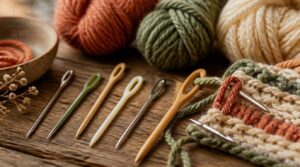
A yarn needle is one of those small tools that quietly does a lot of heavy lifting in any knitting or crochet project. It’s shaped specifically to work with yarn—not fabric—so it manages the finishing work that regular sewing needles simply can’t. Here’s what you need to know about what it is, what it’s made of, and how it earns its place in your toolkit.
If you’re curious how yarn needles differ from standard options, checking out a guide on sewing machine needle sizes and types helps put the distinction into sharper perspective.
Basic Definition
A yarn needle is a hand sewing tool built specifically for knitters and crocheters — slender, sturdy, and designed with a blunt tip to glide through yarn loops without splitting fibers. Its oversized eye threads thick yarn easily, while the shaft, available in metal or plastic, stays strong across repeated use.
Think of it as your finishing partner, distinct from circular, straight, or double pointed needles.
Main Purpose
So you’ve got your blunt-tipped finishing partner — now what does it actually do?
Its job is deceptively simple but genuinely impactful: smooth integration of loose yarn ends into your finished piece. Through careful stitch weaving, it threads tails back through existing loops, achieving hidden tails and clean edges with zero visible bulk.
It also manages:
- Color blending at yarn joins
- Bulk reduction when seaming pieces together
- Joining crochet motifs without raw edges showing
- Finishing amigurumi with a professional, polished look
Yarn Needle Anatomy
Every part of a yarn needle is doing a specific job. The eye — that small, rounded or oval opening near the top — needs to be wide enough for your yarn to pass through cleanly without fraying. A large oval eye works beautifully with chunky or multi-ply yarns, while a smaller, rounder one suits finer weights far better.
The shaft diameter determines how smoothly the needle glides between stitches. A thicker shaft offers leverage when seaming dense pieces; a thinner one won’t distort delicate fabric. Running along the shaft, the groove cradles your yarn, preventing it from slipping mid-weave. And the blunt tapered tip slides between loops rather than splitting them — which is exactly what separates a yarn needle from anything in your regular sewing kit. These components are just as necessary as selecting the correct knitting needle types for your projects.
Knitting and Crochet Uses
Knowing your needle’s anatomy is only half the story — understanding where it fits into your actual projects is where things click.
A yarn needle steps in at the finishing stage, whether you’re weaving in ends on a colorwork sweater knitted with circular knitting needles, seaming panels, joining crochet motifs, or tucking tails into amigurumi seams cleanly.
Yarn Needle Vs Sewing Needle
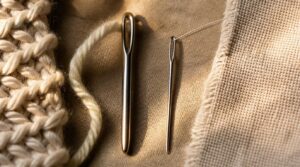
At first glance, a yarn needle and a sewing needle might seem like distant cousins doing the same job — but they’re actually built for very different tasks. Swapping one for the other can mean split stitches, frustrated fingers, and a finished piece that doesn’t quite look right. Here’s exactly how they differ.
Eye Size Differences
The eye of a needle tells the whole story. A standard sewing needle’s eye is tiny — just wide enough for thin thread — while a yarn needle’s eye is dramatically larger to accommodate bulky fibers, much like how the colossal squid evolved eyes up to 28 centimeters wide to gather more of what it needs from its environment.
For heavy-duty projects like upholstery or sails, hand sewing boat canvas with large-eye needles follows the same principle — a bigger eye handles thicker thread without the constant frustration of re-threading.
| Needle Type | Eye Size |
|---|---|
| Sewing needle | Fine, thread-width only |
| Yarn needle | Wide, yarn-friendly opening |
Tip Shape Differences
The tip is where a yarn needle and a sewing needle part ways most dramatically. A sewing needle’s sharp, conical tip pierces fabric threads precisely, while yarn needles commonly feature a rounded ball tip that eases between stitches without splitting delicate fibers.
| Tip Type | Best Use |
|---|---|
| Conical | Tight threading, precise needlework |
| Ball/Rounded | Yarn, delicate fibers |
| Chisel | Faster weaving, longer tails |
Shaft Thickness
Shaft thickness is where the two needle types diverge quietly but markedly.
A sewing needle’s slender, almost wire-like shaft is built for piercing tightly woven fabric, while a yarn needle carries a noticeably thicker shaft designed to glide through open stitch loops without bending or breaking under pressure.
| Feature | Yarn Needle vs Sewing Needle |
|---|---|
| Shaft strength | Yarn needle: thicker, more rigid |
| Material options | Bamboo, metal, plastic |
| Flex under load | Sewing needle flexes; yarn needle resists |
| Best for | Yarn needle: bulky or heavy yarns |
| Fatigue resistance | Thicker shaft withstands repeated use better |
Metal yarn needles, particularly those made from nickel or steel, offer the highest torsional stiffness, meaning they won’t twist or torque sideways when you’re seaming pieces or weaving in ends through dense fabric. Bamboo needles, by contrast, provide just enough natural flex to feel forgiving in your hand — a genuinely useful quality when you’re finishing a project for hours at a stretch.
Metal yarn needles resist twisting through dense seams, while bamboo bends just enough to spare your hands
Fabric Versus Yarn Use
The needle you reach for comes down to one simple question: are you building fabric, or finishing it?
| Material | Best Needle Choice |
|---|---|
| Woven fabric | Sharp sewing needle |
| Knitted yarn | Blunt yarn needle |
| Bulky yarn blend | Wide-eye yarn needle |
Yarn needs room to move — a blunt yarn needle honors that, while a sewing needle’s sharp tip would split your stitches clean apart.
Common Types of Yarn Needles
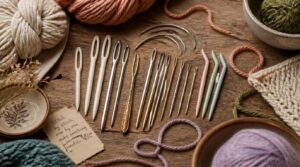
Not all yarn needles are built the same, and knowing the differences can save you a lot of frustration mid-project. Each type is designed with a specific task in mind, from weaving in ends to seaming whole garment pieces together. Here are the most common types you’ll want to know.
Straight Yarn Needles
Straight yarn needles are the workhorses of any finishing kit — rigid, straightforward, and built for the long haul.
- Metal options like nickel-plated or aluminum glide effortlessly through dense seams
- Bamboo and wood offer natural grip, perfect for slippery silk blends
- Eye size and tip shape vary to suit everything from lace-weight to bulky yarn
Bent-Tip Yarn Needles
When a straight needle just can’t navigate a tight seam, bent-tip yarn needles step in. That gentle curve makes all the difference — guiding the large eye through ribbing, corners, and bulky edges where a rigid shaft struggles.
Made from nickel-plated steel, these compact tools handle weaving in loose ends or joining pieces without snagging a single fiber.
Tapestry Needles
Tapestry needles are the workhorses of yarn finishing — built with a large eye and a blunt rounded tip that glides between stitches rather than splitting them. Whether you’re weaving in yarn ends or seaming pieces together, that blunt tip protects your work.
They come in metal, plastic, and wood, with sizes scaling to match your yarn weight.
Darning Needles
Closely related to tapestry needles, darning needles are built for mending and finishing work that demands a bit more reach. Their large eye accommodates bulky yarns and multiple strands, while the blunt tip protects delicate knit fabric by sliding through stitches rather than piercing them.
Key reasons darning needles earn a spot in your sewing notions kit:
- Metal material choices like stainless steel and nickel-plated brass resist bending through dense fabric
- Lengths from 4 to 7 inches give you control for weaving in yarn ends cleanly
- Bent or straight shaft options let you reach awkward angles without fighting your project
Plastic Yarn Needles
If darning needles are the workhorses of the finishing kit, plastic yarn needles are the friendly companions you reach for when you just want things to be easy. Made from high-quality plastic, these lightweight tools feature color-coded sizes and a flexible eye threading design, making them ideal crochet accessories and everyday knitting needle partners for beginners and experienced crafters alike.
How to Choose Yarn Needles
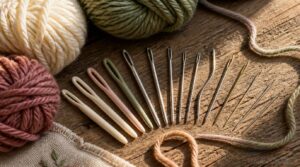
Picking the right yarn needle doesn’t have to be complicated, but a few key factors make a real difference in how smoothly your project comes together. The wrong needle can snag your yarn, split your stitches, or just make the whole process more frustrating than it needs to be. Here’s what to look at before you buy.
Match Yarn Weight
Picking the right yarn needle starts with matching yarn weight. A needle that’s too fine will shred bulky yarn, while an oversized needle creates sloppy tension with fingering-weight. Use a Yarn Weight Chart as your baseline, then verify with a Gauge Swatch Testing sample before committing:
- Lace and fingering weights → sizes 18–22
- DK and worsted → sizes 16–18
- Bulky and super bulky → sizes 13–16
Choose The Right Eye
Getting the eye right matters more than most knitters realize. Eye size should match your yarn’s thickness — a narrow eye frays bulky strands, while an oversized one creates loose, uneven tension.
Use your yarn weight as your guide: fingering weights thread cleanly through sizes 22–26, while worsted and chunky yarns need a broader opening, sizes 13–18, to feed through smoothly without distortion.
Pick Tip Style
Tip style shapes how your needle interacts with yarn at the most critical point of contact.
- Blunt tips gently spread fibers apart — ideal for wool or textured yarns that snag easily.
- Pointed tips pierce cleanly through dense stitches, making them perfect for amigurumi joins or tight crochet.
- Bent tips let you scoop under stitches during seaming without distorting the fabric edge.
Consider Needle Length
Length is one of those quiet decisions that shapes how smoothly your finishing work actually goes.
| Project Type | Recommended Length | Why It Works |
|---|---|---|
| Amigurumi, fine lace | Short (under 2") | Improves precision in tight spaces |
| Garment seams, bulky yarn | Mid-range (2–3") | Controls tension without snagging |
| Flat weaving, thick fabric | Long (3"+) | Reduces passes needed to secure ends |
Shorter needles suit fine cotton or lace yarns, while mid-range lengths handle medium to bulky yarns comfortably. For ergonomic needle length, lighter and slender options reduce hand fatigue during long finishing sessions.
Compare Needle Materials
Material shapes how a needle feels in your hand and behaves with your yarn.
Bamboo grip performance shines with slippery fibers like silk, because the natural surface keeps stitches from sliding. Stainless steel glides faster but suits confident, experienced hands. Titanium-coated needles outlast most options and resist wear on tough fibers like denim. For lightweight comfort, aluminum wins every long session.
How to Use Yarn Needles
Once you’ve got the right needle in hand, it’s time to put it to work. Yarn needles are surprisingly multi-purpose tools that go well beyond just weaving in ends. Here’s how to use them across the most common finishing tasks.
Weaving in Ends
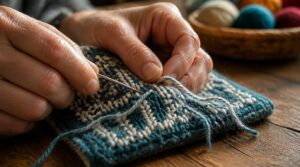
Weaving in ends is the finishing step that transforms a project from "almost done" to truly complete. Thread your yarn tail onto a blunt-tip tapestry needle and weave through 3 to 4 passes on the wrong side.
For colorwork, stay within matching color blocks. In ribbing or garter stitch, follow the structure so ends lie flat and invisible.
Seaming Knit Pieces
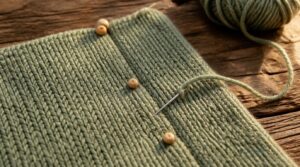
Seaming knit pieces is where your finished panels finally become a garment.
Edge alignment matters enormously, so pin pieces first. Keep seam tension even; pulling too tight creates puckering.
For mattress stitch, align both edges right-side up, then pick up the bars between stitches alternately — the seam practically disappears. For live stitches, Kitchener stitch delivers an invisible, professional finish.
Joining Crochet Motifs
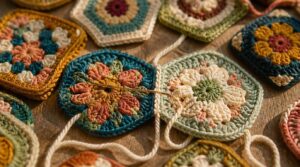
Joining crochet motifs calls for a slightly different mindset than seaming knit panels. Instead of mattress stitch, you’re working edge to edge, connecting squares, hexagons, or granny motifs into a unified fabric.
| Join Method | Best Use |
|---|---|
| Flat Slip Stitch | Granny squares, flat blankets |
| Invisible Back Loop | Shawls, smooth motif joining |
| Flat Braid Join | Heavy throws, structured afghans |
A bent-tip yarn needle manages most methods beautifully, especially when you’re working a Decorative Slip Stitch between motifs for visible texture.
Finishing Amigurumi
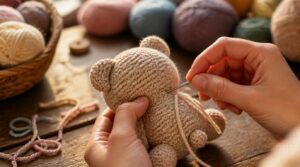
Amigurumi finishing demands a level of care that motif joining doesn’t — you’re closing up a three-dimensional creature, not a flat fabric edge.
Thread your tapestry needle with the yarn tail and use the Prime Finish technique, weaving through the front loops of the final round before pulling tight for a smooth, nearly invisible closure.
Storage and Care
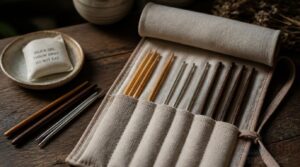
Once your needles have done their job, where you store them matters more than you’d think.
Keep bamboo, metal, and wood needles in a dry, climate-controlled space — ideally between 60 and 70°F with humidity around 40 to 50 percent — so materials don’t warp, rust, or crack over time. A slim case or roll pouch protects tips and prevents bending.
Frequently Asked Questions (FAQs)
How do I thread the eye of a yarn needle?
Wet the yarn tip with your finger, twist it to a point, then angle it through the eye. If it catches, fold a paper strip around the yarn and guide it through.
What are some tips for weaving in ends with a yarn needle?
Weave ends horizontally through several stitches, then change direction twice to lock the tail. Pull snug, not tight. Trim close, then stretch the fabric gently to hide the end completely.
How do I join new yarn when my yarn runs out?
When your yarn runs out, try the Russian Join Technique or Invisible Splice Method for smooth knitting. Work joins at row ends, weave yarn tails securely, and block afterward to keep tension even.
Can I use yarn needles for embroidery and cross stitch?
Absolutely, and it’s a great, budget-friendly move. For embroidery on cotton or canvas, blunt tips prevent fabric snagging, while the large eye works with thick yarn beautifully — speeding up stitching versus fine needlework tools.
Can yarn needles work with embroidery floss?
Yes, embroidery floss works well with yarn needles. Choose one with a large oval eye to thread 2–3 strands smoothly. A blunt tip prevents fiber splitting, keeping your floss clean through every pass.
How do you thread thick yarn easily?
Cut the yarn at a 45-degree angle, then fold it in a paper strip to create a stiff point. A large-eye needle or threader makes threading thick yarn easy.
What causes yarn needles to bend or break?
Bending and breaking often trace back to mismatched yarn weight, excessive knitting tension, worn tips, or poor storage — small stressors that quietly compound until even a sturdy metal needle finally gives way.
Are curved needles better for seaming sweaters?
Curved needles can be a advantage for sweater seaming, reducing wrist strain and handling thick seams with ease. Their gentle arc maintains even tension, especially around armholes and necklines.
Can you sharpen a blunt yarn needle tip?
Technically, you can sharpen a blunt tip using a fine diamond file or emery board. Rotate gently at a shallow angle, apply light pressure, then clean the tip afterward with a soft cloth.
Can yarn needles be used for embroidery projects?
Yes, yarn needles work well for embroidery. Satin, stem, and backstitch techniques translate beautifully with bulky yarn, creating bold, textured results on open-weave fabrics that standard embroidery floss simply can’t replicate.
Conclusion
Precise, purposeful, and perfectly suited to the work directly in front of you, the right yarn needle turns finishing from a frustrating guessing game into a craft skill you can genuinely trust. You now understand tip shapes, eye sizes, and material differences—and why each one matters for your specific project.
Whether you’re weaving in ends or carefully seaming pieces together, that knowledge puts cleaner, more polished, professional results in your hands every single time.
- https://www.knittersreview.com/tools-of-the-trade-darning-needles
- https://www.yarnivoresa.net/module/news/12641/tech-talk-choosing-a-tapestry-needle-part-i
- https://www.maggieframes.com/blogs/embroidery-blogs/ultimate-guide-to-tapestry-needles-for-crochet-selection-uses-and-expert-tips
- https://www.knittingparadise.com/threads/finishing-work-sewing-up-needle-preference.775256
- https://egausa.org/guide-to-embroidery-needles