This site is supported by our readers. We may earn a commission, at no cost to you, if you purchase through links.
That moment when you realize your favorite polyester shirt has a mystery stain—and it’s not coming out with regular washing—hits different when you know polyester doesn’t behave like cotton. The synthetic fibers that make polyester wrinkle-resistant and durable also make it grab onto oil-based stains like they’re long-lost friends.
Fresh coffee, salad dressing, makeup, or even yesterday’s lunch can bond to those smooth plastic-like fibers faster than you’d expect. The good news? Once you understand how polyester reacts to different treatments, most stains don’t stand a chance.
Cold water becomes your best friend, dish soap works magic on grease, and a few household staples can tackle everything from ink to wine without damaging the fabric.
Table Of Contents
Key Takeaways
- Cold water, dish soap, and household staples like vinegar, baking soda, and rubbing alcohol tackle most polyester stains without damaging synthetic fibers or requiring specialty products.
- Fresh stains respond best when you blot immediately from the outside in, pre-treat within 15 to 30 minutes, and avoid heat until the mark completely disappears.
- Oil-based stains cling to polyester’s smooth fibers more stubbornly than water-based marks, so grease needs dish soap or baking soda while protein stains require cold water and enzyme cleaners.
- Different stain types demand specific treatments—rubbing alcohol lifts ink, hydrogen peroxide brightens yellowing, and vinegar neutralizes odors—so identifying what you’re dealing with matters more than scrubbing hard.
Essential Steps to Remove Stains From Polyester
Getting a stain out of polyester doesn’t have to feel overwhelming. The key is knowing what you’re dealing with before you start scrubbing.
If you’ve accidentally gotten hair dye on leather furniture or accessories, removing hair dye from leather surfaces requires a gentler approach than synthetic fabrics to avoid damaging the material.
Let’s walk through the first three steps that set you up for success.
If you’re brand new to embroidery machines, this guide on using an embroidery machine for the first time breaks down everything in simple, beginner-friendly steps.
Assessing The Stain Type and Freshness
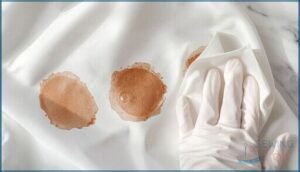
Success in stain removal from polyester fabric starts with identifying what you’re up against. Check if the mark feels wet or dry—fresh stains are damp and glossy, while set-in ones feel stiff.
Oil-based stains on polyester demand the same precision you’d use when choosing the right sewing needles for silk—match your tools to the fabric’s texture.
Look at the edges: sharp means new, blurry means old. Test with a damp white cloth to see if color transfers. Grease stains bead water, blood stains often smell metallic when fresh, and older marks lose their scent completely.
For additional details on recognizing and handling different types of stains, review these characteristics of fresh and set-in stains.
Blotting and Pre-Treating The Area

Once you’ve identified the stain, grab a clean white cloth or paper towel. Press it firmly over the spot—don’t rub. Start at the outer edges and work inward so the stain doesn’t spread across your polyester fabric. Keep switching to a fresh section of cloth as it soaks up the liquid.
For grease or oil, apply a small amount of dish soap or enzyme-based stain remover directly to the area, then let it sit for 10 to 15 minutes before gently massaging it in with your fingers.
It’s important to use proper blotting techniques to avoid pushing stains deeper into the fabric.
Choosing Cold Water Vs. Hot Water

After you’ve blotted and pre-treated, water temperature matters more than you think.
Cold water works best for blood, sweat, and most food stains on polyester because it stops proteins from setting.
Hot water helps with grease but can cause fabric shrinkage and set other stains permanently.
Stick with cold for stain removal and color preservation—you’ll also boost energy efficiency in your laundry routine.
Effective Household Solutions for Polyester Stains
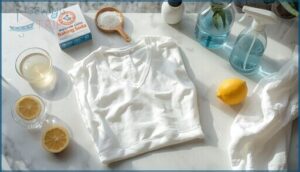
You don’t need specialty cleaners to tackle polyester stains. Your kitchen and bathroom cabinets already hold powerful stain-fighting ingredients that work just as well as store-bought products.
If you’re dealing with a fabric bag that needs refreshing, the same how to clean a nylon purse techniques using household items work beautifully on polyester too.
Let’s walk through five household solutions that’ll help you remove almost any stain from your polyester items.
Using White Vinegar for General Stains
White vinegar breaks down everyday stains on polyester without harsh chemicals. Mix one part distilled white vinegar with two parts warm water in a spray bottle, then mist the stain and let it sit for 10 to 20 minutes before washing.
- Neutralizes odors: Vinegar combats sweat smells trapped in workout clothes
- Dissolves residue: Acidic properties cut through detergent buildup and mineral deposits
- Safe dilution: Use one-third cup vinegar per gallon of water for soaking
- Gentle softening: Rinses away film, restoring polyester’s original texture
Applying Baking Soda to Absorb Grease
For fresh oil spots on polyester, baking soda pulls grease right out of the fibers. Sprinkle a thick layer over the stain, let it sit 15 to 30 minutes, then brush off the darkened powder.
This grease absorption method is gentle enough for any color and won’t harm your fabric. Repeat until the powder stops changing color for stubborn marks.
Treating Stains With Dish Soap
Grab your dish soap for food and beverage stains on polyester—it’s a powerhouse stain treatment that breaks down grease and oils fast. Put a few drops directly on the mark, rub gently with your fingers, then rinse in cold water.
This simple laundry tip addresses sauces, dressings, and mystery spots before they set. Just remember: thorough rinsing prevents film buildup that attracts new dirt.
Removing Ink and Paint With Rubbing Alcohol
Reach for rubbing alcohol when ballpoint ink or paint lands on your polyester—it works as a powerful ink remover that dissolves pigment right out of the fibers. Dab 70 to 91 percent isopropyl onto a cotton ball, blot from the stain’s edge inward, then rinse with cold water before washing.
- Alcohol safety: Test on a hidden seam first to protect dye
- Fabric protection: Place a white cloth behind the stain so loosened ink won’t transfer
- Stain prevention: Treat fresh marks immediately for best results
This laundry tip turns stubborn marks into distant memories.
Whitening With Hydrogen Peroxide
Hydrogen peroxide lifts yellowing and brightens dingy polyester without the harshness of chlorine bleach. Mix a paste of 3 percent peroxide, baking soda, and water, rub it into sweat stains, let it sit thirty minutes, then wash in cold water.
| Method | Contact Time | Best For |
|---|---|---|
| Paste application | 30 minutes | Yellowed armpit areas |
| Direct pour on blood | 1 minute fizzing | Fresh protein stains |
| Machine bleach compartment | Full wash cycle | Brightening white loads |
Always spot-test colored polyester first—peroxide is gentler than chlorine but can still fade vibrant dyes.
Removing Specific Stains From 100% Polyester

Not all stains respond to the same treatment approach, and polyester needs specific approaches for each type.
What works for coffee stains won’t necessarily lift ink stains, and grease requires different tools than blood stains.
Here’s how to tackle the most common stains you’ll encounter on 100% polyester fabric.
Ink Stains (Pens, Markers)
Ink stains from pens and markers bond fast to polyester fibers, so you’ll want to act quickly.
Place a clean cloth behind the spot, then dab rubbing alcohol or hand sanitizer onto the mark from the outside in.
Let it sit for ten to fifteen minutes, blot gently, and rinse with cold water. Repeat if needed, then air dry completely before checking your progress.
Oil and Grease Stains
Oil stains cling stubbornly to polyester fabric because the fabric naturally attracts greasy substances.
Start by sprinkling baking soda or cornstarch over the spot and letting it sit for 15 to 30 minutes to absorb surface oil.
Next, apply grease-cutting dish soap like Dawn directly to the area, gently rub it in, and let it dwell for five to ten minutes.
Rinse with warm water, then machine wash and air dry completely before checking your progress.
Blood and Protein-Based Stains
Blood stains and other protein-based marks require cold water fast—heat will lock the stain in for good. Blot fresh spots immediately, then soak the fabric in cold water with enzyme detergent for 30 minutes.
For dried blood on light polyester, dab on 3 percent hydrogen peroxide and watch it bubble as it breaks down proteins, then rinse and wash.
Coffee, Wine, and Food Stains
Coffee and red wine leave tannin-rich rings on polyester that darken as they dry. Blot beverage spills immediately with a clean cloth, then rinse from the back with cold water to push pigments out.
Mix equal parts white vinegar and water, dab the stain, and let it sit for five minutes. For tomato sauce or curry, add a drop of dish soap to cut through food residue and oils before washing.
Sweat and Yellowing
Yellow armpit marks appear when sweat and antiperspirant aluminum bond to polyester fibers. Make a paste with equal parts baking soda and hydrogen peroxide, scrub gently into the stain, and let sit 30 to 60 minutes before washing in cold water.
- Avoid hot dryer cycles that set yellowing permanently
- Choose aluminum-free deodorant to prevent future discoloration
- Pre-treat underarm areas after each wear
- Store clean garments in cool, dark places to slow oxidation
Top 8 Products for Polyester Stain Removal
You don’t need expensive specialty products to tackle polyester stains. Most effective solutions are already sitting in your pantry or medicine cabinet.
Here are eight reliable products that work fast and won’t damage your fabric.
1. Dawn Platinum Dish Soap Liquid
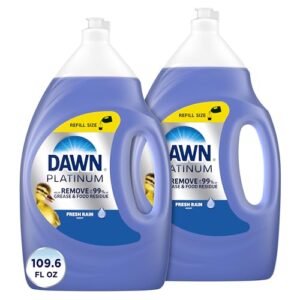
When grease fights back on your polyester, Dawn Platinum Dish Soap cuts through it like a pro. This powerhouse liquid combats oil and grease stains with 4X grease-fighting power, making it a go-to cleaning agent for laundry tips beyond just dishes.
Apply a small amount directly to the stain, gently work it in with your fingers, then wash normally. The concentrated formula breaks down oily residue while staying gentle on fabric. Just spot-test first and rinse thoroughly—dish soap benefits include effective stain removal without harsh chemicals, keeping your polyester looking fresh.
| Best For | Anyone dealing with stubborn grease and oil stains on dishes, cookware, or even fabric who wants a powerful concentrated formula that works fast and cleans more with less. |
|---|---|
| Brand | Dawn |
| Form | Liquid |
| Size | 8.18 pounds |
| Primary Use | Grease removal |
| Scent | Refreshing Rain |
| Special Formula | Concentrated |
| Additional Features |
|
- Cuts through tough, baked-on grease with 4X the cleaning power of regular Dawn, so you spend less time scrubbing stuck-on messes.
- Works beyond the kitchen—pre-treats laundry stains, cleans car exteriors, and tackles grime on grills and other surfaces around the house.
- Concentrated formula means you use less per wash, stretching your bottle further and saving money over time.
- Costs more upfront than basic dish soaps, which might not fit every budget even though it lasts longer.
- The scent, while light, may not appeal to everyone who prefers unscented or different fragrance options.
- Not safe for delicate fabrics like silk, so you’ll need to spot-test and stick to sturdy materials when using it on laundry.
2. Swan Isopropyl Rubbing Alcohol
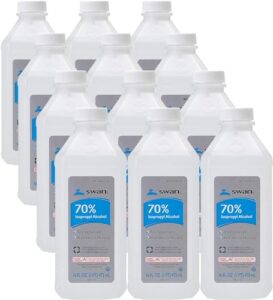
Ink and paint marks meet their match when you reach for Swan Isopropyl Rubbing Alcohol. This 70% solution works as a powerful stain lifting agent—just place a paper towel under the fabric, apply the alcohol directly to the mark, and blot gently.
The rubbing techniques matter here: dab instead of scrubbing to avoid spreading the stain. Always do fabric testing on a hidden seam first, since some dyes react.
Follow these laundry tips with cool water rinsing for best polyester stain removal results without harsh chemicals.
| Best For | Anyone dealing with stubborn ink or marker stains on polyester clothing, or needing a reliable first-aid antiseptic for minor cuts and scrapes. |
|---|---|
| Brand | Swan |
| Form | Liquid |
| Size | 16 Fl Oz |
| Primary Use | Disinfection |
| Scent | Unscented |
| Special Formula | 70% Isopropyl |
| Additional Features |
|
- Works fast on tough fabric stains like ink and marker without leaving oily residue behind
- The 70% concentration gives you the sweet spot between disinfecting power and safe evaporation time
- Comes in bulk packs of 12 bottles so you’re always stocked up for household cleaning and first aid
- Highly flammable so you need to store it away from heat sources and keep the cap tight
- Not safe for all skin types or large wounds—external use only on minor cuts
- You have to test it on hidden fabric first since some dyes can react badly to the alcohol
3. Whole Foods Baking Soda
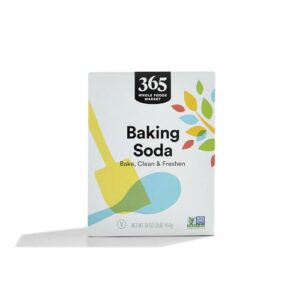
Oil spots and greasy marks vanish when you reach for Whole Foods’ 365 baking soda—a single-ingredient powerhouse of pure sodium bicarbonate. Mix three parts baking soda with one part cold water to create a thick paste, then apply it directly to the stain and let it sit for 15 to 30 minutes.
The mineral ingredients absorb oils naturally, making this eco-friendly packaging staple perfect for polyester stain removal. Add half a cup to your laundry load for extra deodorizing power and brighter fabrics.
| Best For | Anyone tackling greasy stains on polyester or synthetic fabrics who wants a natural, multi-purpose cleaner that works for both laundry and household cleaning. |
|---|---|
| Brand | Arm & Hammer |
| Form | Powder |
| Size | 16 oz |
| Primary Use | Multi-purpose cleaner |
| Scent | Unscented |
| Special Formula | Natural ingredient |
| Additional Features |
|
- Pure sodium bicarbonate with zero artificial ingredients, allergens, or additives makes it safe for sensitive skin and dietary-restricted households
- Effective stain fighter that absorbs oils and grease from polyester when mixed into a paste, plus boosts deodorizing power in the wash
- Incredibly affordable at $1.09 for 16 ounces and versatile enough for baking, cleaning, beauty routines, and fabric care
- The 16-ounce box feels small for the price compared to bulk baking soda options from other brands
- Performance isn’t noticeably different from generic baking soda, so you’re mainly paying for Whole Foods’ ingredient standards
- Availability can be limited to Whole Foods stores or online, and pricing may run higher than supermarket alternatives in some areas
4. Kenra Professional Hairspray
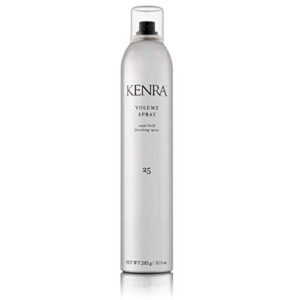
You won’t believe this household stain removal trick: Kenra Professional Volume Spray 25 addresses stubborn ink marks on polyester. The hairspray ingredients—especially SD alcohol—dissolve ballpoint pen and marker pigments fast.
Hold the aerosol benefits 8 to 10 inches from the fabric, saturate the spot, and blot with a clean cloth. Repeat the spray application until the stain lifts. Always rinse with cold water afterward and wash normally.
Product safety matters, so work in a well-ventilated space and keep the can away from heat.
| Best For | Anyone looking for super-strong hold hairspray that can withstand wind and humidity for days, plus double as an emergency ink stain remover on polyester fabrics. |
|---|---|
| Brand | Got2b |
| Form | Aerosol |
| Size | 10 oz |
| Primary Use | Hair styling |
| Scent | Fragrance |
| Special Formula | Silicone-free |
| Additional Features |
|
- Delivers up to 120 hours of hold and resists wind up to 25 MPH, so your style stays locked in through multiple days and weather changes.
- Fast-drying, flake-free formula adds volume and shine without leaving residue or stiffness you can’t brush through.
- The alcohol-based spray works as a household hack for lifting stubborn ink stains from polyester when you need it.
- The fragrance can be overpowering for people sensitive to strong scents.
- Price point runs higher than many drugstore hairsprays on the market.
- A few users have reported receiving defective cans that didn’t spray properly.
5. Solimo Hydrogen Peroxide Antiseptic Solution
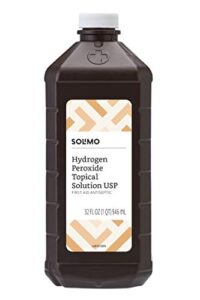
When tough protein stains hit your polyester, Solimo Hydrogen Peroxide Antiseptic Solution brings antiseptic properties and chemical reactions to the rescue. The 3 percent formula breaks down blood and organic marks fast.
Dab it onto the stain with a clean cloth, let it bubble, then rinse thoroughly with cold water. Always spot-test a hidden seam first—hydrogen peroxide can lighten dyes on colored fabric.
This simple laundry and cleaning tip delivers serious stain removal power while keeping polyester fabric care straightforward and fabric safety front of mind.
| Best For | Anyone looking for an affordable, multi-purpose antiseptic that handles first aid needs and tackles tough protein stains on fabrics like polyester. |
|---|---|
| Brand | Solimo |
| Form | Liquid |
| Size | 32 Fl Oz |
| Primary Use | Antiseptic |
| Scent | Unscented |
| Special Formula | 3% Hydrogen Peroxide |
| Additional Features |
|
- Simple 3% hydrogen peroxide formula meets USP standards and works effectively for both wound care and stain removal
- Large 32-ounce bottle provides excellent value, with multi-pack options available for households that use it frequently
- Opaque plastic packaging protects the solution from light degradation, helping maintain its strength longer
- Can lighten or bleach colored fabrics if not spot-tested first, requiring extra caution on dyed polyester
- Gradually loses effectiveness over time as hydrogen peroxide naturally breaks down, even when stored properly
- May cause temporary skin whitening or mild irritation with prolonged contact, so rinsing is necessary after use
6. Dawn Ultra Dish Soap Liquid
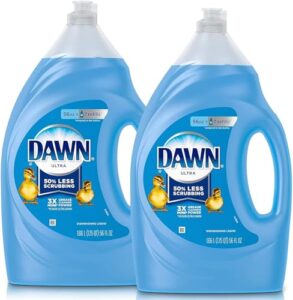
When grease stains threaten your polyester, Dawn Ultra Dish Soap Liquid delivers concentrated cleaning power that cuts through oil fast. Apply a small dab directly onto the mark, work it gently into the fabric with your fingers, then rinse with cold water.
The formula breaks down stubborn grease and food residue without harsh scrubbing, making stain removal simple and effective. This trusted cleaning solution tackles everyday laundry challenges while protecting your polyester from damage, proving that the right dish soap transforms fabric care into a straightforward task.
| Best For | Anyone who regularly cooks with oils or butter and needs a dish soap that cuts through heavy grease without endless scrubbing, plus households looking for a concentrated formula that lasts longer and works on tough messes beyond just dishes. |
|---|---|
| Brand | Dawn |
| Form | Liquid |
| Size | 56 Fl Oz |
| Primary Use | Dish cleaning |
| Scent | Original |
| Special Formula | Concentrated |
| Additional Features |
|
- Concentrated formula means you use less soap per wash and get through more dishes with each bottle, saving money over time
- Cuts through grease and baked-on food with 50% less scrubbing than non-concentrated formulas, making cleanup faster and easier
- Versatile enough for kitchen dishes, pre-treating fabric stains, and cleaning greasy tools or household items
- Large 56 oz bottles can be heavy and awkward to pour, so you may need to transfer soap into a smaller dispenser
- Not suitable for automatic dishwashers despite being a powerful cleaner for hand washing
- Price can feel steep, especially if you’re paying for shipping or buying from international sellers
7. Tide Original Laundry Detergent
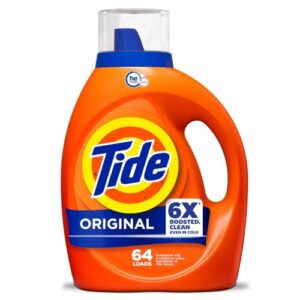
Tide Original Laundry Detergent addresses protein-based stains and body oils on polyester with its enzyme-rich formula, working effectively in cold water to prevent setting marks deeper into synthetic fibers. Pour a small amount directly onto the stain, gently rub it in with your fingers, and let it sit for five minutes before washing.
This concentrated detergent ingredients blend breaks down tough residues while optical brighteners restore brightness to dingy polyester. For fabric safety and best cleaning performance, use the recommended dose and rinse thoroughly to avoid residue buildup on your garments.
| Best For | Households looking for a powerful, budget-friendly detergent that tackles everyday stains and grease on all fabrics, especially synthetic materials like polyester. |
|---|---|
| Brand | Tide |
| Form | Liquid |
| Size | 80 Fl Oz |
| Primary Use | Laundry |
| Scent | Original |
| Special Formula | 6X boosted clean |
| Additional Features |
|
- Enzyme-powered formula effectively breaks down protein stains, body oils, and tough grease on both natural and synthetic fabrics
- Works well in cold water cycles, helping preserve fabric integrity while still delivering strong cleaning performance
- Concentrated formula means you use less per load, making the 64-load bottle last longer and offering solid value at $12.99
- Contains fragrance and surfactants that may irritate sensitive skin or trigger reactions in people with eczema
- Large 80-ounce bottle isn’t travel-friendly, and there’s no smaller trial size available for testing before committing to the full bottle
- Some users report occasional delivery or packaging issues, and the price point runs higher than generic or store-brand alternatives
8. OxiClean Versatile Stain Remover Powder
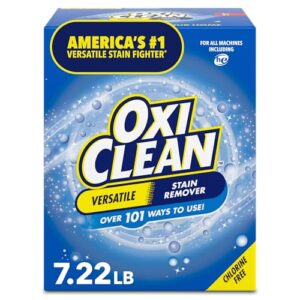
OxiClean Effective Stain Remover Powder addresses everything from coffee spills to grass marks on polyester through its oxygen bleach chemistry. When you dissolve this powder in warm water, sodium percarbonate releases active oxygen that breaks down stain molecules without harming fabric dyes.
Mix a scoop with water to create a presoak solution for set-in marks, or add it directly to your wash as a booster. The effective cleaning power works on wine, food, and pet stains across water-washable polyester items—just test colorfastness first on hidden seams.
| Best For | Households dealing with frequent laundry stains from kids, pets, or active lifestyles who want a versatile, color-safe alternative to chlorine bleach. |
|---|---|
| Brand | OxiClean |
| Form | Powder |
| Size | 115.52 oz |
| Primary Use | Stain removal |
| Scent | Unscented |
| Special Formula | Oxygen-powered |
| Additional Features |
|
- Oxygen-powered formula tackles tough organic stains like wine, coffee, and pet messes without stripping color from most washable fabrics.
- Works as a presoak, in-wash booster, or cleaning solution for multiple surfaces beyond laundry, including carpets and upholstery.
- Chlorine-free and gentler on fabrics than traditional bleach, making it safe for items labeled “Do Not Use Chlorine Bleach.”
- May not dissolve completely in cold water, requiring warm or hot water for best performance.
- Packaging can leak powder during shipping, creating a mess before you even use it.
- Some users report finding cheaper store-brand alternatives that deliver similar stain-fighting results.
Tips and Precautions for Polyester Fabric Care

You’ve tackled the stain, but your work isn’t done yet. How you handle polyester after treatment makes all the difference between a clean rescue and permanent damage.
Let’s cover the key precautions that’ll keep your fabric looking its best for years to come.
Avoiding Heat to Prevent Setting Stains
After removing stains from polyester, keep your garment away from high heat until you’re certain every mark is gone. Heat damage happens fast—dryers above 104°F and hot irons can lock pigments into the fibers permanently, turning a faded coffee ring into a lasting badge of defeat.
After treating polyester stains, avoid high heat until marks are completely gone—dryers and hot irons above 104°F permanently lock pigments into synthetic fibers
Cold water and gentle cleaning protect your fabric, so always air-dry or use low heat for stain prevention and fabric protection.
Gentle Application and Rinsing Techniques
Your blotting motion matters just as much as the product you use. Press a white cloth straight down on the stain—don’t scrub—to lift liquid without grinding it deeper into polyester.
Cold water rinsing from the back pushes soil out through the front, while gentle tapping with your fingertips helps stain absorption without roughing up the fabric.
After treating, roll your garment in a towel and press for delicate drying that protects the weave.
When to Avoid Bleach on Polyester
Chlorine bleach strips dye from colored polyester, leaving rusty brown patches where navy or black used to be. Your printed shirts lose design sharpness when bleach lifts surface pigments.
Even white polyester can yellow instead of brighten because chlorine reacts badly with synthetic fibers. Check care labels for a crossed triangle symbol—that means skip all bleach and reach for oxygen-based alternatives or mild laundry detergent instead.
Preventing Future Stains and Maintenance
A quick spray of fabric protection on your polyester jackets creates a barrier that makes spills bead up instead of soaking in.
Turn garments inside out before washing, skip the hot dryer, and tackle small marks the same day with a damp cloth. These simple maintenance strategies keep your clothing looking fresh between deep cleans.
Frequently Asked Questions (FAQs)
How do you get stains out of 100% polyester?
Why do some stains disappear while others cling stubbornly?
Treat fresh polyester stains within 15 to 30 minutes using cold water, gentle blotting, and targeted pre-treatment with dish soap, vinegar, or enzyme-based stain removers.
Will vinegar ruin polyester?
No, vinegar won’t ruin polyester. The acetic acid in household white vinegar is too mild to damage synthetic fibers, making it safe for routine stain removal and odor treatment when properly diluted and rinsed.
How long will the clothing last?
With proper fabric care and garment maintenance, everyday polyester clothing usually lasts two to five years.
Material longevity increases when you rotate pieces, use gentle washing, and protect the synthetic fiber from excessive heat and harsh chemicals.
Are the clothes machine-washable?
Yes, most 100 percent polyester garments are machine-washable on a normal or gentle cycle with warm water and mild laundry detergent.
Always check care labels first, since some pieces with special trims require dry cleaning instead.
Are the colors fade-resistant?
Like a fortress holding, polyester’s dye stability gives it excellent fade resistance through dozens of washes.
The synthetic durability means colors stay vivid with proper clothing maintenance, careful stain removal, and gentle drying.
Are the fabrics wrinkle-resistant?
Polyester’s synthetic fibers hold their shape naturally, making wrinkle resistance one of the material’s strongest qualities.
The fabric springs back after bending or creasing, so you’ll rarely need an iron for everyday wear.
Are the fabrics hypoallergenic?
Most people tolerate polyester well since it lacks plant or animal proteins that trigger allergies. However, chemical finishes and dyes can irritate sensitive skin, while poor breathability may worsen eczema.
Can dry cleaning remove stubborn polyester stains?
Professional cleaning services use special solvents that dissolve oil-based stains better than home washing. Fresh grease and body oil respond well, but set-in or heat-damaged marks may still leave traces.
Does polyester stain differently than polyester blends?
When comparing fiber composition, 100% synthetic properties repel water-based fabric stains better than blend effects.
Cotton-polyester mixes absorb liquids faster, reducing stain resistance.
However, pure polyester clings to oils more stubbornly during textile cleaning.
Are enzyme cleaners safe for all polyester?
Enzyme-based stain removers work well on most polyester when you follow label times and test hidden seams first.
They won’t damage synthetic fibers, but concentrated formulas left too long can dull some finishes or colors.
Conclusion
Your polyester pieces don’t have to retire early just because they’ve had a run-in with stubborn marks. Now that you know how to get stain out of 100 polyester, you’ve got the tools to handle whatever life throws at your favorite fabrics.
Cold water, the right household products, and quick action turn most disasters into minor inconveniences. Treat your polyester right, and it’ll keep looking sharp through countless wears and washes.
- https://summitbrands.com/articles/how-to-clean-polyester-so-it-stays-bright-and-wrinkle-free/
- https://puracy.com/blogs/cleaning-tips/how-to-clean-polyester-stains
- https://www.answers.com/chemistry/Is-it-safe-to-use-bleach-on-polyester-fabric
- https://laundrysauce.com/blogs/news/how-to-get-ink-out-of-clothes
- https://www.lvsupercleaners.com/set-in-stains-vs-regular-clothing-stains-things-you-should-know-about/