This site is supported by our readers. We may earn a commission, at no cost to you, if you purchase through links.
Your closet holds a textile engineering lab you never knew existed. That 65% polyester, 35% cotton dress shirt isn’t a random combination—it’s a precision-engineered solution balancing wrinkle resistance with breathability, usually holding blend tolerances within ±1-2% across every production batch.
Understanding different fabric blends transforms how you evaluate every garment you own, because each fiber pairing delivers specific performance characteristics that single materials can’t achieve alone. When you know what cotton-polyester, nylon-spandex, or silk-wool combinations actually do—and why manufacturers blend them at particular ratios—you’ll stop choosing clothes by guesswork and start building a wardrobe engineered for your exact needs.
Table Of Contents
Key Takeaways
- Fabric blends combine two or more fiber types in precise ratios—typically held within ±1-2% tolerances—to deliver performance characteristics like wrinkle resistance, breathability, and durability that single fibers can’t achieve alone.
- The blending process occurs at different manufacturing stages, with earlier methods like bale mixing and carding producing more uniform fiber distribution and better yarn evenness than late-stage techniques like roving blending.
- Common blends like 65/35 polyester-cotton dominate ready-to-wear markets because they balance competing needs—polyester provides wrinkle resistance and cost savings while cotton delivers breathability and comfort—creating engineered solutions for specific wardrobe demands.
- Reading care labels reveals the blend ratio in descending order by percentage, which directly determines washing requirements, durability expectations, and whether a garment will perform through repeated wear cycles or fail after a few washes.
What is Blended Fabric
Blended fabric combines two or more fiber types—natural, synthetic, or both—to achieve performance characteristics that single fibers can’t deliver on their own. You’ll find these combinations in everything from your workout gear to office wear, engineered to balance durability with comfort, cost with quality.
Common blends like cotton-polyester or wool-nylon serve specific purposes, and understanding fabric composition also matters when choosing lining fabric for garments that need structure and breathability.
Understanding what blended fabric is starts with three fundamentals: the definition and purpose behind fiber mixing, the manufacturing process that brings different materials together, and the core types of blends you’ll encounter.
Definition and Purpose
Fabric blends are textiles that marry two or more fiber types in controlled proportions—bringing together distinct material properties into a single, unified cloth. Think of it as textile science in action: you’re getting engineered fabric basics that no pure fiber can match alone.
Fabric blends combine two or more fiber types in controlled proportions to create engineered textiles with properties no single fiber can deliver alone
The blending purpose centers on three fundamental objectives:
- Property enhancement – Natural-synthetic pairings leverage each fiber’s strengths, like cotton’s breathability with polyester’s wrinkle resistance, creating enhanced fabric properties through strategic fiber mixing.
- Cost balance – Blend ratios allow you to combine premium fibers with economical alternatives, maintaining quality without breaking your budget.
- Aesthetic versatility – Different fabric blend types deliver unique textures, drape, and visual appeal that single fibers can’t achieve.
This deliberate fusion transforms ordinary textiles into personalized solutions adapted for your specific wardrobe needs.
Fabric Blending Process
Once you grasp why fibers are combined, the next step is understanding how manufacturers build these engineered textiles.
Your fabric blending journey starts with fiber preparation—cleaning, moisture balancing, and opening bales so material flows uniformly into processing equipment. Blend control systems then meter precise ratios, usually holding tolerances within ±1-2%, ensuring consistency across every batch.
Carding machines distribute these fiber combinations evenly before draw frames align them into slivers for yarn formation. Finally, fabric finishing preserves the blend characteristics after weaving, locking in the performance you expect from textile engineering.
For a deeper exploration of the core purposes behind fiber blending, consider how these steps optimize both performance and cost benefits.
Types of Fabric Blends
When blend proportions lock in at the draw frame, you’ll find them sorted into three categories.
Natural-Synthetic combinations—cotton-polyester leading at over 60% of ready-to-wear markets—deliver breathability alongside wrinkle resistance. Performance Fabrics incorporate moisture management for activewear through polyester-nylon pairings. Specialty Luxury Textiles like silk-wool offer premium drape, while Eco-Friendly Materials balance sustainability with function across diverse Fiber Combinations.
For a deeper dive into how blended fabrics combine fibers to improve comfort and versatility, explore professional textile resources.
Fabric Blending Methods
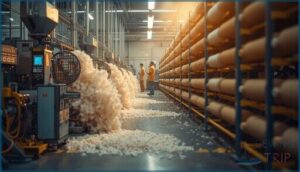
The blending process happens at different stages of yarn manufacturing—each method fulfills a specific purpose in fiber integration. Your choice of blending technique affects yarn uniformity, production efficiency, and final fabric quality.
Blending also influences how fabrics behave in finished products, which is why choosing the right material matters when you’re selecting fabric for plushies or other sewn items.
Let’s examine the three primary methods manufacturers use to combine fibers into consistent, high-performance blends.
Bale Mixing and Flock Blending
When you lay down 6 to 60 bales in a planned sequence—what engineers call bale laydown—you’re building fiber uniformity from the ground up.
Flock extraction pulls fibers from multiple sources simultaneously, so blend consistency stays tight at ±1–2%. This mixing efficiency cuts variation by 30–40%, letting natural-synthetic fiber combinations reach blend ratios that deliver 10–15% better yarn evenness in your final blended fabric.
Web Blending and Sliver Blending
At the ribbon lap or drawframe, web blending doubles 4–8 webs to cut mass variation by 20–30%, establishing precise fiber mixing that your blending machines depend on. Sliver control combines multiple card slivers at the drawframe—keeping blend ratios within ±1% across thousands of meters—which boosts yarn formation evenness by 60–70% while delivering exceptional blend homogeneity through textile manufacturing.
- Material properties stabilize as fiber combinations align during drawframe passes
- Fabric texture uniformity emerges when sliver control reduces variation early
- Blended fabric maintains consistent shade and drape across production runs
- Fabric blends achieve tighter tolerances than single-stage mixing alone
Fiber Blending and Roving Blending
At the carding stage, fiber mixing pairs cotton and polyester in 50:50 or 60:40 ratios—delivering exceptional blend optimization and yarn uniformity with minimal defects.
Roving formation at the ring frame lets you inject specialty fiber combinations for heather effects without disrupting earlier steps, though roving blends increase hairiness and reduce spinning stability.
Natural-synthetic fiber distribution achieved during carding produces blended fabric with better wrinkle resistance and performance than late-stage mixing, making fiber blends your most reliable path to consistent quality.
Benefits of Fabric Blends
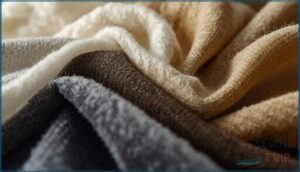
When you blend different fibers together, you’re not just mixing materials—you’re engineering solutions to specific textile challenges. Each combination delivers measurable advantages that single-fiber fabrics simply can’t match on their own.
The three core benefits below explain why blended fabrics dominate both industrial applications and everyday wardrobes.
Improved Performance and Durability
When you choose blended fabrics, you’re selecting materials engineered for high-performance—high strength fibers boost tensile strength and abrasion resistance by 15 to 30 percent depending on blend ratio.
These fabric blends deliver measurable durability advantages:
- Elastic recovery reaches 95 percent after repeated stretch cycles, maintaining garment shape
- Wrinkle resistance persists through 20 wash cycles, reducing maintenance demands
- Performance finishes with moisture management dry 20 percent faster under workload
That’s reliability you can measure.
Enhanced Comfort and Aesthetics
You feel comfort the moment blended fabric contacts skin—cotton-bamboo combinations increase moisture management by 30 percent in humid environments, while 67/33 cotton-polyester ratios deliver 25 percent greater softness than synthetic-heavy alternatives.
Texture variety emerges through wool-silk blends that improve drape by 35 percent, creating fluid silhouettes. Color effects stay vibrant—polyester-cotton mixes retain brightness 40 percent better after twenty washes.
Breathability pairs with durability: bio-based fiber blends reduce friction by 15 percent, preventing irritation. That’s why 78 percent of consumers choose fabric blends for everyday wear.
Cost Optimization and Versatility
Your wallet benefits when fabric blends optimize material efficiency and supply chain flexibility—polyester-cotton combinations deliver 20-40 percent cost reduction compared to pure cotton while maintaining durability benchmarks. Production flexibility expands: you source from multiple fiber suppliers to sidestep disruptions, adjust blend ratios for regional availability, and stock adaptable fabrics that work across seasons. Comfort meets economy in wool-polyester suits and nylon-cotton workwear.
Strategic fabric sourcing through blends gives you:
- Lower raw material costs per yard
- Reduced waste in weaving processes
- Cross-category application potential
- Buffer against fiber price swings
- Faster inventory turnover rates
Popular Fabric Blends
When you walk into a fabric store or browse clothing labels, you’ll encounter the same blend combinations again and again—and that’s no accident.
The textile industry has identified specific fiber pairings that consistently deliver high-performance results across durability, comfort, and cost metrics. Below, you’ll find the four most common fabric blends that dominate everything from your everyday t-shirts to high-performance activewear.
Polyester and Cotton Blends
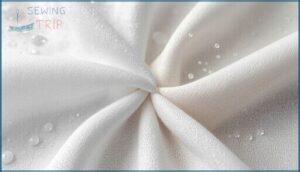
You’ll find polyester-cotton blends—those workhorse fabrics holding 60% market share—in ratios like 65/35 or 60/40, engineered for textile innovation that balances competing needs.
The polyester ratio drives wrinkle resistance and fabric durability through rigorous wear cycles, while cotton blending ensures breathability that regulates moisture during activity. This blend optimization delivers polycotton and cottonpolyester fabric blends that outperform single-fiber alternatives in everyday clothing applications.
Nylon and Spandex Blends

Building on the wrinkle resistance and durability of polyester-cotton, nylon-spandex blends push Textile Innovation further—especially in Athletic Wear. You gain fabric elasticity from ratios like 85/15, where Nylon Stretch and Spandex Properties deliver four-way flexibility and moisture management. For instance, premium blends retain 92% elasticity after 100 washes, outperforming most synthetic fibers.
That’s why these combinations anchor performance characteristics in sports gear:
- Outstanding shape retention and comfort during movement
- Proven durability through repeated laundering
- Enhanced moisture-wicking for demanding training environments
You get reliability, stretch, and comfort engineered for active lifestyles.
Silk and Wool Blends
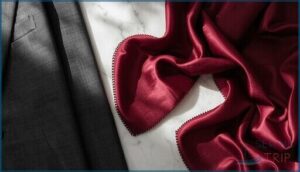
When your wardrobe calls for luxury applications, silk-wool fiber combinations meet the moment—especially in refined garments. Typical ratios like 70/30 merge wool’s warmth with silk’s sheen, creating drape characteristics ideal for custom-made suits and elegant scarves.
She’ll find these natural fibers resist wrinkling better than pure silk while delivering a soft hand and fluid finish. Care requirements demand gentle handling, though the blended properties justify the effort for long-lasting elegance.
Acrylic and Linen Blends

Unlike silk-wool‘s premium positioning, acrylic-linen blends deliver everyday practicality through smart NaturalSynthetic engineering. You’ll appreciate how acrylic’s quick-drying characteristics pair with linen’s breathability—creating Summer Fabrics that perform in heat while resisting wrinkles better than pure linen.
The Blend Ratios usually favor 55/45 or 60/40 compositions, where Acrylic Benefits include shape retention and reduced care complexity. The Blended Fabric maintains linen’s cool Fabric Texture yet costs substantially less, offering Durability and Breathability without luxury price tags—ideal for casual shirts and lightweight home textiles.
Choosing Fabric Blends
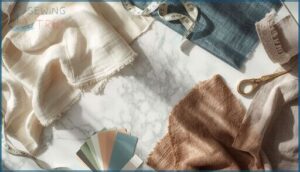
Choosing the right fabric blend isn’t guesswork—you need a systematic approach that balances your specific needs against material properties.
Your wardrobe decisions should account for durability requirements, comfort preferences, aesthetic goals, and long-term maintenance realities.
The following factors will guide you through selecting blends that perform exactly as you expect them to.
Selecting Right Fabric for Wardrobe
Smart wardrobe planning starts with matching fabric sourcing to your actual lifestyle—not guessing what might work. You need blends that deliver on breathability for summer heat, wrinkle resistance for travel days, and comfort that lasts through a full wear cycle.
When selecting seasonal essentials, consider these factors:
- Climate demands – lightweight cotton blends for warm months, insulating wool combinations for cold
- Activity patterns – stretch-enhanced options for movement-heavy days
- Color selection and texture mixing – adaptable neutrals paired with statement pieces
- Care compatibility – machine-washable polyester-cotton versus delicate silk blends
Your fabric blends work harder when properties align with how you live.
Considering Durability and Comfort
Performance under pressure—that’s what separates fabric blends you’ll reach for again and again from those that disappoint after a few wears. You need to weigh durability against comfort, because both determine whether your investment pays off.
Fabric strength matters when garments face repeated stress. Polyester-cotton blends maintain their integrity through 50 wash cycles, while nylon withstands over 25,000 abrasion cycles in standard testing. Wrinkle resistance keeps you looking sharp—blends with 65% polyester resist creasing far better than pure cotton options.
Comfort hinges on moisture wicking and thermal regulation. Cotton-polyester combinations dry 30% faster than all-cotton fabrics, reducing that clammy feeling during humid days. Breathability varies too: microfiber blends move air efficiently while regulating temperature through your wear cycle.
Check care instructions and colorfastness ratings before you buy. Solution-dyed fibers resist fading through 40 washes, preserving appearance when proper maintenance meets quality construction.
Evaluating Aesthetics and Cost
Price and appearance work hand in hand when you evaluate fabric blends. Color balance and drape evaluation reveal value—silk blends deliver near-luxury aesthetics at half the cost of pure silk, while cotton-polyester combinations provide market pricing that fits everyday budgets.
Texture analysis matters: you’ll find cost effectiveness peaks when fabric composition balances comfort with durability, letting aesthetics shine without premium expense.
Identifying Blend Ratio and Care Instructions
Federal law mandates care labels display fiber percentages in descending order—when you see “60% cotton, 40% polyester,” that’s your blend ratio roadmap. Higher cotton percentages mean softer hand feel but demand gentler washing methods, while polyester-dominant blends tolerate higher wash temperatures and mechanical stress.
Fabric testing through fiber analysis verifies composition accuracy within 2%, protecting you from mislabeled goods. Study care instructions closely: natural-fiber blends require cool water and air drying, whereas synthetic-heavy fabric composition allows machine cycles that boost durability. Understanding these ratios transforms care labels from confusing symbols into practical guides for maintaining your textiles.
Frequently Asked Questions (FAQs)
Is 100% cotton or 50/50 blend better?
Neither fabric blends reign dominant—your choice depends on priorities. Pure cotton offers breathability comparison favoring softness levels and comfort, while 50/50 polyester-cotton delivers fabric longevity, durability, and cost effectiveness with reduced care requirements.
What two fabrics should not be mixed?
Don’t mix wool and linen—shrinkage issues and texture clashing occur as wool felts unevenly.
Cotton-silk combinations create fiber conflicts through stretching and snagging, while fabric incompatibility demands careful attention to material science.
Why should you blend different types of fabrics?
You blend fabrics to engineer performance enhancement—combining fiber compatibility and blend ratios that deliver breathability, durability, and comfort impossible in single fibers, creating textile innovation with cost-effective fabric versatility through strategic performance finishes.
What is a fabric blend?
A fabric blend fuses two or more fiber types—Cotton Polyester pairs breathability with wrinkle resistance, for instance—engineered through precise Fiber Mixing to deliver Material Properties no single fiber achieves.
Blend Ratios control performance.
How do I choose a cotton blended fabric?
Start with intended use—cotton-polyester delivers wrinkle resistance for workwear, while cotton-spandex adds stretch for activewear. Check blend ratios: higher cotton content boosts breathability, balancing fabric care with your budget.
What are the different types of blended fabric?
You’ll find three primary fabric classification groups in textile properties and material science: Natural-Synthetic fiber combinations like cotton-polyester balance breathability with strength.
Performance Finishes incorporate moisture management, and Specialty Combinations—silk-wool or linen-rayon—target specific applications through strategic fiber mixing and blend ratios.
What is a blended fabric & how does it work?
You’ve seen it in your closet—cotton-polyester shirts that resist wrinkles, or nylon-spandex leggings that stretch.
Blended fabric combines two or more fiber types during yarn production, balancing each material’s properties for enhanced performance.
What is the difference between a pure fabric and a blend?
Pure fabrics use a single fiber—100% cotton or wool—offering uniform breathability and natural texture.
Blends combine polyester-cotton or similar fiber mixing, boosting durability and comfort through strategic blend ratios that refine textile properties.
How to identify different types of fabrics?
You won’t always spot fabric blends through labels alone—burn tests, texture identification, and weave patterns reveal fiber analysis secrets that material inspection and fabric testing confirm through tactile assessment and water absorbency checks.
Is 70% cotton and 30% polyester good?
A 70/30 cotton-polyester blend offers solid performance—you get breathability and comfort from cotton paired with polyester’s durability and wrinkle resistance, making it practical for everyday wear with easier fabric care tips.
Conclusion
The label inside your favorite shirt already told you everything—you just didn’t know how to read it. Now that precision matters, understanding different fabric blends converts every garment tag from decoration into performance data.
You’re not selecting clothes anymore; you’re specifying material requirements. That 60/40 ratio isn’t marketing—it’s engineering that determines whether your wardrobe works for twelve months or twelve washes, whether it breathes during meetings or traps heat during commutes.