This site is supported by our readers. We may earn a commission, at no cost to you, if you purchase through links.

Choosing upholstery fabric isn’t about picking what looks pretty in a showroom—it’s about matching material to the reality of how you live. A cream-colored silk damask might look stunning on a designer sofa, but place it in a family room with two kids and a golden retriever, and you’ve just made an expensive mistake.
The fabric you select determines whether your furniture survives five years of real life or looks worn out in six months. Thread count, fiber content, cleaning codes—these aren’t just technical details, they’re the difference between upholstery that works for your space and fabric that fights against it.
Getting fabric selection for upholstery right means understanding how durability, maintenance, and lifestyle factors work together to create furniture that looks good and lasts.
Table Of Contents
Key Takeaways
- You need to match fabric to your actual lifestyle—not showroom aesthetics—by weighing durability, cleaning codes, and usage patterns against factors like kids, pets, sunlight exposure, and traffic levels in each space.
- Natural fabrics like cotton and linen offer breathability and comfort but demand higher maintenance and stain protection, while synthetics like microfiber and polyester blends deliver superior stain resistance and durability for high-traffic or pet-friendly homes.
- Thread count alone doesn’t guarantee performance—fiber content, weave density, and protective treatments matter more for real-world longevity, with performance fabrics achieving 99% stain resistance and 25,000+ double rubs in abrasion testing.
- Smart fabric selection calculates cost per year of use rather than initial price, since a $15 microfiber lasting ten years beats $8 cotton requiring replacement in three, and regular maintenance like weekly vacuuming and immediate spill blotting extends fabric life by 20-40%.
Factors Influencing Upholstery Fabric Choice
You can’t just walk into a showroom and pick the prettiest fabric—not if you want furniture that actually works for your life. The right upholstery choice depends on where you’ll use it, how hard you’ll use it, and what you’re willing to spend.
Let’s break down the three factors that’ll steer your decision in the right direction.
Furniture Usage and Location
Traffic patterns dictate everything. You can’t fake durability in a high-traffic zone—your upholstery fabric either survives or it doesn’t. Here’s what spatial planning demands:
- Living rooms need abrasion-resistant fabrics for constant casual use
- Sunlit spaces require UV-resistant materials to prevent fading
- Outdoor furniture faces weather extremes demanding specialized protection
- Formal dining chairs allow delicate fabric choices with lighter wear
- Room layout determines stain resistance priorities based on function.
Effective fabric selection requires considering clear science information to guarantee durability and aesthetic appeal.
Household Lifestyle and Needs
Your family dynamics and daily habits shape every fabric decision you make. Busy households with kids demand stain resistance and durability that won’t quit, while pet owners need pet-friendly materials that handle fur and accidents without complaint. If you’re juggling both, lifestyle choices narrow fast—microfiber and performance blends become non-negotiable.
Family-friendly fabric care means choosing materials that survive real life, not just look good on day one. Understanding the main topic and its subtopic branches can help in making informed decisions about fabric selection.
Budget and Cost Considerations
Price per yard tells just part of the story. Smart budget planning for upholstery fabric weighs upfront fabric pricing against maintenance costs and lifetime value—a $15 microfiber that lasts ten years beats $8 cotton needing replacement in three.
Smart upholstery budgeting weighs total lifetime value against purchase price, not just the cost per yard
For sustainable fabrics with real durability, calculate cost per year of use, not just the initial invoice, and your fabric selection suddenly makes financial sense.
Comparing Natural Upholstery Fabrics
Natural fabrics bring texture, comfort, and timeless appeal to your furniture, but each one performs differently under real-world conditions. You’ll want to weigh the trade-offs between beauty and practicality before committing to cotton, linen, wool, or silk.
Here’s how these classic materials stack up so you can choose with confidence.
Cotton: Pros and Cons
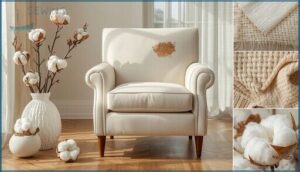
Cotton stands out among natural fibers for its fabric softness and natural breathability, making it comfortable year-round.
When choosing the right upholstery fabric, cotton offers versatility through various weaves and cotton blends that improve cotton durability. However, this upholstery fabric absorbs moisture readily, compromising stain resistance.
You’ll need protective treatments or higher thread counts to boost performance in your fabric selection strategy.
Linen: Features and Suitability
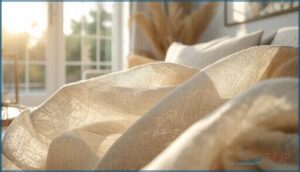
Linen brings serious textile durability thanks to flax fibers with high tensile strength, plus breathability factors that keep seating cool in warm spaces. This natural fiber resists UV damage better than cotton, though its textured surface shows wrinkles easily. Fabric blending with synthetics or cotton improves softness while preserving linen benefits.
Here’s what makes this upholstery fabric stand out:
- Outstanding moisture-wicking keeps you comfortable
- Strong fibers withstand regular use when properly woven
- Natural irregularities create relaxed, casual aesthetics
- Good colorfastness in sunlit rooms
- Fabric properties develop character over time
Wool: Durability and Comfort
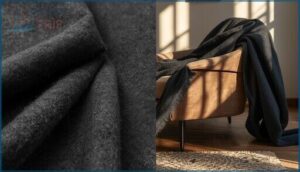
Wool fibre delivers serious fabric resilience, resisting abrasion better than most natural fibres thanks to its scale structure and natural insulation properties. High-twist yarns boost durability in low-to-moderate traffic zones.
You’ll find breathable upholstery in merino blends with soft textures that hide wear patterns. This natural fiber’s breathability keeps seating comfortable year-round, and wool blend options balance fabric durability with easier maintenance routines.
Silk: Luxury and Maintenance
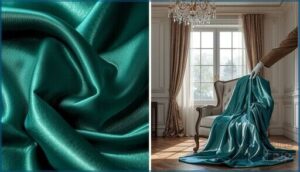
Silk fabric care demands attention, but that natural sheen and cool-to-the-touch luxury upholstery feel justify the effort in formal spaces. You’ll need professional silk maintenance to avoid water spots and fiber damage, since high-end fabrics like silk show lower abrasion resistance than synthetics.
This upholstery fabric excels in low-traffic settings where fabric durability takes a back seat to visual drama and refined texture.
Exploring Synthetic Upholstery Fabrics
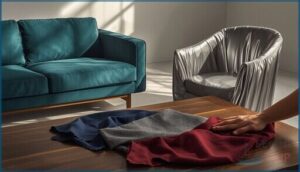
Synthetic fabrics have revolutionized upholstery by offering performance features that natural fibers can’t match. You’ll find options engineered for stain resistance, fade protection, and durability that can handle whatever your household throws at them.
Let’s break down the most popular synthetic choices and what makes each one worth considering.
Polyester, Acrylic, and Microfiber
When you want fabric durability without the fuss, synthetic fabrics deliver. Here’s what sets polyester, acrylic, and microfiber apart:
- Polyester treatments boost stain resistance and colorfastness, making daily-use furniture practical
- Acrylic finishes mimic wool’s softness while resisting UV fading in sun-exposed rooms
- Microfiber care stays simple—water-based cleaning manages most spills
- Synthetic blends balance performance with budget-friendly pricing
Your fabric selection guide starts with understanding these workhorses.
Olefin and Nylon Blends
Olefin nylon blends give you the best upholstery fabric selection guide advantage: nylon durability meets olefin benefits in one powerhouse material. These fabric blends usually use 60–80% olefin with 20–40% nylon, creating synthetic fabric upholstery that withstands 20,000–40,000 double rubs in performance testing.
You’ll get excellent stain resistance from olefin’s hydrophobic fabric properties and characteristics, while nylon adds stretch and abrasion defense. Blend ratios matter—more olefin means lighter weight and colorfastness, while higher nylon content delivers strength for high-traffic pieces.
Performance and Stain Resistance
Performance fabrics transform your upholstery fabric selection guide with military-grade stain resistance—some microfiber benefits include blocking 99% of household spills. You’re looking at synthetic treatments that deliver water repellency through fluorine-free finishes, proven in 50+ wash cycles while maintaining fabric durability.
Top stain resistant fabrics features:
- Crypton-branded textiles: 99.9% stain resistance against coffee and wine
- Microsuede options: spot-clean with mild detergent, no dye transfer
- Performance fabrics: 25,000+ double rubs in abrasion testing
- Indoor-outdoor materials: colorfastness ratings of 4-5 after 1,000 light-exposure hours
Fabric protection technology means you control maintenance, not the other way around.
Key Fabric Properties to Evaluate
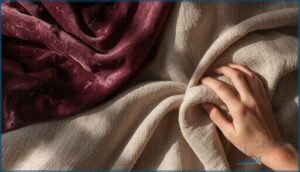
Beyond choosing between natural and synthetic materials, you need to evaluate specific fabric characteristics that determine how your upholstery performs in real life. The right combination of properties ensures your furniture looks great and stands up to daily demands without constant worry.
Here are the essential fabric traits that separate smart investments from regrettable purchases.
Durability and Thread Count
Thread count gets attention, but it’s not the whole story when you’re sizing up upholstery fabric durability. Higher thread count often means tighter weave patterns and better wear resistance, but fiber longevity depends on what those threads are made of.
A mid-count synthetic blend can outlast high-count cotton in heavy-use spots. Dense fabric construction paired with resilient fibers is where real fabric durability lives.
Stain Resistance and Cleanability
Fabric finishes like Scotchgard Fabric and Upholstery Protector change the game for stain resistance, creating barriers that keep spills on the surface instead of soaking in. Cleanability tests using coffee, wine, and ink show how well upholstery fabric manages real-world accidents.
Microfiber and olefin ace soil resistance, while cotton needs aggressive spot cleaning.
Check fabric care labels for stain removal methods—they’ll tell you if your fabric can take the heat or needs gentler treatment.
Color, Pattern, and Texture Impact
Once you’ve nailed stain resistance, color psychology and texture contrast take center stage—darker shades and multi-tone weaves mask wear better than pale solids. Pattern mixing adds visual hierarchy, but large florals demand precise alignment.
Textured weaves like herringbone create aesthetic balance while hiding dust. Choosing the right fabric means balancing decorative appeal with real durability, so your upholstery fabric looks sharp longer.
Fabric Weight and Breathability
Beyond aesthetics, heavyweight fabrics over 14 oz/yd² deliver exceptional durability and abrasion resistance, though they sacrifice breathability—measured through air permeability tests in CFM/ft².
Natural fibers like cotton balance moisture management with comfort, while tightly woven synthetics trap heat.
Fabric density affects long-term seating comfort, especially in warm climates. Smart fabric selection means weighing weight limits against breathable fabrics for upholstery that performs.
Maintenance Tips for Upholstery Fabrics
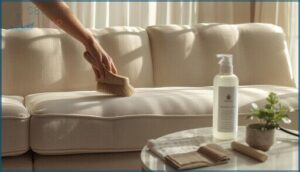
Choosing the right fabric is only half the battle—keeping it looking good takes the right approach. Your upholstery’s lifespan depends on understanding how to care for it properly, from daily habits to knowing when a professional should step in.
Here’s what you need to master fabric maintenance and keep your furniture in top shape.
Cleaning Codes and Methods
Before you tackle any spill, check the cleaning symbols on your upholstery tag—they’re your roadmap to safe fabric care. Water-based methods suit most cotton blends, while solvents handle oily stains on synthetics.
Always do fabric testing in a hidden spot first, then blot spills from the edges inward. For stubborn marks, stain removal products matched to your fabric type work wonders, and professional cleaning solves the toughest challenges.
Regular Care and Longevity
Consistent upholstery fabric care boosts durability by 20–40%, turning maintenance into your secret weapon. Protect your investment with these power moves:
- Vacuum weekly with a soft brush to remove abrasive dirt
- Blot spills immediately to prevent deep staining
- Rotate cushions monthly for even wear patterns
- Shield from direct sunlight to maintain color fastness
Strategic care schedules slash maintenance costs while preserving stain resistance across all fabric types.
When to Seek Professional Cleaning
Professional care becomes essential when stubborn stains resist home methods or your fabric bears “S” or “X” cleaning codes.
Schedule deep cleanings every 12–24 months to preserve stain resistance and prevent damage—especially in high-traffic zones with pets or kids.
These expert cleaning schedules maintain fabric restoration while protecting warranties, turning maintenance requirements into smart upholstery fabric care investments that extend your furniture’s lifespan.
Frequently Asked Questions (FAQs)
Can upholstery fabric cause allergies or sensitivities?
Yes, upholstery fabric can trigger fabric allergies, skin irritation, and dermatitis reactions. Chemical sensitivities from dyes, finishes, or flame retardants in synthetic fibers and natural fibres may cause respiratory issues in susceptible individuals.
How does sunlight affect different fabric types?
Sunlight triggers UV damage in upholstery, causing fabric fading and weakening fibers. Synthetic fibers like acrylic offer enhanced lightfastness testing results and UV resistance, while natural fibers—cotton, linen, silk—lose durability faster without protection or UV-resistant fabric treatments.
Are there eco-friendly or sustainable upholstery options?
Gentler-on-the-planet choices abound: recycled textiles, organic cotton, and biodegradable fabrics offer sustainable upholstery options.
Green upholstery with eco-friendly textiles and sustainable materials transforms your space while respecting environmental impact through responsible weaving practices.
Whats the best fabric for pet owners?
Choose tightly woven microfiber or polyester blends for outstanding pet hair removal and stain resistance.
These pet-friendly fabrics offer remarkable durability, minimal odor retention, and easy maintenance—perfect for upholstery fabric selection in active households.
Can you mix different fabrics on one piece?
You can absolutely mix fabrics on one piece—think contrasting cushions or piping. Just match durability, coordinate colors, and verify compatible cleaning codes.
Pattern blending with texture contrast creates visual interest while maintaining seam integrity.
Conclusion
Most people choose upholstery fabric with their eyes—you’ll choose it with your brain. Understanding durability ratings, fiber behavior, and cleaning codes transforms fabric selection for upholstery from guesswork into strategy.
That microfiber withstands your toddler’s juice boxes, while silk demands white-glove treatment. Cotton breathes beautifully but stains easily. Wool resists wear but costs more upfront.
Know the trade-offs, match fabric to function, and your furniture won’t just look good today—it’ll survive your actual life tomorrow.