This site is supported by our readers. We may earn a commission, at no cost to you, if you purchase through links.
Pick the wrong fabric for a bag, and it bags—literally droops, stretches, and loses its shape after a few uses.
Pick the right one, and that tote you sewed two years ago still looks sharp on your shoulder.
Most makers focus heavily on design and forget that fabric does the real structural work.
Cotton canvas holds its form under weight.
Full-grain leather toughens with age.
Ripstop nylon laughs at rain.
Your fabric choice for accessories determines how something feels on day one and how it holds up on day five hundred.
Knowing which material suits which project is the difference between making and making well.
Table Of Contents
Key Takeaways
- fabric choice is the real structural decision in accessory-making — get it wrong, and even a well-designed piece droops, stretches, and falls apart within months.
- Natural fibers like cotton canvas, linen, and full-grain leather bring breathability and character that deepens over time, while synthetics like nylon and recycled polyester win on durability, water resistance, and low maintenance.
- Matching fabric to the specific accessory — canvas for totes, full-grain leather for wallets, elastomeric knits for headbands — is what separates a piece that holds up from one that just holds together.
- Sustainable options like organic cotton, hemp‑linen blends, and recycled polyester don’t ask you to trade performance for values — they deliver both, often at beginner-friendly price points.
Best Fabrics for Sewing Accessories
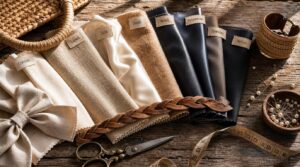
Picking the right fabric is honestly half the battle regarding making accessories that hold up and look great. Each material brings something different to the table — its own feel, strength, and personality. Here are five solid options worth knowing before you cut your first piece.
Before you commit to any material, it helps to brush up on how fabric choice affects sewing shorts so you know exactly what you’re working with.
Cotton Canvas
Cotton canvas is one of the most reliable fabrics you can reach for when sewing accessories. Its plain weave structure creates a grid‑like texture that’s sturdy, holds shape well, and looks great on everyday bags and totes.
Always prewash before cutting — cotton shrinks, and managing that upfront saves your finished piece from warping later.
Its natural water resistance adds durability for outdoor use.
Linen
Linen is a natural, breathable fabric worth keeping in your sewing rotation. Derived from flax, it wicks moisture fast, stays cool against skin, and gets softer with every wash — without losing its structure.
Here’s what makes linen stand out for accessories:
- Tensile strength holds up even when wet
- Absorbs up to 20% of its weight in moisture without feeling damp
- Resists pilling, keeping surfaces smooth over time
- Accepts dye beautifully for rich, lasting color
- Fully biodegradable, making it a sustainable fabric choice
Denim and Twill
If linen is the breezy summer friend, denim and twill are the reliable workhorses of your fabric stash. Both use a diagonal twill weave that builds abrasion resistance right into the structure — making them excellent picks for bags, headwear, and straps that take daily punishment.
Denim’s indigo dye process creates that iconic fading over time, giving accessories a lived-in character no synthetic can replicate.
Leather and Faux Leather
If denim and twill are your tough daily drivers, leather is the luxury upgrade that ages like a fine wine. Real leather’s natural grain means no two pieces look identical — and over time, leather patina builds a rich, personal character that synthetic fabrics simply can’t replicate.
Leather ages like fine wine — its natural grain and deepening patina create a character no synthetic can replicate
- Full-grain leather offers the highest durability and develops the most beautiful patina
- Faux leather care is simple: a quick wipe with mild soap keeps it looking fresh
- Edge reinforcement is easier with real leather, as it holds stitching and burnishing well
- Ethical production matters — look for chrome-free tanning or certified sustainable sources
- PU-based faux leather provides consistent thickness and color, ideal for wallets and pouches
Faux leather won’t crack your budget, and modern PU options drape surprisingly well. Just keep both materials out of direct sunlight to preserve their appearance longer.
Nylon and Polyester
Nylon and polyester are the workhorses of synthetic fabrics — reliable, tough, and built for real-world use. Nylon’s elongation properties mean it flexes under stress without tearing, while polyester’s hydrophobic behavior keeps moisture moving away fast.
For fabric selection for accessories like bags and straps, both offer excellent durability, UV resistance, dye retention, and even recyclability potential.
Natural Versus Synthetic Fabrics
Choosing between natural and synthetic fabrics is one of those decisions that shapes everything — how your accessory feels, holds up, and performs over time. Both camps have real strengths, and knowing where they differ helps you pick with confidence. Here’s how they stack up across the factors that matter most.
Natural fabrics like cotton can surprise you with quirks like dye bleeding, so it’s worth knowing how to prewash different fabric types before your project gets underway.
Breathability and Comfort
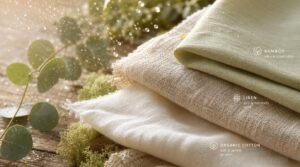
Think of breathability as your fabric’s ability to "exhale" — and natural fabrics do it best. Cotton and linen allow generous airflow, keeping accessories cool and comfortable against skin. Merino and bamboo blends handle moisture wicking beautifully, pulling sweat away fast. Synthetics can manage moisture too, but often trap heat.
- Organic cotton: hypoallergenic, breathable, gentle on sensitive skin
- Linen: releases moisture faster than cotton, ideal for warm-weather wear
- Bamboo blends: soft, eco-friendly, excellent moisture management
Strength and Wear
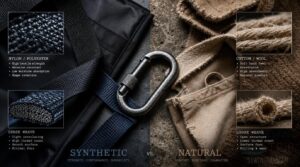
When durability is on the line, synthetic fabrics pull ahead. Nylon’s high tensile strength and abrasion resistance make it a go-to for bags and straps that take daily punishment. Natural fabrics like cotton and wool offer warmth and comfort, but wear out faster under friction. Blended fabrics often hit the sweet spot — pairing fiber elasticity with impact durability.
| Fabric Type | Wear Resistance |
|---|---|
| Nylon | High |
| Cotton Canvas | Moderate |
| Cotton-Poly Blend | Good |
Water Resistance

Water is the real test for any accessory fabric. Here’s how different materials hold up:
- Hydrophobic coatings bead water on synthetic surfaces, buying you time in a drizzle.
- Seam sealing blocks moisture entry at stitched joints.
- Waterproof membranes create a full barrier without sacrificing flexibility.
- Natural fabrics absorb moisture quickly but dry slowly.
- Synthetic fabrics stay quick-drying and maintain water resistance longer.
Wrinkle Resistance
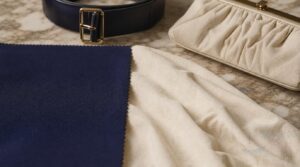
Wrinkle resistance is one of those quiet dealbreakers — nobody notices until a bag or belt looks crumpled after one outing.
Synthetic fabrics like polyester win here naturally, thanks to high fiber elasticity that snaps the material back flat.
Blended fabrics — cotton-polyester especially — strike a smart balance, borrowing polyester’s wrinkle recovery while keeping cotton’s comfort.
Sensitive Skin Considerations
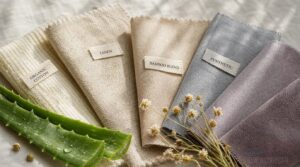
If your skin is prone to reacting to fabrics, natural fibers are usually your safest starting point.
Organic cotton, linen, and bamboo‑spandex blends are naturally gentle, especially with organic certification confirming no harsh finishing chemicals.
Watch for dye sensitivity too — reactive dyes and prewashed fabrics reduce irritation risk.
Flat seam construction and moisture‑wicking properties keep friction and dampness from compounding the problem.
Match Fabric to Accessory Type
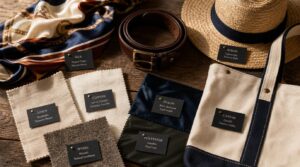
Not every fabric works for every accessory — a great scarf fabric might fall apart as a belt, and what holds up in a bag won’t always suit a hat.
The right match comes down to how each accessory moves, wears, and takes on daily stress.
Here’s how to pair your fabric to the job it actually needs to do.
Bags and Totes
Regarding bags and totes, your fabric choice makes or breaks the finished piece. Canvas tote durability is hard to beat for everyday use — medium-weight cotton canvas holds its shape, carries a full load, and looks great doing it. Add waxed canvas if you want nylon quick-dry-level spill resistance without going fully synthetic.
Leather tote patina develops beautifully over time, giving structured bags a lived-in richness that only gets better with use. For travel or gym bags, nylon’s water resistance keeps contents protected, while recycled tote sustainability lets you build something functional and responsible. A structured tote shape benefits from fusible interlining — it keeps everything looking polished, even when empty.
Wallets and Pouches
Wallets and pouches demand a tighter focus than bags — every millimeter matters. Full-grain leather remains the industry standard here, developing a rich patina while holding up to daily friction.
For a slim profile, ripstop nylon or waxed canvas keeps bulk down without sacrificing structure.
Don’t overlook RFID blocking fabric layers — a smart, subtle addition that protects your cards without changing the look.
Hats and Headbands
From wallets, the shift to hats and headbands means thinking less about millimeters and more about structure and wearability.
Crown construction shapes how a hat holds up over time. For structured hats, cotton canvas or twill works well — it holds interfacing cleanly and resists bending out of shape.
Ventilation design matters more than people expect. Mesh panels or eyelets keep airflow moving, making breathability a real functional feature, not just a nice-to-have.
For headbands, elastomeric or bamboo-blend knits offer gentle stretch and stay comfortable for hours.
- Merino wool suits cold-weather beanies — it wicks moisture and insulates naturally.
- 420D nylon supports structured outdoor hats with durability and weather resistance.
- Foam-padded headbands reduce pressure and keep the band from slipping mid-wear.
Adjustable hat bands using buckles or Velcro add a practical sizing range of 2 to 6 centimeters, making your finished piece work for more people.
Scarves and Wraps
From hats, scarves and wraps ask a different question entirely: how does this feel against bare skin?
Satin drape gives scarves a glossy, fluid fall, while crinkle texture adds easy volume without weight. Pashmina warmth suits cold evenings, gauze breathability works for summer layers, and boucle grip adds edge interest. Match the fabric to the moment, and your scarf does the rest.
Belts and Straps
Belts and straps live at the intersection of function and wear.
Full-grain leather is the classic choice — it withstands daily tension well and develops a leather patina that actually improves with age.
For adjustable fit, a ratchet-style buckle paired with nylon webbing gives you flexibility without punching extra holes.
Strap width matters too: dress belts run narrower, casual ones wider.
Zinc alloy or stainless steel buckle materials resist corrosion reliably.
Key Fabric Performance Factors
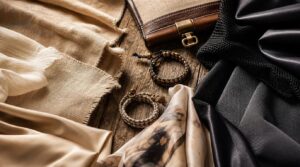
Choosing the right fabric isn’t just about looks — it’s about how the material actually performs once it’s in someone’s hands. Before you commit to a fabric, there are a few key factors worth checking off. Here’s what to evaluate as you make your decision.
Fabric Weight
Fabric weight shapes how your accessory looks, holds up, and feels in everyday use. Measured in GSM (grams per square meter), it tells you how heavy a fabric is per area.
Lightweight fabrics below 170 GSM drape beautifully for scarves, while midweight fabrics from 170–340 GSM suit structured bags and pouches.
Heavyweight options above 340 GSM deliver the durability your belts and totes need.
Drape and Structure
Drape quality and shape retention work hand in hand to determine how polished your finished accessory looks. A fabric that drapes well settles smoothly under gravity, creating clean, uninterrupted lines. Structural support keeps silhouettes from collapsing over time.
Here’s what drives drape and structure:
- Heavier weaves like canvas resist sagging and hold defined edges in bags
- Fabric softness in silk or rayon encourages fluid, elegant folds for wraps
- Fabric flexibility affects how straps and belts bend without losing their shape
- Silhouette stability improves when interfacing reinforces draped sections internally
Texture and Finish
Texture and finish quietly shape how people perceive your work before they even touch it.
A smooth gloss finish reads as polished and modern, though it shows every fingerprint.
Matte surface texture hides minor scuffs and reduces glare, making it ideal for everyday bags.
Embossed pattern design adds tactile depth, while pebbled grip texture improves handling on high‑use pieces like wallets and straps.
Stretch and Flexibility
Stretch can make or break an accessory’s fit. Spandex integration — even just 5 to 10 percent — gives fabric the ability to flex and snap back without sagging.
Knit stretch naturally outperforms wovens, since looped yarns move in multiple directions. Higher recovery speed means fewer wrinkles and a cleaner shape over time.
Color and Print Compatibility
Color behaves differently depending on what your fabric is made of. Natural fibers like cotton and linen absorb dye deeply, but they’re prone to color fastness issues over time.
Synthetics hold pigment more stubbornly.
Watch for metamerism effects — that annoying shift where two pieces match in sunlight but clash under store lighting.
Sustainable and Practical Choices
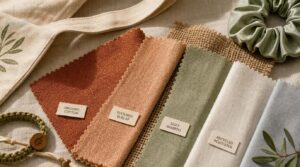
Choosing the right fabric doesn’t have to mean sacrificing your values or your wallet. Whether you’re drawn to eco-friendly materials or just want something that’s easy to wash and sew, there are solid options worth knowing. Here’s a closer look at the most practical sustainable choices available to you.
Organic Cotton
Few natural fibers check as many boxes as organic cotton. It’s grown without synthetic pesticides, relies on crop rotation, and meets strict GOTS certification standards — so you know exactly what you’re getting.
The fabric breathes well, stays soft after repeated washing, and accepts eco dyeing beautifully.
For accessories touching skin daily, that combination of breathability and sustainability is hard to beat.
Hemp and Linen Blends
If organic cotton is your comfort go-to, hemp and linen blends take sustainability a step further. Hemp needs little water and no pesticides, while linen comes from flax that’s fully biodegradable. Together, they create a durable, breathable fabric that genuinely earns its eco credentials.
The blend starts crisp but softens beautifully with wear — ideal for structured bags and pouches.
Recycled Polyester
Hemp and linen blends are a natural fit for eco-conscious sewing, but recycled polyester picks up where plant-based fibers leave off — especially when durability matters more than breathability.
Made from post-consumer plastic bottles, rPET delivers real waste diversion and carbon reduction without sacrificing performance. It holds its own against virgin polyester in every practical way:
- Fiber strength comparable to standard polyester, ideal for bags and straps
- Quick drying properties that suit active, everyday accessories
- Strong color retention through repeated washing
- Energy savings during production compared to virgin fiber manufacturing
If you want sustainable, eco-friendly fabric that genuinely works hard, recycled polyester is a smart, practical choice.
Easy-Care Fabrics
Recycled polyester proves that sustainable can mean low-maintenance too — and easy-care fabrics take that idea even further.
Blended fabrics like cotton-polyester dry two to four times faster than pure cotton and resist wrinkles straight out of the wash. Stain release technology repels everyday spills, while moisture management fabrics keep wearable accessories comfortable through long use.
| Feature | Natural Fabrics | Easy-Care Blends |
|---|---|---|
| Machine washable durability | Moderate | High |
| Low iron requirement | Low | High |
| Quick drying performance | Slow | Fast |
For busy makers, synthetic fabrics and smart blends mean less fussing, more creating.
Budget and Skill Level
Starting out doesn’t have to break the bank. Cotton canvas and denim cost as little as 2.50 euros per meter, while prewashed fabrics save you the headache of surprise shrinkage. Buying remnant fabric from sale bins keeps small projects affordable.
A solid beginner setup — machine included — usually runs 200 to 350 euros, leaving plenty of budget for materials.
Frequently Asked Questions (FAQs)
Can I mix different fabrics in one accessory?
Absolutely — and honestly, it’s one of the smartest moves you can make. Mixing fabrics lets you balance comfort, strength, and style. Just make sure your care requirements align so nothing gets ruined at the first wash.
How do I prevent fabric fraying on edges?
Fraying starts the moment you cut fabric. Use a zigzag stitch or serger overlock to seal edges fast. For synthetics, heat sealing works great. Delicate fabrics like silk need narrow zigzag or French seams.
Which fabrics work best for reversible accessories?
Medium-weight cotton blends and double-faced wovens are practically unbeatable for reversible accessories — they nail dual-sided selection effortlessly, keep layer alignment clean, and make every turn seam look intentional rather than accidental.
Do pre-washed fabrics shrink after making accessories?
Yes, but very little. Pre-washed fabrics release most tension upfront, so post-construction shrinkage stays minimal. Natural fibers may shift slightly; synthetics barely budge.
What interfacing pairs well with lightweight fabrics?
Even the tiniest interfacing mistake can completely ruin a lightweight fabric. Ultra-light non-woven (12–20 gsm) pairs best, preserving breathability and drape. For organic cotton or sheer synthetics, use sew-in interfacing to avoid heat damage.
How do fabric blends affect accessory longevity?
Fabric blends directly boost accessory longevity by combining the best of each fiber. Polyester adds tensile strength to cotton, while nylon resists moisture and abrasion, keeping your accessories looking better, longer.
Which fibers perform best in humid climates?
Linen airflow, cotton breathability, and bamboo cooling shine in humid climates. Linen’s hollow fibers wick moisture fast, hemp blends resist odor, and synthetic wicking pulls sweat away quickly, keeping you comfortable.
Can recycled materials match virgin fabric durability?
In short, yes. Recycled polyester retains 90–93% of its original tensile strength after 50 washes, and its abrasion resistance closely matches virgin fiber — making sustainable choices genuinely high-performance for your accessories.
How does yarn structure influence thermal insulation?
Yarn loft, twist level, and fiber diameter all shape how well a yarn traps heat. More air pockets mean better insulation. Moisture wicking matters too — damp fibers lose warmth fast.
Conclusion
Like a seasoned craftsperson who knows their tools by touch, you now have the knowledge to make fabric choice for accessories count from the first cut.
Natural fibers bring warmth and character; synthetics deliver resilience where it matters most. The difference between a bag that sags after a season and one that earns compliments years later often comes down to this single decision.
Choose with intention, and your work will show it.
- https://www.chicobag.com/articles/best-bag-material
- https://www.applegreencottage.com/what-fabrics-to-use-for-bagmaking
- https://insights.made-in-china.com/How-to-Maintain-Wallets-Caring-for-and-Meeting-User-Needs-in-Wallet-Longevity-and-Performance_tGrTZwPOCEId.html
- https://www.contrado.com/blog/10-eco-friendly-fabrics-revolutionizing-sustainable-fashion
- https://www.printful.com/blog/ultimate-guide-to-fabric-types