This site is supported by our readers. We may earn a commission, at no cost to you, if you purchase through links.
Your hands shouldn’t dictate whether you can fix a crooked seam. But when arthritis tightens its grip, even the smallest sewing tools become surprisingly difficult to control. Standard seam rippers demand precision pinching and sustained pressure that inflames already tender joints, turning a simple fix into a frustrating ordeal.
The good news is that seam rippers for arthritis exist with features specifically designed to reduce strain—padded grips that cushion your hold, larger diameters that require less force, and ergonomic shapes that let your hand rest in a neutral position. These thoughtful adaptations mean you can reclaim control over your sewing projects without paying for it later with stiff, aching fingers.
Table Of Contents
Key Takeaways
- Ergonomic seam rippers with padded grips, larger diameters, and soft rubber coatings reduce the pinch force and joint strain that standard tools cause for people with arthritis, letting you work longer without pain.
- Key features to prioritize include handles 30-40mm in diameter, sharp blades that cut cleanly on the first pass, safety balls that protect fabric, and lightweight construction under 1.75 kg to minimize hand fatigue.
- You can adapt standard seam rippers affordably by adding foam tubing grips or heat-shrink tubing to build up handle diameter, spreading force across your palm instead of stressing individual joints.
- Pairing an ergonomic seam ripper with other arthritis-friendly tools like lightweight rotary cutters, compact irons under 1.5 pounds, and magnetic needle threaders creates a complete adaptive sewing kit that multiplies your comfort.
Top 6 Seam Rippers for Arthritis
You don’t have to settle for a seam ripper that makes your hands ache after five minutes. The right ergonomic tool can transform frustrating seam removal into something you can actually manage comfortably.
Here are six seam rippers designed to work with your hands, not against them.
1. Ergonomic Seam Ripper Tool
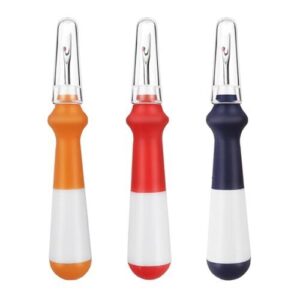
When arthritis makes every stitch removal a challenge, you need a tool built for your hands. An ergonomic seam ripper features a rounded, cushioned handle—usually around 5 inches long—that fits naturally in your palm without requiring a tight pinch grip.
The soft rubber coating provides grip stability even when your fingers won’t cooperate. This ergonomic design for arthritis pairs a sharp steel blade with minimal cutting force requirements, so you’re not fighting the fabric.
If you’re working on quilts or detailed projects, check out more seam rippers designed specifically for quilting to find tools built for precision fabric work.
It’s an assistive device that transforms seam removal from painful to manageable.
If you’re looking for more ways to keep your machine running smoothly, check out this guide on how to clean and maintain a sewing machine for helpful tips.
| Best For | Sewists with arthritis, carpal tunnel, or hand pain who need a comfortable grip for removing stitches without straining their fingers. |
|---|---|
| Ergonomic Design | Yes |
| Material | Stainless steel, rubber |
| Safety Ball | Yes (red mini ball) |
| Protective Cap | Yes |
| Arthritis Friendly | Yes |
| Size | 5.1 inch |
| Additional Features |
|
- Rounded, cushioned handle (around 5 inches) fits your palm naturally and reduces the need for tight pinching
- Soft rubber coating keeps the tool stable in your hand even when grip strength is limited
- Sharp steel blade with protective safety ball removes stitches efficiently while protecting your fabric from accidental cuts
- Round handle shape can roll off tables or work surfaces if you set it down
- Some units arrive with burrs on the blade tip that make it harder to slide under tight threads
- Durability varies—a few users report breakage after short-term use
2. Dritz Ergonomic Seam Ripper Tool
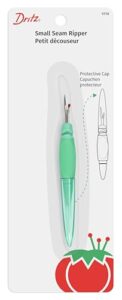
The Dritz ergonomic seam ripper combines fabric protection with hand comfort through its molded plastic handle and distinctive purple design. At 5.79 inches, this tool offers better leverage than slim models, while the rounded grip reduces strain on finger joints.
You’ll find the electronically ground blade stays sharp through countless seam removal tasks, and the safety ball tip won’t puncture your fabric. Priced at $11.79, it’s specifically marketed for arthritis and carpal tunnel users. The soft finger grips minimize the force you need to hold it securely during extended sewing sessions.
If you’re dealing with hand pain, pairing this with other ergonomic sewing tools and workspace adjustments can make hours at your machine feel effortless.
| Best For | Sewers with arthritis, carpal tunnel, or hand pain who need a comfortable seam ripper for extended use. |
|---|---|
| Ergonomic Design | Yes |
| Material | Man-made material |
| Safety Ball | Yes |
| Protective Cap | No |
| Arthritis Friendly | Yes |
| Size | 5.5 inches |
| Additional Features |
|
- Rounded, palm-filling handle reduces hand strain during long seam-removal sessions
- Electronically ground blade with safety ball tip protects fabric while staying sharp
- Larger 5.5-inch size provides better leverage and control than slim models
- No protective cap or storage case included with purchase
- Bigger size may feel awkward for users who prefer compact tools
- Some buyers report receiving dull blades despite the sharpness claims
3. Clover Ergonomic Seam Ripper Tool
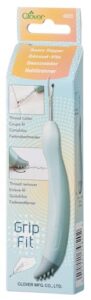
Clover’s ergonomic seam ripper, priced at $11.90, features a thick white handle that lets you rip seams cramp-free even with finger arthritis. The Japanese-made blade stays sharp through years of use, and the textured tip grabs threads precisely without damaging fabric.
If you’re comparing tools before you buy, check out this guide to seam rippers for professional tailors that breaks down blade types and handle styles.
Users with hand pain report this tool feels “totally comfortable” during long sewing sessions, though some find it bulky. The handle’s wider diameter distributes pressure across your palm, reducing joint stress.
Despite lacking a protective cover, its proven durability and arthritis-friendly design earn consistent five-star ratings from quilters.
| Best For | Sewists with arthritis or hand pain who need a sharp, comfortable seam ripper for frequent use. |
|---|---|
| Ergonomic Design | Yes |
| Material | Man-made material |
| Safety Ball | Yes |
| Protective Cap | No |
| Arthritis Friendly | Yes |
| Size | Large |
| Additional Features |
|
- Thick ergonomic handle reduces cramping and distributes pressure across your palm during extended seam ripping
- Japanese-made blade stays sharp through years of heavy use and cuts through stitches smoothly
- Textured tip grabs individual threads precisely, making stitch removal accurate and efficient
- Some users find the thick handle bulky or oversized compared to standard seam rippers
- At $11.90, it’s more expensive than most basic seam ripper options
- No protective cover or cap for the sharp point when not in use
4. Ergonomic Grip Seam Ripper Tool
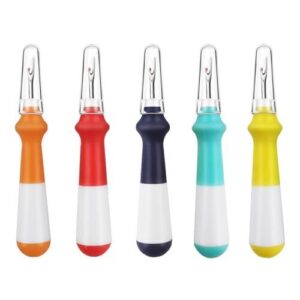
A well-designed ergonomic grip seam ripper transforms how you work with fabric when arthritis limits your hand strength. These tools feature soft, rubberized grips that reduce the pinch force you need by about 24 percent compared to slim models, letting you maintain control without squeezing hard.
The cushioned surface distributes pressure evenly across your fingers during seam removal, preventing localized joint stress. Look for a tapered grip around 10 mm in diameter—this shape decreases gripping effort by roughly a third, making repetitive tasks genuinely manageable instead of painful.
| Best For | People with arthritis or carpal tunnel syndrome who sew regularly and need a tool that reduces hand strain during seam removal. |
|---|---|
| Ergonomic Design | Yes |
| Material | Not specified |
| Safety Ball | No |
| Protective Cap | No |
| Arthritis Friendly | Not specified |
| Size | Not specified |
| Additional Features |
|
- Soft, rubberized grip reduces pinch force by up to 33% compared to standard seam rippers, letting you work longer without fatigue.
- Tapered handle design (around 10mm diameter) distributes pressure evenly across your fingers, preventing localized joint pain.
- Sharp stainless steel blade with protective ball cap minimizes cutting effort while preventing accidental fabric damage.
- Small protective caps can be easy to misplace during use or storage.
- Sharp pointed tips require careful handling to avoid injury, especially when swapping between tasks.
- Not safe for children to use due to the peaked blade design.
5. Ergonomic Seam Ripper Tool Set
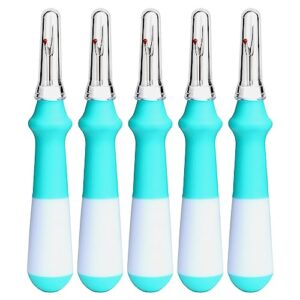
Building your sewing workspace with a complete ergonomic seam ripper tool set saves you from constant hand strain. These adaptive tools bundle a soft-grip seam ripper with other arthritis-friendly implements like ergonomic rotary cutters and needle threaders, creating coordinated setups that minimize cumulative stress during seam removal projects.
If you’re just starting out, check out these beginner quilting lessons to learn proper cutting and seam-ripping techniques from day one.
You’ll work longer without discomfort when every tool shares the same grip comfort philosophy. Many sewists with arthritis keep backup ergonomic grips at multiple workstations, ensuring assistive devices for arthritis are always within reach when you need gentle, controlled fabric work.
| Best For | Sewers with arthritis or hand pain who need a complete set of comfortable tools that work together to reduce strain across all sewing tasks. |
|---|---|
| Ergonomic Design | Yes |
| Material | Stainless steel, rubber |
| Safety Ball | Yes (red mini ball) |
| Protective Cap | Yes |
| Arthritis Friendly | Yes |
| Size | 5.1 inch |
| Additional Features |
|
- The soft-grip handles fit arthritic hands comfortably and let you work longer before fatigue sets in, with protective caps keeping blades safe when stored
- Sharp steel blades with safety balls remove stitches cleanly without damaging fabric, even when picking out small seams
- Bundling multiple ergonomic tools means you get matching grip comfort across your whole workspace instead of switching between comfortable and uncomfortable implements
- Some users report the blades aren’t as sharp as expected, especially on thicker fabrics
- The protective caps can crack or break if you’re not careful when putting them on and taking them off
- Buying a full tool set costs more upfront than replacing just one worn-out seam ripper
Comparison of Features and Prices
Smart shopping means weighing cost against comfort when you compare ergonomic seam rippers designed for arthritis. Here’s your quick reference guide:
- Budget-friendly options (Singer Comfort Grip sets) deliver two sizes for under $10, perfect for testing whether ergonomic designs help your hand pain.
- Mid-range picks (Dritz Large Ergonomic, Madam Sew Deluxe) cost $8-$15 and balance soft grips with sharp, durable blades that reduce cutting force.
- Premium ceramic models (Slice rippers) run around $21 but stay sharp 11 times longer than metal, potentially saving replacement costs over time.
User reviews consistently praise padded grips and lightweight construction as game-changers for extended sewing sessions. When choosing the right tool, consider the importance of seam ripper blades for effective and safe use.
Why Ergonomic Seam Rippers Help Arthritis
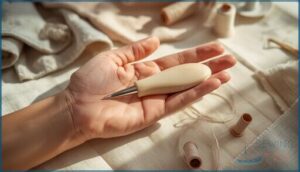
When arthritis makes sewing painful, the right seam ripper can be the difference between finishing your project and giving up halfway through. Ergonomic designs work with your body instead of against it, reducing the stress on already sensitive joints.
Here’s how these thoughtfully designed tools make seam ripping easier on arthritic hands.
Reduced Grip Strength Requirements
Your grip strength can drop by up to 55 percent when you have hand arthritis, making standard seam rippers a real challenge. That’s where ergonomic design makes all the difference. Adaptive tools with enlarged grips let you hold on without forcing your fingers into a tight grip, cutting the effort needed and protecting those small joints from extra strain.
Hand arthritis can slash your grip strength by 55 percent, but ergonomic seam rippers with enlarged handles let you work without straining sensitive joints
Using the right joint protection techniques can also help alleviate arthritis symptoms.
Padded Handles Minimize Joint Stress
Padded, cushioned grips work like a shock absorber for your hands. Soft foam or rubber handle materials spread pressure across a broader contact area, reducing those sharp pinch points on sensitive joints.
This ergonomic design feature makes seam ripper design for people with arthritis genuinely different—you can hold the tool comfortably without aggravating inflammation or tenderness. It’s joint protection built right into the handle materials, giving you grip comfort that lasts.
Larger Diameter Reduces Hand Fatigue
A fatter grip does more heavy lifting than you might expect. When you wrap your fingers around a larger diameter grip, you don’t have to curl them as tightly, which means less bending strain on those small knuckle joints.
- Your fingers rest more naturally around the grip instead of gripping hard
- Static holding fatigue drops dramatically during longer seam-removal sessions
- You’ll notice you can work comfortably for extended periods before discomfort sets in
That’s why ergonomic grips with increased diameter deliver genuine fatigue prevention and hand support—seam ripper design for people with arthritis prioritizes reduced strain and grip comfort through adaptive technology for daily living.
Better Leverage and Control
When you can steer a tool with less muscle tension, your joints catch a break. Ergonomic grips on a quality ergonomic seam ripper give you mechanical advantage—you’re using leverage systems instead of raw grip force.
That translates to precision grips and control mechanisms that let you guide the blade exactly where it needs to go, with reduced strain on fingers affected by arthritis or carpal tunnel syndrome. Soft finger grips seal the deal.
Key Features to Look For
Not every seam ripper will make your hands happy. The right design can turn a frustrating task into something you can actually manage without extra pain or fatigue.
Here’s what matters most when you’re shopping for an arthritis-friendly seam ripper.
Soft Grip and Conical Shape Design
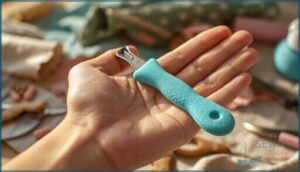
Your hand deserves a break from cramping around those slender grips. The Dritz Ergonomic Seam Ripper features a conical shape with soft finger grips that actually fit your palm, spreading pressure across your whole hand instead of jamming it into tender joints.
That padded, fatter design means you can hold the tool securely without white-knuckling it, giving you real grip comfort and control.
Sharp Blade for Minimal Cutting Force
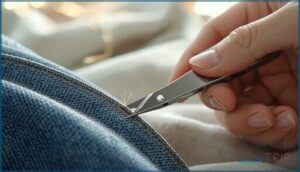
A razor-sharp blade cuts through threads like butter, so you don’t wrestle every stitch with a vise grip. When your seam ripper slices cleanly on the first pass, you skip the repeated picking motions that flare up carpal tunnel syndrome and joint pain.
- Glide through heavyweight denim seams without bracing your wrist
- Slice delicate chiffon stitches in one smooth motion
- Reduce pinch force that aggravates swollen knuckles
Safety Ball to Protect Fabric
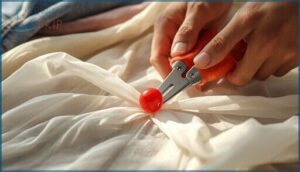
That little red ball on your seam ripper isn’t just decoration—it’s your fabric’s bodyguard. The safety ball presses against material while the blade cuts stitches, so you can glide along seams without accidentally puncturing holes. You’ll move faster through long seams and tackle delicate fabrics with confidence, keeping your grip relaxed instead of white-knuckling every pass.
| Fabric Type | Safety Ball Benefit |
|---|---|
| Heavyweight denim | Speeds through thick seams without tearing |
| Delicate chiffon | Permits careful ripping minus punctures |
| Lightweight cotton | Reduces need for corrective re-grips |
| Long garment seams | Allows continuous sliding motion |
Lightweight Construction
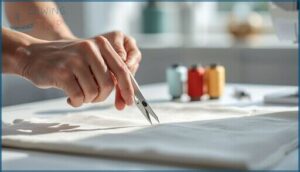
Weight reduction matters more than you’d think when your hands tire quickly. Ergonomic tools under 1.75 kg let you work longer without muscular strain, which is why material selection drives comfort in ergonomic design. Lighter ergonomic grips mean less fatigue, plain and simple.
A well-balanced seam ripper feels steady in your grip without tipping, making it an indispensable addition to your sewing kit essentials.
Handle Size and Weight Balance
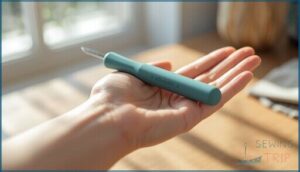
The sweet spot for ergonomic grips sits between 30–40 mm in diameter, supporting a neutral wrist position that protects finger joints.
Balanced design means the tool’s center of gravity aligns with your gripping hand, so you don’t wrestle to keep it steady.
Grip materials and strength requirements drop when weight distribution feels natural, letting you work with less effort and more control.
Adaptive Modifications for Standard Seam Rippers

You don’t have to invest in a brand-new ergonomic seam ripper to get relief from arthritis pain. Simple modifications can transform the standard seam ripper you already own into a more comfortable tool.
Let’s look at practical ways to adapt your current seam ripper for better grip and less hand strain.
Adding Foam Tubing Grips
If your seam ripper feels like pinching a pencil all day, foam tubing grips offer quick relief. Slip closed-cell foam over the handle to boost grip thickness without adding weight.
You’ll distribute force across your hand, easing pressure on swollen joints. Cut the foam to match handle length, secure it with spray glue, and keep the blade clear for safety—this simple tool customization transforms hand function during long sewing sessions.
Building Up Handle Diameter
Grip sizes matter more than you think. Customizing your seam ripper’s diameter lets you work with your hand’s natural grip instead of fighting it. Tool modifications like these boost gripping power without overhauling your whole toolkit.
- Rubberized sleeves add 6–8 mm for secure control
- Heat-shrink tubing builds 3–6 mm while keeping balance
- Commercial ergonomic grips increase 8–12 mm with textured surfaces
Choose handle materials that distribute force across your palm, reducing joint strain during every stitch removal.
Proper Hand Positioning Techniques
How you hold your seam ripper makes all the difference. Keep your wrist alignment neutral—straight, not bent—to protect small joints during each cut.
Finger placement should feel light; rest the tool between thumb and index finger with your middle finger as a gentle anchor. Practice grip relaxation by letting the blade’s sharpness do the work instead of squeezing hard.
Joint protection starts with smart hand ergonomics.
When to Replace Your Seam Ripper
Even the best sewing tools don’t last forever. Watch for these replacement signs that your seam ripper needs to retire:
- If blade sharpness has dulled and snags fabric despite cleaning, get a new one
- When handle durability fails—cracks appear or grip wears down—swap it out
- A bent or damaged safety ball risks fabric tears and finger injuries
- Skipped cuts compromise seam quality and demand precision you can’t achieve
- Rust affecting tool maintenance means it’s time to upgrade
Fresh ergonomic design restores control for garment repair without the frustration.
Pairing With Other Arthritis-Friendly Sewing Tools

Your seam ripper isn’t the only tool that needs to work with your hands, not against them. Building a full kit of arthritis-friendly sewing tools can cut your fatigue in half and keep you stitching longer.
Let’s look at the essential tools that pair perfectly with your ergonomic seam ripper.
Ergonomic Rotary Cutters
Pairing your ergonomic seam ripper with a rotary cutter that’s built for comfort makes a real difference. Look for cutter designs with ergonomic grips—soft grip, larger diameter—that boost grip stability without demanding a tight hold.
Lightweight models with 18–28 mm rotary blades reduce pinch force, and safety guards protect your fingers.
These sewing tools work together to keep your hands happier during long projects.
Lightweight Irons
When your hands hurt, an iron that weighs under 1.5 pounds can be a game changer. Compact lightweight irons with ceramic or stainless steel soleplate materials deliver heat control and iron safety without demanding a strong grip. Their slim ergonomic design reduces strain, and basic temperature settings give you energy efficiency. Pair them with your other arthritis-friendly sewing tools for less fatigue during pressing tasks:
- Choose models 9–12 inches long with balanced weight distribution
- Look for simple heat control dials you can adjust without fine motor precision
- Skip heavy steam functions that add bulk and arm strain
Magnetic Wands and Needle Threaders
When you’re wrestling with pins scattered across your workspace, magnetic retrieval tools give you back control—pick-up wands grab metal needles with about 90 percent success. Needle guidance threaders let you thread with one hand, cutting out frustrating finger work. Look for ergonomic grips and retractable pick-up coils that reduce grip force. These sewing aids transform tedious tasks into manageable ones.
| Tool Type | Key Benefit |
|---|---|
| Magnetic wands | Retrieve pins without bending or pinching |
| Needle threaders | Thread needles using single-hand techniques |
| Retractable coil models | Minimize sustained gripping effort |
| Ergonomic design grips | Reduce hand strain during use |
| Combined kits ($5–$25) | Affordable adaptive crafting supplies |
Creating a Complete Adaptive Sewing Kit
Your ergonomic seam ripper works best when surrounded by supportive sewing aids. Build an adaptive kit that includes rotary cutters with pistol grips, magnetic pin holders, spring-action scissors, and adjustable task lighting—all designed for joint protection.
Combine these assistive devices with wrist braces and cushioned thimbles to create a complete setup. Ergonomic grips across all your sewing tools multiply comfort, letting you craft longer without pain taking control.
Frequently Asked Questions (FAQs)
How often should I sharpen my seam ripper?
You won’t need to sharpen most seam rippers if they’ve quality blades.
Check edge quality after heavy use—when threads snag or require extra force, it’s time for blade maintenance or replacement.
Do ergonomic seam rippers work for thick fabrics?
Yes, they handle thick fabric cutting well when paired with sharp blades. Blade sharpness and grip ergonomics matter most for sewing accessibility and fabric compatibility.
Contoured grips distribute pressure across your palm, lowering joint stress during quilting or weaving.
Are electric seam rippers better for severe arthritis?
Electric rippers can reduce grip strain since they require less squeezing during seam removal, but evidence remains anecdotal.
Control and fabric safety vary by model, so test before committing if you have severe hand limitations.
Conclusion
A year ago, threading a needle felt impossible. Today, you’re finishing a quilt because you refused to let stiff joints steal your creativity.
The right seam rippers for arthritis don’t just make corrections easier—they protect your hands while you work. Pair them with foam grips, sharp blades, and proper technique, and you’ve built a sewing kit that suits your needs.
Your hands deserve tools that work with them, not against them.
- https://madamsew.com/products/deluxe-seam-ripper
- https://eeschenck.com/ergonomic-seam-ripper-dri5111.html
- https://www.esht.nhs.uk/wp-content/uploads/2017/06/0502.pdf
- https://rheumatologistoncall.com/2023/04/04/7-essential-devices-for-people-with-hand-arthritis/
- https://www.superiorthreads.com/clover-ergonomic-seam-ripper/p/82862