This site is supported by our readers. We may earn a commission, at no cost to you, if you purchase through links.
You’ve just spent hours stitching the perfect embroidered design, only to realize the placement is off by half an inch. That sinking feeling hits hard—but here’s the truth most sewers discover too late: removing stitches damages more fabric than the original mistake ever could.
Rushed seam ripping leaves puckered holes, frayed fibers, and permanent distortion that no amount of pressing can fix. The difference between salvaging your project and starting over comes down to technique, not luck.
When you understand how different fabrics respond to stitch removal and match your tools to the thread anatomy, those needle marks disappear like they were never there. Precision beats speed every time, and the right approach transforms a potential disaster into invisible repair work.
Table Of Contents
Key Takeaways
- The right tool for the job—seam rippers for hand embroidery, stitch erasers for machine work, and precision scissors for delicate fabrics—prevents more damage than the original stitching mistake ever could.
- Always cut from the wrong side of the fabric when possible, work slowly by cutting every third stitch instead of ripping continuously, and use tweezers to lift threads rather than yanking them out.
- Different fabrics demand different approaches: silk needs steam hovering and fine-tipped tools, denim tolerates sharper blades and more pressure, while knits require cutting every third stitch to prevent permanent distortion.
- Post-removal restoration through steam, gentle pressing, and strategic use of fusible interfacing erases needle marks and puckering, transforming visible mistakes into invisible repairs.
Essential Tools for Safe Stitch Removal
The right tool makes all the difference between clean removal and a fabric disaster.
Sharp fabric scissors and a seam ripper designed for heavy-duty sewing tips help you remove stitches without snagging or stretching the material.
You don’t need a full workshop, just a handful of specialized instruments that match your specific project. Here’s what belongs in your stitch removal toolkit.
If you’re planning to distress or rip your own jeans, the right cutting tools make all the difference between a polished look and a DIY disaster.
Seam Rippers for Hand Embroidery
You need a seam ripper with a narrow U-shaped blade and fine tip for hand embroidery removal. The inner curve cuts threads while the outer edges protect delicate fabrics.
For detailed guidance on choosing the right tool and mastering the cutting technique, see how seam rippers work and when to use them.
Look for surgical-quality stainless steel blade materials that resist rust. Ergonomic grips with textured holds prevent slips on fragile grounds like linen. The safety ball on the shorter prong guards against puncturing fabric during embroidery techniques.
For more details about the different types of seam rippers, exploring these options can help you select the best tool for your project.
Stitch Erasers for Machine Embroidery
When machine embroidery mistakes happen, stitch erasers with electric trimmers and stainless steel blades solve the problem fast. These embroidery tools use tightly spaced teeth to slice bobbin threads without grabbing fabric underneath, protecting against fabric damage.
Work from the back side, keeping the blade flat against your hooped material—light pressure and short strokes prevent roughing up the backing during embroidery removal.
You can learn more about the advantages of using special blades designed for thread in embroidery stitch erasers.
Precision Scissors for Delicate Work
When electric erasers aren’t enough, precision scissors give you surgical control over individual threads. Double-curved applique scissors keep your hand elevated while ultra-sharp tips slide under tight stitches, isolating one thread at a time on silk or lace.
Look for these features:
- Curved blades in high-grade stainless steel for clean cuts near delicate fabrics
- Short 3–4 inch lengths that improve gripping during embroidery removal
- Offset grips that clear your view while preventing fabric damage
Blunt tips protect fragile cloth from accidental pokes.
Pairing them with the right needle type and fabric-specific sewing techniques ensures clean stitches whether you’re working with delicate silks or sturdy denim.
Tweezers for Thread Removal
Once you’ve snipped threads with scissors, fine tip alignment and jaw design matter—stainless steel tweezers with parallel-closing jaws grip individual threads on delicate fabrics without snagging the weave.
Spring-loaded models with ergonomic grips reduce hand fatigue during long sessions. Clean tips after each use to prevent fabric damage from lint buildup between tweezer maintenance intervals.
When to Use Razor Blades
On thick fabric like denim or canvas, a single-edge utility blade slices dense topstitching faster than any seam ripper, but razor techniques demand careful blade selection and razor safety to prevent fabric damage.
Hold the edge parallel to the surface, work in short strokes, and skip this tool entirely on delicate fabrics—save razors for sturdy textiles where a stitch eraser can’t reach layered seams.
Step-by-Step Guide to Removing Stitches Safely
Removing stitches doesn’t have to feel like defusing a bomb—you just need the right approach and a steady hand.
The process breaks down into five straightforward steps that protect your fabric while getting the job done efficiently. Follow this sequence to remove unwanted stitches without leaving behind damage or regret.
Prepare Your Work Area and Materials
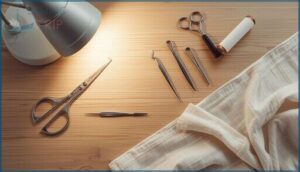
A clean workspace sets you up for success before you make your first cut. Organize your tools and prepare the fabric properly to prevent accidental snags, slips, or tears.
Before cutting, check that your seam ripper and other tools are in good shape—creative uses for sewing tools can help you tackle quick fixes without risking damage.
- Clear your table of debris, pins, and loose threads to create a stable surface.
- Position a bright desk lamp to shed light on tiny stitches and thread tails clearly.
- Gather your seam ripper, precision seam ripper, small scissors, tweezers, and thread snips within arm’s reach.
- Press the fabric lightly and brush away dust with a lint roller before starting.
Identify The Stitch Type and Pattern
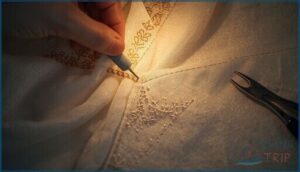
Stitch identification drives your entire removal strategy. Examine both sides of the fabric to spot hand versus machine work—hand stitches show slight spacing variations, while machine embroidery sits dense and uniform.
Pattern analysis reveals whether you’re facing running stitch, backstitch, satin fill, or serger loops. Check thread types and embroidery styles closely; dense logos demand a stitch eraser, while delicate hand work responds best to your seam ripper.
Cut Stitches With a Seam Ripper
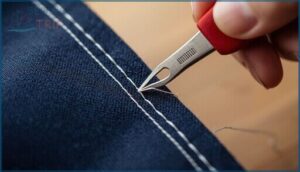
Position your seam ripper almost parallel to the fabric, sliding the sharp point under a single stitch before lifting gently into the curved blade. For longer seams, place the ball tip between layers and push forward so the blade slices multiple threads at once.
Work from the fabric’s backside when possible—this seam ripper safety tip keeps your point away from visible surfaces, protecting delicate fabrics while ensuring clean thread management.
Remove Threads With Tweezers
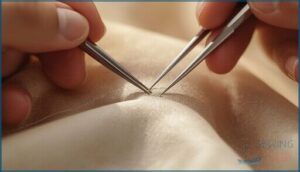
Once the seam ripper finishes its job, grab pointed needlework tweezers and angle them almost parallel to the cloth—this precision handling keeps tips from snagging fibers during thread removal. Grip each cut segment near the fabric surface, then tug lightly and repeatedly instead of yanking.
On delicate fabric handling tasks like silk or rayon, support the material with your opposite hand to prevent puckering and maintain fabric safety throughout stitch removal.
Clean The Fabric Surface
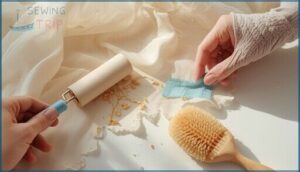
After tweezers finish their work, roll a medium-tack lint roller lightly over the surface for lint removal and fiber reset—it lifts thread fuzz without pulling intact weave.
For delicate fabrics, wrap low-tack painter’s tape around your fingers to pick up tiny bits in tight spots. Surface cleaning with a soft brush sweeps away dust, supporting fabric preservation and fabric restoration after stitch removal.
Top 3 Products for Stitch Removal
You can’t remove stitches efficiently without the right tools in your hands. The products below have been tested on everything from delicate silk to stubborn denim, and they consistently deliver clean results without damaging fabric.
Here are the three essentials that belong in every sewing toolkit.
1. Sullivans Precision Seam Ripper Tool

This surgical-grade tool transforms frustrating unpicking into clean, controlled work. The Sullivans Precision Seam Ripper features a thin stainless steel blade sharp enough to slide under dense embroidery removal challenges and delicate fabrics without snagging.
Its comfortable 5.5-inch handle gives you the precision cutting control you need for stitch removal, while the included safety case protects both blade and fingers. You’ll get an extra blade plus a free buttonhole cutter—essential stitch removal tips for fabric protection.
The sharp edge demands seam ripper safety awareness and proper tool maintenance to prevent accidents.
| Best For | Home sewers and quilters who need surgical precision to remove mistakes quickly without damaging fabric, especially when working with dense serger seams or delicate materials. |
|---|---|
| Primary Material | Metal |
| Brand | Sullivans |
| Product Weight | 0.64 ounces |
| Handle Type | Purple metal |
| Primary Use | Removing stitches/seams |
| Durability | Metal construction |
| Additional Features |
|
- Surgical-grade stainless steel blade slides under tight stitches cleanly and cuts seam-ripping time in half compared to standard tools
- Comes with a spare blade, free buttonhole cutter, and protective safety case for extended use and safe storage
- Ergonomic 5.5-inch handle offers pen-like control for precision work in curved or hard-to-reach seams
- Extremely sharp blade requires careful handling and must be kept away from children to prevent accidents
- Some users report the plastic handle feels flimsy despite its comfortable grip
- Price point strikes some buyers as high for a basic sewing tool, even with the included accessories
2. Stainless Steel Sewing Scissors
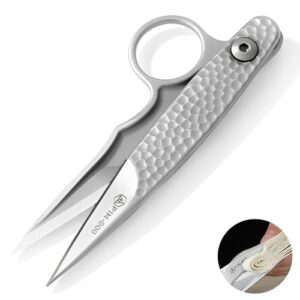
For precision stitch removal that won’t damage delicate fabrics, you need sharp sewing scissors designed specifically for thread work. Stainless steel blades with 420-grade hardness around 48-52 HRC give you clean cuts through fabric care and maintenance tasks while resisting rust in humid sewing rooms.
The WUSAIRX model offers ergonomic grips at 4.6 inches—perfect control for tight curves and seam trimming. Blade sharpening and scissor maintenance matter: reserve these exclusively for fabric, never paper, and apply light machine oil at the pivot point to prevent corrosion and keep your cutting action smooth.
| Best For | Sewers, quilters, and crafters who need reliable scissors for precision stitch removal, seam trimming, and detailed fabric work without worrying about rust. |
|---|---|
| Primary Material | Stainless Steel |
| Brand | WUSAIRX |
| Product Weight | 3.52 ounces |
| Handle Type | Rubberized ergonomic |
| Primary Use | Precision cutting |
| Durability | Long-lasting steel |
| Additional Features |
|
- Stainless steel blades resist rust and corrosion even in humid sewing rooms or near steam irons, so you don’t have to baby them
- Compact 4.6-inch size with rubberized grip gives you excellent control for intricate cuts, tight curves, and close trimming without accidentally cutting fabric
- Sharp enough to slice through multiple fabric layers and tough materials, making them versatile for everything from embroidery to gift wrapping
- You’ll need to keep them away from paper and plastic since cutting anything besides fabric and thread dulls the blades fast
- No adjustable tension or advanced features, so what you see is what you get
- They’ll struggle with very thick or hard materials beyond typical sewing tasks
3. Scotch Brite Heavy Duty Lint Roller
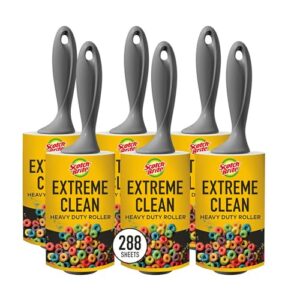
After cutting threads, you need a lint roller for fabric cleanup—and Scotch Brite Heavy Duty models deliver 50 percent stronger adhesive strength than standard versions. This lint removal tool lifts loose embroidery fuzz, short thread bits, and debris collection after stitch removal without damaging delicate fabric handling.
Each 60-sheet refill gives consistent thread pickup across garments and upholstery, making post-removal restoration quick. The ergonomic handle offers control during fabric care and maintenance, while perforated sheets tear cleanly for efficient use on any project.
| Best For | Sewers and crafters who need to remove leftover threads, embroidery fuzz, and lint from fabric after taking out stitches, especially on heavier materials like denim or canvas. |
|---|---|
| Primary Material | Plastic |
| Brand | Scotch-Brite |
| Product Weight | Not specified |
| Handle Type | Plastic ergonomic |
| Primary Use | Removing lint/debris |
| Durability | Refillable design |
| Additional Features |
|
- 50% stickier adhesive than standard rollers picks up stubborn thread bits and debris that regular lint rollers miss
- 60-sheet refills with clean tear-off perforations give you plenty of uses before needing a replacement
- Reusable ergonomic handle works with compatible refills and stores easily on a hook near your workspace
- Some users report the adhesive isn’t noticeably stronger than regular Scotch-Brite rollers despite the marketing claim
- Can pull out human hair from the scalp if used directly on hair, which can be painful
- May leave residue or not perform as expected on certain fabric types based on mixed user feedback
Fabric-Specific Removal Techniques
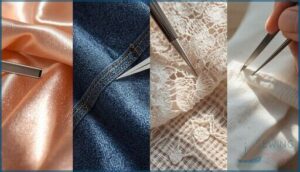
Not all fabrics are created equal, and your removal technique needs to match the material you’re working with.
What works perfectly on denim could destroy silk in seconds.
What tears through denim easily can ruin silk in seconds
Here’s how to safely remove stitches from four common fabric categories without leaving a trace.
Delicate Fabrics Like Silk and Chiffon
Silk fabric care demands a light touch—one wrong move and those protein fibers remember every puncture. For chiffon embroidery and delicate stitch removal, work from the wrong side using fine-tipped seam rippers. Cut every third bobbin stitch, then lift threads with tweezers.
Fabric stabilization in an embroidery hoop keeps tension even. Steam hovering, not direct pressing, aids thread realignment and fabric preservation without adding shine or scorch marks.
Heavy Fabrics Like Denim and Canvas
When you work with heavy fabrics like denim and canvas, stitch removal demands sharper tools and deliberate control. Use a surgical-style seam ripper for thick weave techniques, slicing every third or fourth stitch along densely packed seams.
On canvas fabric care, keep your blade parallel to prevent punching through. For embroidery removal on denim, clip surface threads with precision scissors to avoid snagging the twill. Fabric damage prevention starts with the right heavy fabric tools and steady hands.
Knit and Stretch Fabrics
Knit fabric behavior changes everything about stitch removal. Elastane blends with 3 to 10 percent spandex bring stretch recovery, but aggressive pulling distorts yarn tension permanently.
Cut every third stitch instead of ripping straight through to prevent fabric distortion. Work from the wrong side, keep the knit taut but not stretched, and steam gently afterward. Fabric preservation demands patience with these fabric types.
Leather and Synthetic Materials
Leather shows permanent needle holes because stitches pierce and displace fibers rather than slide between threads. Remove patches from the wrong side with a small seam ripper to protect the grain surface. Cut threads every few stitches to prevent puckering during leather restoration.
Synthetics like polyester resist heat—use stitch removal from the wrong side to avoid snagging filaments. Support fabric underneath while cutting to prevent stretching in synthetic repair and fabric preservation work.
Removing Different Types of Stitches
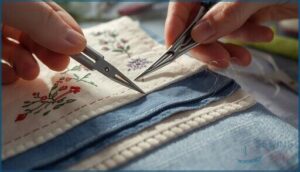
Not all stitches come out the same way.
Hand embroidery pulls apart differently than machine-stitched logos, and serged seams require their own approach entirely.
Here’s how to tackle each type without leaving your fabric worse for wear.
Hand Embroidery Stitch Removal
Hand embroidery removal demands precision because stitch anatomy reveals how each thread interlaces with fabric tension. Start from the wrong side, cutting backstitch or split stitch with your seam ripper every two to three stitches.
Use tweezers to extract loose threads without tugging. For French knots, snip at the base and tease apart carefully. This embroidery restoration method protects delicate weaves and ensures removal safety.
Machine Embroidery and Dense Logos
Dense logos on polos and jackets demand a different stitch strategy because stitch density often exceeds 8,000 stitches per 10 square centimeters.
Turn the garment inside out for bobbin thread access, which releases whole sections during machine embroidery removal. Use a stitch eraser at 15–45 degrees with light pressure, working in short passes to prevent fabric stabilization damage.
This uniform removal approach ensures safe embroidery restoration without thread management headaches.
Serger Stitch Removal
Serger stitches unravel faster when you clip needle threads every few stitches from the right side, letting looper threads slide off without resistance.
Use a seam ripper to lift needle stitches individually, preserving fabric tension and stitch visibility throughout removal. Support the fabric flat to prevent needle damage, then gently pull serger thread sections along the seam line for quick stitch removal with complete fabric preservation and stabilization.
Coverstitch Hem Removal
Coverstitch hems pose a special difficulty—but you can remove them without leaving visible damage. Start by flipping your garment inside-out to locate the looper thread on the wrong side. This serpentine chain holds everything together.
Your five-step removal sequence:
- Lift looper stitches with your seam ripper at the hem end
- Pull the free looper tail steadily around the entire hem
- Watch top needle stitches pop free and slide out effortlessly
- Snip any overlapped sections manually where the chain jams
- Steam press the hemline to relax knit fibers and erase needle tracks
For circular hems with backstitching, switch to the slow method: cut every third needle stitch from the right side, then pull the loosened looper thread. Support knit fabric with one hand while working to prevent stretching.
At cross seams, lift coverstitch threads gently before cutting to avoid nicking underlying layers—fabric preservation demands this extra care.
After thread removal, steam and a pressing cloth work wonders on lightweight jersey, making old stitch lines virtually disappear.
Post-Removal Care and Fabric Restoration
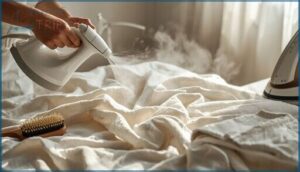
Removing the stitches is only half the battle—now you need to erase the evidence. Even careful removal can leave needle marks, puckering, or thread residue that ruins the fabric’s appearance.
The following techniques will help you restore your fabric to its original condition and prevent permanent damage.
Treating Needle Marks and Holes
Patience transforms post-removal restoration into invisible repair. Fiber realignment starts with gentle fingernail scraping along the stitch line, shifting displaced threads back into position.
Moisture relaxing works wonders on cotton and linen—lightly dampen the needle mark, then rub with a spoon edge for tool-assisted smoothing. For stubborn holes after using a stitch eraser, apply lightweight fusible interfacing to support weakened fibers during fabric repair.
Steam and Ironing Techniques
Steam relaxation restores fabric grain after embroidery removal by holding your iron two inches above the surface for ten to fifteen seconds.
Set iron temperature according to your fabric care label—cotton and linen handle higher heat control, while silk needs the lowest setting.
Use a pressing cloth on synthetics to prevent shine, then let the area cool flat so fibers set smoothly after stitch removal techniques.
Using Fusible Interfacing for Repairs
When needle marks refuse to disappear after embroidery removal, fusible interfacing delivers fabric stabilization that rescues damaged areas. Choose woven interfacing for woven fabrics and knit varieties for stretch material—matching structure keeps repair techniques invisible.
- Cut your interfacing patch one to two centimeters larger than the damaged zone.
- Position the adhesive side against the fabric’s wrong side.
- Press with medium heat for ten to fifteen seconds using a damp pressing cloth for proper adhesive bonding.
This textile restoration method works especially well behind old logo spots where dense stitching left persistent holes.
Laundering After Stitch Removal
A proper wash restores fabric integrity after stitch removal, but technique matters. Use cool water for dark garments since exposed needle paths absorb loose dye.
Skip fabric softening in your first detergent choice—it stiffens compressed fibers. Air drying flat prevents stretching along former stitch lines.
Finish with steam ironing from the wrong side for complete postremoval restoration and textile restoration that makes old embroidery vanish.
Frequently Asked Questions (FAQs)
How do you remove stitches from fabric?
Like unraveling a Victorian corset, stitch removal demands the right tools and technique.
Slip your seam ripper under every third stitch, cut gently, then pull threads with tweezers to preserve fabric integrity.
How to remove stitches from vintage fabrics?
Vintage fabric demands careful stitch removal tools—fine seam rippers, small scissors, and quality tweezers protect fragile fibers.
Work on a padded surface with strong lighting, test techniques on hidden seams, and stabilize delicate textiles before cutting.
Can you reuse fabric after stitch removal?
Think of fabric restoration as a second chance—most woven materials bounce back beautifully after stitch removal.
Cotton and denim recover well through washing and pressing, while silk needs careful masking for successful textile recovery and reuse.
How to remove decorative topstitching without marks?
Cut every third bobbin stitch from the back using a fine seam ripper, then pull threads in the sewn direction.
Steam the stitch line and rub gently with a blunt needle to close holes.
What causes puckering after removing stitches completely?
Ever watched a tightly laced corset spring open? Fabric behaves the same way.
Puckering happens when compressed fibers, stressed by thread tension and stitch density, don’t fully relax after removal—especially on synthetics.
How to remove stitches from quilted layers?
Quilted layers need a ball-tip seam ripper to slide under stitches without piercing batting.
Work from the quilt back, cutting every few stitches, then lift threads with tweezers to protect the quilt sandwich.
Conclusion
Master these techniques, and you’ll never fear undoing a mistake again. The difference between ruined fabric and impeccable repair? Patience matched with precision.
Every seam ripper stroke, every careful tweezers pull builds your confidence to tackle increasingly complex removals. You now know how to remove stitches without damaging fabric—transforming errors into invisible corrections.
Your projects deserve this level of care. Take your time, trust the process, and watch those unwanted stitches disappear without leaving evidence behind.
- https://madamsew.com/blogs/sewing-blog/use-your-seam-ripper-like-a-pro
- https://www.nationalsewingcircle.com/video/best-way-to-remove-sewing-stitches-017247
- https://www.magnetichoop.com/blogs/news/how-to-remove-stitching-safely-without-damaging-fabric
- https://www.instructables.com/The-Best-Way-to-Rip-Out-Stitches/
- https://www.kearing.com/seam-ripper-guide-how-to-choose-use-and-master-this-underrated-sewing-tool/