This site is supported by our readers. We may earn a commission, at no cost to you, if you purchase through links.
Your first quilt taught you something quilters rarely discuss: the magic isn’t in perfect fabric choices or intricate patterns—it’s in the stitches holding everything together. Those tiny movements of needle and thread transform three separate layers into a coherent whole that can withstand decades of washing, wrapping, and love.
Learning basic stitches for quilting means understanding both the practical techniques that prevent your quilt from falling apart and the decorative touches that turn functional stitching into art. Whether you prefer the meditative rhythm of hand quilting or the efficiency of a sewing machine, mastering a handful of fundamental stitches gives you the foundation to tackle any quilting project with confidence.
Table Of Contents
Key Takeaways
- Quilting stitches serve both functional purposes (securing three layers—top fabric, batting, and backing—to prevent shifting) and decorative purposes (adding visual texture through varied patterns and thread choices).
- Beginners should master foundational techniques like the running stitch for hand quilting and straight-line quilting for machine work before progressing to decorative patterns like stippling, echo quilting, or free-motion designs.
- Tool selection directly impacts stitch quality—pairing the correct needle size with thread weight and batting thickness, plus using walking feet for machine work or hoops for hand quilting, prevents tension issues and fabric puckering.
- Building consistent stitch length and tension through practice develops muscle memory that transforms hesitant stitching into confident, professional-looking work, with early imperfections being a natural part of skill development.
Essential Quilting Stitches Explained
Before you start stitching your first quilt, you need to understand what quilting stitches actually do and why they matter. These aren’t just decorative touches—they’re what keeps your quilt together and determines how long it’ll last.
The type of fabric you choose plays a huge role here, since different weaves affect how easily you can stitch and how well your quilt holds up over time—check out this beginner’s guide to quilting fabrics to understand which materials work best for your first project.
Let’s break down the essentials so you know exactly what you’re working with.
Whether you’re working with delicate silk or heavy canvas, matching your fabric choice to your current sewing skills helps you avoid frustration and get better results.
What Are Quilting Stitches?
Quilting stitches are the thread lines you sew through your quilt’s three layers—top fabric, batting, and backing. These stitches serve dual purposes in quilting basics: they secure the quilt layering so it won’t shift or bunch, and they add visual interest through stitch variations.
Mastering how to stitch fabric layers properly ensures your quilt stays durable and smooth, preventing puckering or gaps between the materials.
Whether you choose hand quilting or machine quilting techniques, your thread choices and fabric selection will shape both durability and design in quilting for beginners.
Choosing the right needle sizes for different threads prevents skipped stitches and ensures your quilting projects hold up beautifully over time.
How Quilting Stitches Hold Layers Together
When you push your needle through all three layers, each stitch creates a physical anchor point that locks fabric, batting, and backing together. The thread path—stitch penetration through top, middle, and bottom—acts like tiny clamps that prevent shifting.
Proper fabric tension and thread strength keep these connection points secure, giving your quilt stability whether you’re hand quilting or machine quilting. That’s how layer locking really works.
The overall strength of your quilt depends on factors like fabric construction and thread quality.
Decorative Vs. Functional Stitches
Now that you understand how layers lock together, you can choose stitches based on their purpose. Decorative stitches add visual interest with contrasting thread choice and varied patterns, while functional stitches prioritize stitch density and even stitch tension to secure quilt layering.
Consider these differences:
- Decorative patterns highlight texture through bold thread colors
- Functional stitches prevent shifting with closer spacing
- Fabric compatibility affects both hand quilting and machine quilting
- Thread choice impacts durability and appearance
- Stitch density influences drape and stability
Basic Hand Quilting Stitches
Hand quilting connects you to centuries of tradition while giving you complete creative control.
Hand quilting connects you to centuries of tradition while giving you complete creative control
The stitches you’ll learn here form the foundation of most hand-quilted projects, from simple lap quilts to intricate heirlooms. Let’s start with three essential techniques that every beginner should master.
Running Stitch
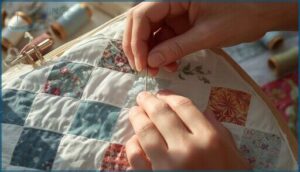
Think of the running stitch as the heartbeat of hand quilting—simple, rhythmic, and absolutely essential.
You’ll weave your needle in and out through all three quilt layers, creating small, even dashes about 1/8 to 1/4 inch long. Aim for four to eight stitches per inch, adjusting your stitch length based on fabric choice and batting thickness for proper tension control.
Choosing the right quilting needle makes all the difference in achieving those clean, uniform stitches without fighting your fabric.
For a deeper understanding of its role in different needlework styles, explore these global embroidery traditions.
Tie Stitch
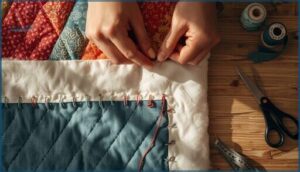
When you need a faster alternative to the running stitch, tie stitches offer a practical solution for securing your quilt layers.
You’ll thread your needle through all three layers, bring it back up about 1/4 inch away, and tie a small knot on the quilt’s surface. Space these ties evenly—usually 4 to 6 inches apart—to prevent batting from shifting while creating a charming, textured look.
Sashiko Stitch
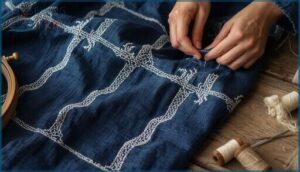
Sashiko, a beautiful Japanese embroidery rooted in centuries of textile history, adds stunning texture to your quilt through precise running stitches.
You’ll work small, even stitches—often following a 3:2 stitch ratio—with thick cotton thread on loosely woven fabric like muslin or calico. This hand quilting technique creates geometric patterns while reinforcing layers, making it both decorative and functional for beginners exploring traditional quilting methods.
Tips for Even Hand Quilting
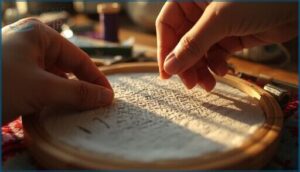
Successfully landing six evenly spaced hand quilting stitches per inch starts with mastering a few core skills that transform your running stitch from shaky to smooth.
- Load multiple stitches on your needle before pulling thread through—this rhythm development builds muscle memory and keeps each running stitch identical in size.
Tension Management:
- Keep your quilting hoop taut but not stretched, preventing fabric bunching while maintaining consistent stitch depth through all layers.
Needle Grip Techniques:
- Use a rocking hand motion with your between needle, stitching toward your body for better control and uniform backstitch placement when reinforcing seams.
Fundamental Machine Quilting Stitches
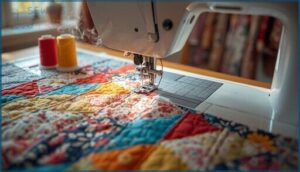
Machine quilting opens up a whole new world of speed and creative possibilities. Whether you’re working with a basic sewing machine or a specialized quilting model, mastering a few fundamental stitches will give you the confidence to tackle any project.
Let’s look at the essential machine stitches every beginner should know.
Straight-Line Quilting
Straight lines might look simple, but they pack a powerful punch in machine quilting. This technique creates crisp rows across your quilt using a walking foot to guide your fabric evenly. You’ll control the look by adjusting line spacing, stitch length, and quilting tension—each choice shapes texture and drape.
| Element | Setting/Choice | Effect on Your Quilt |
|---|---|---|
| Line Spacing | 1–2 inches apart | Softer drape, flexible feel |
| Line Spacing | ⅛–¼ inch (matchstick) | Firmer texture, added structure |
| Stitch Length | 3.0–4.0 mm | Clear stitches, less draw-up |
| Stitch Length | 2.0–2.5 mm | Better for lighter fabric choice |
| Walking Foot | Feeds layers evenly | Prevents puckering, keeps alignment |
Start from your quilt’s center and work outward to avoid distortion.
Stitch in The Ditch
When you want quilting stitches to vanish into your patchwork, stitch in the ditch becomes your go-to technique. You’ll guide your straight stitch right along seam lines—where fabrics meet—using a walking foot for perfect seam alignment.
The ditch hides thread visibility beautifully while securing quilt layering. Use micro stitches to lock your line without bulk, and choose fine thread that matches your fabrics for nearly invisible ditch quilting.
Free-Motion Quilting
Free Motion Quilting lets you create flowing curves and personal designs by lowering your machine’s feed dogs and guiding the quilt layering yourself. This Quilting Technique gives you total Fabric Control, though you’ll need to balance needle speed with hand movement to maintain even Stitch Tension.
Master Machine Setup first, then practice Free Motion Basics on scrap sandwiches before tackling your finished project.
Stippling Stitch
Stippling Stitch takes Free Motion Quilting a step further by filling background areas with continuous Micro Stitches that meander like puzzle pieces. You’ll guide your quilt under the needle to create tiny curved loops—aim for 6 to 12 stitches per inch to control Quilting Density and maintain steady Thread Tension.
Three keys to successful stippling:
- Keep your curves tight and consistent to build even texture
- Avoid crossing or touching previous stitch lines as you work
- Practice controlling speed and hand movement together on scrap fabric first
Choosing Tools for Quilting Stitches
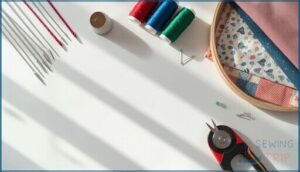
The right tools make quilting easier and help you create clean, professional-looking stitches.
Your needles, thread, and support tools work together to keep your quilt layers stable as you stitch.
Let’s look at what you’ll need for both hand and machine quilting.
Selecting Needles for Hand and Machine Quilting
Choosing the right quilting needles depends on your technique and materials. For hand quilting for beginners, short betweens in size 8 or 9 work well through most batting types, while machine quilting requires paired sizes like 75/11 for lightweight projects or 90/14 for thicker layers.
Match needle size to thread weight and batting types—finer threads need smaller needles, and dense batting calls for stronger ones.
Thread Types and Colors
Once you’ve chosen your needle, matching the right thread makes all the difference. Cotton thread in 40 wt works for most projects, while polyester offers extra strength.
Check colorfastness on dark fabrics, and consider thread coatings for smoother stitching. Variegated threads add visual interest without changing spools.
Thread weights affect tension, so test quilting thread or embroidery floss on scraps before starting your quilt.
Using Hoops, Frames, and Walking Feet
Beyond thread and needles, your setup shapes every stitch. A quilting hoop or frame keeps fabric taut during hand quilting, preventing shifting and bunching.
For machine work, a walking foot tips the balance—it feeds layers evenly, maintaining stitch tension control even through thick batting. Proper hoop frame setup and frame ergonomics reduce fatigue, while regular quilting tool maintenance ensures smooth free-motion quilting sessions.
Simple Decorative Stitch Patterns for Beginners
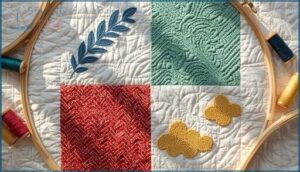
Once you’ve got the basics down, it’s time to add personality to your quilts with simple decorative stitches.
These beginner-friendly patterns combine function with visual interest, giving your projects a polished, handmade look. Let’s explore four approachable decorative stitches that work beautifully on any quilt.
Outline Quilting
Outline quilting traces around the edges of shapes on your quilt top, making each motif pop. This quilting technique creates strong shape emphasis and quilt silhouette, working beautifully on border designs or pieced blocks.
You can stitch right along the seam or slightly inside for edge finishing. Unlike free motion quilting or stipple quilting, outline quilting follows existing lines, giving clean stitch visibility that highlights your design.
Echo Quilting
Echo quilting repeats the outline of a shape in concentric rings that radiate outward like ripples on water. These echo patterns create stunning motif emphasis around appliqués or pieced blocks while adding background fills across your quilt.
You’ll maintain consistent quilting spacing—usually 1/4 inch between lines—using free motion quilting or straight line quilting techniques. This approach controls stitch density beautifully, making quilting stitches frame your favorite designs.
Pebble Stitch
Pebble texture brings bubbly charm to your quilts through small, irregular circles stitched densely across the surface. You’ll use free-motion quilting to create these quilting stitches, varying pebble sizes naturally for organic appeal—don’t worry about uniformity.
This beginner-friendly technique works beautifully as background fill in quilting patterns, and your fabric choices won’t limit you since pebbles complement most materials.
Clamshell Stitch
Clamshells create interlocking arcs that form beautiful scalloped rows across your quilt surface. You’ll stitch curved lines row by row using free-motion quilting techniques, and spacing determines your quilting textures—tight shells build dense visual weight while wider arc designs feel airy.
Shell patterns work wonderfully as border fills or allover backgrounds, and clamshell variations let you scale from delicate to bold depending on your project’s needs.
Frequently Asked Questions (FAQs)
What is the best stitch for a beginner quilter?
For quilting beginners, the straight running stitch by hand or straight-line quilting by machine works best.
You’ll control stitch length and tension easily while building confidence before trying free-motion quilting patterns.
What stitches are used in quilting?
You’ll use running stitches, straight lines, stitch in the ditch, free-motion quilting, stippling, echo patterns, pebble fills, and clamshells—mixing hand quilting for beginners with machine techniques to secure batting options through quilt layering.
What are the 10 basic stitches?
The ten basic stitches include running, tie, Sashiko, straight-line, stitch-in-the-ditch, free-motion, stippling, outline, echo, and pebble—each offering different quilting techniques and stitch variety for hand quilting and machine work.
How do I prepare my quilt layers before stitching?
Press your quilt top and backing fabric flat, then layer the backing face down, batting, and top face up. Smooth from center outward, then secure with pins or basting stitches.
What is trapunto quilting and how is it done?
This stuffed quilting technique creates raised motifs by stitching around a design, then inserting extra batting behind those areas.
Italian quilting adds beautiful padded effects and three-dimensional texture to your quilt projects.
How do I fix uneven stitches in hand quilting?
Keeping your hand posture relaxed and maintaining consistent thread tension helps even out quilting stitches.
Mark stitch guides with erasable pencil, practice steady rhythm, and match needle size to thread weight for uniform results.
What batting works best for different quilting techniques?
Your batting choice depends on your quilting method.
Low-loft cotton or cotton-blend batting works best for hand quilting and straight-line machine stitches, while medium-loft polyester or wool batting showcases free-motion designs beautifully.
Can I combine hand and machine quilting techniques?
Absolutely—hybrid quilting lets you blend hand sewing charm with machine stitched speed.
Many quilters use free motion quilting or combo techniques for backgrounds, then add hand-quilted accents where you want that handmade glow.
Conclusion
Think of basic stitches for quilting as your quilting vocabulary—once you know a few essential words, you can speak the language fluently. Start with running stitches and straight-line quilting, then gradually add decorative techniques as your confidence grows.
Your early projects won’t look like museum pieces, and that’s perfectly fine. Each stitch you practice builds muscle memory that transforms hesitant movements into steady, reliable work. Pick up your needle or turn on your machine—your quilt is waiting.
- https://www.craftsy.com/sewing/article/quilting-stitches/
- https://www.quiltingdaily.com/ready-set-quilt-how-to-baste-a-quilt-sandwich/
- https://www.jozmakesquilts.com/blog-and-tutorials/quilting-101-quilt-sandwich
- https://welikesewing.com/articles/9-simple-steps-for-hand-tying-a-quilt/
- https://www.platinumsonsews.com/blogs/news/the-hidden-science-of-quilting-how-fabric-stitching-and-patterns-affect-durability