This site is supported by our readers. We may earn a commission, at no cost to you, if you purchase through links.

You’ve wrestled with fabric scissors for hours, your hand cramping around the third quilt block, and you know there has to be a better way. That’s exactly why quilters and sewists reach for rotary cutters—they slice through multiple fabric layers in seconds while keeping your hand comfortable and your edges laser-straight.
Unlike scissors that force fabric up off the table and require awkward hand angles, a rotary cutter glides flat across your cutting mat with a smooth rolling motion that feels almost easy.
The difference becomes crystal clear once you compare a day of cutting with scissors to the same work done with a sharp rotary blade—you’ll finish faster, cut cleaner, and your hand won’t feel like you’ve been wrestling a stubborn zipper all afternoon.
Table Of Contents
- Key Takeaways
- What is a Rotary Cutter for Fabric?
- Why Use a Rotary Cutter for Fabric?
- When Should You Choose a Rotary Cutter?
- How to Use a Rotary Cutter Safely
- Top 9 Rotary Cutters for Fabric
- 1. Fiskars Rotary Fabric Cutter Tool
- 2. Fiskars Rotary Cutting Set
- 3. Mr Pen Rotary Fabric Cutter
- 4. Electric Rotary Fabric Cutter Machine
- 5. Rdutuok Rotary Cutter Quilting Kit
- 6. Clover Rotary Cutter Tool
- 7. Cricut Rotary Fabric Cutter
- 8. Fiskars Titanium Rotary Fabric Cutter
- 9. Rotary Cutter With Safety Lock
- Choosing The Right Rotary Cutter for You
- Maintaining Your Rotary Cutter for Longevity
- Troubleshooting Common Rotary Cutter Problems
- Frequently Asked Questions (FAQs)
- Conclusion
Key Takeaways
- Rotary cutters deliver faster, cleaner cuts through multiple fabric layers with less hand strain than scissors, making them essential for quilting and patchwork where precision and speed matter most.
- Choose blade size based on your project—28mm handles tight curves and detail work, 45mm offers versatile all-around performance, and 60mm powers through thick materials and large patterns.
- Safety demands constant respect: always cut away from your body, lock the blade immediately after each cut, keep your guiding hand behind the ruler, and pair your cutter with a proper cutting mat and acrylic ruler.
- Regular maintenance extends your tool’s life—replace blades when you notice resistance or snagging (typically every 6-12 months for frequent users), clean fabric residue after projects, and store with the blade locked in a protective case.
What is a Rotary Cutter for Fabric?
A rotary cutter is a handheld tool with a circular blade that rolls smoothly across fabric, giving you straighter, cleaner cuts than scissors ever could. If you’ve only used scissors for your projects, you’re in for a revolutionary tool—this tool works faster, reduces hand strain, and manages multiple layers at once.
For those just starting out, this beginner’s guide to rotary cutters walks you through choosing the right size and using it safely from day one.
Let’s break down what makes a rotary cutter tick, starting with its key components and design features.
Key Components and Design Features
A rotary cutter’s circular blade rotates on a low-friction pivot, housed in a protective disk that retracts when you’re not cutting. Understanding these key components helps you master your tool:
- Blade materials like high carbon steel or tungsten carbide deliver lasting sharpness and durability
- Ergonomic grips with soft rubber grips reduce hand strain during marathon cutting sessions
- Safety features including retractable blades and locking mechanisms protect you between cuts
How Rotary Cutters Differ From Scissors
The cutting edge on a rotary cutter rolls smoothly through fabric in one continuous motion, while scissors rely on two blades meeting with each snip. That’s why rotary cutters paired with a cutting mat deliver straighter lines and cleaner edges.
You’ll notice less fraying on woven materials, plus the blade design lets you slice multiple layers at once without the crushing effect scissors can create during fabric handling.
Common Blade Sizes and Their Uses
You’ll find three main blade sizes when shopping for rotary blades, each suited to different fabric cutting needs. The 28mm blade manages tight curves and precise detail work on light materials, while the standard 45mm rotary cutter balances control with versatility across most projects.
- 28mm blades excel at intricate cuts and small-scale patterns
- 45mm rotary blades provide the best all-around performance for quilting
- 60mm options speed through large patterns and thick fabric layers
- Blade material affects sharpness retention, with titanium-coated versions lasting longer
- Blade sharpening extends tool life, though replacement often proves more practical
Proper blade size selection improves your cutting techniques and edge finishing results.
Why Use a Rotary Cutter for Fabric?
You’ve probably heard quilters and sewers rave about rotary cutters, but what makes them worth the switch from scissors? These circular-blade tools offer real advantages that transform how you work with fabric, from cutting faster to reducing the strain on your hands.
Let’s look at four key benefits that make rotary cutters essential for your sewing projects.
Speed and Efficiency in Cutting
Think of your rotary cutter as your express lane through fabric prep—it slices several inches per second, leaving scissors in the dust. You’ll breeze through long runs without lifting and repositioning.
Here’s the key advantage: stack 4 to 6 layers and cut them all at once. That’s efficiency tips in action, transforming hours of tedious work into minutes of precision cutting.
Precision and Clean Edges
Accuracy you can feel starts with the blade itself: sharp rotary cutter blades slice fabric fibers instead of tearing them, so you get clean cuts that hold within 0.5 mm of your acrylic ruler. Edge alignment stays crisp across multiple layers, and fiber precision means less fraying.
That cutting accuracy transforms your patchwork from “good enough” to gallery-worthy.
Reduced Hand Fatigue During Projects
Long sessions with scissors leave your hands cramped and aching, but rotary cutters change that game entirely. Ergonomic grips with cushioned grips distribute pressure across your palm, while the rolling blade action cuts repetitive motions in half.
You’ll glide through yards of fabric without the tight clenching scissors demand, and wrist support from balanced designs keeps fatigue at bay during marathon quilting sessions.
Ability to Cut Multiple Fabric Layers
Stack six to eight layers of quilting cotton beneath your rotary cutter, and one clean pass delivers uniform cuts across the entire fabric stack. A sharp blade paired with a stable cutting mat and ruler keeps multi-layer cuts precise while your layered cutting workflow speeds up dramatically.
Proper fabric stacking prevents shifting, and those cutting efficiency gains transform how quickly you’ll finish patchwork projects.
When Should You Choose a Rotary Cutter?
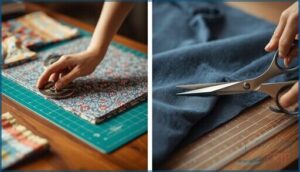
You might wonder if a rotary cutter is the right tool for every fabric project, and the answer depends on what you’re working with. Some materials and tasks are perfectly suited for rotary cutting, while others still call for traditional scissors.
Let’s look at when you should reach for your rotary cutter and when it’s better to set it aside.
Best Fabric Types for Rotary Cutting
Not all fabrics cooperate equally when you reach for your rotary cutter. Medium-weight woven cottons, linen, canvas, and flannel cut beautifully with clean edges and minimal fraying, making fabric selection straightforward for quilting and patchwork. Stable polyesters also handle well on your cutting mat.
Delicate silks and slippery satins need extra care—light pressure and a fresh blade prevent edge damage and fabric shifting during cutting. For additional tips on safe cutting practices and choosing essential rotary cutter features, review expert guidance before starting your next project.
Ideal Projects for Rotary Cutters
Rotary cutters shine when fabric cutting demands precision and speed across your crafting ideas. Your sewing projects benefit most when you need repeating shapes, straight seam allowances, or layered fabrics.
- Quilting techniques requiring identical squares and triangles up to 6.5 inches
- Patchwork designs with bias strips and complex block layouts
- Garment construction using muslin panels and interfacing trims
- Home decor projects including table runners, curtain panels, and cushion covers
- Fabric crafts featuring applique shapes and precise template transfers
For more insight into the customer preferences and expectations regarding rotary cutters, recent analysis highlights the importance of product quality and usability.
Quilting and Patchwork Applications
Quilting transforms fabric scraps into heirloom treasures, and your rotary cutter is the precision instrument that makes those intricate patterns possible. You’ll cut consistent quarter-inch seam allowances through multiple fabric layers, creating uniform blocks that align perfectly. Your fabric selection matters—cotton works beautifully with rotary techniques.
| Quilting Techniques | Rotary Advantage |
|---|---|
| Half-square triangles | Identical 45° angles |
| Strip piecing | Uniform fabric cutting |
| Patchwork techniques | Clean block design |
| Bias binding strips | Precise seam management |
| Template patterns | Accurate edge alignment |
Situations Where Scissors Work Better
While rotary cutters excel at straight lines, scissors claim victory in specific scenarios. You’ll reach for scissors when tackling fine detail cutting around curved seams, working with texture-sensitive materials like delicate knits, or performing edge-finishing tasks such as notching collars. Limited workspace situations don’t require bulky mats, and quick adjustments during fitting sessions happen faster. Scissors remain your go-to tool for intricate sewing work where precision trumps speed.
- Curved appliqué shapes that require following tight contours
- Clipping seam allowances near zipper teeth without damage
- Trimming fringe or decorative thread work by hand
- Portable cutting when traveling without your full cutting setup
- Small fabric scraps too narrow for safe rotary cutting
How to Use a Rotary Cutter Safely
A rotary cutter can feel like a powerful friend in your sewing room, but only if you respect what it’s capable of. One slip can lead to cuts that heal slowly, so knowing how to handle this tool correctly isn’t optional—it’s essential.
A rotary cutter is a powerful ally in your sewing room, but one careless slip can lead to serious cuts—respecting this tool isn’t optional, it’s essential
Let’s walk through the key safety practices that’ll keep your fingers intact and your cutting confident.
Proper Hand Position and Cutting Technique
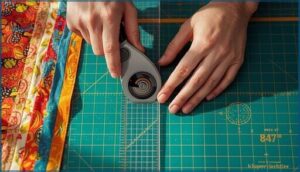
Grip your rotary cutter with your thumb resting on the blade housing and fingers wrapped around the handle for steady control. Your cutting strokes should be smooth and even, keeping the blade aligned perpendicular to the fabric while maintaining light downward pressure.
Hand placement matters—keep your guiding fingers behind the ruler’s edge to avoid contact with the blade. This cutting technique ensures clean edges and proper fabric tension throughout your project.
Essential Safety Rules to Follow
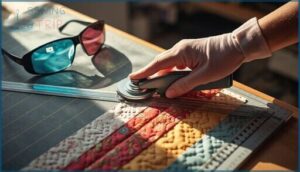
Beyond perfecting your technique, solid safety guidelines keep your fingers intact and your projects on track. Start with these blade safety fundamentals:
- Always cut away from your body and keep fingers at least 1 inch from the blade path
- Engage the safety lock immediately after each cut—never carry an exposed blade
- Wear ANSI Z87.1 compliant safety glasses to protect against flying debris
- Replace damaged blade guards before your next project
Using Cutting Mats and Rulers Correctly
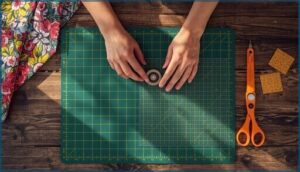
Your cutting mat and ruler work together like dance partners—when one’s off, the whole performance suffers. Place your mat on a flat surface and align fabric edges with the 1 millimeter grid lines for accurate cutting techniques.
Press your clear acrylic ruler firmly against the fabric, using its non-slip grip to prevent shifting. Apply even blade pressure control while keeping the rotary cutter perpendicular to maintain mat surface quality and extend blade life.
Preventing Common Accidents and Injuries
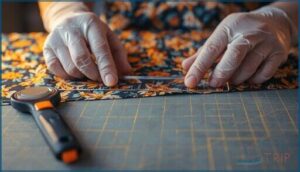
Vigilance separates confident crafters from emergency room visits. Master these accident prevention strategies to keep your cutting safety record spotless and your fingers intact.
- Wear cut-resistant gloves to reduce skin exposure risk by up to 60 percent during fabric cutting tasks
- Always retract blades or engage the safety lock when setting down your rotary cutter, even for a moment
- Position your non-cutting hand behind the ruler with fingers spread, never in the blade’s path
Top 9 Rotary Cutters for Fabric
Now that you know how to use your rotary cutter safely, you’re ready to find the perfect tool for your fabric projects. The right cutter can make all the difference in your cutting speed, comfort, and precision.
Here are nine standout options that cover everything from budget-friendly basics to specialty cutters with sophisticated features.
1. Fiskars Rotary Fabric Cutter Tool
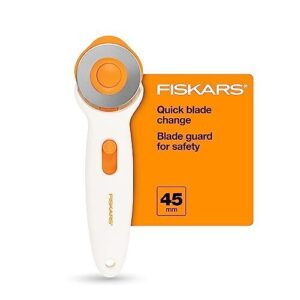
The Fiskars Rotary Fabric Cutter Tool stands out for its ambidextrous design, making it a solid pick whether you’re left- or right-handed. Its 45mm premium steel blade cuts through multiple layers of fabric, felt, and vinyl with ease, saving you time compared to scissors.
You’ll appreciate the sliding button that extends, locks, and retracts the blade smoothly. The symmetrical stick handle offers comfortable control, and blade replacement is straightforward when sharpness fades.
Plus, Fiskars backs it with a lifetime warranty, excluding the blade itself.
| Best For | Sewers, quilters, and crafters who need a versatile cutter that works comfortably for both left- and right-handed users and can handle multiple fabric layers. |
|---|---|
| Blade Size | 45mm |
| Blade Material | Steel |
| Handle Orientation | Ambidextrous |
| Safety Feature | Sliding Lock Button |
| Primary Use | Fabric Cutting |
| Handle Material | Stainless Steel |
| Additional Features |
|
- 45mm steel blade cuts through multiple layers of fabric, felt, and vinyl quickly, saving time over scissors
- Ambidextrous stick handle design works equally well for left- and right-handed users
- Lifetime warranty (excluding blade) and easy blade replacement system
- Replacement blades can be expensive over time
- Handle grip can feel slightly slippery during extended use
- Blade may dull faster than expected with heavy use
2. Fiskars Rotary Cutting Set
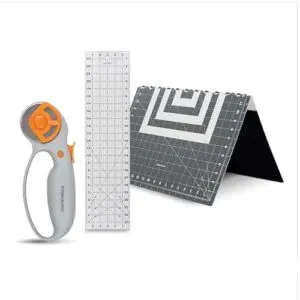
If you’re starting out or want a complete system ready to go, this Fiskars set bundles everything you need. You get a 45mm rotary cutter with a comfortable loop handle, an 18-by-24-inch self-healing mat with bias lines and grids, and a clear acrylic ruler marked with seam allowances.
The mat folds for storage, though watch for slight creasing at the fold that can cause skipping. Replacement blades snap in easily, and the whole package works as one cohesive cutting system.
| Best For | Beginners and crafters who want an all-in-one kit with everything needed to start cutting fabric, paper, or vinyl right away. |
|---|---|
| Blade Size | 45mm |
| Blade Material | Premium Steel |
| Handle Orientation | Ambidextrous |
| Safety Feature | Blade Lock |
| Primary Use | Quilting & Crafts |
| Handle Material | Ergonomic Loop |
| Additional Features |
|
- Includes all three essentials (cutter, mat, and ruler) in one package, so you don’t need to buy pieces separately
- 45mm rotary blade cuts through multiple layers cleanly and replacement blades are easy to swap
- Self-healing mat has helpful bias lines and grids for accurate measuring and angled cuts
- Folding mat can develop a crease in the middle that may cause the cutter to skip over the fold
- Cutting multiple layers doesn’t always produce clean edges
- Ruler only shows inches, not centimeters, which limits usefulness for metric measurements
3. Mr Pen Rotary Fabric Cutter
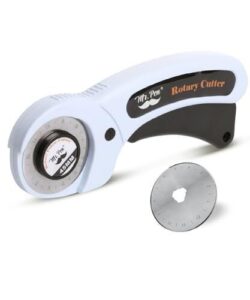
You won’t spend a fortune with the Mr Pen 45mm cutter, which comes with one extra blade right in the package. The ergonomic loop handle fits comfortably whether you’re right- or left-handed, and the sliding button retracts and locks the blade for safe storage.
It cuts through four layers of cotton, felt, or vinyl cleanly, though you might need to press a bit harder on tougher materials like leather.
The bright-colored handle makes it easy to spot in your workspace.
| Best For | Crafters and quilters who want an affordable, ambidextrous rotary cutter that handles multiple fabric layers without breaking the bank. |
|---|---|
| Blade Size | 45mm |
| Blade Material | Premium Steel |
| Handle Orientation | Ambidextrous |
| Safety Feature | Sliding Lock Button |
| Primary Use | Quilting & Crafts |
| Handle Material | Silicone |
| Additional Features |
|
- Comes with an extra blade included, so you’re covered when the first one dulls
- Ergonomic handle works equally well for righties and lefties
- Cuts cleanly through four layers of fabric, felt, or vinyl in one pass
- Requires extra pressure and multiple passes on tougher materials like leather
- Sharp blade can cut through your cutting mat if you’re not careful
- Some users reported the blade skipping over fabric or the logo sticker peeling off
4. Electric Rotary Fabric Cutter Machine
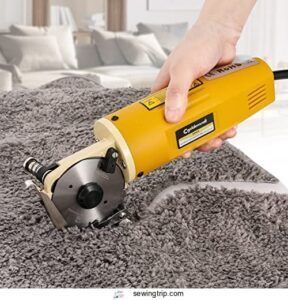
When you need serious cutting power for thick materials, an electric rotary fabric cutter manages up to 25mm (1 inch) in a single pass. This silver or yellow metal machine features a 70mm octagonal blade spinning at 2400 RPM, slicing through multiple layers of cotton, silk, leather, and even carpet with minimal effort.
The built-in sharpening stone keeps the alloy steel blade sharp automatically, while the pure copper motor ensures stability.
Just avoid cardboard and flannel, and keep it away from children—the exposed blade demands respect.
| Best For | Commercial sewers, upholsterers, and DIY enthusiasts who regularly cut through thick, multi-layer fabrics like leather, carpet, or heavy cotton and need a powerful tool that can handle industrial-grade projects. |
|---|---|
| Blade Size | 70mm |
| Blade Material | Alloy Steel |
| Handle Orientation | Standard |
| Safety Feature | Trigger Switch |
| Primary Use | Industrial Cutting |
| Handle Material | Metal |
| Additional Features |
|
- Cuts through up to 1 inch of thick material in one pass, saving significant time on large projects
- Built-in sharpening stone maintains blade sharpness automatically without manual maintenance
- Pure copper motor and high-speed 2400 RPM performance deliver consistent, reliable cutting power
- Heavy 3.1 lb weight can cause hand fatigue during extended use
- Exposed blade and trigger switch design require extra caution to prevent accidents
- Can’t handle certain materials like cardboard or flannel, limiting versatility
5. Rdutuok Rotary Cutter Quilting Kit
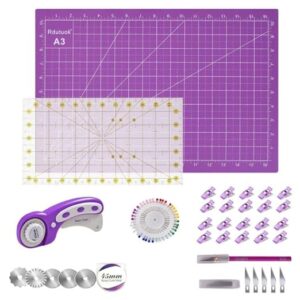
Looking for a complete setup that won’t break the bank? The Rdutuok Quilting Kit bundles a 45mm rotary cutter with five replacement blades, an 18 x 12″ self-healing mat, a 6.5 x 12″ acrylic ruler, plus 40 pins and 20 craft clips.
You’ll cut through multiple fabric layers with steady pressure, though some users report the cutter loses sharpness quickly. The grid-lined mat guides your cuts while protecting your workspace, making this 2.1-pound kit suitable for beginners tackling patchwork projects.
| Best For | Beginners or casual crafters who want an affordable all-in-one quilting starter kit with essential tools and accessories included. |
|---|---|
| Blade Size | 45mm |
| Blade Material | Sharp Steel |
| Handle Orientation | Standard |
| Safety Feature | Safety Button |
| Primary Use | Quilting & Sewing |
| Handle Material | Plastic |
| Additional Features |
|
- Complete bundle includes everything you need to start quilting—rotary cutter, self-healing mat, ruler, pins, and clips
- Self-healing cutting mat protects your work surface and provides helpful grid lines for accurate measurements
- Budget-friendly option that gives you multiple tools and extra replacement blades without a big investment
- Rotary cutter may lose sharpness quickly or have blades that freeze up after limited use
- Overall quality can be inconsistent, with some users reporting durability issues with the cutter and other components
- Cutting mat may show wear and tear like scratches or small cuts sooner than higher-end options
6. Clover Rotary Cutter Tool
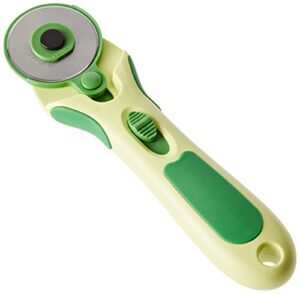
Clover’s 45mm rotary cutter puts comfort front and center with its soft-cushion handle that fits both right and left hands.
You’ll slice through fabric, paper, and leather with the alloy steel blade, opening and closing it via a simple thumb latch.
The blade cover keeps you safe between cuts and during blade swaps.
At just 0.03 pounds, this lightweight tool won’t tire your hand during marathon quilting sessions, though you’ll need to monitor blade sharpness and replace it when cutting gets rough.
| Best For | Quilters, sewers, and crafters who need a comfortable, ambidextrous rotary cutter for fabric, paper, and leather projects. |
|---|---|
| Blade Size | 45mm |
| Blade Material | Alloy Steel |
| Handle Orientation | Ambidextrous |
| Safety Feature | Thumb Latch Cover |
| Primary Use | Quilting & Sewing |
| Handle Material | ABS & Elastomer |
| Additional Features |
|
- Soft-cushion handle reduces hand fatigue during long cutting sessions
- Works equally well for right and left-handed users
- Lightweight design (0.03 pounds) makes it easy to maneuver for both curves and straight lines
- Blade can dull quickly depending on usage and materials
- Not ideal for cutting thick or heavy-duty materials
- Requires periodic blade replacements to maintain cutting performance
7. Cricut Rotary Fabric Cutter
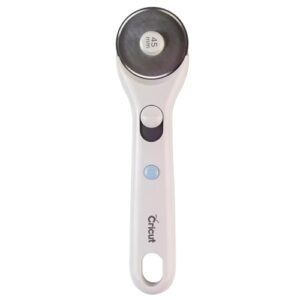
Cricut’s 45mm rotary cutter brings symmetrical design to the table, so you can cut comfortably whether you’re right or left handed. The sliding quick-release blade cover protects your fingers until you press the button to activate the blade.
You’ll get clean cuts through fabric, foils, and other thin materials with its premium carbon alloy steel blade, though the safety latch takes some practice to master without accidentally releasing it.
At 3.32 ounces, it’s light enough for precision work across quilting and crafting projects.
| Best For | Crafters and quilters who want a lightweight rotary cutter with a reversible grip that works for both right and left-handed use. |
|---|---|
| Blade Size | 45mm |
| Blade Material | Carbon Alloy Steel |
| Handle Orientation | Ambidextrous |
| Safety Feature | Quick-Release Cover |
| Primary Use | Fabric & Quilting |
| Handle Material | Symmetrical Design |
| Additional Features |
|
- Premium 45mm carbon alloy steel blade cuts cleanly through fabric, foils, and thin materials
- Symmetrical handle design accommodates both right and left-handed users comfortably
- Lightweight at 3.32 ounces, making it easy to control for precision cutting work
- Safety latch can be finicky and may release accidentally during use
- Takes practice to learn the right amount of pressure for effective fabric cutting
- Despite symmetrical design, may still not be ideal for left-handed users
8. Fiskars Titanium Rotary Fabric Cutter
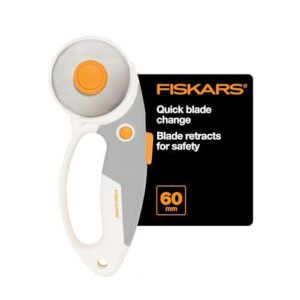
Fiskars takes things up a notch with its 60mm titanium rotary cutter, featuring a blade coating about three times harder than steel. This larger blade slices through thick batting, denim, and multiple fabric layers without the edge dulling quickly, while the SoftGrip handle fits comfortably in either hand.
You’ll appreciate the sliding button that extends the blade guard for safe storage between cuts. At just 0.11 kilograms, it balances precision with the muscle to handle heavy materials your quilting projects demand.
| Best For | Quilters and crafters who regularly cut through thick batting, denim, or multiple fabric layers and want a durable blade that stays sharp longer. |
|---|---|
| Blade Size | 60mm |
| Blade Material | Titanium |
| Handle Orientation | Ambidextrous |
| Safety Feature | Sliding Button |
| Primary Use | Thick Material Cutting |
| Handle Material | Plastic Loop |
| Additional Features |
|
- Titanium-coated 60mm blade is three times harder than steel and maintains sharpness through heavy use
- Ergonomic handle works comfortably for both right- and left-handed users
- Sliding button guard makes blade changes easy and keeps the cutter safe when stored
- Blade remains exposed during use unless manually locked closed
- Replacement blades needed over time add to long-term costs
- Some users report finding residue on the blade out of the box
9. Rotary Cutter With Safety Lock
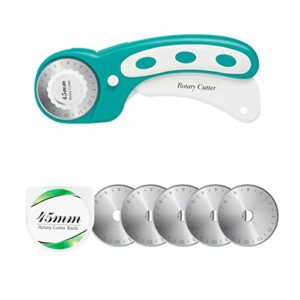
For those who value protection above all else, the 45mm rotary cutter with a safety lock brings peace of mind to every project. Its side-mounted lock button keeps the blade tucked safely inside the housing when you’re not cutting, preventing accidental nicks while you reach for rulers or fabric.
The stainless steel blade cuts cleanly through cotton, vinyl, and leather, while the ergonomic plastic handle fits both right and left hands comfortably during long sewing sessions.
| Best For | Crafters and hobbyists who need a safer cutting tool for fabric, paper, and vinyl projects without the worry of accidental blade exposure. |
|---|---|
| Blade Size | 45mm |
| Blade Material | SKS7 Stainless Steel |
| Handle Orientation | Ambidextrous |
| Safety Feature | Safety Lock Button |
| Primary Use | Multi-Material Cutting |
| Handle Material | Plastic |
| Additional Features |
|
- Safety lock button keeps the blade secure when not in use, reducing the risk of cuts
- Comes with 5 replacement blades so you won’t need to buy more right away
- Works for both right-handed and left-handed users with a comfortable grip
- The locking mechanism has been reported as unreliable by some users
- Quality may not hold up for heavy-duty or professional work
- Blade sharpness isn’t consistent and may need frequent swapping
Choosing The Right Rotary Cutter for You
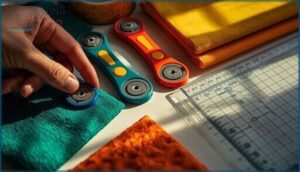
Finding the right rotary cutter isn’t about grabbing the first one you see—it’s about matching the tool to your hands, your projects, and how you work. The wrong choice can leave you frustrated with tired wrists or cuts that don’t live up to your standards.
Let’s break down the key features you need to keep in mind so you can pick a cutter that feels like an extension of your own hand.
Blade Size Selection Guide
When you’re ready to choose your rotary cutter, blade size determines cutting efficiency and fabric thickness you can handle.
A 28 mm blade works best for thin materials and curved cuts, while 45 mm blades offer adaptable cutting through most projects.
For heavy fabric or multiple layers, 60 mm blades deliver exceptional blade sharpness and power, making rotary cutter techniques easier to master.
Ergonomic Handle Features to Consider
Your hand deserves a rotary cutter that works with your natural grip, not against it. An ergonomic handle with contoured grips reduces strain during long quilting sessions, while handle materials like rubberized grips prevent slipping.
- Ergonomic grip features distribute pressure evenly across your palm
- Weight balance prevents twisting and keeps cuts steady
- Adjustable fits accommodate different hand sizes without switching tools
Choose Fiskars or brands offering true comfort for marathon cutting sessions.
Safety Lock and Retractable Blade Options
When you’re slicing through layers of fabric, blade safety isn’t optional. A rotary cutter with a safety lock prevents blade exposure when you set it down, while retraction systems automatically slide the blade back into the housing after each cut.
These guard features work together for accident prevention, giving you control without constant worry. Look for models with one-handed lock mechanisms that click into place—your fingers will thank you.
Specialty Cutters Vs. Standard Models
Standard models give you basic blade comparison and safety features at a lower price, but specialty rotary cutters from brands like Fiskars and OLFA deliver exceptional tool durability and cutter ergonomics.
You’ll notice the difference in blade sharpness—specialty blades stay sharp up to 50% longer, handle thicker fabric handling with ease, and offer precision cutting across multiple layers without the hand strain.
Maintaining Your Rotary Cutter for Longevity
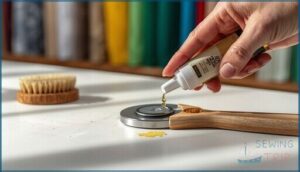
Your rotary cutter won’t last long if you treat it like an afterthought. Regular maintenance keeps your cuts clean, your hands safe, and your blades sharp enough to slice through multiple fabric layers without hesitation.
Let’s walk through the essential care steps that will keep your tool working like new for years to come.
When and How to Replace Blades
Your blade’s sharpness directly affects every cut you make. Replace it when you notice increased resistance, fabric snagging, or visible nicks along the edge. For frequent quilters, swap blades every 6 to 12 months.
Before blade replacement, engage your rotary cutter’s safety lock and wear cut-resistant gloves. Clean the housing, align the new blade correctly, and test tightness before your next project.
Cleaning Fabric Residue and Dust
Fabric fibers cling to your rotary cutter blade after every project, dulling its edge and compromising blade sharpness. Use a microfiber cloth for dust removal, gently wiping both sides to lift particles without damaging the blade.
For stubborn residue prevention, run a lint roller across the blade surface. Regular fabric cleaning and cutter maintenance preserve safety features and extend your tool’s cutting performance between blade replacements.
Proper Storage and Blade Protection
After wiping down your tool, proper storage solutions protect your investment and maintain blade sharpness. Engage the safety features on your rotary cutter—lock that blade every time—then follow these cutter maintenance steps for edge protection:
- Store in a rigid blade guard or protective sheath
- Keep in a dry, dust-free drawer or case
- Use blade guards to prevent nicks and corrosion
- Store upright to avoid pressure on the cutting edge
- Keep away from children in secured containers
Smart rotary cutter usage starts with blade safety habits.
Inspecting for Dullness and Damage
Once your rotary cutter is safely stored, regular edge inspection keeps it performing like new. Test blade sharpness by slicing scrap fabric—clean cuts mean you’re good, while frayed edges signal it’s time for blade replacement. Check for nicks, chips, or corrosion during cutter maintenance, and watch for bent edges that veer off course. Proper damage assessment protects your projects and extends rotary cutter usage with quality blade material and reliable safety features.
| Inspection Area | Warning Signs | Action Needed |
|---|---|---|
| Blade Sharpness | Frayed edges, skipped starts | Replace blade immediately |
| Edge Condition | Nicks, chips, burrs visible | Install new blade |
| Alignment | Curved or jagged cuts | Check mount, realign or replace |
| Handle & Guard | Cracks, worn grips, loose parts | Repair or upgrade cutter |
| Debris Build-up | Lint between blade and guard | Clean thoroughly before use |
Troubleshooting Common Rotary Cutter Problems

Even with proper care, rotary cutters can develop frustrating issues that affect your cutting quality. The good news is that most problems have simple fixes you can tackle right away.
Let’s walk through the most common challenges and how to solve them so you can get back to smooth, accurate cuts.
Fixing Uneven or Jagged Cuts
Precision starts with proper setup. When your cuts turn jagged, first check your blade alignment—a dull or nicked edge creates uneven fabric cutting every time.
Secure your cutting mat on a flat surface, then press your ruler firmly to prevent shifting during mat calibration.
Light fabric stabilization with starch reduces fraying, while consistent pressure delivers cutting edge correction and fray reduction throughout each pass.
Solving Fabric Slipping Issues
Slippery fabric ruins cutting accuracy fast. Start with slip prevention by placing a non-slip mat under your fabric cutting surface for mat adhesion. Press your ruler down firmly to maintain edge control, and use pattern weights instead of pins on delicate materials.
Light fabric spray adhesive works wonders for fabric grip on silky weaves—just let it dry before you cut. Your rotary cutter glides smoothly when everything stays put.
Addressing Blade Skipping or Dragging
Five common culprits cause blade skipping during fabric cutting. First, check blade sharpness through regular blade maintenance—dull edges drag instead of slicing cleanly. Second, adjust your cutting techniques by applying steady, moderate pressure rather than forcing cuts.
Third, focus on fabric preparation by smoothing wrinkles and securing layers. Fourth, verify mat quality isn’t compromised by deep grooves. Finally, confirm proper blade material compatibility with your rotary cutter model.
Dealing With Excessive Fraying
Sharp blades are your first line of fray prevention—dull cutters pull threads loose and create ragged edges. Use a fresh blade with your cutting mat and ruler for clean fabric cutting.
Apply edge finishing techniques like fray check or zigzag stitching immediately after cuts. Fabric stabilizers under delicate materials reduce shedding, and proper cutting techniques that follow the grain minimize edge unraveling.
Frequently Asked Questions (FAQs)
What is the purpose of a rotary cutter?
You might think rotary cutters are just fancy scissors, but their circular blade rolls through fabric layers to deliver straight, continuous cuts with less hand strain than traditional shears.
Is a rotary cutter better than scissors for fabric?
For long, straight cuts, a rotary cutter paired with a ruler and cutting mat delivers greater cutting accuracy and speed compared to scissors.
Scissors, however, excel at curves, where fabric selection and blade sharpness matter most.
What two things must you use with the rotary cutter?
You can’t cut safely without the right partners: a self-healing cutting mat protects your surface and allows clean rotary cutter blade movement, while a clear acrylic ruler provides the straight edge for accurate fabric cuts.
Can rotary cutters work on thick upholstery fabrics?
Yes, rotary cutters handle thick upholstery fabrics when you choose carbide blades in larger sizes (45mm or 60mm) and use a sturdy cutting mat. Make smooth, firm passes and replace your blade when you notice skipping or fraying.
Do left-handed rotary cutters actually exist?
Absolutely—left-handed rotary cutters feature mirror image blade orientation and ergonomic grips shaped for lefties. Brands like Fiskars and Martelli offer models with reversed mounting, while many cutters provide ambidextrous designs with reversible blade placement.
How often should blades be sharpened professionally?
Professional sharpening frequency depends on your cutting load and blade material. Hobbyists typically need service every 6 to 12 months, while heavy users benefit from sharpening every 3 to 6 months for best edge retention.
Are rotary cutters safe for children to use?
Like handing a young driver the keys, rotary cutters demand respect and readiness.
Children aged 12 and up can use them with close supervised use, blade guards, ergonomic grips, safety locks, and strict safety rules preventing child accident prevention concerns.
Can you cut curves easily with rotary cutters?
Rotary cutters handle curves with practice and the right blade size. A 28mm blade excels at tight turns, while steady pressure and a flexible cutting mat guarantee smooth edge control and precision cutting.
Conclusion
Sure, you could keep wrestling with scissors like it’s 1842, hand-cramping your way through each quilt block while your edges wander off like they’ve got somewhere better to be. Or you could join the rest of us who’ve discovered why use a rotary cutter for fabric—speed, precision, and hands that don’t feel like they’ve been wringing out wet towels.
Your fabric deserves clean cuts. Your projects deserve efficiency. You deserve tools that work.