This site is supported by our readers. We may earn a commission, at no cost to you, if you purchase through links.
Loose threads at the edge of your fabric spell trouble fast. One wash, and that tidy seam turns into a fringe you never asked for. You know the feeling—painstakingly stitched seams, then after a tumble in the wash, your hard work looks worn before you even wear it.
Finishing raw edges isn’t just about making things look sharp; it’s the secret to clothes that last and feel store-bought. Mastering these edge techniques means fewer frayed nerves and far fewer frayed seams. Ready for those professional finishes every maker wants? Let’s get straight to it.
Table Of Contents
Key Takeaways
- Finishing raw edges is essential for preventing fraying and making your clothes last through washes and wear.
- Matching your edge finishing technique to the fabric type and weight leads to strong, professional-looking results.
- Simple methods like zigzag stitch, overcast stitch, or hand sewing can quickly seal edges and keep seams tidy.
- Pressing, trimming, and choosing the right thread and tension all help create crisp, durable seams that look store-bought.
Why Finishing Raw Edges Matters
You might think finishing raw edges is just an extra step, but it’s what separates a homemade project from something that looks store-bought.
If you want your projects to look truly polished, this guide on finishing seams like a pro breaks down the best techniques for clean, crisp results.
Finishing raw edges transforms your project from homemade to polished, setting it apart with a truly professional touch
Without proper finishing, your seams will fray, your hems will unravel, and your hard work won’t last through even a few washes. Here’s why taking a few extra minutes to finish those edges makes all the difference.
Preventing Fabric Fraying
Fraying happens when fabric fibers unravel at raw edges, revealing loose threads that weaken your seams. Fray prevention keeps those threads locked in place!
Different fabrics demand different edge finishing techniques:
- Delicate silks and chiffons need gentle edge binding or fabric stabilizers
- Woven materials with loose yarns require zigzag stitch or pinking shears for fray resistance
- Each wash cycle accelerates fraying on unfinished edges
- Proper seam reinforcement stops unraveling before it starts
One effective approach is to use fabric sealants for fray prevention, which can help protect edges from wear.
Enhancing Garment Durability
Choosing the right seam finish is your first line of defense for garment longevity. A sturdy French seam or an edge binding strengthens seam allowance and holds up through real-life durability testing—think laundry, movement, and wear.
Let’s compare a few winning strategies below:
| Technique | Benefit |
|---|---|
| Seam Reinforcement | Reduces raw edge splits |
| Edge Binding | Shields fabric from fraying |
In addition to technique choice, understanding promotes more durable outcomes in sewing.
Achieving a Professional Appearance
Let your edge finish tell a story of skill—neat lines and precise fabric folding signal professionalism every time. Clean finishing with a zigzag stitch or serger changes casual projects into polished ones.
If you want more tips on keeping your seams tidy, this guide on simple ways to finish your edges with a sewing machine has easy-to-follow tricks to try.
Pressing seams flat after edge trimming and adding professional binding, like bias tape, takes your piece up a notch:
- Improved seam finish
- Fewer visible threads
- Longer-lasting shape
Choosing The Right Edge Finish
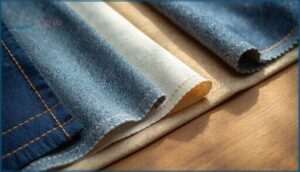
Every fabric acts a little differently as you work. To get edges that last, it pays to match your finishing method to the fabric and the job.
Here’s what you’ll want to think about before you choose.
Considering Fabric Type and Weight
Think of fabric weight as the backbone of your project—too light, and edges fray with a tug; too heavy, and seams need real muscle for edge stability.
Your fiber blends matter too. Cotton and linen love to unravel, while synthetics hold steady. Every fabric’s drape and texture change how you finish seams, affecting seam durability and that satisfying garment feel.
Matching Techniques to Project Needs
Almost every project demands a fresh look at your fabric analysis—some sewing techniques truly shine on delicate silks while others uphold rugged denim.
You’ll weigh edge binding for crisp corners, rely on seam reinforcement for garment longevity, and adjust finish selection for durability and style. With smart edge finishing, your garments gain polish and outlast everyday wear.
Tools Required for Each Method
In your sewing kit, keep sharp pinking shears ready for decorative anti-fray cuts, and an overcasting foot nearby for machine-based edge work. Stock up on quality hand sewing needles and strong thread for hand finishes.
Secure sturdy binding supplies for bias edges, and don’t overlook serger accessories, like differential feed, to tackle every raw edge with polish and confidence.
Machine Techniques for Finishing Edges
Machine finishing can give your raw edges a clean look in just a few steps. You’ll get tidy seams and extra strength, all with your regular sewing machine or a serger.
Here’s how you can use these techniques to keep your seams neat and lasting.
Zigzag Stitch for Raw Edges
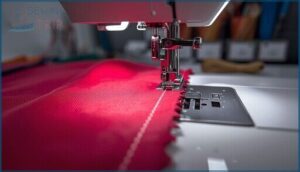
Ever watched fabric edges unravel like a slow, stubborn fray? That’s why the zigzag stitch is your secret weapon. With smart Zigzag Settings and keen Tension Control, you’ll master Edge Stability in no time.
Here’s how to keep raw edges neat:
- Adjust Stitch Width to 2mm.
- Set stitch length to 2.5mm.
- Align fabric under your presser foot.
- Zigzag along the edge for impeccable edge finishing—no Fabric Distortion or messy seams.
Overcasting With a Sewing Machine
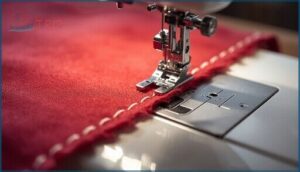
Imagine this: the Overcast Stitch gives you edge finishing so neat, it looks factory-made. Set your sewing machine with an overcasting foot—its center bar keeps fabric flat, no curling or tunneling here.
Prep fabric, align with the edge guide, and stitch. Whether on thick or light wovens, overcasting controls fraying while laying down a strong, slim seam finish.
Using a Serger for Seam Finishing
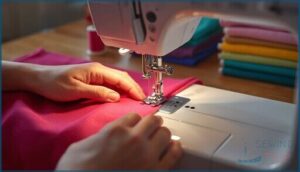
Think a serger is just for pros? Not true—you can master it! A serger trims, stitches, and seals the edge all at once, making seam finishing precise.
Here’s how you get perfect results:
- Adjust thread tensioning for your fabric.
- Set up the differential feed to control stretch.
- Use serger edging for clean seams.
- Don’t skip regular serger maintenance!
Hand and Decorative Edge Finishing
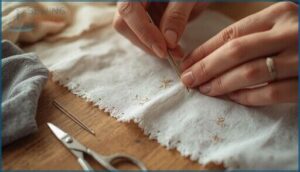
Not every edge needs a machine finish to look polished or last. Sometimes, hand sewing or a little extra decoration turns a basic seam into something special.
Here are a few ways you can finish raw edges by hand or add a touch of style.
Whip Stitch and Blanket Stitch
When you use a whip stitch or blanket stitch, you’re giving your fabric edges a layer of armor.
Both hand stitching styles wrap thread over raw edges, protecting them from fraying and adding decorative flair.
Play with stitch length for texture, keep thread tension steady, and match your method to your fabric selection.
It’s simple edge protection, done your way.
Hand-Overcast and Scalloped Edges
Hand Overcast edges wrap thread along the raw edge, keeping fabric flexible and tidy—it’s perfect when machine finishing won’t reach or when you want a soft touch.
Scalloped Edges, on the other hand, bring curves and personality to hems. Both of these sewing techniques let you tailor your edge finishing based on fabric selection and your seam finishing goals.
Using Bias Tape and Binding
After playing with curved hems or textured edges, you’ll find bias tape and binding open up a world of neat, colorful finishes.
Bias tape binding hugs curves with ease, letting you secure folded seams or finish tricky fabric edges.
Whether you’re after Decorative Binding or durable seam finishing, these Edge Finishing Tools make your projects look sharp and professionally woven.
Tips for Neat and Lasting Edge Finishes
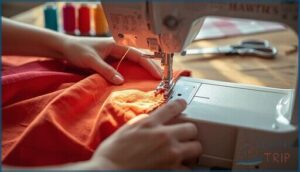
Getting polished seams takes a little extra care and the right steps. You want your edges to look just as good on the inside as the outside.
Here are some proven tricks to help you get crisp, long-lasting results every time.
Pressing and Trimming for Clean Seams
Crisp fabric edges set the stage for stunning edge finishing. Before anything, press your seams—steam sets the stitches and smooths puckers. Always press first, trim second.
Then, use sharp trimming tools to shape your seam allowance for a polished finish. Finally, prep enclosed areas by grading and clipping, making each turn and curve lie flat and professional.
Thread Selection and Tension Control
Once seams are pressed and trimmed, thread selection moves to center stage. Choose thread weight to balance with your fabric—polyester blends offer strength, while cotton threads prevent puckering.
For best seam finishing techniques, check tension gauges and calibrate your sewing machine. Adjust bobbin tensioning when switching fabrics or stitches. Light tension prevents thread breakage and keeps fabric friction under control.
Common Mistakes to Avoid
You’ll often spot edge finishing errors when you skip prewashing or forget to check thread tension—little things that matter.
Don’t rush over seam allowance problems, or you’ll fight fabric grain mistakes later. Test your sewing techniques on scraps first.
Watch for serger troubleshooting troubles and never ignore messy raw edges. Neat, sturdy fabric edges require patience, precision, and some trial and error.
Frequently Asked Questions (FAQs)
What is the best stitch for finishing raw edges?
For a clean finish on most raw edges, use a zigzag stitch or an Edge Stitch with your sewing machine.
If you own a serger, the Overlock Stitch creates professional seam finishing and strong seam reinforcement every time.
Do you finish raw edges before sewing?
It would be wild to finish every raw edge before you even start sewing.
Edge Preparation comes after joining seams, as part of your Sewing Sequence.
This approach lets you stabilize fabric edges and ensures seam security with better Finishing Order.
What are the methods of finishing raw edges?
You can give fabrics long-lasting polish by using techniques like Edge Binding, zigzag stitch, Overlock Techniques, or Seam Enclosure.
These raw edge finishing methods boost durability, prevent fraying, stabilize fabric edges, and guarantee your seam allowance stays tidy.
Can raw edges be finished without a sewing machine?
Absolutely, you can finish raw edges without a sewing machine. Try manual stitching, hand finishing, or binding with bias tape.
Pinking shears work for quick fray prevention, while decorative edges add flair—no serger required!
How do you finish seams on stretch fabrics?
Think of seam finishing on stretch fabrics as steering a car around sharp bends—keep control with a narrow zigzag stitch or overlock stitch, stabilize edges, adjust machine settings, and avoid stretching the seam allowance to prevent fabric distortion and guarantee long-lasting strength.
What are eco-friendly edge finishing options?
Eco Bindings and Sustainable Trims, like organic cotton bias tape or hemp, offer Green Finishes and Natural Edges.
Try Biodegradable Seams with linen or recycled polyester for fabric edge stability—these seam finishing techniques keep your fabric finishing truly eco-conscious.
How to repair frayed seams after washing?
Over 60% of garment repairs start at Frayed Seam.
For Frayed Seam Repair, trim loose threads, reinforce with a backstitch or zigzag along the seam allowance, and finish raw edges for strong Edge Reinforcement and lasting Fabric Mending results.
Are there quick, temporary edge finishing methods?
Need a speedy fix for raw edges or seams? Try pinking shears for instant fray prevention, Quick Wrapping with edge binding, a zigzag stitch, or narrow hemming—each works as a temporary seam finishing method before a permanent approach.
Conclusion
Don’t leave your projects hanging by a thread—finishing raw edges in sewing gives your work real staying power. Each neat finish, each smart choice, sets you apart from the crowd and saves you time down the line.
Your next garment won’t just look sharp; it’ll survive every wash, tug, and twist without worry. Master these edge techniques and sew with pride—now, every seam is secure, and every finish is a quiet promise your work will last.