This site is supported by our readers. We may earn a commission, at no cost to you, if you purchase through links.

You flip a handmade garment inside out and find a mess of frayed threads, loose edges, and exposed seam allowances that scream “amateur hour.” That’s the reality when you skip seam finishing.
A clean seam finish inside transforms your project from homemade to handcrafted, protecting fabric edges from unraveling while adding strength to every stitch. The technique locks thread tension right at the seam allowance, stopping fraying before it starts and extending your garment’s lifespan through dozens of washes.
Whether you’re working with delicate silk or sturdy denim, mastering this fundamental skill separates casual hobbyists from confident sewists who produce professional-grade work.
Table Of Contents
Key Takeaways
- Seam finishing prevents fabric edges from fraying and unraveling, extending garment lifespan through multiple washes while adding structural strength to high-stress zones.
- Your fabric type determines which finish works best—silk needs fine stitching for drape preservation, medium cottons pair with zigzag or serger methods, and structured garments require flat pressed seams.
- The basic clean finish technique involves three steps: press seams flat from center outward, fold raw edges under 6mm and pin, then stitch 2-3mm from the fold using straight stitch.
- Alternative methods like French seams enclose raw edges inside double seams for sheers, while flat felled seams fold one allowance over the other for denim strength, and bound finishes wrap bias tape around edges for couture-level results.
Why Clean Seam Finishes Matter
When you finish a seam properly, you’re not just making things look nice. You’re protecting your fabric from falling apart and making sure your garment lasts through years of wear and washing.
Mastering a few essential seam finishing techniques will transform your sewing from homemade to handmade quality.
Here’s why taking those few extra minutes to clean finish your seams is one of the smartest moves you can make as a sewist.
Preventing Fabric Fraying
Fray prevention starts the moment you cut woven fabric. Raw edges expose loose threads that pull free when your garment bends or rubs against itself. That’s why seam finishing techniques matter from the start.
- Thread tension locks fibers before they unravel during washing
- Zigzag stitch traps several threads along the seam allowance for edge stability
- Fabric selection influences how quickly fraying begins
- Seam reinforcement resists edge wear in high-stress areas
- Proper finishing maintains clean edges through multiple launderings
You can explore other effective to guarantee your seams stay neat and durable.
Enhancing Garment Durability
Clean finish seam techniques boost garment longevity by protecting high-stress zones where fabric selection and fiber strength matter most. Seam reinforcement with proper seam allowance folding shields edges from wear, while serger or machine stitching locks fibers against repeated flexing.
Durability testing shows finished seams outlast raw edges by preventing thread breakage. Your garment withstands more washes when seam finishing techniques secure every edge.
For further reading on how garment durability improves by design, explore techniques that integrate thoughtful material selection and construction methods.
Achieving a Professional Appearance
Beyond durability, a clean finish seam communicates your attention to detail. Your garment’s interior tells a story about craft when seam finishing reveals no raw threads or zigzag stitch blunders.
A well-executed clean finish facing tutorial walks you through techniques that elevate necklines and armholes from homemade to professionally polished.
A clean finish seam communicates your attention to detail—your garment’s interior tells a story about craft
French seams or proper fabric selection enhance workplace attire into personal presentation that mirrors professional grooming standards.
You signal competence through seam finishing tips applied with care, transforming basic construction into polished work worthy of respect.
Choosing The Right Seam Finish
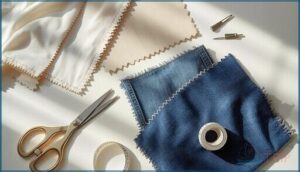
Not every seam finish works for every project. Your fabric type and the garment you’re making will determine which method gives you the best results. Here’s what you need to keep in mind before you start stitching.
Matching Finish to Fabric Type
Your fabric selection drives every seam finish decision you make. Smooth fabrics like silk demand crisp, clean finish techniques with fine stitching to maintain their drape. Medium-weight cottons pair well with zigzag stitch or serger methods for seam durability.
Texture analysis helps you match finish compatibility—wovens tolerate tighter seams while knits need stretch-friendly options. Proper fabric preparation and fiber matching prevent fraying and guarantee professional results.
Considering Garment Style and Use
Your garment style dictates which seam finishing technique you choose. Professional attire demands minimal seam visibility and crisp, clean-finished seam edges, while everyday wear tolerates more relaxed methods that resist wear patterns.
- Structured jackets require flat, pressed seams that preserve garment construction lines
- Active wear needs flexible finishes that endure movement and care needs
- Formal dresses benefit from French seams for refined garment lifespan
- Casual shirts allow simpler fabric choice-matched seam finishing
Tools and Supplies Needed
You need a basic sewing machine with straight and zig-zag stitches for most seam finishing tutorials.
Pressing tools like an iron with steam settings and a pressing cloth protect delicate fabrics during each stage.
Hand sewing needles, sharp scissors, and a seam ripper handle detailed work, while finishing supplies such as bias tape or fray check seal edges on fabrics that resist serging.
Step-by-Step Clean Seam Finish Tutorial
A clean seam finish looks intimidating at first, but it’s just three simple actions done in the right order. You’ll press, fold, and stitch your way to professional results in under ten minutes per seam.
Here’s how to tackle each step with confidence.
Preparing and Pressing Seams

You’ll set the foundation for a clean finish seam by mastering seam preparation and pressing techniques.
Start by aligning raw edges with your fingers to keep seam allowances accurate. Use a hot dry iron and press from the center outward to avoid ripples. Let the fabric cool before handling—this simple ironing method locks in crisp lines and prevents shifting during stitching.
Folding and Stitching Raw Edges
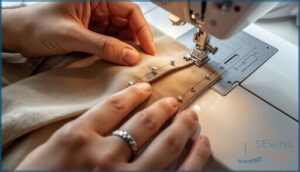
Once you’ve pressed your seam allowance, fold the raw edges toward the wrong side about 6 millimeters and pin in place. Stitch parallel to the folded edge using a straight stitch, staying 2–3 millimeters from the fold for a clean finish. This raw edge management prevents fraying:
- Press each seam allowance flat before folding
- Fold fabric edges under evenly
- Pin to hold the fold secure
- Stitch close to the folded line
- Repeat on the opposite seam allowance
Tips for Crisp, Even Finishes

A light coat of starch before pressing keeps your clean finish seam sharp through wear and washing. Use a walking foot to reduce shifting, and keep your seam allowance narrow to cut bulk.
For crisp edge stitching, finger-press along the fold first, then run your final press. Higher stitch density near the folded edge maintains that clean line over time.
Alternative Seam Finishing Techniques
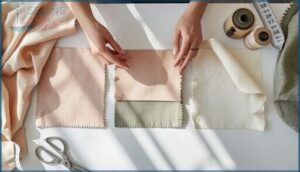
The clean finish isn’t your only option when you want to tidy up seam allowances inside your garments. You can choose from several other techniques that work better for different fabrics and project types.
Let’s look at three popular alternatives that give you professional results without needing a serger.
Zig-Zag and Overedge Stitch Methods
When your standard sewing machine is your only tool, zigzag stitch becomes your go-to seam finishing technique. Set your stitch width between 3 and 5 millimeters and guide the fabric edge under the presser foot. For woven fabrics that fray easily, this edge stitching creates a barrier against unraveling.
Overedge stitch wraps the raw edge more completely, working beautifully on both knits and wovens when you adjust stitch tension properly.
French and Flat Felled Seams
French seams enclose raw edges inside a narrow double seam, perfect for sheer fabrics like chiffon and silk. You start with wrong sides together, stitch, then flip and stitch again.
Flat felled seams fold one seam allowance over the other, creating strength in denim and workwear.
Both techniques require careful trimming and pressing but deliver excellent edge finishing and seam reinforcement for sewing beginners.
Bound and Hong Kong Finishes
Bound edges wrap bias binding around seam allowances to encase raw fabric, working well for medium to heavy materials like wool and gabardine.
Hong Kong finish techniques use a single fold bias strip to cover each seam allowance separately, leaving the binding’s raw edge visible inside.
Both fabric edge finishing methods reduce bulk while creating couture-level seam enclosure for unlined jackets and dresses.
Troubleshooting Common Seam Finish Issues
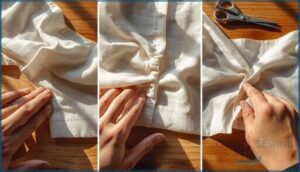
Even the most careful stitching can run into trouble. You might end up with bulky seams, edges that won’t lie flat, or fabric that puckers where it should be smooth.
Let’s fix the most common problems you’ll face and keep your finishes looking sharp.
Avoiding Bulk and Uneven Edges
When your seam allowance rolls or bunches, you’re looking at edge smoothing issues. Trim corners with a rotary cutter and press with a tailor’s clapper to flatten bulk reduction areas. For heavier fabrics, widen your seam allowance slightly.
Test finishing techniques on scrap first—French seams and flat felled seams demand precise fabric selection to keep that clean finish seam from bulging.
Fixing Fraying and Puckering
You can tackle fraying with narrow zigzag stitches along raw edges or apply a lightweight fabric stabilizer before sewing. Edge stabilizing techniques like stay stitching prevent further unraveling. When fraying persists, switch to French seams or flat felled seams for complete fray prevention and seam reinforcement.
For puckering control, adjust your thread tension and press seams with steam to relax fibers.
Maintaining Clean Finishes Over Time
Routinely inspect your seam allowance every few washes to catch wear before it spreads. Fabric care protocols matter: wash garments inside out and air dry when possible to preserve seam finishing techniques.
Clean finish seam edges benefit from gentle detergents and cool water. Apply finish longevity tips like avoiding harsh agitation during cleaning.
Seam maintenance extends durability when you treat French seams and other methods with consistent, thoughtful care.
Frequently Asked Questions (FAQs)
Do you need to finish seams inside lining?
Like a hidden backbone that upholds the whole garment, finishing seams inside lining prevents fraying and shedding fibers.
Your lining fabric choices determine which professional finishing techniques work best for lasting durability.
How to finish the inside of a garment?
You can achieve a polished interior by attaching garment lining at shoulder seams, using bias binding at edges, or employing French seams and flat felled seams for clean finish seam allowances that prevent fraying.
How to finish internal seams?
A stitch in time saves nine. Finish internal seams by pressing flat, trimming seam allowance, then applying zigzag, French seams, or edge binding. Choose your method based on fabric selection and desired stitch quality for durability.
Can clean seam finishes work on curved seams?
Yes, but curved seam challenges require careful handling. French seams work on gentle curves with narrow seam allowance.
For tighter curves, curved binding or Hong Kong finishes follow the shape better than turn-and-stitch methods.
How do you finish seams on thick fabrics?
When working with heavy fabrics, trim seam allowances to about 3 mm, then use a narrow overcast stitch or bias-cut bound seams to reduce bulk while protecting fabric edges from fraying.
What thread weight works best for clean finishes?
For lightweight fabric sewing tips, choose 60wt to 40wt thread. Medium fabrics pair with 40wt to 50wt in your Thread Weight Guide.
Match Fabric Thread carefully—finer threads minimize bulk in Clean Finish Techniques and seam finishing.
Do you need special presser feet for this?
Most clean finish work relies on your standard presser foot. Specialty feet like edge-stitching or seam guide attachments help maintain consistent stitching distance, but they’re optional for sewing machine beginners mastering basic seam finishing techniques.
How do you finish armhole and neckline seams?
You can finish armhole and neckline seams with bias tape applications, narrow facings with folded edges, or Hong Kong bound seams—each method creates a smooth, professional edge on curved areas.
Conclusion
Like a signature on a masterpiece, a clean seam finish inside stamps your work with intention. You’ve learned how fabric type dictates your method, how pressing sets the foundation, and how precise stitching locks everything in place.
Each technique you master builds muscle memory that translates across every project. Your garments now carry that hidden hallmark of quality—the kind that withstands scrutiny from both the outside world and the critical eye examining what lies beneath.