This site is supported by our readers. We may earn a commission, at no cost to you, if you purchase through links.
Your first few attempts at sewing a straight line probably looked more like a drunken caterpillar trail than the crisp seams you’d envisioned. That’s completely normal—most sewists struggle with keeping their stitches straight and even when starting out.
The good news? Straight stitch mastery isn’t some mystical talent you’re born with; it’s a skill you build through smart, deliberate practice. The secret lies in training your hands and eyes to work together, much like learning to ride a bike. Once your muscle memory kicks in, those wonky lines transform into professional-looking seams almost effortlessly.
Ready to ditch the wobbly stitches and gain the control that makes every project easier?
Table Of Contents
Key Takeaways
- Straight stitch mastery is a learnable skill built through muscle memory and deliberate practice, not innate talent—think of it like learning to ride a bike, where your hands and eyes eventually sync up automatically.
- The foundation for clean stitches starts before you even touch fabric: proper machine setup (correct needle-thread pairing, 2.5mm stitch length, balanced tension around 4-5) and ergonomic workspace positioning prevent most common problems.
- Progress through structured practice exercises—paper stitching without thread, tape guidelines, striped fabric alignment, and simple projects like coasters—with short daily sessions (15-30 minutes) beating marathon practice every time.
- Most frustrating issues, like skipped stitches, puckering, or thread bunching, trace back to three fixable culprits: dull needles, incorrect tension settings, or poor bobbin maintenance.
What is a Straight Stitch?
A straight stitch is the backbone of almost everything you’ll sew—it’s that simple, reliable line of stitches holding your seams together.
If you’re wondering how it compares to other techniques, check out this breakdown of overlock stitch vs straight stitch to see when each works best.
Once you understand how it actually works and when to use it, you’ll feel way more confident at your machine. Let’s break down the basics so you can start stitching like you know what you’re doing.
How a Straight Stitch Works
Think of stitch formation like a handshake between two threads. Your needle carries the top thread down through fabric, creating a tiny loop that the bobbin’s hook catches from below. When tension is balanced just right, these threads lock together flat against your fabric. That’s the magic behind every straight seam your sewing machine creates.
A straight stitch is just two threads meeting through fabric—one from above, one from below—locking together when tension is balanced
The key factors that influence stitch formation are:
- Needle geometry determines how cleanly the thread penetrates without snagging or skipping
- Thread tension controls whether stitches lie smooth or pucker across the fabric surface
- Bobbin mechanics grab each needle loop to interlock threads underneath your work
- Fabric interaction happens as feed dogs grip material, moving it forward stitch by stitch
When to Use Straight Stitches
Now that you know how straight stitches work, let’s talk about when to pull them out of your sewing toolkit. Use them for seams needing serious strength on woven fabrics—think side seams, shoulder seams, and garment construction basics.
They’re your go-to for topstitching hems, quilting precise blocks, and basting temporary holds. Tension control and stitch length adjustments keep those straight seams looking crisp every time.
Setting Up Your Machine for Practice
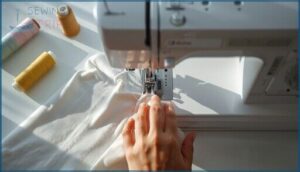
Before you even touch the foot pedal, you need to set your machine up for success. Think of it like prepping your workspace before a big project—getting the basics right saves you a ton of frustration later.
Let’s walk through the three essentials that’ll make your practice sessions actually productive.
Choosing The Right Needle and Thread
Your needle and thread are like dance partners—they’ve got to match. Universal needles in sizes 70 to 90 work beautifully with polyester or cotton thread on most wovens.
For specialty fabrics or thicker threads, check out this complete guide to needle sizes for different thread types to find your perfect match.
Here’s your quick matching guide:
- Ballpoint needles for knits prevent snagging
- Sharp needles for tight weaves give clean penetration
- Match needle eye to thread thickness
- Heavy fabrics need size 90 or larger needles
Wrong pairings cause skipped stitches and wonky tension control.
Adjusting Stitch Length and Tension
Once your needle’s threaded, dial in your sewing machine settings. Start with 2.5mm stitch length—it’s the sweet spot for most fabrics. Set thread tension around 4 or 5 for tension balance.
Run a test seam on scrap fabric to check if stitches look flat and balanced. If you see loops or puckering, tweak the fabric tension dial slightly. Testing adjustments now saves headaches later.
Proper Workspace and Posture
Before you stitch another seam, set up an ergonomic workspace that won’t leave you sore. Position your sewing machine 18 to 24 inches from your eyes and adjust your chair so forearms rest at 90 degrees—your back will thank you.
Add bright, even workspace lighting around 4000K to eliminate shadows. Good posture tips and comfort optimization turn wobbly sewing fundamentals into confident practice exercises for sewing straight lines.
Easy Straight Stitch Practice Exercises
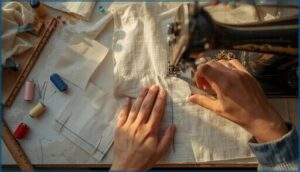
The best way to build straight stitching skills is through deliberate, focused practice. You don’t need fancy fabric or finished projects yet—just simple exercises that train your hands and eyes to work together.
Here are four proven practice drills that’ll take you from wobbly beginner to confident stitcher.
Paper Stitching Without Thread
You’re about to discover one of the smartest sewing practice exercises—paper perforation. Unthread your needle and bobbin completely, then feed plain copy paper through your machine.
Set a tight stitch length and watch as the needle creates perfect sewing straight lines through punctures alone. This builds muscle memory without wasting fabric.
Choose the right needle selection (size 65-80) and experiment with different paper types to master stitch alignment before touching cloth.
Using Tape and Guidelines
After mastering paper punctures, let’s add visual aids to your sewing machine. Tape alignment transforms wobbly seams into laser-focused practice exercises—painters tape won’t leave gunk on your throat plate.
- Press low-tack tape parallel to your presser foot, creating instant guideline tools for consistent seam allowances.
- Align fabric edges with these straight edges while guiding material under the needle.
- Add grid markings at ¼-inch intervals for precision topstitching routes.
- Layer fabric guides to practice sewing straight lines without wandering off course.
Practicing on Striped Fabric
Stripes act like training wheels for sewing straight lines—those bold patterns instantly reveal when your fabric grip wavers or your needle drifts off course. Choose medium-weight striped fabric and align the stripes parallel to your sewing machine’s throat plate edge. Match your needle selection to the fabric weight (80/12 for most cottons) and pick thread that contrasts with darker stripes for better thread visibility.
As you stitch alongside each stripe, you’ll develop stitch consistency through immediate visual feedback.
Building Speed and Control
Once your lines stay true, it’s time to pick up the pace. Start by lowering your sewing machine’s motor control speed limits—slower maximums prevent runaway stitches while you’re learning. Keep steady foot pedal pressure and watch your thread tension stay balanced.
As fabric grip becomes second nature, gradually increase speed through short practice bursts. You’ll transform straight stitch sewing machine operation from careful crawl to confident cruise.
How to Sew Straight Lines Step-by-Step
You’ve practiced on paper, tape, and stripes—now it’s time to put it all together with real fabric. The secret to sewing straight lines isn’t just speed or fancy equipment; it’s all about hand position, smooth fabric control, and knowing exactly how to start and stop your seam.
Let’s break down each step so you can stitch confidently from the first thread to the final backstitch.
Positioning Your Hands Correctly
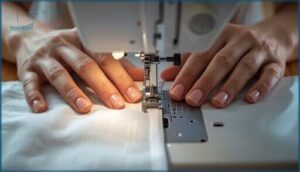
Think of your hands as gentle traffic controllers, not vice grips. Rest your palms lightly around the presser foot with wrists straight and fingers about two inches from the needle.
Your dominant hand guides from behind while the other steers from the front. This hand placement and finger control creates the foundation for sewing straight lines without fighting your fabric—or your machine.
Guiding Fabric Through The Machine
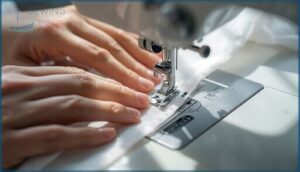
Let the sewing machine do the heavy lifting—don’t pull or push your fabric. The feed dogs underneath grip and move fabric forward in small bursts, while you just guide the edge along a seam allowance marker.
Keep your touch light and watch that fabric edge, not the needle. When tension adjustment is balanced and you’re guiding gently, sewing straight lines becomes second nature.
Starting and Finishing Your Seam
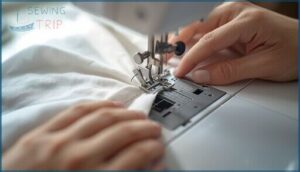
Now you’re guiding smoothly—time to lock those stitches down. Start by backstitching two to three stitches to create seam security, then sew forward along your seam allowance.
When you reach the end, use stitch reversal again to anchor everything. This sewing tip prevents unraveling and keeps fabric alignment tight. Trim threads close for clean edge finishing—you’ve just nailed straight stitch seam finishing like a pro.
Common Straight Stitch Problems and Fixes
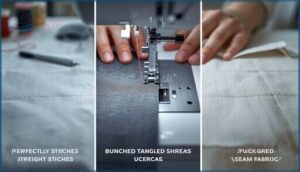
Even when you’re doing everything right, your machine might throw a little tantrum.
Threads bunch, fabric puckers, and stitches skip like they’ve got somewhere better to be.
Here’s how to troubleshoot the most common straight stitch problems so you can get back to sewing without the frustration.
Skipped or Uneven Stitches
When your straight stitch skips or looks uneven, check needle sharpness first—dull needles cause thread breakage and wonky stitch formation.
Rethread your machine with the presser foot up so tension discs grip properly, boosting tension control. Also, watch for fabric slippage; guide your material parallel to the needle for stitch consistency. Sewing basic straight stitches gets smoother once you nail these fixes.
Fabric Puckering
Puckered fabric usually signals too much tension or the wrong stitch length. Try reducing your tension setting to 3 or 4—tight thread control yanks fabric and ruins seam stability.
On lightweight material, shorten your stitch length and press before sewing; proper fabric prep keeps things smooth. A walking foot improves fabric handling and control, preventing those annoying waves along your straight stitch.
Thread Bunching and Breaks
Thread nests under your fabric? That’s a bobbin maintenance red flag. Pop out the case, clear away lint, and check you’ve wound it correctly—incorrect setup throws off thread tension and wrecks stitch consistency.
Dull needles also cause thread breaks and friction, so swap yours out. Rethread with your presser foot up to seat the tension discs properly, and your sewing machine will reward you with clean, basic straight stitches.
Simple Beginner Projects for Practice
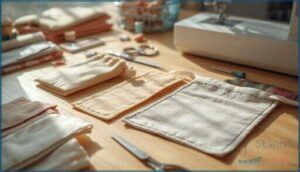
You’ve practiced on paper, worked through troubleshooting, and now you’re ready to actually make something real. The best way to lock in those straight-stitch skills is by tackling simple fabric projects that don’t demand flawlessness but still give you a finished product you can hold.
Let’s look at a couple of beginner-friendly options that’ll turn all that practice into genuine confidence.
Sewing Practice Coasters
Coasters are the perfect beginner sewing project—they’re quick, forgiving, and totally functional. You’ll practice sewing straight lines on a four-by-four-inch square using cotton fabric with a quarter-inch seam allowance.
Choose striped fabric for built-in guidelines, layer it with batting, then finish the edges with a neat topstitch. Thread choices matter less than consistent tension here. These sewing basics will sharpen your straight stitch skills fast.
Building Muscle Memory Through Repetition
Honestly, practice schedules beat marathon sessions every time. Short, regular sewing sessions—think fifteen minutes daily—build motor skill development faster than cramming.
Your brain needs rest between practice exercises to lock in those sewing techniques. Try stitching three coasters Monday, two napkins Wednesday, then a bookmark Friday.
These muscle memory tips work because skill retention strategies thrive on consistency, not flawlessness.
Frequently Asked Questions (FAQs)
How to practice straight stitch?
Picture yourself gliding down a perfectly straight road—that’s the feel you’re after.
Start with paper stitching (no thread!) to nail sewing rhythm and fabric guidance before tackling actual seams with proper machine calibration.
Can I practice straight stitching by hand?
Yes, hand sewing builds solid straight stitch basics. Use a sharp needle with thread control and fabric preparation to guide even, small stitches along marked lines—perfect practice for sewing beginners mastering hand sewing tools.
What fabrics work best for beginner practice?
Think of fabric selection like choosing training wheels—you need something stable that won’t fight back. Cotton blends, muslin, and felt offer forgiving surfaces ideal for sewing basics.
While denim practice builds confidence through fabric preparation.
How do I maintain consistent seam allowances?
Use your sewing machine‘s seam guide or apply painter’s tape at your desired seam allowance width.
Keep fabric grain aligned, check thread tension, and maintain consistent stitch length for accurate, professional-looking edges every time.
Should I use pins or clips while practicing?
Clips pin down the debate: they’re faster for practice and safer on slippery fabrics, while pins risk puckering and finger pricks.
For sewing straight lines, clips boost fabric stability and sewing efficiency without the pin risks.
How long does it take to master straight stitching?
Most sewers reach comfortable proficiency with straight stitches after about 20 hours of focused practice—usually 4 to 8 weeks when you’re practicing 15 to 30 minutes daily on scrap fabric.
Conclusion
Those wobbly lines that once frustrated you? They’re behind you now. Those awkward hand placements? Now second nature.
That muscle memory you’ve built through easy straight stitch practice doesn’t just make seams straighter—it makes every project faster, more enjoyable, and infinitely less stressful. Your hands know what to do, your eyes know where to look, and that confidence shows in every stitch.
Time to stop practicing and start creating something beautiful.