This site is supported by our readers. We may earn a commission, at no cost to you, if you purchase through links.

Small quilting projects pack a surprising punch—they’re your testing ground for bold color combinations, your quick-win confidence builders, and your gateway to mastering tricky techniques without committing yards of fabric.
But here’s the catch: standard 24-inch rulers turn precision work into a wrestling match, and oversized tools obscure your tiny seam allowances right when accuracy matters most. You need quilting rulers for small projects that match your scale, rulers with sharp gridlines you can actually see on a 3-inch block and non-slip grips that won’t budge when you’re trimming half-square triangles down to the quarter-inch.
The right ruler transforms fussy miniature work into smooth, controlled cuts—think crisp corners, perfectly squared blocks, and seam allowances that line up on the first try.
Table Of Contents
Key Takeaways
- Small quilting projects demand rulers sized between 2.5 and 12 inches with high-contrast gridlines, non-slip backing, and durable acrylic construction—oversized 24-inch rulers obscure tiny seam allowances and turn precision work into a frustrating wrestling match.
- The sweet spot for small-scale quilting includes a 6.5-inch square ruler for block squaring and a 6×24-inch rectangle for strip cutting, giving you versatile fabric control without cluttering your cutting mat or forcing constant tool switching.
- Effective ruler use hinges on proper mat placement, pairing with sharp rotary cutters, and maintaining even pressure during cuts—small techniques like aligning gridlines with fabric edges and checking diagonal measurements prevent wonky blocks and misaligned seams.
- Ruler longevity depends on flat storage away from direct sunlight, regular cleaning with mild soap and microfiber cloths, and immediate replacement when edge chips, warping, or faded markings compromise cutting accuracy and safety.
Essential Ruler Features for Small Quilting Projects
Not all quilting rulers are created equal, especially when you’re working on smaller projects where every fraction of an inch matters.
For beginners tackling small quilts or table runners, choosing the right starter set of quilting rulers makes precision cuts far easier than grabbing whatever’s on sale.
The right essential features can mean the difference between frustration and clean, confident cuts that actually line up. Let’s look at the essential features you’ll want in a ruler for small-scale quilting work.
Clear Gridlines and High-Contrast Markings
You can’t cut with confidence if you can’t read your ruler—that’s why gridline visibility matters. Look for high-contrast markings etched in white or black on clear acrylic, with bold numerals every inch and fine 1/8″ subdivisions.
The best quilting rulers feature laser-etched lines that won’t fade, plus thick edge borders for measurement precision even against busy fabrics, ensuring marking accuracy every single time.
Non-Slip Surfaces and Textured Backing
Even the clearest gridlines won’t help if your ruler slides during fabric cutting—that’s where textured backing shines. Non slip coatings reduce movement by up to 45 percent on polished surfaces, giving you the traction control you need for precision cutting.
Textured backing reduces ruler slippage by up to 45 percent, giving you the traction control precision cutting demands
Effective grip materials include:
- Rubber backing for strong hold on smooth cutting mats
- Silicone gripper dots that flex with gentle pressure
- Latex modified surfaces adding tacky slip resistance
- Jute backing with nonslip coatings for eco-friendly stability
Quality nonslip rulers transform shaky cuts into confident, accurate strips every time.
Durable Acrylic Construction
Grip matters, but a ruler that warps or cracks after a few months? That’s wasted money. Ruler durability resists shattering when blades make contact—you’ll appreciate that edge stability when your rotary cutter slips.
Cast acrylic construction methods deliver flatter surfaces, and hardened finishes boost wear resistance against repeated scoring. Quality acrylic rulers maintain clarity and precision cutting accuracy for years, making them reliable quilting tools you can trust.
Optimal Size Range for Small Projects
Quality acrylic rulers means nothing if your ruler can’t handle the job at hand. For small quilting projects—think mug rugs, miniature blocks, or tight borders—fabric efficiency and cutting accuracy depend on project scaling that matches your work surface.
Here’s the sizing sweet spot for mat optimization and precision cutting:
- Miniature blocks thrive with 3 to 6 inch rulers for drift-free block sizing
- Portable projects stay within 8 to 12 inches for travel ease
- Borders and sashing work best at 6 to 24 inches maximum
- Most small blocks need 6 to 12 inch rulers for precise handling
- Avoid rulers larger than 24 inches—they complicate setup
Best Quilting Ruler Sizes for Small Projects
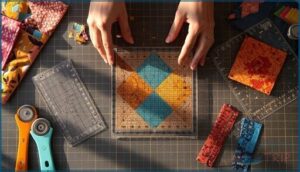
Choosing the right ruler size can make or break your small quilting projects—you don’t want to fumble with a giant 24-inch ruler when you’re squaring up a 4-inch block.
The sweet spot for small work sits between pocket-sized precision tools and compact multi-purpose rulers that won’t crowd your cutting mat. Here’s a breakdown of the ruler sizes that’ll give you control without the guesswork.
Square Rulers (2.5 to 6.5)
Square rulers from 2.5 to 6.5 inches deliver the precision cutting you need for miniature quilt blocks and tight seam allowances. These compact quilting rulers feature a 1 inch grid pattern with clear gridlines that let you square up four-patches and half-square triangles without fuss—plus, nonslip surfaces keep fabric from shifting during block trimming. Perfect for mastering those tiny fabric measurement challenges.
T-square rulers are also popular in the crafting world for their material and size options.
| Ruler Size | Best For | Key Feature |
|---|---|---|
| 2.5″ square | Mini blocks, charm squares | Corner alignment marks |
| 3.5″ square | Secondary cutting, small units | High-contrast gridlines |
| 4.5″ square | Standard block squaring | Center crosshairs printed |
| 6″ square | Foundation piecing, angles | Dual metric/imperial scale |
| 6.5″ square | Trimming versatility, beginner kits | Anti-slip grip edges |
Small Rectangle Rulers (1 X 6 to 6 X 12)
Small rectangle rulers ranging from 1 x 6 up to 6 x 12 inches bring cutting accuracy to your quilting essentials—these measurement tools deliver fabric guidance for trimming blocks, scraps, and border strips without the bulk.
Pairing these compact rulers with other sewing project planning tools helps you organize layouts and maintain consistency across all your piecing work.
Pair them with your rotary cutter, and the nonslip surfaces keep fabric aligned while you slice through multiple layers. Clear acrylic ruler material means you’ll spot every edge underneath.
For enhanced straight cuts and added stability, consider using rulers with a TrueCut Ruler Track feature.
Specialty Rulers for Miniature Blocks
Miniature quilting techniques demand precision cutting methods—specialty rulers deliver mini block accuracy through micro gridlines at 1/16 inch increments and built-in angle templates. These quilting tools pair with your rotary cutter for fabric cutting that transforms tiny patchwork into sharp, consistent results.
- Decorative etched patterns guide miniature block layouts with visual appeal
- Color-tinted acrylic helps you distinguish measurement lines during block trimming tips
- Edge alignment grooves assist consistent placement against fabric edges
- Clear gridlines at micro increments guarantee repeatable mini block accuracy
- Specialty ruler materials resist warping under typical workshop conditions
Combination Sets for Versatility
You’ll gain ruler versatility when combination sets deliver multiple measurement functions—replacing stacks of individual quilting rulers with one compact fabric cutting system. These quilting tools pair interchangeable blades with adjustable heads for measurement flexibility across small projects, boosting quilting accuracy while your rotary cutter manages fabric precision work that once demanded constant tool switching.
| Feature | Benefit for Small Projects |
|---|---|
| Interchangeable blades | Cutting efficiency without tool changes |
| Multiple heads | Measurement flexibility for varied layouts |
| Graduated scales | Quilting accuracy in tight spaces |
| Locking mechanisms | Fabric precision during trimming |
| Compact storage | Easy transport to workshops |
Top 6 Quilting Rulers for Small Projects
You’ve narrowed down the sizes that work for your small projects—now it’s time to match those measurements to actual rulers.
The right tool combines precise gridlines, non-slip backing, and durability without breaking your budget.
Here are six quilting rulers that deliver accuracy and confidence for compact piecing, trimming, and cutting tasks.
1. Fiskars Sewing Ruler Tool
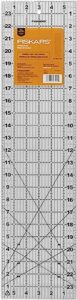
The Fiskars 6″ x 24″ ruler brings serious cutting power to your small project table—you’ll appreciate its two-toned markings that show up on both dark and light fabrics without squinting.
This clear acrylic ruler features 30-, 45-, and 60-degree angle indicators, perfect for bias cuts and triangle work. The built-in carrying handle makes it travel-friendly, though some quilters find it a touch lightweight.
At around $34, it’s a reliable workhorse for cutting fabric from the bolt and trimming borders on miniature quilts.
| Best For | Quilters and sewers who need a reliable ruler for cutting fabric from the bolt and making angled cuts on medium to large pieces. |
|---|---|
| Material | Acrylic |
| Primary Use | Quilting and sewing |
| Visibility Feature | Two-toned markings |
| Angle Indicators | 30°, 45°, 60° |
| Non-slip Feature | No |
| Brand | Fiskars |
| Additional Features |
|
- Two-toned markings show up clearly on both light and dark fabrics
- Built-in angle indicators (30°, 45°, 60°) make bias cuts and triangle work easy
- Carrying handle adds portability for classes or sewing groups
- Feels lightweight, which may affect long-term durability
- Clear acrylic grid can break if dropped or mishandled
- Not ideal for cutting small pieces under 1.5 inches
2. Omnigrid Quilting Ruler
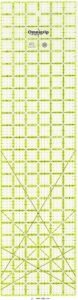
The Omnigrid 6″ x 24″ ruler delivers neon green gridlines that won’t disappear on busy prints—you’ll cut with confidence even when your fabric looks like a kaleidoscope exploded.
This plastic ruler features left and right hand numbering, 1/8″ graduations, and laser-cut edges that stay sharp through countless rotary passes. The non-slip backing keeps fabric from shifting mid-cut, though some quilters notice occasional slippage on silky materials.
Priced around $34, it’s a solid choice for small strip piecing and border trimming.
| Best For | Quilters and sewists who work with small fabric pieces, patchwork, and precision cuts, especially those who struggle to see standard grid lines on busy or dark prints. |
|---|---|
| Material | Plastic |
| Primary Use | Quilting and crafting |
| Visibility Feature | Neon lines |
| Angle Indicators | Unique angle system |
| Non-slip Feature | Yes |
| Brand | Omnigrid |
| Additional Features |
|
- Neon green lines stay visible on patterned and dark fabrics where traditional rulers fade into the background
- Dual numbering system (left and right) and 1/8″ graduations make measurements quick and accurate from either direction
- Non-slip backing grips fabric during cuts, reducing mistakes and improving safety with rotary cutters
- No metric measurements, limiting usefulness for quilters who prefer or need centimeter markings
- Backing may slip on silky or slick fabrics, requiring extra care during cuts
- Some buyers report receiving damaged rulers due to quality control or shipping issues
3. Slotted Quilting Ruler for Precise Fabric Cutting
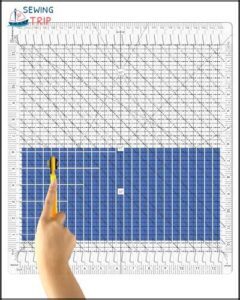
If you’re tired of repositioning your ruler every time you need a fresh strip, a slotted design changes everything.
The Karpoulra 12″ x 12″ slotted ruler features 26 grooves at half-inch intervals—your rotary cutter glides through each slot, cranking out perfectly uniform strips without the constant realignment dance.
Double-color sight lines work on light and dark fabrics, while nonslip silicone grips keep the ruler planted. At around $30, it’s a smart pick for rapid strip piecing, though the slots may feel snug with larger rotary cutters.
| Best For | Quilters who cut a lot of strips and want to speed up their workflow without constantly repositioning their ruler. |
|---|---|
| Material | Acrylic |
| Primary Use | Quilting and cutting |
| Visibility Feature | Double color sight lines |
| Angle Indicators | 45°, 60° |
| Non-slip Feature | Yes |
| Brand | Karpoulra |
| Additional Features |
|
- 26 grooves let you cut perfectly uniform half-inch strips without realigning after every cut
- Double-color sight lines make it easy to see on both light and dark fabrics
- Nonslip silicone grips keep the ruler from shifting during cutting
- The slots might be too narrow if you use a larger rotary cutter
- Not the best choice for cutting longer fabric pieces
- The acrylic can break if you’re not careful with it
4. Acrylic Quilting Rulers Set
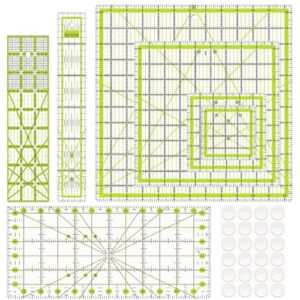
Once you’re juggling small fabric blocks, a full acrylic quilting ruler set really pulls its weight.
Sets like ZICALSO’s give you every size you’ll need—from 1″ x 6″ for seam checks to mid-sized squares and rectangles for rotary cuts.
Each ruler stays put with grippy rings and shows off bold, easy-to-read gridlines, so you’re not squinting or second-guessing.
With seven pieces in one tidy bundle, you can trim, square, and measure with the same steady hand on every project.
| Best For | Quilters and crafters who need a complete ruler set for precise fabric cutting, seam checking, and pattern work across different project sizes. |
|---|---|
| Material | Acrylic |
| Primary Use | Quilting and sewing |
| Visibility Feature | Clear markings |
| Angle Indicators | Not specified |
| Non-slip Feature | Yes |
| Brand | ZICALSO |
| Additional Features |
|
- Complete 7-piece set covers all the ruler sizes you’ll need for most quilting projects
- Non-slip rings keep rulers steady during rotary cutting for accurate measurements
- Clear acrylic with bold gridlines makes it easy to see your fabric and measure precisely
- Protective film can leave sticky residue that’s annoying to remove
- The 2″x12″ ruler uses centimeters instead of inches, which can throw you off
- Quality control is hit-or-miss—some units arrive with marks or film issues
5. Creative Grids Quilting Ruler Tool
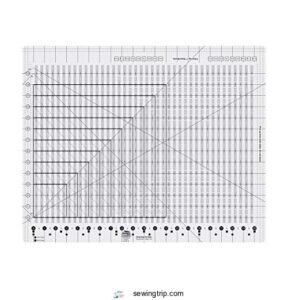
If you need precision quilting without the price shock, Creative Grids quilting rulers deliver.
Their 17¾” × 22″ design features a non-slip grip that locks fabric down when you apply pressure, then slides smoothly when you lift—no more chasing wiggly bits across the mat.
Bold black-and-white markings stay visible on light or dark prints, cutting slots appear every ½”, and you get 45- and 60-degree angles for quick diamonds and triangles.
Made in the USA from durable acrylic, this ruler squares blocks fast and keeps your seam allowances honest.
| Best For | Quilters who want durable, made-in-USA accuracy for squaring blocks, cutting strips, and tackling angled piecing without fabric slip. |
|---|---|
| Material | Acrylic |
| Primary Use | Quilting and patchwork |
| Visibility Feature | Black and white markings |
| Angle Indicators | 45°, 60° |
| Non-slip Feature | Yes |
| Brand | Creative Grids |
| Additional Features |
|
- Non-slip grip holds fabric securely under pressure, then releases smoothly when you lift the ruler
- Clear markings with cutting guides every ½” plus 45° and 60° angles for fast triangles and diamonds
- Large 17¾” × 22″ size handles bigger projects and reduces repositioning time
- Pricey at $81.99 compared to basic acrylic rulers
- Static electricity can occasionally cause fabric to shift despite the non-slip surface
- Instructions may contain typos that lead to cutting mistakes if you’re not careful
6. Omnigrid Quilting Ruler Set
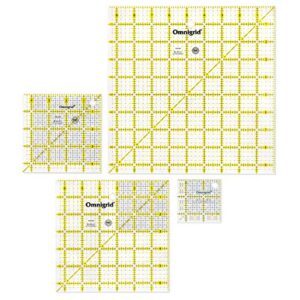
When you’re working on a dozen mini blocks at once, a ruler set beats buying singles—and Omnigrid’s four-pack (2½”, 4½”, 6½”, and 9½” squares) keeps every size within reach.
Each ruler is laser-cut acrylic with left- and right-hand numbering, so you won’t twist your wrist trying to read backward. Double-sight lines show up on both light and dark fabric, diagonal markings guide triangle cuts, and the 13-ounce weight feels sturdy without being clunky.
| Best For | Quilters who tackle multiple block sizes in one session and want all their essentials in a single, grab-and-go set. |
|---|---|
| Material | Acrylic |
| Primary Use | Quilting and sewing |
| Visibility Feature | Double-sight lines |
| Angle Indicators | Diagonal angle line |
| Non-slip Feature | No |
| Brand | Omnigrid |
| Additional Features |
|
- Four rulers (2½”, 4½”, 6½”, 9½”) mean you’re covered for most standard quilt blocks without hunting for the right size
- Double-sight lines work on light and dark fabric, so you’re not squinting or guessing where to cut
- Left- and right-hand numbering plus diagonal guides make triangle cuts and reversals way less awkward
- Acrylic can slide around on slippery fabrics—you might need grip dots or a non-slip mat underneath
- Yellow markings blend in on certain lighter fabrics, making measurements harder to see
- If you’re piecing king-size quilts or oversized blocks, the 9½” max won’t cut it for every scenario
How to Use Quilting Rulers Effectively
Having the right ruler is just the start—you also need to know how to use it without turning your fabric into a game of patchwork roulette.
The difference between wonky blocks and professional results often comes down to placement, pressure, and pairing your ruler with the right tools. Let’s walk through five essential techniques that’ll give you the control and precision your small projects deserve.
Proper Placement on Cutting Mats
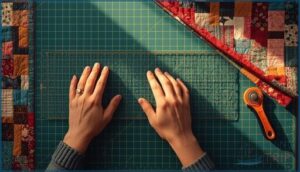
Think of your cutting mat as your quilting home base—everything starts here. Place the ruler edge flush with the mat edge for straight cuts every time, then align the ruler’s clear gridlines with your intended cut line.
Keep the ruler perpendicular to the mat surface and press down with even pressure to prevent sliding. Mat alignment tips like these transform guesswork into precision, while fabric securing methods and proper cutting surface prep guarantee your rotary cutter glides smoothly without drift.
Pairing With Rotary Cutters
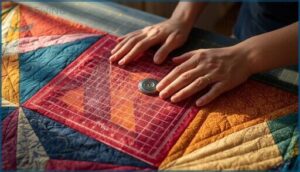
Your rotary cutter and quilting rulers are a matched pair—let them work together. Press the ruler firmly from above with one hand, keeping fingers behind the edge for blade safety, then push the cutter away from your body in one smooth stroke.
Sharp blades plus clear gridlines equal clean cuts, while fabric control and proper cutting techniques turn accuracy tips into consistent, professional results every time.
Squaring Up Small Blocks
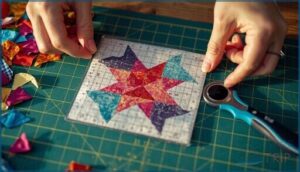
Small squaring rulers between 2.5 and 6.5 inches transform messy corner units into crisp blocks. Align clear gridlines with your block’s outer edges, trim with a rotary cutter in controlled motions, then rotate and verify straightness on all sides.
Measure both diagonals—they should match—to confirm precision cutting and corner alignment before assembly, preventing wonky seams and fabric accuracy issues down the line.
Trimming Seam Allowances Accurately
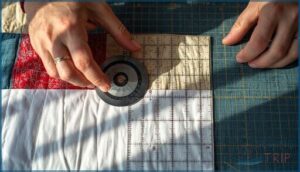
Seam allowance trimming is where precision trimming separates polished blocks from puffy, misaligned seams. Use a clear quilting ruler with high-contrast markings to see your stitching line—align the edge exactly where you need it, then slice with a sharp rotary cutter for accurate cutting.
- Keep fabric flat and taut to prevent shadows that throw off sewing accuracy
- Trim gradually, removing small bits at a time for cutting efficiency and edge finishing control
- Check width with a seam gauge after each pass to confirm fabric trimming consistency
Cutting Strips and Small Shapes
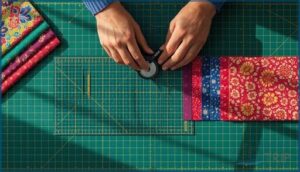
Efficient fabric cutting starts with alignment—line your selvage parallel to the mat grid before slicing any strips. Stack several pre-cut strips side by side, then subcut them together into small shapes like 2.5-inch squares for faster precision trimming. Your rotary cutter works best at a 45-degree angle with one smooth motion.
| Technique | Setup | Result |
|---|---|---|
| Strip cutting | Align fabric fold with ruler’s vertical line | Straight, on-grain strips |
| Subcutting stacks | Layer 4–6 strips, match ends at zero | Uniform small shapes fast |
| Slotted rulers | Insert blade in grooves at marked intervals | Multiple widths, no re-measuring |
| Grain alignment | Match selvage to horizontal mat line | Consistent width, no waves |
Maintaining Your Quilting Rulers for Longevity

You’ve invested in quality rulers—now let’s keep them working like new. A little regular care prevents warping, fading, and edge damage that can throw off your cuts.
Here’s how to clean, store, and protect your rulers so they stay accurate for years.
Cleaning Methods and Best Practices
You don’t need fancy cleaning solutions to keep your quilting rulers sharp and readable—just warm water and mild dish soap work wonders for acrylic maintenance.
Wipe down your fabric cutting tools after each session with a microfiber cloth to prevent fiber buildup along those clear gridlines.
For ruler sanitizing, skip harsh chemicals that dull markings, and always dry your sewing rulers completely before you tuck them away.
Proper Storage to Prevent Warping
Once your quilting rulers are clean, flat storage tips become your best friend—you’ll want them lying on a smooth, level surface in a drawer or dedicated rack spaced at least an inch apart.
Keep fabric cutting tools away from direct sunlight and maintain 40 to 60 percent humidity to avoid warping prevention disasters that mess with your cutting efficiency.
When to Replace Worn Rulers
Proper storage won’t fix rulers with edge damage—small nicks lift your rotary blade off the line, killing cutting efficiency.
Ruler warping throws off quilting precision even after you flatten it, and faded markings ruin ruler calibration faster than you think.
Safety concerns pile up when chipped corners snag your fingers. Replace quilting rulers when clear gridlines blur or edges lose their straight edge—your blocks deserve better.
Protecting Gridlines and Edges
Beyond replacing damaged tools, you can extend ruler life with smart handling. Contrast gridlines stay readable when you clean fabric dust with microfiber cloths—no scratching the surface. Non-slip grips and protective covers shield edges from chips that wreck edge straightness during fabric cutting.
Guard your acrylic rulers this way:
- Store flat to prevent warping that distorts clear gridlines
- Use ruler shields when traveling with rotary cutter kits
- Check edge straightness before each session
- Replace worn non-slip grips immediately
Frequently Asked Questions (FAQs)
What is the most versatile quilting ruler?
A 5-inch square ruler with angle lines delivers the most bang for your buck—you’ll cut strips, trim blocks, and handle specialty shapes with clear gridlines and a sharp rotary cutter.
What size quilting rulers do I need?
You don’t need every ruler size—just a smart handful. For small project tools and fabric cutting accuracy, grab a 5-inch square for squaring blocks and a 6 x 24-inch rectangle for strips—your minimizing toolkit essentials.
Can quilting rulers be used for paper piecing?
Yes, quilting rulers work beautifully for paper piecing—clear gridlines and non-slip surfaces keep fabric control tight on delicate foundations, while rotary cutters paired with precision tools deliver clean edges on tiny seams.
Do left-handed quilters need special rulers?
Most lefties manage just fine with standard quilting rulers—hand dominance doesn’t affect cutting accuracy.
However, left-handed rulers with mirrored markings can speed up your workflow by aligning gridlines with your natural reading orientation.
Whats the difference between quilting and sewing rulers?
Quilting rulers emphasize dense grid patterns and angle lines for patchwork precision, while sewing rulers prioritize length measurements for garment patterns—both use clear acrylic, but quilting tools offer specialized fabric guidance for rotary cutter work.
Are there travel-friendly ruler options for small projects?
Portable ruler sets like the six-inch Fiskars tool or Omnigrid compact options slide into project totes without adding bulk—perfect for travel storage and fabric precision while maintaining the cutting accuracy you need on the road.
How do I prevent ruler slippage on slippery fabrics?
Slippery fabrics shift when you rush—apply clear grip tape to your ruler’s back, press down with steady pressure across the entire length, and use slow cutting strokes with your rotary cutter for clean edges.
Conclusion
The difference between a mediocre mini-quilt and one that looks like it belongs in a gallery? Honestly, it all comes down to your ruler. Investing in the right quilting rulers for small projects means you’ll stop fighting your tools and start nailing those crisp corners every single time.
Grab a 4.5-inch square, pair it with a sharp rotary cutter, and watch those tiny blocks transform from frustrating to perfect—no wrestling match required.