This site is supported by our readers. We may earn a commission, at no cost to you, if you purchase through links.
Most sewers own at least three medium weight fabrics in their stash, yet they rarely tap into the full range of what these adaptable materials can do. Medium weight fabric—measuring 150 to 270 GSM—sits in that Goldilocks zone where it’s substantial enough to hold structure but breathable enough for everyday wear.
You’ll find it in everything from your favorite button-down shirt to the tote bag you grab for weekend errands. The real power of medium weight fabric lies in its adaptability: it shifts seamlessly between clothing, home decor, and craft projects without demanding specialized equipment or skilled skills.
Understanding which medium weight fabric suits each project transforms your sewing from guesswork into confident creation.
Table Of Contents
- Key Takeaways
- What is Medium Weight Fabric?
- Popular Types of Medium Weight Fabric
- Clothing Uses for Medium Weight Fabric
- Home Decor Applications
- Bag and Accessory Projects
- Quilting and Patchwork Uses
- Crafting and DIY Projects
- Upholstery and Furniture Covers
- Choosing The Right Medium Weight Fabric
- Sewing Tips for Medium Weight Fabrics
- Frequently Asked Questions (FAQs)
- Conclusion
Key Takeaways
- Medium weight fabrics (150-270 GSM) deliver the versatility you need for clothing, home decor, bags, and crafts without requiring specialized equipment or advanced skills.
- Cotton twill, linen blends, lightweight denim, and canvas stand out as the most reliable medium weight options, each offering distinct advantages for structure, drape, or durability depending on your project.
- Match fabric weight to your specific use—trousers and structured pieces perform best at 300-350 GSM for crease resistance, while dresses need lighter weights below 300 GSM to maintain fluid movement.
- Pre-wash cotton fabrics to account for 2-5% shrinkage, grade seam allowances to reduce bulk at intersections, and use needles sized 70/10 to 90/14 based on fabric density for professional results.
What is Medium Weight Fabric?
Medium weight fabric sits right in the middle of the textile spectrum, offering enough body to hold its shape without the stiffness of heavier materials.
This balance makes it ideal for flowing skirts that drape beautifully without clinging or bunching awkwardly at the waist.
You’ll find these fabrics usually measure between 150 and 270 GSM, making them the go-to choice for everyday clothing and home projects that need to last. Understanding what defines this category helps you pick the right material for your next sewing session.
Definition and GSM Range
Medium weight fabric sits in the sweet spot between flimsy and bulky, usually weighing 200 to 350 grams per square meter. That GSM measurement tells you the fabric density and thickness you’re working with.
Understanding this weight class helps you nail material selection for any project. Fabrics around 230 GSM drape softly, while those closer to 320 GSM give you more structure and body.
Common Fiber Types
You’ll find cotton, linen, and polyester dominating the medium weight category for good reason. Cotton twill and drill offer excellent fabric dyeing results with stable yarn properties that hold up wash after wash.
Linen blends bring natural textiles into play with cool breathability, while synthetic fibers like polyester boost durability without adding bulk. Fiber blends marry the best traits of each material for balanced performance.
Typical Weaves and Textures
Plain weave creates that simple over-under pattern you see in broadcloth and percale—identical on both sides with serious edge stability.
Twill weave adds diagonal ribbing for better drape and wrinkle resistance. Satin weave brings a smooth sheen that catches light beautifully.
Each weave pattern changes fabric density, thread counts, and textile properties, giving mediumweight fabrics distinct texture and performance for your specific project needs.
Popular Types of Medium Weight Fabric
You’ll find medium weight fabrics in dozens of varieties, each with its own strengths and textures. Some handle crisp tailoring better, while others soften with every wash.
Here are four workhorses that show up in studios and sewing rooms everywhere.
Cotton Twill and Drill
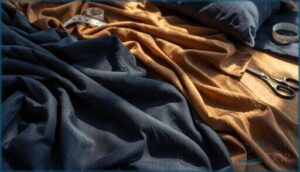
Cotton twill stands out with its diagonal rib weave and strong thread count, putting fabric weight between 180 and 360 GSM. That fabric weave creates a surface tough enough for daily wear yet soft against your skin.
Drill, its lighter cousin, offers a tighter structure perfect for your next sewing project. Both mediumweight fabrics resist wrinkles better than plain cotton blends and handle your toughest twill patterns with ease.
Linen Blends
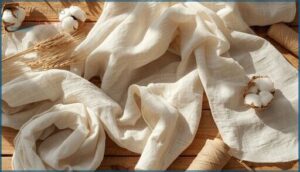
Blending linen with cotton or synthetics gives you the best of both worlds. Textile science shows you can tame wrinkles while keeping that breathable feel you love in natural fibers.
- Typical fabric blending uses 40 to 60 percent linen matched with cotton for easier linen care
- These medium weight fabrics show that irregular texture you want for casual style
- Smart fabric selection balances weave patterns with textile properties for your next project
Lightweight Denim and Chambray
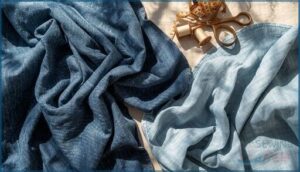
You want denim weaving that moves with you instead of fighting back. Lightweight fabrics weighing 6.5 to 9.5 oz per square yard give you that softness for garment construction without sacrificing durability.
Chambray textures offer a similar twill but with lighter tones that fade beautifully. Fabric finishing like enzyme wash creates that lived-in feel, while fabric dyeing with indigo delivers authentic character. Smart fabric selection starts here.
Canvas and Duck
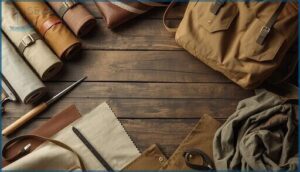
Fabric durability reaches a new level when you work with canvas and duck. These plain weave workhorses resist tearing and abrasion while maintaining medium weight fabric balance. Fabric selection matters for bags, outerwear, and projects facing heavy use.
- Fabric weight ranges from 8 oz for lighter canvas to 20 oz for heavy duck options
- Water resistance improves with wax coatings and treated finishes for added fabric properties
- Abrasion testing confirms performance under stress and friction
- Stitch reinforcement holds better in tight weave cotton fabric structure
Clothing Uses for Medium Weight Fabric
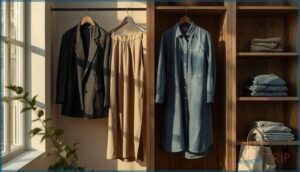
Medium weight fabrics work best when you need structure that doesn’t feel stiff or heavy. They hold their shape through daily wear while staying comfortable enough for all-day use.
Here’s where you’ll see these fabrics shine in your wardrobe.
Dresses and Skirts
You’ll find that medium weight fabrics between 180 and 300 GSM give your dresses and skirts the structure they need without sacrificing movement. They hold A-lines and pencil shapes beautifully while resisting wrinkles better than lighter weights. Fabric selection matters here—twill and canvas weaves complement skirt silhouettes, while cotton-elastane blends add stretch for fitted dress patterns without compromising garment construction.
| Fiber Blend | Best Silhouette | Key Benefit |
|---|---|---|
| Cotton-polyester | A-line skirts | Wrinkle resistance |
| Linen blends | Flowing dresses | Breathable comfort |
| Wool blends | Sheath dresses | Shape retention |
| Cotton-elastane | Fitted dresses | Comfortable stretch |
| Silk blends | Draped styles | Natural luster |
These fabric properties make medium weight materials ideal for everyday wear that balances professional polish with comfort.
Shirts and Blouses
Medium weight fabrics give your shirts and blouses crisp structure while staying comfortable against skin. Cotton poplin and broadcloth in the 100 to 150 GSM range work beautifully for custom button-downs, where fabric selection directly impacts garment fit and drape.
Your sewing project benefits from French seams on lightweight options, while heavier chambray holds buttonhole stitching without puckering. These fabric properties balance professional polish with breathable wear, and proper care instructions preserve that fresh-pressed look through repeated washing.
Trousers and Shorts
Trousers and shorts demand a fabric selection that stands up to movement without going stiff. Cotton twill, canvas, and denim blends in the 150 to 270 GSM range give you the durability you need while maintaining drape.
Your sewing project benefits from proper waist designs, pocket styles, and hem finishing that hold their shape. Medium weight fabrics handle seaming techniques beautifully, balancing structure with everyday comfort.
Light Jackets and Blazers
When you step up to blazers and jackets, your fabric selection guide shifts to 220 to 320 GSM materials that support custom silhouettes without sagging. Wool and cotton blends offer seasonal versatility, while gabardine and twill weaves give you crisp design elements. Medium weight fabrics hold structured shoulders and notched lapels beautifully.
Care varies—some blends handle machine washing, though dry cleaning preserves shape best for garment construction and fashion design. For more insight on key components of jacket design, consider how features like lapel style and jacket fit influence both appearance and functionality.
Home Decor Applications
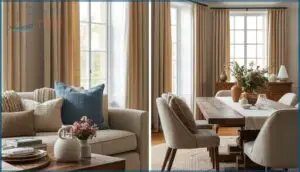
Medium weight fabrics work beautifully throughout your home, bringing both function and style to everyday spaces. These materials hold up to regular use while keeping the polished look you want in living areas and dining spaces.
Here’s how you can put them to work in three key home decor projects.
Curtains and Drapes
You control light and privacy with the right fabric selection for window treatments. Medium weight fabrics between 200 and 400 g/m² give you excellent drape dynamics without overwhelming your rod hardware.
Canvas and linen blends offer fabric breathability while absorbing sound to improve room acoustics. Pinch pleats need fabric density that holds sharp folds, while grommet curtain styles slide smoothly on any standard rod diameter.
Cushion Covers
Your cushion covers take center stage in home decor with fabrics between 180 and 400 g/m².
Cotton twill and canvas blends give you strength for daily use, while linen blends soften beautifully over time. Pattern mixing and texture blending create layered visual interest.
Seasonal updates become straightforward with zippered or envelope closures. Choose polyester blends for vibrant color choices that resist fading in sunny spots.
When selecting materials, consider the benefits of natural fabric options for cushion covers to improve comfort and durability.
Table Runners and Placemats
Moving from cushions to your dining table, medium weight fabrics transform table runners and placemats into practical art pieces.
Your fabric selection depends on how you want your table setting to perform. Cotton drill and linen blends in the 180-270 GSM range handle spills while maintaining crisp folds.
- Runner materials like canvas hold structure along table centers
- Placemat designs benefit from tighter weaves that resist staining
- Dining decor gains longevity when you choose colorfast medium weight fabrics
- Fabric weight selection balances washability with visual impact
Hemmed edges stay flat through countless meals.
Bag and Accessory Projects
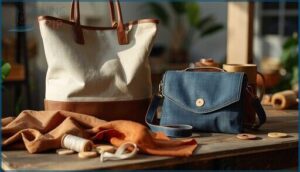
Medium weight fabrics excel at bag and accessory projects because they hold their shape without feeling stiff or heavy.
Canvas, cotton drill, and lightweight denim offer the durability you need for daily use while staying easy to sew.
Here are the most common projects where these fabrics perform best.
Tote Bags and Backpacks
Tote bags and backpacks thrive when you build them with medium weight fabrics like canvas or duck that offer bag durability without excess bulk.
You’ll find these sewing projects handle daily loads while maintaining comfort features through proper fabric choice. Add reinforcement techniques at stress points, and choose blends with water resistance for DIY projects that actually last through rain and rough handling.
Aprons and Pouches
Apron design demands cotton twill or canvas in the 150 to 270 gsm range, giving you structure without stiffness during long kitchen shifts.
Your fabric choice shapes pocket construction—medium weight fabrics hold reinforced stitching at corners and support bib pockets 16 to 20 centimeters wide. These sewing techniques deliver accessory options that outlast cheaper alternatives, with waist ties extending 60 centimeters for any body type.
Hats and Caps
Hat materials in the 150 to 270 gsm range give you the crisp structure baseball caps and bucket styles need without adding weight that crushes your crown.
Canvas and cotton drill hold their shape through daily wear, while linen blends offer breathable headwear trends for summer months.
Your fabric selection controls brim stiffness and sweatband comfort using proven millinery techniques.
Quilting and Patchwork Uses
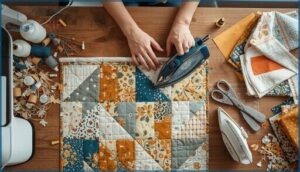
Medium weight fabrics work well for quilting because they hold their shape without adding too much stiffness or bulk. You can piece them cleanly, press seams flat, and layer them with batting without fighting excessive weight.
Here’s how these fabrics fit into different parts of your quilt construction.
Quilt Tops and Blocks
You’ll find medium weight fabrics perfect for quilt tops and blocks because they hold crisp seams without adding bulk.
Cotton quilting weight—usually 150 to 180 GSM—creates sharp piecing techniques on nine-patch or Log Cabin block patterns.
This fabric weight balances structure with ease of handling, letting you nest seams cleanly and press accurately.
Your quilt design stays flat while showcasing fabric selection through precise quilting tools.
Sashing and Borders
Sashing techniques and border designs transform your quilt from scattered blocks into a cohesive frame. Medium weight fabrics—around 150 to 180 GSM—give you the structure to keep fabric strips flat while handling seam management at every join.
- Fabric weight conversion helps you cut sashing width from 1/2 inch to 2 inches finished
- Neutral fabric selection frames blocks without stealing their spotlight
- Pressing seams away from blocks minimizes bulk in your grid
- Cornerstones keep alignment tight at every intersection
- Accurate fabric measurement units guarantee your borders stay square
Foundation Piecing
Foundation Basics reveal sharp points and crisp angles you can’t nail with standard piecing techniques. Medium weight fabrics—150 to 180 GSM—give your foundation blocks enough body to stabilize small pieces without adding bulk.
Block Construction follows numbered patterns stitched to paper templates, where Accuracy Tips like short stitch length and precise fabric measurement units transform tricky stars and log cabins into professional results.
Fabric Selection drives your final drape, so match your cotton weight to your pattern’s demands.
Crafting and DIY Projects
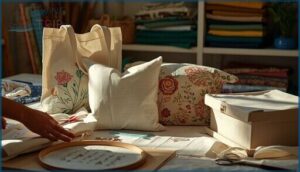
Medium weight fabrics give you the stability you need for craft projects that get handled, moved, and put to work. They hold their shape without being too stiff, making them ideal for items that need to stand up or keep their form.
Here are three ways to put these adaptable materials to use in your crafting space.
Soft Toys and Dolls
You can stitch adorable plush creatures and soft dolls using medium weight cottons or fleece that won’t fray easily. Toy Filling Materials stay secure when you reinforce seams with triple stitching, while Fabric Paint Techniques let you add expressive faces without stiffness.
Choose fabrics around 150 to 200 gsm for proper fabric drape and durability. Soft Toy Patterns work best with fabric thickness that holds shape yet remains cuddly, and Doll Joint Construction benefits from this balanced fabric weight for movable limbs that won’t tear.
Banners and Wall Hangings
Medium weight fabrics work beautifully for banners and wall hangings that add personality to your space. You’ll find polyester and cotton blends in the 150 to 270 gsm range hold print details while offering enough drape for vertical display.
Banner materials like canvas resist fraying when hemmed, and hanging styles from rod pockets to clip rings let you swap seasonal designs without damaging walls.
Organizer Baskets
Beyond decoration, you can create storage solutions that tame clutter with medium weight fabrics. Cotton canvas and polyester blends between 150 and 270 gsm provide the structure needed for organizer baskets that hold their shape on shelves or countertops.
Here are five basket materials worth considering for your DIY projects:
- Cotton canvas – Strong fabric that forms crisp corners and reinforces well
- Polyester blends – Water-resistant options protect contents from spills
- Duck cloth – Extra abrasion resistance for high-use storage
- Jute combinations – Natural fiber mixing adds rustic texture
- Metal-rimmed canvas – Maintains basket designs even when empty
Fabric selection depends on where you’ll use your baskets and what fabric properties suit daily handling.
Upholstery and Furniture Covers
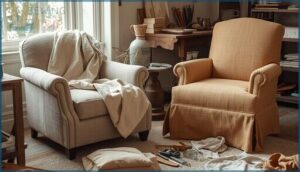
Medium weight fabrics work well for furniture projects that need both durability and a polished look.
Canvas and duck options give you extra abrasion resistance without the stiffness of true upholstery-grade material.
Here are three ways to refresh your furniture with medium weight fabric.
Chair and Sofa Slipcovers
A slipcover transforms tired furniture into something fresh without the hassle of reupholstering. Medium weight fabrics like cotton drill and canvas hold their shape over arms and seat backs while resisting daily wear. You’ll need accurate furniture measurement to choose slipcover patterns that fit snugly without gaps. Proper fabric selection ensures your cover installation stays secure, and following maintenance tips keeps colors vibrant through repeated washing.
| Fabric Selection | Best For |
|---|---|
| Cotton drill | Structured slipcovers with crisp edges |
| Canvas | High-traffic sofas needing abrasion resistance |
| Linen blends | Relaxed drapes with natural texture |
| Microfiber blends | Easy-clean upholstery fabric for families |
| Polyester-cotton | Color retention after machine washing |
Seat Cushions and Pads
You need cushion materials that balance comfort and durability for chairs that see constant use. Medium weight fabrics like cotton blends and canvas give seat ergonomics the support you need without losing breathability.
Pair a polyurethane foam density of around 2 to 4 inches with upholstery fabric in the 150 to 270 gsm range for pads that hold shape. Cushion maintenance stays simple when you choose removable zippered covers.
Headboard Upholstery
Upholstery for headboards demands fabric selection that withstands regular contact while adding visual warmth to your bedroom. Medium weight fabrics in the 150 to 270 gsm range deliver the structure you need over foam thickness of 1 to 2 inches.
Layer your upholstery techniques for lasting results:
- Secure plywood or timber as your core
- Add foam cut to shape
- Place thin batting materials between foam and fabric
- Anchor fabric with staples or nailhead trim
Velvet and linen blends prove popular headboard designs that resist wear.
Choosing The Right Medium Weight Fabric
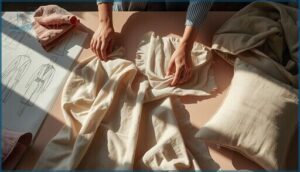
Picking the right medium weight fabric means matching material to purpose. You’ll want to think about how the finished piece should behave, how much wear it will see, and whether you need structure or flow.
These three considerations will steer you toward fabrics that perform well and look good for years.
Project Suitability
Your project drives your fabric selection. Trousers and structured skirts perform best between 300 and 350 GSM for crease resistance and longevity. Dresses need lighter options below 300 GSM to maintain fluid movement.
Medium weight fabrics handle topstitching and custom seams without puckering, making material selection straightforward. Canvas variants suit bags and workwear, while cotton twill works for everyday garments. Match fabric weight to your project planning goals.
Desired Drape and Structure
Drape analysis reveals how fabric flow shapes your final piece. Medium weight fabrics balance structure retention with natural hang, giving you control over silhouette. Weight distribution across weave types determines whether your garment holds crisp lines or falls softly.
Consider these fabric properties and uses for clothing and fashion design:
- Twill offers structured drape with visible body
- Canvas maintains vertical lines and stiffness
- Linen blends create crisp, defined folds
- Cotton drill balances moderate drape with seam stability
Texture impact alters how light reflects and fabric moves on your body.
Durability and Wear
Fabric fatigue shows up where your pieces work hardest—knees, elbows, seat seams. Medium weight material choice delivers measurable fiber strength; cotton twill hits 20 to 25 cN/tex, while polyester blends boost tear resistance up to 40 percent without adding bulk.
| Fabric Property | Performance Metric | Practical Impact |
|---|---|---|
| Abrasion Resistance | 20,000–40,000 cycles | Extended wear life |
| Flex Life | 15,000–25,000 bends | Reduced seam stress |
| Tear Strength | 15–40% increase (blends) | Better edge stability |
| Pilling Resistance | Longer staple fibers | Smoother surface |
| Wash Retention | 70%+ tensile strength | Maintains fabric properties and uses |
Weave construction matters—twill and drill weaves resist sag and distribute stress better than plain weaves. Seam durability depends on thread count; tighter weaves boost wear patterns resistance by roughly 15 percent. Linen blends raise abrasion resistance 30 percent over pure cotton at identical fabric weight, giving you real control over textile measurement and longevity.
Sewing Tips for Medium Weight Fabrics
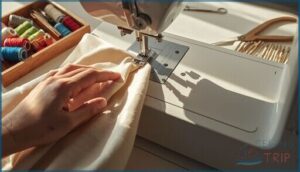
Medium weight fabrics are forgiving to work with, but you’ll get cleaner results when you match your tools and techniques to the material.
The right needle prevents skipped stitches, and a little attention to seam finishing keeps edges from fraying over time. Here’s what you need to know to handle these fabrics with confidence.
Needle and Thread Selection
Your needle selection and thread type set the stage for every seam you sew. Match a size 70/10 to 80/12 needle for lighter medium weight fabrics, stepping up to 90/14 for denser canvas or denim. Thread tension and stitch length adjust to fabric weight, ensuring fabric compatibility without puckering.
- Polyester thread delivers strength and subtle sheen across most material choices
- Cotton thread bonds naturally with plant fibers for lasting seams
- Core-spun blends resist fraying on tight weaves and heavy textures
Test your sewing techniques on scraps first.
Seam Finishes and Pressing
Once you’ve matched your needle to your material, sharp seam construction demands consistent edge finishing and pressing techniques. Neaten raw edges with overcasting or narrow zigzag to lock threads and boost fabric durability. Press seams open on lighter weaves, to the side on heavier ones, always using a cloth to shield delicate fibers from shine.
| Finish Type | Best For | Durability |
|---|---|---|
| Overcasting | Light to mid weight | Moderate |
| French seam | Delicate weaves | High |
| Flat-felled | Trousers, shirts | Very high |
Your sewing notions and pressing tools shape the final look—don’t skip the steam.
Managing Layers and Bulk
After pressing, tackle layer management by planning your fabric stack before you cut. Grade seam allowances to stagger thickness—trim one layer to a quarter inch, another to an eighth.
For bulk reduction, press seams open rather than to one side. Choose lightweight fusible interfacing on collars and cuffs; it stabilizes without the stiffness heavyweight options bring.
Frequently Asked Questions (FAQs)
What are medium weight fabrics?
You’ve likely grabbed a shirt that felt just right—not flimsy, not stiff. That sweet spot is medium weight fabric, usually ranging from 150 to 270 GSM, balancing structure with comfortable drape.
Does midweight cotton shrink?
Yes, midweight cotton shrinks about 2 to 5 percent after the first wash. Cotton fabric shrinkage depends on washing methods and drying techniques. Pre-shrunk finishes minimize size changes in cotton blends.
What does midweight mean in clothing?
When you see “midweight” on clothing labels, you’re looking at fabric weight classification that signals fabric density between 170 and 340 GSM.
This classification offers garment structure with seasonal versatility and balanced drape for everyday wear.
What is an example of a midweight fabric?
Cotton twill, linen blends, lightweight denim, and chambray are classic examples of medium weight fabric. These materials usually range from 150 to 270 GSM, balancing drape with structure for everyday garments.
Can medium weight fabric be used for outdoor furniture?
Medium weight fabrics work for outdoor furniture when treated for weather resistance and mooristure management.
Choose solution-dyed acrylics or polyester blends with UV protection, prioritizing upholstery fabric designed specifically for outdoor durability.
How do you prevent fraying with medium weight fabrics?
Finish raw edges with overlocking, French seams, or pinking to stop unraveling. Apply fray check liquid along cut lines before sewing.
Choose sharp rotary cutters for clean cuts and prewash fabric to remove finishes that loosen fibers.
What interfacing works best with medium weight fabric?
Choose fusible interfacing that’s slightly lighter than your fabric weight to avoid stiffness.
Sew in methods work best for stretchy blends, while fabric stabilizers maintain drape on cotton twill and linen.
How should you store medium weight fabric long-term?
Store your fabric flat or loosely rolled in breathable cotton bags inside a cool, dry space with stable humidity around 50 percent.
Keep it away from sunlight and inspect regularly for pests.
Conclusion
Medium weight fabric uses aren’t just adaptable—they’re the material world’s Swiss Army knife. You’ve seen how one roll of cotton twill or canvas transforms into structured blazers, durable tote bags, and crisp curtains without switching your sewing setup.
That’s the freedom these fabrics deliver: no specialized tools, no guesswork, just confident making. Pick your project, match the weight to your vision, and start stitching. Your next favorite piece is waiting in your stash right now.