This site is supported by our readers. We may earn a commission, at no cost to you, if you purchase through links.
You’re holding two fabrics—same thickness, wildly different weights. One floats when you drape it over your hand; the other falls with purpose. That difference isn’t just trivia—it’s the boundary between a blouse that skims gracefully and one that sags, between curtains that puddle elegantly and ones that hang like cardboard.
Most sewers pick fabric by color or pattern, then wonder why their finished project doesn’t match their vision. The culprit? Wrong weight for the job. When you understand GSM and ounces per square yard, you stop guessing and start choosing fabric that actually works with your pattern’s needs—not against them.
Table Of Contents
- Key Takeaways
- What is Fabric Weight and Why Does It Matter?
- How Fabric Weight is Measured
- Understanding Fabric Weight Categories
- What Influences Fabric Weight
- Choosing Fabric Weight by Project Type
- Selecting Fabric Weight for Climate and Season
- How Fabric Weight Affects Sewing Techniques
- Common Mistakes When Choosing Fabric Weight
- Caring for Fabrics Based on Weight
- Tips for Successfully Choosing Fabric Weight
- Frequently Asked Questions (FAQs)
- Conclusion
Key Takeaways
- Fabric weight (measured in GSM or oz/yd²) directly controls drape, structure, and durability—choosing the wrong weight for your pattern means fighting against the material instead of working with it.
- Lightweight fabrics (30-150 GSM) suit summer garments and sheer projects, medium weights (150-350 GSM) handle everyday wear and most home décor, while heavyweight options (350+ GSM) deliver the structure needed for upholstery and outerwear.
- Your sewing machine settings, needle size, thread weight, and seam finishing techniques all shift based on fabric density—what works for chiffon will destroy denim and vice versa.
- Always order swatches before buying full yardage because GSM numbers alone don’t reveal hand feel, drape behavior, or how the fabric will respond to washing and wear over time.
What is Fabric Weight and Why Does It Matter?
Fabric weight isn’t just a number on a label—it’s the foundation of how your finished project will look, feel, and perform. Before you can match the right material to your sewing pattern, you need to understand what fabric weight actually measures and why it matters more than you might think.
Once you’ve selected the right fabric weight, pairing it with the correct sewing machine needle ensures your stitches come out clean and professional every time.
Let’s break down the essentials so you can make informed decisions from the start.
Definition of Fabric Weight
Fabric weight measures how heavy a material feels per unit area—usually in GSM (grams per square meter) or oz/yd². GSM indicates the mass of fabric in one square meter, while oz/yd² shows weight per square yard.
Higher numbers mean denser, sturdier fabric. This weight measurement guides your fabric classification and helps you match material thickness to your project’s needs.
For further details on fabric measurement and categories, it’s helpful to refer to textile industry standards.
How Fabric Weight Affects Your Sewing Projects
Knowing your material’s GSM doesn’t just categorize fabric—it shapes every step of your sewing project. Lightweight materials glide under your presser foot, while heavyweight textiles demand sharper blades to handle cutting challenges and create pressing bulk at seams.
Fabric weight drives interfacing needs, influences draping outcomes, and determines whether your garment floats or stands firm. Choose wisely, and fabric selection becomes your strongest design tool.
Fabric weight drives interfacing needs, drape, and structure—choose wisely, and it becomes your strongest design tool
The Role of Weight in Drape and Structure
Weight Distribution determines how fabric hangs on your body—heavier textiles fall with graceful structural integrity, while lighter weights create soft fold dynamics that move with you. Understanding fabric density and weave structure lets you predict drapability before you cut, matching texture impact to your pattern’s intended silhouette and fabric drape behavior.
A 50 GSM chiffon drapes like liquid, but a 300 GSM canvas holds crisp lines.
How Fabric Weight is Measured
You’ll see fabric weight expressed in two main units—GSM and ounces per square yard. Both measure the same thing: how much the material weighs across a set area.
Understanding these measurements helps you compare fabrics accurately and make confident choices for your projects.
GSM (Grams Per Square Meter) Explained
GSM stands for grams per square meter—think of it as fabric density expressed in pure numbers. When you see 150 GSM on a bolt tag, that tells you how much one square meter weighs in its clean, dry state. Higher GSM means more material packed into each square meter, giving you a denser feel.
It’s the universal weight measurement standard for fabric selection and textile properties, guiding everything from material selection to understanding fabric thickness.
Ounces Per Square Yard Explained
In the U.S., you’ll see ounces per square yard more often than GSM—it measures how much a yard-by-yard fabric patch weighs. Lightweight materials hover around 3-6 oz, medium weights land between 6-12 oz, and heavyweight fabrics push past 12 oz.
This yardage calculation helps you match fabric density to your sewing machine settings and understand fabric thickness before you cut.
Converting Between GSM and Ounces
To bridge GSM and ounces, multiply your GSM by 0.00295—that’s your fabric weight in oz per square yard.
For quick conversion, keep these ounce equivalents in mind:
- 150 GSM → approximately 0.52 oz/yd²
- 250 GSM → about 0.86 oz/yd²
- 350 GSM → roughly 1.21 oz/yd²
This weight calculation helps you cross-check fabric density and maintain measurement accuracy when pattern instructions use different units.
How to Measure Fabric Weight at Home
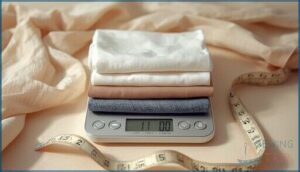
A kitchen scale with 0.1-gram precision transforms fabric sampling into exact home measurement. Cut a 10 cm square, tare your scale with a clean tray, then lay your sample flat without stretching—weight calibration starts here. Multiply grams by 100 to calculate GSM, giving you reliable fabric density data for sewing preparation.
| Sample Size | Weighed (grams) | GSM Calculation |
|---|---|---|
| 10 cm × 10 cm | 2.5 g | 250 GSM |
| 10 cm × 10 cm | 1.5 g | 150 GSM |
| 10 cm × 10 cm | 3.5 g | 350 GSM |
Always measure three samples and average results—your fabric weight guide depends on consistency.
Understanding Fabric Weight Categories
Once you know how fabric weight is measured, you need to understand what those numbers actually mean for your sewing projects.
Fabric weights fall into distinct categories—each with different properties, uses, and handling requirements.
Let’s break down the main weight ranges so you can match the right category to your next project.
Lightweight Fabrics (30-150 GSM)
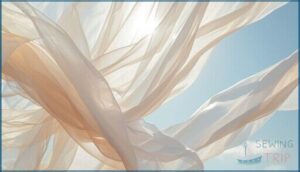
You’ll find fabrics between 30 and 150 GSM floating at the light end of the weight spectrum—perfect for summer apparel and projects demanding breathable textiles with excellent fabric drape.
Sheer fabrics like chiffon hover near 30–60 GSM, while voile and cotton lawn sit around 90–120 GSM. These lightweight fabric types need delicate handling during sewing, but they reward you with airy comfort and graceful movement.
Understanding how fabric density is measured in grams per square meter can help you select the best material for your needs.
Medium-Weight Fabrics (150-350 GSM)
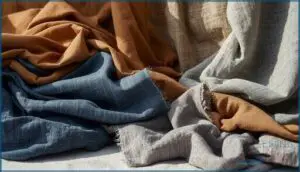
This is the sweet spot—medium-weight fabrics ranging from 150 to 350 GSM deliver balanced fabric density that suits countless projects.
You’ll work with cotton twill, chambray, and fabric blends that offer enough fabric durability for everyday wear without the sewing challenges of heavier materials.
The weight variations within this range let you choose midweight textures that drape softly yet hold structure beautifully.
Heavyweight Fabrics (350+ GSM)
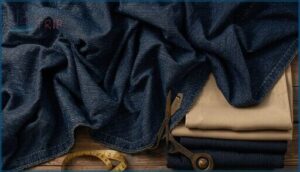
When you move past 350 GSM, you’re entering heavyweight textiles built for serious durability. Heavy fabrics like canvas, duck, denim, and thick weaving structures provide the fabric density needed for upholstery, outerwear, and workwear.
These dense materials resist wear in high-abrasion areas—their textile properties deliver structure, warmth, and longevity that lighter weights simply can’t match.
Very Lightweight and Very Heavyweight Options
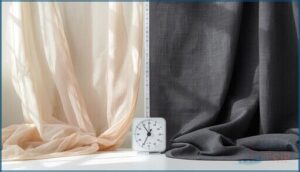
Beyond the core fabric weight categories, you’ll find extremes on both ends—very lightweight materials under 60 GSM for sheer blouses and chiffon, and very heavyweight options over 500 GSM for heavy duty canvas and upholstery.
These specialized GSM ranges demand specific sewing techniques and careful weight selection to match fabric drape with your project’s structural needs.
What Influences Fabric Weight
Fabric weight isn’t just a random number—it’s shaped by several interconnected factors that you need to understand before you make a purchase. The fiber content, construction method, and even the finishing treatments all play a role in determining whether a fabric lands at 80 GSM or 400 GSM.
Let’s break down the four main influences that control fabric weight and how they affect your project choices.
Fiber Type and Blend Composition
Different fibers carry different weights—that’s the starting line when you’re selecting material. Natural fibers like cotton and linen offer breathable softness, while synthetic options such as polyester pack durability into lighter GSM. Fiber blends and blend ratios let you tweak fabric density and performance:
- Cotton provides comfort but adds heft per yard
- Polyester keeps GSM low with high strength
- Wool delivers warmth at medium fabric weight
- Silk combines luster with surprising density
- Fiber hybrids balance traits through strategic fiber content and material selection
Weave and Knit Structure
How you weave or knit yarn directly shifts fabric density and GSM. Plain weaves create tight, balanced structures with uniform thread counts—think sheers and shirting. Twill weaves angle yarns diagonally, adding weight through deeper floats, like denim. Satin weaves stretch long floats across the surface, producing lighter fabric weight despite luxurious drape.
Knit types—jersey, rib, interlock—form looped structures that weigh less than woven counterparts at equal yarn count.
Finishes and Treatments That Add Weight
Fabric finishing techniques add measurable weight—sometimes unexpectedly. Water-repellent coatings boost GSM by 5 to 20 grams per square meter, depending on coat count. Fire retardant treatments increase weight by 5 to 12 percent through polymer layers. Fabric impregnation with resin or wax saturates fibers, raising weight by 2 to 15 percent.
Thermal treatments and heavyweight backing layers push fabric density even higher, transforming lightweight base textiles into structured materials.
Why Thickness Doesn’t Always Equal Weight
Thickness doesn’t always reveal fabric weight—fiber type and construction shift the balance. Dense cotton might weigh more per square meter than a chunky knit because air pockets take up space without adding mass. That’s why you can’t judge GSM by hand feel alone.
- Silk feels light yet packs substantial weight per area due to compact fiber packing
- Polyester bonded fabrics may look thick but weigh less than dense cotton blends
- Linen can be textured and stiff yet carry less mass than smooth heavyweight wool
- Double weave fabrics add perceived thickness without proportional weight gain
Choosing Fabric Weight by Project Type
Different projects demand different fabric weights—and choosing the wrong one can sink even the best pattern. A breezy summer dress won’t work in 400 GSM denim, just like curtains sewn from 80 GSM voile will hang like wet tissue paper.
Here’s how to match fabric weight to what you’re actually making.
Garments and Apparel Considerations
When you’re sewing apparel, GSM determines everything from garment fit to seasonal wear. Lightweight fabrics (30-150 GSM) give you breathable fabric drape for summer tops, while medium weights (150-350 GSM) balance apparel comfort and clothing durability for everyday garments. Heavier options provide structure for jackets.
Match fabric weight and fabric density to your pattern’s garment construction needs—your project’s success depends on it.
Home Decor and Upholstery Projects
Your living room and outdoor spaces demand fabrics built for endurance—upholstery fabric for heavy-duty furniture needs 340-620 GSM, while curtain weight influences both thermal insulation and tracking.
Consider these priorities:
- Furniture cushioning uses high-resilience foams paired with durable woven fabrics (12-22 oz/yd)
- Decor textiles like throw pillows require 9-13 oz/yd for structure
- Outdoor fabrics need UV stabilizers and water-resistant coatings
- Match fabric density to your project’s specific textile properties and behavior requirements
Quilting and Crafting Applications
When you piece a traditional quilt, you’re working in a sweet spot: 80-120 GSM for tops ensures smooth sewing techniques and minimal bulk when quilt layering with thin batting. Cotton quilting weight at 140-180 GSM gives you stable seams without stretch—critical for appliqué techniques and decorative stitching.
Your batting selection directly affects quilting thread density—lighter battings need tighter stitching to prevent gaps. Fabric drape matters less here than stability; test a scrap sandwich before committing to full yardage. Heavier fabrics resist fraying during raw-edge work, while lightweight chiffons slip and weaken seams.
Match your fabric weight to the quilt’s intended use: summer quilts benefit from breathable 100 GSM backings, while heirloom projects pair well with loftier options. Always check fabric selection against your batting thickness—the combination determines how your finished quilt hangs and wears over time.
| Application | Recommended GSM |
|---|---|
| Quilt tops (piecing) | 80-120 GSM |
| Standard quilting cotton | 140-180 GSM |
| Backings (broadcloth) | 100-125 GSM |
| Embroidery/appliqué | 60-90 GSM |
Matching Weight to Pattern Recommendations
Your pattern envelope isn’t just a suggestion—it’s your blueprint for fabric selection. When a designer specifies “medium-weight wovens,” they’ve tested drape, garment structure, and pattern ease at 150-250 GSM. Stray too light and seams sag; too heavy and mobility suffers.
Check the recommended fabric density and thread count, then order swatches. Weight adjustments affect sewing techniques, so test your choice before cutting into yardage.
Selecting Fabric Weight for Climate and Season
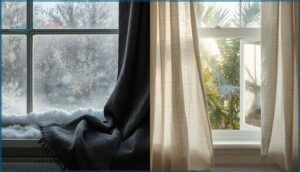
Your sewing climate directly affects which fabric weights will work best—and which ones will leave you uncomfortable. A 350 GSM wool coat makes perfect sense in Minnesota winters but becomes unwearable torture in Florida heat.
Let’s break down the specific GSM ranges you need for each season so you can match fabric weight to your local weather conditions.
Best Weights for Summer and Hot Weather
Hot weather textiles demand fabric weight between 60 and 150 GSM—anything heavier traps heat and moisture against your skin. Focus on breathable materials that allow airflow while maintaining enough structure for your garment to hold its shape.
Top lightweight designs for summer fabric choices:
- Cotton voile (60–90 GSM) – drapes beautifully and breathes exceptionally well
- Linen (100–140 GSM) – dries fastest and stays cool to the touch
- Rayon challis (120–150 GSM) – silky hand feel with excellent moisture evaporation
- Chambray blends (140–170 GSM) – crisp appearance without summer weight penalty
- Bamboo viscose (90–130 GSM) – wicks perspiration 15% faster than cotton
These seasonal sewing tips on fabric selection and properties guarantee your projects stay comfortable when temperatures climb above 86°F.
Choosing Fabrics for Winter and Cold Climates
Cold climate materials need 300–460 GSM for reliable thermal performance and insulating layers. Wool and wool blends deliver the best warmth-to-weight ratio—their crimped fibers trap air pockets that block wind chill.
Dense twill or herringbone weaves in heavyweight fabrics provide both fabric durability and winter protection.
Alpaca, cashmere, and merino offer lighter insulation without bulk, perfect when you’re layering for extreme cold.
Transitional Season Fabric Selection
Spring and fall call for midweight textiles between 180–280 GSM—they balance breathability with subtle warmth for unpredictable weather. Fabric blends like cotton-polyester or wool-rayon excel here, offering stretch and crease resistance across seasonal layers.
Choose woven fabrics for lightweight jackets or knits that layer without bulk. Always order swatches to test drape and opacity before committing to full yardage for your climate fabrics.
How Fabric Weight Affects Sewing Techniques
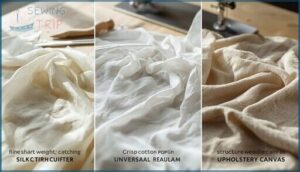
Fabric weight doesn’t just determine how your finished project looks and feels—it completely changes how you sew it. Every weight category demands different tools, machine adjustments, and construction techniques to get clean, professional results.
Here’s what you need to adapt when working with lightweight, medium-weight, and heavyweight fabrics.
Needle and Thread Selection by Weight
Your needle and thread choices make or break stitch quality—especially across different fabric weights and GSM levels. Fine fabrics demand 60-70 microtex needles with 50-60 weight thread to avoid puckering, while heavyweight materials need 90-110 needles paired with thicker 20-30 weight threads.
Match thread tension to fabric density, and you’ll see cleaner seams with fewer skipped stitches—even at higher sewing speeds.
Adjusting Machine Settings for Different Weights
Once you’ve matched your needle, dial in your machine tension and presser foot pressure to suit fabric density.
Increase presser foot tension by 2–3 pounds when moving from lightweight to medium GSM to prevent skipped stitches.
Tighten feed calibration one notch for heavyweight materials, ensuring consistent stitch quality and reducing slippage—test on scrap fabric first.
Seam Finishes and Construction Methods
Your fabric weight and GSM directly control which seam finishes succeed—and which fail under stress.
- Pinked edges work fast on lightweight wovens (60–120 GSM) but won’t hold on thick fabrics.
- Serged finishes prevent stretching in knits and trim seam allowance efficiently.
- French seams suit sheer materials, hiding raw edges inside delicate drape.
- Flat felled seams deliver durability on denim and heavyweight constructions.
- Bound edges add bulk—choose for decorative edge finishing on wovens prone to fraying.
Understanding Your Machine’s Weight Limitations
Your motor’s torque cap determines how many layers of heavyweight fabric you can feed before the drive system stalls or overheats. Most home machines handle up to 350 GSM reliably; industrial models manage 600+ GSM without strain.
Check your manual for maximum fabric density and thread the thickest seam you plan—if the presser foot won’t close flat, you’ve exceeded structural integrity limits.
Common Mistakes When Choosing Fabric Weight

Even experienced sewists make predictable errors when selecting fabric weight—mistakes that compromise the final project before you’ve cut a single piece. These missteps usually stem from skipping essential research steps or letting enthusiasm override practical considerations.
Understanding where others go wrong helps you avoid the same pitfalls and choose fabric that actually works for your intended garment or project.
Ignoring Pattern Weight Recommendations
Your pattern’s weight specs aren’t suggestions—they’re blueprints for success. Weight Neglect leads to Fabric Mismatch that throws off drape, GSM errors that trigger Pattern Distortion, and structural chaos that compromises Garment Stability. Here’s what you risk with improper Fabric Density:
- Sagging or stiff silhouettes that miss the intended fit by sizes
- Transparent seams when Fabric Weight runs too light
- Shifted pattern pieces during Sewing that cause alignment failures
- Weakened interfacing bonds that collapse collars and waistbands
- Premature wear at stress points from mismatched weaving structures
These Sewing Challenges aren’t minor—they waste yardage and time.
Overlooking Seasonal Appropriateness
Seasonal color and temperature rarely align with your gut instinct—what looks winter-ready may smother you indoors, and lightweight fabrics can cling awkwardly over autumn layers. Fabric selection demands climate considerations beyond calendar months, factoring regional humidity and temperature scaling that shift GSM performance drastically.
| Season Challenge | Weight Mistake |
|---|---|
| Spring transitions | Too-heavy GSM traps heat during layering |
| Summer humidity | Dense weaving blocks airflow despite Lightweight Fabrics label |
| Autumn layering | Midweight pieces lack drape for multiple garments |
| Winter indoors | High warmth-to-weight ratios cause overheating |
| Cross-climate travel | Single Fabric Weight fails varied Seasonality needs |
Not Considering Care and Maintenance Requirements
You skip care labels at your peril—fabric shrinkage and color fading accelerate when you ignore weight-specific laundering instructions. Heavyweight weaves demand controlled temperatures to preserve seam integrity, while delicate GSM ranges lose texture after high-heat cycles.
Finishes like water-repellent coatings break down with improper washing, and fabric delamination strikes when humidity storage meets poor fabric care planning—derailing your material selection from the start.
Caring for Fabrics Based on Weight

Once you’ve matched the right fabric weight to your project, caring for that fabric correctly keeps it performing the way you expect. Different weights demand different handling—from gentle cycles for delicate lawns to hot washes for sturdy canvas.
Here’s how to wash, dry, store, and maintain fabrics based on their GSM category.
Washing and Drying Guidelines by Weight
Your fabric’s GSM dictates everything from water temp to spin speeds—lightweight fabrics under 150 GSM need cold water and gentle cycles, while heavyweight fabrics over 350 GSM tolerate warm washes and longer cycles. Always check care labels for weight-specific guidelines.
For drying methods, light weights air-dry in 1–2 hours; medium weights need 2–4 hours or low tumble heat. Proper fabric care and maintenance starts with matching your technique to the weight.
Preventing Shrinkage and Damage
Pre-wash everything before cutting—fabric shrinkage hits hardest on the first cycle. Use cold water and air drying to minimize fiber relaxation, especially for fabrics under 200 GSM. Always follow care labels for drying techniques and moisture control.
Test a swatch first to catch shrinkage potential. Your best defense? Match laundry and fabric care methods to your fabric weight and fiber type from day one.
Storage Tips for Different Fabric Weights
Once you’ve protected your fabric from shrinkage, proper storage keeps it ready to sew. Your fabric weight dictates the best method—light, medium, and heavyweight pieces each need different approaches to prevent creases, stretching, and fiber damage.
- Roll lightweight fabrics under 150 GSM on small tubes to avoid hard fold creases
- Fold medium-weight pieces (150–300 GSM) into neat rectangles for shelf organization
- Lay heavy fabrics flat or roll on large tubes so their weight won’t create deep lines
- Label everything with GSM, yardage, and fiber content for fast project matching
- Control climate—aim for 70°F and 50% humidity to prevent mildew and brittleness
How Weight Changes After Washing
Beyond storage, you’ll notice Fabric Weight shift during the wash—wet fabric absorbs moisture, increasing its mass until drying is complete. Cotton and rayon absorb water quickly, causing Weight Fluctuation of several percent, while polyester retains less moisture. Drying Methods significantly affect how rapidly GSM returns to its baseline: tumble drying accelerates Moisture Retention loss, whereas line drying prolongs it.
| Fiber Type | Water Absorption | Fabric Shrinkage Risk |
|---|---|---|
| Cotton/Rayon | High (rapid uptake) | Moderate to high |
| Polyester/Nylon | Low (minimal gain) | Low |
| Wool/Blends | Medium (slow release) | Moderate |
Tips for Successfully Choosing Fabric Weight
You’ve learned how fabric weight works, what the numbers mean, and how to match GSM to your project—but putting that knowledge into practice takes a few smart habits.
The best sewists don’t guess or hope for the best when choosing fabric. Here are four practical steps that’ll help you make confident, informed decisions every time you shop.
Always Order Swatches Before Buying Yardage
A swatch is your insurance policy against buyer’s remorse—it shows you the true hand feel, drape, and color accuracy before you commit to full yardage.
You’ll see how the fabric weight and GSM translate into real-world texture matching, helping you fine-tune material selection and avoid costly mistakes.
Fabric sampling protects your budget and ensures your fabric selection aligns perfectly with your project vision.
Check Fabric Tags and Manufacturer Specifications
Fabric labels provide essential data for informed material selection, including fiber content, care symbols, weight classifications, and manufacturer guides. This information ensures you know the truth about fabric weight and GSM.
You can decode key specifications by reading:
- Fiber content percentages listed in descending order by weight
- Care symbols for washing temperature and drying method
- Weight classifications like lightweight or heavyweight plus GSM numbers
- Manufacturer style numbers for exact colorway verification
- Performance specifications including moisture wicking or UV ratings
Consider Long-Term Durability and Wear
Longevity separates a successful project from a future disappointment—you need to think beyond the first wear. Match fabric weight and GSM to expected use, because heavier fabrics often deliver better wear resistance under repeated stress.
| Fabric Type | Expected Lifetime |
|---|---|
| High-quality apparel (long staple fibers) | 50+ washes retain shape and color |
| Heavy-duty upholstery | 10+ years in residential traffic |
| Denim and canvas blends | 300+ cycles before visible wear |
| Linen blends | 100+ industrial launderings |
| Performance fabrics (reinforced) | Minimal edge fraying after extended use |
Durability tests like abrasion resistance and pilling tendency reveal how material degradation unfolds over time. Tighter weaves resist snagging, while performance metrics guide garment construction and design decisions. Check fabric properties—fiber content, weave density, and finishes—because they dictate real-world wear resistance far more than weight alone.
Balance Cost, Quality, and Project Needs
You’ll often find that smart budget planning means weighing upfront fabric sourcing costs against long-term value—quality control matters more than sticker price.
Balance cost optimization with project scope by:
- Choosing mid-range GSM fabrics for everyday garments to reduce waste and alteration expenses
- Investing in heavier material selection for high-use upholstery or outerwear that demands durability
- Testing fabric weight and sewing compatibility with swatches before committing to full yardage
- Matching sewing techniques to fabric complexity, avoiding bargain materials that fray or shrink excessively
Frequently Asked Questions (FAQs)
Can fabric weight affect color vibrancy or saturation?
Yes—heavier GSM fabrics usually show deeper color saturation because denser weaves absorb more dye and reduce light transmission.
Fabric dyeing, weave structure, and dye chemistry all influence vibrancy factors beyond weight impact alone.
How does humidity change measured fabric weight?
Your bathroom scale isn’t the only one that lies—your fabric’s weight can swing a few percentage points depending on how humid the air is. Natural fibers like cotton (8-9% moisture regain) and wool (15-16%) soak up moisture like sponges, adding measurable grams per square meter to your GSM reading.
That’s fabric hygroscopy at work: fiber absorption from ambient humidity causes weight fluctuation that textile labs control by conditioning samples at 65% relative humidity and 20°C. Synthetics like polyester barely budge (under 2% MR), but blends show intermediate shifts.
So when you’re checking fabric weight specifications, know that a 200 GSM cotton might weigh 216 GSM on a muggy day—humidity effects are reversible, but they matter for accurate purchasing and pattern grading in fabric science and technology.
Conclusion
The next time you walk into a fabric store, you won’t be guessing—you’ll be reading the room like a textile designer. Choosing fabric by weight transforms your sewing from hopeful experimentation to deliberate craft.
Check that GSM, feel the drape, match it to your pattern’s specifications. Your machine will run smoother, your seams will sit right, and your finished projects will finally look like what you imagined. Weight isn’t everything, but it’s the foundation.