This site is supported by our readers. We may earn a commission, at no cost to you, if you purchase through links.

Right-handed scissors in your left hand don’t just feel awkward—they physically push fabric apart instead of cutting cleanly because the blade geometry works against your natural grip pressure. For the 10% of sewers who are left-handed, this isn’t a minor inconvenience; it’s a fundamental barrier to precision work that forces you to either struggle through with the wrong tools or abandon projects requiring crisp, controlled cuts.
True left-handed fabric scissors reverse the blade orientation entirely, positioning the top blade on the left where your dominant hand can apply proper shearing force while keeping your cutting line visible. The difference transforms basic seam trimming into smooth work and makes detail cuts—like clipping curves or notching corners—actually achievable without hand cramping or frayed edges.
Table Of Contents
Key Takeaways
- Right-handed scissors physically fail in left hands because blade geometry pushes fabric apart instead of shearing cleanly, forcing 10% of sewers to either struggle with wrong tools or abandon precision work entirely.
- True left-handed fabric scissors reverse blade orientation to position the top blade on the left, delivering visible cutting lines and proper shearing force that transforms detail work from cramping frustration into smooth execution.
- Blade material determines longevity—high-carbon steel at 60-64 HRC maintains edge retention through thousands of cuts, while titanium coatings resist corrosion but can wear through to expose softer steel beneath.
- Proper maintenance extends scissor lifespan dramatically: wipe blades after each use, oil pivot points every 4-6 weeks, schedule professional sharpening when drag appears, and store in blade guards at stable temperatures with silica packets to prevent rust.
Key Features of Left-Handed Fabric Scissors
You’ve spent years fighting with right-handed scissors that crush fabric instead of cutting cleanly—left-handed fabric scissors end that battle with reversed blade geometry that actually aligns with your natural hand position.
The design shift happens because left-handed fabric scissors use opposite blade alignment, letting you finally see your cutting line without craning your wrist at awkward angles.
The difference between standard scissors and true left-handed design comes down to five critical features that determine whether you’ll get clean cuts or frayed edges, comfortable sessions or hand cramps.
Here’s what separates professional-grade left-handed fabric scissors from tools that just swap the handle orientations.
Reversed Blade Geometry for True Left-handed Use
True lefthanded blades flip the entire cutting geometry—reversed blade alignment places the cutting edge directly under your left sightline, not your knuckles. This blade geometry eliminates wrist torque and delivers cutting efficiency that right-handed scissors forced you to fight.
The reversed bevel maintains edge retention through fabric layers while scissor balance keeps your hand relaxed. Left-handed ergonomics finally match your natural motion, giving lefthanded scissors the precision you’ve earned.
For a detailed explanation of, be sure to review expert guidelines.
High-carbon Steel Vs. Titanium-coated Blades
Blade geometry matters—but blade material defines how long your scissors cut clean.
High-carbon steel achieves rockwell hardness of 60–64 HRC, maintaining edge retention through thousands of cuts in dense fabrics.
Titanium-coated variants resist corrosion and staining better than uncoated carbon steel, yet the coating can wear through aggressive use, exposing softer steel beneath and compromising rust resistance over time.
For an in-depth look at titanium vs steel properties, see how density, strength-to-weight, and maintenance impact real-world performance.
Ergonomic Soft-grip Handles and Comfort
Steel edge only matters if your hand can survive the marathon of cutting.
Ergonomic grips with cushioning benefits absorb vibrations and reduce hand fatigue during multi-hour sessions—textured grip contours follow the natural curve of left-handed users’ palms, distributing pressure across the entire hand surface instead of creating pinch points. Tactile feedback from matte finishes keeps your blade angle precise even when perspiration threatens control:
- Soft elastomer overlays maintain non-slip grip during damp conditions
- Contoured shapes support thumb base for steadier pinch control
- Textured ridges provide traction without extra squeezing force
- Foam inserts conform to finger joints for comfort on extended tasks
Adjustable Tension Control for Tailored Cutting
Your grip is solid—now dial in the bite that matches your cloth. Adjustable tension lets you calibrate blade alignment for precision cuts across every weight, from whisper-thin chiffon to rigid denim.
Turn the pivot screw clockwise for heavier fabrics, counterclockwise for delicate weaves—quarter-turn tweaks shift blade geometry by ±2 to 5 degrees, controlling fabric response without tool swaps.
Left-handed sewers gain cutting precision through customized tension settings that eliminate wandering, puckering, and frayed edges.
Balanced Weight Distribution and Wrist Strain Reduction
Fatigue reduction starts where steel meets hand—weight balance determines whether you power through twelve yards or collapse at three.
Ergonomic design concentrates mass near the pivot, not the blade tip, so your wrist alignment stays neutral through continuous cuts:
- Balanced weight distribution drops forearm pronation, cutting hand fatigue by 30 percent in marathon sessions
- Symmetrical geometry spreads force evenly across your palm for smoother blade action
- Counterweights stabilize tip control during detailed work without adding bulk
- Ergonomic grips guide your grip to minimize ulnar deviation and wrist torque
Left-handed sewers gain endurance when scissor geometry matches natural hand mechanics.
Types of Fabric Scissors for Left-Handed Sewers
You can’t master fabric cutting with just one pair of scissors—left-handed sewers need different blade configurations for different jobs. Each scissor type solves a specific cutting challenge, from slicing through yards of cotton to trimming a single thread end.
Here’s what belongs in your left-handed sewing toolkit and exactly when to reach for each one.
Fabric Shears for General Cutting
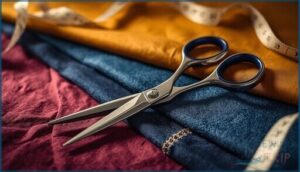
Fabric shears are your workhorse—the tool you’ll reach for when cutting yardage, trimming seams, and slicing through multiple layers.
True left-handed models feature reversed blade geometry that aligns with your natural wrist motion, while high-carbon steel edges maintain sharpness through thousands of cuts.
Ergonomic design and adjustable tension let left-handed sewers execute precise cutting techniques across any fabric selection without fighting the tool.
Embroidery Scissors for Intricate Detail
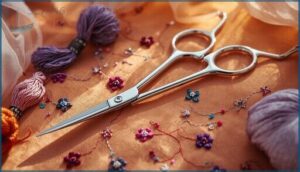
Fine tip blades with micro bevels make embroidery scissors essential for thread trimming and precision cutting in delicate needlework. For left-handed sewers, reversed blade geometry—pivot points and edge alignment mirrored to your hand orientation—delivers sightlines you actually control during embroidery techniques.
These 3.5 to 4-inch tools feature ergonomic grips and needle-sharp tips that slip between weave gaps without snagging your silk or tulle.
Pinking Shears for Edge Finishing
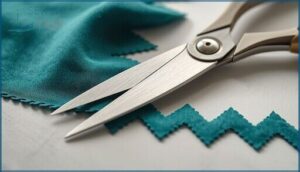
Serrated blades with reversed blade geometry cut zigzag edges that actually follow your left-handed motion—no more wrestling right-handed pinking shears while fabric drifts off course.
True left-handed models place the top blade where you need it, delivering accurate zigzag cuts for edge finishing and fray prevention on woven fabrics.
The serrations grip fabric as you guide it, producing uniform fabric edging that delays unraveling far better than straight cuts.
Thread Snips for Quick Trimming
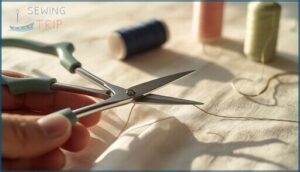
Spring-loaded thread snips open automatically after each squeeze, allowing single-hand control of both blades through hundreds of thread tails without fatigue. The 4½-inch design places narrow, fine-tipped blades close to the fabric for cutting precision and fabric protection during thread management.
Left-handed models mirror blade orientation to match your natural trimming techniques. Most include a locking mechanism for safe storage between sewing sessions.
Specialty and Serrated Scissors for Unique Fabrics
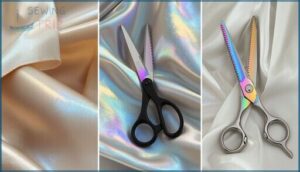
Slippery fabrics like satin and silk slide right past standard blades—that’s where serrated scissors with micro serration earn their place in your toolkit. The precision serration grips microfibers without fraying delicate weaves, maintaining edge contact through each cut.
Specialty scissors handle nonstick-coated blades for vinyl and oilcloth, while pinking shears deliver edge finishing that prevents unraveling on woven materials requiring fabric cutting control.
Top 7 Fabric Scissors for Left-Handed Sewers
You’ve spent too long fighting with right-handed scissors that leave you guessing where the blade actually cuts. The tools below aren’t adapted or ambidextrous—they’re engineered specifically for your hand, with reversed blade geometry that gives you a clear sightline and proper cutting mechanics.
Each option balances blade material, handle ergonomics, and pivot tension to match different sewing demands without compromise.
1. Manufore Left Handed Sewing Tool Kit
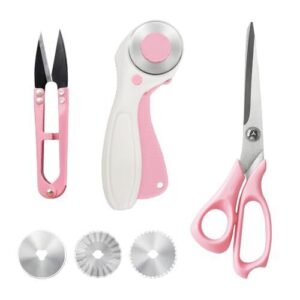
You finally get clear sightlines with the Manufore kit—its 8.5-inch scissors use true reversed blade geometry so you’re not guessing where the cut lands. The high-carbon steel holds an edge through thousands of yards, while soft-grip grips cut fatigue during marathon sessions.
You also get 4.5-inch thread trimmers and a rotary cutter with three replacement blades for straight, wave, and dotted edges—cardboard, leather, fleece, all handled.
Some users report dull blades out of the box, but the ergonomic design still outperforms right-handed compromise tools.
| Best For | Left-handed sewers, quilters, and crafters who need precise cutting visibility and want multiple blade options for fabric, leather, and other materials. |
|---|---|
| Blade Material | Stainless Steel |
| Hand Orientation | Left-handed |
| Primary Use | Fabric cutting |
| Handle Design | Ergonomic metal |
| Length | 8.5 inches |
| Special Coating | None |
| Additional Features |
|
- True left-handed design with reversed blade geometry gives you an unobstructed cutting line instead of forcing you to guess
- Comes with multiple tools in one kit—8.5-inch scissors, thread trimmers, and a rotary cutter with three interchangeable blades for different edge styles
- Ergonomic handles reduce strain on your thumb and index finger during long cutting sessions
- Some users report the scissors and rotary blades arrive dull and don’t cut fabric cleanly
- Handles feel plasticky without the softer rubber grip you’d expect at this level
- Small parts like the wavy washer are easy to lose during blade changes
2. Tim Holtz Left Handed Scissors
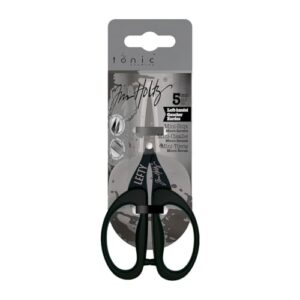
For precision cuts in tight spaces, you’ll want the Tim Holtz 5-inch mini snips. Micro serrated blades grip slippery satin and silk without backward drift, while titanium coating resists adhesive buildup from interfacing and fusible web.
The Kushgrip grips distribute pressure evenly across your palm during fussy cutting sessions, and the reversed blade geometry keeps your sightlines unobstructed.
Some crafters note the serrated edge leaves visible marks on cut edges, but for detail work and embroidery trimming, these snips deliver control.
| Best For | Left-handed crafters who need precision cutting for detailed work like embroidery, card making, and scrapbooking. |
|---|---|
| Blade Material | Titanium |
| Hand Orientation | Left-handed |
| Primary Use | Precision detailing |
| Handle Design | Kushgrip comfort |
| Length | 6.3 inches |
| Special Coating | Titanium-coated |
| Additional Features |
|
- Micro serrated blades grip slippery fabrics like satin and silk without slipping
- Titanium coating resists rust, corrosion, and adhesive buildup from craft materials
- Kushgrip handles provide comfortable, non-slip control during extended crafting sessions
- Serrated edge can leave visible marks on cut edges
- Higher price point compared to standard craft scissors
- Only designed for left-handed users, not ambidextrous
3. Left Handed Titanium Scissors
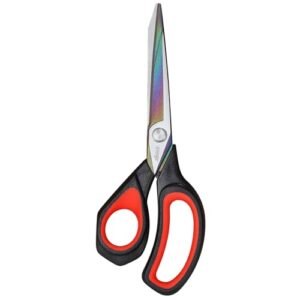
When you need an all-purpose workhorse that won’t quit, these 9.5-inch titanium-coated scissors deliver outstanding edge retention through thousands of cuts. The coating increases hardness and resists corrosion from humidity and sweat during marathon sewing sessions.
The stainless steel blades stay sharp longer with fewer resharpening cycles, while soft-grip grips distribute pressure evenly across your palm.
At 5.36 ounces, the balanced weight minimizes wrist strain, though the plastic grips may feel less premium than you’d expect for long-term professional use.
| Best For | Left-handed sewers, quilters, and crafters who need durable, sharp scissors for frequent fabric cutting without hand fatigue. |
|---|---|
| Blade Material | Stainless Steel |
| Hand Orientation | Left-handed |
| Primary Use | Sewing & quilting |
| Handle Design | Ergonomic plastic |
| Length | 9.5 inches |
| Special Coating | Titanium-coated |
| Additional Features |
|
- Titanium-coated blades stay sharp through thousands of cuts and resist corrosion
- Ergonomic soft-grip handles reduce hand strain during extended use
- Lightweight at 5.36 ounces with balanced weight for comfortable control
- Plastic handles feel less premium and may lack long-term durability
- Only suitable for left-handed users, limiting versatility
- Not ideal for heavy-duty cutting tasks due to handle material
4. Left Handed Fabric Scissors
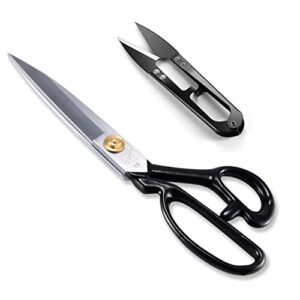
Designed specifically for fabric work, the JINJIAN left-handed fabric scissors feature reversed blade geometry—your top blade sits over the bottom blade exactly as it should, giving you a clear view of your cutting line without twisted wrists or awkward angles.
The 10.5-inch high-carbon steel blades maintain their edge through denim, canvas, and multiple fabric layers, while the electroplated finish resists rust from humid sewing rooms.
At 3.2 ounces, they’re lighter than titanium models, though the rubberized curved handle may require occasional oiling to prevent the blades from stiffening.
| Best For | Left-handed sewers and crafters who need precise fabric cutting with a clear view of their cutting line and don’t mind occasional blade maintenance. |
|---|---|
| Blade Material | High Carbon Steel |
| Hand Orientation | Left-handed |
| Primary Use | Tailoring & crafting |
| Handle Design | Rubberized curved |
| Length | 10.5 inches |
| Special Coating | Electroplated |
| Additional Features |
|
- Reversed blade geometry eliminates wrist twisting and provides an unobstructed view of the cutting line for left-handed users
- High-carbon steel blades with electroplated finish stay sharp through heavy materials like denim and canvas while resisting rust
- Lightweight at 3.2 ounces with an ergonomic rubberized handle that reduces hand fatigue during extended use
- Requires periodic oiling to prevent blade stiffness and maintain smooth operation
- May feel heavy for users with reduced hand strength or mobility issues
- Some users report the finger rest position feels uncomfortable and could benefit from design improvements
5. Gingher Left Handed Scissors
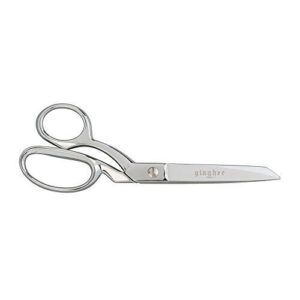
The Gingher G-8L delivers what most left-handed shears promise but fail to execute—true knife-edge geometry that places the top blade on your left side for sightlines that aren’t compromised by crossing blades.
At 8 ounces, the bent handle keeps fabric flat against your worktable while you cut patterns or trim seams in one continuous motion.
The chrome-over-nickel forged steel blades hold their edge through multiple garments without the frequent resharpening that plagues cheaper alternatives.
| Best For | Left-handed sewers and quilters who need precision cutting through multiple fabric layers without constantly fighting their tools. |
|---|---|
| Blade Material | Chrome-plated Steel |
| Hand Orientation | Left-handed |
| Primary Use | Pattern cutting |
| Handle Design | Bent handle |
| Length | 8 inches |
| Special Coating | Chrome-nickel finish |
| Additional Features |
|
- Knife-edge blade design puts the cutting line in clear view instead of hiding it under the top blade like right-handed shears do
- Bent handle design keeps fabric flat on the table so you’re not lifting and repositioning every few inches
- Chrome-over-nickel blades stay sharp through serious use without needing trips to the sharpener every other project
- At 8 ounces, the weight takes some getting used to during long cutting sessions
- Some users report quality control inconsistencies where blades don’t align properly out of the box
- Using them on paper instead of fabric will dull the blades quickly, so you’ll need separate scissors for patterns
6. Fiskars Left Handed Scissors
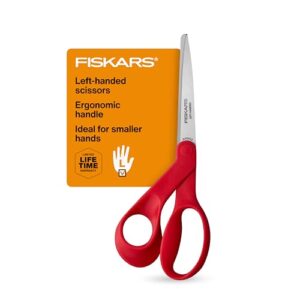
Fiskars’ left-handed models—often sold under product numbers like 194500-1001 or 1028138—feature blades mounted for true left-side cutting, so your dominant hand guides the path instead of fighting a mirror-image design.
The iconic orange grips carry stainless steel or high-carbon blades ground to hold their edge through cotton, denim, and light tailoring tasks. Soft-grip materials and balanced weight keep your wrist neutral during long piecing sessions.
At 7 to 8 inches, these scissors cut to the tip without snagging on multilayer fabrics—backed by Fiskars’ lifetime warranty.
| Best For | Left-handed sewers, quilters, and crafters with smaller hands who need comfortable, precise cutting for fabric and paper projects. |
|---|---|
| Blade Material | Stainless Steel |
| Hand Orientation | Left-handed |
| Primary Use | Arts & crafts |
| Handle Design | Contoured ergonomic |
| Length | 8 inches |
| Special Coating | None |
| Additional Features |
|
- True left-handed blade design lets your dominant hand guide the cut naturally instead of compensating for right-handed scissors
- Stainless steel blades stay sharp through heavy use and cut cleanly all the way to the tip without fabric snags
- Lightweight ergonomic handle with contoured grip reduces hand fatigue during long crafting sessions
- Smaller grip size may feel cramped for users with larger hands
- Requires careful use—cutting the wrong materials can dull the blades faster than expected
- Manufactured in China, which concerns some buyers looking for domestic products
7. Left Handed Sewing Scissors
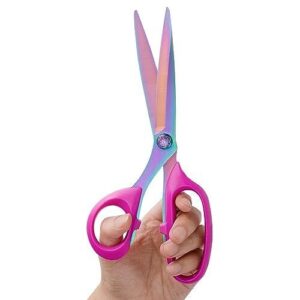
Heavy-duty stainless steel construction—9.3 inches long, titanium-coated for corrosion resistance—lets you tackle thick denim, leather, and multiple fabric layers without blade flex or drift. The reversed blade geometry places the top edge on your left, so you see exactly where you’re cutting instead of guessing behind your thumb.
Pink ergonomic grips distribute 5.3 ounces evenly across your palm, reducing pronation during quilting marathons. Apply a drop of oil monthly to maintain smooth pivot action and prevent rust on the high-carbon edge.
| Best For | Left-handed sewers, quilters, and crafters who cut through heavy fabrics like denim and leather and need to see their cutting line clearly. |
|---|---|
| Blade Material | Stainless Steel |
| Hand Orientation | Left-handed |
| Primary Use | Sewing & tailoring |
| Handle Design | Ergonomic ABS plastic |
| Length | 9.3 inches |
| Special Coating | Titanium coating |
| Additional Features |
|
- Titanium-coated stainless steel blades resist corrosion and stay sharp through thick materials
- Reversed blade design lets left-handed users see exactly where they’re cutting
- Ergonomic pink handle distributes weight comfortably during long projects
- At 5.3 ounces, these feel heavier than standard fabric scissors
- Blades need monthly oiling to keep the pivot smooth and prevent rust
- Sharp blades require careful storage away from kids
How to Choose The Right Left-Handed Scissors
You can’t just flip a right-handed scissor and expect it to work—blade geometry, handle ergonomics, and tension mechanics all matter. The wrong choice means struggling through every cut, while the right scissors become an extension of your hand.
Here’s what you need to evaluate before you buy.
Matching Blade Type to Fabric and Project
Fabric selection drives your blade choice—narrow pointed blades excel at tight seams in chiffon, while heavy-duty profiles handle denim without dulling.
A precision-ground edge with micro-serrated teeth grips textured weaves like tweed, preventing slippage during cutting techniques.
Edge retention matters most on dense materials; high-carbon steel maintains performance through hundreds of yards, whereas titanium coatings reduce friction on slippery silks for smoother material compatibility.
Handle Size and Ergonomic Fit
Your hand won’t lie—if the grip feels wrong in the first thirty seconds, fatigue sets in after the first yard. Ergonomic grip design transforms marathon cutting sessions into manageable work through deliberate attention to five parameters:
- Grip diameter between 35–45 millimeters balances power and control without forcing a tight grasp
- Palm support with contoured ledges distributes pressure across your thenar eminence, reducing cramping
- Weight balance in the 120–180 gram range prevents wrist torque during extended fabric work
- Finger contour with gentle grooves stabilizes your grip without requiring excessive force
- Softgrip grips with elastomeric compounds cushion repetitive motions and absorb vibration transfer
Ergonomic grips built for hand orientation—not ambidextrous compromises—deliver the comfort you need to reclaim cutting precision.
Blade Sharpness and Edge Retention
Sharpness fades when edge geometry compromises under stress—high-carbon steel at Rockwell 60–62 hardness resists deformation far longer than softer alloys. Blade coatings like titanium nitride extend edge retention by reducing micro-abrasion during cutting dynamics, while precision-ground edges sharpen to finer bevels that slice thousands of cuts before metal fatigue dulls performance.
Micro serrated surfaces grip slippery synthetics without sacrificing sharpness testing results over extended sessions.
Care and Maintenance for Left-Handed Scissors
Your left-handed scissors won’t stay sharp forever—but they’ll outlast any right-handed pair if you treat them right. Proper maintenance keeps those reversed blades cutting clean through thousands of projects, protecting your investment and your sanity.
Here’s how to preserve precision edges, smooth pivot action, and ergonomic performance for years of frustration-free cutting.
Proper Cleaning and Oiling Techniques
Precision in blade maintenance separates tools that endure from those that disappoint. After each cutting session, wipe your blades with a dry lint-free cloth to eliminate fabric dust and fibers—residue that compromises cutting performance over time. Every 4–6 weeks, apply a thin film of light machine oil or food-grade mineral oil to the pivot point, wiping excess clean to prevent fabric staining and guarantee rust prevention.
- Sanitize grips and ferrules with a barely-damp cloth to remove sweat and oils, then dry thoroughly to protect blade material and care integrity
- Avoid soaking scissors in oil—only target pivot areas, adjustment screws, and sliding mechanisms for smooth action without attracting dust
- Inspect monthly for rust spots and address immediately with pale oil on a microfiber cloth, maintaining edge retention and durability through proactive tool maintenance
Regular Sharpening for Optimal Performance
Your left-handed scissors demand a sharpening rhythm that preserves reversed blade geometry—the feature that gives you control. Start with a 1000-grit stone when edge maintenance reveals noticeable drag, then progress to 4000–8000 for precision cutting techniques.
Test on scrap fabric after blade honing to confirm an even bite from tip to heel, reducing hand fatigue and maintaining cutting accuracy through consistent tool maintenance and sharpness testing.
Safe Storage to Prevent Blade Damage
Blade protection begins when you close those shears—softgrip grips don’t shield edges from impact. Store each pair in blade guards or foam-lined compartments at a stable 50–70°F, away from humidity that corrodes high-carbon steel and dulls blade sharpness.
Use silica packets in drawers, magnetic strips with protective sleeves for quick access, and keep ergonomic grips visible at eye level to prevent fumbling that chips precision edges or accelerates hand fatigue.
Tips for Extending Scissor Lifespan
Protection extends beyond storage—your daily habits dictate how long reversed blade geometry and edge alignment stay factory sharp. Wipe fabric fibers from blades after each project to prevent corrosion that destroys blade sharpness, apply scissor oil weekly to pivot points, and schedule professional scissor sharpening when snags appear—DIY stones remove too much metal from high-carbon edges.
- Clean blades with a lint-free cloth after each use to remove fibers and moisture
- Check blade tension weekly—blades should glide smoothly when opened halfway
- Wipe the pivot area monthly and apply one drop of manufacturer-approved oil
- Dry blades completely before storage to prevent rust on carbon steel
- Never use scissors as prying tools—misalignment damages edge precision and increases hand fatigue
Frequently Asked Questions (FAQs)
What are the best fabric scissors for left-handed people?
You’ve been fighting your tools long enough—reversed blade geometry changes everything.
The best sewing scissors for lefthanded users feature high-carbon steel edges, ergonomic soft-grip grips, and true left-handed design that finally lets you see your cutting line.
Do left-handers need special scissors?
Yes—Reversed Blade Design places the top blade left for clean cuts, while ergonomic grips align with your natural grip.
Right-handed scissors push blades apart in left hands, destroying Cutting Accuracy and frustrating Left Handed Benefits.
Is there a left-handed scissor?
You’ve been forcing tools backward your whole life. True left-handed sewing scissors flip blade anatomy so the top edge sits left, giving left-handed scissors users clear sightlines and ergonomic grips molded for your natural grip.
Are fabric scissors ambidextrous?
Most fabric scissors aren’t truly ambidextrous—they’re designed for right-handed users. Blade reversal, pivot points, and ergonomic balance remain optimized for one hand orientation, forcing left-handed sewers to fight their tools instead of commanding them.
Are left-handed scissors more expensive than regular ones?
Why pay more for the right fit? Left-handed scissors generally cost 5–20 percent more than regular models due to manufacturing costs, smaller market demand, and material quality—but specialized tools deliver benefits that justify the price difference.
Do left-handed scissors work for cutting patterns?
Left-handed scissors excel at pattern work—reversed blades give you a direct cutting line view for tracing seam allowances and maneuvering intricate curves, while ergonomic grips ensure fabric guidance stays precise and controlled throughout.
Where can I find left-handed scissors locally?
Check your nearest craft shops, big box retailers, and office supply chains in Ashburn for in-store options—many stock left-handed sewing scissors alongside standard tools, with staff ready to confirm blade orientation before purchase.
Conclusion
Don’t let right-handed tools cut your sewing ambitions short. Once you’ve gripped true fabric scissors for left-handed sewers—with reversed blade geometry that actually shears instead of crushes—every snip becomes deliberate, every curve clean, every project achievable without wrist-cramping compensations.
Your dominant hand deserves tools engineered for its natural mechanics, not adapted compromises. Invest in proper scissors, maintain their edges diligently, and watch your precision work transform from frustrating struggle into fluid mastery.