This site is supported by our readers. We may earn a commission, at no cost to you, if you purchase through links.
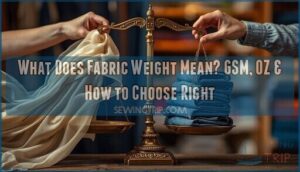
You’re standing in a fabric store, holding two bolts that look nearly identical—same color, same weave, same fiber content on the label. Yet one drapes like water while the other stands stiff as cardboard.
The difference? Fabric weight, a specification that dictates whether your silk blouse will flow gracefully or your denim jacket will last through years of wear. Most sewers scan fabric labels for fiber content and width, but skip right past the GSM or ounce measurement—the numbers that reveal how a material will actually behave under your needle.
Understanding these weight classifications transforms guesswork into precision, helping you match the right textile to every project from delicate lingerie to sturdy outdoor gear.
Table Of Contents
- Key Takeaways
- What Does Fabric Weight Mean?
- How is Fabric Weight Measured?
- What Do GSM and OZ Indicate?
- Fabric Weight Categories Explained
- How Fabric Weight Affects Fabric Properties
- Choosing The Right Fabric Weight for Projects
- Factors Influencing Fabric Weight Selection
- Impact of Fabric Weight on Sewing Techniques
- Common Mistakes When Assessing Fabric Weight
- Caring for Fabrics Based on Weight
- Frequently Asked Questions (FAQs)
- Conclusion
Key Takeaways
- Fabric weight, measured in GSM (grams per square meter) or oz/yd² (ounces per square yard), determines how a material drapes, feels, and performs—from whisper-thin voiles under 150 GSM to sturdy canvas above 350 GSM.
- The weight measurement directly controls three critical properties: drape and structure (lighter fabrics flow while heavier ones hold shape), warmth and breathability (higher GSM traps more air for insulation), and durability (denser weaves resist wear better but may sacrifice comfort).
- Matching fabric weight to your project prevents costly mistakes—use lightweight materials (30-150 GSM) for summer garments and linings, medium weights (150-350 GSM) for everyday clothing, and heavyweight options (350+ GSM) for outerwear, upholstery, and workwear.
- Your sewing technique must adapt to fabric weight through proper needle selection (size 70-80 for delicates, 90-100 for heavy materials), adjusted machine settings (looser tension for lightweight, tighter for heavyweight), and pre-washing natural fibers to account for 3-5% shrinkage that can ruin garment fit.
What Does Fabric Weight Mean?
Fabric weight is exactly what it sounds like—the actual weight of material, measured in a standardized way. It tells you whether you’re holding a whisper-thin voile or a sturdy canvas, and that difference changes everything about how you’ll work with it.
Understanding fabric weight for beginners helps you choose the right material for each project, from delicate scarves to heavyweight upholstery.
Let’s break down what this term really means and why it should matter to you as a sewist.
Definition of Fabric Weight
Fabric weight measures how heavy material is per unit area, reflecting fabric density and material thickness. You’ll see this value expressed as GSM (grams per square meter) or OZ (ounces per square yard). Understanding weight measurement helps you predict textile properties like drape and durability.
Here’s what influences fabric weight:
- Amount of fiber packed into each area
- Yarn thickness used in weaving
- Tightness of the weave construction
- Fabric classification determines end-use suitability
This number guides your fabric selection for any project. The importance of fabric weight categories lies in helping determine which fabrics are most suitable for specific uses and garments.
Why Fabric Weight Matters in Sewing
Knowing this measurement transforms your sewing from guesswork to precision. Weight impact determines whether your garment will drape gracefully or stand rigid. It affects everything from needle selection to final fit.
| Weight Category | Drape Control | Sewing Challenges |
|---|---|---|
| Lightweight (30-150 GSM) | Soft, fluid flow | Slippery, shifts easily |
| Medium (150-350 GSM) | Balanced structure | Stable, forgiving |
| Heavyweight (350+ GSM) | Stiff, holds shape | Thick seams, strong needles |
Your fabric selection success depends on matching weight to sewing project requirements and fabric performance expectations.
Understanding how fabric weight affects drape is essential when choosing the right textile for your project.
How is Fabric Weight Measured?
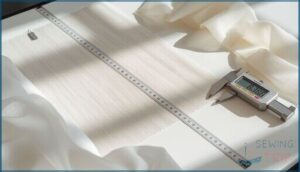
You’ll see fabric weight expressed in a few different ways, depending on where you’re shopping or what industry standard you’re looking at. The two most common measurements are GSM and ounces per square yard, but there are other units you might encounter.
Let’s break down each one so you know exactly what you’re working with.
Grams Per Square Meter (GSM)
GSM stands for grams per square meter and represents fabric density by measuring how much one square meter of material weighs. This textile metric gives you an objective way to assess material thickness and compare fabrics equally, regardless of width.
For weight calculation, manufacturers use precision scales on fabric samples. Higher GSM values signal heavier, denser textiles, while lower numbers indicate lighter materials suited for different fabric selection needs.
Ounces Per Square Yard (oz/yd²)
While GSM caters to the global textile industry well, the United States relies on ounces per square yard (oz/yd²) for fabric measurement. This imperial unit tells you fabric density by weighing material across one square yard of area.
Here’s what OZ measurement reveals about fabric thickness:
- Higher oz/yd² numbers indicate heavier, more durable fabrics
- Lower values signal lightweight materials with better drape
- Weight conversion: 1 oz/yd² equals approximately 33.91 g/m²
- Imperial units remain standard in American sewing and fabric selection
Other Measurement Units
Beyond GSM and OZ, you’ll encounter several measurement units when evaluating Fabric Weight. Length Units like meters and centimeters determine fabric dimensions, while Mass Units (grams, kilograms) describe total weight. Area Units clarify density measurements across surfaces.
| Unit Type | Common Examples | Application in Textiles |
|---|---|---|
| Mass Units | Grams, kilograms, ounces | Total fabric weight, yarn weight |
| Area Units | Square meters, square yards | GSM and OZ calculations |
| Length Units | Meters, yards, centimeters | Fabric dimensions, linear measurements |
| Volume Measures | Liters, milliliters | Dye baths, chemical treatments |
Weight Conversion between systems helps you navigate both metric grams per square meter and imperial measurements effectively.
If you’re working with industrial canvas or upholstery vinyl, check out these heavy-duty sewing tips to avoid needle breaks and skipped stitches.
What Do GSM and OZ Indicate?
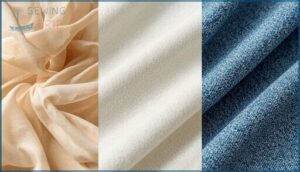
Now that you know how fabric weight is measured, you’re probably wondering what those numbers actually tell you.
GSM and OZ aren’t just random figures—they reveal how thick, dense, and structured your fabric will be.
Let’s break down what these measurements mean and how to use them when choosing materials.
Interpreting GSM Values
When you see a higher GSM number, you’re looking at a denser fabric with more mass packed into each square meter. This fabric density directly affects drape and hand feel.
Understanding GSM and oz/yd² through fabric measurement and conversion charts guides smart fabric weight choices for your project. A 200 GSM cotton twill feels sturdier than 180 GSM poplin, which helps you compare material selection across different fibers.
Understanding OZ in Fabric Context
In the United States, OZ measures fabric mass as ounces per square yard—a traditional weight measurement standard you’ll encounter alongside GSM. When you see 8 oz denim versus 12 oz, you’re comparing fabric density and stiffness directly.
This OZ conversion helps with thread selection and predicting drape. Lighter fabrics (3–6 oz) feel airy, while heavyweight options (12+ oz) deliver structure and warmth for upholstery or outerwear projects.
Converting Between GSM and OZ
Converting units lets you compare fabrics across suppliers and patterns with confidence. The formula is straightforward: divide GSM by 33.906 to get oz/yd², or multiply oz/yd² by 33.906 for GSM.
These weight calculations guarantee your fabric density matches project requirements perfectly.
Conversion Formulas at a Glance:
- GSM to OZ: OZ = GSM ÷ 33.906
- OZ to GSM: GSM = OZ × 33.906
- Quick check: 150 GSM ≈ 4.43 oz/yd²
- Heavy example: 400 GSM ≈ 11.83 oz/yd²
Fabric Weight Categories Explained
Fabrics fall into three main weight categories, and knowing the difference helps you match the right material to your project.
Each category has a specific GSM range and works best for certain types of garments or items. Let’s break down lightweight, medium weight, and heavyweight fabrics so you can choose with confidence.
Lightweight Fabrics

Lightweight fabric ranges from 15 to 140 GSM (0.5 to 4.0 oz/yd²), making it your go-to for summer apparel and breathable materials. These fabrics offer excellent garment flow and drape beautifully against your body. You’ll recognize them in chiffon, silk voile, and lawn cotton.
| Property | Lightweight Fabric Characteristics |
|---|---|
| GSM Range | 15–140 grams per square meter |
| Common Uses | Summer dresses, blouses, linings, scarves |
| Sewing Delicates | Requires fine needles and gentle handling.” |
When you’re sewing delicates, careful fabric selection prevents snags and tearing.
Medium Weight Fabrics
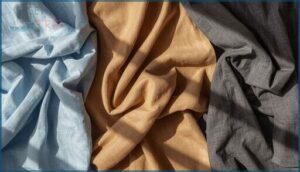
Medium weight fabric sits between 150 and 270 GSM, giving you the sweet spot for everyday garment construction. This fabric weight offers balanced drape and structure—perfect for shirts, trousers, and light jackets.
Your fabric selection here includes chambray, cotton twill, and ponte knit. These midweight textures handle sewing challenges better than delicates while fabric blending with polyester improves durability and fabric properties.
Heavyweight Fabrics
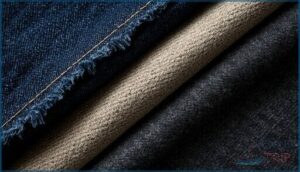
Heavyweight fabric starts above 350 GSM, delivering the fabric density and fabric thickness you need for outerwear, upholstery, and workwear. These weighty materials resist abrasion and maintain shape after washing.
Your heavy textile options include:
- Denim (12+ oz) for durable fibers in jackets
- Canvas for bags and utilitarian gear
- Wool blends balancing warmth with structure
Fabric weight and selection here prioritize longevity over drape.
How Fabric Weight Affects Fabric Properties
Fabric weight isn’t just a number on a label—it determines how your fabric behaves from the moment you cut it to the day you wear it.
Fabric weight isn’t just a number on a label—it shapes how your material cuts, drapes, and wears from start to finish
The GSM or ounce measurement directly influences whether your material flows like water or stands at attention, whether it keeps you cool or cozy, and how long it’ll last through repeated use.
Let’s break down the three main properties that fabric weight controls.
Drape and Structure
Gravity shapes drape by pulling fabric into flat planes and curved surfaces. Lightweight Fabric flows easily, creating soft folds and fluid silhouettes. Heavyweight Fabric holds sharper creases and stands away from the body. Your Fabric Weight choice directly controls Structural Elements like how edges settle and where corners concentrate Fold Dynamics.
| Fabric Weight | Drape Analysis | Silhouette Control |
|---|---|---|
| Lightweight (30-150 GSM) | Soft, flowing drape with gentle folds | Minimal structure, follows body contours |
| Medium (150-350 GSM) | Balanced drape with moderate hold | Controlled shape with some definition |
| Heavyweight (350+ GSM) | Crisp, stiff drape with sharp creases | Strong structure, holds away from body |
Understanding Fabric Flow helps you match Fabric Properties and Characteristics to your design vision.
Warmth and Breathability
Fabric Weight controls how warm you stay and how well air moves through your garment. Heavier materials trap more air pockets for Thermal Insulation, while Breathable Fabrics balance Moisture Management with Climate Control. Wind Resistance improves as GSM increases, but Fabric Thickness can reduce vapor flow.
- Winter weight (300-450 GSM) holds warmth without sealing moisture
- Midweight Fabrics (200-300 GSM) balance airflow and insulation
- Lightweight weaves wick sweat faster for active wear
Durability and Comfort
You want fabrics that last, but Wear Resistance shouldn’t come at the expense of Clothing Comfort. Heavier materials deliver exceptional Fabric Longevity through tighter weaving, yet they can sacrifice Softness Levels and Breathability Factors.
Fabric Quality balances Thermal Insulation with skin-friendly textures—medium weights retain shape after 100+ wash cycles while maintaining Fabric Drape. Fabric Thickness guides both durability and how your garment feels against skin throughout the day.
Choosing The Right Fabric Weight for Projects
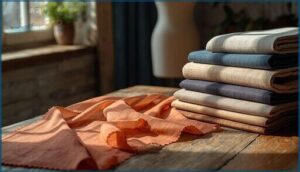
Now that you understand how weight affects fabric behavior, it’s time to match the right material to your actual project.
Different projects demand different weights—what works for a breezy summer dress won’t cut it for a winter coat or your living room couch. Let’s break down the three main project categories and which weights will give you the best results.
Apparel and Garment Construction
You’ll want to match fabric weight to garment patterns and your project’s purpose. Lightweight fabrics (30-150 GSM) work best for lingerie and summer blouses—your sewing machines handle them easily.
Medium weights (150-350 GSM) suit everyday shirts and dresses in fashion design. For structured blazers or denim jeans, heavyweight options (350+ GSM) provide the durability clothing and apparel construction demands, though fabric sourcing becomes critical for textile science accuracy.
Home Décor and Upholstery
For furniture that endures daily use, you need upholstery materials with exceptional fabric durability. Home textiles for decorative fabrics usually demand:
- Heavy GSM ratings (350-600+) for furniture upholstery that resists abrasion through thousands of double rubs
- Tight weaving patterns in canvas or jacquard that prevent snagging
- Treated finishes enhancing fabric quality and stain resistance
Fabric weight directly determines how upholstery performs under stress.
Seasonal and Climate Considerations
Climate adaptation starts with matching fabric weight to your local weather patterns and seasonal needs. Summer suits thrive under 180 GSM for humidity control and breathability, while winter suits demand 300+ GSM for thermal regulation and wind resistance.
Transitional seasons call for midweight options around 200-300 GSM. Clothing for different climates benefits from seasonal layers—base weights paired with adaptable outer garments extend versatility year-round.
Factors Influencing Fabric Weight Selection
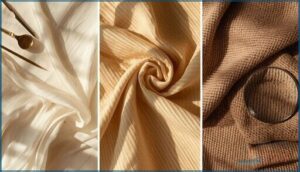
You’ve picked your project and know the GSM range you need, but fabric weight isn’t just about numbers on a label. The actual weight comes from what the fabric is made of, how it’s constructed, and what’s been done to it after weaving.
Let’s break down the three main factors that determine why two fabrics with similar purposes can feel completely different in your hands.
Fiber Types and Blends
The fiber type you choose shapes fabric weight more than you might expect. Natural fibers like cotton, linen, and denim provide breathable structure, while synthetic blends add durability without bulk.
Here’s what influences your selection:
- Cotton and linen offer coolness but vary widely in weight
- Regenerated materials like rayon drape beautifully yet feel lighter
- Fiber hybrids balance softness with wrinkle resistance
- Textile composites engineer specific performance traits
Each fiber type brings distinct weight characteristics to your project.
Weave and Knit Construction
Your fabric’s construction method dramatically shifts its weight, even when you’re working with identical fibers. Tight weave patterns like twill weave pack more yarn per square inch than plain weaves, boosting both GSM and fabric density.
The yarn selection and weave density you choose will define your final fabric weight. Knit textures such as jersey knit use looping instead of interlacing methods, creating lighter fabrics with natural stretch.
Fabric Finishes and Treatments
You mightn’t realize it, but fabric finish chemistries can add 10–30 GSM to your base material. Water repellent treatments, antimicrobial coatings, UV protection, and flame retardants all layer onto woven or knitted textiles, increasing fabric weight.
Wrinkle resistance finishes bond crosslinking agents to fibers, while some textile science and technology applications use resins that shift both hand feel and final measurements in fabric finishing processes.
Impact of Fabric Weight on Sewing Techniques
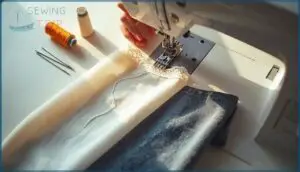
Fabric weight doesn’t just determine what you make—it changes how you make it.
Your needle settings and thread all need to match the fabric you’re working with, or you’ll end up with skipped stitches, broken threads, or puckered seams.
Here’s what you need to adjust based on fabric weight.
Needle and Thread Selection
Your stitch quality depends on matching needle sizes to fabric weight and thread type. Lightweight materials need size 70-80 sharp or universal needles, while heavyweight fabrics require 90-100 to prevent bending.
For sewing machine success, pair thread tension with fabric compatibility—delicate threads need larger needle eyes to avoid fraying. Always test your sewing techniques on scrap fabric before starting your project.
Machine Settings and Adjustments
Once you’ve selected the right needle, adjusting your sewing machine settings ensures smooth performance. Thread tension controls how stitches lock together—loosen it for lightweight materials, tighten for heavyweight fabrics. Stitch length usually ranges from 1.5mm for delicate weaves to 3.5mm for denim.
Machine calibration includes:
- Presser foot pressure to match fabric feed resistance
- Thread type compatibility with tension discs
- Speed reduction for thick or slippery materials
- Bobbin tension adjusted to prevent puckering
- Throat plate selection based on fabric weight category
Managing Layers and Seams
After you’ve dialed in your machine settings, layer management becomes your next checkpoint. Seam alignment across multiple fabric thicknesses demands careful pinning to prevent shifting.
Bulk reduction techniques—grading seam allowances, notching curves—keep heavyweight GSM fabrics from creating lumpy crossings. Edge finishing before you stack layers stops fraying cold.
Fabric stabilization through understitching or stay stitching locks your seam construction in place, especially when fabric weight varies between pattern pieces.
Common Mistakes When Assessing Fabric Weight
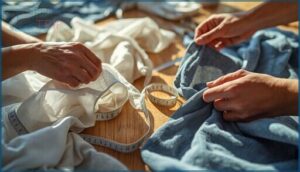
Even experienced sewers can make mistakes when choosing fabric by weight alone. These errors often lead to frustrating sewing sessions, wasted materials, or garments that don’t perform as expected.
Here are three critical mistakes you’ll want to avoid when evaluating fabric weight for your next project.
Overlooking Purpose and Use
You can’t choose fabric weight without knowing where your finished piece will live. Wrong project fit happens when you pick 200 GSM cotton for winter coats or 400 GSM denim for summer blouses—both create style mismatch and unsuitable climate performance.
Consider wear frequency and care demands up front. Choosing the right fabric means matching OZ or GSM to your project’s real-world application, not just what catches your eye.
Ignoring Machine Capabilities
Your sewing machine has physical limits that heavy fabric weight will quickly expose. Home machines often can’t handle 400+ GSM denim or upholstery without motor overload, needle breakage, or fabric tension issues.
Check your model’s maximum needle size and motor torque before buying heavyweight material—pushing beyond these sewing strains causes skipped stitches, belt wear, and costly repairs.
Not Considering Fabric Shrinkage
Overlooking fabric shrink rates ranks among the costliest mistakes you’ll make. Natural fibers like cotton can shrink 3-5% during the first wash, tightening garment fit issues and distorting drape.
Shrinkage testing reveals fiber relaxation patterns before cutting—you’ll protect fabric stability and avoid seams puckering. Pre-wash medium and heavyweight materials (150+ GSM) to guarantee dimensional accuracy and preserve your intended silhouette through repeated fabric care and maintenance cycles.
Caring for Fabrics Based on Weight

Once you’ve chosen the right fabric weight for your project, knowing how to care for it properly makes all the difference in how long it lasts.
Different weights need different handling—what works for a delicate chiffon will ruin a heavy canvas. Here’s how to wash, store, and protect your fabrics based on their weight.
Washing and Drying Tips
Your fabric’s weight dictates its wash cycles and drying techniques. Lightweight materials need cold water to prevent fabric shrinkage and maintain color preservation, while medium-weight cotton tolerates warm settings.
Skip high heat on delicates—air drying protects fiber integrity. Use minimal fabric softening on absorbent types like towels. These fabric care and maintenance practices extend fabric durability across all fabric types and uses, making fabric selection worthwhile.
Storage and Handling Practices
Store your textiles rolled rather than folded to prevent creasing, especially vital for heavier fabrics above 350 GSM.
Keep your fabric storage area between 40 and 60 percent humidity and 65 to 75°F to maintain fiber integrity. Label each piece with its OZ or textile measurement specs, and use sealed bins for pest management.
Proper handling tools like soft-wheeled carts protect heavyweight materials during inventory systems transfers.
Preventing Damage and Prolonging Life
Your fabric’s lifespan depends on matching care techniques to its weight category—a principle rooted in material science and wear resistance.
- Select needles sized to GSM: 70/9 for lightweight, 90/14+ for heavy fabrics to prevent snags and fiber stress.
- Wash light materials on gentle cycles to minimize abrasion damage.
- Store heavy textiles rolled flat to avoid crease-induced weakness.
- Inspect seams regularly at stress points for early damage prevention.
Frequently Asked Questions (FAQs)
Can fabric weight affect print quality?
Yes, heavier fabrics absorb more ink, improving print durability and opacity. Lighter materials need precise GSM-matched techniques to maintain color consistency and resolution without bleeding or stiffness issues.
Does fabric weight impact garment construction time?
Absolutely. Construction time increases with fabric thickness because heavier materials demand slower sewing speed, stronger needles, and extra handling steps—impacting production efficiency.
Garment complexity rises as dense fabrics require careful material selection and specialized sewing techniques.
How does humidity affect fabric weight measurements?
Humidity increases fabric weight through moisture regain—fibers absorb atmospheric moisture, creating weight variability.
You need hygrometer calibration and fabric conditioning at 65% RH for accurate GSM readings, ensuring your measurements reflect true textile science specifications.
Are fabric weight standards consistent internationally?
Like telegraph operators once standardized Morse code, global textile bodies now align fabric testing protocols.
GSM provides international compliance, yet regional differences persist—ASTM, EN, and ISO methods create weight variance despite shared goals across the textile industry.
Does fabric weight change after dyeing processes?
Yes, fabric weight changes after dyeing. Dyeing effects include weight variance from moisture retention, fabric shrinkage, and finishing chemicals.
Cotton fabrics may gain a few to over ten percent in GSM depending on fabric construction.
Conclusion
Think of fabric weight as your material’s fingerprint—it tells you everything before the first cut. When you know what fabric weight means, those cryptic GSM and ounce numbers transform into a roadmap: whether your chiffon needs a size 9 needle or your canvas demands a 16.
You’re no longer gambling on drape or durability. Instead, you’re matching precision to purpose, choosing textiles that perform exactly as your project demands.