This site is supported by our readers. We may earn a commission, at no cost to you, if you purchase through links.
Your quilt’s drape, durability, and overall feel hinge on a measurement most quilters overlook—fabric weight. That flimsy piece that frays at the seams or the stiff square that won’t lie flat? Both likely fell outside the ideal 150-220 GSM range for quilting cotton.
Understanding GSM (grams per square meter) transforms fabric selection from guesswork into precision. Whether you’re piecing your first baby quilt or tackling an heirloom masterpiece, the weight of your fabric determines how your blocks align, how your seams hold, and how the finished quilt moves in someone’s hands.
Learning to measure and select the right fabric weight gives you control over every aspect of your project’s success.
Table Of Contents
Key Takeaways
- Choose quilting fabrics in the 150–220 GSM range for the best balance of durability, drape, and ease of handling during piecing and quilting.
- Measure fabric weight at home by cutting a 10 cm x 10 cm sample, weighing it in grams, then dividing by 0.01 square meters to calculate GSM.
- Match fabric weight to your project’s purpose—lighter weights (150–180 GSM) work for baby quilts and summer throws, while heavier weights (180–220 GSM) suit heirloom pieces and winter quilts.
- When mixing fabrics in one quilt, keep GSM differences within 20 points and place heavier fabrics at borders to maintain seam stability and prevent puckering.
What is Fabric Weight in Quilting?
Fabric weight determines how your quilt looks, feels, and performs over time. Understanding GSM (grams per square meter) gives you the control to choose materials that won’t frustrate you mid-project.
A detailed guide to fabric thickness breaks down GSM ranges so you can match the right weight to your specific quilting technique.
Here’s what you need to know about fabric weight and why it matters for your quilting success.
Definition of Fabric Weight (GSM)
Fabric weight in quilting refers to how dense your material is, measured in GSM—grams per square meter. This standard metric lets you compare fabrics across different brands and product lines.
A higher GSM means heavier, denser fabric, while lower numbers indicate lighter material. Understanding this measurement helps you choose the right fabric thickness for your project and ensures consistent quilting fabric selection.
For a deeper explanation of fabric weight categories and uses, you can explore resources that outline how GSM impacts fabric choice.
Why Fabric Weight Matters for Quilts
Your fabric choice goes beyond color and pattern. Weight variance affects quilt structure, durability, and how the layers behave when you sew them together.
Heavier GSM values improve fabric durability and create a crisper finish, while lighter quilting fabric offers softer drape. Mismatched weights create sewing challenges—puckered seams, uneven thickness, and texture impact that throws off your entire design.
Mismatched fabric weights create puckered seams and uneven texture that sabotage your quilt’s structure
Understanding the significance of fabric weight categories can greatly inform your decisions when selecting quilting materials.
How Fabric Weight Affects Quilt Performance
When you match shell weight to your batting choice, the whole quilt works together—loft stays balanced, seam stability improves, and quilting tension becomes predictable. Here’s how fabric weight shapes your finished piece:
- Fabric drape: Lighter GSM creates soft, flowing quilts; heavier weights add structure.
- Quilt loft: Shell and batting pairing controls overall bulk.
- Quilt durability: Midweight fabrics resist wrinkling and wear.
- Performance consistency: Uniform weight prevents shifting during washing.
Ideal Fabric Weight Range for Quilting
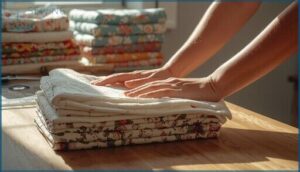
The right fabric weight keeps your quilt flat, smooth, and easy to handle while you’re piecing and quilting. Most quilters stick to a specific GSM range that balances durability with flexibility, but understanding how different fabrics compare helps you make smarter choices.
Let’s look at the recommended weight range and how popular quilting fabrics measure up.
Recommended GSM for Quilting Fabrics
Understanding the right GSM makes quilt making predictable and enjoyable. Here’s a quick fabric weight guide to help you choose materials suited to each season and purpose:
| Quilt Type | GSM Range | Best For |
|---|---|---|
| Baby & Summer Quilts | 120–180 GSM | Breathability and gentle drape |
| All-Season Quilts | 200–280 GSM | Balance of warmth and versatility |
| Winter Quilts | 300–400 GSM | Extra quilt insulation and coziness |
| Specialty Projects | 150–350 GSM | Heirloom designs with varied fabric density |
| Practice & Backing | 120–200 GSM | Affordable material selection for sewing techniques |
Most quilting fabric sits comfortably in the 150–220 GSM range, giving you stability for weight calculation and easy handling.
If you’re adjusting yardage for unique projects, learning to fix common pattern alteration mistakes helps you avoid wasting fabric or miscalculating your needs.
Benefits of Quilting Cotton (150–220 GSM)
You’ll find quilting cotton at 150–220 GSM delivers everything a beginner or seasoned quilter needs: fabric stability that prevents warping during piecing, quilting comfort with a soft hand after washing, and cotton durability that withstands frequent laundering.
This GSM range offers sewing ease—minimal fraying, consistent seam allowances, and crisp blocks. It’s the backbone of smart fabric selection for reliable quilt making.
Comparing Quilting Cotton, Muslin, and Broadcloth
When you line these three fabrics side by side, their differences become clear. Here’s how quilting cotton, muslin, and broadcloth compare:
- Quilting Cotton (150–220 GSM): Offers excellent fabric durability, controlled quilt drape, and excellent sewing ease with minimal fraying—your go-to for patchwork.
- Muslin (90–140 GSM): Lightweight fabric weight makes it budget-friendly for practice and backings, though less stable.
- Broadcloth (115–180 GSM): Mid-range quilting fabric with smooth thread count, ideal for solid-color designs.
Choose based on your project’s needs.
How to Measure Fabric Weight for Quilts
You don’t need fancy equipment to measure fabric weight—just a few basic tools and a simple process. Knowing your fabric’s GSM helps you choose materials that work together and perform well in your finished quilt.
Here’s how to measure fabric weight at home with straightforward steps you can follow right away.
Preparing and Cutting a Fabric Sample
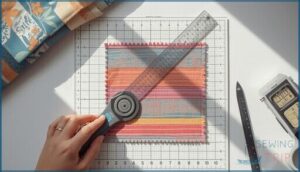
You’ll want to cut a clean, four-by-four-inch swatch from your quilting fabric using a straight edge and sharp rotary cutter. Align the sample with the fabric grain—selvage edge parallel to one side—so you’re measuring true fabric weight, not stretched fibers.
Trim loose threads at the edges, but skip any edge finishing that might add bulk and throw off your reading.
Weighing The Fabric Accurately
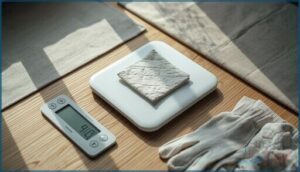
Before you place your swatch on the scale, make sure it’s bone-dry—moisture skews fabric weight readings.
Follow these measurement techniques for scale accuracy:
- Calibrate your digital scale to within 0.1 gram before each fabric sampling session.
- Handle your quilting fabric with clean hands to avoid transferring oils during fabric handling.
- Set the sample flat with zero tension for true weight calibration.
- Record grams to calculate fabric density and thread count.
- Test multiple spots on patterned weaves for consistent fabric selection.
Measuring Sample Dimensions
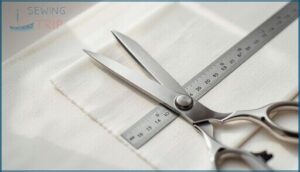
After weighing, you’ll measure your sample’s length and width for dimension accuracy. Cut a 10 by 10 centimeter square using sharp fabric scissors and calibration methods—clean edges matter for fabric sampling.
Lay it flat, use a calibrated ruler with 0.1 centimeter precision, and record both dimensions at the center. This measurement tools approach ensures your fabric thickness and thread count calculations stay spot-on for quilting fabric selection.
Calculating GSM for Your Fabric
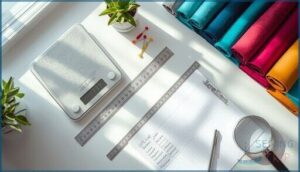
Once you have your sample’s weight and dimensions, converting to GSM is straightforward. Here’s the fabric sampling formula for accurate measurement accuracy:
- Calculate sample area: Multiply length by width in centimeters, then divide by 10,000 to convert to square meters.
- Apply the GSM calculation: Divide fabric weight (grams) by area (square meters).
- Verify fabric density: Compare your result against standard quilting fabric ranges (150–220 GSM).
- Use weight conversion: This method works for any fabric selection, ensuring consistent thread count assessment.
Example Fabric Weight Calculation
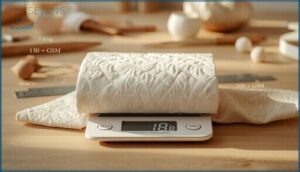
Let’s walk through a real calculation. Say your 10 cm by 10 cm fabric sampling weighs 1.5 grams.
First, convert sample area: (10 × 10) ÷ 10,000 = 0.01 square meters. Then apply the calculation methods: 1.5 ÷ 0.01 = 150 GSM.
This fabric density falls right in the sweet spot for quilting fabric, confirming it’s ideal for your project.
Tips for Selecting The Best Fabric Weight
Knowing the ideal GSM range is just the starting point—you also need to choose fabrics that match your skill level and project goals. The right fabric weight depends on whether you’re just learning the basics or tackling a complex design, and whether your quilt needs to be cozy, decorative, or durable.
Here’s how to make smart fabric choices that set you up for success.
Choosing Fabrics for Beginners Vs. Experienced Quilters
Your skill level shapes your fabric selection more than you might expect. Beginners thrive with quilting cotton in the 150–180 GSM range—it’s forgiving when you’re mastering quilting techniques and handling sewing challenges.
Experienced quilters often prefer sturdier 180–220 GSM fabrics that support complex quilting styles and material preferences. Choosing the right fabric weight matches your current abilities and builds confidence.
Mixing Fabric Weights—What to Know
Mixing fabric weights adds texture contrast and visual depth to your quilt drape. When blending fabrics, follow these rules for seam stability and weight distribution:
- Keep differences within 20 GSM to prevent wonky seams
- Test your fabric selection with sample blocks before committing
- Place heavier fabrics at borders for better structure
- Prewash everything to avoid uneven shrinkage across quilting techniques
Matching Fabric Weight to Quilt Purpose
Your quilt’s purpose determines the right fabric weight and fabric selection. Baby quilts need soft 150–180 GSM for breathability, while heirloom pieces use 190–230 GSM for quilt durability. Summer throws work best at 150–170 GSM to stay cool.
Consider fabric compatibility with your quilting techniques—dense stippling needs slightly heavier fabric to prevent shifting, while lighter fabrics reduce needle resistance during machine work.
Top Quilting Products for Perfect Fabric Weight
The right tools and materials make choosing and working with proper fabric weight much easier. You’ll need quality fabric options that fall within the ideal GSM range, plus reliable cutting tools to prepare accurate samples for testing.
Here are four products that help you achieve consistent, professional results in your quilting projects.
1. Cotton Fabric Squares For Quilting Sewing
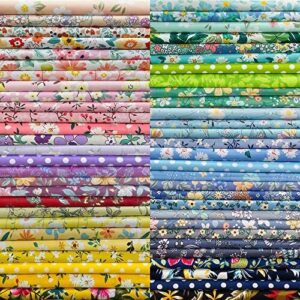
You’ll find these 10″ x 10″ cotton squares especially handy for patchwork projects. Each bundle includes 50 different patterns in 100% cotton with a 200-thread count, fitting right into that ideal quilting weight range.
The precut squares save you time and effort—no more measuring and cutting individual pieces. They’re perfect for beginners tackling their first quilt or anyone building cushion covers and potholders.
Just remember to pre-wash them, since some users report slight shrinkage and color fading after laundering.
| Best For | Beginner quilters and crafters who want a variety of patterns without the hassle of measuring and cutting individual fabric pieces. |
|---|---|
| Material | 100% Cotton |
| Primary Use | Quilting & Sewing |
| Form | Bundles |
| Skill Level | Beginner Friendly |
| Item Weight | Not Specified |
| Washable | Yes |
| Additional Features |
|
- 50 different patterns give you plenty of design options for quilts, potholders, and other small projects
- Pre-cut 10″ x 10″ squares save time and make it easy to jump right into your project
- 200-thread count cotton is a good weight for patchwork quilts and beginner-friendly sewing
- Fabric may shrink and colors can fade after washing, so pre-washing is recommended
- Some pieces arrive cut off-grain, which can make them tricky to work with in precision projects
- Quality isn’t always consistent—some users received faint or repeated patterns
2. Tinyspool Quilting Fabric Strips
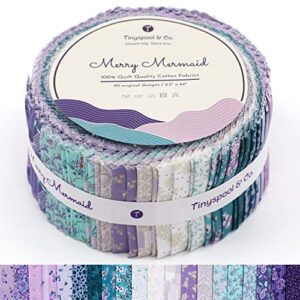
These jelly roll bundles give you 40 precut strips measuring 2.5″ x 44″ each, with 20 coordinated prints repeated twice. You’re getting 100% preshrunk cotton that falls right into quilting’s ideal weight range, so your seams will lie flat and your blocks won’t pucker.
The fabric meets OEKO TEX STANDARD 100 certification, meaning it’s safe for any project. Two strips per print let you create balanced patterns without buying full yardage, and the prewashed finish cuts down on shrinkage worries later.
| Best For | Quilters who want coordinated prints without buying full yardage, especially if you’re working on small-to-medium projects like table runners or baby quilts. |
|---|---|
| Material | 100% Cotton |
| Primary Use | Quilting & Crafting |
| Form | Bundles |
| Skill Level | All Skill Levels |
| Item Weight | 15.2 ounces |
| Washable | Yes, Pre-shrunk |
| Additional Features |
|
- 40 preshrunk cotton strips arrive ready to use, with two of each print so you can build balanced patterns
- OEKO TEX certification means the fabric’s safe for baby quilts and other close-contact projects
- Standard jelly roll dimensions (2.5″ x 44″) work with most precut-friendly quilt patterns
- Twenty prints might feel limiting if you’re aiming for a scrappy look with tons of variety
- Some users mention fraying issues, especially if you’re not using sharp rotary cutters
- Price point runs higher than budget jelly rolls, though the quality backs it up
3. Fiskars Rotary Fabric Cutter Tool
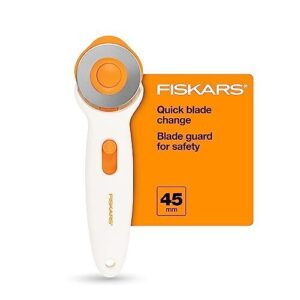
A rotary cutter makes quick work of multiple fabric layers without compromising accuracy. The Fiskars 45mm model features a premium steel blade that cuts cleanly through quilting cotton, muslin, and broadcloth—all the weights you’ll work with most.
Its ambidextrous handle fits comfortably whether you’re right or left-handed, and the sliding lock keeps the blade secure between cuts.
You’ll pair this with a cutting mat and ruler to slice straight strips and precise shapes faster than scissors ever could.
| Best For | Quilters, sewers, and crafters who regularly cut multiple layers of fabric and want faster, more precise results than scissors can provide. |
|---|---|
| Material | Steel Blade |
| Primary Use | Fabric Cutting |
| Form | Rotary Cutter |
| Skill Level | All Skill Levels |
| Item Weight | Not Specified |
| Washable | N/A |
| Additional Features |
|
- Sharp 45mm steel blade cuts cleanly through multiple fabric layers at once, saving significant time on large projects
- Ambidextrous design with comfortable stick handle works equally well for both right-handed and left-handed users
- Sliding lock mechanism keeps the blade safely retracted when not in use, reducing accident risk
- Replacement blades can be expensive over time, adding to long-term ownership costs
- Handle can feel slightly slippery during extended use, which may affect control
- Requires a cutting mat and ruler for best results, meaning additional purchases if you don’t already own them
4. Tone On Tone Quilting Fabric Strips
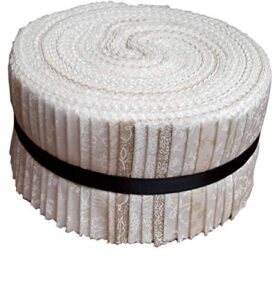
These precut strips give you 40 neutral tone-on-tone prints in a ready-to-sew 2.5 inch x 42 inch format. You’ll get subtle texture without bold patterns—perfect for sashing or low-volume backgrounds that won’t compete with your feature blocks.
The cotton fabric weighs right in the quilting range, so you can mix these strips with standard quilting cotton without worrying about uneven seams. At 12 ounces for the whole bundle, you’re covered for multiple projects without breaking your budget.
| Best For | Quilters who need neutral sashing strips or low-volume backgrounds that won’t overpower their main fabric choices. |
|---|---|
| Material | Cotton |
| Primary Use | Quilting & Sewing |
| Form | Precuts |
| Skill Level | All Skill Levels |
| Item Weight | 12 ounces |
| Washable | Yes |
| Additional Features |
|
- 40 precut strips save you cutting time and give you instant variety in neutral tones
- Standard 2.5 inch width works perfectly for traditional sashing and piecing
- Budget-friendly option that covers multiple projects without a big investment
- Fabric quality isn’t top-tier, so it might not hold up for heirloom pieces
- Strips can arrive permanently warped from tight winding
- Limited to neutral tones only—not ideal if you want pops of color
Frequently Asked Questions (FAQs)
What is the best weight for quilting?
The best weight for quilting sits between 150 and 220 GSM. This range gives you fabrics that are easy to handle, hold their shape nicely, and create quilts with beautiful drape.
What weight fabric for quilting?
Like choosing the right thread count for bedsheets, you’ll want quilting fabric between 150 and 220 GSM. This range gives you enough body to handle easily without making your finished quilt stiff or heavy.
Is 30 wt or 40 wt thread thicker?
30 wt thread is thicker than 40 wt thread, creating bolder, more visible stitches on your fabric. The lower the number, the thicker the thread—so 30 wt delivers stronger, standout seams.
Does thread count affect quilting fabric performance?
Yes—thread count shapes how your fabric manages seams, resists fraying, and holds stitches during quilting.
Higher counts create smoother, tighter weaves that reduce seam slippage and improve stitch security across your quilt top.
Can you quilt with flannel or fleece?
Absolutely—flannel works beautifully for quilt tops, offering soft texture and warmth, while fleece makes cozy backings or batting alternatives.
Just remember to prewash flannel and choose needles carefully to prevent snagging fleece’s brushed surface.
How does batting thickness impact fabric choice?
Thicker batting needs firmer fabric—around 180 GSM or higher—to prevent sagging and support the extra loft. Lighter fabrics work well with thin batting, creating softer drape without adding bulk.
Should you prewash all quilting fabrics equally?
Not quite. Prewash 100 percent cotton quilting fabrics to curb shrinkage and dye bleed, but skip prewashing precut bundles—they’ll fray and distort. Test dark colors first with color catchers.
What fabric works best for hand quilting?
Midweight cottons between 140 and 180 GSM work beautifully for hand quilting. They’re soft enough to push a needle through comfortably but stable enough to hold neat, even stitches without bunching.
Conclusion
It’s no coincidence that quilts you love most often use the best fabric weight for quilting—right in that sweet 150–220 GSM spot. When you measure, select, and mix your fabrics with intention, your quilt’s drape, strength, and comfort fall perfectly into place.
Each block becomes easier to stitch, seams stay strong, and your finished quilt feels just right in your hands. With GSM as your guide, you’re set to craft quilts that last and truly shine.