This site is supported by our readers. We may earn a commission, at no cost to you, if you purchase through links.
That nest of tangled thread on top of your fabric isn’t a mystery—it’s your machine sending a distress signal.
Thread bunching on the top fabric is one of the most common frustrations sewists face, and almost every case traces back to a handful of fixable causes. Tension settings, threading mistakes, bobbin issues, even a worn‑out needle can throw your stitches into chaos.
The maddening part? The problem shows up on top, but the culprit is usually hiding underneath. Once you know where to look, fixing it takes minutes—and keeping it from coming back takes even less effort.
Table Of Contents
Key Takeaways
- Thread bunching on top almost always starts at the bottom — loose upper tension lets the bobbin thread run wild, and one notch on the dial is all it takes to throw everything off.
- Rethreading with the presser foot raised fixes more problems than any tension adjustment ever will, because closed tension discs mean your thread was never actually seated right to begin with.
- Needle and thread need to work as a team — mismatch them by weight or type, and no amount of tweaking will give you clean, balanced stitches.
- If bunching keeps coming back after you’ve rethreaded, cleaned, and adjusted tension, that’s your machine asking for a technician — hook timing and worn tension discs aren’t things a dial can fix.
Causes of Thread Bunching on Top Fabric
Thread bunching on top of your fabric almost always comes down to a handful of fixable culprits.
Most of these issues have quick fixes once you know what to look for—common causes of bobbin thread bunching covers each one with clear, practical solutions.
Knowing what’s actually causing it saves you from guessing — and a lot of wasted fabric.
Here are the most common reasons it happens.
Incorrect Upper Thread Tension
Tension is the silent troublemaker behind most thread bunching on top fabric — responsible for over 80% of cases. When your upper thread tension runs too loose, the top thread can’t pull the bobbin thread up properly, leaving ugly loops on the underside. Think of tension dial calibration like tuning a guitar: even one notch off throws everything out of balance.
Loose upper thread tension causes over 80% of thread bunching — one notch off, and everything unravels
incorrect bobbin threading often leads to top‑fabric bunching.
Improper Needle or Bobbin Threading
Even with tension dialed in, a missed take-up lever or skipped needle bar guide can unravel everything. Threading errors cause bunching just as fast — and they’re sneaky.
- Presser foot down during threading? Your tension discs stay open, loosening the upper thread instantly
- Missing the take-up lever alignment creates loops that nest underneath your fabric
- Bobbin guide skipping causes inconsistent pulls and surface puckers
- Backward bobbin insertion disrupts thread path verification entirely
- A skipped needle bar guide shreds thread right at the eye
Regular cleaning prevents lint buildup in bobbin area.
Poor Thread Quality
Sometimes the culprit isn’t your machine at all — it’s what’s on your spool.
Poor sewing thread quality causes more bunching than most sewists realize.
Inconsistent Diameter means tension discs grip unevenly, throwing upper thread tension off mid‑seam.
Lint Accumulation from fuzzy Brittle Fibers clogs guides fast.
A rough Surface Coating creates drag, and mismatched Fiber Compatibility makes thread tension control nearly impossible to dial in.
Machine Maintenance Issues
machine needs the same respect as your materials. fast track to thread bunching. Skipping sewing machine maintenance is a fast track to thread bunching.
Packed lint blocks tension disc inspection, killing thread tension control.
A dry hook race demands a proper lubrication schedule — friction creates loose loops instantly.
Poor feed dog alignment stalls fabric movement. Hook timing checks catch what no tension adjustment ever will.
Incorrect Needle or Presser Foot Position
Two small mistakes — wrong needle orientation and a lowered presser foot while threading — cause more thread bunching than most people expect.
- Needle Flat Side faces back on most home machines; reversing it breaks hook timing instantly.
- Foot Lift Timing matters — thread your machine with the foot raised, always.
- Presser Foot Alignment affects feed consistency, creating top-thread slack.
- Foot Pressure Adjustment prevents uneven fabric grip on delicate fabrics.
How to Diagnose Thread Bunching Problems
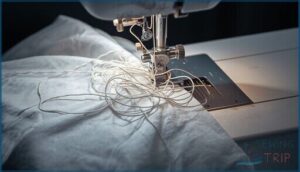
Thread bunching can feel like a mystery, but it usually leaves clues if you know where to look.
Matching your thread type to your technique goes a long way toward preventing bunching—especially for tricky work like quilting techniques for curved seams, where tension and thread weight really start to matter.
Before you start adjusting tension dials or rethreading everything in frustration, you need to figure out what’s actually causing the problem.
Here’s how to read the signs your machine is giving you.
Identifying Upper Vs. Lower Thread Issues
fabric as a confession — it tells you exactly where the tension broke down. Flip your test seam over.
upper tension test failure; your upper thread tension is too loose. Bobbin visibility clues on top mean lower thread is migrating upward. pull resistance method confirms it: proper stitch balance check shows both threads locked neatly in the middle.
Checking Thread Path and Guides
Tracing your thread path from spool to needle reveals most problems instantly. Even one missed guide throws off thread tension completely.
- Spool guide alignment — confirm thread feeds cleanly off the pin without catching
- Tension disc seating — raise your presser foot first, then rethread so discs grip properly
- Take-up lever path — skipping it causes birdnesting every time
- Needle bar guide inspection — feel for burrs; damage shreds thread silently
Assessing Stitch Balance on Fabric
Your stitches tell the whole story — you just have to read them.
Flip your test sew sample over and use thread color contrast between needle and bobbin thread. Balanced tension means each side shows only its own thread.
Check stitch density metrics by examining stitches per inch for consistency. Uneven spacing or seam flatness issues almost always point to upper thread tension being off.
Recognizing Common Beginner Errors
Most thread bunching on top fabric traces back to a handful of fixable mistakes.
Threading with the presser foot down keeps tension discs closed — so your thread never actually seats properly. Skipping tension discs entirely creates instant slack.
Not holding thread tails for the first few stitches? That’s a nest waiting to happen.
Wrong needle choice and bobbin tension errors quietly pile on from there.
Quick Fixes for Thread Bunching
Good news — most thread bunching problems have a fix you can do right now, no tools required.
Before you rip out your seams in frustration, run through these four quick checks first. They solve the problem the vast majority of the time.
Rethreading Needle and Bobbin

Rethreading fixes most bunching problems — fast.
Presser Foot Preparation: raise it fully so the tension discs open and grip the thread properly.
Needle Lever Positioning — turn the handwheel until the needle sits highest.
Upper Thread Path from spool to needle without skipping a single guide.
Bobbin Insertion Tips, ensuring it rotates freely.
Adjusting Upper Thread Tension
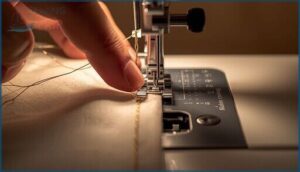
Once your machine is rethreaded, the tension dial is your next checkpoint. Start at the default 4 — that’s your baseline for most fabrics. Then use incremental dial adjustments: move one number at a time, test on scrap fabric, and feel both sides of the stitch.
- Set 5–6 for denim or canvas
- Drop to 3–3.5 for silk or delicate weaves
- Stay at 4–4.5 for everyday cotton projects
Cleaning Tension Discs and Bobbin Area

tension fixes won’t stick if your discs are clogged. Slide an 8–10 inch fleece strip between the open tension discs — presser foot raised, power off — and pull it back and forth. That’s your disc buffing technique right there.
For the bobbin case access, lift out the case, sweep a soft brush around the interior, and use tweezers for stubborn lint.
Holding Thread Tails When Starting

Clean discs help, but here’s another quick win.
Before your first stitch, grab both thread tails — upper and bobbin — and hold them behind the presser foot. That’s the Tail Grip Technique. Keep at least 4–6 inches of tail length and use Stitch Duration Holding: 3–4 stitches for cotton, longer for denim. Proper Hand Position Basics and Fabric Type Adjustments prevent thread bunching before it starts.
Preventing Thread Bunching During Sewing
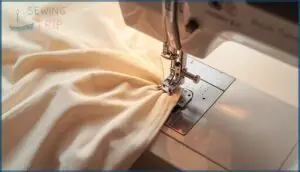
Fixing thread bunching is satisfying — but keeping it from coming back is even better.
A simple habits can make a real difference in how your machine performs every time you sit down to sew.
Here’s what to focus on.
Using The Correct Needle and Thread
Think of your needle and thread as a team — they either work together or fight each other.
Needle‑Thread Matching starts with Thread Weight Selection: a size 80/12 manages 50‑weight cotton beautifully, while heavy denim needs a 100/16 with 30‑weight thread. Thread Eye Sizing matters too — wrong fill causes bunching quickly. Match Needle Point Types and Thread Material Compatibility to your fabric, and thread tension almost fixes itself.
Proper Fabric Handling Techniques
Rushing past fabric handling techniques is how most thread bunching problems actually start — not with tension settings.
- Hand Pressure Control: Let feed dogs do the work; guide gently with both hands.
- Pinning Strategies & Fabric Alignment: Pin perpendicular every 3–4 inches; curves need every 1–2 inches.
- Layer Stabilization: Baste slippery fabrics or add tissue paper between them.
- Curve Feeding: Slow down, pivot small, keep the top layer flat.
Regular Machine Cleaning and Maintenance
Neglecting your machine is basically inviting thread bunching to every sewing session.
Stick to a simple sewing machine maintenance routine: sweep the bobbin area clean every few uses, pull dental floss through tension discs monthly for tension disc care, and follow a consistent lubrication schedule — one drop of oil after every 8–10 hours.
Small habits, zero drama.
Setting Tension for Fabric Type
one-size-fits-all isn’t the rule for tension. Fabric weight guides every decision here — lightweight chiffon sits best around 3 to 3.5, medium cottons at 4 to 4.5, and heavy denim closer to 5 or 6.
Thread weight matching matters too. Scrap testing should always be done before cutting into your real fabric. Automatic tension settings get you close, but manual thread tension control gets you there.
Top Threads for Preventing Bunching
Thread quality isn’t just a minor detail — it’s often the deciding factor between smooth stitches and a tangled mess.
Not all threads are created equal, and choosing the right one can save you a lot of frustration.
four solid options worth keeping in your sewing kit.
1. Simthread 12 Colors Cotton Quilting Thread
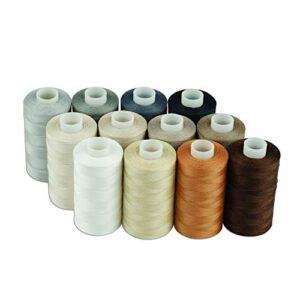
If thread bunching is driving you crazy, your thread choice might be the real culprit. Simthread’s 12-color cotton quilting set is built from 100% long staple mercerized cotton — which means smoother fibers, less lint clogging your tension discs, and fewer mystery jams mid‑project.
Each spool runs 550 yards at 50wt/3‑ply, a solid all‑purpose weight for piecing, quilting, and garments. Pair it with a size 80/12 needle, dial in your tension, and you’ll feel the difference almost immediately.
| Best For | Quilters and home sewers who want a reliable, lint-friendly cotton thread for piecing, garments, and everyday machine or hand sewing. |
|---|---|
| Material | 100% Cotton |
| Thread Weight | 50s/3 (Tex 35) |
| Spool Length | 550 yards |
| Use Cases | Sewing, quilting, embroidery |
| Color Options | 12 neutral colors |
| Hand & Machine | Machine and hand sewing |
| Additional Features |
|
- Long staple mercerized cotton means a smoother, stronger thread with noticeably less lint buildup in your machine
- 12 neutral colors cover most everyday projects, and at 550 yards per spool, you get solid mileage before needing to restock
- Works for everything from quilting and piecing to embroidery and baby clothes — a genuinely versatile all-purpose thread
- Some users have run into thread breakage or machine jamming, so you may need to fine-tune your tension settings
- A few orders came with inconsistent spool sizes or even the wrong material (polyester instead of cotton), which is frustrating when you’re expecting a specific product
- Quality control isn’t perfectly consistent, so what you get can vary a bit from order to order
2. New Brothread Mercerized Cotton Thread Set
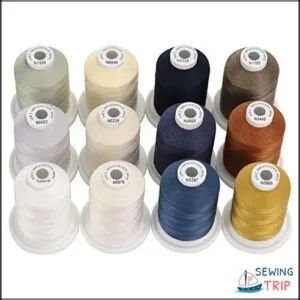
Another solid pick is the New Brothread Mercerized Cotton Thread Set.
It’s 100% gassed and mercerized cotton — that gassing step actually burns off surface fuzz, so lint buildup in your tension discs stays minimal.
The 50S/3 weight runs thicker than standard 40wt thread, so bump up to a size 80/12 needle and ease your upper tension down slightly.
Each 600‑meter spool includes a locking base that stops accidental unwinding — one less reason for bunching right at the seam start.
| Best For | Quilters and sewists working with natural fabrics like cotton and linen who want a low-lint, reliable thread for machine or hand sewing projects. |
|---|---|
| Material | 100% Cotton |
| Thread Weight | 50S/3 weight |
| Spool Length | 600 meters (660 yards) |
| Use Cases | Quilting, serger, sewing, embroidery |
| Color Options | 12 neutral & jean colors |
| Hand & Machine | Machine and hand sewing |
| Additional Features |
|
- Mercerized and gassed cotton means way less lint buildup in your machine over time
- The locking spool base is a small thing that makes a real difference — no random unwinding mid-project
- 600 meters per spool gives you plenty of thread without constantly swapping out
- Thicker than standard 40wt thread, so you’ll need to adjust your needle size and possibly slow down your stitching speed
- Not a great fit for stretchy or synthetic fabrics — it’s built for natural fibers only
- Some machines might need a bit of tension tweaking to play nicely with the heavier weight
3. BlesSew Polyester Sewing Thread 22 Colors
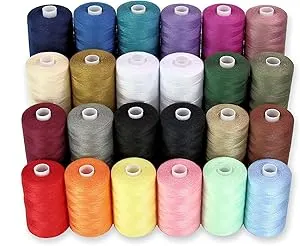
Polyester gets a bad reputation, but the BlesSew 22-Color Thread Set makes a strong case for it.
Each of the 24 spools holds 1,000 yards of 100% azo-free polyester — smooth, low-lint, and consistent enough to behave well through your tension discs. The even wind reduces the erratic pulls that trigger bunching mid-seam.
It works on both machine and hand sewing, manages light to medium fabrics without drama, and the color range practically eliminates the "close enough" thread-matching trap that quietly wrecks stitch balance.
| Best For | Beginners and hobbyist sewers who want a reliable, colorful thread set for quilting, hand stitching, and everyday light-to-medium fabric projects. |
|---|---|
| Material | 100% Polyester |
| Thread Weight | Standard weight |
| Spool Length | 1000 yards |
| Use Cases | Quilting, hand stitching, machine sewing |
| Color Options | 22-color palette + black & white |
| Hand & Machine | Machine and hand sewing |
| Additional Features |
|
- 24 spools with 1,000 yards each means you won’t run out mid-project anytime soon
- Azo-free dyes and a 22-color palette make color-matching easy without compromising on safety
- Works for both machine and hand sewing, so it’s flexible across different project types
- Not built for heavy-duty machines or thick fabrics — it has its limits
- Some users ran into breaking, shedding, or the occasional knot mid-sew
- May need bobbin tension tweaks depending on your machine, which can be a hassle
4. New Brothread Mercerized Cotton Thread
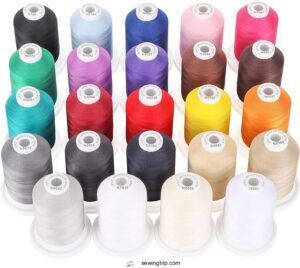
If you’re working with cotton or linen, the New Brothread Mercerized Cotton Thread is worth a serious look. The 100% mercerized construction means less lint, smoother feeding through your tension discs, and a shrinkage rate that actually matches natural fabrics — so you’re not fighting puckering after the first wash.
At 30WT with a three-ply twist, it’s thicker than your average sewing thread, which means stitch formation stays solid and consistent. The locking spool base keeps tangles from sneaking up on you mid‑project.
| Best For | Quilters and sewers working with natural fabrics like cotton and linen who want a reliable, low-lint thread that holds up across a wide range of projects. |
|---|---|
| Material | 100% Cotton |
| Thread Weight | 50S/3 (Tex 33) |
| Spool Length | 600 meters (660 yards) |
| Use Cases | Quilting, serger, sewing, embroidery |
| Color Options | 24 basic colors |
| Hand & Machine | Machine and hand sewing |
| Additional Features |
|
- Minimal lint and smooth feeding — less fussing with your machine mid-project
- Vibrant, consistent colors across 24 options, so your work looks polished from start to finish
- Versatile enough for quilting, embroidery, serging, and everyday sewing all on one spool
- No stretch, so you’ll need to slow your stitching speed on certain machines or fabrics
- Thicker weight (30WT) can be overkill for delicate or fine-detail work
- Needs a larger needle eye (80/12 or bigger), which not everyone has on hand
When to Seek Professional Sewing Help

Sometimes you do everything right and the machine still fights you.
That’s the moment to stop troubleshooting alone and get a trained eye on the problem.
Here are the clearest signs it’s time to call in a professional.
Persistent Thread Bunching After Troubleshooting
Sometimes you do everything right — rethreading, resetting tension, swapping the needle, cleaning the bobbin area — and the bunching still comes back.
That’s your machine talking.
Hidden setup errors like machine timing issues or fabric feed problems go beyond what a dial can fix.
When thread bunching ignores every adjustment, a qualified technician with proper gauges is your next logical step.
Machine Damage or Mechanical Issues
Mechanical damage is a different beast entirely.
When hook timing slips, your needle rises before the hook catches the thread loop — bunching follows every single stitch. Worn tension discs lose grip after heavy use. A bent hook point or burr on the needle plate shreds thread silently.
These need a technician:
- Hook timing realignment
- Tension disc replacement
- Damaged bobbin case swaps
- Needle plate resurfacing
Problems With Specialized Fabrics or Threads
Specialized materials push machines — and sewists — to the limit.
Metallic thread elasticity causes loops under fabric from uneven bobbin pull. Waterproof fabric stickiness drags thread into piles without tissue underlay. Stretch fabric feed problems yank top thread into visible bunches.
A technician can calibrate tension precisely where you can’t.
| Fabric/Thread | Common Issue |
|---|---|
| Silk slipperiness | Top bunching, puckering |
| Faux suede friction | Thread clusters along seams |
| Metallic thread | Loops, inconsistent feeding |
Frequently Asked Questions (FAQs)
Why is my top thread bunching?
Nine times out of ten, it’s your upper thread tension. Thread bunching usually means the tension’s off, threading was skipped, or your needle’s the wrong type for the fabric.
How to fix fabric bunching?
Rethread with the presser foot raised, clean lint from the tension discs, and adjust your upper tension in small steps. Hold thread tails for the first few stitches. Fixed.
Why is the bobbin thread showing on top of the fabric?
Bobbin thread showing on top means your upper thread tension is too tight.
It yanks the bobbin thread upward through the fabric.
A quick upper-lower balance check and tension adjustment usually solves it quickly.
Can thread bunching damage fabric permanently?
Yes, it can.
Thread Bunching causes fabric weakening, seam splits, and even heat damage from friction.
Tension Issues left unchecked lead to color fading and permanent runs — especially on delicate fabrics.
Does sewing speed affect thread bunching?
Absolutely — sewing speed directly impacts thread bunching. Too fast strains Speed‑Tension Balance; too slow disrupts Slow‑Speed Loop Formation. Aim for 600–900 SPM for smooth, balanced stitches every time.
How does humidity impact thread and tension?
Think of your thread as a living fiber — it breathes with the air around it.
High humidity causes fiber moisture absorption, triggering humidity-induced swelling that tightens tension.
Dry air brings thread brittleness, creating tension variability stitch after stitch.
Can a bent needle cause top thread bunching?
A bent needle absolutely disrupts stitch quality. Bend detection tools like backlighting reveal subtle hooks that throw off upper thread tension, causing bunching. Replace your needle every 8–10 sewing hours.
Does bobbin brand matter for thread performance?
Brand consistency matters more than most sewers realize.
Off-brand bobbins can vary enough in size to throw off your thread tension control, making material compatibility with your specific bobbin case a genuine cost‑benefit analysis worth having.
Conclusion
Thread bunching on top fabric is really just your machine waving a white flag—asking for a little attention. Every tangle tells a story: wrong tension, a skipped threading step, a needle that’s past its prime.
Now you know how to read it.
Rethread. Adjust. Clean.
Those aren’t just fixes; they’re habits that separate a frustrated sewist from a confident one.
Treat your machine well, and it’ll return the favor—stitch after perfect stitch.
- https://www.maggieframes.com/blogs/embroidery-blogs/fix-bobbin-thread-bunching-comprehensive-troubleshooting-guide
- https://topnotchsewvac.com/blogs/sewing-machine-blog/why-bobbin-thread-bunches-up-top-7-common-causes-and-solutions
- https://www.hooptalent.com/blogs/news/fix-thread-bunching-under-fabric-ultimate-troubleshooting-guide
- https://www.mhthread.com/blog/products/bunched-up-fabric
- https://sewguide.com/puckered-seam-and-fabric-solutions/