This site is supported by our readers. We may earn a commission, at no cost to you, if you purchase through links.
Grab the wrong stabilizer for a stretch knit, and you’ll watch your embroidery pucker, pull, and distort before the hoop even comes off the machine. It’s one of those mistakes that costs you fabric, thread, and time—all at once.
The difference between cutaway and tearaway stabilizers isn’t just a matter of preference; it’s the line between a clean, lasting design and one that warps after the first wash. Cutaway stays permanently bonded beneath your stitches, while tearaway removes cleanly once the needle stops.
Knowing which one your fabric actually needs changes everything about how your finished piece holds up.
Table Of Contents
- Key Takeaways
- What is an Embroidery Stabilizer and Why It Matters
- Cutaway Stabilizer: Permanent Support for Stretch Fabrics
- Tearaway Stabilizer: Temporary Support for Stable Fabrics
- Cutaway Vs. Tearaway: Side-by-Side Comparison
- How to Remove Each Stabilizer After Stitching
- Choosing The Right Stabilizer for Your Embroidery Project
- Frequently Asked Questions (FAQs)
- Conclusion
Key Takeaways
- Cutaway stabilizer is the only reliable choice for stretch fabrics like jersey, knits, and spandex — it stays permanently bonded beneath your stitches and holds up through 50+ wash cycles without distorting the design.
- Tearaway stabilizer works best on stable woven fabrics like denim, canvas, and linen with stitch counts under 10,000, where it tears off cleanly after stitching and leaves a soft, residue-free finish.
- Stitch count is your second filter after fabric stretch — designs over 15,000 stitches need medium to heavy cutaway (2.0–3.0 oz) to manage tension; tearaway simply can’t hold that load long-term.
- The most common and costly mistake is using tearaway on stretch fabrics — the fabric recovers, the backing doesn’t, and you end up with a puckered, distorted design that no amount of pressing will fix.
What is an Embroidery Stabilizer and Why It Matters
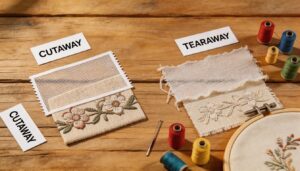
Before you stitch a single thread, there’s one thing standing between a clean design and a puckered mess: your stabilizer. It works quietly beneath your fabric, keeping everything locked in place while the needle does its job.
Choosing the right type makes all the difference, and this guide to embroidery stabilizers for small businesses breaks down exactly which options hold up best for different fabrics and stitch counts.
Here’s what you need to know to pick the right one.
The Role of Stabilizers in Machine Embroidery
Think of a stabilizer as the silent partner behind every clean embroidery design. It sits beneath your fabric, giving the needle a steady surface to form stitches on. Without it, even simple designs shift, stretch, or sink.
Choosing the right stabilizer material types — whether cutaway, tearaway, or adhesive backing options — directly affects how your finished embroidery looks and holds up. For projects needing long‑term support, remember that cut‑away stabilizers are permanent.
How Stabilizers Prevent Puckering and Distortion
Every stitch pulls the fabric inward — that’s tension distribution at work, and without proper stabilizer weight matching, those forces cause puckering and design distortion. A stabilizer absorbs needle penetration stress, keeping threads anchored flat instead of cinching the cloth.
A stabilizer absorbs every stitch’s pull, keeping threads anchored flat before puckering begins
It also reinforces edges so border stitches don’t drag the surrounding fabric out of shape. Match your stabilizer weight to your stitch density, and distortion stops before it starts.
Overview of Cutaway Vs. Tearaway Stabilizer Types
Two stabilizer types handle most embroidery projects — and knowing the difference between cutaway and tearaway stabilizers saves you from redoing work.
- Cutaway stabilizer stays permanently, supporting stretch fabrics like jersey and spandex
- Tearaway stabilizer removes cleanly, suiting stable weaves like denim and canvas
- Stabilizer weight directly affects stitch count capacity and design flexibility
- Fabric drape effect varies — cutaway adds firmness, tearaway preserves softness
- Cost comparison favors tearaway for budget-conscious, lower-density projects
Cutaway Stabilizer: Permanent Support for Stretch Fabrics
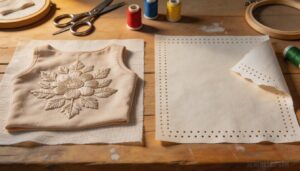
Cutaway stabilizer is the go-to choice when your fabric moves, stretches, or pulls — and your design needs to hold up through all of it. Unlike tearaway, it stays permanently behind your embroidery, acting as a silent backbone for every stitch.
Here’s what you need to know about how it works and when to use it.
How Cutaway Stabilizer Works Under Stitching
Cutaway stabilizer acts like a silent partner beneath your fabric — holding everything flat while the needle does its work. Each penetration passes through both fabric and backing, so the stabilizer manages tension distribution instead of your fabric absorbing all that stress.
This stitch alignment assurance keeps satin columns crisp and fill areas clean, even at high stitch counts.
It’s permanent support, not a temporary fix.
Best Fabrics for Cutaway Stabilizer (Knits, Jersey, Spandex)
Stretch fabrics are where cutaway stabilizer earns its keep. The higher the Knit Stretch Levels, the more permanent backing you need to keep stitches from pulling out of shape.
These fabrics are your clearest matches:
- Knit fabrics like cotton and stretch fleece
- Jersey Fabric Types, especially thin t-shirts
- Spandex Blend Support for athletic or fitted wear
- Lightweight Cutaway Choice for delicate, skin-contact garments
- Mesh Transparency Benefits on light-colored stretchy fabrics
When High Stitch-Count Designs Require Cutaway
When your design has thousands of stitches packed into a tight area, the fabric needs more than temporary help. That’s where High-Count Support from cutaway stabilizer becomes essential. More thread means more pull — and tearaway simply can’t hold that tension long-term.
For lighter projects where high-density isn’t a factor, tearaway stabilizer techniques for sturdy fabrics offer a cleaner, easier removal without sacrificing stitch quality.
| Stitch Count | Recommended Stabilizer Weight | Thread Load Management |
|---|---|---|
| Low (under 5,000) | Lightweight tearaway | Minimal stress |
| Medium (5,000–15,000) | Medium cutaway | Moderate Stitch Pull Resistance |
| High (15,000+) | Heavy cutaway | Maximum Fabric Tension Control |
Cutaway weight matching to your design density considerations keeps stitches flat and outlines crisp through every wash.
No-Show Mesh Cutaway for Light-Colored Garments
When your garment is white or pastel, a regular cutaway can cast a shadow right through the fabric. That’s where no-show mesh cutaway — sometimes called PolyMesh stabilizer — solves the problem. It weighs around 1.5–1.8 oz, so Weight Optimization and Skin-Friendly Softness come standard.
- Light Fabric Blending: White and beige mesh disappear behind thin knits for clean Sheer Mesh Benefits
- Fabric type matching: Ideal fabric compatibility with T‑shirts, polos, and baby apparel
- Cost Efficiency: Lightweight construction trims material bulk without sacrificing permanent support
Tearaway Stabilizer: Temporary Support for Stable Fabrics
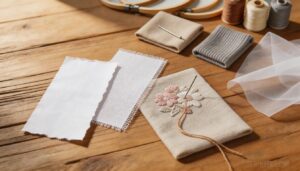
Tearaway stabilizer is the go-to choice when your fabric doesn’t need permanent backing support.
It holds everything steady during stitching, then tears away cleanly once the embroidery is done.
Here’s what you need to know about how it works, which fabrics it suits best, and how to use it right.
How Tearaway Stabilizer Works During Stitching
Think of tearaway backing as a temporary scaffold — it’s there to hold everything steady, then steps aside.
Once hooped, it creates a rigid base for needle penetration support, resisting the downward force of each stitch while the tension absorption mechanism keeps threads from pulling your fabric inward.
With proper hoop tension interaction, tearaway gives you clean, precise results and easy removal when stitching is done.
Best Fabrics for Tearaway Stabilizer (Denim, Canvas, Linen)
Tearaway stabilizer thrives on fabrics that don’t fight back — and denim, canvas, and linen are its best partners.
Here’s why each fabric works so well:
- Denim — Denim Grain Direction resists stretching, so a single tearaway layer holds stitches flat without permanent residue.
- Canvas — Canvas Fabric Density manages logos and patches cleanly; medium-weight tearaway prevents tunneling under moderate stitch counts.
- Linen — Linen Fiber Finish stays crisp during stitching; light 2.0 oz tearaway removes without snagging open-weave threads.
- Tearaway Adhesive Options — Spray adhesive secures backing under denim or canvas without staining cotton fibers.
- Pre-tension Techniques — Hooping fabric taut before stitching maximizes tearaway stabilizer advantages and applications across all three fabrics.
Weight Grades and Stitch Density Considerations
Not all tearaway is created equal — and weight grade selection directly controls how well your backing holds up.
Lightweight stabilizer (1.5–2.0 oz) manages simple, low-density logos on stable wovens. Medium-weight covers moderate stitch density impact without bulk. Heavy-duty stabilizer steps in when counts climb.
Matching stabilizer weight and its effect on stitch count to your fabric-stabilizer compatibility keeps registration tight and puckering out.
Layering Tearaway for Denser Embroidery Designs
When one sheet isn’t cutting it, stabilizer layering gives dense designs the extra muscle they need. Hooping two medium-weight sheets beats hunting for a single heavy-duty roll.
You can also float extra sheets underneath — those Floating Support Layers spread Multi Layer Tension across Targeted Support Zones without stuffing the hoop.
Stitch Density Mapping tells you where Layer Weight Optimization matters most, so dense fills stay locked down.
Cutaway Vs. Tearaway: Side-by-Side Comparison
Now that you know what each stabilizer does on its own, it helps to see them next to each other. A few key differences will tell you exactly which one fits your project. Here’s how they stack up across the things that matter most.
Permanence — What Stays Vs. What Gets Removed
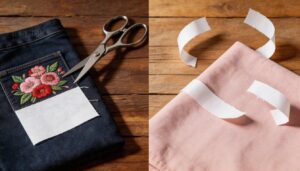
Here’s the bottom line: cutaway stabilizer stays. Tearaway stabilizer leaves. That single difference shapes everything about long-term design quality.
| Feature | Cutaway | Tearaway |
|---|---|---|
| Support Longevity | Permanent | Temporary support only |
| Removal Time | Slower — needs Trim Precision | Fast hand-tear |
| Backside Feel | Firmer backing remains | Softer, cleaner finish |
| Stitch Shift Prevention | Ongoing after washing | Ends after removal |
| Stabilizer Removal Technique | Scissors trim close to stitches | Pull and tear by hand |
Fabric Compatibility at a Glance
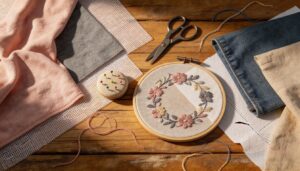
Fabric type drives the whole decision. Stretch vs stable is the first question you ask before anything else.
Knits, jersey, and spandex need cutaway stabilizer because the fabric moves and recovers—tearaway can’t hold that. Stable wovens like denim, canvas, and linen work fine with tearaway stabilizer.
Fiber content influence and color transparency issues also matter, especially on thin or light garments.
| Fabric Type | Best Stabilizer |
|---|---|
| Jersey / Knits / Spandex | Cutaway Stabilizer |
| Denim / Canvas / Linen | Tearaway Stabilizer |
| Performance Wear | Cutaway (no-show mesh) |
| Light-Colored Thin Fabrics | Cutaway PolyMesh |
| Cotton / Quilting Fabric | Tearaway Stabilizer |
Design Complexity and Stitch Density Differences
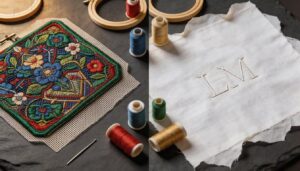
Stitch count is where the real fork in the road happens. Tearaway stabilizer manages low stitch count designs up to about 10,000 stitches on stable wovens — think simple monograms or small logos. Push past that, and it starts to buckle. Cutaway stabilizer takes over for high stitch count designs, complex pattern stability, and fine detail preservation.
| Feature | Cutaway Stabilizer | Tearaway Stabilizer |
|---|---|---|
| Stitch Density Limits | 20,000–100,000+ stitches | Up to 10,000 stitches |
| Complex Pattern Stability | Excellent — holds fine details | Limited to simple patterns |
| Heavyweight Stabilizer Choice | 2.5–3.0 oz for dense fills | 1.5–2.0 oz for light designs |
| Layered Support | 1–2 layers for ultra-dense work | 2–3 layers for moderate density |
| Fine Detail Preservation | Maintains registration under tension | Risks shifting in intricate motifs |
Stitch density considerations and layered support needs should always guide your stabilizer choice before the needle drops.
Finished Appearance and Back-of-Fabric Feel
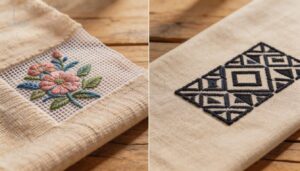
What you see — and feel — on both sides matters more than most beginners expect.
| Aspect | Cutaway Stabilizer | Tearaway Stabilizer |
|---|---|---|
| Front Edge Sharpness | Crisp, defined outlines on knits | Clean finish on woven fabric |
| Back Texture Smoothness | Soft mesh remains; slight texture | Bare fabric feel after removal |
| Skin Comfort | Lightweight mesh reduces irritation | No residue, maximum comfort |
No-show mesh cutaway preserves Color Vibrancy Retention on light shirts, while soft tearaway leaves zero Residue Visibility.
Crisp firm tearaway suits structured fabrics where fabric drape matters, but cutaway embroidery backing wins on fabric texture and feel for stretch garments.
Durability Through Repeated Washing and Wear
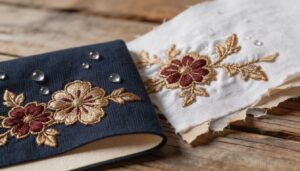
Every wash cycle puts your embroidery to the test — and cutaway stabilizer consistently wins that fight.
| Durability Factor | Cutaway Stabilizer | Tearaway Stabilizer |
|---|---|---|
| Dimensional Stability | Holds shape wash after wash | Fades without backing support |
| Fabric Distortion After Wash | Resists puckering on knits | Higher risk on stretch fabrics |
| Stitch Tension Retention | Maintained through repeated cycles | Weakens once removed |
| Backside Softening | Gradually softens with laundering | No residue remains |
Tearaway suits low-stress projects, but cutaway is your durability anchor when color fastness impact and fabric shrinkage effects threaten your design long term.
How to Remove Each Stabilizer After Stitching
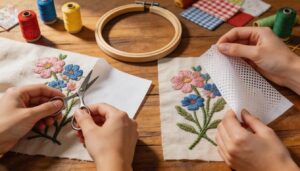
Getting the stabilizer off cleanly is just as important as choosing the right one. Each type comes out differently, and rushing the process can pull stitches or distort your finished design.
Here’s what you need to know about removing each one the right way.
Trimming Cutaway Stabilizer Without Damaging Stitches
Trimming cutaway stabilizer is where patience pays off. Rush it, and you risk nicking stitches or stressing thread edges you can’t easily fix.
- Sharp Scissor Choice — Use short-blade embroidery scissors or curved duckbill scissors for precise edge protection technique near tight stitch lines.
- Trim Margin Width — Leave 1/8 to 1/4 inch from the design edge; this stabilizer frame consistency maintains stitches through washing.
- Fabric Tension Control — Hold the fabric flat to avoid twisting while trimming excess stabilizer around your design.
- Work from the back — Flip the project over so the stitch outline guides every snip, reducing fabric distortion risk.
- Small cuts only — Controlled snips protect stitch quality far better than long, aggressive cuts through dense backing.
Tearing Away Tearaway Stabilizer Cleanly and Safely
Removing tearaway stabilizer is genuinely satisfying when you do it right. Follow the perforation line guidance built into the backing — those scored lines are your roadmap.
Use the angle pull technique: pull at roughly 45 degrees toward the design center, never straight outward.
Work in small section tearing passes, about an inch at a time. For stubborn piece tools, grab tweezers or sharp scissors near dense stitches.
Practice tension release timing — loosen your hoop gradually before you start tearing.
Why Cutaway Removal Takes More Time and Precision
Unlike tearaway stabilizer, cutaway doesn’t just pull away — it demands scissors, patience, and a steady hand. Keep your margin between 1/8 and 1/4 inch to protect bobbin threads from accidental snips.
Curved edge navigation around intricate shapes is the real fiber density challenge here. Sharp scissor choice matters too — curved blades follow your design’s outline far better than straight ones.
Choosing The Right Stabilizer for Your Embroidery Project
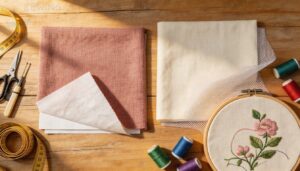
Picking the right stabilizer comes down to a few key factors that are easy to get wrong if you’re not sure what to look for. Your fabric type, how often the item gets washed, and your design’s stitch count all play a role in the decision.
Here’s what to think about before you buy.
Matching Stabilizer Type to Fabric Stretch and Weight
Think of fabric stretch as your first filter when selecting the right stabilizer for fabric type. Stretchy fabrics — knits, jersey, spandex — need cutaway stabilizer because it stays put and holds stitches through tension and recovery.
Your Stabilizer Density Ratio and Weight Matching Matrix should align: light stretch fabrics need soft cutaway; stable wovens, like denim, handle tearaway stabilizer cleanly.
Match stretch first, then weight.
Considering Wash Frequency and Long-Term Wear
Once you’ve matched weight to stretch, ask yourself: how often will this get washed?
- Cutaway stabilizer holds stitches through 50+ washes — ideal for daily-wear garments
- Tearaway stabilizer suits decorative pieces with minimal wash exposure
- Wash durability testing confirms stitch retention drops after 10–15 cycles without permanent backing
- Fabric stretch degradation accelerates on knits — longevity cost favors cutaway every time
Common Mistakes to Avoid When Selecting Stabilizers
Even with wash durability sorted, stabilizer selection still trips up a lot of embroiderers. Tearaway on stretch fabrics is the most common mistake — jersey and spandex will distort every time.
Skipping test swatches costs you more than the swatch ever would. Watch for incorrect weight selection and over-stabilizing layers, too. Non-fusible cutaway on vinyl shifts under the needle, ruining your run.
When to Consider Wash-Away Stabilizer as an Alternative
Sometimes neither cutaway nor tearaway is the right call. Wash-away stabilizer fills the gap for projects where zero residue matters:
- Sheer fabrics like organza and tulle need it for clean, invisible backing
- Freestanding lace support requires a base that rinses away completely
- High pile topping on fleece or terry keeps stitches crisp, then dissolves
- Light stitch designs on stable fabric get a soft, residue-free finish
Frequently Asked Questions (FAQs)
When to use cutaway vs tear away stabilizer?
Use cutaway on stretchy fabrics like knits and T-shirts, or for high-density designs. Use tearaway on stable woven fabrics like denim or canvas with lighter stitch counts.
What is the best type of embroidery stabilizer?
There’s no single "best" stabilizer — the right one fits your fabric.
Cutaway stabilizer suits stretchy knits; tearaway stabilizer works for stable wovens.
Match the stabilizer to your project, and you’ll get clean, lasting results.
Can I use stabilizer on velvet or fleece?
Yes, you can. Cutaway is the safer pick for both. Velvet’s pile compression and fleece bulkiness need lasting support that tearaway simply can’t provide once it’s removed.
Does stabilizer affect embroidery thread color vibrancy?
Stabilizer doesn’t change thread dye, but it directly affects how vivid your colors look.
Poor fabric tension causes stitch sinkage and puckering — both flatten Thread Saturation Consistency and dull the finished design.
How do I store unused stabilizer rolls properly?
Keep rolls in cool dry storage, away from heat and sunlight. Store in original packaging, flat roll position, with clean handling throughout.
Label & rotate your stock so older material gets used first.
Can stabilizer be reused for multiple embroidery projects?
Technically, no. Most stabilizer isn’t built for reuse. Fresh backing gives you the most reliable support. Scraps work for practice motifs, but reused material risks puckering on finished work.
What stabilizer works best for embroidered patches?
For embroidered patches on stable fabrics like twill or denim, tear away stabilizer is your everyday workhorse. Need a clean, residue-free finish? Water-soluble backing wins every time.
Conclusion
It’s a delicate balance: stability without suffocation. Choosing the right stabilizer can make or break your embroidery project.
The difference between cutaway and tearaway stabilizers lies in their permanence and fabric compatibility. Cutaway provides lasting support for stretchy fabrics, while tearaway offers temporary aid for stable ones.
By understanding your fabric’s needs and matching it with the right stabilizer, you’ll achieve professional-looking results that withstand time and washing. Your finished piece will thank you.
- https://art.illinois.edu/about/resources-for-current-students/facilities/digital-labs/tutorials-templates/tutorial-choosing-an-embroidery-stabilizer/
- https://melco.com/selecting-stabilizer-backing-for-embroidery/
- https://www.maggieframes.com/blogs/embroidery-blogs/cut-away-embroidery-stabilizer-guide-master-selection-application-and-perfect-results
- https://embroideryhooping.com/blogs/articles/embroidery-stabilizer-that-actually-works-cutaway-vs-tearaway-vs-washaway-plus-the-sticky-float-trick-with-a-magnetic-hoop
- https://www.facebook.com/groups/omlembroidery