This site is supported by our readers. We may earn a commission, at no cost to you, if you purchase through links.
A skewed seam line or a dart that lands half an inch off-center can unravel hours of careful cutting and stitching—and most of the time, the culprit isn’t the sewing. It’s what happened before the sewing. Getting your pattern markings onto fabric accurately is the step that holds everything else together.
different fabrics demand different approaches. What works on a crisp quilting cotton will bleed into a silk charmeuse or disappear entirely on a textured boucle. Knowing how to transfer sewing pattern markings to fabric —and which tools to reach for—keeps your finished pieces fitting the way the pattern intended.
The steps ahead walk you through fabric prep, the best transfer methods for common fabric types, and the tools worth keeping in your kit.
Table Of Contents
Key Takeaways
- Prep your fabric first — pressing it flat and aligning the grainline before you mark anything is what keeps every seam and dart landing where they should.
- No single marking tool works on every fabric, so match your method to the material: chalk and tailor’s tacks for dark fabrics, washable markers for cotton and linen, and a lightbox or hera marker for sheers and delicates.
- Darts and notches deserve your sharpest attention — a small dot off-center or a missed notch can throw off the fit of an entire garment before you’ve sewn a single seam.
- Always test your marking tools on a scrap of the same fabric first, because what removes cleanly from cotton can stain silk or disappear entirely on textured bouclé.
Prepare Fabric and Pattern Pieces
Before you mark a single line, your fabric needs to be ready to work with. Skipping this step is how you end up with crooked seams and marks that land in the wrong spot.
Rushing past prep is one of the top sewing mistakes beginners make, and your finished seams will show it every time.
Here’s what to do first.
Press Fabric Flat Before Marking
Before you place a single pattern piece, press your fabric flat — it’s the foundation of accurate marking.
- Use a pressing surface like an ironing board or padded table
- Match heat settings to your fabric’s care label
- Apply your ironing technique in small sections, center outward
- Maintain gentle fabric tension as you smooth edges
- Allow a full cooling period before positioning anything
Good fabric preparation prevents every mark from shifting later. Sharp marking implements guarantee precise lines and reduce waste.
Align The Grainline With The Selvage
Once your fabric is pressed and smooth, it’s time to get the grain right. Find your selvage edge — that’s your anchor.
Lay your pattern piece down and check that the grainline arrow runs perfectly parallel to it. Measure from both arrow ends to the selvage.
Equal distances mean true fabric grain consistency and no grainline drift later.
Place Pattern Pieces Using The Layout Guide
Now that grainline is set, grab your pattern layout guide — it’s your roadmap for pattern placement on fabric.
Follow these four steps:
- Match fabric width selection to the layout diagram that fits your fabric.
- Start large piece positioning first, near the fabric edge.
- Confirm grainline parallel placement for every pattern copy.
- Practice piece spacing optimization to avoid overlapping seam allowances, and check nap direction alignment throughout.
Secure Pieces With Pins or Pattern Weights
With your pieces laid out, it’s time to hold them in place. For slippery silks or satins, pattern weights win every time — they sit flat without poking holes or causing fabric creep. Space weights about 2 to 3 inches apart for the best hold.
On sturdier fabrics, pins work great. Just pin outside the seam allowances and you’re good to go.
Test Marking Tools on Fabric Scraps
Before you mark a single pattern piece, run a quick test on fabric scraps first. Grab a piece at least 6×6 inches from your actual project fabric — same material, same weave. This simple fabric scrap testing step covers your bases:
- Tool Compatibility & Pressure Calibration: Check that your marking tools leave clean, even lines without bleeding
- Visibility Assessment: Confirm marks show clearly under normal sewing light
- Eraseability Test: Wipe or dampen the area and verify temporary fabric marks disappear completely
Label each scrap for easy reference.
Choose The Best Transfer Method

Not every marking method works for every fabric, so picking the right one upfront saves you a lot of headaches later. The good news is you have several solid options depending on your fabric type and what tools you have on hand.
Once you match your fabric to the right technique, finishing edges cleanly becomes second nature—especially if you understand when to use a clean finish vs. a French seam.
Here are the best transfer methods to know.
Use Carbon Paper and a Tracing Wheel
Carbon paper and a tracing wheel are one of the most reliable pattern transfer techniques you’ll use. Place the carbon paper between your pattern and fabric, colored side down — that’s your paper orientation. Then roll your tracing wheel along the lines with steady wheel pressure.
| Carbon Types | Best For |
|---|---|
| Wax-based | Sturdy woven fabrics |
| Non-wax | Delicate or washable fabrics |
| Dark colors | Light-colored fabrics |
| Light colors | Dark-colored fabrics |
For darts, try layered transfer by sandwiching carbon on both sides.
Mark With Tailor’s Chalk for Visible Lines
Tailor’s chalk is one of those marking tools that earns its place in every sewing kit.
Pick color that contrasts clearly with your fabric — white on dark, blue or pink on light. Apply steady, light pressure to keep lines crisp without embedding wax into the fibers.
Chalk Line Removal is simple: a soft brush or damp cloth usually does it. Always test on a scrap first.
Choose Washable or Disappearing Fabric Markers
Fabric markers might just be the most beginner-friendly tools in your kit. Washable fabric markers and disappearing ink pens each handle differently, so fabric compatibility matters more than you’d think.
- Washable fabric markers lift out with water — great for cotton and linen
- Disappearing ink pens fade with air exposure or heat activation within 24 hours
- Color coding helps you track ink longevity at a glance
- Always test your water‑soluble fabric marker on scraps first — safety considerations include avoiding ironing before marks are removed
Transfer Points With Pin Pricking or Tailor’s Tacks
When you need to mark a single point — not a line — pin pricking and tailor’s tacks are your best friends. Push a sharp needle through dart tips and notches with controlled Pin Prick Density to keep holes precise.
For tailor’s tacks, use Thread Color Contrast so marks stay visible.
Tack Length Adjustment for thicker fabric, and always use a Stabilizer Use layer underneath delicate material.
Trace Sheers With a Lightbox or Window
Sheer and lightweight fabrics are almost made for lightbox and window tracing. Set your Lightbox Brightness Settings just bright enough to see lines clearly without straining your eyes — that’s your sweet spot.
For Window Positioning Tips, align your fabric perpendicular to the light to cut down on shadows. Slip transparent tracing paper between layers, maintain Ergonomic Tracing Posture, and trace slowly for clean results.
Mark Darts, Notches, and Lines
This is where the real fitting magic happens — getting those darts, notches, and lines exactly where they belong. A little care here saves you a lot of frustration later at the sewing machine.
Marking darts, notches, and lines with care is where fit is won or lost
Here’s how to mark each one with confidence.
Transfer Pattern Notches With Precision
Notches might look tiny, but they’re the backbone of a well-fitted seam.
Use your tracing wheel and transfer paper to mark each triangular notch design clearly, whether inward or outward notches or single cuts along curves.
On dark fabric notches, go bolder with chalk or tailor’s tacks for grainline notch alignment.
Reinforce critical points with basting notch reinforcement stitches, so nothing shifts before you sew.
Mark Dart Points and Legs Accurately

Once your notches are set, darts are next — and getting them right makes all the difference in fit.
Start with Dart Tip Precision: mark a small 1/4-inch dot at the tip using your Erasable Marker Choice, then use Symmetry Cross Marks 1/2-inch out on both sides. Run your tracing wheel along transfer paper for Leg Angle Measurement at 45 degrees, Stabilizing fabric with a pin first.
- Mark the dart tip with a clear 1/4-inch square dot
- Draw Symmetry Cross Marks on both dart legs for balance
- Use transfer paper and a tracing wheel along each leg
- Keep Leg Angle Measurement at exactly 45 degrees from the tip
- Pin across the tip before marking darts accurately to prevent shifting
Trace Seam Lines and Cutting Lines
With darts done, seam and cutting lines are your next focus — and they work as a team.
Use your tracing wheel with carbon paper and steady Pressure Control Techniques to trace each seam line first, then the cutting edge.
Consistent pressure prevents Ghost Line Minimization issues and keeps Transfer Consistency Checks simple.
| Line Type | Tool | Tip |
|---|---|---|
| Seam line | Tracing wheel + transfer paper | Stay inside seam allowance |
| Cutting line | Carbon paper | Check Line Visibility Contrast |
| Both layers | Sandwich method | Confirm Seam Allowance Accuracy |
Keep Markings Clear on Textured Fabrics
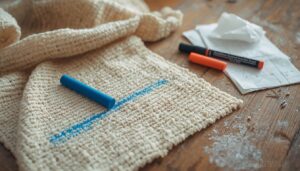
Textured fabrics like bouclé or tweed can swallow fine lines whole. That’s why Contrast Color Selection matters — pick a chalk wheel or fiber-friendly ink marker that actually shows up.
Use light Tool Pressure Control so your direct marking tools sit on the surface without snagging fibers. Layered Transfer Techniques and a water‑soluble fabric marker work well here.
After stitching, Post-Marking Cleanup is simple with a damp cloth.
Avoid Shifting While Tracing or Pressing

Even a tiny shift mid-trace can throw off an entire dart or seam. That’s why stability matters before your pen ever touches the fabric.
- Place an anti-slip mat under your fabric to stop sliding instantly
- Use pattern weights on larger pieces instead of pins alone
- Apply light pressure tracing with steady wrist stabilization
- Buffer heat with an iron cloth buffer when pressing marks
- Do incremental alignment checks after each marked section
Top 5 Pattern Marking Tools
Having the right marking tool makes a real difference in how clean and accurate your pattern transfers turn out. Some tools work better on certain fabrics, so it helps to know your options before you start.
Here are five reliable picks worth keeping in your sewing kit.
1. Dritz Water Soluble Marking Pencils
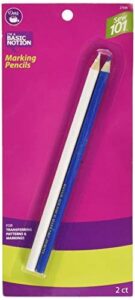
The Dritz Water Soluble Marking Pencils are a quiet workhorse in any sewing kit.
You get two pencils — one light blue, one white — so you’re covered whether you’re working on dark or light fabric.
The marks show up cleanly and wipe away with a damp cloth, leaving no residue behind.
Just know that the white pencil can run faintly on very dark fabrics, so test it on a scrap first.
Sharp the tip before each use for the most precise lines.
| Best For | Sewists and crafters who need a clean, easy-to-remove marking tool for tracing patterns, embroidery guides, or appliqué outlines on fabric. |
|---|---|
| Mark Removal | Water-soluble, damp cloth |
| Primary Use | Seams and appliqué |
| Fabric Compatibility | Washable fabrics only |
| Residue Risk | Low if washed promptly |
| Price Range | Budget |
| Age Recommendation | General use |
| Additional Features |
|
- Comes with both a light blue and white pencil, so you’re set for light and dark fabrics
- Marks wipe away cleanly with just a damp cloth — no residue, no fuss
- The chunky grip makes it comfortable to hold and control while marking
- The white pencil can be pretty faint on very dark fabrics, so it doesn’t always deliver
- The leads tend to break when sharpening, which gets frustrating fast
- Takes more pressure than you’d expect to get a visible line on some fabrics
2. Mr Pen Tailors Fabric Chalk
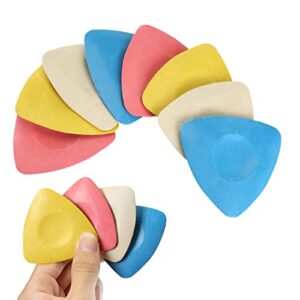
When you need color variety at an honest price, Mr. Pen’s Tailor’s Fabric Chalk is hard to beat. The eight-piece set gives you white, yellow, red, and blue — two of each — so you can pick the shade that actually shows up on your fabric.
The triangular shape sits comfortably in your hand and won’t roll off the table mid-project. Marks brush away cleanly after you’re done.
Just know the blocks can be brittle, so handle them gently.
| Best For | Sewers, tailors, and crafters who want a budget-friendly, multi-color chalk set for fabric marking on a variety of projects. |
|---|---|
| Mark Removal | Washable with water |
| Primary Use | Tailoring and dressmaking |
| Fabric Compatibility | Light and dark fabrics |
| Residue Risk | Possible residual marks |
| Price Range | Budget |
| Age Recommendation | Kid, Teen, Adult |
| Additional Features |
|
- Eight pieces in four colors — great for color-coding patterns or working on both light and dark fabrics
- Triangular shape makes it easy to grip and keeps it from rolling off your work surface
- Marks wash out with water or a cloth, so cleanup is simple when you’re done
- Blocks are brittle and can crack during shipping or if dropped
- Some users find the marks harder to remove than expected
- Larger than standard tailor’s chalk, so it may not fit chalk holders you already own
3. Clover Blue Chaco Liner Pen
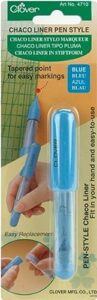
The Clover Blue Chaco Liner Pen is a go-to for sewists who want control without the mess. Its click-wheel mechanism advances compressed chalk smoothly, so you get a sharp, consistent blue line with barely any hand pressure.
At $9.76, it’s refillable too — swap the cartridge and keep going.
It marks cleanly on woven cottons and most blends, and the chalk washes out with water.
Just test it on a scrap first, since some fabrics hold the powder longer than expected.
| Best For | Sewists and quilters who need clean, precise fabric markings that wash out easily without leaving a trace. |
|---|---|
| Mark Removal | Washes out with water |
| Primary Use | Quilting and patchwork |
| Fabric Compatibility | Light and dark fabrics |
| Residue Risk | May persist if unwashed |
| Price Range | Mid-range |
| Age Recommendation | 13 and up |
| Additional Features |
|
- Sharp, consistent blue line with barely any pressure — works great for detailed seam and quilt marking
- Chalk washes out with water, so no staining or bleed on your fabric
- Refillable design cuts down on waste and saves money over time
- The bottom piece can detach on some units, spilling powder and making a mess
- Markings can linger if not washed out thoroughly — always test on a scrap first
- Chalk buildup can get messy with heavy or frequent use
4. Dritz Mark B Gone Fabric Marking Pens

Two pens, two fabric shades — that’s the whole idea behind the Dritz Mark-B-Gone Marking Pens. The blue pen shows up clearly on light fabrics, and the white suits your dark ones.
$12.32 for the pair, it’s a practical grab.
Marks wipe off with a damp cloth, no fuss.
cap them between uses so the ink doesn’t dry out, and always test on a scrap first — some fabrics can be unpredictable.
| Best For | Sewers, quilters, and embroiderers who need clean, temporary marks on both light and dark fabrics. |
|---|---|
| Mark Removal | Water-soluble ink |
| Primary Use | Pattern and appliqué lines |
| Fabric Compatibility | Washable fabrics only |
| Residue Risk | None on washable fabrics |
| Price Range | Mid-range |
| Age Recommendation | 13 and up |
| Additional Features |
|
- Comes with both a blue and white pen, so you’re covered for any fabric color
- Marks wipe away easily with a damp cloth — no scrubbing, no staining
- Works on specialty materials like marine vinyl, not just standard fabric
- Ink can dry out fast, and some pens arrive already dried up
- May not show up on certain fabrics, especially darker ones if used with the wrong pen
- Humidity can cause marks to fade before you’re done using them
5. Clover Hera Slim Marker
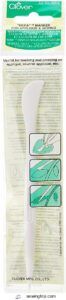
Sometimes the best marking tool leaves no mark at all. The Clover Hera Slim Marker works by pressing a clean crease into your fabric instead of using ink or chalk.
That means zero residue — perfect for light-colored cottons, linens, and appliqué work where staining is a real risk.
At $7.93, it’s a smart, low-fuss addition to your kit.
Just trace along your template with steady pressure, and the line guides your stitching without anything to wash out afterward.
| Best For | Quilters, appliqué enthusiasts, and embroiderers working with light-colored or delicate fabrics who want clean, residue-free guidelines without the hassle of washing out ink or chalk. |
|---|---|
| Mark Removal | Iron or launder away |
| Primary Use | Appliqué and quilting |
| Fabric Compatibility | Light-colored fabrics |
| Residue Risk | None, no ink or chalk |
| Price Range | Mid-range |
| Age Recommendation | General use |
| Additional Features |
|
- Leaves zero residue — no ink, no chalk, nothing to wash out after your project is done.
- Slim, lightweight design makes it easy to handle and great for precise creasing along templates or seam lines.
- Doubles as a seam turner and stabilizer-removal tool, so it pulls extra weight in your sewing kit.
- Crease marks can fade if you’re handling the fabric a lot before you stitch, so you’ll want to work in sections.
- Struggles on coarse or loosely woven fabrics where a clean, crisp indent is hard to press in.
- The tip can snap if it catches under a needle, so you need to be careful during use and storage.
Frequently Asked Questions (FAQs)
Can I reuse pattern markings on multiple fabric cuts?
Yes, you can reuse pattern markings across multiple cuts.
Keep fabric flat, align grainlines consistently, and use the same transfer method each time so every piece stays accurate and ready to sew.
How do I mark fabric without a tracing wheel?
You don’t need a tracing wheel at all. Tailor’s chalk, fabric markers, tailor’s tacks, or even pin pricking work just as well for transferring notches, dart points, and seamlines accurately.
What marking methods work best for dark fabrics?
White chalk markers and tailor’s tacks work best on dark fabrics. Water-soluble white pencils are also great since they wipe away cleanly. Always test on a scrap first.
How long do fabric markings last before fading?
Fabric markings are a lot like pencil notes in a book—they fade faster than you’d expect.
Chalk disappears in one to two washes, while heat-set markers can last up to fifteen.
Can pattern markings survive washing before sewing?
Most markings won’t survive a wash before sewing. Chalk disappears in the first cycle, water-soluble pen fades fast, and carbon transfer rarely lasts beyond two washes.
Conclusion
stitch in time saves nine—and so does a marking made right the first time.
dart, notch, and seam line you transfer carefully is an investment in a garment that actually fits.
Learning how to transfer sewing pattern markings to fabric isn’t just prep work; it’s where good sewing begins.
Choose the right tool for your fabric, take your time with each mark, and your finished piece will show exactly that care.