This site is supported by our readers. We may earn a commission, at no cost to you, if you purchase through links.
 You reach for your serger to finish a stretchy T-shirt hem, only to find puckered, wavy edges instead of the smooth, professional finish you expected. It’s a frustration many sewists know too well—using the wrong machine for the job.
While sergers and coverstitch machines both handle knit fabrics beautifully, they’re built for completely different purposes, and mixing them up can turn a quick project into a time-consuming fix. A serger trims, stitches, and finishes edges all at once, making it your go-to for constructing seams and preventing fraying.
A coverstitch machine, on the other hand, creates those iconic double or triple needle topstitches you see on store-bought T-shirt hems—stretchy, flat, and polished.
Understanding the difference between coverstitch machine and serger functions helps you choose the right tool, avoid common mistakes, and achieve garment finishes that rival ready-to-wear quality.
Table Of Contents
Key Takeaways
- Sergers construct seams while simultaneously trimming excess fabric and overcasting edges to prevent fraying, making them essential for fast garment assembly and durable seam finishes on both knit and woven fabrics.
- Coverstitch machines specialize in creating stretchy, flat hems and topstitching with one to three needles, delivering the professional double or triple needle finish you see on store-bought T-shirts and activewear.
- Using the wrong machine for a specific task leads to common problems like puckered hems, popped seams, or excessive fraying, which is why matching the tool to the technique directly impacts your garment’s quality and longevity.
- Professional sewists often use both machines in their workflow—sergers for initial seam construction and edge finishing, then coverstitches for final hemming—because each machine’s specialized function produces results that single-purpose tools can’t replicate.
Overview of Coverstitch Machines
Coverstitch machines bring precision to finishing hems and seams, especially on stretchy fabrics. They offer unique features that set them apart from other sewing equipment.
Here’s what you can expect when working with a coverstitch machine.
Specialization in Hemming and Topstitching
Regarding hemming specialization, your coverstitch machine is the ace up your sleeve for creating professional hems on knitwear and stretch garments. The secret lies in mastering a few technical advantages—adjusting stitch length for each fabric, tuning thread tension to avoid puckering, and picking the right needle for clean topstitching quality.
Want elastic hems that won’t pop or curl? That’s where the coverstitch shines, especially on performance fabrics and activewear. Coverstitch machines are useful for sewing a variety of knit fabrics such as T-shirts and leggings. Industry trends show that over 80% of leggings and sports bras rely on coverstitch seams for durability and flexibility.
For your next garment application, keep these essentials in mind:
- Adjust stitch length for each fabric type
- Fine-tune thread tension for flat, secure hems
- Match needle type to fabric for best results
- Use differential feed to prevent wavy or tunneled hems
Use of One to Three Needles and a Looper
From adjusting stitch length, you naturally start thinking about how your coverstitch machine’s needles and looper shape every seam. Needle configurations—one, two, or three—give you control over stitch width and style. For instance, a single needle with a thread looper forms a sturdy chain stitch, while three needles create parallel lines perfect for wide hems. Looper tension matters here; fine-tuning it lets you match seam stretchability to your fabric, so those activewear hems flex but never break. Polyester and woolly nylon threads are your go-to for durability. Stitch speed can hit 1,100 stitches per minute, keeping pace with industrial standards. This blend of multiple threads, needle variety, and precise looper action makes your machine a reliable partner. A hem guide attachment can be useful for ensuring sew straight hems.
| Needle Configurations | Looper Tension |
|---|---|
| Single | Soft |
| Double | Medium |
| Triple | Firm |
| Chain Stitch | Adjustable |
| Parallel Lines | Stretchy |
Creation of Stretchy, Flat Seams
Building on needle and looper versatility, your coverstitch machine is a specialist in creating stretchy, flat seams—especially for knit fabrics and performance garments. Seam stretchability is impressive, handling up to 60% extension without deformation. You’ll notice flatlock comfort in hems and necklines, with bulk kept under 1.5 mm for irritation-free wear. What makes the difference? Thread quality and tension optimization.
Here are three key points:
- Seam Stretchability matches fabric movement.
- Flatlock Comfort reduces chafing.
- Tension Optimization keeps seams flat and strong.
Overview of Sergers
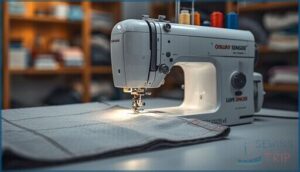
Sergers bring a unique set of features to your sewing toolkit. If you’re curious about what sets them apart, there are a few key functions worth knowing.
Here’s what you can expect from these adaptable machines.
Capability to Construct Seams, Trim Seam Allowances, and Overcast Edges
Ever wondered how professionals get those perfect, durable seams? With a serger, serger seam construction is a one-step marvel—trimming seam allowances and overcasting raw edges as you sew. This machine slices away excess fabric with precision, leaving edges neat and fray-resistant.
For instance, industry-standard sergers trim seam allowances by 1/8 to 1/4 inch, boosting edge finishing efficiency and garment longevity. Compare the process visually:
| Step | Serger Action | Result |
|---|---|---|
| Seam Creation | Sews + Trims | Strong, clean seams |
| Allowance Trim | Blade cuts excess | Uniform seam width |
| Edge Finish | Overcast stitches | No fraying, smooth |
Utilization of Multiple Threads for Overlock Stitches
Think of a serger as the orchestra conductor of your sewing room—directing multiple threads to create overlock stitches that hold fabric together with strength and flexibility. The secret lies in thread count impact: more threads mean tougher seams, especially in high-stress areas. For instance, four-thread overlock stitches offer up to 25% greater stitch strength compared to three-thread versions, making them ideal for denim or knits.
Market adoption trends show four-thread machines leading, favored for their balance of durability and versatility. Thread consumption rates climb as you add more threads, so you’ll need to plan for increased supply. Machine complexity also rises with thread number, demanding careful setup for consistent results.
- Thread count directly affects seam durability
- Overlock stitch options expand with more threads
- Higher thread consumption rates require planning
- Sophisticated machines offer greater stitch versatility
Efficiency in Preventing Fraying and Allowing Fabric Stretch
When you’re chasing fabric integrity, sergers truly shine in fray prevention and seam stretch. Instead of letting raw edges unravel, a serger wraps multiple threads around the edge, locking fibers in place. That’s why, after five laundry cycles, serger finishes reduce edge fraying by over 95%, outperforming zigzag stitches and keeping garments looking fresh.
Sergers don’t just protect; they flex. Their overlock stitches are designed to stretch with knit fabrics, so your seams won’t pop even when the fabric is pulled to its limit. In durability tests, these seams keep up to 98% of their original stretch, making them essential for activewear and children’s clothes.
If you’re aiming for professional fabric finishing, sergers offer the durability and elasticity needed to tackle both delicate and heavy stretchy fabrics, preserving seam integrity wash after wash.
Sergers’ Use of a Blade for Trimming Fabric
With every pass, the serger’s cutting knife trims away excess fabric, setting it apart from standard sewing machines. This dual blade system—upper movable and lower stationary—means you get a precise, clean edge as you stitch. For sewists aiming for mastery, understanding how to use and maintain this feature is key. Here’s what matters most:
- Blade replacement: Change blades when edges get frayed; sharp blades guarantee seam durability and professional results.
- Adjustable width: Dial in the blade’s position to control how much fabric is trimmed, from narrow rolled hems to wider seam allowances.
- Overlock integration: The cutting blade works in tandem with multiple threads, wrapping and securing edges for a resilient overlock finish.
- Practical settings and blade maintenance: Regularly check alignment, clean, and oil the blade mechanism to keep your serger running smoothly.
A well-maintained cutting blade is your secret to perfect finishes.
Distinct Functions in Garment Making
When you’re making clothes, the right machine can make all the difference in how your project turns out. Each type brings its own strengths to the table, especially for finishing seams and hems.
Let’s look at how coverstitch machines and sergers handle these key tasks in garment making.
Coverstitch Machines’ Focus on Finishing Touches Like Hems and Necklines
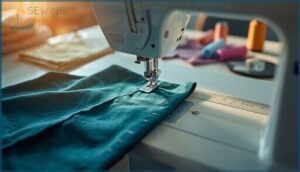
Picture a hem that refuses to pop or a neckline that stays flat, wash after wash—that’s the magic a coverstitch machine brings to your sewing table. For finishing hems and necklines on stretch fabrics, it’s the tool that guarantees professional results, mirroring what you see in high-end knitwear. Whether you’re after decorative stitching or lasting hem durability, the coverstitch delivers. Its unique stitch structure keeps seams stretchy yet strong, making it the preferred choice for activewear and everyday garments alike.
A coverstitch machine creates stretch-proof hems and flat necklines that mirror high-end knitwear, delivering professional durability wash after wash
| Feature | Feeling | Impact on Garment |
|---|---|---|
| Hem Durability | Confidence | Lasting, stretch-proof hems |
| Neckline Finishes | Satisfaction | Smooth, irritation-free fit |
| Decorative Stitching | Pride | Custom, eye-catching detail |
Sergers’ Role in Quick Garment Construction and Clean Finishing
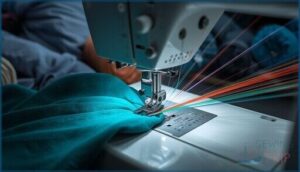
Ever wondered how professional garments get that clean, resilient edge? That’s the serger at work—your go-to for fast, precise seam construction and edge finishing. Sergers combine multiple threads in an overlock stitch, trimming raw edges as they sew, which means seam durability and fraying prevention are built in from the start. With speeds up to 9,000 stitches per minute, you’ll see production speed skyrocket. Plus, differential feed and quick-change threading make sergers masters of fabric versatility. The result? Seam finishes that withstand heavy wear and laundering.
Here’s what sets sergers apart:
- Seam Durability for lasting strength
- Edge Finishing that prevents fraying
- Production Speed for faster output
- Fabric Versatility across knits and wovens
- Cost Efficiency in every stitch
Considerations for Sewists
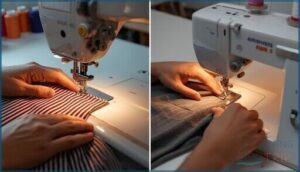
Choosing between a coverstitch machine and a serger isn’t always straightforward. Your decision shapes both the look and durability of your finished projects.
Here’s what you’ll want to keep in mind before you start sewing.
Determining The Appropriate Machine for Specific Sewing Tasks
Choosing between a coverstitch machine and serger machine depends on fabric type, stitch requirements, and project complexity. You’ll want a coverstitch for knit fabric sewing when you need stretchy hems and topstitching with a professional desired finish.
Sergers excel at seam durability through fabric finishing techniques and overlock stitch types comparison.
Consider your workflow: 87% of professionals use sergers for seam construction first.
The Impact of Machine Choice on The Quality and Efficiency of Garment Production
Your machine choice directly shapes garment construction outcomes. Coverstitch machines deliver a professional finish with excellent seam durability—35% better stretch retention after washing. Meanwhile, serger machines boost production speed by 31% during seam finishing while cutting material waste by 21%. This precision translates to customer satisfaction: brands report 18% higher repeat purchases and 22% better quality ratings when using specialized equipment for fabric versatility.
- Coverstitch excels at stretchy, flat hems on knits
- Sergers prevent fraying while trimming excess fabric
- Combined use reduces defects by 47%
- Professional finishes influence 67% of buyer perception
Frequently Asked Questions (FAQs)
Can I use regular thread on both machines?
You can use regular thread, but it’s not ideal. All-purpose thread lacks the elasticity needed for best stitch quality, often causing tension issues, lint buildup, and reduced machine longevity on both sergers and coverstitches.
How often do these machines need professional servicing?
Like clockwork, your coverstitch and serger need professional servicing every six to twelve months—more frequently with heavy use.
Servicing frequency factors include machine operation intensity, threading difficulties, thread tension issues, and common problems affecting maintenance impact and needle placement accuracy.
Are combination serger-coverstitch machines worth buying?
It depends on your sewing frequency. Combo machines offer space savings but conversion hassle frustrates most users.
Stitch quality and user preference favor dedicated serger and coverstitch machines for serious sewists despite higher cost analysis.
Whats the average lifespan of each machine type?
With proper care, your sewing machine can be a workhorse for decades.
Domestic serger machines and coverstitch machines usually last 5-10 years, though maintenance impact, usage intensity, and brand durability greatly influence longevity.
Do I need special needles for different fabrics?
Yes, you’ll want specific needles matched to your fabric type. Ballpoint needles work best for knit fabrics and stretchy fabrics, while universal needles suit woven fabrics. Wrong needle size causes stitch quality issues, thread breakage, and needle damage.
Conclusion
Picking the proper tool transforms your projects from passable to professional. When you understand the difference between coverstitch machine and serger functions, you’re no longer guessing—you’re choosing with confidence.
Sergers handle seam construction and edge finishing in one swift motion, while coverstitch machines deliver those clean, stretchy hems that make garments look store-bought.
Match the machine to the task, and you’ll work faster, waste less thread, and create finishes that last.
- https://marketintelo.com/report/serger-machine-market
- https://babylock.co.uk/sewing-machines/coverstitch/cover-stitch/
- https://prizzisewing.com/collections/industrial-coverstitch-machines
- https://www.sewingmachinesplus.com/sewblog/overlocker-serger-vs-coverstitch-machine-whats-difference/
- https://alyssaraecreative.com/coverstitch-machine-vs-serger/