This site is supported by our readers. We may earn a commission, at no cost to you, if you purchase through links.
Thread tension is one of those things that looks simple until your seams start doing something weird—loops on the bottom, puckering on top, stitches that pull apart the moment you tug them. Most sewists assume the machine is broken.
Usually, it’s just the tension dial sitting a hair off from where it needs to be. That tiny adjustment controls where the knot locks inside your fabric layers, which means it controls everything: how your seam looks, how it holds, and whether your project survives its first wash. Learning to adjust upper thread tension correctly is less about memorizing numbers and more about reading what your fabric is telling you.
Table Of Contents
- Key Takeaways
- What is Upper Thread Tension?
- Signs Your Upper Thread Tension Needs Adjustment
- Factors Affecting Upper Thread Tension
- Step-by-Step Guide to Adjusting Upper Thread Tension
- Troubleshooting Common Upper Thread Tension Issues
- Best Practices for Consistent Stitch Quality
- Frequently Asked Questions (FAQs)
- Conclusion
Key Takeaways
- The tension dial controls where the stitch knot locks inside your fabric, so even a one-number shift can mean the difference between a clean seam and one that puckers, loops, or falls apart.
- Loops on top mean your tension is too loose, puckering means it’s too tight, and uneven stitches on the underside usually point to a threading error or dirty tension disks — each problem has a clear fix.
- Fabric weight, thread quality, and needle size all pull on your tension settings, so what works perfectly on cotton lawn will fight you on denim without a small adjustment.
- Keeping a written log of your tension settings for each thread-fabric combo saves you from re-learning the same lessons every time you start a new project.
What is Upper Thread Tension?
Upper thread tension is basically how tightly your machine pulls the top thread as each stitch forms.
When it’s off, you’ll notice skipped stitches, puckering, or loose loops—all covered in this guide to sewing machine tension problems and fixes.
Get it right, and your stitches look clean on both sides. Here’s what you need to understand before touching that tension dial.
How Upper Thread Tension Works
Inside your sewing machine, a pair of metal or ceramic discs grip the upper thread as it passes through. Turn the tension dial up, and those discs squeeze tighter — slowing the thread down. Turn it down, and they loosen their grip.
Thread path friction, presser foot position, and bobbin balance interaction all influence this system. Even automatic tension sensors rely on the same basic disc mechanics.
balanced thread tension is essential for perfect stitches.
Role in Stitch Formation
So what does all that disc-gripping actually do for your stitches?
Upper thread tension controls thread travel speed — how quickly the top thread pulls back up through the needle hole. Done right, it locks the stitch knot inside the fabric layers, giving you seam flexibility, stitch uniformity, and solid layer locking.
Knot positioning control is really just tension adjustment. Proper bobbin tension impacts stitch quality.
Difference Between Upper and Lower Tension
Think of upper and lower tension as a tug-of-war. Upper thread tension uses a dial for easy adjustments; lower tension relies on a tiny bobbin spring screw — that’s your dial vs screw difference in action. Their balance mechanics determine interlock position, where the stitch knot hides between fabric layers.
Upper and lower thread tension are a tug-of-war: one dial, one screw, endless balance
- Upper tension dial: frequent, easy to use adjustment
- Bobbin spring screw: sensitive, rarely touched
- Adjustment sensitivity differs greatly between both
- Correct interlock position means neither thread shows through
Signs Your Upper Thread Tension Needs Adjustment
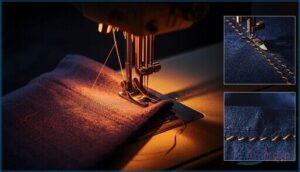
Your machine is trying to tell you something — you just have to know what to look for.
Tension problems show up in pretty obvious ways once you know the signs.
Here are the three most common ones to watch for.
Loose Stitches on Fabric Top
See those big loops of thread sitting on top of your seam? That’s your upper thread tension talking — and it’s saying it’s too loose.
Tightening that dial a notch or two usually does the trick — and if you’re still fighting with your stitch, this sewing machine troubleshooting guide for skipped stitches walks you through tension fixes from both sides of the fabric.
Thread path issues, lint buildup on the tension disks, or a needle size mismatch can all throw off stitch quality. Try rethreading with the presser foot raised first. That one fix alone often solves the problem before you even touch the tension dial.
Puckering or Tight Stitches
Puckering along your seam is one of the clearest signals that your upper thread tension is cranked too tight. The thread pulls the fabric inward as each stitch forms, leaving you with rippled, bunched seams instead of smooth ones. Watch for these signs:
- Tiny ripples or gathers along the stitch line
- Fabric that feels stiff or ridged under your fingers
- Bobbin thread visible on the top surface
- Seam looks shorter than the surrounding fabric
- Needle holes appear stretched or distorted on fine fabrics
Loosen upper thread tension slightly, test on scrap fabric first, and adjust stitch length. Presser foot pressure, needle size selection, and fabric stabilization techniques all matter too — especially on delicate or stretchy fabric types.
Uneven Stitches on Underside
Flip your fabric over — that underside tells the real story. Uneven stitches on the bottom usually point to upper thread tension being off, but fabric feed issues and stitch length settings play a role too.
| What You See | Likely Cause |
|---|---|
| Long, loopy bottom stitches | Upper tension too loose |
| Short, tight underside stitches | Tension dial calibration needed |
| Inconsistent stitch lengths | Fabric feed issues or feed dog alignment |
| Thread bunching underneath | Threading path error |
| Staggered stitch spacing | Machine vibration effects |
Small adjustments go a long way.
Factors Affecting Upper Thread Tension

Thread tension doesn’t exist in a vacuum — a few key things can throw it off before you even touch the dial.
Knowing what to watch for makes troubleshooting a whole lot faster.
Here’s what actually affects your upper thread tension.
Fabric Type and Thickness
Fabric type is probably the biggest factor in your tension settings. Sheer fabric tension sits low — around 2 to 3.5 — so delicate layers don’t pucker. Medium weight tension lands near 4 to 5 for everyday cotton. Heavy fabric tension climbs to 5 or 6 to lock thick layers together. Knit stretch tension drops back down to prevent tunneling.
Layered seam tension? Nudge it slightly higher as bulk increases.
Thread Quality and Weight
Thread quality affects upper thread tension more than most sewers realize.
Cheap thread with uneven ply consistency surges through tension disks, creating random tight and loose spots.
Heavier tex weight selection means reducing tension slightly; finer denier impact works opposite — bump it up a touch.
Thread finish lubrication matters too: waxy or coated threads glide differently.
Cross-wound spool winding type feeds smoother, keeping tension adjustment predictable.
Needle and Thread Compatibility
Your needle and thread have to speak the same language — otherwise your upper thread tension pays the price.
A size 80 needle paired with heavy thread jams the groove, causing breaks and skipped stitches.
Match thread thickness to needle size: fine threads need smaller needles, heavy threads need larger ones.
Ballpoint vs universal needle choice, groove fit ratio, and needle wear impact all quietly control how well your tension holds.
Step-by-Step Guide to Adjusting Upper Thread Tension
Adjusting thread tension isn’t complicated once you know where to start.
It comes down to two things: finding the right dial and making small, careful changes.
Here’s exactly how to do both.
Locating and Understanding The Tension Dial

Your tension dial is right there on the front of your sewing machine — hard to miss once you know what you’re looking for. Most machines use a 0-to-9 scale, with 4 or 4.5 as your sweet spot for everyday fabrics.
The mechanism linkage connects the dial directly to metal discs that squeeze your upper thread. Some Brother models even use color coding for extra clarity.
Making Incremental Adjustments

Now that you’ve found the tension dial, the real work begins. Move it by just one number at a time — dial turn precision matters here.
Sew a short test seam on matching scrap fabric, and use thread color contrast between needle and bobbin so you can clearly see which side is pulling. Jot down what works. That adjustment documentation saves you guesswork later.
Troubleshooting Common Upper Thread Tension Issues

Sometimes tension problems stick around even after you’ve adjusted the dial — and that’s a sign something else needs attention.
Before you assume the machine is broken, there are a few quick checks that fix most issues. Start with these three.
Rethreading The Machine Properly
Sometimes a full rethread is all it takes to fix stubborn upper thread tension problems. Start fresh — spool pin placement matters, so check your spool is seated correctly before anything else.
- Raise the presser foot for proper presser foot coordination
- Follow the complete thread path cleanliness route
- Hook thread through take-up lever threading correctly
- Apply consistent needle insertion technique
- Test tension on scrap fabric
Cleaning Tension Disks and Pathways
Rethreading helps, but if tension keeps fighting you, dirty discs might be the real problem.
Lint loves to hide in there.
For your Lint Prevention Routine, try the Disk Flossing Technique — stretch a fleece strip thin, slide it between the tension discs with the presser foot raised, then pull it back and forth gently.
Follow with Alcohol Residue Removal for oily buildup, then Thread Path Brushing through the guides.
Smart Maintenance Scheduling keeps your upper thread tension dialed in.
Checking Bobbin and Needle Condition
Clean discs help, but your bobbin and needle deserve equal attention.
- Bobbin Winding Quality & Bobbin Case Drop Test — Hold the case by the thread; it should slide down an inch, not drop freely.
- Needle Tip Inspection & Needle Size Matching — A dull or wrong-sized needle fakes a tension problem.
- Thread Path Verification — Recheck every guide after any needle or bobbin swap.
Best Practices for Consistent Stitch Quality
consistent stitches isn’t just about dialing in the tension once and calling it done.
A simple habits can save you a lot of frustration down the road.
Here’s what actually matters.
Documenting Tension Settings
Think of your Tension Log Template as a cheat sheet for your future self. Jot down the Thread-Fabric Pairing, Machine Dial Scale number, stitch type, and even Environmental Conditions like humidity.
Sew a short Test Seam Recording alongside each entry using contrasting thread colors. Over time, these Tension Settings become your personal shortcut — smarter Thread Tension Adjustment, fewer headaches, better Sewing Machine Settings every single time.
Regular Machine Maintenance
Your machine can’t hold steady Tension Settings if it’s running dirty.
Bobbin Area Cleaning after every session, Feed Dogs Lubrication every two weeks, and Tension Discs Maintenance monthly keep your Upper Thread Tension from drifting.
Check every Oil Point Inspection marker every seven to eight hours.
Book Annual Professional Service once or twice a year — it’s the reset button your Sewing Machine Maintenance routine actually needs.
Using High-Quality Thread and Needles
Thread brand consistency matters more than most people realize. Cheap thread sheds lint into your tension disks and throws off your Upper Thread Tension without warning.
Switch to a smooth polyester — its elasticity benefits keep seams stable through washing and wear. Match your thread weight to the right Needle Size for proper Needle Eye sizing, and your Stitch Quality practically takes care of itself.
Frequently Asked Questions (FAQs)
What controls the tightness of the upper thread?
Your tension dial is the gatekeeper. It controls tension disc pressure through a dial numbering system from 0 to
While the thread path guides and the presser foot influence keep your upper thread tension balanced and consistent.
Where should my thread tension be?
For most fabrics, your tension dial should sit between 4 and 5 — that’s the sweet spot where balanced stitches form cleanly, with no loops or puckering on either side.
Can thread color affect upper tension settings?
Surprisingly, yes — color-induced drag is real. Dye-thickness impact means darker threads sit tighter between tension discs, often needing a small tension drop.
Surface-lubrication variance matters too. Always test on scrap first.
How does sewing speed impact thread tension?
The faster you sew, the more your upper thread tension tightens up — leading to speed-induced puckering, looping at high speed, and even needle heat breakage on fine threads.
Should tension differ for decorative versus utility stitches?
Yes, absolutely. Utility stitch settings sit around 4–5, while decorative tension range drops to 2–
Thread type impact and fabric density considerations both matter.
Match settings to stitch type for better stitch quality.
Does thread age or storage affect tension performance?
Absolutely.
Aged thread strength drops fast — old cotton gets brittle, UV‑induced brittleness causes snapping, and humidity‑driven swelling drags through tension disks.
Storage temperature impact is real.
Match fiber‑specific aging to your tension adjustment routine.
Can humidity or temperature influence upper thread tension?
Humidity and temperature absolutely mess with upper thread tension. High humidity weakens natural fibers, while dry air makes threads brittle. Seasonal adjustments to your tension settings keep stitches consistent year-round.
Conclusion
They say a never blames the tools—but they also never ignore them. Once you learn to adjust upper thread tension correctly, you stop guessing and start reading your machine like a second language.
A loop here, a pucker there—each one is just feedback, not failure. Small, deliberate adjustments beat big, frustrated ones every time.
Keep a notepad of what works, stay consistent with maintenance, and your seams will hold up long after the project is finished.
- https://madamsew.com/blogs/sewing-blog/how-to-deal-with-thread-tension
- https://www.artisanstitch.co.uk/sewing-machine-tension/
- https://sewcutepatterns.com/blog/testing-thread-tension
- https://www.magnetichoop.com/blogs/news/master-thread-tension-ultimate-guide-to-flawless-stitches
- https://weallsew.com/tips-for-tension-testing/