This site is supported by our readers. We may earn a commission, at no cost to you, if you purchase through links.
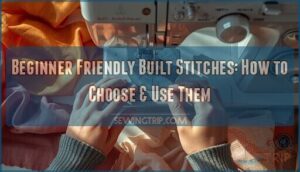
Your sewing machine’s dial displays dozens of cryptic symbols, each representing a different built-in stitch. Most beginners stick to one or two familiar options, leaving powerful capabilities untapped.
Built-in stitches transform your machine from a basic straight-seam tool into a flexible crafting powerhouse—when you know which stitch to select and how to adjust it correctly.
The difference between professional-looking projects and amateur attempts often comes down to matching the right stitch to your fabric type and understanding three simple adjustment controls: length, width, and tension.
Master these beginner-friendly built stitches, and you’ll handle everything from stretchy knits to delicate silks with confidence.
Table Of Contents
- Key Takeaways
- What Are Built-in Stitches on Sewing Machines
- How Built-in Stitches Work on Modern Machines
- Common Built-in Stitches Every Beginner Should Know
- Straight Stitch: Your Basic Seaming Workhorse
- Zigzag Stitch: Versatile Edge Finishing and Stretch
- Buttonhole Stitch: Essential for Garment Making
- Blind Hem Stitch: Creating Invisible Hems
- Overcast Stitch: Preventing Fabric Fraying
- Choosing The Right Built-in Stitch for Your Fabric
- Top 3 Beginner-Friendly Sewing Essentials
- How to Use Built-in Stitches Successfully
- Troubleshooting Common Built-in Stitch Problems
- Frequently Asked Questions (FAQs)
- Conclusion
Key Takeaways
- Master five fundamental stitches—straight, zigzag, buttonhole, blind hem, and overcast—to handle 90% of beginner projects from seams to stretch fabrics without needing dozens of complicated options.
- Match your stitch type to fabric weight and texture by adjusting length (2.0-3.5mm) and width settings, testing on scraps first to prevent puckering, skipped stitches, or thread breakage.
- Thread tension balance matters more than you think—when upper and lower threads meet perfectly at the fabric surface, you’ll see flat, professional stitches on both sides every time.
- Replace your needle every 8-12 hours of sewing and clean your bobbin mechanism monthly, because even perfect settings won’t save you from worn equipment causing inconsistent results.
What Are Built-in Stitches on Sewing Machines
Built-in stitches are pre-programmed stitch patterns stored in your sewing machine’s memory, ready to use at the turn of a dial or push of a button. Modern machines offer anywhere from a handful to hundreds of these stitches, but you don’t need them all to create professional results.
Understanding which built-in stitches you actually need helps you choose the right machine without paying for features you’ll never use.
Let’s break down how these stitches work and which ones you’ll actually use as you build your sewing skills.
Before you dive in, it helps to familiarize yourself with basic sewing terminology so you can follow patterns and tutorials more easily.
How Built-in Stitches Work on Modern Machines
Your sewing machine creates builtin stitches through coordinated needle movement, bobbin settings, and feed dog control working in perfect sync. Preprogrammed patterns dictate how the needle travels, forming each stitch with precision. Here’s what controls stitch formation:
Understanding essential sewing machine features every sewist should understand helps you troubleshoot tension issues and select the right stitch for any project.
- Needle movement determines the stitch path
- Thread tension regulates upper and lower thread balance
- Stitch length adjusts stitches per inch
- Stitch width modifies side-to-side needle travel
Common Built-in Stitches Every Beginner Should Know
You’ll master five fundamental stitches that handle 90% of beginner projects, from hemming your first pair of jeans to finishing stretchy knit edges.
Each machine’s built-in stitch selection varies, but these five stitches appear on nearly every model and cover everything from seams to stretchy fabrics.
Your sewing machine offers straight stitch for seams, zigzag stitch for stretch fabrics, buttonhole stitch for garment construction, blind hem stitch for invisible finishes, and overcast stitch to prevent fraying.
Stitch selection depends on fabric type, thread weight, and your project’s requirements.
Straight Stitch: Your Basic Seaming Workhorse
The straight stitch joins fabrics with clean, sturdy seams. Set your stitch length between 2.0 and 3.0 mm for most woven materials—2.5 mm works perfectly as your starting point. Feed dogs guide fabric smoothly under the presser foot, maintaining consistent seam allowance at 1/4 inch.
Set your straight stitch to 2.5 mm and let the feed dogs guide your fabric to clean, sturdy seams every time
- Match needle size and thread weight to your fabric for professional results
- Adjust tension control only when you notice loose or puckered stitching
- Practice fabric guidance techniques to keep your seams straight and even
Zigzag Stitch: Versatile Edge Finishing and Stretch
Zigzag stitches move side-to-side, creating flexible seams that stretch with knit fabrics. Adjust your stitch width from 1.0 to 5.0 mm depending on edge finishing needs—wider settings secure raw edges better, preventing fraying without a serger.
Test tension control on scrap fabric first—proper settings prevent looping along edges.
| Fabric Type | Stitch Width | Best Application |
|---|---|---|
| Lightweight | 1.0–2.0 mm | Delicate edge finishing |
| Medium-weight | 2.5–3.5 mm | Standard seam allowances |
| Heavy fabrics | 3.0–4.0 mm | Secure edge control |
| Knits | 2.0–4.0 mm | Stretch-friendly seams |
| Wovens | 2.5–3.5 mm | Fray prevention |
Buttonhole Stitch: Essential for Garment Making
Buttonhole stitch creates tight, reinforced bars along fabric edges using dense zigzag patterns—critical for garment construction. Your sewing machine’s builtin stitches include programmable buttonhole sequences that adapt to button size, delivering edge finishing with minimal bulk.
Stitch selection determines fabric stability; combine with interfacing for stitch reinforcement on delicate materials. Test tension settings on scrap fabric first—proper density prevents gaps and fraying around openings.
Blind Hem Stitch: Creating Invisible Hems
Blind hem tips start with precise fabric folding—turn your hem allowance, then fold the fabric back to expose just a sliver of the edge. Your sewing machine’s blind hem stitch catches this tiny fold, creating an invisible stitch on the garment’s right side.
Stitch selection matters: adjust length for fabric weight, and practice hemming techniques on scraps before tackling your final project.
Before you start, make sure your thread tension control is dialed in—it’s the difference between professional-looking seams and frustrating puckers.
Overcast Stitch: Preventing Fabric Fraying
When cut edges threaten to unravel, you need fabric edge protection. Overcast stitch tips start with machine settings: set your stitch length to 1.5–2.5 mm and use a narrow foot to guide the edge.
This fray prevention method hugs woven fabric with a tight zigzag pattern, sealing threads before they escape.
Practice edge finishing techniques on scraps for confident seam finishing every time.
Choosing The Right Built-in Stitch for Your Fabric
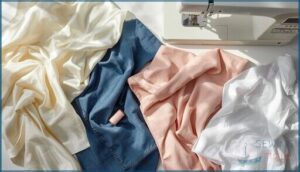
Your fabric choice determines which built-in stitch will give you the best results. Lightweight silk demands a completely different approach than heavyweight denim, and stretchy knits behave nothing like crisp cotton.
Let’s break down exactly how to match your machine’s stitches to whatever fabric lands on your sewing table.
Matching Stitch Type to Fabric Weight
Your fabric weight determines everything about stitch selection on your sewing machine—get it wrong, and you’ll battle puckering, skipped stitches, or broken threads. Light fabrics demand a shorter stitch length around 2.0–2.5 mm, while heavy materials need 3.0–3.5 mm to distribute stress evenly.
- Use a straight stitch at 2.5–3.0 mm for light to medium wovens
- Increase to 3.0–3.5 mm for heavy fabrics to prevent seam failure
- Adjust thread tension and sewing speed based on fabric weight
Stitch Selection for Stretchy Vs. Woven Fabrics
Stitch selection hinges on fabric stretch—knits demand a zigzag stitch or stretch stitch to prevent seam failure, while wovens thrive with a straight stitch.
You’ll need needle selection precision too: attach a ballpoint or jersey needle for stretchy fabrics to avoid fabric distortion and skipped stitches.
Test your stitch tension and seam allowance on scrap fabric first, confirming fabric compatibility before committing to your project.
How Fabric Texture Influences Stitch Choice
Texture analysis separates smooth cottons from rough bouclés—and your stitch compatibility depends on it. Test rough textures with longer stitches to prevent thread abrasion, while tight weaves favor dense, uniform stitches for secure seams.
Napped fabrics like velvet need walking feet to avoid crushing the pile.
Always conduct a tension test on sample swatches matching your fabric’s texture before final construction.
Selecting The Proper Stitch Length and Width
Once you’ve matched texture to stitch type, stitch calibration fine-tunes your seam quality. Adjust stitch length and stitch width based on fabric thickness and thread weight—your straight stitch and zigzag stitch performance depends on it. Balance three factors:
- Shorter lengths (1.5–2.0 mm) for delicate fabrics prevent gaps
- Medium lengths (2.5–3.0 mm) suit most wovens
- Longer lengths (3.5–4.0 mm) reduce perforation on knits
Proper seam allowance and tension control complete the equation.
Best Stitches for Delicate Fabrics
When working with silk, chiffon, or lace, your straight stitch needs a lighter touch. Reduce stitch length to 1.5–2.0 mm and lower presser foot pressure. A narrow zigzag stitch (width 1.0–1.5 mm) offers fabric compatibility without bulk.
Edge finishing techniques like narrow rolled hems or French seams prevent fraying. Stitch tension control matters most: balanced tension stops show-through.
Lightweight fabric handling demands fine needles (size 60/8 or 70/10) and smooth thread for delicate seam options.
Best Stitches for Heavy-Duty Materials
Canvas, denim, and upholstery fabrics demand more from your machine than silk ever will. Reinforced stitches create heavy-duty seams that won’t give out under stress.
Use straight stitch with 8–10 stitches per centimeter for stitch density on thick materials. Triple-stitch or wide zigzag manages dense fabric best.
Set stitch length longer, adjust thread tension higher, and match needle size to fabric weight—minimum 90/14 for durability.
Top 3 Beginner-Friendly Sewing Essentials
You can’t build skills without the right tools in your corner. The three essentials below will set you up for success without draining your wallet or overwhelming your workspace.
Each one plays a specific role in helping you master those built-in stitches with confidence.
1. Brother Metal Sewing Machine
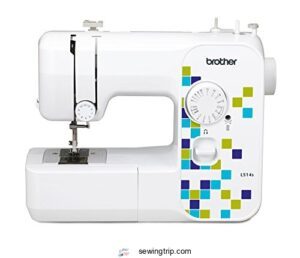
You need a machine that won’t quit halfway through your first quilt. The Brother Metal Sewing Machine delivers exactly that with its metal framework—this isn’t just marketing talk.
Metal construction reduces vibration during operation, which translates to consistent stitch quality whether you’re testing a straight stitch or experimenting with zigzag stitch patterns. The metal chassis accommodates heavier fabrics without warping, and the corded electric power source maintains steady sewing speed.
Your builtin stitches perform cleaner when the machine’s internal needle bar stays rock-solid under pressure.
| Best For | Sewers who want a durable, reliable machine that handles everything from lightweight cotton to heavier fabrics without struggling through long projects. |
|---|---|
| Material | Metal |
| Brand | Brother |
| Color | White |
| Primary Use | Sewing |
| Skill Level | Beginner-Friendly |
| Durability | Metal Chassis |
| Additional Features |
|
- Metal framework cuts down vibration and keeps stitches consistent, even when you’re working on thick material or sewing for hours
- Corded electric power means you don’t have to worry about batteries dying or performance dropping mid-seam
- Solid construction at this price point makes it a smart pick if you’re tired of flimsy machines that feel like they’ll fall apart
- At 11.2 pounds, it’s not exactly portable—you’ll want a dedicated sewing spot rather than moving it around constantly
- The plug might need an adapter if you’re outside the US, which is an extra step and expense
- Since it’s relatively new to some users, long-term durability over years of heavy use isn’t fully proven yet
2. Framad Sewing Machine Presser Foot Set
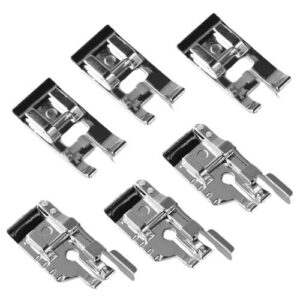
You can’t master builtin stitches without the right presser foot. The Framad Sewing Machine Presser Foot Set gives you six essential presser foot types—including a quarter-inch quilting foot with an integrated guide—so you won’t struggle with stitch selection guesswork.
This zinc alloy set snaps onto low-shank machines from Brother, Janome, and Singer, making foot installation tips unnecessary for most users. The transparent soles let you see your sewing techniques in action.
Check your sewing machine compatibility before purchasing, and clean these quilting accessories after each project to maintain consistent performance with your builtin stitches.
| Best For | Sewists and quilters who need precise seam allowances and edge finishing on Brother, Janome, or Singer low-shank machines. |
|---|---|
| Material | Zinc |
| Brand | Generic |
| Color | Silver |
| Primary Use | Quilting & Hemming |
| Skill Level | All Levels |
| Durability | Zinc Alloy |
| Additional Features |
|
- Six-foot set covers everything from basic stitching to advanced quilting and appliqué work
- Transparent zinc alloy soles let you see your stitching line as you sew
- Snap-on design means you can switch feet quickly without fumbling with tools
- Only works with low-shank machines, so you’ll need to verify compatibility first
- No warranty information provided, which makes long-term durability uncertain
- Won’t fit all sewing machine brands or models despite broad compatibility claims
3. Gutermann Sewing Thread Set
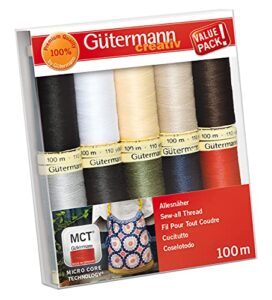
Thread selection makes or breaks your builtin stitches. The Gütermann Sewing Thread Set delivers ten essential colors in 100% polyester with Micro Core Technology, giving you strong seams across various fabric compatibility needs.
Each 100-meter spool accommodates tension control and stitch selection on most sewing machines. You’ll achieve professional thread quality for color matching projects from hemming to button attachment.
Store spools away from sunlight to preserve color integrity. Check your sewing techniques regularly—proper tension adjustment prevents looping and maintains consistent weaving results with these reliable threads.
| Best For | Home sewers who want reliable, professional-quality thread in essential colors for everyday projects like garment repairs, alterations, and general sewing tasks. |
|---|---|
| Material | Polyester |
| Brand | Gütermann |
| Color | Popular |
| Primary Use | Thread for Seams |
| Skill Level | All Levels |
| Durability | Micro Core Technology |
| Additional Features |
|
- Micro Core Technology creates strong, durable seams that hold up well across different fabric types
- Ten basic colors give you solid versatility for common sewing needs without overwhelming your thread collection
- Works smoothly with most sewing machines and maintains consistent tension for clean, professional stitching
- 100-meter spools run out faster than expected on larger projects, requiring frequent replacements
- Price point sits higher than budget thread options, which adds up when you need multiple spools
- Hand wash recommendation limits convenience for projects you’d prefer to machine wash
How to Use Built-in Stitches Successfully
Knowing which stitch to use is only half the battle—the real magic happens when you set up your machine correctly and practice until those stitches become second nature. Your machine’s settings, tension adjustments, and presser foot choices directly impact how clean and professional your stitching looks.
Let’s walk through the essential steps that’ll help you master built-in stitches with confidence.
Setting Up Your Machine for Different Stitches
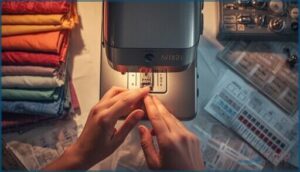
Your machine won’t forgive sloppy setup—each stitch demands its own configuration. Start by choosing your stitch selection and matching it with the manufacturer’s recommended presser foot. Dial in the correct stitch length and stitch width before you begin.
Match your needle selection to your fabric weight, then run a test on scrap material. Adjust machine settings until the fabric testing shows clean, even formation—this calibration step saves you from ripping out seams later.
Adjusting Thread Tension for Clean Stitches
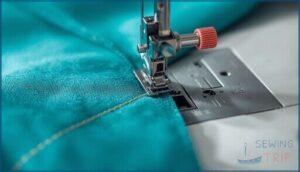
Balancing your thread tension transforms sloppy stitches into professional seams. Tension control directly affects stitch quality—when your needle thread and bobbin thread harmonize, you’ll see flat, even stitches on both fabric sides.
- Test on scrap fabric before sewing your project to verify thread balance and fabric behavior
- Make small tension dial adjustments—quarter-turn increments prevent overcorrection
- Check straight stitch and zigzag stitch formation for loops or puckering
- Maintain consistent sewing precision by adjusting stitch length alongside tension settings
Selecting The Right Presser Foot for Each Stitch
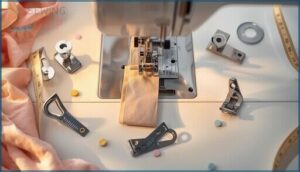
Your presser foot directly controls how fabric feeds through your sewing machine—wrong choice equals wonky stitches. Proper foot adjustment ensures perfect fabric feeding every time.
Match a standard universal foot to straight stitch work, then switch to a buttonhole foot for precision garment construction. Zigzag stitch demands compatible adjustable feet that handle stitch width changes. Walking feet prevent multi-layer shifting, while blind hem feet create invisible finishes.
Practicing Stitch Consistency and Control
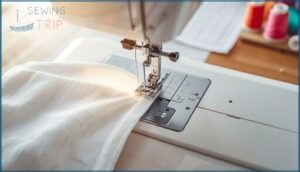
You’ll build real stitch precision through deliberate, daily practice—15 to 20 minutes beats marathon sessions every time. Start with straight stitch basics, then progress to zigzag stitch variations as your fabric handling improves.
- Set measurable targets: five uniform stitches per session builds confidence fast
- Check thread tension before every practice to prevent nested disasters
- Adjust stitch length and stitch width on scrap fabric until muscle memory clicks
Record your settings and track weekly progress using simple quality grids.
Troubleshooting Common Built-in Stitch Problems
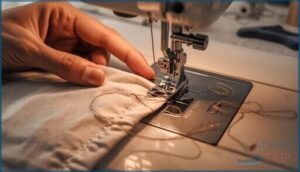
Even when you’re doing everything right, your machine can throw you a curveball. Stitches that looked perfect yesterday suddenly go rogue, leaving you staring at puckered fabric or loops of tangled thread.
Let’s tackle the most common stitch problems and get you back on track with solutions that actually work.
Fixing Uneven Stitch Tension and Formation
Inconsistent stitches reveal tension imbalance between your top and bobbin threads. Rethread your sewing machine completely, then test on scrap fabric. Adjust thread tension gradually until both threads meet at the fabric surface—whether you’re running a straight stitch or zigzag stitch.
Fabric thickness matters too; heavier materials need higher tension. Check your stitch length settings and thread quality to guarantee proper needle calibration and consistent formation.
When to Replace Worn or Damaged Needles
Even perfectly balanced thread tension won’t save you from a damaged needle. Watch for needle wear signs: bent shafts, dull points, or increased thread breakage.
Your sewing machine needs fresh needles every 8–12 hours of use—or immediately when you notice fabric damage like snags or pulls.
Proper needle selection and timely replacement protect both your fabric and sewing efficiency, keeping stitch length consistent.
Resolving Threading Errors for Better Results
A fresh needle won’t help if your thread path is wrong. Re-thread from spool to needle, following every tension disc and guide in your machine’s manual—proper needle alignment cuts skipped stitches by 20 to 30 percent.
Check bobbin maintenance too: uneven winding causes loops underneath. Confirm thread quality matches your fabric weight, then test-stitch on scrap material before tackling your project.
Preventing Fabric Puckering With Proper Settings
Proper threading fixes skipped stitches, but puckering demands different solutions. You’ll conquer fabric gathers when you dial in these settings:
- Match your needle type and size to the fabric weight you’re sewing.
- Reduce thread tension slightly and shorten stitch length on delicate materials.
- Lower presser foot pressure for lightweight fabrics to prevent fiber crushing.
- Choose appropriate stitches—straight stitch for seams, zigzag stitch for edges.
- Test all adjustments on scrap fabric before sewing your final piece.
Regular Maintenance Tips for Consistent Stitching
Clean your machine’s bobbin mechanism and needle plate monthly to remove lint buildup. Replace needles after 8–12 hours of sewing to maintain perfect straight stitch and zigzag stitch formation. Verify thread tension settings after every color change to guarantee even results.
| Maintenance Task | Frequency |
|---|---|
| Machine Cleaning | Monthly |
| Needle Replacement | Every 8-12 hours |
| Tension Adjustment | After each thread change |
| Feed Dog Inspection | As needed |
Frequently Asked Questions (FAQs)
Can I combine multiple built-in stitches together?
Many sewing machines let you program stitch sequencing to blend multiple built-in stitches in one seam. Adjust stitch length and thread tension between transitions, then practice seam blending on scrap fabric first.
Which stitches work best for quilting projects?
You’ll rely on the straight stitch for piecing quilt blocks and assembling layers.
Use a zigzag stitch for edge finishing, and select a blind hem stitch for invisible quilt binding seams.
How do I save custom stitch settings?
Saving settings starts with locking in your ideal stitch length, width, and tension—then storing them as custom presets in your machine’s stitch memory. Name each one clearly for quick preset organization and smooth recall during future projects.
What stitches are ideal for appliqué work?
Satin stitch delivers a dense fabric finish for appliqué edges, while blanket stitch adds decorative edge security. Zigzag stitch manages stretch, and slip stitch minimizes stitch visibility.
Your sewing machine offers multiple options for different effects.
Do decorative stitches require special thread types?
Not necessarily—decorative stitches work beautifully with standard all-purpose thread. However, thread selection matters: choose lightweight options for delicate fabrics, polyester for stretch materials, and adjust your needle selection to match thread weight for ideal stitch visibility and decorative effects.
Conclusion
Your machine holds more potential than you’ve unlocked—those mysterious symbols aren’t obstacles, they’re shortcuts to professional results.
Each beginner-friendly built stitch you master eliminates another limitation, transforming frustrating projects into satisfying creations. Start with straight stitches today, experiment with zigzags tomorrow, and within weeks you’ll instinctively reach for the perfect setting.
Your fabric will tell you what it needs. Trust your adjustments, practice deliberately, and watch amateur guesswork become confident craftsmanship.
- https://blog.missouriquiltco.com/building-blocks-learning-quilting-basics/
- https://sewcanshe-sewingbee.mn.co/
- https://www.polkadotchair.com/beginner-friendly-fat-quarter-nine-patch-quilt-free-pattern/
- https://www.diaryofaquilter.com/patchwork-gingham-quilt-pattern-and-tutorial/
- https://x.com/godofprompt/status/1990526288063324577