This site is supported by our readers. We may earn a commission, at no cost to you, if you purchase through links.
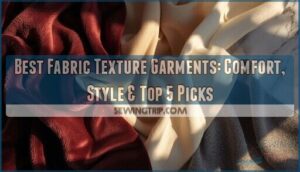
Your favorite shirt doesn’t just look good—it feels right against your skin, moves with you, and somehow makes you stand taller. That’s fabric texture working its magic, and it’s the difference between clothes you tolerate and garments you actually want to wear.
Whether you’re drawn to the buttery drape of silk, the cozy embrace of velvet, or the crisp confidence of linen, texture shapes how you experience your wardrobe every single day. Understanding what makes certain fabrics feel exceptional helps you build a collection that matches your lifestyle, not just your aesthetic.
From natural fibers that breathe with your body to pioneering blends that never wrinkle, the best fabric texture garments combine comfort and style in ways that transform getting dressed from routine to ritual.
Table Of Contents
Key Takeaways
- Fabric texture determines how garments feel against your skin and move with your body, making it the key difference between clothes you tolerate and pieces you actually love wearing every day.
- Natural fibers like cotton and wool excel at breathability and moisture absorption (wool absorbs up to 30% of its weight), while synthetic fibers prioritize durability, wrinkle resistance, and easy care through engineered properties.
- Matching texture to purpose transforms garment performance—smooth silk and satin drape beautifully for dresses, crisp linen holds structure for button-downs, and plush velvet adds warmth to outerwear.
- Quality fabric blends combine the best of both worlds, like cotton-polyester offering breathability with durability or wool-synthetic delivering thermal regulation with 15-30% better wrinkle resistance than pure wool.
Best Fabric Textures for Garments
Fabric texture changes everything about how a garment feels against your skin and how it moves with your body. Some textures drape like water, while others stand crisp and structured, giving you totally different vibes for different occasions.
If you’re aiming for that fluid, elegant look, choosing fabrics that drape well makes all the difference in how your finished piece hangs and moves.
Let’s break down the main texture categories so you can find what works best for your style and comfort needs.
Smooth Textures: Silk and Satin
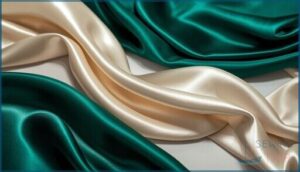
Silk and satin textures are smooth textures that’ll seriously upgrade your wardrobe. Silk’s natural fibers wick moisture and keep you comfortable, while satin weave creates that signature glossy face you see on luxury fabrics.
The cool-to-touch surface, enhanced through textile finishing, makes these materials perfect when you’re breaking free from scratchy, uncomfortable clothing—and honestly, that smoothness against your skin changes everything about clothing comfort.
Soft Textures: Velvet and Fleece
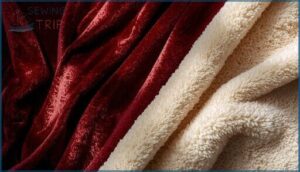
When you’re craving that cozy-luxe vibe, velvet softness and fleece warmth deliver in completely different ways.
Velvet’s thousands of tiny cut fibers create plush fabrics with a cushioned feel that glides over your skin—perfect for eveningwear that feels extraordinary.
Fleece, with its soft brushing technique, traps air for serious warmth without weight, making it your go-to for hoodies and loungewear where clothing comfort beats everything else.
For those interested in garment innovation, explore the unique benefits of brushed fleece fabric features.
Crisp Textures: Linen and Cotton
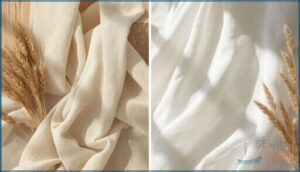
If you want that clean feel, linen weave and cotton blends are your answer. Linen’s natural breathability wicks moisture faster than cotton—absorbing sweat so it evaporates quickly in heat—while crisp fabrics like cotton poplin hold sharp pleats beautifully.
These natural fibers create summer textures with a matte finish that catches light softly, giving you freedom to move without clinging or heaviness.
Textured Weaves: Corduroy and Tweed
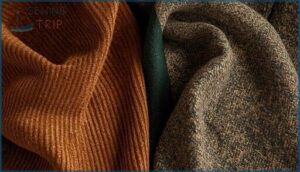
For richer depth, corduroy and tweed bring heritage style with serious texture.
Corduroy’s vertical ridges—called wales—range from 6 to 14 per inch, creating fabric density that feels substantial yet softens beautifully over time.
Tweed fabric shows off flecked patterns and wool warmth, woven in herringbone or twill. Both textured fabrics carry textile history while giving you bold, timeless looks that break free from plain weaves.
For a deeper look at its characteristics, review this guide on tweed fabric properties and history.
Natural Vs Synthetic Fabric Textures
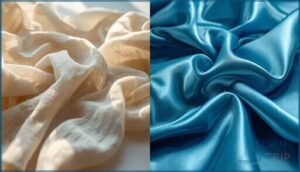
Natural and synthetic fabrics each bring their own texture personality to your wardrobe, and knowing the difference can help you choose garments that feel as good as they look.
Natural fibers like cotton and wool have a warmth and breathability that synthetic materials approach differently, often prioritizing durability and easy care. Let’s break down what makes each fiber type unique in texture, comfort, and how they actually feel against your skin.
Key Characteristics of Natural Fibers
Natural fibers—like cotton, wool, and linen—bring something synthetic materials can’t quite match: they breathe with you. Cotton absorbs around 8-11% of its weight in moisture, while wool pulls in up to 30% without feeling damp. That moisture wicking keeps you comfortable, and the natural insulation adapts as temperatures shift, making these eco-friendly choices essential for sustainable fashion.
| Fiber Type | Moisture Absorption | Key Texture Benefit |
|---|---|---|
| Cotton | 8-11% weight | Soft textures, breathable comfort |
| Wool | Up to 30% weight | Natural insulation, thermal regulation |
| Linen | Rapid evaporation | Crisp, cooling fabric texture |
| Silk | 11-12% weight | Smooth drape, temperature adaptable |
| Cashmere | High warmth-to-weight | Luxurious softness, fiber breathability |
Texture Profiles of Synthetic Fibers
Synthetic fibers deliver texture versatility through polymer blends and surface finishes, letting you explore smooth textures in satin polyester or soft textures in brushed fleece. Microfiber textures feel silky, while synthetic weaves like textured nylon add grip and dimension.
Fiber chemistry controls drape and sheen—trilobal cross-sections catch light beautifully, though some synthetic fiber drawbacks include reduced breathability and potential for static cling.
| Fiber Type | Texture Profile |
|---|---|
| Polyester | Smooth, wrinkle-resistant surface with matte or shiny finish |
| Acrylic | Soft, wool-like feel with brushed warmth |
| Nylon | Sleek, slightly crisp hand with excellent durability |
| Spandex Blends | Stretchy, body-hugging texture with recovery |
Comparing Comfort and Breathability
Your fabric’s comfort level hinges on breathability and softness working together. Natural fibers like cotton and linen usually allow 15 to 25 g/m²/24h moisture vapor transfer, while polyester blends rely on wicking finishes to push sweat outward.
| Fabric Type | Breathability | Comfort Metrics |
|---|---|---|
| Cotton | High air flow, absorbs 7-12% weight | Cool, soft against skin |
| Merino Wool | Stable skin temp, excellent wicking | Warm yet breathable |
| Polyester Blend | Lower natural flow, chemical wicking | Dries fast, can trap heat |
| Bamboo | Fast moisture transfer | Silky, cooler feel |
Thermal regulation differs too—smooth silk feels cooler due to low friction, while fleece textures trap air for insulation.
Choosing Fabrics for Comfort and Style
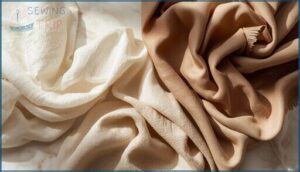
You want fabrics that feel good and look great, but picking the right texture isn’t always straightforward.
The key is understanding how different textures work with specific garments, seasons, and the way clothes hang on your body. Let’s break down three practical ways to choose fabrics that deliver both comfort and style.
Matching Texture to Garment Type
You want your garments to actually work for their purpose, right? Fabric pairing and texture analysis make all the difference. Here’s how texture influences garment styling:
- Smooth silk and satin drape beautifully for dresses and blouses, creating that polished, slender silhouette you’re after
- Crisp linen and cotton hold sharp collars and pleats, perfect for button-downs
- Plush velvet and soft fleece add warmth and depth to jackets and cozy pieces
Texture and Seasonality Considerations
Think of your wardrobe as a climate-response toolkit. Heavy textures like velvet and wool felt deliver winter warmth through insulation and density, while lightweight cotton voile and silk charmeuse offer summer breathability.
Seasonal fabric swings mean switching between textured weaves for cool months and smooth natural fibers for heat. Fabric layering lets you adapt—pair crisp linen over breathable synthetics or stack corduroy for bulk without sacrificing comfort across fabric texture and properties.
Impact of Texture on Fit and Drape
Texture shapes how your garment moves with you—smooth satin glides over curves while rough textures add structure. Here’s what happens when fabric texture and properties meet your body:
- Fabric drape: Silky weave patterns create fluid garment movement that skims rather than clings
- Surface interaction: Napped textures grip gently, holding fit dynamics in place
- Weight influence: Heavier fabrics pull downward for clean lines
- Stretch recovery: Elastane blends maintain shape through texture analysis and wear
Popular Fabric Blends for Garments
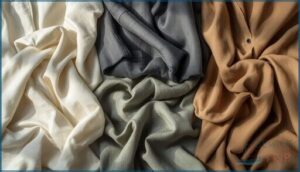
You don’t have to choose between natural and synthetic in terms of your favorite garments. Fabric blends give you the best of both worlds, combining the breathability of cotton or wool with the durability and easy care of synthetics.
Let’s look at the most popular blends and what makes each one work so well.
Cotton-Polyester Blend Textures
You’ll find that cotton-polyester blends strike a beautiful balance between breathability and durability. The cotton keeps things soft and airy against your skin, while polyester adds serious wrinkle resistance and strength.
These smooth finishes feel crisp, not clingy, and they bounce back after washing. It’s basically the best of natural fibers meeting synthetic fibers—giving you low-maintenance fabric texture that actually lasts.
Wool-Synthetic Blend Benefits
Wool-synthetic blends give you real freedom from upkeep. The synthetic fibers boost wrinkle resistance by 15 to 30 percent compared to pure wool, so you stay sharp through the day.
You’ll get thermal regulation that adapts, fabric durability that lasts, and softness enhancement without the itch. Color retention stays vibrant wash after wash, blending natural warmth with low-maintenance ease.
Bamboo-Cotton and Linen-Cotton Blends
You want a gentler footprint? Bamboo-cotton blends fuse silky bamboo fiber with cotton’s structure—sustainable textiles that wick moisture and soften with every wash.
Linen-cotton blends pair linen weave’s crisp breathability with cotton’s resilience, creating eco-friendly fabrics that dry fast and wrinkle less. Both natural fibers give you that airy, textured comfort without the upkeep drama.
Top 5 Textured Fabrics and Products
You’ve learned about the textures that make garments comfortable and stylish, so now it’s time to see real products in action.
The following picks showcase fabrics with standout texture, from corduroy‘s classic ridges to Liverpool knit’s unique surface feel. Each one brings something different to your sewing projects or wardrobe, giving you options that work for different styles and needs.
1. Corduroy Fabric For Sewing And Crafts
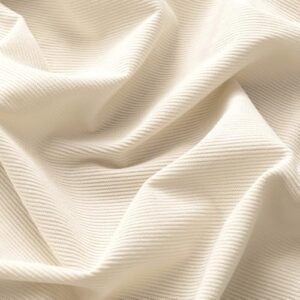
Looking for a fabric that balances softness with real staying power? This cream white corduroy comes with those classic vertical ridges—16 pit stripes at 1.6mm width—that give your projects that rich, tactile feel.
You’ll get a 60-inch width in sizes from one yard up to five, and it’s super breathable and washable, which makes it perfect for pants, costumes, pillow covers, or DIY crafts. Just keep in mind it’s a polyester blend rather than pure cotton, so it’s on the thinner side and might need lining for garments.
| Best For | Crafters and DIY enthusiasts who want a versatile, budget-friendly corduroy for home decor projects, lightweight garments, or creative sewing work. |
|---|---|
| Material Type | Corduroy |
| Primary Use | Garments & crafts |
| Fabric Weight | Lightweight |
| Care Level | Easy to iron |
| Breathability | Breathable |
| Texture | 16 pit stripe |
| Additional Features |
|
- Soft, breathable texture with classic vertical ridges that add visual interest to any project
- Washable and easy to care for, making it practical for everyday items like pillow covers or costumes
- Wide 60-inch width gives you plenty of fabric to work with and reduces seams
- Polyester blend rather than pure cotton, which may feel less natural and could have some stretch
- Thin material that likely needs lining for garments to avoid sheerness
- Color may look different depending on lighting or your screen settings
2. Olive Green Corduroy Fabric
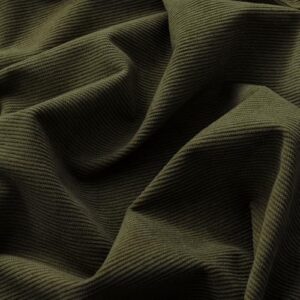
This olive green option brings that classic corduroy with a 11 to 14 wale count you’d expect in good corduroy, along with a medium weight around 9 to 12 ounces per yard. The soft, velvety nap feels wonderful against your skin and adds that subtle shine under light.
You’re looking at fabric that holds its shape really well—perfect for structured trousers, jackets, or pinafore dresses. Just remember to pre-wash it first to minimize shrinkage, and cut all pattern pieces in the same nap direction for a uniform look.
| Best For | Home sewers looking for an affordable, lightweight corduroy for casual garments, kids’ projects, and craft decorations where structure isn’t critical. |
|---|---|
| Material Type | Corduroy |
| Primary Use | Garments & crafts |
| Fabric Weight | Lightweight |
| Care Level | Easy to iron |
| Breathability | Breathable |
| Texture | 16 pit stripe |
| Additional Features |
|
- Soft, breathable fabric that’s easy to work with and safe for children’s clothing
- Foldable and lightweight design makes it simple to store and handle during projects
- Available in multiple yardage options (1, 3, or 5 yards) to match your project size
- Thin material requires lining for most garments and won’t hold up for structured pieces
- Not true 100% cotton corduroy—likely a polyester blend that may not have the durability of traditional corduroy
- Texture and thinness can make cutting straight lines and sewing evenly more challenging
3. Watermelon Patterned Liverpool Fabric
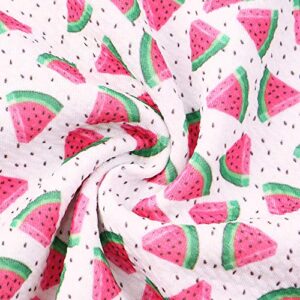
This playful watermelon print on Liverpool fabric brings serious versatility to your sewing projects. You’re getting a poly-spandex blend with that signature textured front—think waffle or crepe surface—that makes the bright greens and pinks really pop.
The 4-way stretch means it’ll flow beautifully for summer dresses, skirts, and tops, while staying soft and lightweight against your skin. At roughly 55 inches wide, you’ve got plenty of fabric to work with, though keep in mind the edges might fray a bit during cutting.
| Best For | Sewists looking for stretchy, textured fabric for colorful summer garments, accessories, or craft projects who don’t mind doing a bit of edge finishing. |
|---|---|
| Material Type | Polyester |
| Primary Use | Garments & accessories |
| Fabric Weight | Lightweight |
| Care Level | Standard care |
| Breathability | Breathable |
| Texture | Textured with stretch |
| Additional Features |
|
- 4-way stretch and soft drape make it perfect for comfortable clothing like dresses, skirts, and tops
- Textured surface adds visual interest and helps the watermelon print stand out
- Wide width (55 inches) gives you good coverage for larger projects
- Fabric frays easily along cut edges, requiring extra finishing work
- Cuts may arrive uneven or jagged, and actual yardage might be slightly short
- Print size and colors can look different than the product photos suggest
4. David Angie Liverpool Fabric
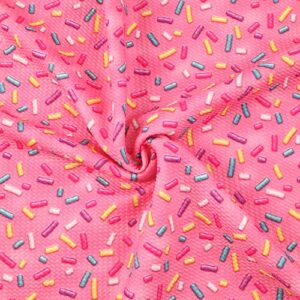
This candy-printed bullet texture from David Angie delivers that perfect balance of structure and softness you need for statement pieces. The polyester-spandex blend stretches in four directions, so your dresses and skirts will move with you while keeping their shape beautifully.
At 53 by 50 inches per yard, you’re looking at generous coverage for garments, accessories, or craft projects. Just remember each piece comes pre-cut, and those oversized sprinkles might be bolder than you expect—which honestly makes them even more fun for baby clothes and headwraps.
| Best For | Sewers looking for structured yet stretchy fabric for statement garments, baby clothes, or bold craft projects like headwraps and accessories. |
|---|---|
| Material Type | Polyester |
| Primary Use | Garments & accessories |
| Fabric Weight | Lightweight |
| Care Level | Standard care |
| Breathability | Breathable |
| Texture | Textured with stretch |
| Additional Features |
|
- 4-way stretch keeps garments comfortable and movable while maintaining shape
- Generous 53″x50″ cuts give you plenty of fabric to work with per yard
- Versatile enough for both clothing (dresses, skirts, tops) and home décor projects
- Each piece is pre-cut at one yard, so you can’t get continuous yardage for larger projects
- Color may appear lighter in person than in product photos
- Large sprinkle print might overwhelm smaller or more delicate designs
5. Textured Cardigan Jacket
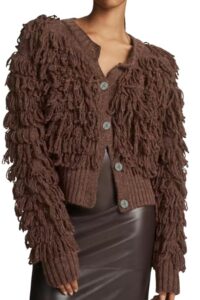
This oversized brown knit brings that cozy coffee-shop vibe straight into your fall wardrobe. The plush texture feels wonderful against your skin while those large buttons down the front make layering a breeze—throw it over jeans or pair it with a flowy dress for instant casual-chic energy.
The relaxed fit gives you freedom to move without feeling boxed in, perfect when you’re ready to break from stuffy dress codes. Just keep in mind it’s designed for everyday comfort, not boardroom formality.
| Best For | Anyone who loves layering pieces that add texture and warmth to casual outfits without sacrificing comfort or style. |
|---|---|
| Material Type | Not specified |
| Primary Use | Casual wear |
| Fabric Weight | Lightweight |
| Care Level | Easy care |
| Breathability | Breathable |
| Texture | Unique textured knit |
| Additional Features |
|
- Lightweight, breathable material keeps you comfortable without overheating
- Oversized fit and large buttons make it easy to throw on over anything
- Textured knit design adds visual interest to simple outfits
- Too casual for professional or formal settings
- Oversized style might overwhelm smaller frames
- Only available in brown and size L, limiting options for different preferences
Tips for Selecting Quality Fabric Textures
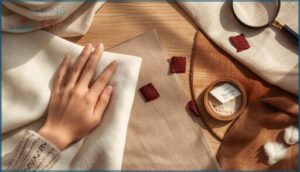
Finding the right fabric texture is like learning to read the language your clothes speak—you just need to know what to look for. When you’re selecting quality fabric textures, keep these essentials in mind:
Selecting quality fabric is about reading your clothes’ language through fiber content, weight, texture, and weave consistency
- Check fiber content labels for exact percentages to predict fabric quality, garment durability, and care instructions
- Test fabric weight by feel—heavier weights suit outerwear while lighter options drape beautifully for flowing pieces
- Run your hand across the surface for texture analysis, checking for softness, snags, and consistency
- Look for even weave density across the entire fabric selection, with no thick or thin spots
- Consider fiber blending ratios that match your needs—natural fibers for breathability, synthetics for resilience
When you combine these checks with your style goals, you’ll find fabrics that deliver both clothing comfort and style every time.
Frequently Asked Questions (FAQs)
Which fabrics have the most texture?
Like a mountain landscape versus a glass lake, some fabrics refuse to stay smooth.
Velvet, tweed, and bouclé lead the pack with their dense piles, looped yarns, and mixed weave patterns creating seriously tactile surfaces.
How do you care for delicate textured fabrics?
Delicate fabric types need gentle washing in cold water, careful drying techniques flat or on padded hangers, proper stain removal by blotting instead of rubbing, and smart storage methods away from sunlight to maintain their texture.
What textures work best for activewear garments?
Your workout gear needs smooth, moisture-wicking textures like polyester microfiber or nylon blends.
These synthetic fibers offer breathability, fabric stretch with spandex, and quick-dry technology—keeping you comfortable during intense training sessions.
Can fabric texture affect garment longevity?
Yes, texture dramatically impacts garment longevity. Smooth fabrics like silk resist pilling but weaken with friction, while textured weaves distribute stress better.
Dense synthetics boost durability, and proper care matched to texture extends lifespan substantially.
Which textures are hypoallergenic for sensitive skin?
For sensitive skin care, hypoallergenic materials like silk, satin, and organic cotton offer skin-friendly fabrics with smooth surfaces.
Natural fibers such as bamboo and linen provide gentle fiber options with breathability, reducing irritation from allergy-free textures.
How does fabric texture impact clothing price?
Think of texture as a fabric’s fingerprint—it tells you what went into making it.
Production complexity, labor costs, and material sourcing all drive up price, especially when eco-friendly materials meet intricate weaving.
Conclusion
The next time you reach for something to wear, pause. Feel the fabric texture between your fingers—notice how it catches light, how it breathes, how it transforms ordinary movement into something intentional.
That’s the power you now hold. With your deeper understanding of the best fabric texture garments, you’re not just shopping anymore. You’re curating a wardrobe that honors both your body and your boldest self.
Touch matters. Choose wisely.