
This site is supported by our readers. We may earn a commission, at no cost to you, if you purchase through links.

Suede and water have a complicated relationship. One wrong move—a rainy commute, an overzealous cleaning attempt, a spin in the washing machine—and that buttery texture you paid good money for is gone for good. Unlike leather, suede’s delicate nap can’t be restored once it’s been crushed, soaked, or stripped of its natural oils.
The good news is that suede shoes don’t need water to get clean. With the right tools and a little patience, you can remove stains, lift scuffs, and keep your suede looking sharp—no washing machine required.
Table Of Contents
Key Takeaways
- Never put suede shoes in the washing machine — the water, agitation, and tumbling permanently destroy the nap and shape.
- A suede brush, eraser block, white vinegar, and cornstarch handle most stains without a drop of running water.
- Always air dry at room temperature, stuffed with newspaper, and keep heat sources like dryers and radiators far away.
- A protector spray applied every one to two weeks is your best defense against water marks, stains, and long-term wear.
Can You Wash Suede Shoes?
Suede and water don’t mix well, and tossing your shoes in the washing machine is one of the fastest ways to ruin them.
But knowing exactly why — and when to make an exception — helps you make smarter choices. Here’s what you need to know before cleaning your suede shoes.
Risks of Machine Washing Suede
Machine washing is the fastest way to ruin suede. The drum fully saturates the material, leaching out natural oils and causing fiber breakage that leaves the surface stiff and rough.
Texture loss is permanent — tumbling flattens the nap beyond repair. Color bleeding, detergent damage, and warped shapes follow.
Air drying is your safest bet—proper viscose fabric care techniques can help you avoid the shrinkage and texture damage that heat and tumbling cause.
The risks of machine washing suede far outweigh any convenience it offers. For more details on essential suede care and maintenance, consult expert guides before attempting any cleaning methods.
Differences Between Real and Faux Suede
Not all suede is the same — and that distinction matters for cleaning.
Real suede is cut from animal hide, giving it an organic, buttery texture that breathes well but absorbs water fast.
Faux suede uses synthetic fibers, usually polyester microfibers, making it more water-resistant and easier to clean.
Knowing your suede material properties upfront saves your shoes from the wrong treatment. For additional details about the differences and care, see this guide to faux suede material properties.
When Professional Cleaning is Needed
Some problems go beyond what a brush or eraser can fix. Deep Stain Removal for oil-soaked marks, Mold Treatment for fuzzy growth after damp storage, and Color Revival for uneven fading all call for professional cleaning.
Suede Restoration services usually start around $25, and Luxury Shoe Care specialists handle multiple issues in one visit — stains, odor, and fading — without risking further damage.
Best Methods to Clean Suede Shoes by Hand
Cleaning suede by hand doesn’t have to feel complicated — you just need the right tools and a bit of patience. A few simple supplies can handle most dirt, scuffs, and everyday wear without damaging the material.
Once you’ve cleaned your suede, store it somewhere with steady temperature and humidity — this guide on proper thread and fabric storage conditions explains exactly why climate control matters for keeping delicate fibers in good shape.
Here’s what you’ll need to get started.
Essential Tools and Materials
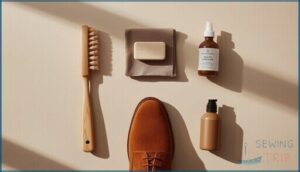
You don’t need a fancy setup — just the right tools. A suede brush with nylon or horsehair bristles lifts dirt without tearing the nap. Eraser Blocks tackle dry scuffs before any liquid touches the shoe.
Grab a microfiber cloth, white vinegar, and mild soap for stains. Cleaning Kits bundle most of these together, and a Protector Spray rounds out your toolkit.
Step-by-Step Brushing and Erasing
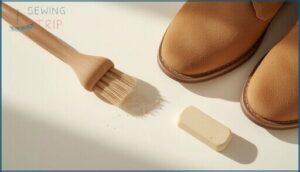
Think of your suede brush and eraser as a team — one lifts, the other erases. Together, they handle most scuff marks and light stains without water.
- Brush first — use your suede brush in one direction for Gentle Cleaning and Fiber Care.
- Erase dry — apply your suede eraser on dry spots only for effective stain removal.
- Work lightly — heavy pressure flattens the nap; short strokes protect suede shoe cleaning results.
- Brush again — finish with Nap Restoration strokes to revive texture.
Removing Surface Dirt and Dust
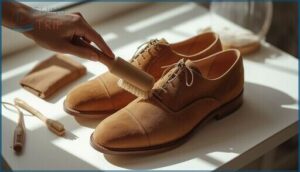
Loose dust is sneaky — it hides in seams and settles deep before you notice it. Start Shoe Prep by removing laces and stuffing the shoe so the upper holds its shape. Then dry brush the whole surface in one direction.
| Task | Tool |
|---|---|
| Dust removal | Suede brush |
| Crevice Cleaning | Toothbrush |
| Cloth Wiping edges | Microfiber cloth |
How to Remove Stains and Scuffs From Suede
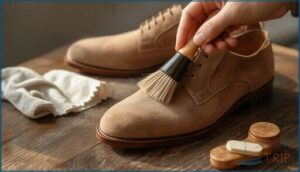
Stains and scuffs on suede aren’t a death sentence for your shoes — most can be fixed with the right approach. The key is knowing which method matches the mess you’re dealing with.
Here’s how to handle the most common ones.
Treating Oil and Grease Stains
Oil and grease stains move fast — act faster. Blot fresh oil with a dry paper towel first, dabbing gently to avoid pushing it deeper.
Then try the Baking Soda Method: sprinkle a generous layer over the stain and let it sit overnight.
For tougher grease and oil stains, Dish Soap Application or a Commercial Degreasers product can lift what powder leaves behind.
Using Vinegar, Cornstarch, and Suede Erasers
Three household staples handle most stains on suede shoes: vinegar, cornstarch, and a suede eraser.
For Cornstarch Absorption, sprinkle it over oily spots and leave it overnight before brushing off.
Vinegar Safety matters — dab white vinegar on a cloth, never pour it directly.
Eraser Technique works best on dry suede, using short strokes for clean stain removal without odor or damage.
Dealing With Water and Salt Marks
Water marks form when suede absorbs moisture unevenly, leaving darker rings where it dries slowest. Salt stains come from winter slush, leaving crusty white lines as water evaporates.
For an immediate response, blot excess moisture right away. Clean salt rings with a half-water, half-white-vinegar solution on a cloth. Finish with a suede protectant spray to prevent future water marks and salt stains on your suede shoes.
Proper Drying Techniques for Suede Shoes
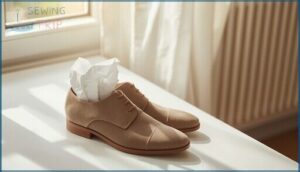
Getting suede dry the right way matters just as much as how you cleaned it. Rush the process or use the wrong method, and you can undo all that work in minutes.
Here’s what to do once the cleaning is done.
Blotting and Removing Excess Moisture
Speed matters when suede gets wet. Immediate blotting within the first five to ten minutes stops moisture from soaking deeper.
Material choice makes a real difference — grab a white microfiber cloth or plain paper towels, never printed ones. Use a gentle blotting technique: press, lift, reposition.
Manage internal moisture by stuffing the toe box with tissue. Post-blotting, your suede should feel evenly damp, not soaked.
Air Drying and Maintaining Shoe Shape
Once you’ve blotted out the excess moisture, let your shoes air dry completely — no shortcuts. Set them upright on a mesh rack so airflow reaches all sides.
For shape maintenance, stuff shoes loosely with plain newspaper or slip in a cedar shoe tree.
Proper drying techniques for suede rely on patience; fully soaked pairs may need 24–48 hours before they’re ready to wear again.
Avoiding Heat and Direct Sunlight
Heat damage moves fast once you start rushing the drying process. Keep your shoes away from radiators, hair dryers, and sunny windowsills — all of these cause shrinkage, warping, and sun fading you can’t reverse. Proper drying techniques for suede mean air dry at room temperature, full stop.
Keep suede away from heat — air dry at room temperature or risk permanent damage
- Avoid radiators — they dry out fibers and cause cracking
- Skip sunny spots — UV light fades color unevenly
- Never use a hair dryer — heat shrinks suede permanently
- Store away from hot vents to prevent long-term storage risks
Preventative Care and Long-Term Suede Protection
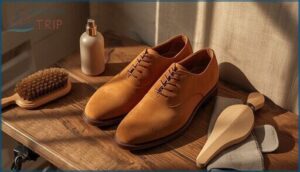
Cleaning your suede shoes is only half the battle — keeping them in good shape long-term takes a little routine effort. The good news is that a few simple habits go a long way toward protecting the material from damage, stains, and wear.
Here’s what you can do to keep your suede looking sharp for years to come.
Applying Suede Protector Sprays
Before anything touches your suede, make sure it’s clean and dry — trapped dirt gets sealed in permanently. Brush the nap to open up the fibers, then hold your suede protector spray about 6–8 inches away and apply two light coats.
Good waterproofing sprays need 24 hours to cure fully. Always spray outdoors — aerosols are flammable. Don’t expect suede protectant to survive heavy rain.
Storing Suede Shoes Safely
Once your suede is protected, where you store it matters just as much. Climate storage conditions between 60–75°F keep fibers stable. Skip plastic bags — they trap moisture and invite mold. Proper positioning on open shelves allows airflow and prevents crushing.
For long-term preservation and odor control, try these shoe tree benefits:
- Cedar shoe tree absorbs moisture and deodorizes naturally
- Breathable cloth bags block dust without sealing in humidity
- Silica gel packets reduce mold risk inside shoe boxes
- Upright positioning prevents creasing and upper collapse
Routine Maintenance Tips for Lasting Quality
Consistency is the real secret to extending shoe lifespan. A quick brush after each wear, spot-checks for fresh marks, and rotating between pairs weekly keeps damage from stacking up quietly.
| Task | Frequency | Benefit |
|---|---|---|
| Brushing Frequency | After each wear | Lifts fibers, prevents buildup |
| Spray Reapplication | Every 1–2 weeks | Maintains suede protectant barrier |
| Cleaning Schedules | Every 1–2 weeks | Stops grime from setting |
Shoe Rotation gives each pair recovery time — and your suede stays fresher, longer.
Frequently Asked Questions (FAQs)
Can I put my suede shoes in the washing machine?
No, don’t put your suede shoes in the washing machine. Machine washing causes fiber stiffening, texture changes, dye bleeding, and glue damage. This delicate material warps permanently under that much water and agitation.
How do you remove stains from suede shoes?
Think of stains on suede like spilled ink on a favorite book—quick action matters.
For delicate stain removal, use a suede eraser for scuffs, cornstarch for oil, and vinegar for salt stains.
Spot cleaning prevents dye bleed risks.
How to ensure your suede shoes are dry before cleaning?
Before cleaning, press a paper towel against your dry suede shoes. If it darkens, moisture remains. Allow at least 12 hours of drying time, then dry brush away surface dirt before starting.
How do you protect Suede Shoes?
Protecting suede starts with a good protector spray. Apply suede protectant evenly, let it dry, then brush lightly.
Smart daily wear habits, dust protection, and shape preservation keep your shoes lasting longer.
How do you clean your shoes?
Brush first, ask questions later. For cleaning suede shoes, grab a suede brush, work in one direction, and let a suede cleaner handle stubborn spots.
Simple suede shoe cleaning methods beat overwashing every time.
Can you put suede shoes in the washer?
No, you shouldn’t put suede shoes in a washing machine. Even a delicate cycle causes washer deformation, detergent stripping, color bleeding, and spin cycle damage that ruins the nap permanently.
What is the best way to clean suede shoes?
The best cleaning method for suede shoes is hand-cleaning.
Use a suede brush for gentle cleaning and regular brushing, a suede cleaner for spot treatment, and finish with nap restoration to keep fibers looking fresh.
Is it okay to clean suede shoes with water?
Water can damage suede fast, so skip soaking entirely. A light misting is okay for blending water stains, but real suede needs dry methods. Faux suede tolerates moisture better.
Can I use Dawn dish soap on suede shoes?
Think of Dawn dish soap like a power washer on a silk shirt — technically possible, but risky. It can strip natural oils, stiffen suede, and leave water rings. Safer alternatives exist.
How do I dry suede shoes after getting them wet?
Blot wet suede immediately with a dry cloth, stuff with newspaper, and air dry at room temperature.
Humidity impact can slow drying to 48 hours.
Finish with post-dry brushing for nap restoration.
Conclusion
Think of this: your favorite suede Chelsea boots catch a puddle splash on the way to work. Instead of panic, you reach for your suede brush and eraser—and handle it like a pro.
Knowing can you wash suede shoes how to matters less than knowing you never have to. The right tools, a little routine care, and your suede stays exactly as it should: soft, clean, and built to last.
- https://science.howstuffworks.com/difference-between-ethyl-and-isopropyl-alcohol.htm
- https://shoewash.ca/what-is-a-suede-eraser-and-how-to-use-it/
- https://www.thespruce.com/baking-soda-and-stain-pre-treating-1901052
- https://www.charleskeith.com/us/guides/how-to-clean-suede-shoes.html
- https://greatamericandrycleaners.com/your-washing-machine-isnt-safe-for-these-types-of-clothes/