This site is supported by our readers. We may earn a commission, at no cost to you, if you purchase through links.
Your fingertips know things your eyes can’t see. That crisp resistance when you crease linen, the buttery glide of silk charmeuse, the reassuring weight of wool suiting—these sensations tell you instantly whether a fabric will work for your project.
Choosing fabric by feel isn’t some mystical skill reserved for seasoned designers; it’s a practical, learnable approach that often reveals more than any bolt label ever could. A fabric might photograph beautifully and check all the technical boxes, but if it feels wrong in your hands, it’ll feel wrong on the body or in the space you’re creating for.
The good news? Your hands are already equipped with incredibly sensitive tools for evaluating drape, weight, texture, and flexibility. Once you know what to notice and how different tactile qualities translate to finished projects, you’ll walk through fabric stores with the confidence of someone who trusts their instincts as much as their patterns.
Table Of Contents
Key Takeaways
- Your fingertips reveal critical fabric properties—texture, weight, drape, and stiffness—that labels and photos can’t capture, making tactile evaluation your most reliable tool for choosing materials that’ll actually work for your project.
- Natural fibers like cotton, linen, wool, and silk feel breathable with subtle irregularities, while synthetics like polyester and nylon present a slicker, more uniform surface—and your hands can detect these differences instantly without reading a single tag.
- Matching fabric feel to your project’s demands matters more than aesthetics alone: apparel needs breathability and skin comfort, while home decor requires abrasion resistance and durability against constant friction.
- A simple hands-on process—testing drape by holding fabric at one corner, checking stiffness through the scrunch test, and examining grain direction—builds the muscle memory that turns tactile fabric selection into an instinctive skill.
Why Fabric Feel Matters in Sewing
You can’t pick the right fabric without touching it first. The way a material feels in your hands tells you whether it’ll work for your project, whether it’ll feel good against skin, and whether the finished piece will look the way you imagine.
Beyond the initial feel, you’ll also want to consider how different fabrics hold up over time and through repeated washing.
Touching fabric first reveals whether it will work for your project and feel right against skin
Here’s why fabric feel should be your first test, not your last.
Comfort and Wearability
Comfort dictates whether you’ll actually wear what you sew. Fabric softness against your skin, breathability during movement, and drape quality all determine wearability. When you’re choosing material, feel for these essentials:
- Texture that won’t irritate – smooth surfaces reduce friction and prevent all-day discomfort
- Skin comfort through breathability – natural fibers like cotton pull moisture away from your body
- Durability with flexibility – wear resistance that still moves with you, not against you
Touch reveals everything.
Suitability for Different Projects
Your hands guide material selection based on what you’re building. Project planning demands different fabric properties—knit fabrics with stretch for activewear, while canvas durability anchors tote bags.
Garment construction needs change everything: lightweight cotton voiles drape softly for blouses, but structured wool holds creases for fitted jackets.
Weaving style, weight, and stiffness signal whether fabric types suit your sewing techniques before you cut a single thread.
Impact on Final Appearance
The fabric you choose shapes every visual detail—how light catches the surface, how folds cascade, how color saturates the fibers. Texture effects and drape determine whether patterns stay crisp or blur into movement, while finish quality controls sheen levels:
- Softness influences how fabric drape creates silhouette flow
- Breathability affects color balance and pattern visibility across surfaces
- Durability prevents texture degradation that dulls your finished piece
Key Fabric Properties You Can Feel
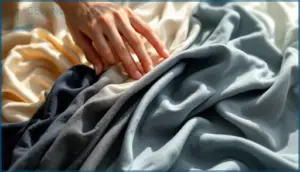
When you run your hands across fabric, you’re gathering critical information that no label can fully capture. Your fingers can detect subtle differences in texture, weight, drape, and stiffness—all properties that determine whether a fabric will work for your project.
Different fabrics have distinct personalities—understanding which fabric types work best for home decor helps you choose materials that match both your aesthetic vision and practical needs.
Let’s break down the four key characteristics you can feel and what they reveal about the material in your hands.
Texture and Surface Quality
Run your fingers across that fabric panel, and you’ll decode its true identity. Texture and surface quality reveal everything—from raised purl stitches that create tactile ridges to sateen’s glossy slip.
Fabric smoothness depends on fiber density and weave patterns, while surface irregularities from slub yarns add character. Pile depth transforms velvet into plush luxury, and drape flows from how those fibers interact.
| Texture Type | What You’ll Feel |
|---|---|
| Smooth Fabrics | Slippery, even surface with natural sheen that reflects light |
| Napped Finishes | Soft brushed surface with directional pile depth |
| Slub Weaves | Intentional bumps and irregularities across the panel |
| Tight Knits | Crisp yet soft surface that bounces back after pressing |
Weight and Thickness
Heft tells you everything you need to know about durability and breathability before scissors touch cloth. Weight measurement in gsm—grams per square meter—ranges from gossamer chiffon at 30 gsm to sturdy denim around 400 gsm.
Thickness variance and fabric density control opacity levels, while bulk analysis reveals how material properties like softness stack against structure. Feel that substance, and you’re reading the fabric’s future performance.
Drape and Flexibility
When you hold a corner and let fabric fall, you’re running drape analysis that reveals its soul. Fabric flow and fold dynamics show how silk glides while cotton holds—watch how stretch and flexibility tests expose a textile’s true movement.
That fluid drape comes from low-friction fibers creating graceful cascades, while texture influence and breathability tell you if your design will dance or stand firm.
Softness and Stiffness
Press your palm against fabric to decode its character—that’s your first stiffness test and softness level checkpoint combined. Fabric hand reveals how texture types behave in real life, while fiber blends shift the fabric feel spectrum dramatically.
- Fabric bend radius shows resistance when you curve fabric around your fist
- Soft cotton yields instantly, while crisp linen pushes back
- Texture analysis separates smooth silks from rough tweeds
- Weaving patterns determine if fabric texture feels firm or fluid
- Synthetic blends can mimic natural softness or engineer permanent stiffness
Identifying Fabrics by Touch
Once you know what to feel for, the next step is learning how to identify what you’re actually touching.
Your fingertips can tell you whether a fabric is natural or synthetic, and they can also decode the weave or knit pattern that gives it structure.
Here’s how to read fabrics through touch alone.
Natural Vs. Synthetic Fibers
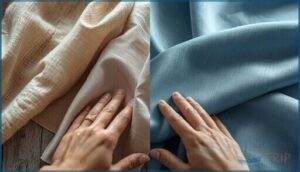
Natural fibers—cotton, linen, wool, silk—feel like they breathe against your fingertips, with subtle irregularities that synthetic fibers rarely match. Polyester and nylon, born from material science and textile innovation, often feel slicker, more uniform.
Understanding fiber sourcing shapes your fabric selection guide: blends marry both worlds, balancing eco impact with durability.
Touch reveals these material properties instantly, enabling smarter fabric texture choices.
Recognizing Common Weaves and Knits
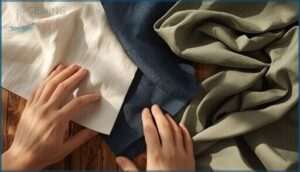
Run your fingers across the surface—weave patterns reveal themselves through texture alone. Plain weave feels smooth and balanced, while twill weave creates those unmistakable diagonal ridges. Satin weave glides under your palm with its signature sheen.
Knits stretch where wovens don’t, and fabric density tells you how tightly threads interlock. Higher thread count often means finer fabric types, though yarn weight matters equally when you’re choosing between knit types for your next project.
Step-by-Step Guide to Choosing Fabric by Feel
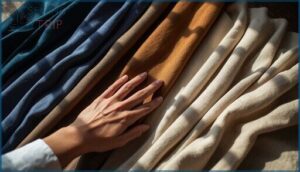
Choosing fabric by feel isn’t some mystical talent—it’s a skill you can learn with a simple, repeatable process. You need to know what to look for before you touch a single bolt, what sensations actually matter when your hands make contact, and how to avoid the rookie mistakes that’ll have you second-guessing your choices later.
Here’s your step-by-step approach to building confidence with every fabric you handle.
Preparing to Evaluate Fabric
Before you start any swatch testing or texture analysis, you need the right setup for smart fabric selection. Evaluation methods work best when you create conditions that reveal true fabric properties and material properties.
- Find a clean, well-lit workspace where you can spread swatches without distraction
- Grab sample yards or small cuts for hands-on fabric preparation and fiber identification
- Use a neutral background to assess color and weave accurately
- Keep a ruler handy to measure thickness and compare fabric hand and feel
- Test each fabric the same way so you understand fabric properties consistently
What to Notice When Touching Fabrics
Your hands can detect fiber density, weave patterns, and surface roughness the moment you touch a swatch. Notice fabric grain direction by running fingertips along and across the material—you’ll feel different tactile sensations.
Check fabric hand by crumpling the textile, then releasing it to gauge stiffness. This tactile perception reveals material properties and fabric texture that determine your project’s success.
Hands-on Tips for Fabric Selection
Bring samples to a window—daylight shows true texture and weave identification better than store fluorescents.
For drape testing, hold fabric at one corner and watch how it falls; stiffer materials keep their angle, while fluid ones pool.
Pinch fibers between your thumb and forefinger to analyze texture and detect fiber blending. This tactile fabric sampling gives you control over every sewing choice.
Avoiding Common Tactile Mistakes
Don’t judge fabric sensitivity in cold rooms—stiff knits soften once they warm up on your body.
Comparing fabrics from different color lots leads to tactile errors, since hand feel can shift up to fifteen percent between dye batches.
Skip texture issues by always prewashing test swatches first; weight and drape change by five to ten percent after that first cycle, affecting fabric properties you rely on for mistake prevention.
Matching Fabric Feel to Project Needs
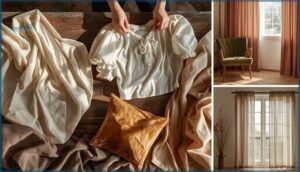
You’ve got the feel of the fabric figured out, but now you need to make sure it actually works for what you’re making. A silky drape might be perfect for a blouse but totally wrong for throw pillows.
Let’s match what your hands are telling you to the real-world demands of your project.
Choosing for Apparel Vs. Home Decor
Your fabric needs split into two camps, and texture variance plays a bigger role than you think. Apparel comfort demands breathability and softness against the skin, while home decor style requires toughness that laughs at daily wear.
Here’s how to choose the right fabric for each:
- Apparel fabrics need flexibility and wrinkle resistance to move with your body
- Home textiles require abrasion resistance since they face constant friction from seating
- Clothing prioritizes smooth surfaces to prevent pilling on visible outfits
- Upholstery uses textured weaves that hide minor wear and add dimensional interest
- Fabric durability matters more for furniture than garments due to usage intensity
Selecting Fabrics for Seasonal Use
Temperature swings demand you master seasonal fabric choices through touch alone. Winter textures need weight—wool blends trap warmth, while brushed surfaces feel cozy against the skin. Summer weaves like linen stay breathable with crisp, open structures. Feel for fabric layering potential in autumn materials, checking drape and recovery.
Natural fibers breathe better in heat, while synthetic fibers resist pilling through cold-weather friction.
| Season | Ideal Fabric Properties |
|---|---|
| Winter | Heavyweight wool jersey, napped suedes, thermal brushed fabrics with soft hand |
| Summer | Linen with high air permeability, cotton poplin, seersucker’s puckered weave |
| Spring/Fall | Lightweight fabrics under 120 g/m² for layering, crisp poplin, knit jerseys |
| Transitional | Midweight fabrics 150–250 g/m², chambray, double-knit around 280 g/m² |
Considering Care and Maintenance Based on Feel
Touch reveals maintenance secrets before you commit. Rough fabrics with dense weaves need friction wear protection—use gentle washing methods to prevent pilling during those first five washes. Soft low-twist knits snag easily, so you’ll want delicate cycles and careful storage. Stiff materials hold creases stubbornly, while smooth textures show water spots fast.
Fabric durability and breathability depend on understanding these material properties, texture and drape quirks, then following proper care instructions.
Frequently Asked Questions (FAQs)
How to choose the right kind of fabric?
Like matching ingredients to a recipe, choosing the right fabric begins with understanding your project’s purpose—whether it’s breathable cotton for summer garments or structured polyester for fitted jackets requiring specific drape evaluation.
Does Hobby Lobby have a good selection of fabrics?
Yes, Hobby Lobby offers solid fabric variety across apparel and home decor categories, with seasonal options at multiple price points.
Quality control varies by line, so you’ll want hands-on store experience to evaluate texture before purchasing.
For additional insights, check weekly sales updates and tips for seasonal fabric availability.
How does fabric feel change after washing?
Fabric shrinkage, fiber relaxation, and moisture impact transform texture after washing. Wash cycle effects alter drape—some materials soften as detergent lubricates fibers, while others stiffen when natural oils strip away during care and maintenance.
Can you identify fabric blends by touch alone?
You can recognize most fabric blends through tactile testing—poly-cotton feels crisp yet smooth, while wool blends show fuzzy texture with added strength.
Blend recognition improves with practice analyzing fabric hand and material properties.
What does thread count feel like in fabrics?
Ever run your hand across sheets and wonder what makes them different? Thread count variations create distinct textures—higher counts feel smoother and silkier, while mid-range fabrics offer breathable crispness that balances fabric density with everyday comfort.
Understanding the significance of thread count classification can help you identify which sheets will best match your desired feel.
Does fabric grain direction affect tactile sensation?
Absolutely. When you touch fabric along the grain, fiber orientation changes tactile sensitivity—straight grain feels firmer, crosswise looser, bias more fluid. Grain alignment directly impacts texture variance, drape, and your fabric hand perception.
How do finishes alter original fabric texture?
Think of finishes as texture transformers—mercerization boosts cotton’s luster and strength, calendering creates satin-smooth surfaces, while brushing adds cozy warmth by raising tiny surface fibers through mechanical alterations.
Conclusion
Like a musician learning to hear the difference between instruments, choosing fabric by feel becomes second nature once you train your hands to recognize what matters.
That scrunch test, that drape check, that quick rub between your fingers—they’re not extras, they’re essentials. Trust what your skin tells you, because fabric that feels right in the bolt will feel right in the finished piece. Your hands already know more than you think.