This site is supported by our readers. We may earn a commission, at no cost to you, if you purchase through links.
If you’ve ever wondered why your favorite shirt feels crisp while denim holds up to years of wear, the answer lies in the weaving pattern. Every fabric starts with a blueprint—the way threads cross and lock shapes its strength, texture, and look.
From the tight grid of plain weave to the glossy sweep of satin, common weaving patterns explained can reveal why some materials breathe easy and others stand up to tough jobs. Knowing these patterns isn’t just for textile designers; it’s the secret behind picking the right fabric for any adventure.
Table Of Contents
Key Takeaways
- The way threads cross in weaving patterns determines a fabric’s strength, texture, and appearance, making it crucial for choosing the right material for any project.
- Common weaving patterns like plain, twill, satin, basket, and Oxford each offer different levels of durability, breathability, and visual effects.
- Specialized weaves such as Jacquard, herringbone, pile, and leno add complexity, texture, and decorative options to textiles, expanding their uses beyond basic fabrics.
- Factors like end use, fiber type, production cost, and sustainability should guide your choice of weaving pattern to match how you want your fabric to look, feel, and perform.
What Are Weaving Patterns?
Weaving patterns shape how threads come together to form fabric, influencing its look and feel. Understanding these patterns helps you choose the right cloth for any purpose.
For a deeper dive into how different weaves like plain and twill affect durability and drape, check out this.
Let’s explore what weaving patterns are, how they’re made, and why they matter.
Definition of Weaving Patterns
Imagine a blueprint for fabric—this is what a weave pattern offers you. In Weave Theory, a weave pattern is the planned arrangement of warp and weft threads, guiding how fabric formation happens. You’ll see this in:
- Thread interlacing order
- Pattern design choices (like twill or plain weave)
- The foundation for all weaving basics and fabric weave styles
How Weaving Patterns Are Formed
Building on the blueprint idea, weaving patterns are formed by controlling how warp threads interlace with weft threads using loom mechanics.
Each pattern—like plain weave or twill—relies on a set order of warp interlacing and weft crossing.
Careful thread tension keeps everything steady, so fabric formation stays precise and consistent from one repeat to the next.
Importance in Fabric Structure
The weave pattern acts as the backbone of fabric structure, controlling how warp threads and weft threads lock together. Thread count, fabric density, and weave tension all shape the cloth’s strength and feel.
For instance, a tight plain weave boosts structural integrity, while twill’s angled yarn interlacing lets fabric bend and drape without losing durability.
Basic Types of Weaving Patterns
Weaving patterns come in a few main styles, each with its own method and effect. Understanding these basics will help you spot differences and choose what works best for your project.
If you want to see how different cotton weaves impact fabric quality, breaks down the options clearly.
Let’s take a closer look at the most common types you’ll find.
Plain Weave
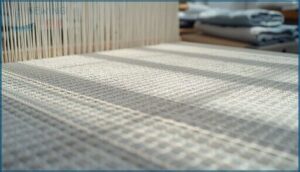
Think of plain weave as the blueprint for all weaving—simple, strong, and endlessly useful. You’ll spot this weave pattern in shirts and bedsheets, thanks to its balanced fabric structure and checkerboard look.
By adjusting weave density, thread count, weft tension, and yarn selection on the loom, you control fabric thickness and durability, making plain weave a foundation for countless projects.
Twill Weave
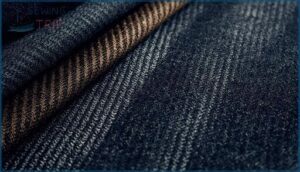
A diagonal weave gives twill fabric its signature slant, making it easy to spot and tough as nails. You’ll notice the diagonal lines, created as weft yarns cross over and under warp threads in twill patterns.
This weave pattern boosts textile strength, so twill weaves are perfect for denim, uniforms, and workwear—strong, flexible, and resistant to wear.
Satin Weave
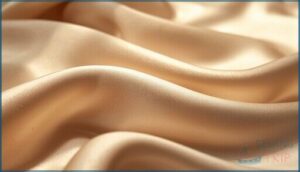
Satin weave is the luxury end of fabric weave characteristics — smooth, glossy, and built to impress. Its weave structure floats warp yarns over four or more weft threads, minimizing interlacings and creating that signature luster effect.
Fiber choices matter here: silk, polyester, and nylon amplify the surface finish beautifully. That’s why satin fabric dominates formalwear, bedding, and ribbon applications.
Common Variations (Basket, Oxford)
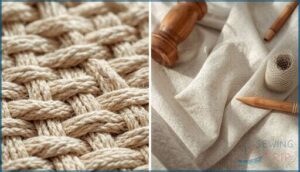
Texture plays a starring role in basket weave and Oxford fabric, two practical twists on basic textile patterns. Basket weave groups warp and weft yarns to create a checkerboard effect, adding bulk and breathability to the fabric texture.
Oxford, a modified basket weave, blends crispness with comfort—ideal for shirts and uniforms. Both weave structures offer durability beyond plain weave without twill’s complexity.
Specialized and Decorative Weaves

Once you move past the basics, weaving gets a lot more interesting. Specialized and decorative weaves bring in texture, pattern, and complexity that plain or twill weaves simply can’t match. Here are four worth knowing.
Jacquard Weave
Ever wondered how designers create bold, intricate patterns right in the fabric? Jacquard Weave is your answer. Using Jacquard Looms, each warp thread moves independently, letting you weave complex motifs.
This Textile Innovation boosts Fabric Trends in 2026, with high Weave Density and sustainable production. Jacquard Weave patterns keep garments structured and textured, perfect for statement pieces and modern Fabric Manufacturing.
Herringbone and Chevron
Looking for a fabric weave that stands out? Herringbone textiles use a broken V-shape, creating intricate geometric weaves with a classic touch, ideal for suiting and patterned fabrics.
Chevron flooring, meanwhile, forms bold, continuous zigzags that energize any space.
Both design elements rely on twill weave patterns, offering durability, visual interest, and versatility in modern interiors and textiles.
Pile Weave and Tapestry
Pile weave gives fabric structure a three-dimensional boost, creating Pile Fabric like velvet and corduroy. Weft Pile techniques make those signature ridges in corduroy, while Velvet Production relies on cutting loops for softness.
Tapestry Art, meanwhile, turns weaving into storytelling—using flexible weave patterns and thick yarns to craft flat, durable textiles.
Textile Innovation keeps both methods evolving in modern textile manufacturing.
Leno and Crêpe Weaves
Moving from textured tapestry to Leno Fabric, you’ll notice its net-like grid offers impressive Weave Stability and Fabric Breathability—perfect for mosquito nets or summer garments.
Crêpe Texture takes a different path, scattering light with its pebbly surface and springy drape.
Both leno weave and crêpe weave highlight Textile Innovation in fabric weaving methods and modern textile manufacturing processes.
Properties and Uses of Weave Patterns
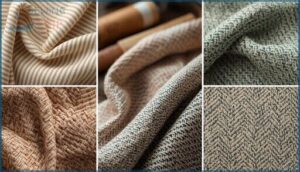
Every weaving pattern brings its own set of qualities to a fabric, shaping how it feels, looks, and lasts. If you know what each weave can do, you’ll make smarter choices for any project.
Understanding each weaving pattern unlocks smarter fabric choices, letting you shape how your project feels, looks, and performs
Let’s look at the key properties and uses of the most common weaving patterns.
Durability and Strength
Durability shapes how your fabric stands up to daily life. The weave pattern, yarn tensile strength, and weave density all play a role. For example:
- Plain weave boosts material durability with high thread count and tight structure.
- Twill weave excels in fabric abrasion resistance, perfect for jeans.
- Strong yarns and balanced densities improve overall fabric durability and strength.
Texture and Appearance
Fabric’s texture and appearance come alive through weave patterns and tactile elements. For instance, bouclé adds visual depth with looped surface texture, while matte velvet offers soft fabric drape and aesthetic appeal. Layering neutral textures—like linen blends or slub wovens—creates harmony. Each weave shapes how a fabric feels, catches light, and frames its overall look.
| Weave Pattern | Surface Texture | Visual Depth |
|---|---|---|
| Bouclé | Loop-rich | High |
| Matte Velvet | Smooth-matte | Moderate |
| Linen Blend | Slubbed | Subtle |
Common Applications by Weave Type
Just as texture shapes a fabric’s personality, the types of fabric weaves you choose—plain for shirts, twill for denim, or satin for gowns—directly impact fabric performance and end use.
Weave selection isn’t just about looks; it determines strength, breathability, and sustainability.
In textile innovation, material efficiency and sustainable manufacturing hinge on choosing the right fabric weave for each application.
Choosing The Right Weaving Pattern
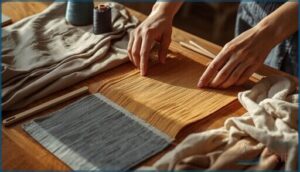
Picking the right weaving pattern means thinking about how you want your fabric to look, feel, and perform. There are a few key factors that can help guide your decision.
Let’s walk through what matters most when choosing a weave.
Fabric End Use Considerations
Imagine picking a fabric for a school uniform—would you want something flimsy or tough? Weave selection shapes fabric durability, texture and drape, and even care methods.
For high-use items like upholstery or activewear, performance testing ensures strength and abrasion resistance. Everyday clothing calls for comfort and easy care, while fabric weave applications influence how each material stands up to wear and washing.
Material and Yarn Type
Fiber selection is your secret weapon in weaving. Choosing natural textiles like linen or hemp for warp threads boosts strength, while organic cotton blends offer mold resistance and flexibility.
Yarn weight and yarn types affect fabric density and feel—think slubby cotton for texture or eco-friendly yarns for sustainability. Material science and yarn processing shape how threads behave in every pattern.
Cost, Production, and Sustainability Factors
Often, your weaving pattern shapes more than just the look—it steers Production Costs, Fabric Waste, and how Eco Friendly your fabric can be. Twill and Jacquard, for example, boost durability, cutting replacement rates.
Smart Loom Operation and Textile Recycling drive Sustainable Textile Production, while using Sustainable Materials and efficient Weaving Techniques lowers environmental impact and aids responsible Textile Manufacturing from start to finish.
Frequently Asked Questions (FAQs)
How do weaving patterns impact fabric care routines?
If you treated your fabric like a vintage vinyl record, you’d notice that fabric density and weave durability shape care methods—plain weaves need gentle cycles, while twill’s wrinkle resistance and breathability demand brushing, soaking, and careful textile maintenance.
What tools are needed for hand weaving different patterns?
For hand weaving, you’ll need the right loom, harnesses, heddles, shuttles, and tools for thread tensioning.
Good yarn management and weaving notions, like pick-up sticks and bobbins, help you master shuttle techniques and complex weaving patterns.
Can weaving patterns affect fabric colorfastness?
Yes, weaving patterns impact colorfastness. Tighter weaves, like plain or twill, limit dye penetration and boost color retention, while looser weaves allow more dye but risk faster fabric fading. Yarn interaction and weave density also influence results.
Are certain weaving patterns better for allergy sufferers?
Certain weaving patterns, like tight plain or percale weaves, create Allergy Friendly Fabrics by forming Dust Mite Barriers.
These Breathable Textiles balance hypoallergenic weave properties with comfort, making them Allergen Resistant Materials that offer breathability and easy fabric care.
How do weaving patterns influence fabric breathability?
Weave patterns shape fabric airflow and breathability by controlling how tightly threads interlace. For example, plain weave’s open structure boosts ventilation, while twill’s denser weave reduces airflow.
Breathability tests often consider weave density, thread count, and fabric structure.
Conclusion
Choosing a weaving pattern is like selecting the blueprint for a building—every thread’s path shapes the final structure’s strength and personality. With common weaving patterns explained, you now hold the keys to fabric’s hidden architecture, whether you’re picking sturdy denim or soft satin.
Each style fulfills a purpose, from durability to decorative flair. When you look at fabric, remember: its story is woven right in, waiting for you to read between the threads and make the right choice.