This site is supported by our readers. We may earn a commission, at no cost to you, if you purchase through links.
I once watched a friend unroll the same bolt of fabric three times, convinced the fabric store had made a mistake. “This feels nothing like what I ordered online,” she muttered, holding up what looked more like cardboard than cloth. She’d ordered cotton poplin expecting something soft and drapey, but got a crisp, structured fabric that could practically stand on its own.
This mix-up happens constantly because crisp vs flowy fabric isn’t just about feel—it’s about physics, fiber content, and how those properties transform your finished garment. A flowing silk charmeuse puddles around the body in soft folds, while cotton organdy holds its shape like architectural origami.
Understanding these differences means you’ll stop guessing at fabric counters and start matching material to vision with precision.
Table Of Contents
- Key Takeaways
- What is Crisp Vs Flowy Fabric?
- Technical Parameters of Fabric Drape
- Fiber Content and Fabric Construction
- Types of Flowy and Crisp Fabrics
- Choosing The Right Fabric for Garments
- Sewing and Handling Tips by Fabric Type
- Care, Maintenance, and Longevity
- Frequently Asked Questions (FAQs)
- Conclusion
Key Takeaways
- Crisp fabrics hold their shape with wide, angular folds and stand away from your body, while flowy fabrics drape in soft, rounded folds that follow your curves—and this distinction comes down to physics like drape coefficient, bending stiffness, and GSM rather than just personal preference.
- GSM (grams per square meter) directly predicts how fabric behaves: flowy materials typically sit under 150 GSM with drape coefficients below 40, while crisp fabrics climb above that with coefficients over 85, meaning you can choose the right drape before even touching the bolt.
- Fiber content and weave structure work together to determine drape—natural fibers like silk and viscose create flow, while cotton poplin’s plain weave locks yarns tight for structure, but blends let you balance performance by mixing the best properties of both worlds.
- Each fabric type demands completely different handling: flowy fabrics need prewashing to prevent 3-8% shrinkage, fine 60/8 needles, and stabilization tricks like tissue paper layering, while crisp weaves require precision cutting on hard surfaces, stay-stitching to prevent stretch, and pressing every seam before crossing it with another.
What is Crisp Vs Flowy Fabric?
You know that moment when you reach for fabric and it either holds its shape like it’s got a backbone, or it slips through your fingers like water? That’s the difference between crisp and flowy fabrics—and it’s way more than just a vibe check.
Understanding smooth versus textured fabric helps you predict how a material will drape, wrinkle, and perform before you even start cutting.
Crisp fabrics hold their shape with structure, while flowy fabrics slip through your fingers like liquid—and that difference defines everything
Let’s break down what sets these two apart, how they actually feel and move, and when you’d choose one over the other.
Defining Crisp and Flowy Fabrics
Understanding fabric drape starts with two camps: crisp and flowy. Crisp fabric holds its shape, forming broad, angular folds. Flowy fabric falls into many small, rounded folds that follow your body.
Drape Analysis reveals how cloth behaves when draped — from stiff organza to liquid viscose. Here’s your quick reference:
| Crisp Fabric | Flowy Fabric |
|---|---|
| Holds sharp creases | Forms soft, rounded folds |
| Stands away from body | Follows body curves |
| Cotton poplin, taffeta | Silk, rayon challis, lyocell |
GSM and Weave Structures determine whether fabric weight creates structure or Garment Movement. The relationship between fabric weight and drape is further explained in this fabric drape reference guide.
Key Differences in Texture and Drape
Touch and drape separate these two styles clearly. Run your hand across crisp cotton poplin—you’ll feel a cool, dry surface that springs back after folding.
Flowy rayon? It pools like liquid in your palm, soft and slightly slippery.
Here’s what changes on the body:
| Crisp Fabric | Flowy Fabric |
|---|---|
| Wide, angular folds | Narrow, rounded folds |
| Stands away from skin | Clings to body curves |
| Snaps back when crushed | Stays relaxed, wrinkled |
| Visible seam lines | Soft, continuous drape |
For a detailed exploration of what determines drape, see this guide on factors influencing fabric drape.
Common Uses for Each Fabric Type
Texture and drape directly influence garment purposes. Crisp poplin keeps your office shirt sharp through twelve-hour days, while flowy viscose makes summer dresses move with you. Occasion wear demands precision: taffeta for ball gowns that need volume, silk satin for bias-cut evening pieces.
| Fabric Type | Garment | Why It Works |
|---|---|---|
| Crisp Poplin | Button-downs | Holds collar shape |
| Flowy Rayon | Maxi Dresses | Soft body drape |
| Crisp Taffeta | Ball Gowns | Creates structure |
Seasonal choices follow naturally—crisp cotton for warm-weather tailoring, flowy chiffon for resort wear.
For lined pieces that need structure and breathability, selecting the best fabric for lined skirts ensures comfort across different climates and occasions.
Technical Parameters of Fabric Drape
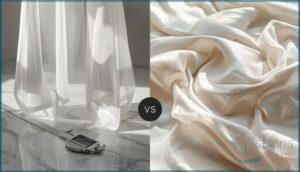
You don’t need to memorize textile engineering formulas to pick the right fabric, but a few key measurements will give you total control over your project.
These technical parameters explain exactly why one fabric pools like water while another stands at attention. Let’s break down the three specs that actually matter when you’re choosing between crisp and flowy.
GSM and GLM Explained
GSM calculation shows how many grams one square meter of fabric weighs, while GLM calculation measures grams per linear meter along the full roll width. Here’s the catch: a 200 GSM fabric at 1.5 meters wide yields 300 GLM.
Widths impact everything. Understanding fabric weight GSM GLM transforms how you assess drape and fabric properties.
Practical uses? You’ll predict flow before you even touch the material.
Drape Coefficient and Measurement
Drape coefficient reveals whether your fabric will collapse into soft folds or hold its shape like cardboard. On a 30 cm test specimen, flowy fabrics score below 40—think silk charmeuse pooling elegantly—while stiff organza climbs above 85.
- Very limp fabrics (drape coefficient below 30) create fluid, body-skimming silhouettes
- Mid-range fabrics (30–70) balance structure with movement for everyday wear
- Stiff fabrics (above 85) maintain crisp outlines and sculptural shapes
- Modern image-based measurement techniques capture fold height, peak width, and drape shape in seconds
Mechanical testing for fabric drape transforms guesswork into precision, letting you choose textiles that behave exactly as your design demands.
Bending Stiffness and Flexural Rigidity
Bending stiffness tells you whether your fabric will drape like water or stand like armor. A cantilever test measures how far fabric projects from a surface before bending under its own weight—lower values mean softer drape.
Flexural rigidity quantifies this resistance in mN·cm units. Plain weaves show higher stiffness than twills because interlacing points lock yarns tight. Fabric weight and GSM multiply that effect, turning delicate silk into structured taffeta.
Fiber Content and Fabric Construction
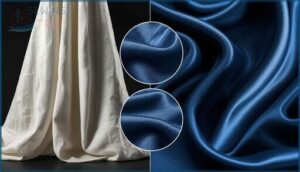
Here’s the truth: what a fabric is made of matters just as much as how it’s put together.
The fibers you start with—and the way they’re woven or knitted—dictate whether your fabric will hold its shape or flow like water. Let’s break down how fiber content and construction transform drape from stiff to soft.
Natural Vs Synthetic Fibers
Your fabric’s origin story shapes everything from how it feels to how it behaves on your body. Natural fibers like silk, viscose, and Tencel come from plants or animals, while polyester and other synthetics spring from petrochemicals.
This distinction drives drape, eco impact, and material science innovations in textile innovation today. Fiber sourcing and fabric blending let you balance performance with sustainability—choosing what truly matters for your project.
Weave and Knit Structures
Think of construction as your fabric’s skeleton—it dictates whether material collapses into soft folds or holds a sharp edge.
Knit patterns form interlocking loops that stretch and hug curves, creating fluid drape even at higher GSM. Weave types lock yarn at right angles: plain weaves feel crisp, satins flow like water.
Loop geometry, fabric density, and yarn twist all conspire to build either structure or swing.
Blends and Their Effects on Drape
Fiber mixing rewrites how a garment falls. A viscose-polyester blend wrinkles less than pure viscose, so your skirt keeps softer, flowing lines instead of collapsing into creases.
Blend ratios matter: 65 percent cotton, 35 percent polyester hangs crisper for uniforms, while reversing that ratio pulls the drape closer to your body. Tencel or modal blends deliver flowy fabric with better shape retention than single fibers alone.
Types of Flowy and Crisp Fabrics
You’ve got the technical stuff down—now let’s talk real fabrics. Some names you’ll recognize from your closet, others might sound like a fancy French menu.
We’re breaking down the heavyweights in both camps so you know exactly what you’re working with before you commit.
Popular Flowy Fabrics (Silk, Viscose, Lyocell)
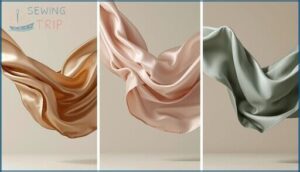
Your fabric lineup starts here: silk charmeuse, viscose, and Tencel lyocell dominate the flowy fabric arena. Each brings its own personality to the table, from silk blends that shimmer to lyocell textures that hold their shape longer than viscose. Understanding the fabric weave and fiber chemistry behind these drape champions helps you make smarter pattern choices.
- Silk charmeuse slides like liquid gold, catching light with every move you make
- Viscose drapes softly at half the price but demands gentle viscose care to survive
- Tencel lyocell keeps 85% of its strength when wet, outlasting viscose in daily wear
- Flowy patterns work best when you match the fiber’s natural movement to your design vision
Common Crisp Fabrics (Cotton Poplin, Organza)
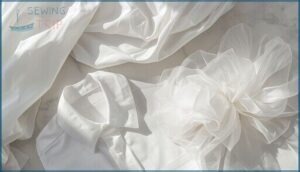
On the crisp side, you’ll find cotton poplin commanding attention. This plain-weave workhorse usually sits between 90 and 130 GSM, giving you that smooth, structured finish perfect for sharp shirt collars and fitted dresses.
Cotton blends add wrinkle resistance, while organza—woven from tightly twisted filaments—delivers stiffness with airiness. Organza uses span from bridal veils to voluminous evening wear, holding three-dimensional shapes that softer fabrics can’t touch.
Suitability for Different Projects
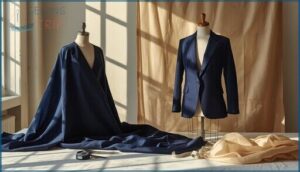
Knowing your options means nothing without smart project planning. Match crisp poplin to custom blazers needing structure—its 90-130 GSM weight holds lapels perfectly. Choose flowy viscose for maxi skirts requiring drape at 120 GSM.
Garment construction demands this precision: sewing techniques shift dramatically when you’re wrestling organza’s stiffness versus charmeuse’s slip. Garment design succeeds when textile choice reflects both fabric weight and your vision.
Choosing The Right Fabric for Garments
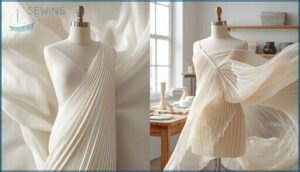
You’ve got the fabric knowledge down—now it’s time to put it to work. Choosing between crisp and flowy isn’t just about personal taste; it’s about matching the right drape to the garment you’re actually making.
Let’s break down how to pair fabric with style, comfort needs, and the occasions you’re dressing for.
Matching Fabric Drape to Garment Style
Your garment silhouette dictates drape analysis before you cut a single thread. Bias-cut slip dresses demand silk crepe’s fluid drape, while structured blazers need poplin’s crisp body to hold lapels sharp.
Here’s your fabric selection strategy:
- Flowy fabric (rayon challis, viscose) creates romantic tiers and cowl necks that cascade softly
- Mid-drape textiles (linen, twill) suit shirt dresses with gentle structure
- Crisp weaves (canvas, denim) deliver clean lines in boxy coats and tailored skirts
Comfort, Breathability, and Movement
Beyond silhouette, your fabric must work with your body. Breathability drives comfort—loose weaves and lightweight flowy fabrics between 90 and 150 GSM let airflow cool you down fast.
Viscose drapes beautifully but holds moisture, while cotton wicks sweat yet clings when damp. Add 2 to 8 percent spandex for movement ease; your handfeel test reveals if stretch lets you stride freely without fabric fighting back.
Occasion and Seasonal Considerations
At a summer wedding, you’ll reach for breezy chiffon or silk that catches ocean air—but swap to crisp taffeta for autumn galas where structure photographs beautifully under evening light.
- Formal events demand crisp weaves like organza or worsted wool that hold sharp lines through long ceremonies
- Summer dresses thrive in flowy fabric under 150 GSM; seasonal color palettes favor pastels on fluid drape
- Autumn layers pair structured blazers over drapey tops, balancing warmth with intentional garment types
Sewing and Handling Tips by Fabric Type
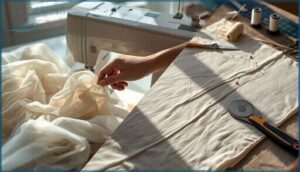
Working with different fabric types isn’t about following rigid rules—it’s about understanding how each material behaves under your hands and your machine.
Flowy fabrics will fight you if you rush them, while crisp fabrics demand precision from the first cut. Here’s how to handle both like you’ve been doing this for years, even if you haven’t.
Cutting and Prepping Flowy Fabrics
Prewashing steps aren’t optional—flowy fabrics like viscose and chiffon shrink three to eight percent on first wash, so you’ll skip heartbreak by washing before cutting.
Use fabric stabilization tricks: spray lightweight cloth with starch, sandwich it between tissue paper, or lay it over flannel for traction. Single-layer cutting with a sharp rotary cutter keeps grainline accuracy intact without distortion.
Needle, Thread, and Stitch Selection
A 60/8 needle won’t behave like a 100/16—and that gap defines your seam quality. Match needle size to fabric weight, thread weight to fiber content, and stitch length to drape goals so you preserve handfeel instead of fighting it.
- Flowy fabrics: Fine 60/8–70/10 needles, lightweight thread, 2.0 mm stitch length prevent puckering and tunneling.
- Crisp weaves: Universal 80/12 needles, all-purpose thread, 2.5 mm straight stitch support structure.
- Heavy layers: 100/16 denim needles, heavy thread, 3.0 mm length handle density without skipping stitches.
Managing Crisp Fabrics During Construction
Crisp fabrics demand precision cutting from the first cut. Lay fabric flat on a hard surface—padding distorts cotton poplin and organza. Use weights instead of pins to prevent drag marks.
Stay-stitch necklines before construction to block stretch. Press every seam before crossing it with another, trapping steam with a clapper for razor-sharp edges. Trim seam allowances in collars and cuffs so bulk disappears and corners turn cleanly.
Care, Maintenance, and Longevity

You didn’t spend hours choosing the perfect fabric just to watch it fall apart after one wash. The truth is, crisp fabrics and flowy fabrics need completely different care strategies to keep their character intact.
Here’s how to make your favorite pieces last season after season without losing that drape or structure you fell in love with.
Washing and Drying Recommendations
Your washing machine can be a fabric’s best friend or its worst enemy. Cold water protects dimensional stability and washfastness for both crisp cotton poplin and delicate flowy rayon—warm cycles cause shrinkage and limp drape.
Skip the dryer for fluid viscose; hang it instead. Tumble crisp weaves on low, then steam from the wrong side to refresh surface durability without crushing texture or fabric weight.
Preventing Distortion and Wear
Your garment’s shape can shift over time if you ignore key wear prevention steps. Lightweight fusible interfacing stabilizes necklines and cuffs, locking in dimensional stability so flowy viscose won’t sag.
Stay stitching curves before construction prevents distortion control failures. Reinforce high-stress zones—underarms, pockets—with double stitching or bar tacks to maintain fabric weight distribution and surface durability across every yarn count.
Storing Crisp and Flowy Fabrics Properly
After you’ve mastered preventing wear, you’ve got to nail fabric storage tips or all that work unravels. Closet organization matters—your hanging methods and folding techniques directly affect drape over time.
Here’s how garment protection works for different fabric weights:
- Hang lightweight flowy fabrics on padded hangers to preserve their natural drape and avoid hard creases.
- Fold heavy crisp textiles flat to prevent shoulder stretching from their own weight.
- Keep humidity between 30-50 percent in your closet to stop mold without overdrying natural fibers.
- Use breathable cotton garment bags instead of plastic to shield pieces from dust while allowing air circulation.
Think of storage as textile science in action—the right environment keeps your fabrics looking fresh for years.
Frequently Asked Questions (FAQs)
What kind of fabric is flowy?
Flowy fabric has a soft drape that moves freely with your body.
Think chiffon, viscose, or Tencel in lightweight weaves—usually under 150 GSM—that create graceful folds instead of stiff angles.
What fabrics to stay away from?
Some fabrics fight your body instead of moving with it.
Stay clear of non-breathable synthetics, heavy rigid fabrics, overly shiny materials, and static-prone weaves that trap heat, resist drape, and cling uncomfortably.
What is drapey fabric?
Drapey fabric hangs in soft, fluid folds close to your body instead of holding a stiff shape.
Think silk charmeuse or viscose chiffon—materials that bend, flow, and move with you rather than standing away rigidly.
Can you dye crisp fabrics at home?
Good news: dyeing at home is in the bag. Cotton poplin and linen accept fiber reactive dyes beautifully with proper fabric preparation, salt addition, and continuous stirring for even color fastness.
Do flowy fabrics wrinkle more than crisp?
Yes, usually. Lightweight fabrics crease easily under everyday movement because their low bending stiffness folds quickly.
Heavier, structured textiles resist wrinkles better—their weight and density pull out minor creases.
Which fabric type is better for beginners?
Like choosing between learning to drive a sports car versus a sturdy sedan, crisp cottons ease Beginner Projects thanks to predictable Fabric Ease.
Chiffon, silk charmeuse, and viscose bring Sewing Challenges—slippery drape tests skills you haven’t built yet.
How does humidity affect fabric drape behavior?
Humidity transforms fabric behavior through moisture regain. Natural fibers like cotton soften 20-30% in rigidity at high humidity, while synthetics stay crisp.
This material science shift dramatically changes drape, creating flowy movement from structured forms.
Are crisp fabrics more expensive than flowy?
It’s a toss-up, honestly. Cotton poplin costs $8 to $16 per yard, while viscose rayon runs $16 to $24 per meter—production efficiency and material sourcing flip the script, not fabric drape alone.
Conclusion
Pick your fabric like you’d choose a steed for battle—crisp vs flowy fabric determines whether your garment holds its ground or moves with graceful rebellion.
You’ve got the drape coefficients, the fiber breakdowns, the sewing hacks. Now stop second-guessing at the cutting table. Run your fingers across that bolt, check the GSM, visualize how it’ll move on your body. You’re not guessing anymore. You’re commanding the material to match your vision.
- https://www.sewinggem.com.au/pages/fabric-descriptors-explained
- https://snsilk.com/what-is-fabric-drape/
- https://www.seamwork.com/fabric-guides/how-to-buy-fabric-online-know-your-terms-weight-and-drape
- https://www.fibre2fashion.com/industry-article/4650/factors-affecting-draping-quality-of-fabric-and-its-measurement
- https://guthrie-ghani.co.uk/blogs/blog/understanding-slippery-floaty-fabrics-for-dressmaking