This site is supported by our readers. We may earn a commission, at no cost to you, if you purchase through links.
Your couch cushions start sagging after eighteen months, the fabric on your dining chairs pills like a cheap sweater, and that gorgeous ottoman you reupholstered last spring already shows wear patterns. Sound familiar? Most upholstery failures trace back to one critical mistake—choosing fabric that looks good in the bolt but can’t handle real life.
The difference between durable fabric for upholstery projects and decorative yardage isn’t just thread count or price per yard. It’s abrasion ratings, fiber chemistry, and weave structures that determine whether your work lasts two years or twenty.
From solution-dyed synthetics that laugh at red wine spills to natural fibers that breathe and age gracefully, the right fabric choice sets you up for success before you fire up the staple gun.
Table Of Contents
- Key Takeaways
- Key Qualities of Durable Upholstery Fabric
- Comparing Natural Vs. Synthetic Fabrics
- Factors for Choosing Upholstery Fabric
- Top 7 Durable Fabrics for Upholstery Projects
- Maintenance Tips for Long-Lasting Upholstery
- 2026 Upholstery Fabric Trends and Innovations
- Frequently Asked Questions (FAQs)
- Conclusion
Key Takeaways
- Durability comes down to measurable specs like abrasion ratings (aim for 25,000-30,000+ double rubs for high-traffic areas), not just how the fabric looks on the bolt—solution-dyed synthetics like nylon and olefin outperform natural fibers in stain resistance and longevity.
- Natural fabrics like cotton and linen offer breathability and classic appeal but fade faster under UV exposure and require more maintenance, while leather delivers 25+ years of use with proper conditioning and exceeds 100,000 double rubs.
- Synthetic upholstery fabrics (polyester, nylon, olefin) provide superior stain resistance, faster drying times, and built-in moisture barriers that make them ideal for families with kids and pets who need furniture that survives real-world chaos.
- Regular maintenance—weekly vacuuming, immediate blotting of spills, and professional cleaning every 6-12 months for high-traffic pieces—doubles your fabric’s lifespan regardless of whether you choose natural or synthetic materials.
Key Qualities of Durable Upholstery Fabric
You can’t pick a durable upholstery fabric by looks alone—the real story is in the technical specs that determine how it holds up under daily use. The difference between a sofa that looks worn out in two years and one that stays sharp for a decade comes down to a handful of measurable qualities.
Understanding fabric characteristics for upholstery projects helps you decode those specs and make smarter choices based on weight, weave, and abrasion resistance.
Durable upholstery isn’t about looks—it’s about the measurable specs that separate a two-year sofa from a decade-long one
Here’s what you need to check before you commit to any fabric.
Abrasion and Rub Count Ratings
Rub count tells you exactly how much friction a fabric can handle before it starts looking shabby. The Martindale test rubs your upholstery in a figure-eight pattern—15,000 to 20,000 rubs work for everyday sofas, while 25,000 to 30,000 suit busy family rooms.
High-traffic spaces need 30,000-plus to avoid premature wear, shiny spots, and fraying. Understanding how double rub count measures fabric abrasion resistance standards can help you select upholstery built to last.
Stain and Water Resistance
Water repellency and stain resistance separate decent upholstery from the stuff that survives real life. Olefin fibers naturally shrug off moisture—liquids bead up instead of soaking in, giving you time to blot before damage sets in.
Waterproof canvas with PVC backing blocks spills completely, while fabric treatment options like silicone-based chemical guards add moisture protection without PFAS. Solution-dyed acrylic locks in colorfastness and durability for patios.
For additional guidance on choosing a fabric protector, consider factors like fabric compatibility, safety, and long-term maintenance effectiveness.
Pilling and Fade Resistance
Pilling—those fuzzy little balls—happens when friction loosens fiber ends. Tight weaves and solution-dyed acrylic or olefin lock fibers down, so your cushions stay smooth through years of use. Martindale pilling tests rate fabrics 1 to 5; aim for grade 4 or higher.
For fade resistance:
- Solution-dyed fibers embed pigment throughout—outdoor fabrics often give you five to ten years of vivid color
- AATCC 16 lightfastness ratings near 5 mean minimal fading near windows
- UV-stable weaves keep seat backs from bleaching out in sunny rooms
Ease of Cleaning and Maintenance
Cleanability matters as much as toughness—check the tag for cleaning codes W, S, WS, or X before you commit. Performance upholstery fabrics repel spills right off the surface, microfiber wipes clean with gentle soap, and some solution-dyed olefin lets you use diluted bleach for stain removal. Vacuum monthly, blot fast, and your fabric maintenance stays simple.
| Cleaning Code | Allowed Cleaner | Typical Fabric Examples |
|---|---|---|
| W | Water-based foam or detergent | Cotton, microfiber, polyester blends |
| S | Solvent-based dry cleaner | Silk, acetate, some velvet |
| WS | Either water or solvent | Many synthetics, treated cotton |
| X | Vacuum or brush only | Natural silks, delicate weaves |
Upholstery care gets easier when you match your lifestyle to stain resistance and fabric protection—weekly vacuuming prevents wear and tear, and quick blot work stops most disasters cold.
Comparing Natural Vs. Synthetic Fabrics
Natural fibers like cotton and leather bring breathability and classic appeal, but they won’t shrug off spills the way synthetics do.
Polyester, nylon, and olefin offer exceptional stain resistance and durability—perfect when you need furniture that can take a beating.
Here’s how each type stacks up for real-world use.
Cotton, Linen, and Leather Durability
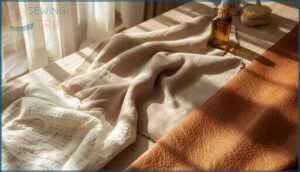
Natural upholstery fabric comes down to three contenders—cotton, linen, and leather—each with trade-offs you’ll want to understand before you commit. Here’s how they stack up in terms of durability:
| Material | Durability Lifespan |
|---|---|
| Cotton | 5–10 years (high-traffic homes) |
| Linen | 7–12 years (minimal sun exposure) |
| Leather | 25+ years (with regular conditioning) |
| Cotton Twill | Up to 10 years (treated, indoor-outdoor) |
Cotton weave fabrics endure 15,000 to 30,000 double rubs in heavy residential use, while linen strength hits 20,000 to 50,000 rubs depending on the blend. Leather durability exceeds 100,000 rubs thanks to its dense fiber structure.
Cotton resists wear and pilling but fades after 20 to 40 hours of direct UV exposure—so you’ll need window treatments if your sofa faces west. Linen, on the other hand, gains 30 percent higher tensile strength than cotton and actually gets stronger when wet. However, it wrinkles easily and rates only 3 to 4 on lightfastness scales. Fabric tear becomes a real concern with untreated linen after 50 hours of UV light, which drops its strength by 20 percent.
Leather finish options matter too—top-grade aniline withstands over 250,000 double rubs in commercial settings and develops a patina instead of fading, maintaining color integrity for a decade or more.
Similar protective strategies apply to fabric upholstery, where selecting durable, colorfast materials helps prevent sun damage and premature wear.
Material longevity comes down to maintenance: leather needs conditioning every 6 to 12 months, cotton benefits from vacuuming and spot cleaning every 12 to 18 months, and linen responds best to gentle dry cleaning annually to avoid shrinkage.
Polyester, Nylon, and Olefin Strengths
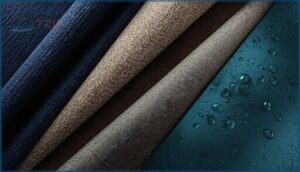
Synthetic fabrics deliver measurable fiber durability you can count on for years. Nylon leads in tensile strength—stretching 33 percent before breaking and enduring over 80,000 double rubs on armrests. Polyester holds shape better, resists UV fading, and dries faster after spills. Olefin’s nonporous surface beads up liquids, resists mildew, and maintains color through solution dyeing—perfect for damp spaces.
| Synthetic Fabric | Key Strength Advantage |
|---|---|
| Nylon | Exceptional abrasion resistance (80,000+ rubs) |
| Polyester | Dimensional stability + UV resistance |
| Olefin | Inherent stain + moisture resistance |
Pros and Cons for High-Traffic Use
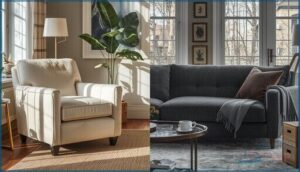
Choosing upholstery for high-traffic areas means weighing durability tradeoffs against comfort and cost. Performance fabrics rated 30,000+ double rubs handle daily wear in family rooms, while commercial spaces need 50,000+ to resist constant friction. Stain resistance speeds cleanup, but tighter weaves can feel less cozy. Here’s how fabric testing reveals what works where traffic patterns hit hardest:
| Factor | Natural Fabrics | Synthetic Fabrics |
|---|---|---|
| Abrasion resistance in high-traffic areas | Moderate; leather excels, cotton fades faster | Excellent; nylon and olefin endure 80,000+ rubs |
| Stain cleanup and maintenance | Requires more care; professional cleaning often needed | Water-cleanable, some bleach-safe for fast spot treatment |
| Comfort vs. durability balance | Softer hand feel but shows wear and tear sooner | Firmer weave trades plush for longevity in busy spaces |
| Upfront cost vs. longevity | Lower initial price, but replacement comes quicker | Higher per-yard cost pays off through extended use cycles |
| Best high traffic solutions | Leather for durability; cotton blends for breathability | Microfiber, polyester, olefin for durable upholstery fabrics |
Factors for Choosing Upholstery Fabric
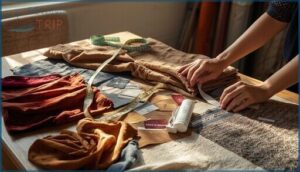
You can’t pick a fabric on gut instinct alone—numbers and specs matter just as much as the pattern you love. Weight, colorfastness, and where you’ll actually use the piece all influence how long your upholstery holds up.
Here’s what to keep in mind before you commit to yardage.
Fabric Weight and GSM Considerations
GSM Measurement tells you the grams of Textile Material Guide per square meter—your quick handle on Fabric Density and Fabric Thickness.
Most Upholstery Fabric Selection lands between 250 and 400 GSM for good Durability. Weight Conversion helps too: 340 GSM equals roughly 10 ounces per square yard.
Higher Fabric Weight generally means better Durability Testing results and tougher Fabric Durability and Maintenance over years of use.
Colorfastness and UV Protection
Lightfastness Ratings tell you how long your Durable Upholstery Fabrics keep their original color under UV Resistance testing—Blue Wool Scale ratings of 4 to 5 work for most indoor spots, while outdoor pieces need 6 to 7 for real Sun Protection and Fade Resistance.
- AATCC 16 Fade Testing measures Color Retention after controlled light exposure
- Solution-dyed fibers lock pigment inside for enhanced Colorfastness
- Indoor upholstery manages 40-hour UV Protection tests just fine
- Outdoor fabrics survive 1,000-plus hours for lasting Fabric Durability and Maintenance
Suitability for Indoor Vs. Outdoor Projects
Indoor Comfort leans on softer, breathable weaves—cotton blends, velvets, high-rub microfibers—while Outdoor Durability demands solution-dyed synthetics like acrylic or olefin that laugh off rain and UV.
Outdoor Furniture fabrics feel stiffer but add Weather Resistance and Water Resistance you won’t get from typical Indoor Decor materials. Material Comparison shows outdoor picks work indoors in splash zones, but Fabric Selection for a plush sofa? Stick with indoor-rated textiles every time.
Family, Pet, and Commercial Needs
Your couch’s worst enemies aren’t just design trends—kids, pets, and commercial wear destroy upholstery fast. Here’s what you need:
- Kid-Proof Fabrics demand 15,000+ rub ratings and protective finishes that bead spills for quick cleanup.
- Pet Claw Resistance lives in tight-weave microfiber and Petfriendly Fabrics like Crypton that resist snags.
- Contract Grade upholstery hits 30,000–100,000 double rubs for Hightraffic Areas.
- Hygiene Features with antimicrobial treatments block 94% of bacteria—critical in commercial spaces.
Synthetic Upholstery Fabric wins for Durable Upholstery Fabrics that handle real life.
Top 7 Durable Fabrics for Upholstery Projects
You’ve narrowed down your needs—now it’s time to match them to actual fabric. The seven options below cover everything from budget-friendly polyester blends to waterproof outdoor performers, each built to handle different levels of wear. Pick the one that fits your project’s demands, then move forward with confidence.
1. Bohemian Upholstery Fabric
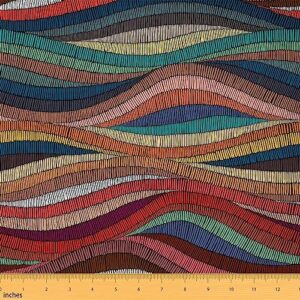
Bohemian upholstery fabric brings eclectic patterns—ikat, suzani, kilim—to your furniture, and it’s built to handle everyday use when you choose the right construction. Look for polyester or olefin blends that push tens of thousands of double rubs on abrasion tests, making them solid for high-traffic seating.
These fabrics hide pet hair and minor stains thanks to busy, multi-color motifs, and jacquard weaves deliver the heft you need for structured pieces like sofas and ottomans without sacrificing that layered, collected boho vibe.
| Best For | DIY enthusiasts and crafters looking for affordable, eye-catching fabric to create home décor items like pillow covers, tote bags, and upholstery accents with bold bohemian patterns. |
|---|---|
| Material | Polyester |
| Width | 59 inches |
| Item Form | Cut by yard |
| Washable | Machine washable |
| Indoor/Outdoor Use | Both |
| Waterproof | Yes |
| Additional Features |
|
- Waterproof and machine washable, making it practical for everyday items that need frequent cleaning
- Versatile for multiple projects—works for everything from quilts to upholstery to craft accessories
- Large 36″ x 59″ cut gives you plenty of material to work with at a budget-friendly price point
- Frays easily when cut, so you’ll need to finish edges with zigzag stitching or binding to prevent unraveling
- Fabric isn’t very soft, which limits its appeal for cozy projects like quilts or throw blankets
- Some pieces have a visible dark line running across the width that can disrupt pattern placement
2. TinaKim Faux Linen Upholstery Fabric
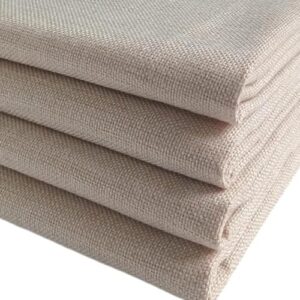
TinaKim faux linen upholstery fabric gives you the slubbed, textured look of natural linen without the shrinking and stretching headaches—100 percent polyester holds its shape on chairs and sofas.
At 380 gsm, it’s thick enough to hide lumpy foam and resist fraying when you staple it during DIY reupholstery. The tight canvas weave withstands regular sitting friction, and the beige neutral blends with most palettes.
It’s sold in cuts from one to three yards, so you can tackle single dining chairs or bigger couch cushions without seam chaos.
| Best For | DIYers reupholstering dining chairs, barstools, or couch cushions who want a linen look that won’t shrink or fray under staple guns. |
|---|---|
| Material | Polyester |
| Width | Not specified |
| Item Form | Cut by yard |
| Washable | Easy to clean |
| Indoor/Outdoor Use | Indoor |
| Waterproof | No |
| Additional Features |
|
- Thick 380 gsm fabric hides foam bumps and resists fraying when you staple it during projects
- Polyester holds its shape without the shrinking and stretching issues of real linen
- Available in 24 colors and multiple yardage cuts so you can match your decor and buy exactly what you need
- Durable texture feels stiff, so it’s not ideal for throw pillows or soft seating where you want a cozy feel
- Online colors may not match what arrives, making it tricky to coordinate with existing furniture
- Some customers report receiving incomplete orders or less yardage than purchased
3. GeeComfy Waterproof Canvas Fabric
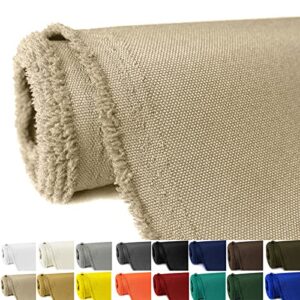
GeeComfy waterproof canvas fabric delivers what its name promises—a 600D polyester weave with a coating that beads water like a freshly waxed car.
At 220 gsm and 58 inches wide, you get enough heft and coverage for outdoor cushions, boat seats, or mudroom benches that see rain and mud. The fabric resists scratching, dries fast after a downpour, and holds color through 900 hours of UV testing.
Spot-clean spills before they soak in, and you’ll keep khaki or any of the sixteen colors looking crisp season after season.
| Best For | DIYers and home sewers who need affordable, water-resistant fabric for outdoor cushions, boat upholstery, or weatherproof bags and gear. |
|---|---|
| Material | Polyester |
| Width | 58 inches |
| Item Form | Cut by yard |
| Washable | Spot clean |
| Indoor/Outdoor Use | Both |
| Waterproof | Water-resistant |
| Additional Features |
|
- Water-repellent coating sheds rain and spills effectively, making cleanup quick with just a damp cloth
- Wide 58-inch width and 220 gsm weight provide good coverage and durability for furniture and marine projects
- Available in 16 colors with reactive dyeing that holds up through extended UV exposure
- Polyester material can feel plasticky and may arrive with a chemical odor that needs airing out
- Not fade-proof despite UV resistance, so prolonged sun exposure will eventually dull colors
- Some customers report inconsistent cutting and quality control issues with rolled fabric
4. Erosebridal Peony Floral Fabric
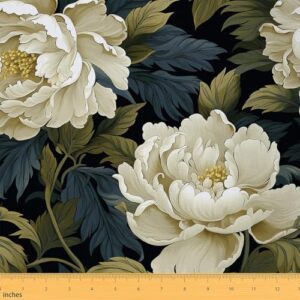
Erosebridal peony floral fabric brings romantic style to indoor upholstery without sacrificing everyday toughness. The 100 percent polyester microfiber feels soft—like brushed cotton—but resists pilling and tearing better than most cotton prints at similar weights.
You’ll see large watercolor blooms in beige, blue, or red palettes that suit farmhouse and cottage décor. Machine-wash slipcovers on cold, tumble-dry low, and skip the iron.
Use it for accent chairs, window seats, and bedroom benches where moderate traffic meets a need for personality.
| Best For | Crafters and DIYers looking for affordable, easy-care fabric to make outdoor cushions, tote bags, or home décor projects with bold floral prints. |
|---|---|
| Material | Polyester |
| Width | 59 inches |
| Item Form | Cut by yard |
| Washable | Machine washable |
| Indoor/Outdoor Use | Both |
| Waterproof | Yes |
| Additional Features |
|
- Waterproof and fade-resistant polyester holds up well outdoors and survives frequent washing
- Wide 59″ width and machine-washable design make it practical for large projects like tablecloths and cushion covers
- Versatile for both indoor and outdoor crafts, from upholstery to artificial flowers
- Pattern repeat has distinct breaks, so it won’t work well for projects needing continuous large-scale designs
- Fabric feels smooth and shiny rather than textured, which may not suit every aesthetic
- At only 1 yard per quantity (36″ x 59″), you’ll need to order multiple pieces for bigger projects
5. Feelyou Waterproof Outdoor Upholstery Fabric
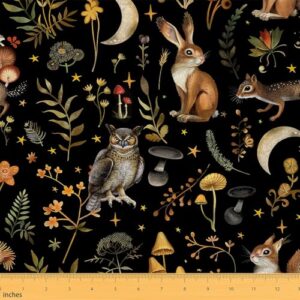
This tightly woven polyester prints bold florals, bows, and botanicals across waterproof upholstery fabric sold by the yard at 58 inches wide. Feelyou’s coating beads up spills on patio cushions and poolside seating—ideal when rain shows up unannounced or kids splash near furniture.
Bright colors resist fading for at least one season outdoors, and the synthetic weave dries faster than cotton when soaked. Spot-clean with mild soap and lukewarm water, air-dry completely, then store cushions in shade during winter to extend print life and keep that waterproof finish working.
| Best For | DIYers and homeowners looking for affordable, decorative outdoor fabric for light-duty projects like patio cushions, throw pillows, or poolside seating that won’t be exposed to extreme weather. |
|---|---|
| Material | Polyester |
| Width | 58 inches |
| Item Form | Cut by yard |
| Washable | Machine washable |
| Indoor/Outdoor Use | Both |
| Waterproof | Yes |
| Additional Features |
|
- Wide 58-inch width gives you plenty of material per yard for larger cushions and projects
- 3D printing creates vibrant, detailed patterns that resist fading through at least one outdoor season
- Dries quickly after rain or spills, and cleans up easily with a damp cloth or machine wash
- Not truly waterproof despite claims—some buyers found moisture seeps through over time
- White backing shows through if fabric gets punctured, rubbed hard, or starts to wear
- Print quality can be inconsistent, with some patterns missing details or showing imperfections
6. Linen Blue Floral Upholstery Fabric
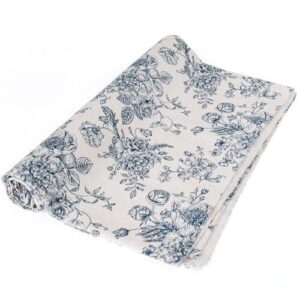
This 60-inch-wide linen fabric prints soft blue florals on a natural cream ground—perfect for statement chairs and benches in bedrooms or dining rooms. LOVOUS pre-cuts each order into 2-yard pieces, so plan seam placement before you buy multiple lengths.
Linen wrinkles easily and soaks up spills faster than synthetic upholstery, which makes it better suited for low-traffic accent pieces than family-room sofas. Spot-clean with mild detergent, blot thoroughly, then air-dry out of direct sun to keep those blue blooms looking crisp.
| Best For | Crafters and DIYers who want to upholster accent chairs, make decorative pillows, or sew curtains with a soft floral pattern—just keep it away from high-traffic areas. |
|---|---|
| Material | Linen |
| Width | 60-62 inches |
| Item Form | Cut by yard |
| Washable | Washable |
| Indoor/Outdoor Use | Indoor |
| Waterproof | No |
| Additional Features |
|
- Natural linen feels soft and breathable, plus it’s washable and reusable for long-term projects
- 60-62 inch width gives you plenty of fabric to work with for furniture or large home decor items
- Pre-cut 2-yard pieces make it easy to handle and store without dealing with bulky rolls
- Actual color often looks off-white or pale blue instead of the vibrant blue shown in photos
- Linen wrinkles easily and absorbs stains quickly, so it’s not ideal for sofas or high-use furniture
- Multiple orders come as separate 2-yard cuts instead of one continuous piece, which limits your layout options
7. Feelyou Orange Floral Upholstery Fabric
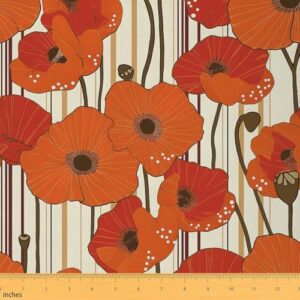
Feelyou’s 58-inch orange floral polyester combines waterproof performance with a tight weave that resists snagging—so you can tackle kitchen chairs, playroom benches, or covered patio cushions without worrying about every spill.
The cheerful floral-and-stripe print brings warmth to neutral rooms, and the medium weight holds its shape on simple slipcovers or throw pillows.
Wipe liquid spills with a damp cloth, vacuum regularly, and keep it out of harsh direct sun to avoid fading that orange glow over time.
| Best For | DIYers and home decorators who want a cheerful, waterproof fabric for indoor furniture or covered outdoor projects like patio cushions and playroom seating. |
|---|---|
| Material | Polyester |
| Width | 58 inches |
| Item Form | Cut by yard |
| Washable | Machine washable |
| Indoor/Outdoor Use | Both |
| Waterproof | Yes |
| Additional Features |
|
- Waterproof polyester wipes clean easily after spills, making it practical for high-traffic areas
- 58-inch width gives you plenty of coverage for larger projects without piecing fabric together
- Bright orange floral print adds warmth and personality to neutral spaces
- Ironing can fade the color, especially delicate tones, so you’ll need to steam or press carefully
- Each yard is cut separately rather than as continuous yardage if you order multiple quantities
- Not ideal for full sun exposure since the orange may lose vibrancy over time
Maintenance Tips for Long-Lasting Upholstery
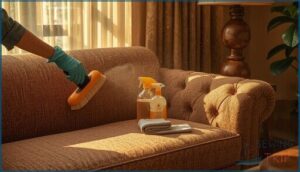
You’ve picked the right fabric—now you need to keep it looking sharp for years. Even the toughest upholstery won’t survive neglect, sun damage, or mystery stains from last Tuesday’s dinner.
Here’s how to protect your investment with three straightforward maintenance strategies.
Regular Cleaning and Spot Treatment
You’ll stretch the life of your upholstery by tackling spills within minutes—blot, don’t rub, so you lift the stain instead of grinding it in. Vacuum weekly to remove abrasive grit before it wears down fibers, and match your spot treatment to the fabric’s cleaning code. For water-safe weaves, a drop of mild dish soap works wonders; solvent-based cleaners handle the rest.
Applying fabric protection like Scotchgard Fabric and Upholstery Protector after deep cleaning adds an extra shield against future stains and keeps high-traffic pieces looking newer, longer—maintenance tips that save you from early re-upholstery headaches.
| Cleaning Method | Best For | Key Tip |
|---|---|---|
| Blotting with damp cloth | Fresh spills on W or WS fabrics | Press down—never rub outward |
| Solvent-based cleaner | S-coded upholstery (silk, acetate) | Test on hidden seam first |
| Baking soda + vacuum | Odors, surface oils | Let sit 15–30 min before vacuuming |
Protecting Against Sun and Spills
Sun exposure and liquid spills are the two biggest threats to upholstery durability—protect against both and you’ll double your fabric’s lifespan. Choose solution-dyed acrylic or polyester with UV protection for areas near windows, then boost colorfastness with sunscreen finishes or multipurpose fabric protectors.
Water repellent treatments create a beading surface that improves stain resistance and spill prevention, so quick blotting manages accidents before they become permanent damage.
When to Use Professional Cleaning
Even durable fabrics with high stain resistance need professional cleaning when stubborn stains or lingering odors survive blotting and home treatment.
Delicate fabrics marked with cleaning code X, oil-based spills on light upholstery, and high-traffic pieces in homes with pets usually benefit from hot water extraction every 6 to 12 months—professionals reach deep soil that vacuuming can’t touch.
2026 Upholstery Fabric Trends and Innovations
You don’t have to sacrifice looks for toughness anymore—2026 upholstery fabrics are bringing serious performance upgrades without the clinical vibe.
Manufacturers are doubling down on colorfast tech, sustainable materials, and stain-blocking innovations that actually work in real homes.
Here’s what’s shaking up the upholstery world this year.
Solution-Dyed and Reactive Printed Fabrics
Two dyeing processes dominate 2026 upholstery fabric innovation—solution-dyed and reactive printing. Each delivers serious colorfastness, fade resistance, and durability in different ways:
- Solution-dyed polyester locks pigment into the fiber during extrusion, so the color runs through the entire filament instead of sitting on the surface
- Reactive printing bonds dye chemically to cotton, creating wash-resistant patterns with impressive design flexibility
- Solution-dyed fabrics tolerate stronger cleaning solutions, including diluted bleach on some lines
- Reactive printed upholstery keeps soft hand-feel after repeated washes
Eco-Friendly and Sustainable Options
Sustainability now drives many upholstery choices—look for recycled polyester spun from plastic bottles, organic cotton grown without synthetic pesticides, or TENCEL lyocell processed in closed-loop systems that reclaim solvents.
OEKO-TEX and GOTS certifications confirm you’re avoiding harmful chemicals, while natural fibers like hemp and linen break down faster at end-of-life than fossil-fuel synthetics, supporting circular design and green manufacturing.
Performance Fabrics for Modern Homes
Performance fabrics solve real-world problems—spills bead up instead of soaking through, stains wipe off with water-based cleaners, and built-in moisture barriers protect foam cores from odors. You’ll find Crypton and similar textiles rated at 30,000 double rubs or higher, combining hospital-tough durability with soft hand and on-trend designs that let busy families stop choosing between style and survival.
- Crypton and high-abrasion synthetics integrate stain resistance into every fiber, so red wine and muddy paws clean up fast
- Many W- or WS-coded textiles let you spot-clean with household water-based products instead of calling professionals
- Performance velvet and coated polyester can hit 50,000–200,000 Martindale cycles for sectionals that survive years of daily use
- Indoor–outdoor fabrics unify sunrooms and patios with UV protection and fade resistance built into solution-dyed yarns
- Odor-blocking technologies and moisture barriers keep sofas fresh in pet-heavy homes without constant deep cleaning
Frequently Asked Questions (FAQs)
What is the most durable upholstery fabric?
Leather usually wins the durability race—a quality hide can outlast synthetic upholstery fabrics for decades with basic conditioning.
But if you need washable fabric, tightly woven polyester or olefin with 25,000+ double rubs delivers serious fabric longevity.
Which fabric is the most hardwearing?
Nylon tops the hardwearing chart—it resists crushing and retains appearance better than most synthetics, making it ideal for high-traffic zones where fabric durability and abrasion resistance are non-negotiable.
How do I estimate yardage for my furniture piece?
Don’t fly blind—measure every surface on your furniture piece, account for fabric width and pattern repeats, then consult yardage charts at the fabric store and add a safety margin for reupholstering success.
Can upholstery fabric be used for throw pillows?
Yes—upholstery fabric works beautifully for throw pillows because it’s built to handle friction and daily use.
You’ll get excellent durability, stain resistance, and a wide range of decorative fabric options that outlast standard pillow materials.
What thread type works best with heavy fabrics?
You might think all-purpose thread works fine—it doesn’t. Heavy fabrics like canvas and upholstery need bonded nylon or Tex 40–135 polyester thread for strength, matched with larger needle sizes so seams survive stress and friction.
Does fabric direction affect durability or appearance?
Fabric direction shapes both durability and appearance. Warp strength resists daily compression, while bias cutting stretches and sags faster.
Pile direction shifts color perception, and nap consistency unifies the look across every upholstered surface.
Should I pre-wash upholstery fabric before sewing?
Pre-wash benefits include shrinkage control and dye removal, but check care codes first.
Natural fibers usually need it, while synthetics and performance fabrics with protective finishes can lose durability if washed.
Conclusion
Here’s the irony—after reading seven thousand words about durable fabric for upholstery projects, you’ll still second-guess yourself at the fabric store. That’s normal. The difference now? You know what rub count actually means, why polyester outperforms linen in kitchens, and which fabrics laugh at your dog’s muddy paws.
Check the bolt end for specs, trust the numbers over the salesperson’s pitch, and your next project won’t need a redo in eighteen months.
- https://fabric-fabric.com/blog/best-upholstery-fabrics-2025-comparison
- https://procareofnashville.com/everything-you-need-to-know-about-performance-fabrics/
- https://vocal.media/education/the-best-upholstery-fabrics-of-2025-comfort-durability-and-style
- https://fiberseal.com/2025/12/19/fabric-trends/
- https://revolutionfabrics.com/blogs/gotcha-covered/understanding-double-rubs-the-key-to-durable-upholstery-fabric