This site is supported by our readers. We may earn a commission, at no cost to you, if you purchase through links.
Your first sewing project doesn’t need perfect stitches—it just needs to hold together. That’s the beauty of learning to sew: you can practice basic stitches while making things you’ll actually use, from scrunchies to pillow covers.
Most beginners think they need to master every stitch before starting a project, but the opposite is true. The best way to learn running stitches, backstitches, and blanket stitches is to work them into simple makes that give you instant results.
With the right starter projects, you’ll build muscle memory and confidence at the same time, turning wobbly stitches into neat, even rows faster than you’d expect.
Table Of Contents
Key Takeaways
- You will master basic stitches faster by practicing them through real beginner projects, such as scrunchies, pillow covers, and drawstring bags, rather than drilling techniques in isolation.
- Starting with forgiving fabrics like cotton and stable weaves lets you build muscle memory without fighting tricky materials that shift or pucker.
- Practice swatches are your secret weapon—they let you test tension and stitches on scraps before tackling actual projects, saving fabric and accelerating your learning curve.
- Most beginner mistakes stem from tension issues and poor threading, so always rethread completely and test on scraps before sewing your real piece.
Choosing Easy Projects to Learn Stitches
You don’t need years of experience to start sewing—you just need the right projects. When you’re learning stitches, the best way forward is choosing simple, forgiving projects that build your confidence instead of frustrating you.
Start with beginner embroidery stitch projects that let you practice without pressure while creating something you’ll actually want to keep.
Start sewing with simple, forgiving projects that build confidence—not years of experience
Let’s break down what makes a project beginner-friendly, what tools you actually need, and how to pick something you’ll finish and feel proud of.
What Makes a Project Beginner-Friendly
A beginner-friendly project keeps things simple with two to three clear steps and under 30 minutes of sewing time. You’ll want tutorials with numbered instructions and photos showing each stitch.
Look for projects using stable fabrics like cotton and minimal materials—no zippers or piping yet! Color-coded guides and practice swatches help you build confidence without feeling overwhelmed.
Essential Tools and Materials for Starters
You’ll need a few solid sewing tools and materials to get rolling. Grab universal hand sewing needles in sizes 7 to 9 for light to medium weight fabrics, plus all-purpose polyester thread for strength.
Small sharp scissors, straight pins with glass heads, and a measuring tape at least 150 cm long round out your starter kit. If you’re using a sewing machine, choose one with at least seven basic stitches.
How to Pick Your First Sewing Project
Once you’ve got your tools ready, it’s time to choose wisely. Look for easy sewing projects labeled for beginners with clear diagrams. Start with simple rectangles or squares—think pillow covers or tote bags—that skip complex pattern reading and sizing adjustments.
Projects under one hour build confidence fast. That simple approach to project selection criteria keeps learning fun while you master basic stitches through practical sewing ideas.
Basic Hand Sewing Stitches for Beginners
Before you tackle those cute scrunchies and cozy pillow covers, you’ll want to get comfortable with a handful of basic stitches. Think of these as your sewing alphabet—once you’ve got them down, you can mix and match to create just about anything.
Start with essential stitches for beginners like the running stitch and backstitch—they’re simple, versatile, and surprisingly fun to practice.
Let’s walk through three essential hand stitches that’ll give you the confidence to take on any beginner project.
Running Stitch Step-by-Step
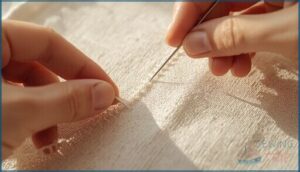
The running stitch is your bread and butter in hand sewing techniques—think of it as the foundation for basic sewing skills. Thread your needle, knot the end, then push it through the fabric from underneath. Weave up and down in a straight line, keeping stitch length consistent at 2 to 3 millimeters.
Control thread tension so fabric lies flat without puckering. Choose stable fabric and match needle selection to your material weight. This sewing tutorial builds confidence fast!
Backstitch for Strong Seams
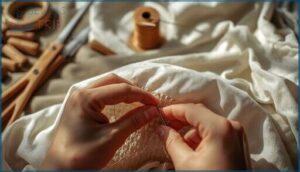
When you’re ready to level up from the running stitch, backstitch is your go-to for seam reinforcement that won’t quit. This hand sewing technique creates overlapping stitches that lock tight—perfect for armholes and high-stress areas.
Keep stitch tension even and choose thread that matches your fabric selection. It’s one of those basic sewing stitches that transforms flimsy seams into unshakeable ones! For more on its practical benefits, check out the strong and durable seam that backstitch can create.
Blanket Stitch and Overcast Stitch Basics
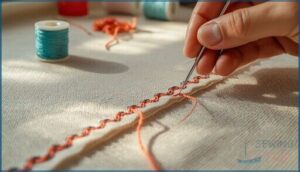
Want to finish raw edges with style? Blanket stitch wraps thread over the fabric edge in neat semicircular loops—perfect for appliqués and decorative hems.
Overcast stitch uses diagonal stitches that prevent fraying on lightweight wovens. Both basic sewing stitches require moderate stitch tension and smart thread choices. Practice edge finishing on scrap fabric before tackling real projects!
Step-by-Step Easy Sewing Projects
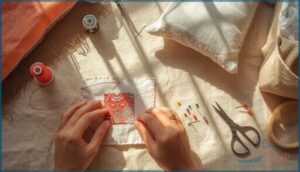
Now that you’ve got the basic stitches down, it’s time to put them to work on real projects.
The best way to get comfortable with your new skills is to practice on simple, forgiving items that won’t stress you out. Here are four beginner-friendly projects that’ll help you master those stitches while making something you can actually use.
How to Sew Reusable Makeup Wipes
Reusable makeup wipes are perfect for sewing beginners who want quick wins! Layer terry cloth with cotton fabric, right sides together, then sew around leaving a small gap. Turn it right side out and topstitch the edges.
These simple 4×4 or 6×6 squares teach you basic sewing steps while creating eco-friendly wipes you’ll actually use. Wash them on cold and skip the fabric softener to keep them absorbent.
You can also explore ways to reuse old clothing or fabric scraps for an even greener project.
Making Simple Scrunchies
Scrunchies are perfect Easy Sewing Projects for beginners! Cut your fabric 9 by 3 inches with a quarter-inch seam allowance, then fold lengthwise and sew. Turn the tube right-side-out using a safety pin, then thread 7-inch elastic through.
Overlap elastic ends and stitch securely. Satin Scrunchie Materials prevent hair breakage, while lightweight cottons work great for practice. This Sewing for Beginners win takes under an hour!
Envelope Pillow Covers Tutorial
Envelope pillow covers are your secret weapon for mastering straight seams without wrestling with zippers. This DIY Home Decor project teaches Pillow Cover Basics through overlapping back panels that slip closed.
- Cut front fabric 1 inch larger than your pillow form for seam allowance
- Hem back panels separately before assembling the envelope closure
- Press seams flat between steps for crisp, professional-looking results
Perfect Fabric Selection includes stable cottons that won’t sag after Pillow Insertion.
Quick Drawstring Bags for Practice
Drawstring bags work like training wheels for your Sewing Machine skills. In under an hour, you’ll conquer straight seams and edge finishing. Choose from Bag Size Options like 6 by 9 inch or 8 by 10 inch for Easy Sewing Projects.
| Fabric Choices | Drawstring Materials | Thread Colors |
|---|---|---|
| 100% cotton canvas | 1/4 inch nylon cord | High contrast hues |
| Lightweight ripstop | 3/8 inch cotton rope | Bright visibility shades |
| Stable weave quilting cotton | Non-slip braided cord | Bold learning tones |
Start with cotton—it’s forgiving when practicing that vital 1/4 inch seam allowance. Sewing Notions like plastic toggles add professional flair while keeping things simple for Beginners following Sewing Tutorials.
Practicing Stitches Through Home Decor Projects
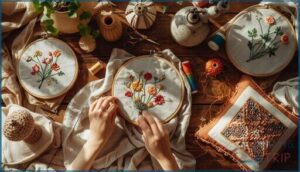
Home decor projects are where your new stitching skills really get to shine.
You’ll create things you actually use every day while practicing everything from running stitches to backstitches.
These three beginner-friendly projects turn your practice time into functional pieces that’ll brighten up your space.
DIY Fabric Coasters
Coasters are your best friend when you’re tackling edge finishing and practicing straight stitches. You’ll love working with cotton denim or felted wool—both are forgiving coaster materials that handle beginner mistakes like a champ.
Cut two fabric squares, stack them right sides together, and sew around the edges. This DIY sewing project builds confidence fast while creating something you’ll actually use every single day!
Easy Table Runner for Beginners
Ready to level up from coasters? A table runner is the perfect next step for practicing long seams and neat finishes. Cut 100 percent cotton fabric to 14–18 inches wide and 36–72 inches long—quilting cotton prints hide those small imperfections beautifully.
Sew straight stitches along the edges with a 1/4 inch seam allowance, add simple binding, and press flat. You’ve just created stunning DIY home decor!
Sewing Reversible Bowl Covers
Now let’s tackle bowl covers—a reversible design that brings together everything you’ve learned. This project teaches you sewing circles, elastic channels, and fabric selection in one go!
- Cut two identical fabric circles using a bowl as your template
- Stitch them together with a 1/2 inch seam allowance, leaving a small opening
- Turn right side out and create a narrow channel around the edge
- Thread elastic through using a safety pin and secure the ends
These reusable covers beat plastic wrap every time!
Tips for Mastering Stitches and Improving Skills
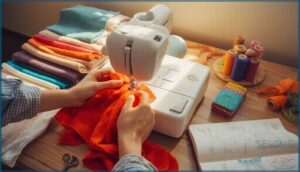
Getting comfortable with stitches takes practice, but a few smart strategies can speed up your progress. You’ll avoid common mistakes that slow you down and learn which fabrics make learning easier.
Let’s cover the essentials that’ll help you build real confidence at your sewing machine.
Common Stitching Mistakes to Avoid
Even the best sewers started with wobbly seams! Watch out for tension control issues—uneven tension creates gathered stitches, while threading problems cause skipped spots.
Don’t pull fabric while stitching or you’ll get wavy seams. Master seam finishing early to prevent fraying, and always check stitch length when switching fabrics. These sewing tips will save you frustration as you’re learning hand sewing techniques for beginners.
Best Fabrics for Learning Stitches
Starting with the right fabric makes all the difference! Cotton fabrics and linen blends are your best friends—they’re forgiving natural fibers with stable weaves that won’t shift on you.
Look for medium-weight quilting cottons or broadcloth. These beginner textiles grip your needle well and press beautifully, letting you focus on mastering sewing stitches instead of wrestling with tricky material.
Using Practice Swatches for Confidence
Practice swatches are your secret weapon for sewing mastery! These small fabric testing samples let you nail stitch tension and try different sewing stitches before tackling real projects.
You’ll build confidence through repetition, spot mistakes fast, and create a handy reference library. Beginner sewing tutorials often skip this step, but swatches save fabric and accelerate your learning—stitch creation becomes second nature!
Frequently Asked Questions (FAQs)
How do you fix uneven or crooked stitches?
Uneven stitches often signal tension issues or threading errors.
Rethread your machine completely, check bobbin placement, and swap in a fresh needle matched to your fabric.
Test on scraps first—it’s your safety net!
Can you combine different stitches in one project?
Combining running stitches with backstitches creates reinforced seams and decorative outlines.
Mixing blanket stitches for edging and running stitches for seaming adds texture while maintaining fabric stability—perfect for building your hand sewing confidence.
Whats the best way to finish thread ends?
Backstitch reinforcement is your secret weapon! Weave thread tails through nearby stitches for a knot-free finish that won’t unravel.
For delicate fabrics or embroidered ends, bury them between layers—trim close and you’re golden.
How do you prevent fabric puckering while sewing?
To prevent fabric puckering, lower your thread tension, use a sharp sewing needle matched to fabric weight, and let fabric feed naturally without pulling.
Always prewash for proper fabric preparation before starting your seam allowance.
Should you wash fabric before starting a project?
Think of crisp fabric straight off the bolt—it might hold starch or hidden shrinkage.
Pre-washing removes sizing, controls shrinkage, and prevents dye bleeding, ensuring your beginner sewing projects fit perfectly after their first wash.
Conclusion
Your stitching journey doesn’t require a horse and buggy’s worth of time—just a needle, thread, and willingness to start messy. Each easy project to learn stitches builds real skill faster than reading another tutorial ever could.
Those wobbly running stitches you’re making today? They’re becoming muscle memory tomorrow. Pick one simple make, thread your needle, and prove to yourself that confidence comes from doing, not from waiting until you’re ready.
- https://abeautifulmess.com/2019/11/reusable-makeup-wipe-diy.html
- https://sewcanshe.com/2014-11-13-easy-peasy-pincushions-with-baby-pom-poms/
- https://makeit-loveit.com/butterfly-hair-bow-tutorial
- https://sewcanshe-sewingbee.mn.co/
- https://www.sewcanshe.com/blog/how-to-sew-easy-baskets-with-10-squares-layer-cake-leftover-project