This site is supported by our readers. We may earn a commission, at no cost to you, if you purchase through links.
Stretch fabric can make clean embroidery look easy right up until the hoop comes off.
Then design ripples, the letters sink, and the knit never pulls back into shape.
Most of the time, thread isn’t the problem.
The backing is.
Choosing the right embroidery stabilizers for stretch fabrics decides whether a logo stays crisp through wear and washing or turns into a puckered patch after one cycle.
Some knits need soft no-show mesh.
Others need firm cut-away support and a second layer.
Once you match stabilizer type, weight, and hooping method, stretchy garments stop fighting back.
Table Of Contents
- Key Takeaways
- Top 8 Stabilizers for Stretch Fabrics
- 1. Brothread Tear Away Embroidery Stabilizer 8×8
- 2. Brothread Medium Cut Away Embroidery Stabilizer
- 3. Brothread No Show Mesh Embroidery Stabilizer
- 4. New Brothread Tear Away Embroidery Stabilizer
- 5. Brothread Water Soluble Embroidery Stabilizer
- 6. HBI Cut Away Embroidery Stabilizer
- 7. Brothread Clear Water Soluble Embroidery Film
- 8. HBI Water Soluble Embroidery Stabilizer
- Best Stabilizer Types for Knits
- Matching Weight to Stitch Density
- Hooping Stretch Fabrics Correctly
- Preventing Puckering on Stretch Fabrics
- Frequently Asked Questions (FAQs)
- Conclusion
Key Takeaways
- Cut-away and no-show mesh stabilizers provide most reliable, lasting support for stretch fabrics, preventing puckering and distortion after washing.
- Always match stabilizer weight and type to your fabric and stitch density for crisp, comfortable embroidery that holds its shape.
- Hooping technique matters—avoid stretching the garment and align stabilizer grain perpendicular to fabric stretch for best results.
- Water-soluble and skin-friendly mesh options keep embroidered garments soft, breathable, and safe for sensitive skin.
Top 8 Stabilizers for Stretch Fabrics
Stretch fabric needs the right stabilizer, or your embroidery can shift, pucker, and lose shape fast. The options below give you a clear starting point for knits, jerseys, and other fabrics that move.
For deeper guidance on pairing stabilizers with specific fabrics, these embroidery machine fabric tips walk you through matching weight and stretch every time.
Use this list to compare proven choices and find the best match for your fabric and design.
1. Brothread Tear Away Embroidery Stabilizer 8×8
When you need quick, reliable stabilization for stretch fabrics, Brothread Tear Away Embroidery Stabilizer 8×8 delivers.
Each 8×8-inch precut sheet gives you medium-weight, skin-friendly support—ideal for hoop embroidery on jersey, cotton blends, and lightweight knits.
The polyester construction tears away cleanly after stitching, leaving minimal residue and preventing hoop burn.
For moderate stitch counts, this backing keeps your designs crisp without over‑stiffening the fabric.
If you’re after a temporary stabilizer that balances support and easy removal, this one works efficiently.
| Best For | Beginners and experienced embroiderers looking for easy, temporary support on natural, thicker fabrics. |
|---|---|
| Type | Tear-away |
| Material | 100% polyester |
| Weight | 1.8 oz medium |
| Format | 100 precut sheets |
| Best For | Natural thicker fabrics |
| Removal | Tears away |
| Additional Features |
|
- Clean tear-away removal leaves minimal residue
- Skin-friendly and free from acid or lead
- Precut sheets make setup quick and simple
- Not ideal for dense designs without extra layers
- May feel thicker than other stabilizers
- Some users report occasional quality control issues
2. Brothread Medium Cut Away Embroidery Stabilizer
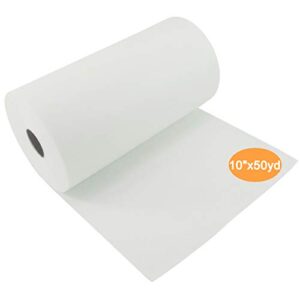
If you want lasting support for stretch fabrics, Brothread Medium Cut Away Embroidery Stabilizer stands out. This 2.5 oz polyester backing stays put after stitching, keeping knits, fleece, and denim stable through wear and wash.
You trim excess close to the stitches, leaving the rest to reinforce your design. For medium-density embroidery, one layer usually does the job—add another for high stitch counts.
It’s skin-friendly, won’t itch, and comes in rolls or sheets to fit any hoop or project size.
| Best For | Anyone who needs reliable, permanent support for machine embroidery on knits, fleece, or denim, especially for medium-density designs. |
|---|---|
| Type | Cut-away |
| Material | 100% polyester |
| Weight | 2.5 oz medium |
| Format | 10 in x 50 yd roll |
| Best For | Knits fleece denim |
| Removal | Trim excess only |
| Additional Features |
|
- Easy to trim close to stitches for a clean finish
- Works well with a variety of fabrics and hoop sizes
- Skin-friendly and safe for wearables
- May require multiple layers for very dense designs
- You have to cut the stabilizer to your desired size
- Not ideal if you prefer a lighter or heavier weight stabilizer
3. Brothread No Show Mesh Embroidery Stabilizer
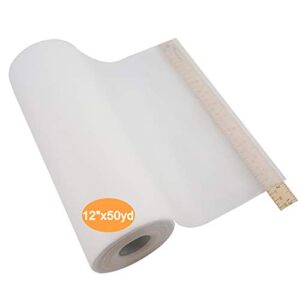
For lightweight knits and delicate projects, Brothread No Show Mesh Embroidery Stabilizer is your go-to. This 1.8 oz nylon mesh disappears under light-colored shirts and baby wear, so your embroidery stands out—never the backing.
The embossed texture grips stretch fabrics without adding bulk or stiffness, and it feels soft against skin, making it perfect for garments worn close to the body.
Use one layer for simple logos; add a tear-away for heavier stitching if needed.
It’s washable and holds up well.
| Best For | Anyone embroidering on light-colored, stretchy knits or delicate fabrics who wants a soft, invisible finish. |
|---|---|
| Type | No-show cut-away |
| Material | 100% nylon |
| Weight | 1.8 oz lightweight |
| Format | 12 in x 50 yd roll |
| Best For | Light-colored stretch knits |
| Removal | Trim and leave |
| Additional Features |
|
- Lightweight and sheer, so it won’t show through light fabrics.
- Soft and flexible, making it comfortable for garments worn close to the skin.
- Easy to use alone or with a tear-away layer for extra support.
- Not strong enough by itself for dense or heavy-stitch designs.
- Fixed 12-inch width means you may need to trim for smaller projects.
- May not work as well on dark or heavily textured fabrics.
4. New Brothread Tear Away Embroidery Stabilizer
If you’re working with thicker knits or natural fibers, New Brothread Tear Away Embroidery Stabilizer offers reliable, temporary support. Its 1.8 oz polyester sheet tears away cleanly after stitching, leaving no residue and keeping skin-contact garments comfortable. You’ll appreciate how it holds up for medium stitch density—think sportswear, caps, or applique.
For trickier projects, stick it directly to the stabilizer bed and float your fabric. It’s practical for hoop embroidery and quick clean-up, but avoid using it on loose or stretchy fabrics.
For tips on choosing the right hoop size and keeping your fabric taut, check out this guide to embroidery machine hoop sizes and fit.
| Best For | Crafters and embroiderers working with thicker knits or natural fibers who need temporary support for medium-density designs. |
|---|---|
| Type | Tear-away |
| Material | 100% polyester |
| Weight | 1.8 oz medium |
| Format | 10 in x 25 yd roll |
| Best For | Firm woven fabrics |
| Removal | Tears away |
| Additional Features |
|
- Tears away easily, leaving no residue behind.
- Skin-friendly and safe for garments that touch the skin.
- Works well for hoop embroidery, applique, and decorative stitching.
- Not suitable for loose or stretchy fabrics.
- May require multiple layers for very dense designs.
- Can tear unevenly if not applied correctly.
5. Brothread Water Soluble Embroidery Stabilizer
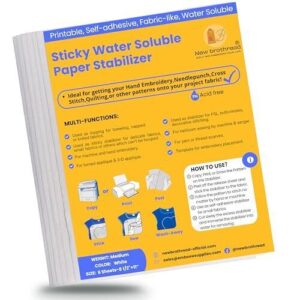
Brothread Water Soluble Embroidery Stabilizer is your go-to for delicate knits and high-pile fabrics. This medium-weight backing dissolves completely in cold or warm water, leaving no stiffness or residue behind.
Print or draw your pattern directly onto the stabilizer, then stitch with confidence—no hoop marks, no bulk.
It’s ideal for skin-touch garments and intricate lacework.
For stretch textiles, pairing it with a second stabilizer gives extra control. Removal is simple: rinse and watch the support vanish, preserving softness and drape.
| Best For | Crafters and embroiderers who work with delicate, stretchy, or napped fabrics and want an easy-to-remove stabilizer that leaves no residue. |
|---|---|
| Type | Sticky water-soluble |
| Material | 100% natural material |
| Weight | Medium weight |
| Format | Printable sheets |
| Best For | Delicate napped fabrics |
| Removal | Rinses away |
| Additional Features |
|
- Printable and easy to draw on for custom designs
- Completely dissolves in cold or warm water, leaving fabric soft
- Prevents hoop marks and is safe for skin-touch garments
- Adhesive can be quite sticky and needs time to activate
- Washing off the stabilizer can be a bit of a chore
- Printed designs may appear a little faded
6. HBI Cut Away Embroidery Stabilizer
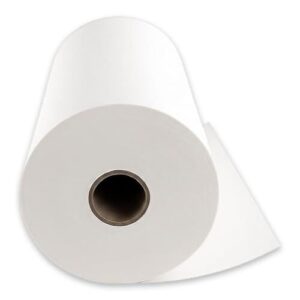
When you need lasting support for dense stitches on stretch fabrics, HBI Cut Away Embroidery Stabilizer stands out. Its 2.5 oz weight keeps jersey, fleece, and spandex blends from puckering, even with heavy designs or frequent washes.
You’ll trim it close for a clean edge, and the backing stays soft after laundering.
For logos, patches, or layered materials, this stabilizer gives you a stable foundation and resists tearing. It’s flexible enough for both small and large hoops, making it a reliable choice.
| Best For | Those who need strong, lasting support for dense embroidery on stretchy or layered fabrics. |
|---|---|
| Type | Cut-away |
| Material | Polyester |
| Weight | 2.5 oz firm |
| Format | 12 in x 50 yd roll |
| Best For | Stretch dense designs |
| Removal | Trim and leave |
| Additional Features |
|
- Prevents puckering and distortion, even on heavy stitch designs.
- Softens after washing, keeping finished garments comfortable.
- Works well with a wide range of fabrics and hoop sizes.
- Can feel stiff or “paper-like” before laundering.
- Too thick for delicate fabrics or tiny embroidery areas.
- Needs careful cutting to avoid shredding or tearing.
7. Brothread Clear Water Soluble Embroidery Film
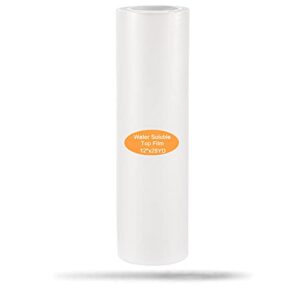
When you’re tackling towels, fleece, or any plush stretch fabric, a transparent water-soluble topping like this clear film is your secret weapon. Lay it on top before stitching—those dense, raised fibers won’t swallow your threadwork.
The film dissolves completely in water, so you won’t fight leftover residue or stiffness. It’s thin, natural, and skin-friendly, making it safe for wearables.
For small details or lettering on textured knits, this film keeps outlines crisp and your embroidery looking professional every time.
| Best For | Hobbyists and small businesses who need crisp embroidery on plush, textured fabrics like towels, fleece, and sweatshirts. |
|---|---|
| Type | Water-soluble topping |
| Material | Water-soluble polymer |
| Weight | 25-micron light |
| Format | 12 in x 25 yd roll |
| Best For | Towels velvet fleece |
| Removal | Dissolves in water |
| Additional Features |
|
- Dissolves fully in water, leaving no residue behind.
- Thin and easy to cut for custom-sized projects.
- Skin-friendly and safe for garments that touch the body.
- Hard to see on dark fabrics, making pattern placement tricky.
- Texture can vary between batches, sometimes feeling slippery or plasticky.
- Needs thorough soaking to dissolve completely; leftover residue is possible if not washed well.
8. HBI Water Soluble Embroidery Stabilizer
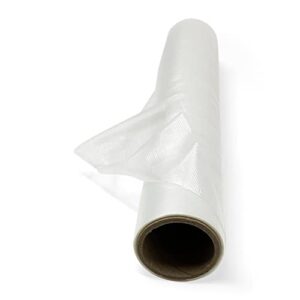
Looking for a stabilizer that disappears without a trace? HBI Water Soluble Embroidery Stabilizer is your go-to for stretch knits, delicate tricot, and lace.
This clear, nonwoven film dissolves in warm water, leaving embroidery soft and residue-free. It prevents puckering and tunneling on jerseys, holds fine satin stitches, and keeps fabric drape intact.
For textured fabrics, pair it with a water-soluble topper. If your design’s dense, double up layers—this stabilizer stays gentle while giving you firm, temporary control.
| Best For | Embroiderers working with textured, stretchy, or delicate fabrics who want a stabilizer that completely washes away. |
|---|---|
| Type | Water-soluble topping |
| Material | Clear soluble film |
| Weight | Light film |
| Format | 12 in x 15 yd roll |
| Best For | Textured high-pile fabrics |
| Removal | Dissolves in warm water |
| Additional Features |
|
- Dissolves fully in warm water, leaving no residue.
- Prevents stitches from sinking into high-pile fabrics like towels and fleece.
- Works for both machine and hand embroidery projects.
- Can be thin and may roll up during use.
- Sometimes needs double layering for extra stability.
- Difficult to hoop because it’s stretchy.
Best Stabilizer Types for Knits
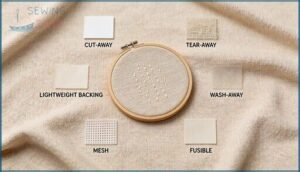
Choosing the right stabilizer for knits is essential if you want clean, durable embroidery. Stretch fabrics demand options that balance support and comfort without distorting the garment.
Here’s what you need to know about the best stabilizer types for knits.
Cut-away for Lasting Support
Think of cutaway stabilizer as the backbone for stretch fabrics. It delivers Edge Reinforcement and Stitch Sink Prevention, locking your design in place for Long-term Durability. Align the Cut-away Grain perpendicular to fabric stretch—this preserves Fabric Memory.
For ultra-dense designs, double stabilizing boosts support. Match stabilizer weight to stitch density for excellent results.
Noshow mesh cutaway offers softer options. The permanent backing after trimming preserves stitch integrity through repeated washes.
No-show Mesh for Light Garments
Want a stabilizer invisible on light fabrics? No-show mesh cutaway is your answer.
Its Show-through Reduction and Soft Skin Feel make it ideal for Light Fabric Compatibility, especially on stretch fabrics.
Fusible Options help with fabric stretch management. Use smart Trimming Techniques to keep edges smooth.
Match stabilizer weight to your garment for embroidery that sits flat and comfortable. The product is a 1.5 oz sheer cutaway mesh that prevents shadowing on light fabrics.
Water-soluble Topping for Textured Stretch Fabrics
No-show mesh supports the backing, but textured stretch fabrics need help on top too. Water-soluble topping sits over pile fabrics like fleece and pique knits, giving the needle a smooth surface to stitch across.
Film Thickness Selection matters here — a 20–25 micron film keeps stitches clean without bulk. Rinse it off after stitching, and it’s gone completely.
Fusible and Adhesive Options for Tricky Pieces
For tricky stretch fabrics, adhesive sticky stabilizers and iron-on fusible stabilizers are your secret weapons. Repositionable adhesive lets you secure cuffs or collars without hoop marks. Fusible mesh performance stabilizers provide stretch knit reinforcement and smooth applique bonding.
Control iron temperature carefully to avoid scorching. Edge trimming strategies—cut close after stitching—keep garments comfortable and maintain support where you need it most.
Why Tear-away is Usually a Poor Match
Even with adhesive and fusible solutions, tearaway stabilizer falls short on stretch fabrics. Temporary backing issues lead to stitch shift and support loss, especially after washing. You’ll see longevity issues and comfort compromise—knits rebound, embroidery distorts, and the clean finish doesn’t last.
Cutaway stabilizer is your reliable option for stabilizer weight and fabric matching on stretchy knits.
Matching Weight to Stitch Density
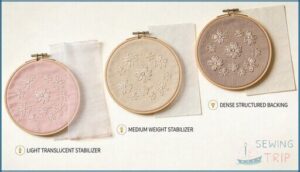
Choosing the right stabilizer weight is key to keeping your stitches smooth and your fabric flat. Every project needs support that matches both the material and the design.
Here’s how to pair stabilizer strength with stitch density for stretch fabrics.
Lightweight Backing for Thin Stretch Fabrics
Stitching on thin stretch fabrics demands precision—mesh transparency and drape retention are essential. You’ll want a low-GSM stabilizer that won’t stiffen the garment but still prevents stitch slip.
Here’s what works:
- Lightweight tearaway for minimal support
- No-show mesh cutaway for permanent backing
- Heat-activated bond for tricky knits
- Topping stabilizers to keep stitches visible
Medium Support for Everyday Jersey
A medium weight (18 oz) cutaway stabilizer is your go-to for everyday jersey. It balances fabric stretch management and stabilizer longevity, keeping stitches crisp through wear and wash.
For moderate designs, thread tension balance matters—avoid tearaway stabilizer for stretchy fabrics.
Smart design placement strategy and consistent post-embroidery care guarantee clean outlines and lasting support.
| Fabric Stretch | Stabilizer Longevity | Thread Tension |
|---|---|---|
| ————–: | : | |
| ——————-: | : | |
| ————–: | ||
| Managed | High | Balanced |
| Maintained | Lasting | Consistent |
| Controlled | Durable | Stable |
Heavy Support for Dense Embroidery
When your design packs in dense stitches, you need cutaway stabilizers for stretchy knit fabrics.
Heavy Mesh Backing and a Layered Cutaway Strategy keep outlines crisp and prevent puckering.
Stitch Tension Management is essential—pair stabilizer weight and design density for best results.
Fabric Grain Alignment matters, and Post-Embroidery Trimming ensures comfort.
Heavy tearaway suits heavy fabrics, not stretch.
- Crisp outlines, no ripples
- Confident stitch placement
- Soft finish, lasting comfort
- No distortion after washing
- Professional results, every time
When to Add a Second Layer
stitch count crosses key thresholds—think 10,000 or more—you need double stabilizing. For ultra‑dense motifs, add a second layer of noshow mesh or cutaway to prevent edge tunneling and fabric puckering.
Large design spans and performance wear layers demand extra support. Matching stabilizer weight to stretchy knits is essential for stability and crisp results every time.
Balancing Softness, Support, and Show-through
Want your embroidery to look crisp without sacrificing comfort? Mesh Transparency Balance is key—no-show mesh keeps T-shirts smooth, cutaway stabilizer preserves Drape Retention, and Edge Softness Control prevents irritation.
For stretchy fabrics, Layered Support Strategy means combining no-show mesh or washaway stabilizer.
Stitch Visibility Management matters: adhesive sticky stabilizer helps prevent show-through, while careful trimming ensures softness and natural movement.
Hooping Stretch Fabrics Correctly
Hooping stretch fabrics takes more care than working with stable cotton. You need the right technique to keep your embroidery crisp and your garment in shape.
Here’s how to get a secure, comfortable hold every time.
Hooping Without Stretching The Garment
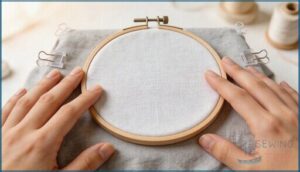
Think of hooping stretchy fabrics like setting a foundation—if you stretch the garment, your embroidery won’t sit right. Use Hoop Tension Control and select a hoop size that hugs the design area.
Keep the fabric flat, avoid pulling, and let Edge Support Techniques do the work. Stabilizer Placement Accuracy matters: center the backing, then lay the garment gently.
Aligning Stabilizer Against Fabric Stretch
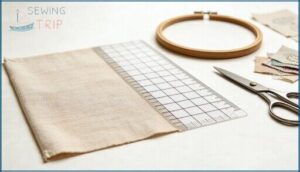
Stabilizer Edge Alignment is your first defense against distortion. Lay the backing flat, align its grain perpendicular to fabric stretch, and check for Fabric Stabilizer Cohesion before hooping.
Use a Stabilizer Grid Check for accuracy, then run a Pre-embroidery Test on scraps.
Tension Balance Technique is key—don’t overstretch. Matching stabilizer weight and fabric ensures your embroidery stays crisp and controlled.
Floating Fabric on Sticky Stabilizer
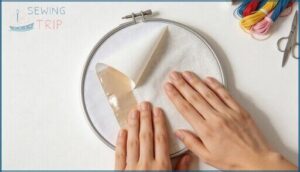
Sticky stabilizer flips the script on hooping technique. Instead of crushing your stretch fabric, you hoop only the backing, peel the Adhesive Release Paper, and press your garment flat.
Hoopless Embroidery Setup means:
- Surface Grip Optimization keeps fabric centered.
- Tackiness Control prevents puckering.
- Residue-Free Cleanup protects delicate knits.
Fabric support layers stay strong, stitch after stitch.
Using Basting Stitches for Better Control
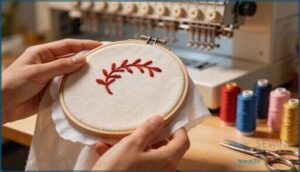
You gain real control over stretch fabrics by using basting stitches—place them along your embroidery path, picking a contrast thread for easy removal. Adjust tension to avoid distortion, especially on knits with Cutaway stabilizers.
Basting Stitch Placement marks Multi-Needle Alignment and keeps fabric stretchiness in check. After stitching, use the right Line Removal Technique to protect your work.
Trimming Cut-away for Comfort and Durability
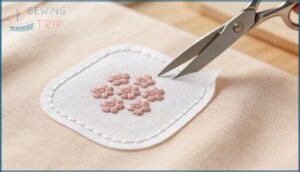
Once your basting stitches have set the stage, focus on cutaway trimming. Aim for a Close Trim Margin—about 1/8 to 1/4 inch from the embroidery edge.
Rounded Edge Finish and Edge Softening Methods make the backing Skin-friendly. Use a Consistent Trim Technique with curved scissors. Cutaway stabilizers for stretchy knit fabrics prevent fabric puckering, supporting stitch density and fabric stretch.
Preventing Puckering on Stretch Fabrics
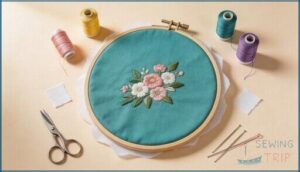
Stretch fabrics can be tricky, and puckering is one of the most common headaches in machine embroidery. Getting the right stabilizer and technique makes all the difference.
The right stabilizer turns puckered stretch fabric into crisp, professional embroidery every time
Here’s what you need to know to keep your designs smooth and your garments comfortable.
Common Stabilizer Mistakes on Knits
Ever wonder why knit embroidery puckers or warps?
Common stabilizer mistakes include using tear-away on stretchy knits, skipping compatibility tests, and reusing stabilizer. Improper layer count and excessive hoop tension can distort designs.
Always match stabilizer weight and type to fabric and stitch density.
Cutaway stabilizers for stretchy knit fabrics prevent distortion after washing—don’t compromise on stabilizer selection.
Fixing Shifting, Tunneling, and Distortion
When stabilizer shifting, tunneling, or distortion threatens your embroidery, you need precision. Use Cutaway stabilizers for stretchy knit fabrics, and always calibrate tension.
Align stabilizer grain perpendicular to fabric stretch. Edge stitch locking and layered stabilizer strategy help lock the design.
Don’t forget:
- Stabilizer Alignment
- Edge Stitch Locking
- Tension Calibration
- Layered Stabilizer Strategy
- Grain Direction Control
Choosing Skin-friendly Backing for Wearables
If your embroidery sits close to skin, choose a skin-friendly stabilizer like Soft Knit Backing or Low-Bulk No-Show mesh. OEKO‑TEX Certification signals safe materials for wearables.
Breathable Mesh Backing prevents sweat buildup, while no-show mesh stays invisible on light shirts.
For temporary support, water soluble stabilizer offers residue‑free removal.
Always favor softness and flexibility for stretchy knit fabrics.
Care and Washing Tips for Long-lasting Results
If you want your stretch fabrics to last, pay attention to how you wash embroidered garments.
Cold Water Wash and Gentle Machine Cycle protect both stitches and stabilizer. Turn pieces Inside Out Laundry for cleaner outlines. Use Low Heat Drying to control fabric shrinkage.
For stubborn residue, spot-treat with Stain Remover Use.
Washaway stabilizer and water soluble stabilizer need thorough rinsing for washable embroidery techniques.
Frequently Asked Questions (FAQs)
Can stabilizers affect the drape of stretch fabric?
Yes, they can.
Heavier cutaway stabilizers for stretchy knit fabrics affect fabric hang more than lighter options. Matching stabilizer weight and fabric support needs keeps drape preservation intact without stiffness impact.
How do stabilizers impact fabric breathability?
Adding backing limits airflow, so you’ll notice Airflow Reduction and possible Heat Buildup under dense areas. Lightweight mesh or water-soluble options restore Post-Wash Breathability.
Always match Stabilizer weight to fabric and design for ideal Moisture Management.
Are stabilizers safe for sensitive skin?
Most are skin-safe when matched correctly. Choose soft cut-away for knits, trim it close, and look for Oeko-Tex certification. Avoid stiff or adhesive-heavy options on sensitive skin.
What stabilizer is best for metallic thread embroidery?
metallic thread embroidery, use a medium-weight cutaway stabilizer or no-show mesh on stretchy knits.
These options provide a smooth stabilizer surface texture, prevent thread breakage, and preserve color shine—key for stitch density optimization and design clarity.
How should stabilizers be stored to prevent damage?
Store stabilizers in a cool, dry environment with UV light protection.
Use airtight sealing for water-soluble types.
Support rolls on racks, organize with color-coded bins, and keep scraps separate to reduce waste and extend stabilizer lifespan.
Conclusion
Like a tailor’s hidden stitches shaping a seamless garment, the right embroidery stabilizers for stretch fabrics form the unseen backbone of crisp, enduring designs. Choosing cut-away, no-show mesh, or water-soluble options transforms puckering into an ideal.
Match weight to fabric stretch, hoop without tension, and layer when needed.
Master these techniques, and logos withstand every wash and wear, maintaining sharp detail through movement.
Stretch fabrics become a canvas for seamless artistry—where every stitch holds its shape, defying distortion with quiet strength.
- https://www.maggieframes.com/blogs/embroidery-blogs/cut-away-embroidery-stabilizer-guide-master-selection-application-and-perfect-results
- https://www.marathonaustralia.com.au/choosing-the-right-stabilizers/
- https://americanemb.com/pages/all-about-stabilizers-faq
- https://bauer-schlichter.de/Away-Stabilizer-100pcs-Embroidery-Stabilizer-Embroidery/1084727
- https://sewguide.com/stabilizers-as-backing-fabric/