This site is supported by our readers. We may earn a commission, at no cost to you, if you purchase through links.
A bolt of cotton feels nothing like velvet in your hands, and that difference becomes critical the moment you hang your finished curtains. The fabric you choose doesn’t just determine how your windows look—it shapes how light moves through your space, how sound travels in your rooms, and whether you’re re-hemming panels every six months or enjoying them for years.
Most sewers grab whatever fabric catches their eye, then wonder why their billowy sheers won’t block morning sun or their heavy drapes refuse to gather gracefully. Understanding fabric types for curtain sewing transforms guesswork into confident decisions.
You’ll match weight to function, texture to style, and care requirements to your actual lifestyle—creating window treatments that work as beautifully as they look.
Table Of Contents
Key Takeaways
- Fabric weight (measured in GSM) directly controls how your curtains hang and perform—lightweight sheers need 1.2–2× window width for gentle waves, while heavyweight options above 300 GSM create structured folds that anchor the room.
- Match fabric to room function instead of just aesthetics—media rooms benefit from sound-absorbing velvet, bedrooms need blackout materials blocking 85–99% of light, and high-traffic spaces require durable polyester that outlasts cotton by two to three years.
- Pre-wash natural fabrics before cutting to trigger the inevitable 3–5% shrinkage in cotton (up to 20% in rayon), then choose linings strategically since they transform basic panels into insulated, UV-protected systems that extend fabric life.
- Different curtain styles demand specific fabrics—grommet and eyelet headers work best with medium-weight cotton or linen for smooth operation, while layered treatments combine sheer voile with opaque linen to create flexible light control throughout the day.
Key Factors in Choosing Curtain Fabric
Picking the right curtain fabric isn’t just about what catches your eye at the store. The fabric you choose affects everything from how much light filters into your room to how often you’ll be wrestling with your iron.
Before you commit to yards of velvet or linen, check out these essential fabric tips for sewing curtains to understand how weight, weave, and texture impact the final result.
The curtain fabric you choose controls light, privacy, and how often you’ll be ironing
Let’s walk through the five essential factors that’ll guide you toward curtains that actually work for your space.
Fabric Weight and Drape
Fabric density shapes how your curtains hang and move. Weight categories range from airy 50 GSM sheers to substantial 300-plus GSM panels. Understanding textile properties helps you predict drape styles—softer fibers like viscose create flowing folds, while linen holds crisp lines.
Consider these essentials:
- Lightweight drapery fabric needs 1.2–2× window width for gentle waves
- Medium weight curtain fabric (150–250 GSM) balances body with drape
- Heavyweight textile creates structured, grounded fold techniques
- Weave structure affects how fabric types bend and gather
The drape characteristics of curtain fabrics can be influenced by factors like weave structure and fiber type.
Light Control and Privacy Needs
Your window treatments need to match how you live in each space.
Privacy shades work best where you need separation from the street—tight weaves blur shapes so neighbors see only shadows.
Light filtering fabrics at 3 to 5 percent openness soften glare while maintaining a view.
For true daylight control in bedrooms, blackout curtains block 85 to 99 percent of light, creating the darkness you need for rest. The level of privacy and light in a room is influenced by different fabric openness factors.
Room Function and Ambience
Every space you design demands curtain fabrics that answer both practical needs and aesthetic appeal. Media rooms need sound-absorbing velvet to improve room acoustics, while open lofts benefit from light filtration through sheers that manage natural light without blocking it entirely.
Color psychology matters too—warm terracotta tones create intimacy in dining areas, while cool greys foster calm in bedrooms, directly shaping room ambiance and energy efficiency.
Ease of Care and Maintenance
Once you’ve nailed your room’s mood, think about how much time you’ll spend cleaning. Machine washable cotton and polyester make Fabric Durability and ease of care simple, especially in high-traffic areas.
Linen needs gentler handling with cold water and mild detergent. Velvet often demands professional dry cleaning.
Check Care Instructions before you buy—your future self will thank you when maintenance day rolls around.
Budget and Durability Considerations
Cost Analysis shows polyester often outlasts cotton by two to three years, making it smarter for busy homes.
Budget Fabrics in the ten to thirty dollar range balance affordability with Durability Tests—look for 15,000 double rubs in high-traffic spots.
Price Comparison matters less than Fabric Longevity when UV-resistant options skip early fading and replacement costs down the road.
Popular Fabric Types for Curtains
Walking into a fabric store can feel overwhelming when you’re staring at endless bolts of material. Each fabric type brings its own personality to a room—some whisper elegance while others shout durability.
Let’s break down the most popular curtain fabrics so you can match the right material to your project’s needs.
Cotton and Cotton Blends
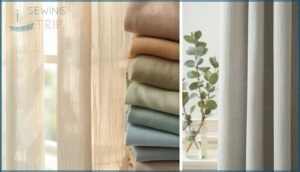
Cotton fabric is a workhorse for curtain making—you’ll find it in everything from lightweight voiles to sturdy twills. Cotton weaves are naturally breathable, so air moves freely around your windows without that stuffy feel.
Plain cotton takes dye beautifully, giving you endless color choices. Cotton blends add durability while keeping those natural textures you want in casual spaces.
Linen and Linen-Look Fabrics
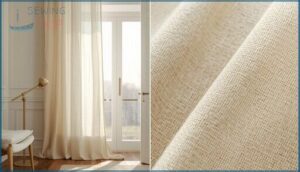
Linen fabric brings that unmistakable slub texture straight from flax fibers—each thread shows natural variation in the weave patterns. You’ll get a relaxed, airy look that works beautifully in casual spaces.
Linen blends mix in synthetic fibers to cut down on wrinkles while keeping that organic feel. Pure linen needs gentle fabric care, but linen-look options simplify curtain making without sacrificing visual appeal.
Polyester and Synthetics
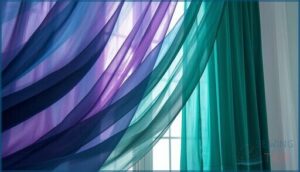
Polyester and synthetic fibers dominate ready-made curtain panels because they resist wrinkles and shrinking better than natural textiles. You’ll find polyester blends and microfiber options across sheer to blackout weights—all machine washable on gentle cycles. Faux materials mimic linen or silk at a fraction of the cost.
The textile science behind these fabric properties for window treatments means your panels hold color and shape through years of sun exposure.
Velvet and Chenille
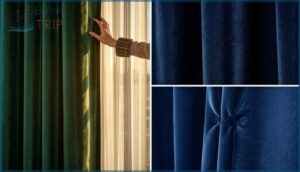
Velvet and chenille bring instant drama to any window with their plush fabrics and touchable depth. These luxury drapery choices do more than look gorgeous—they block drafts, muffle street noise, and add serious warmth. If you’re eyeing soft furnishings that make a statement, here’s what matters:
- Velvet texture comes from dense pile construction that feels rich underfoot and resists crushing when made from polyester blends
- Chenille care requires gentle spot cleaning since aggressive washing flattens the distinctive tufted loops
- Deep jewel tones like emerald and navy dominate fabric selection for curtain making techniques that emphasize floor-to-ceiling presence
- Most velvet curtains need dry cleaning to preserve their pile, though modern polyester versions tolerate careful fabric care at home
Canvas, Duck Cloth, and Utility Fabrics
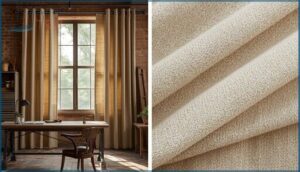
When rustic meets practical, canvas and duck cloth step up as your go-to heavy-duty materials for workspace windows and casual family rooms.
These tightly woven cotton fabrics resist wear and offer serious fabric thickness—perfect for utility styles that take a beating.
Canvas textures hold their shape well, making curtain-making techniques straightforward, and fabric care stays simple with regular machine washing for ongoing fabric selection confidence.
Sheer and Blackout Fabrics
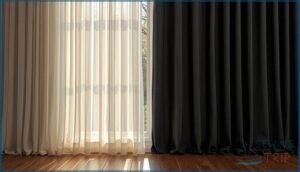
While utility fabrics handle wear, sheer curtains and blackout curtains sit at opposite ends of light filtration. Sheers—woven from fine polyester—create a soft window treatment glow, but offer limited privacy during daylight.
Blackout curtains use triple weave construction or foam backing to block up to 99 percent of light. That fabric thickness also delivers curtain insulation, cutting energy loss by 25 percent while your fabric selection controls both light blockage and fabric durability needs.
Jacquard, Damask, and Decorative Options
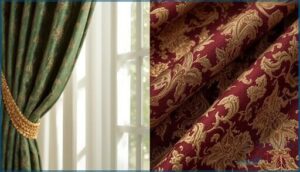
When you want pattern built right into the cloth, Jacquard weaves and Damask patterns deliver raised motifs without printing. These textile designs use special looms to create decorative trims and fabric embellishments—tone-on-tone contrasts in matte and sheen.
Fabric properties for curtains matter: most jacquard blends cotton and polyester for durability, making decorative sewing easier in formal rooms where curtain fabric needs both structure and visual interest.
Matching Curtain Styles With Fabric Types
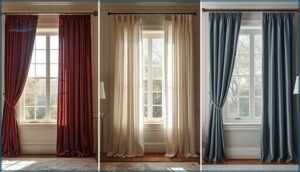
Your curtain style and fabric choice need to work together, not fight each other. Some hanging styles demand heavier materials to create the right folds, while others shine with lightweight drapes.
Let’s match the most common curtain styles to the fabrics that’ll make them look their best.
Rod-Pocket and Tab-Top Curtains
Two header styles dominate DIY curtains: rod pocket and tab top. A rod pocket creates a fabric channel—usually 2 to 3 inches tall—that slides over the rod and produces soft gathers. Tab top designs use fabric loops spaced 4 to 6 inches apart for a relaxed look.
Both work beautifully with cotton fabric and linen, though tab tops slide more easily for daily use.
Grommet and Eyelet Curtains
Grommet hardware and eyelet installation bring a modern edge to your windows. Metal rings set right into fabric headers let curtain rods thread through for smooth operation.
Choose medium-weight cotton or linen for gentle folds, or opt for velvet to create deeper drapery folds with real presence. Space grommets evenly—about 2 times your rod width in fabric—so the waves look balanced and the curtain materials glide effortlessly.
Layered Curtains With Sheers and Opaques
Layered styles combine sheer curtains with opaque drapery for flexible light control throughout the day. Install a double curtain rod so you can move each layer independently—sheers stay closed to diffuse glare while heavy panels open, or both close for blackout privacy.
Pair smooth voile with slubby linen to create contrasting fabric textures that make window treatments look custom and high-end, elevating room ambiance with minimal curtain hardware investment.
Pattern and Texture Selection
Pattern scale impacts how your curtain reads across the room. Large-scale prints over 6 inches become striking focal points on wide windows, while small ditsy florals under 3 inches feel softer in compact spaces.
Texture choice matters too—smooth fabrics like satin create formal polish, whereas nubby linen adds relaxed depth.
Check fabric direction before cutting so directional prints stand upright on finished panels.
Care and Maintenance for Curtain Fabrics

Your curtain fabric deserves more than just a good wash now and then. Proper care starts before you even sew the first seam and continues through years of hanging.
Let’s walk through the essential steps that’ll keep your curtains looking fresh and functioning beautifully.
Pre-Washing and Ironing Tips
Pre-washing curtain fabric is the simplest way to avoid fabric shrinkage and color bleeding before you cut a single panel. Run cotton through a gentle cycle to trigger that typical 3 to 5 percent shrinkage, then use steam pressing while the yardage is still damp.
This fabric relaxation step smooths wrinkles and reveals any weave distortion you can fix early.
Lining Options and Benefits
Lining transforms fabric into a high-performance curtain system that works as hard as it looks. Your choice between standard cotton, blackout lining, or interlining shapes how your curtains manage light, temperature, and privacy:
- Standard cotton linings add body and protect face fabric from UV fading while softening daylight.
- Blackout linings block nearly 100 percent of light for bedrooms and media rooms.
- Thermal insulation layers reduce heat loss through single-glazed windows and lower energy costs.
- Dimout fabrics filter 80 to 90 percent of light without the heavy feel of full blackout.
- Interlining benefits include luxurious drape, deeper pleats, and enhanced noise reduction for period homes.
Curtain layering with drapery lining fabric adds warmth and refined elegance while extending fabric care requirements only slightly.
Cleaning and Longevity Strategies
Dust control starts with monthly vacuuming using a soft brush attachment, which keeps fibers strong and reduces allergen buildup. Quick stain removal with diluted dish soap preserves fabric durability without harsh scrubbing.
Cotton tolerates machine washing in cold water, while velvet needs professional dry cleaning to prevent pile damage. Fabric shrinkage varies—cotton may shrink 4 to 6 percent, rayon up to 20 percent—so match your cleaning methods to each fiber.
Protecting Fabrics From Sun Damage
Sunlight damages curtain fabric faster than most people realize—single pane glass blocks only 23 to 28 percent of UV rays. Applied window films stop 95 to 99 percent of ultraviolet light, dramatically slowing fabric fading.
For extra fade resistance, choose solution dyed polyester or add blackout linings that shield decorative panels from direct sun exposure while improving thermal insulation and light blocking.
Top Curtain Sewing Products for Fabric Selection
Now that you know how to choose and care for your curtain fabrics, let’s look at some standout products that make the sewing process easier.
These options cover different styles and needs, from light control to decorative finishing touches. Whether you’re working on blackouts or adding elegant trim, you’ll find practical choices here.
1. BoxElfos Blackout Window Curtain Panel

This high-density polyester panel measures a generous 157″ x 59″, letting you cut it to fit odd-shaped windows, RVs, or skylights without ordering custom sizes.
The triple-blackout technology blocks nearly 100 percent of sunlight when installed snugly against the frame. Hook and loop tabs make installation simple—no drilling required—so you can move it between rooms or pack it for travel.
The fabric adds insulation to reduce heat gain in summer and slow heat loss in winter, supporting steadier indoor temperatures.
| Best For | Night shift workers, parents with young kids, or anyone who needs total darkness to sleep well—especially if you have tricky window sizes or want something you can take on trips. |
|---|---|
| Material | High-density Polyester |
| Color | Black and Silver-grey |
| Use Case | Bedrooms and nurseries |
| Fabric Form | Pre-cut panel |
| Care | Machine washable |
| Durability | Triple-blackout technology |
| Additional Features |
|
- Cuts to fit any window shape or size, so you’re not stuck hunting for exact dimensions
- Blocks nearly all light and adds a layer of insulation to help with temperature control
- Super portable with hook-and-loop tabs—no tools needed, and you can move it room to room or toss it in the travel bag
- You’ll need to do the cutting and measuring yourself, which might feel like extra work if you’re not into DIY
- The adhesive tabs can lose their stick in high heat, so they might not hold up well in hot climates or south-facing windows
- It’s fairly thin, so don’t expect heavy-duty insulation, and you might need tape around the edges to seal out every last bit of light
2. Mustard Yellow Chiffon Fabric
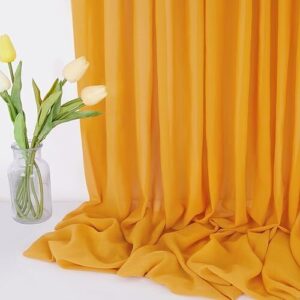
While blackout panels deliver serious light control, you’ll find a different mood with this 10-yard chiffon roll in mustard yellow. The 58-inch width covers standard windows without seaming, and its semi-sheer weave lets sunshine through with a warm, golden cast—perfect for living rooms or breakfast nooks where you want brightness without glare.
Polyester construction means it won’t fray easily during sewing, and it’s machine washable on delicate. Expect a soft drape that flutters gently when windows are open, adding movement and color to your space.
| Best For | DIYers and decorators who want soft, filtered light in living spaces or event backdrops with an airy, romantic feel. |
|---|---|
| Material | Chiffon |
| Color | Mustard Yellow |
| Use Case | Wedding and party decoration |
| Fabric Form | Cut by the yard |
| Care | Hand or machine wash |
| Durability | Durable and reusable |
| Additional Features |
|
- 10-yard length and 58-inch width provide plenty of fabric for large projects or multiple windows without seaming
- Semi-sheer weave creates warm, diffused lighting while maintaining privacy during the day
- Machine washable polyester that’s easy to cut, sew, and reuse for different décor or sewing projects
- May leave an orange tint on skin or clothing during handling
- Some customers report receiving fabric with spots or damage
- Bottom edges can fray despite polyester construction, requiring finishing or hemming
3. Velvet Fabric By The Yard Light Gray
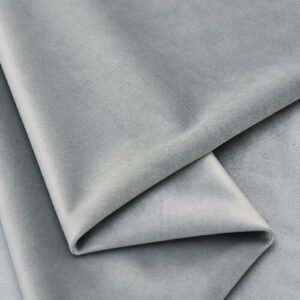
If you’re after elegance and light control, this 57.5-inch polyester velvet in light gray delivers both. At 260 grams per square meter, it hangs with enough weight to form clean vertical folds, and its dense pile blocks 80 to 90 percent of incoming light without extra lining.
You’ll get privacy plus moderate insulation—helpful for keeping rooms cooler in summer. The soft, breathable texture sews easily for DIY curtain panels, and polyester resists pilling over time.
| Best For | DIYers looking for elegant, light-filtering curtain fabric that blocks most daylight while staying breathable and easy to sew. |
|---|---|
| Material | 100% Polyester |
| Color | Light Gray |
| Use Case | DIY sewing and upholstery |
| Fabric Form | Cut by the yard |
| Care | Standard washing |
| Durability | Wear-resistant |
| Additional Features |
|
- Blocks 80–90% of light without needing a separate liner, giving you privacy and some insulation
- Soft polyester velvet resists pilling and sews smoothly for curtains, upholstery, or craft projects
- Wide 57.5-inch width means fewer seams and less fabric waste for large panels
- Thin construction without backing may not hold up for heavy-use upholstery like sofas
- Some customers report receiving incorrect yardage or fabric with loose fibers on the back
- Light gray shows dust and pet hair more easily than darker colors
4. Bullion Fringe Trim Curtain Decor
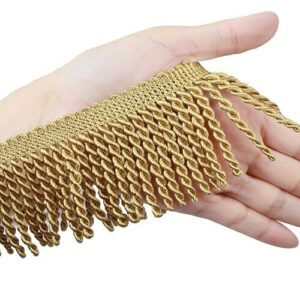
Once your curtains hang beautifully, you can finish the edges with this 2.5-inch gold bullion fringe—197 inches on each roll. The premium polyester cords bring that formal, classic look found in French and English interiors, and they add subtle movement whenever air flows through the room.
Attach it with a straight stitch along the bottom hem or side borders. You’ll see the twisted strands catch light, creating depth and polish without heavy contrast. Cold-water wash and hang-dry to keep the cords from tangling.
| Best For | Anyone adding a polished, old-world touch to curtains, upholstery, or lampshades—especially if you want that luxe French or English look without spending a fortune. |
|---|---|
| Material | 100% Polyester |
| Color | Gold |
| Use Case | Home furnishings and curtains |
| Fabric Form | Trim by the yard |
| Care | Cold water wash, hang dry |
| Durability | Premium polyester yarns |
| Additional Features |
|
- Premium polyester holds up well and catches light beautifully, giving you that high-end shimmer
- 197 inches per roll covers most standard curtain widths without needing multiple purchases
- Works across different projects—curtains, cushions, costumes, even church décor
- Only comes in gold, so you’re out of luck if you need silver, black, or another color
- The weight might be too much for delicate fabrics or lightweight garments
- Hand-washing and hang-drying takes more effort than tossing it in the machine
Frequently Asked Questions (FAQs)
What type of fabric do I use for curtains?
You’ll want fabric in the 150 to 250 GSM range for most rooms. Cotton and linen blends work beautifully, while velvet or lined options suit bedrooms needing darkness and privacy.
What fabric is commonly used for curtains?
Cotton acts like a reliable best friend in the curtain world—breathable, soft, and endlessly adaptable.
Linen, polyester, and velvet follow closely, each bringing distinct benefits for light control and style.
What is the most durable drapery fabric?
Polyester stands out as the toughest choice for everyday homes. It resists fading, stretching, and wrinkling better than natural fibers, making it ideal for high-traffic rooms where curtains open and close constantly.
Can I mix different fabric types in one room?
Absolutely—mix materials to match your mood and each window’s job. Tie them together with a shared color or undertone, then layer sheers with heavier panels so every spot feels connected yet purposeful.
What fabrics work best for humid bathroom environments?
Bathrooms need moisture-fighting fabrics that dry quickly. Polyester and nylon resist humidity well.
Add a waterproof vinyl liner behind any decorative fabric.
Avoid pure cotton—it stays damp and grows mildew fast.
How do I calculate yardage for floor-to-ceiling curtains?
First, measure from your ceiling or rod to half an inch above the floor.
Then multiply that length by your desired fullness ratio (usually 2x to 5x) and divide by fabric width.
Are there eco-friendly or sustainable curtain fabric options?
Yes, you can choose organic cotton, hemp, or linen with GOTS certification. Recycled polyester curtains also work well and keep plastic bottles out of landfills while lowering energy use.
Conclusion
The wrong fabric turns sewing into a battle. The right one makes every stitch feel smooth. You now understand how fabric types for curtain sewing shape everything from light filtering to longevity.
You’ve matched weights to window styles, textures to room needs, and care routines to your schedule. Your next project won’t be guesswork—it’ll be intentional, informed, and built to last.
Measure twice, choose once, and watch your windows transform into exactly what your space deserves.
- https://twopagescurtains.com/blogs/all-posts/the-ultimate-guide-to-different-types-of-curtains-linen-cotton-velvet-silk-and-more
- https://linenq.com/blogs/journal/how-to-choose-the-right-linen-curtain-a-guide-to-fabric-weight-and-style
- https://www.maakhome.co.nz/blogs/news/top-7-fabric-for-curtain-ideas-in-2025
- https://blog.fabricuk.com/understanding-fabric-weight/
- https://joeyzshopping.com/blogs/news/curtain-cloth-types