This site is supported by our readers. We may earn a commission, at no cost to you, if you purchase through links.
Pick up two fabrics from the same bolt at different weights, and you’ll hold two entirely different garments in your hands—even though the fiber, color, and pattern remain identical. A featherweight silk charmeuse glides into a bias-cut slip dress with liquid movement, while the same silk woven at a heavier weight structures a structured blazer that holds crisp lapels and defined shoulders.
This transformation happens because fabric weight and drape work together as a design system: weight determines how much material you’re working with per square yard, and drape describes how that material reacts to gravity, folds around curves, and moves through space. Misreading this relationship leads to frustrating project failures—stiff curtains that won’t puddle, flimsy trousers that won’t hold a crease, or dresses that cling instead of flow.
Table Of Contents
- Key Takeaways
- What is Fabric Weight?
- What Does Drape Mean in Textiles?
- How Fabric Weight Affects Drape
- Key Factors Influencing Fabric Weight
- The Relationship Between Fabric Weight and Appearance
- Choosing Fabric Weight for Clothing
- Selecting Fabric Weight for Home Decor
- How to Test Fabric Drape and Weight
- Common Mistakes When Choosing Fabric Weight
- Frequently Asked Questions (FAQs)
- Conclusion
Key Takeaways
- Fabric weight (measured in GSM or oz/yd²) determines material density, while drape describes how that fabric falls and moves under gravity—together they form a design system that controls whether garments flow softly or hold structured shapes.
- Lightweight fabrics under 150 GSM create fluid, rippling movement ideal for bias-cut dresses and sheer curtains, while heavyweight fabrics above 350 GSM maintain architectural forms perfect for blazers, upholstery, and blackout drapes.
- Fiber type, weave construction, and finishing treatments all influence final fabric weight independently—finer fibers packed tightly boost density without bulk, while twill and satin weaves alter drape without changing mass.
- Testing fabric through swatch folding, side-by-side comparisons, and drape assessment over curved surfaces reveals real-world performance far more accurately than relying on product descriptions or GSM numbers alone.
What is Fabric Weight?
Fabric weight is the measurable density and thickness of a textile, expressed through standardized units that tell you exactly how much material you’re working with. Understanding these measurements—and the categories they fall into—gives you the foundation for making informed fabric choices, whether you’re sewing a garment or selecting curtains for your home.
You’ll find that choosing fabric by weight becomes second nature once you understand how different weight categories perform in real-world applications.
Let’s break down the key measurement systems, weight categories, and testing methods that define how fabric weight works.
GSM Vs. Ounces Per Square Yard
When you’re comparing fabrics, you’ll encounter two primary measurement units: GSM (grams per square meter) and oz/yd² (ounces per square yard). GSM measures fabric density by weighing a square meter of material, while oz/yd² weighs one square yard.
For weight conversion between these systems, a fixed factor of roughly 33.906 applies—so 150 GSM equals approximately 4.5 oz/yd², enabling direct material comparison across textile thickness standards.
To better understand these differences, you can consult this explanation of fabric measurement basics.
Lightweight, Medium, and Heavyweight Categories
Once you understand GSM and oz/yd², you can sort fabrics into three weight classifications that shape your material selection. Lightweight fabrics (under 150 GSM) deliver airy draping with delicate texture analysis—think chiffon or lawn for seasonal fabrics in summer.
Medium-weight fabrics (150–350 GSM) balance structure and flow, while heavyweight fabrics (above 350 GSM) provide substantial fabric density for weaving sturdy upholstery or winter coats.
How Fabric Weight is Measured
To confirm your fabric’s true specs, labs cut a representative swatch from the roll and weigh it on calibrated measurement tools—usually an analytical balance. They divide the mass by the swatch area to calculate GSM or oz/yd², documenting fabric density for quality control.
Weight calibration requires conditioning the sample at standard humidity before material testing, ensuring each batch meets drape coefficient benchmarks and calibration methods minimize moisture error.
For a deeper dive into, you can explore how professionals achieve accuracy in textile evaluation.
What Does Drape Mean in Textiles?
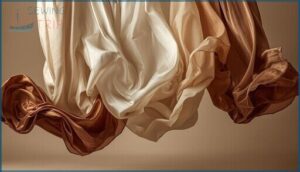
Drape describes how a fabric falls, flows, and shapes itself when it’s worn or used in a design—basically, it’s the way the material reacts to gravity and movement. This characteristic isn’t just an aesthetic detail; it determines whether a garment will cling softly to your body or stand away from it with structure, and whether curtains will puddle elegantly on the floor or hang in crisp, defined folds.
Understanding drape means recognizing how it transforms both fashion and home decor applications.
How Drape Affects Garment Silhouette
Drape is how fabric falls and flows over body contours, creating the vertical and horizontal lines that define your garment’s silhouette—whether it clings, skims, or hangs away from your frame.
When you select lightweight fabrics, you’ll notice gentle fluidity that emphasizes elongating lines and subtle fullness; medium-weight materials balance structure with controlled drift, producing a relaxed yet polished look; heavyweight options resist sagging entirely, yielding sculpted, architectural silhouettes with crisp edges.
Understanding these drape dynamics guides your clothing construction decisions, ensuring fabric weight and weave align with your intended garment movement and drape coefficient.
Drape in Home Decor and Curtains
When you hang a curtain, you’re watching fabric transform into cascading volume—drape determines whether your window treatments form graceful, continuous folds or boxy, rigid edges. Lightweight curtains like voile permit high light transmission and soft fluidity, while heavier weaves block room lighting and hold straighter vertical lines; this interplay between curtain weight and fall shapes your entire decorative scheme.
Curtain styles depend heavily on fabric texture and drape dynamics, since proper drape contributes to both light control and the perceived height of your windows, influencing acoustic properties and aesthetic goals through strategic fabric weight and drape selection.
How Fabric Weight Affects Drape
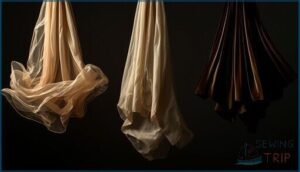
Fabric weight doesn’t just determine how heavy a material feels—it fundamentally changes how that fabric moves, falls, and shapes itself around forms. The relationship between weight and drape follows predictable patterns: lighter fabrics flow and ripple with every shift, while heavier materials hold their structure and create defined silhouettes.
Fabric weight controls how material moves and drapes—lighter weights flow freely, while heavier weights hold structured shapes
Understanding these patterns gives you the power to predict exactly how a fabric will perform before you commit to cutting or purchasing.
Fluidity and Movement in Lightweight Fabrics
Lightweight fabrics—like cotton voile, chiffon, and silk georgette—move with visible ripples and flutter, settling within two seconds of disturbance. Their fluid motion stems from fine fibers and open weaves that allow continuous air flow, creating soft, graceful folds.
- Fabric flow follows body contours smoothly without stiffness
- Movement analysis shows moisture enhances drape dynamics
- Lightweight textures recover shape quickly after bending
- Drape responds instantly to ambient breezes and gestures
Structure and Shape in Heavier Fabrics
Heavyweight fabrics—think denim, canvas, and brocade—hold architectural forms through exceptional fabric density and dimensional stability. Weight distribution anchors pleats and seams in place, while textile rigidity prevents sagging: a 400 GSM wool suiting maintains clean lapel lines, whereas upholstery-grade linen preserves cushion edges under stress. Fabric thickness creates volume without padding, letting draping showcase bold, sculpted silhouettes.
| Fabric Characteristic | Impact on Structure |
|---|---|
| High density weaving | Resists wrinkling and maintains crisp edges |
| Increased fabric weight | Holds architectural shapes like swags and pleats |
| Thick warp and weft yarns | Delivers stiffness for defined collars and cuffs |
| Strong fiber orientation | Preserves straight seams and minimal stretch |
| Dimensional stability | Maintains three-dimensional forms long-term |
Real-Life Examples of Drape Differences
You’ll see Weight Variations transform Fabric Texture instantly when comparing real examples—chiffon at 25 GSM creates soft, rippling folds that shift with every breeze, while 400 GSM wool broadcloth holds sharp, architectural pleats. Understanding these Drape Styles guides confident Fabric Selection:
- Silk charmeuse flows with smooth, gliding curves perfect for cowl necklines
- Cotton gabardine maintains crisp A-line shapes in structured skirts
- Velvet’s plush pile creates soft, rounded breaks showing rich Silhouette Effects
- Voile yields delicate, translucent flutter in sheer curtains
- Denim displays gravity-driven Fold Dynamics with pronounced crease lines
Key Factors Influencing Fabric Weight
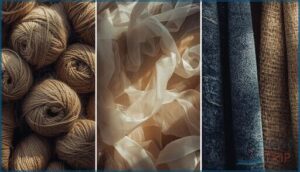
Fabric weight doesn’t emerge from a single characteristic—it’s the result of multiple material and construction decisions that interact in specific ways. Understanding these factors gives you the ability to predict how a fabric will perform before you invest time or money in a project.
Three primary elements determine the final weight: fiber type and yarn thickness, weave construction and density, and the finishing processes applied after production.
Fiber Type and Yarn Thickness
Your fabric’s foundation—fiber type and yarn thickness—dictates weight before weaving even begins. Longer fibers create smoother, often lighter yarn, while fineness drives GSM: finer fibers pack tighter, boosting fabric density without bulk.
Crimp effects add loft and texture, influencing draping subtly but measurably.
Fiber blends let you balance properties, and twist ratio determines whether yarn sits firm or relaxed, shaping textile properties and final hand feel.
Weave Construction and Fabric Density
How threads interlock—plain, twill, satin, or basket—controls density and dictates both fabric weight and drape before you touch the material. Higher thread count tightens the grid, boosting GSM and stiffness, while weave patterns shift textile structure profoundly:
- Plain weave at 180+ threads per inch yields heavyweight, durable fabric with minimal drape
- Twill’s diagonal lines permit tighter yarn density without sacrificing fluidity
- Satin’s long floats feel lighter despite mass, enhancing draping
- Basket weave doubles plain weave thickness, adding weight while preserving softness
- Density (threads per centimeter) interacts with fiber properties to shape final textile properties and performance
Finishing Processes and Treatments
After weaving determines your base structure, fabric finishing and surface treatments add the final performance layer—chemical coatings, resin cross-links, calendering heat, or water-repellent applications that modify hand feel, weight, and draping without altering fiber composition.
Textile enhancements like pre-shrinking stabilize dimensions, while softeners improve tactile comfort; these material modifications in textile science shift fabric density subtly, refining how your final piece performs and feels.
The Relationship Between Fabric Weight and Appearance
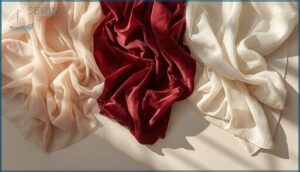
Fabric weight doesn’t just determine how a material behaves—it fundamentally shapes how it looks and feels to the eye and hand. The visual qualities you notice first, from surface texture to the way color presents itself, are directly influenced by whether you’re working with a lightweight chiffon or a substantial upholstery-grade textile.
Understanding these visual connections will help you select fabrics that both perform well and deliver the aesthetic impact you’re after.
Visual Texture and Surface Feel
Weight determines more than just how a garment falls—it fundamentally shapes the tactile sensations and visual effects you’ll see on the surface. Heavier fabric density naturally creates deeper texture types through thicker yarns and tighter weaves, while lightweight fabrics often display smoother, more delicate surface finishes. When evaluating fabric patterns and draping potential, you’ll notice:
- Brushed finishes raise fiber ends, producing a soft, fuzzy visual texture that catches light differently than flat weaves
- Mercerized treatments amplify luster and improve how fabric weight appears at various viewing distances
- Napped surfaces and embossed patterns add dimensional texture that changes with lighting angles
Impact on Color Saturation and Sheerness
Beyond texture, you’ll find that color perception shifts dramatically with fabric weight—sheerness effects and saturation levels depend heavily on how light interacts with the material. Lightweight fabrics transmit more light, making colors appear brighter and more vibrant due to even reflection across the surface, while heavier fabric density scatters light through thicker fibers, slightly dulling perceived saturation.
Dye absorption also varies: lighter weights reach full saturation faster, whereas darker shades in heavy draping fabrics need higher dye concentrations to achieve the same visual intensity you’d expect from drape-friendly lightweight materials.
Choosing Fabric Weight for Clothing
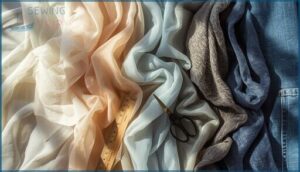
Selecting the right fabric weight for your clothing projects starts with understanding how different weights perform in real-world garments. The relationship between weight, drape, and garment function isn’t arbitrary—it follows clear patterns that you can learn to recognize and apply with confidence.
Here’s how to match fabric weight to your specific clothing needs, from delicate summer pieces to structured winter coats.
Matching Weight to Garment Type
Your garment patterns determine fabric selection more than style alone—lightweight knits under 180 gsm suit fluid tees and dresses, while bottom-weight fabrics from 200 gsm upward provide the weight distribution needed for trousers and skirts.
For structured outerwear, aim for 350 to 500 gsm to maintain sharp silhouettes; drape analysis before cutting prevents costly mistakes in clothing construction and ensures your sewing techniques match the fabric’s natural behavior.
Seasonal and Climate Considerations
Usually, you’ll shift between fabric weight categories as seasons change—lightweight fabrics below 150 gsm excel in humid summers where breathability prevents cling, while heavyweight fabrics above 350 gsm with thermal insulation trap air for winter protection.
Climate adaptation demands regional textiles matched to your environment: dense weaving resists coastal winds, and weather resistance finishes preserve draping quality when temperatures swing between day and night extremes.
Comfort and Wearability
Often, your skin sensitivity dictates fabric choices more than visual appeal—natural fibers like cotton and bamboo at 150 gsm offer fabric softness with excellent breathability factors, while moisture management in wicking blends keeps you dry during activity.
Wear comfort depends on four key interactions:
- Lightweight fabrics under 150 gsm optimize airflow and reduce bulk
- Smooth finishes minimize friction against sensitive skin
- Garment drape affects how fabric sits without constricting movement
- Clothing construction balancing fabric weight with stretch enhances mobility
Selecting Fabric Weight for Home Decor
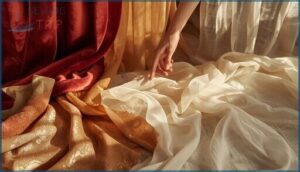
When you’re selecting fabric for home decor, the weight you choose determines far more than just aesthetics—it directly impacts functionality, durability, and how well the piece fulfills its intended purpose. Unlike garment construction, home decor applications demand that you balance visual appeal with practical performance requirements: light filtration, structural integrity, and longevity under constant use.
The three primary considerations below will guide you through matching fabric weight to your specific home decor needs.
Curtains, Drapes, and Light Control
Choosing the right curtain fabric begins with understanding how fabric weight influences light control in your space. Blackout performance fabrics, weighing 300–500 GSM, block nearly 100 percent of incoming light through triple-weave polyester or acrylic-backed construction. Room darkening panels, which block 85–95 percent of light, utilize medium-heavy weights. Sheer layering options, around 120 GSM, soften glare while maintaining views. Consider fullness ratios of 2.5 times your window width—extra drape minimizes light leakage at pleats and seams, especially when paired with wall-to-wall rods and overlapping center closures.
| Fabric Type | Typical Weight (GSM) | Light Blocking | Best Application | Drape Character |
|---|---|---|---|---|
| Blackout | 300–500 | 99.5–100% | Bedrooms, media rooms | Structured, dense folds |
| Room Darkening | 200–350 | 85–95% | Living rooms, nurseries | Moderate body, soft fall |
| Light Filtering | 150–250 | 40–60% | Dining areas, offices | Gentle gathering, subtle texture |
| Sheer | 80–120 | 5–20% | Layered treatments, bright spaces | Fluid, airy movement |
| Thermal Blackout | 350–550 | 99–100% (plus insulation) | Energy efficiency focus | Heavy, crisp structure |
Upholstery and Durability Needs
Upholstery fabric selection demands that you match weight and construction to your furniture’s real-world demands—fabrics ranging from 12 to 40 ounces per yard deliver varying levels of fiber durability and shape retention. For high-traffic seating, prioritize:
- Heavyweight fabrics (24–32 oz/yd²) with tight weaves for sofas and dining chairs
- Abrasion testing ratings above 25,000 double rubs for residential longevity
- Polyester blends or microfibers that resist pilling and surface wear
- Fabric density expressed in high thread counts, ensuring minimal translucency and excellent structure
Room Function and Aesthetic Goals
Your space dictates its fabric demands—a home theater requires heavier drapes (350+ GSM) for room acoustics and light control, while a sun-filled breakfast nook thrives with lightweight sheers that celebrate texture mixing and natural illumination.
Room decoration and ambiance depend on aligning fabric weight with space planning priorities: color schemes gain depth through strategic draping, and curtain styling reinforces both lighting design intentions and privacy requirements you’ve established.
How to Test Fabric Drape and Weight
You can’t rely on product descriptions alone—you need to put fabric through simple, hands-on tests before you commit. Testing drape and weight yourself reveals how a material will actually perform in your project, whether you’re sewing a garment or selecting curtains.
Here are three practical methods that give you the information you need to make confident fabric decisions.
Swatch Folding and Drape Assessment
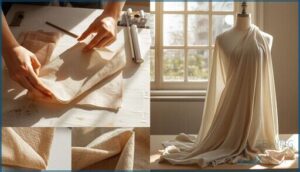
You can predict fabric weight and garment drape with striking accuracy using two simple fold test methods: the right-angle fold and the free-hang drape analysis.
Start with swatch preparation—cut a clean, square sample and press it flat. Fold at ninety degrees with consistent pressure, then observe bulk and edge collapse.
For draping, let your fabric sampling hang freely over a curved surface; watch how gravity shapes the folds and note fluidity versus stiffness.
Comparing Fabrics Side by Side

Once you’ve assessed individual swatches, fabric sampling demands direct weight comparison to reveal performance gaps. Hold two fabrics together—you’ll notice differences in stiffness, fall, and texture evaluation instantly.
For drape analysis across GSM ranges, try these methods:
- Stack and release to see which lightweight fabrics recover first
- Pinch-and-bunch tests show how material selection manages volume
- Light-source inspection exposes translucency at similar fabric weight thresholds
Practical Tips for Fabric Selection
After drape analysis and weight conversion checks, your fabric testing strategy needs a sourcing plan. Request multiple samples for material sourcing comparisons—draping each over your arm reveals how choosing the right fabric transforms from theory to tactile certainty.
For fabric selection for fashion or upholstery, test under project lighting and note GSM tolerances; this hands-on approach eliminates guesswork when weaving fabric selection into final design decisions.
Common Mistakes When Choosing Fabric Weight
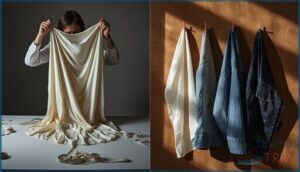
Even experienced sewers and designers fall into predictable traps when selecting fabric weight—mistakes that can derail an entire project before the first cut. The wrong choice doesn’t just affect appearance; it can compromise structure, increase costs, and create frustration during construction and finishing.
Here are the three most common errors you’ll want to avoid when matching fabric weight to your intended application.
Misjudging Drape for Intended Use
A fabric mismatch between drape expectations and real-world silhouette outcomes can derail even the most carefully planned project. When choosing the right fabric, understanding fabric properties and textile performance matters more than initial impressions—lightweight weaves can appear unexpectedly stiff in full-length panels, while weight considerations alone won’t predict how fabric weight and garment drape interact with movement, washing, or environmental changes.
- Test draping before committing: Fold a swatch over your hand or a curved surface to observe how the fabric falls in motion, not just static display.
- Account for real-use conditions: Consider that garments shift with body movement and home textiles respond to humidity, temperature, and sunlight exposure.
- Remember fabric selection and application context: A fabric that drapes beautifully as a scarf may puddle awkwardly as curtains, and vice versa.
Ignoring Hardware and Support Needs
You can’t judge fabric weight and draping success on material alone—hardware failure starts when you skip load calculations. Support systems must handle at least twice your fabric density to avoid sagging, yet installation errors remain the most common cause of structural damage.
Curtain rods rated for lightweight sheers won’t manage heavyweight velvet, no matter how you adjust weight distribution, and garment drape suffers when zippers or closures aren’t matched to fabric weight and its effects.
Overlooking Lining and Layering Effects
Complexity sneaks in when you add lining materials—layering techniques introduce weight distribution changes that transform fabric interactions completely. A smooth lining surface reduces friction, letting top fabrics glide differently than worn bare, while nonstretch liners restrict movement in stretch fabrics and alter garment drape.
Drape enhancement starts with testing combined layers:
- Opacity improvements that make sheer fabrics wearable
- Temperature-regulating bulk that affects vertical fall
- Stretch compatibility that maintains fluid motion
- Color depth shifts from dark or patterned linings
- Maintenance requirements preventing shrinking or distortion
Frequently Asked Questions (FAQs)
How do you choose drapery fabric weight?
Start by matching your room’s privacy needs and sun exposure to a fabric’s density, then verify rod compatibility—especially for heavier curtains—and consider layering options for flexible light control and seasonal draping.
Do heavier fabrics drape better?
Not always—heavier fabrics resist movement and form structured folds, while lighter textiles flow more freely. The best drape depends on whether you need fluid movement or architectural shape in your project.
What are the fabric weight categories?
Fabric weight divides into three main categories: lightweight fabrics under 150 GSM, medium-weight fabrics between 150-350 GSM, and heavyweight fabrics above 350 GSM—each offering distinct material density and thread count for different applications.
What does 400 GSM mean in fabric?
Think of GSM as a fabric’s density fingerprint—400 grams per square meter signals a heavyweight material, substantial enough for upholstery or winter coats, offering structure, warmth, and excellent durability in every fiber.
Can fabric weight change after washing?
Yes—moisture regain after washing can temporarily increase fabric weight as fibers absorb humidity. Cotton and wool show larger weight fluctuation than synthetics. Fabric shrinkage also tightens weave density, subtly raising GSM measurements.
How does humidity affect fabric drape?
Like a sponge soaking up morning dew, fabrics absorb moisture from humid air, altering their GSM and drape stability. Natural fibers swell and hang more heavily, while moisture absorption softens crisp folds, requiring climate control to maintain consistent draping.
Do printed fabrics weigh more than solids?
Most printed fabrics weigh nearly the same as solid versions at the same GSM, since ink coverage adds minimal mass.
Material interaction and fabric density matter far more than print effects when evaluating weight variance.
Whats the lightest fabric for professional attire?
Silk habotai, georgette, and tropical wool are your lightest professional attire options, usually ranging from 40 to 100 GSM—offering breathability and fluid draping while maintaining the polished, business-appropriate appearance you need in office wear.
How do you calculate total curtain weight?
You multiply the curtain’s finished dimensions—width times drop—by the fabric’s GSM or oz/yd² rating. If you’ve added lining or interlining, calculate each layer separately and sum them for accurate total curtain weight estimation.
Conclusion
Think of fabric weight and drape as a compass and map: one tells you what you’re carrying, the other shows where it’ll take you. Master both, and you’ll navigate every project—from billowing curtains to fitted jackets—with confidence instead of guesswork.
The right pairing transforms raw yardage into finished work that performs exactly as intended: moving when it should, holding shape when it must, and wearing the way you envisioned from that first swatch test.
- https://blog.kwikhang.com/how-to-layer-curtains-like-a-pro/
- https://www.u-hightech.com/news/industry-news/the-ultimate-guide-to-total-blackout-curtain-fabric-benefits-types-and-selection-tips.html
- https://drapeful.com/collections/room-darkening-curtains
- https://linenq.com/blogs/journal/how-to-choose-the-right-linen-curtain-a-guide-to-fabric-weight-and-style
- https://www.edmundbell.com/news/2024/08/14/blackout-curtains-vs-dimout-curtains-whats-the-difference/