This site is supported by our readers. We may earn a commission, at no cost to you, if you purchase through links.

Most people choose curtains by color and pattern, then wonder why they don’t hang quite right. The culprit? Fabric weight—a detail that separates elegant window treatments from disappointing purchases.
A gossamer sheer at 40 GSM creates an entirely different effect than a 300 GSM blackout panel, affecting everything from how your curtains drape to whether your hardware can support them. Understanding fabric weight transforms curtain shopping from guesswork into precision, ensuring your windows get the performance and aesthetic you’re actually paying for.
The difference between lightweight and heavyweight fabrics isn’t just technical—it’s the foundation of successful window design.
Table Of Contents
- Key Takeaways
- What is Fabric Weight for Curtains?
- Key Factors Affecting Curtain Fabric Weight
- Comparing Fabric Weights by Curtain Type
- How to Choose The Right Fabric Weight
- Measuring and Calculating Curtain Weight
- Matching Curtain Weight to Hardware
- Common Mistakes in Selecting Fabric Weight
- Frequently Asked Questions (FAQs)
- Conclusion
Key Takeaways
- Fabric weight (measured in GSM or oz/yd²) determines how your curtains hang, perform, and whether your hardware can support them—ranging from lightweight sheers at 40 GSM to heavyweight velvet at 360 GSM.
- Choosing the right weight requires matching fabric density to your room’s specific needs: blackout curtains (200-400 GSM) for bedrooms and thermal insulation, lightweight options (20-60 GSM) for filtering light without blocking views, and midweight fabrics (150-350 GSM) for living spaces.
- Total curtain weight multiplies based on fullness ratio, lining layers, and header styles—doubling your fabric width from 1.5x to 3x fullness means doubling the load on your rod, while blackout lining adds 100-200 GSM and pleated headers consume two to three times more material than flat panels.
- Hardware must match your curtain’s actual weight to prevent sagging and failure—steel rods and brackets rated for 15-25 pounds each, mounted into studs every 24-36 inches, are essential for heavy curtains, while underestimating fabric density or ignoring lining effects leads to costly installation failures.
What is Fabric Weight for Curtains?
Fabric weight determines how your curtains hang, function, and perform in your space. It’s measured in specific units that help you compare different materials and make informed decisions about what works best for your windows.
Understanding what fabric weight means helps you choose curtains that drape beautifully and meet your specific light-filtering or privacy needs.
Understanding these basics ensures you choose curtains that look beautiful, last longer, and actually do what you need them to do.
Definition of Fabric Weight
Fabric weight describes how heavy your curtain material is per unit area—a key detail that influences drape, hang, and overall performance. It stems from fabric density, the weaving process, and any finishes applied during manufacturing.
Understanding curtain weight and textile science helps you predict:
- How the material responds when you open and close panels
- The level of fullness and structure you’ll see in folds
- Material selection needs for privacy and light control
- Curtain thickness required for thermal insulation
For a detailed breakdown of typical fabric weight categories, you can learn which weights are best for various curtain applications.
Common Units (GSM, Oz/yd²)
When you’re shopping for window treatments, you’ll encounter two main measurement tools: GSM (grams per square meter) and oz/yd² (ounces per square yard). These unit standards quantify fabric density and curtain weight with precision.
GSM is the global textile weight metric—multiply oz/yd² by 33.906 for weight conversion. Understanding these calculation methods ensures you compare fabrics accurately across suppliers and weaving styles.
For a detailed explanation of fabric GSM and oz/yard, you can explore how these measurement units impact textile selection.
Why Fabric Weight Matters for Curtains
Once you grasp those measurement units, you’ll see why curtain weight shapes your entire window treatment experience. The right fabric density determines curtain balance along your rod, controls weight distribution across brackets, and influences drape dynamics that define how your panels fall and move.
Understanding curtain weight calculation through GSM and textile density helps you:
- Match hanging systems to fabric mass
- Prevent sagging rods and failed brackets
- Achieve the visual flow you want
Key Factors Affecting Curtain Fabric Weight

When you’re choosing curtain fabric, the final weight isn’t just about the material itself. Several elements work together to determine how heavy your curtains will be, and understanding these factors helps you pick the right rod and hardware from the start.
Let’s break down what actually adds weight to your window treatments.
Fabric Type and Thickness
Think of fabric type as the foundation of your curtain’s weight—cotton floats at under 150 GSM, while velvet commands 360 GSM or more.
The best fabric for lined curtains often depends on how much insulation and light control you need in the space.
Fabric density, thread count, and weave patterns all stack up: a tightly woven polyester blend holds its shape differently than linen’s loose, breathable textile density. Yarn thickness in your material blends directly shifts how your fabric selection drapes and performs across light control needs.
Lining and Interlining Impact
Adding lining materials layers on extra fabric weight—blackout lining alone can push your curtain weight up by 100–200 GSM, while thermal interlining types add another 80–150 GSM of fabric thickness.
This weight distribution affects how your panels hang: heavier lining weight anchors the drape, giving you fuller curtain fullness and better light control without compromising the outer fabric’s appearance.
Curtain Size and Fullness
Curtain size and fabric fullness directly multiply your total weight—doubling the panel widths from 1.5x to 3x fullness means you’re using twice the fabric, which doubles the load on your rod.
The number of widths in your curtain drop, combined with curtain gathering and drape styles, determines how much material you’re actually hanging, making fold calculations essential before you choose hardware.
Heading Styles and Material Usage
Your drapery header style transforms fabric weight—pleated headers require two to three times more material than flat panels, while gathered or pinch-pleat styles add significant ounces per width.
Pencil pleats use less fabric than goblet pleats, but both consume more yardage than simple rod-pocket curtains. Understanding GSM and fullness ratios helps you calculate accurate curtain weight before purchasing fabric or selecting hardware for your curtain fabric selection.
Comparing Fabric Weights by Curtain Type
Not all curtains are created equal in terms of weight. The fabric type you choose can mean the difference between a lightweight panel that weighs under a pound and a heavyweight drape that tips the scales at ten pounds or more.
Let’s compare the most common curtain types so you can find the right weight for your space.
Sheer Curtain Weights

You’ll find sheer curtains weighing between 20 and 60 GSM, making them the lightest option for filtering daylight without blocking views.
Voile and chiffon fabrics need strategic edge hemming with bottom weights—often pre-sewn lead chains or fabric-covered options—to control curtain sway and maintain clean fabric drape. These lightweight curtains handle weight distribution through side stick weights sewn into vertical hems, preventing billowing while preserving their translucent appeal.
Blackout and Thermal Curtain Weights

When you need real light control and temperature regulation, blackout and thermal curtains deliver fabric weights between 200 and 400 GSM. These dual-purpose panels combine dense weaving with insulating linings that increase curtain density substantially.
The construction of these curtains involves:
- Standard blackout materials add 150-250 GSM through tightly woven polyester or cotton blends
- Thermal insulation layers contribute an extra 50-150 GSM to fabric thickness
- Multi-layer constructions distribute weight across the panel for improved drape
- Heavier curtain weight requires brackets rated for 4-10 pounds per panel
Velvet and Stage Curtain Weights

At the heaviest end of the spectrum, velvet fabric for stage applications delivers 360 GSM or 20-40 oz per square yard—true theater-grade heavy curtains.
These panels often include reinforced linings that improve acoustic dampening and light blocking under stage lighting.
Proper weight distribution across brackets becomes critical for curtain safety, especially when motorized tracks handle velvet curtains exceeding 10 pounds per panel.
How to Choose The Right Fabric Weight
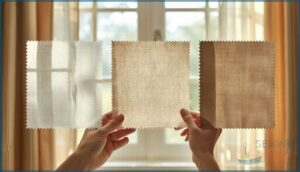
Choosing the right fabric weight isn’t just about what looks good—it’s about matching your curtains to how you actually live in the space.
The weight you need depends on three key factors: what the room is used for, how much privacy and temperature control you want, and the overall look you’re going for. Let’s break down each consideration so you can make a confident choice.
Room Function and Light Control
Before you choose curtain weight, think through how each room actually gets used. Light management transforms room ambiance and daylight control needs shift based on your activities—media viewing, focused work, or unwinding after hours.
The right window treatments create space optimization customized to your life:
- Living rooms: Flexible light control for socializing and screen time without harsh glare
- Bedrooms: Blackout curtains for restful darkness and complete privacy
- Home offices: Steady, even illumination that facilitates concentration
- Kitchens: Lightweight curtains allowing bright, task-friendly light throughout the day
Privacy and Insulation Needs
Beyond light control, curtain weight dramatically improves privacy and thermal insulation. Heavyweight fabrics reduce heat loss through windows while blocking up to 99 percent of visible light when properly lined.
Dense weaves boost acoustic privacy by absorbing mid-to-high frequency sounds, muffling voices between rooms. Blackout curtains paired with thermal linings deliver energy efficiency, lowering heating bills in cold climates while maintaining complete light blocking and room insulation year-round.
Aesthetic and Drape Considerations
Fabric weight shapes how your curtains hang and move. Lightweight curtains drape with soft folds and flowing lines, while heavy curtains form structured ridges with sharp, custom pleats.
The drape coefficient—how fabric bends under its own weight—determines fold techniques and light interplay across gathered panels. Velvet absorbs shadows for rich texture effects; sheers create delicate silhouettes with gentle hemline designs that hover near windowsills.
Measuring and Calculating Curtain Weight
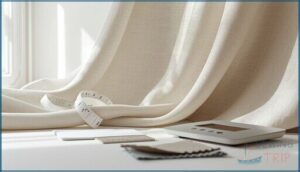
Getting the weight right isn’t just guesswork—you can actually calculate it before you buy. Once you understand a few basic measurements and formulas, you’ll know exactly what you’re hanging and whether your hardware can handle it.
Let’s walk through the practical methods you can use to estimate your curtain’s total weight.
Using GSM to Estimate Weight
Understanding GSM conversion transforms curtain weight estimation from guesswork into precision. Your fabric’s GSM—its density in grams per square meter—tells you exactly what you’re hanging before you commit. Here’s your textile weight guide for accurate material selection:
- Multiply fabric area in square meters by GSM to get total grams, then convert to kilograms or pounds for curtain calculation
- Measure a precise one-meter-square sample on a digital scale to verify the manufacturer’s stated GSM
- Account for fullness ratio by multiplying your window width by 2–2.5 before weight estimation
Curtain Weight Calculators
Online curtain weight calculators simplify fabric density math by instantly converting your panel dimensions, GSM, and lining choices into accurate weight estimation. You’ll enter header style, width, length, and fabric type to get precise curtain weight figures that inform rod capacity decisions.
These digital tools perform curtain load tests virtually, ensuring your curtain balance matches your hardware’s strength before you hang anything.
Fullness Ratio and Gathering
Your curtain’s fullness ratio—the multiple of fabric width gathered across your window—directly increases fabric weight and reshapes drape effects. A 2x fullness doubles the GSM load on your rod compared to 1x, while pleat styles like French or box pleats concentrate gathering techniques into structured folds.
Higher fabric fullness demands stronger hardware, so use a curtain calculator to check total curtain weight before installation.
Hem Allowances and Pattern Repeats
When you calculate curtain size, don’t forget hem depth—usually 2.5 to 5 cm—adds fabric weight and influences draping effects.
Pattern matching demands repeat alignment at seams, increasing fabric waste by up to 20 percent on complex designs. Enter these details into your curtain calculator alongside GSM to capture true fabric weight, ensuring your rod holds the final panel without sagging.
Matching Curtain Weight to Hardware
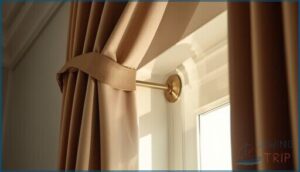
Even the most beautiful curtains won’t hang properly if your hardware can’t support their weight.
The right rod, brackets, and installation method create a foundation that keeps your window treatments secure and looking their best for years.
Let’s walk through how to match your curtain’s fabric weight to the hardware that’ll hold it.
Selecting Appropriate Curtain Rods
Your curtain rod is the backbone of your entire window treatment. To match rod material and diameter to your fabric weight, consider these essentials:
- Steel rods resist bending under heavy curtains, holding up to 40 pounds per standard 1-inch diameter
- Thicker rods (1½ to 2 inches) handle blackout panels and velvet drapes without sagging
- Long curtain spans over 96 inches need center supports every 4 to 6 feet for stability
Bracket and Hardware Requirements
Think of your brackets as the unsung heroes holding everything together. Steel brackets carry 20 to 50 percent more load capacity than aluminum, supporting 15 to 25 pounds each when matched to proper rod diameter and wall anchors.
For drapery hardware strength, mount into solid studs or use heavy-duty toggle bolts, spacing brackets every 24 to 36 inches along your track width.
Safe Installation Tips for Heavy Curtains
Heavy fabric handling starts before you even drill a hole. Use a rod rated for at least 20 pounds per linear foot, mount brackets into wall studs with heavy-duty wall anchors rated for 100 pounds per pair, and space them every 4 feet maximum.
Level all brackets with a spirit level for proper curtain hardware alignment, pre-drill pilot holes, and always work with a helper for secure installation methods on tall windows.
Common Mistakes in Selecting Fabric Weight

Even experienced designers sometimes get fabric weight wrong, and the results can range from sagging rods to curtains that just don’t hang right.
The good news is that most of these mistakes follow predictable patterns you can easily avoid. Let’s walk through the three most common missteps and how to sidestep them in your next project.
Misjudging Fabric Density
Density measurement trips up even experienced decorators. When you underestimate fabric weight, your curtains hang limp and reveal too much light—defeating your privacy goals entirely.
Underestimating fabric weight leaves curtains hanging limp and failing to block light or provide privacy
Overestimate GSM, and heavy curtains overwhelm your rods, sagging within weeks. Dense weaves need proper curtain fullness to drape gracefully, while lightweight curtains require different hardware altogether.
Misjudging fabric density during fabric selection means costly do-overs.
Ignoring Lining and Header Effects
You might pick the perfect fabric weight, only to watch your curtains hang awkwardly because you forgot about lining and header styles. Lining thickness adds hidden bulk that shifts fabric drape and weight distribution—sometimes doubling your curtain weight. Header styles consume extra yardage, affecting curtain fullness without changing the base GSM.
Consider these overlooked factors:
- Blackout lining adds insulation and body that heavyweight curtains need for proper drape
- Pinch-pleat headers use 30-50% more fabric than simple rod pockets
- Lightweight curtains gain unexpected heft when thermal interlining joins the main panel
Overlooking Hardware Limitations
Even perfect fabric weight calculations fall apart when your curtain rod bends under load. Bracket failure points occur when heavy curtains exceed rated capacity, causing wall anchor weakness and rod sagging risk.
Material compatibility matters—steel brackets handle heavyweight fabrics better than decorative aluminum. Always check curtain hardware requirements against actual curtain weight before installation, ensuring your rod system prevents structural failure.
Frequently Asked Questions (FAQs)
What weight should curtain fabric be?
Your curtain fabric should weigh between 180 and 300 grams per square meter for most rooms, balancing privacy with drape, though kitchens need lighter materials.
While bedrooms perform better with heavier blackout options.
Is 8 oz of fabric heavy?
In the realm of textiles, 8 oz fabric falls right in the middle—it’s a medium-weight material.
It strikes a balance between lightweight sheers and heavyweight drapes, offering moderate drape and opacity.
Do heavier fabrics drape better?
Yes, when heavyweight fabrics carry proper fullness and correct lining. Greater fabric density promotes structured fold formation and smoother silk draping effects, while GSM over 250 ensures gravity-driven drape dynamics rather than stiff, lifeless panels.
What is the best lightweight fabric for curtains?
Cotton voile and linen blends are top lightweight fabrics for curtains. Both breathable fabrics offer soft drape, airflow, and easy maintenance, with GSM ranging from 50 to 180 for ideal sheer choices.
Can I wash heavy curtains at home safely?
Most durable fabrics like cotton or polyester curtains can handle a gentle cycle with cold water at home.
Check your care label first, remove hardware, use mesh bags, and air dry to prevent shrinkage.
Do curtain weights affect energy bills significantly?
Heavier curtains with thermal insulation can modestly reduce HVAC costs by blocking solar heat gain and limiting winter drafts, but overall energy savings depend heavily on proper window sealing, climate, and installation quality—not fabric weight alone.
How often should curtains be replaced based on weight?
Think of your drapes like a well-loved jacket—they’ll tell you when it’s time.
Weight factors like fabric durability drive replacement schedules: lightweight sheers every two to four years, heavier blackout panels every three to six.
Are lighter curtains better for humid climates?
Yes, lightweight curtains excel in humid climates. Their breathable fabrics promote air flow management and moisture resistance, drying faster than heavy blackout curtains while reducing mildew risk through enhanced humidity control and ventilation.
What fabric weight works best for bay windows?
Bay Window Styles demand fabrics around 150–350 GSM for Curtain Fabric Selection that follows curves smoothly.
Weight Distribution and Drape Fullness depend on the bay’s angles, while Curve Fitting requires midweight Blackout Curtains with proper Curtain Size for uninterrupted coverage.
Conclusion
Nothing transforms a room faster than curtains that hang with the exact weight and drape you envisioned.
Now that you understand fabric weight for curtains—from GSM measurements to hardware matching—you’re equipped to choose panels that deliver both beauty and function. Skip the guesswork: measure your needs, calculate the weight, verify your rod’s capacity, and watch your windows come alive with perfectly weighted fabric that performs exactly as intended.