This site is supported by our readers. We may earn a commission, at no cost to you, if you purchase through links.
Walk into any quilt shop and you’ll spot them immediately—those neatly folded squares of fabric stacked in rainbow order, begging to come home with you.
Fat quarters are the quilting world’s sweet spot: big enough to cut meaningful pieces from, small enough to collect without guilt.
At 18 by 22 inches, a single fat quarter unlocks block sizes that a standard quarter-yard simply can’t deliver, which is why seasoned quilters rarely buy fabric any other way.
Whether you’re building your first patchwork or raiding your stash for a weekend project, understanding fat quarters changes how you shop, plan, and sew.
Table Of Contents
Key Takeaways
- A fat quarter’s 18×22-inch shape unlocks bigger block sizes than a standard quarter-yard’s narrow 9×44-inch strip, making it the smarter cut for almost any quilting pattern.
- You can stretch one fat quarter surprisingly far — think twelve 5-inch squares, four jelly roll strips, or a fully lined tote bag — with virtually zero wasted fabric when you plan your cuts right.
- Building your stash with coordinated bundles takes the color-matching guesswork off your plate, since the best collections already balance light, medium, and dark tones for you.
- A little prep goes a long way: prewash in cold water, press with starch, and respect a four-layer max when cutting to keep your dimensions accurate and your seams clean.
What Are Fat Quarters?
If you’ve ever wandered through a fabric store and spotted those neatly folded, pre‑cut squares of fabric, chances are you were looking at fat quarters. They’re a quilter’s best friend — and once you understand what makes them special, you’ll see why they’re everywhere.
Whether you’re just starting out or refining your technique, understanding fabric preparation for quilting projects helps you get the most out of every fat quarter you buy.
Here’s what you need to know about their size, how they’re cut, and what sets them apart from a regular quarter yard.
Fat Quarter Dimensions and Size
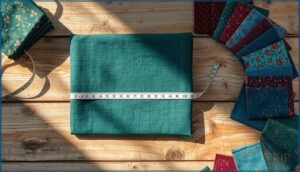
In the US, a fat quarter measures 18 by 22 inches — your go-to quilting supplies staple. UK versions run slightly larger at about 19.5 by 22 inches, so always check before ordering fabric packs online.
Factor in seam allowance impact and fabric width variations, and your usable area after cutting lands around 17.5 by 20.5 inches — still generous for square cutting yields. A fat quarter can produce twelve 5‑inch squares for quilting.
How Fat Quarters Are Cut
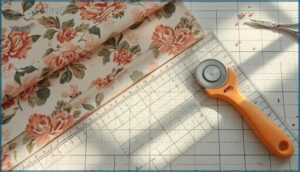
Start with a half yard, fold it across the width, and cut straight along that center fold line — that’s your fat quarter. Fold alignment matters here; even a slight drift throws off your measurements.
Use a rotary cutter with a fresh blade (replace it every couple of cuts), trim the selvage cleanly, and always verify your 18-inch measurement before committing.
Refer to a fat quarter cutting chart for visual guidance.
Differences From Standard Quarter Yards
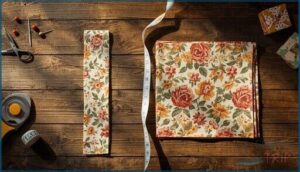
Once you’ve cut fat quarter, you’ll notice it looks almost square — that’s the shape ratio at work.
A standard quarter yard runs 9" × 44", long and narrow.
Your fat quarter flips that to 18" × 22".
Same fabric, totally different story.
That wider cut unlocks bigger block size limits and friendlier pattern compatibility, making fat quarters a smarter pick for quilting for beginners.
Why Quilters Love Fat Quarters
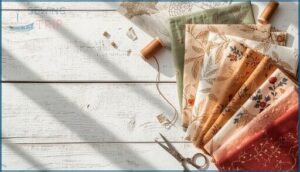
Fat quarters have a way of winning quilters over fast — and it’s not hard to see why.
From how they fit into patterns to how they stack neatly in your sewing space, there’s a lot to appreciate.
Here’s what makes them such a go-to choice.
Versatility for Quilting Patterns
Fat quarters are basically the Swiss Army knife of quilting — the block size flexibility alone opens up a world of possibilities. Whether you’re a beginner or seasoned stitcher, these little fabric bundles adapt to almost any pattern:
Fat quarters are the Swiss Army knife of quilting, adapting to virtually any pattern for beginners and seasoned stitchers alike
- Cut twelve 5‑inch charm squares for scrappy design options
- Slice four jelly roll strips for strip‑piecing techniques
- Yield nine 6‑inch squares for medium blocks
- Mix color mixing techniques across fabric bundles and collections
- Explore style adaptability with modern or traditional quilting patterns
Minimal Fabric Waste
Quilting smart means wasting less — and fat quarters make that surprisingly easy.
No-waste layouts map every inch of the 18″×22″ rectangle to specific blocks.
Strip cutting along the 22″ edge turns one fat quarter into dozens of sub-units.
Standardized block sizes let you repeat one layout across your fabric bundles, so scrap repurposing becomes second nature rather than an afterthought.
| Technique | Waste Reduction Benefit |
|---|---|
| No-waste layouts | Uses every section of the fat quarter |
| Strip cutting | Minimizes edge utilization leftovers |
Easy Stash-Building and Organization
Building your stash doesn’t have to feel overwhelming.
Color-coded bins and drawer tray systems keep fat quarters sorted by hue, so you can grab exactly what you need mid-project.
Rolling storage logs reveal each print at a glance, while tub bin labeling removes the guesswork entirely.
Bundle purchasing strategies — like curated fat quarter bundles — are a beginner’s shortcut to coordinated quilting fabric selection without second-guessing every choice.
Creative Projects Using Fat Quarters

rare craft supplies are one of those rare craft supplies that punch way above their weight. That little 18" x 21" piece of fabric can become just about anything you set your mind to. Here’s a look at some of the most satisfying projects you can make with them.
Quilts and Patchwork Designs
Your fat quarter stack is basically a quilt waiting to happen.
From classic Traditional Motifs like nine‑patch and log cabin blocks to bold XL Block Design layouts with minimal seams, the options are wide open.
Play with Color Value Contrast to create movement, or embrace Modern Negative Space for a clean, graphic finish.
Sampler Layouts let your favorite Quilting Fabric Selection shine — one block, one print, all yours.
Tote Bags and Accessories
Two fat quarters can become a fully lined tote before lunch. Cut your exterior panels, choose your Interfacing Choices wisely — fusible woven works best for structure — then add Pocket Configurations inside for phones and keys.
Experiment with Reversible Tote Features using coordinating Fabric Bundles and Sets. Don’t overlook Zipper Pouch Designs either; one fat quarter plus a 10‑inch zipper creates a perfect everyday accessory.
Home Décor: Pillows and Baskets
Your home deserves handmade charm — and fat quarters deliver it beautifully. Whether you’re revitalizing a reading nook or organizing a shelf, these little fabric cuts punch well above their weight.
- Trim fat quarters to 17×17" for envelope pillow covers with a clean, professional finish
- Use two fat quarters for reversible zippered pillows — perfect for seasonal color palettes
- Sew small baskets (5"×5.5") for tidy, mix‑match textures on any shelf
- Add DIY fabric grips to book-style pillows for functional, stylish layered pillow styling
- Stuff with eco‑friendly stuffing to keep your sewing projects for home both cozy and conscious
Appliqué and Small Crafts
Appliqué turns fat quarters into storytelling fabric. Whether you’re learning Fusible Web Techniques or practicing Hand Applique Stitches, these cuts are ideal for DIY Projects and Fabric Crafting for Beginners.
| Technique | Best For |
|---|---|
| Raw Edge Finishing | Quick, casual designs |
| Fusible Web | Precise shapes, clean edges |
| Mini Pouch Patterns | Gifts and organizers |
Color Catcher Tips keep your finished pieces vibrant through every wash.
How to Choose and Shop Fat Quarters
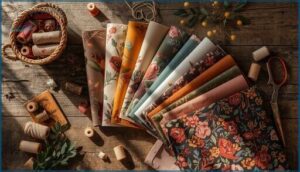
Shopping for fat quarters is honestly one of the most fun parts of the whole quilting journey. Whether you’re browsing online or wandering the aisles of your local fabric shop, saves you time you money, and a lot of second-guessing.
Here’s what to keep in mind as you start building your collection.
Coordinating Fabric Bundles
Choosing the right fat quarter bundle doesn’t have to feel overwhelming. Most bundles contain 4 to 30 pieces, and the best ones already do the Color Harmony work for you. Here’s what a well-coordinated Fabric Bundle and Sets selection looks like:
- Value Balancing: Mix light, medium, and dark tones for natural depth
- Pattern Mixing: Pair bold prints with small-scale motifs or tone-on-tones
- Seasonal Palettes: Choose themed bundles that guide your color story
- Selvedge Coordination: Use selvage dots to verify exact shade matching across fabrics
Popular Fabric Collections and Themes
Once your bundle is coordinated, the fun really begins — picking a theme.
Floral Collections like Riley Blake’s watercolor blooms or Moda’s Vintage Garden lines bring instant romance to any project.
Prefer bold structure? Geometric Patterns deliver.
Boho Themes mix earthy mandalas with linen textures.
Holiday Motifs and Limited Edition Spring Fabric Collections — think Floral Fade or Flamingo Fiesta — make every Fat Quarter Bundle feel like a seasonal treasure.
Tips for Online and In-Store Shopping
Whether you’re clicking "add to cart" or browsing bolts in person, a little strategy goes a long way with fat quarters.
- Check shipping thresholds — free delivery often kicks in around $65
- Do a quick price comparison: divide bundle cost by piece count, multiply by four
- Read return policies before ordering; restocking fees can sting
- Run fabric quality checks — tug lightly; good quilting cotton won’t stretch or fray quickly
Essential Tips for Working With Fat Quarters
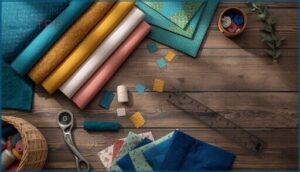
fat quarters comes down to a few good habits before you ever sew a stitch. From prepping your fabric to keeping your colors balanced, small steps make a big difference in how your finished project looks and lasts.
Here’s what you need to know before you get started.
Prepping and Pressing Fabric
Before fat quarters ever meet a rotary cutter, prep work makes all the difference. Start with prewashing to control shrinkage — cold water, gentle cycle — then air dry to keep those 18×22 dimensions intact.
| Step | Why It Matters |
|---|---|
| Starch Application | Stabilizes fabric for cleaner cuts |
| Ironing Techniques | High heat + smooth strokes removes creases fast |
Moisture management is your secret weapon: lightly dampen, press both sides, then let fabric cool completely.
Cutting Techniques for Accuracy
Precision cutting starts with the right setup. Keep your blade angle snug against the ruler — tilting outward causes wobbly lines.
Apply pressure from your shoulder, not just your wrist, for one clean pass. Watch parallax prevention: look straight down at your ruler mark. Respect layer stacking limits (four fat quarters max), and rotate your mat instead of lifting fabric for accurate crosscuts.
Balancing Colors and Patterns
Getting your colors right can make or break a quilt. For Patchwork Quilting, try Complementary Pairing — purple with yellow — for bold contrast, or lean into Analogous Harmony with blues and greens for something calming.
Value Contrast keeps blocks from going muddy. Mix scales within your Fat Quarter Bundle, and balance Warm‑Cool tones so your Fabric Bundles and Sets feel cohesive, not chaotic.
Washing and Care Recommendations
Before you cut a single square, give your fat quarters a little TLC.
Prewashing takes care of Color Bleeding Prevention and Shrinkage Control in one go — just use cold water, a gentle cycle, and a mesh bag to protect edges.
For Fabric Softening Techniques, skip the dryer heat; air dry flat instead.
Finish with Starch Application before pressing, then tuck them into flat bins as your go-to Storage Solutions.
Frequently Asked Questions (FAQs)
Can fat quarters be used for garment sewing?
Baby Bibs, Toddler Skirts, and Kimono Jackets are all fair game. Check Pattern Yardage carefully, since Knit Stretch fabric opens more options than woven Sewing Fabric for small garments.
How many fat quarters complete a full quilt?
For a standard full quilt, plan on 16 to 24 fat quarters.
Your exact block layout planning and fabric yield estimates shift that number, so always factor in your pattern’s quarter yard equivalents before buying.
What tools do beginners need for fat quarters?
You need a rotary cutter, cutting mat, quilting ruler, fabric pen, and seam ripper.
These core sewing supplies make clean, accurate cuts and keep your quilting supplies and materials organized for smooth, frustration‑free crafting.
Are fat quarters suitable for childrens craft projects?
Absolutely — fat quarters are a perfect match for kids’ DIY crafts.
Their compact size, safety materials like 100% cotton, and ease of use make simple projects approachable, especially with adult supervision guiding every colorful stitch.
How should fat quarters be stored long-term?
Keep your fat quarter bundle fresh for years: store in archival containers, control humidity below 70%, block UV light, fold neatly, and add cedar blocks for pest prevention.
Conclusion
Think of your fabric stash as a garden—and fat quarters are the seeds that give you the most to work with. Each one carries enough material to matter, without demanding more space than it deserves.
Once you understand how fat quarters fit into your projects, shopping and planning both get sharper. You’ll waste less, create more, and build a collection that actually benefits your work.
The right cut of fabric changes everything.
- https://lindehobby.com/definition-of-a-fat-quarter-of-fabric-1691/
- https://www.generations-quilt-patterns.com/what-is-a-fat-quarter.html
- https://hellosewing.com/what-is-a-fat-quarter/
- https://www.dalstonmillfabrics.co.uk/fabric-blog/what-is-a-fat-quarter
- https://lorikennedyquilts.com/what-is-a-fat-quarter-quilting-101/