
This site is supported by our readers. We may earn a commission, at no cost to you, if you purchase through links.
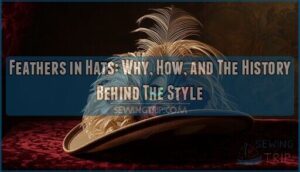
A single feather tucked into a hatband once announced everything about you—your rank, your victories, even your right to wear it at all. When soldiers returned from battle in medieval Europe, they’d fasten a plume to their caps as proof of survival and valor, a tradition so potent that laws actually restricted which feathers commoners could touch.
The choice wasn’t just decorative. Ostrich plumes signaled aristocratic wealth, while peacock eyes hinted at spiritual vision or vanity, depending on who was watching.
Today, feathers in hats still carry that weight of meaning, even if we’ve forgotten the language. Understanding why and how feathers became such powerful hat ornaments reveals a surprising mix of identity, rebellion, and artistry that’s lasted centuries.
Table Of Contents
- Key Takeaways
- Why Are Feathers Used in Hats?
- Symbolism Behind Feathers in Hats
- Popular Types of Feathers for Hats
- Iconic Hat Styles Featuring Feathers
- How Feathers Are Attached to Hats
- Feather Placement and Hat Design
- Where to Find Feathers for Hat Making
- Ethics and Conservation in Feather Use
- Creative Ways to Style Feathered Hats
- Frequently Asked Questions (FAQs)
- Conclusion
Key Takeaways
- Feathers in hats served as powerful status symbols and achievement markers throughout history, with strict laws in medieval Europe limiting which feathers commoners could wear and military traditions awarding plumes for battlefield valor.
- Different feather types carried distinct meanings—ostrich plumes signaled aristocratic wealth, peacock feathers suggested spiritual vision, and specific placements and angles communicated military rank, social standing, or cultural identity across various societies.
- The 19th-century feather trade nearly drove multiple bird species to extinction before conservation movements like the Audubon Society pushed for protective laws, leading to today’s emphasis on ethical sourcing, sustainable alternatives, and responsible feather collection practices.
- Modern hat makers can attach feathers using multiple techniques including gluing for quick projects, hand-sewing for durability, or hatpins for removable styling, while creative shaping methods like heat curling and fabric mixing allow for personalized designs that honor centuries of tradition.
Why Are Feathers Used in Hats?
Feathers in hats aren’t just decoration—they’ve carried meaning across centuries and cultures. From medieval battlefields to Victorian drawing rooms, people have worn feathers to signal everything from social rank to personal triumph.
Let’s explore the fascinating reasons behind this enduring tradition.
Historical Origins of Feathered Hats
Feathered hats didn’t just appear out of nowhere. You’ll find their roots in ancient Egyptian nobles wearing ostrich plumes and medieval headwear signaling rank across Europe.
By the 16th century, the feather trade exploded, fueling a massive millinery industry. Cultural exchange spread these styles globally, while hat regulations tried to keep plumes exclusive to the elite.
The history of fashion shows feathers carried serious weight—literally and symbolically. Researchers rely on scientific study summaries to understand the evolution of fashion trends.
Social Status and Symbolism
Feathers weren’t just pretty decorations—they were power moves. In medieval Europe, plumes defined who stood where in military and court hierarchies. The bigger and bolder your feathers, the closer you sat to the throne. Sumptuary laws even restricted certain colors and materials to specific social classes, turning hat feathers into prestige markers you couldn’t fake.
- Military uniforms showcased feathered elements to display unit prestige and achievement distinctions
- Aristocrats used ostentatious plume displays to signal wealth and proximity to monarchs
- Prize feathers publicly announced social advancement or victories you’d earned
- Cultural significance of feathers transformed headwear into identity statements across societies
Fashion Trends and Influences
While status mattered historically, fashion trends brought feathers to the masses. Runway inspirations from fashion weeks constantly reinterpret plumes through modern lenses. Celebrity styles spark crazes overnight—one red-carpet moment can revive centuries-old techniques. Before dyeing delicate plumes, explore techniques for preserving heirloom-quality fabrics to ensure your colors stay vibrant for decades.
Cultural exchange fuels innovation as designers blend traditions across continents.
Today’s sustainable fashion practices push faux alternatives and ethical sourcing, proving fashion accessories evolve while honoring heritage. Fashion and style keep reinventing what feathers mean in hat fashion trends.
Symbolism Behind Feathers in Hats
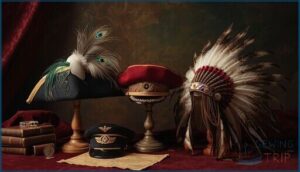
A feather in your hat isn’t just decoration—it’s always meant something more. Throughout history, people wore feathers to show achievement, signal their beliefs, or tap into something spiritual.
Let’s look at what these plumes have symbolized across different times and cultures. From Victorian mourning wreaths to Renaissance status symbols, feather motifs have carried deep meaning—and mastering advanced free-motion quilting foot techniques can help you capture that historical richness in your own textile art.
Feathers as a Mark of Achievement
You’ve probably heard the phrase “a feather in your cap”—it’s not just about pride and achievement. Across history, feathers became powerful achievement symbols and status symbols tied directly to what you earned:
- Military honors: Officers displayed plumes signaling rank, valor, or campaigns completed
- Indigenous traditions: Feather awards marked leadership, spiritual milestones, or community contributions
- Fraternal groups: Feathered hats recognized service accomplishments and earned credentials
- Competitive victories: Championships granted feathered decorations as tangible personal achievement markers
Today, conservation ethics shape how we honor these traditions responsibly. Many of these traditional embroidery techniques from around the world are being adapted with sustainable materials to preserve cultural heritage without compromising environmental values.
Cultural and Spiritual Meanings
Beyond personal triumph, feathers carry deep spiritual symbols woven into cultural heritage across civilizations. Indigenous communities view ritual headwear as sacred adornments connecting wearers to ancestors and divine guidance. Many artisans preserve these traditions through meticulous hand-stitching techniques for ceremonial garments, ensuring each feather is secured with respect and precision.
The cultural significance varies—eagle feathers symbolize strength, while heron plumes represent grace. These feather traditions honor cosmological beliefs and ceremonial roles like healers or leaders. Today’s artisans draw on traditional embroidery styles and inspiration to translate these sacred feather motifs into wearable designs that respect their origins.
Understanding feather meaning within cultural symbols respects symbolism and meaning that transcends fashion.
A Feather in Your Cap Explained
You’ve heard “a feather in your cap” countless times, but this idiom roots itself in medieval Europe’s literal feather awards for bravery. Hat heritage shows how military victories earned soldiers actual plumes during the 17th–19th centuries—a fashion statement displaying rank and courage.
Today’s feather symbolism in vintage headwear carries that legacy forward:
- Achievement recognition through visible hat feathers marking accomplishments
- Social standing communicated via feather crafts and placement techniques
- Group identity shown through species variations and positioning codes
- Cultural significance honoring traditions where symbolism and meaning intersect with personal pride
Popular Types of Feathers for Hats
Not all feathers are created equal in hat design. Some bring drama and height, while others offer subtle texture or bold patterns.
Let’s look at the most popular feather choices and what makes each one stand out.
Ostrich, Peacock, and Pheasant Feathers
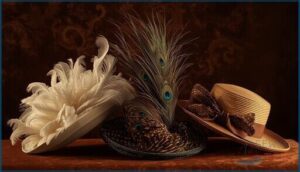
When you’re choosing hat feathers, three birds dominate the scene. Ostrich feathers bring soft, fluffy plumes that can stretch over 60 cm—perfect for volume and drama. Peacock feathers deliver those mesmerizing eye patterns with natural rigidity that holds shape beautifully. Pheasant feathers offer rich, earthy tones with distinctive barred patterns.
Each type brings unique feather coloration, plume texture, and personality to your hat adornments, making “a feather in your cap” truly your own statement.
Color, Texture, and Pattern Choices
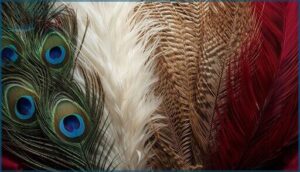
Color choices in feathers let you craft a bold fashion statement or subtle millinery accessories touch. Neutral tones offer versatility, while iridescent peacock plumes catch light dramatically. Feather dyeing unlocks custom hues that match your vision perfectly.
Texture mixing—like pairing downy ostrich with rigid pheasant—adds dimension to hat decoration. Pattern harmony matters too: barred stripes create rhythm, while eye motifs become focal points.
Always run colorfastness tests and prioritize sustainable sourcing to protect your aesthetics and design investment.
Sourcing Ethical and Sustainable Feathers
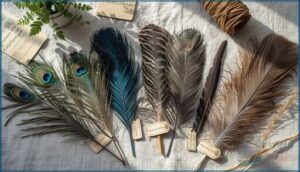
You’ll want feathers that align with sustainable fashion practices and conservation goals. Look for suppliers offering feather certification and documentation proving responsible harvesting methods.
Ethical trade matters—choose vendors who follow wildlife protection laws and support eco-friendly feathers from farmed or recycled sources.
Understanding the cultural significance of feathers and the ethics of feather use helps you make choices that honor both style and sustainability in fashion.
Iconic Hat Styles Featuring Feathers

Some hats are remembered not just for their shape, but for the feathers that complete them. Throughout history, certain styles have made feathers their signature detail, each with its own story and purpose.
From the American West to military tradition and high fashion, these iconic hats show how feathers transformed headwear into something more.
Cowboy Hats and Their Feather Traditions
In the American West, feathered hats weren’t just cowboy fashion—they told stories. Rodeo culture turned hat feathers into badges of honor, earned through roping competitions and grueling roundups. You’d spot ostrich or pheasant plumes tucked behind hat bands, signaling skill and grit.
These hat adornments connected western heritage to personal achievement, transforming simple feather accessories into powerful symbols. Today’s feather crafts still echo that frontier spirit, though modern feathered hats lean more decorative than functional.
Military and Ceremonial Hats
Military hat decoration evolved from pure power moves. Seventeenth-century European armies used regimental plumes as warriors’ calling cards—bright feathers on plumed helmets and ceremonial headgear made ranks instantly visible across smoky battlefields.
These heraldic symbols turned military insignia into art, with specific colors marking unit pride. Today’s hat making still honors that tradition, though modern ceremonial headgear often swaps real feathers for synthetic versions in historical context nods.
Fashion and Costume Hats
Beyond battlefields, feathers found their true home in fashion. From 1920s flapper cloche hats to today’s runway collections, feather embellishments transform ordinary millinery techniques into pure magic. Costume hat making thrives on this heritage:
- Theater designs use ostrich plumes for dramatic stage lighting effects
- Haute couture showcases feathers as luxury fashion accessories
- Cosplay incorporates them as character-defining fashion statements
- Hat decoration and accessories blend vintage and modern hat design trends
- Fashion and style movements continuously reinvent feathers on hats
Your feathered hat tells a story through hat fashion trends and timeless millinery craft.
How Feathers Are Attached to Hats
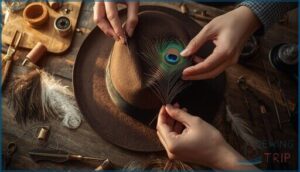
Once you’ve chosen the perfect feather for your hat, the next step is figuring out how to actually attach it. The good news is that you don’t need fancy equipment or expert skills to make it work.
There are a few tried-and-true methods that milliners and DIY hat makers have relied on for generations.
Gluing Feathers to Hat Bands
Gluing feathers to hat bands is straightforward once you understand the right adhesive types and bonding techniques. Clean your hat band with isopropyl alcohol before you start—it removes oils that weaken the bond. A glue gun works fast for fabric bands, but two-part epoxy gives you stronger, waterproof adhesion on rigid materials.
| Adhesive Type | Best For |
|---|---|
| Hot glue (glue gun) | Quick feather attachment on fabric bands |
| Two-part epoxy | Rigid hat band materials needing durability |
| White craft glue (PVA) | Lightweight feather decoration on softer bands |
Apply a thin bead along each feather’s base during feather preparation, press firmly onto the band, and hold until set. Position feathers at 45-degree angles for visual balance and wind resistance. Let the adhesive cure fully before wearing your newly decorated hat.
Sewing Techniques for Feather Attachment
When gluing won’t cut it, sewing gives your feathers real staying power. Thread selection matters—fine linen or polyester with high twist keeps things tight. Here’s how to anchor feathers like a pro:
- Pass your stitch through the quill and base to stop any wiggle
- Use a backstitch on feather bundles before final stitches
- Section feathers into small clusters for even tension
- Dab fabric glue at the base after stitching for extra security
Let it cure completely before you wear your creation.
Using Hatpins and Invisible Thread
For removable style or delicate work, hatpins and invisible thread give you flexibility. Hatpins slide through the quill and hat base about 1 to 1.5 inches deep—keep them secure in a pin cushion when not in use.
Invisible thread weaves through the feather shaft and inner lining, balancing thread tension so nothing sags or puckers. Both attachment methods let you swap feathers without commitment.
Feather Placement and Hat Design
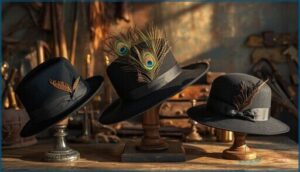
Where you place a feather on your hat isn’t just about aesthetics—it’s part of a design language that’s been around for centuries. The angle, position, and pairing with other decorative elements all contribute to the overall look and message your hat conveys.
Let’s break down the traditional rules and creative possibilities for feather placement.
Traditional Feather Positions
Where you place a feather on your hat isn’t just about style—it tells a story rooted in history. Traditional crest placements and plume styles developed over centuries of hat decoration, each placement carrying its own meaning. Here are four classic feather arrangements that shaped hat decorations through the ages:
- Upright crest: Military dress in 19th-century Europe used this position to signal allegiance and unit identity.
- Diagonal forward slant: Early 20th-century court dress featured this arrangement for ceremonial formality and pageantry.
- Rear tuck: Folk costumes in the 1800s adopted this low plume tucked behind the crown for regional festival headwear.
- Side-mounted arrangement: Colonial ceremonial uniforms used feathers on hats positioned right or left to denote rank distinctions.
Understanding these traditional feather angles helps you appreciate how hat crests evolved from practical signals into powerful fashion statements. Feather symmetry also played a role—bilateral pairs emerged in haute couture to convey balance and sophistication.
The history of hat feathers reveals that every placement choice reflected purpose, from battlefield identification to social standing. When you’re choosing how to position feathers on your own hat, you’re tapping into centuries of feather usage in fashion.
Meaning Behind Feather Angles and Direction
Direction speaks louder than you might think. Feather orientation carries symbolic expressions rooted in history, especially within military plumes and ceremonial feathers. Steeper angles traditionally signaled higher rank in certain regiments, while forward-pointing tips suggested progress in cavalry contexts. Today, feather usage in fashion leans toward aesthetic balance over rigid angle symbolism, but understanding this cultural significance adds depth to your style choices.
| Feather Direction | Traditional Meaning |
|---|---|
| Steep upward angle | Higher rank or seniority |
| Forward-pointing tips | Progress, forward movement |
| Horizontal placement | Unit affiliation marker |
| Symmetrical orientation | Formal, uniform appearance |
Combining Feathers With Other Hat Embellishments
Feathers don’t have to stand alone. You can layer texture by pairing plumes with velvet ribbons or satin hat banding for soft contrast.
Embellishment styles like metallic threads echo feather sheen, while trimming techniques such as woven garlands integrate stems into cohesive hat decoration.
Feather arrangements work beautifully with button clusters or netting overlays, giving your headwear decoration depth and letting feather attachment techniques shine through balanced accessories and decoration.
Where to Find Feathers for Hat Making

So you’re ready to add feathers to your hat, but where do you actually find them? Whether you want something exotic or just a basic plume, there are more options than you might think.
Let’s look at the best places to source feathers for your project.
Craft Stores and Specialty Shops
You’ll find feather supplies at national craft retailers that stock seasonal feather bundles—ostrich, goose, and dyed varieties perfect for hat making and design.
Millinery shops offer something different: specialty trims, millinery buckram, and historically styled plumes that enhance your feather craft. These stores often demonstrate feather attachment techniques, helping you master hat accessories.
Whether you’re browsing craft retailers or specialized millinery, you’re tapping into centuries of tradition.
Online Feather Suppliers
Ever wondered how feather fashion stays bold and fresh? Online feather suppliers bring you everything—from premium ostrich plumes to quirky guinea hen patterns. You’ll spot supplier ratings, online reviews, and bulk discounts, making it easy to compare Feather Quality.
Sustainable sourcing is front and center, so your hat decoration or feather craft project can reflect both style and conscience. For the best results, consider purchasing from a reputable wholesale feather supplier.
DIY Sourcing and Responsible Collection
You can practice responsible collection by gathering naturally shed feathers during walks, documenting where and when you found them. This eco-friendly approach to feather sourcing promotes wildlife conservation while giving you unique fashion accessories.
Make sure you’re following local wildlife laws—the U.S. Migratory Bird Treaty Act restricts most wild bird feathers. Conservation and fashion can coexist when you prioritize sustainable practices and personal expression through fashion over convenience.
Ethics and Conservation in Feather Use

The feathers that once adorned every fashionable hat came at a steep cost to the natural world. By the late 1800s, entire bird species teetered on the edge of extinction because of demand from hat makers and fashion lovers.
Today, understanding this history helps you make better choices about how and when to use feathers in your designs.
Historical Impact on Bird Populations
The hunger for feathers on hats nearly wiped entire species off the map. During the feather trade’s peak, bird extinctions and species decline accelerated as hunters stripped populations bare. This sparked the conservation movement—groups like the Audubon Society pushed back hard. Their conservation efforts eventually led to hunting regulations that brought some balance back, proving conservation and fashion could coexist. Here’s what happened:
The feather trade nearly destroyed bird species until conservation groups like the Audubon Society fought back with hunting regulations
- Wild bird populations crashed as feather demand skyrocketed
- Targeted species faced regional extinctions and habitat loss
- Early 1900s protections helped stabilize surviving populations
Laws and Regulations on Feather Trade
That backlash from conservation efforts like the Audubon Society led to real legal teeth. In 1918, international regulations kicked in to protect migratory birds, and today you’ll need permits for certain feathers on hats.
Wildlife protection laws now control feather trade through CITES agreements, banning plumage from endangered species while pushing sustainable sourcing.
Fashion and culture had to adapt—historical context matters when you’re choosing your plume.
Alternatives to Real Feathers in Hat Design
If you’re looking for cruelty-free hat styling and decoration, synthetic materials have come a long way. Faux feathers mimic peacock eyes and ostrich plumes with impressive accuracy—they’re eco-friendly, sustainable fashion choices that hold their shape beautifully.
You can also explore printed feather motifs or recycled textiles shaped into decorative arts adornments. These alternatives let you rock the look while supporting hat making that respects wildlife and embraces modern fashion accessories ethics.
Creative Ways to Style Feathered Hats
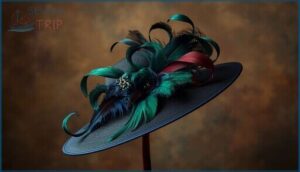
Once you’ve picked out your feathers and attached them to your hat, the real fun begins. You can curl, shape, and arrange feathers in ways that make your hat look completely unique.
Here are some creative techniques to transform your feathered hat from simple to stunning.
Curling and Shaping Feathers
You can transform plain feathers into dramatic hat decorations through heat styling and feather shaping techniques. Curling feathers adds dimension and personality to your design. Here’s how to curl them safely:
- Apply moderate heat (120–160°C) for 2–6 seconds per section using metal or silicone curlers
- Work with lightweight feathers like ostrich or goose for best results
- Let feathers cool completely to set the curl
- Seal with transparent coating for curl retention
Pre-treat feathers with conditioning spray to prevent brittleness during feather texturing.
Mixing Feathers With Fabrics and Trims
You can layer feather textures with contrasting fabrics like smooth silks or matte textiles to create visual depth in your hat decorations. For color harmony, pair neutral feathers with monochrome fabric choices, or try complementary schemes with patterned materials.
When selecting trim, use metallic threads to echo feather iridescence. Secure attachment methods include bar-tack stitching on bands and textile-safe adhesives that won’t damage delicate fabrics.
Tips for Personalizing Your Feathered Hat
Choose feather color and texture that reflect your personal symbols or signature style. Match feather selections to your hat shape—longer plumes complement tall crowns, while compact arrangements suit smaller brims.
Custom embellishments like monograms or unique hat band details add personal expression and identity to your feathered hat. Weaving these fashion design elements together creates accessories design that’s distinctly yours.
Frequently Asked Questions (FAQs)
How do you clean feathers on hats?
Gently shake your hat to dislodge dust, then use a soft natural-bristle brush along the feather direction.
For stubborn debris, try a cool hair dryer blast or lightly mist with distilled water and air dry.
Can you dye feathers for custom colors?
Feathers resist change, yet crave color—ironic for something so delicate.
You can dye feathers using acid dyes for ostrich, heron, or duck feathers. Pre-treatment improves colorfastness. Sustainable dyes work, too. Test first.
What makes a feather high quality or durable?
A high-quality feather shows intact barbs along a firm rachis, dense structure without breaks, and consistent color.
Look for rigid quills—like those from turkey feathers or ostrich feathers—that resist bending during durability tests.
Do feathers deteriorate over time or storage?
Like flowers pressed in a forgotten book, feathers fade and break when ignored.
Humidity control and proper storage methods prevent feather decay, though deterioration factors from light, pests, and moisture threaten their preservation over time.
Which hat shapes complement feathers best?
Wide-brimmed fedoras and floppy hats create visual harmony with dramatic plumes. Trilbys suit compact feather placement, while cloche hat silhouettes pair beautifully with delicate sprays.
Felt hats anchor bold ostrich feathers without overwhelming millinery design balance.
Conclusion
A feather isn’t just decoration—it’s a flex, a story, a statement you wear without saying a word. From medieval battlefields to modern runways, understanding feathers in hats and how they became symbols of power reveals centuries of human creativity and defiance.
Whether you’re crafting your own or simply appreciating the artistry, you’re part of a tradition that refused to disappear. That’s the real magic tucked into every plume.