This site is supported by our readers. We may earn a commission, at no cost to you, if you purchase through links.
A zipper that splits open mid-wear isn’t just annoying—it’s a surprisingly fixable problem that most people throw away perfectly good gear over.
The culprit is almost always one of a handful of mechanical failures: a slider that’s lost its grip, teeth knocked out of alignment, or a tiny stop that’s gone missing.
These are mechanical systems, and mechanical systems respond to mechanical solutions.
Knowing how to fix a zipper that separates means understanding what broke and why—then working through a short, logical sequence of repairs that any careful set of hands can manage.
Table Of Contents
Key Takeaways
- Most zipper separations trace back to just a few fixable culprits — a worn slider, bent teeth, stretched tape, or a missing stop — so spotting the right one gets you to the fix faster.
- A loose slider is the most common troublemaker, and a few gentle squeezes with needle-nose pliers can often restore its grip without replacing anything.
- The right lubricant matters: use silicone spray on bags and outerwear, graphite on metal zippers, and wax on fabric garments — and skip WD-40, which attracts grime.
- Knowing when to stop repairing is just as important as knowing how — cracked sliders, missing teeth across more than 10% of the chain, or tape tearing away from fabric, all mean it’s time to replace, not fix.
Common Reasons Zippers Separate

Before you can fix a zipper, you need to know why it gave out in the first place. Most separations come down to one of a handful of culprits — and once you spot yours, the fix becomes much clearer.
A quick look at the most common zipper problems and their fixes can help you zero in on exactly what went wrong.
Here’s what to look for.
Worn or Damaged Slider
Think of your zipper slider as the engine holding everything together. Once it wears out, the whole system fails. Slider Material Fatigue builds quietly — repeated open-close cycles gradually widen the internal throats, and Throat Alignment Issues follow quickly. You’ll know it’s happening when the zipper closes but pops open right behind the slider.
Watch for these Channel Wear Indicators:
- The slider feels loose or wobbly on the chain
- Pull Tab Integrity is compromised — it wobbles or spins freely
- Gauge Mismatch Effects appear when a replacement slider doesn’t glide cleanly
Slider adjustment using pliers to repair zipper slider can restore slider tension and bring the slider back to its original size. When adjustment fails, slider replacement is your next move. Ensuring proper crown guides alignment helps maintain smooth zipper travel.
Misaligned or Damaged Teeth
Even a perfect slider can’t save you from bent zipper teeth. When tooth contact breaks down, the slider has nothing solid to grip. Bite pressure shifts, wear patterns appear fast, and the whole chain splits. About 60% of separations trace back to damaged teeth alone.
Here’s what to watch for:
- Bent zipper teeth that ride unevenly and won’t mesh
- Missing teeth leaving gaps the slider can’t cross
- Broken coils that split under normal tension
- poor zipper teeth alignment with twisted chains
- Hard-to-see damage hiding in tight cleaning access spots
Restores that clean tooth-tooth lock.
Stretched Zipper Tape or Fabric
Teeth aren’t the only weak link.
Stretched zipper tape pulls the whole chain out of alignment — even intact teeth won’t engage when the tape twists under tension.
Fabric stretch management matters here: lightweight tape paired with heavy shells stretches unevenly, stressing the seam.
zipper repair to hold, trim frayed edges first — tape edge trimming ensures a clean base.
Interfacing reinforcement and stitch length optimization keep the tape stable and prevent a separated zipper from recurring.
Broken or Missing Zipper Stops
Stops are small but mighty. Top stops keep the slider from flying off the end; bottom stops anchor the chain so teeth don’t splay open under tension.
If stops fail and fabric gets caught, knowing how to free stuck fabric from a zipper without forcing it can save both the garment and the teeth.
Lose either one, and separation follows fast.
Gauge matching and material compatibility matter when you replace the top stops or replace the bottom stop — wrong sizing means loose crimps.
Good installation techniques and reinforcement strategies eliminate these failure indicators for good.
Tools and Materials for Zipper Repair

Before you touch that zipper, it helps to have the right tools within reach. Nothing’s worse than stopping mid-repair because you’re missing a simple pair of pliers.
Here’s what you’ll want on hand before you get started.
Essential Hand Tools (Pliers, Tweezers, Needles)
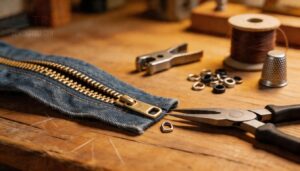
Three hand tools make or break a zipper repair: needle-nose pliers, precision tweezers, and a hand needle.
For pliers’ grip styles, needle-nose is your go-to — those long tapered jaws reach tight spots with control. Flat jaw pliers spread pressure evenly when you don’t want to mark soft hardware.
For tweezers’ precision styles, bent-tip tweezers give better sight lines in cramped spaces.
Pick a sharp hand needle for stitching stops securely.
Lubricants for Zipper Maintenance
The right lubricant saves a zipper — and your garment.
Silicone Spray Benefits include smooth, low-residue performance on metal and plastic alike, making it a top pick for bags and jackets.
For clothing, Wax Application Tips are simple: rub candle wax or graphite lightly along the teeth.
Follow this Material Compatibility Guide:
- Silicone-based lubricant — bags, tents, outerwear
- Graphite — metal zippers
- Wax — fabric garments
Replacement Zipper Parts
When a slider wears out, zipper slider replacement is your fastest fix — and knowing your gauge measurement methods matters. Measure across the teeth in millimeters: 8mm means you need a size 8 slider. Repair kit contents usually cover most emergencies for under ten dollars.
| Part | Size/Type | Best For |
|---|---|---|
| Slider Size Matching | 5, 8, or 10 | Jackets, bags, pants |
| Stop Component Types | Top, bottom, universal | Replacing or reattaching zipper stops |
| Pull Tab Varieties | Hook-loop, clip-on | Quick pull tab swap |
Match metal to metal, coil to coil.
Step-by-Step Fixes for Separated Zippers
Now that you’ve got your tools ready, it’s time to actually fix the problem. Most separated zippers come down to one of three things: a loose slider, misaligned teeth, or a broken stop.
Work through each step below and you’ll know exactly where yours went wrong.
Inspecting and Tightening The Slider
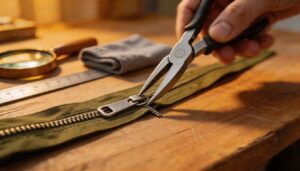
Most separations trace back to one culprit — a worn slider that’s quietly lost its grip. Before replacing anything, do a slider cleanliness check first. Dirt packed inside the channel throws off slider alignment verification and makes the problem look worse than it is.
Once it’s clean, try these slider adjustment methods:
- Use needle-nose pliers for jaw pressure control — small squeezes only
- Apply the incremental squeeze technique: one gentle press, then test
- Check slider gap measurement — the opening should be 0.2–0.3 mm
- Confirm slider tension adjustment by running the zipper up and down
- Using pliers to repair zipper slider works best with even, balanced pressure on both sides
One to three careful compressions usually does it.
Realigning and Reinserting Zipper Teeth
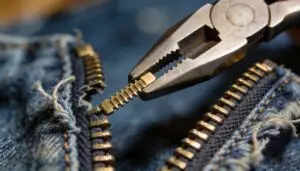
Sometimes the teeth are the real troublemakers. If your slider is fine but the zipper still won’t close, it’s time to realign the zipper.
Use the Tooth Pressure Technique: apply 1–2 mm of pressure at each tooth’s base with needle-nose pliers, working bottom to top in small Incremental Tooth Presses. Keep your Gap Tolerance Measurement between 0.2–0.5 mm.
To replace missing zipper teeth, match the size exactly — mismatched teeth won’t hold. Finish with Tape Edge Reinforcement so realigned zipper teeth stay locked in place.
Repairing or Replacing Zipper Stops
missing stop is like a broken gate — the slider just wanders off the track. To fix it, grip the old U-shaped stop with needle-nose pliers and lift it free.
Stop Material Choice matters here: metal stops suit heavy zippers, while plastic stops work better on lighter chains. Stop Size Matching prevents slipping.
Use Crimping Technique Tips — steady, even pressure under 3 N. For molded zippers, Snap-Cap Installation just presses into place.
No stop handy? Fabric Stop Sewing works fine.
Preventing Future Zipper Separation

Fixing a zipper is satisfying, but keeping it from separating again is even better.
A little routine care goes a long way toward adding years to any zipper’s life.
Here’s what actually works.
Proper Zipper Storage and Handling
Good storage habits are the first line of defense against zipper wear and tear. How you put things away matters just as much as how you use them. Follow this preventive zipper maintenance checklist to keep things running smoothly:
- Dry Climate Storage — Always let zippers dry completely before storing; moisture left on metal teeth causes rust and corrosion.
- Straight Positioning — Lay or hang items flat so zipper tape doesn’t kink or bend under pressure.
- Clean Handling — Keep dirt and grit away from the tooth track before closing.
- Safe Closure Practices — Close zippers fully before storing to prevent teeth from splaying.
- Regular Inspection — Check for bent teeth or loose sliders, and avoid overloading bags to prevent zipper separation.
Regular Cleaning and Lubrication
Once your storage routine is in place, cleaning and lubrication become your next line of defense. Grit and dust act like sandpaper inside the slider — slow damage you won’t notice until the zipper fails. Use a soft brush for dust removal techniques along the tooth track, then apply a silicone-based lubricant or graphite sparingly. Skip WD-40; it attracts grime.
Grit and dust act like sandpaper inside the slider, so clean the track and lubricate sparingly — skip WD-40
| Task | Recommended Approach |
|---|---|
| Lubricant selection guide | Silicone spray or graphite for smooth, clean results |
| Even application method | Run slider five times to spread lubricant fully |
| Post-clean inspection | Check for bent teeth or uneven coating |
| Routine maintenance schedule | Clean and lubricate every three months |
Lubricating zipper tracks this way keeps separations from sneaking up on you.
Avoiding Excessive Force and Strain
Cleaning and lubrication only go so far — how you actually use the zipper matters just as much. Sudden yanks spike slider tension fast, and overpacked bags make it worse.
Use the Gentle Pull Technique: one smooth, Even Slider Motion while your Fabric Support Hand keeps the tape flat.
Low Force Habits and Stop Protection Practices are your best preventive maintenance practices for fasteners, preventing zipper wear before it starts.
When to Replace or Seek Professional Help

Sometimes a zipper is just done — no amount of pliers or wax is going to save it. Knowing when to stop fiddling and move on is just as important as knowing how to fix it.
Here’s what to look for before you decide your next step.
Identifying Irreparable Zipper Damage
Not every zipper can be saved — and recognizing the point of no return is a skill in itself. When you spot Slider Corrosion Failure, rough edges or seized movement mean the metal is gone for good. A broken pull tab, Irreversible Coil Split, or Complete Stop Loss tells the same story. These aren’t repair jobs — they’re replacements. Watch for:
- Severe Tooth Gaps or missing teeth across more than 10% of the chain
- Extensive Tape Tears or delamination pulling away from the fabric
- A cracked or corroded slider that wobbles and won’t grip evenly
- Separated zipper sections that reopen under light pressure after adjustment
That’s when to replace a broken zipper versus repair — stop fixing, start replacing.
DIY Zipper Replacement Techniques
Replacing a zipper yourself saves real money — professional repairs can run $114 or more.
Start with a zipper length measurement to match your replacement exactly. Matching zipper types matters here: coil vs Vislon teeth aren’t interchangeable, so get the right one.
Use a seam ripper to remove the old zipper, then pin and stitch the new one in place. Threaded stop alternatives work well when hardware stops aren’t available.
Choosing a Tailor or Repair Service
When DIY reaches its limit, a skilled tailor becomes your best tool. Look for these signs of a trustworthy professional zipper repair service:
- Technician experience of five or more years with jackets, trousers, and coats
- Pricing transparency with written estimates ranging €15–60 depending on complexity
- Turnaround time clearly stated — usually 3–7 days, or same-day for simple fixes
- Quality guarantees backed by reinforced stitching and matched hardware
- Customer reviews confirming smooth results and honest communication
Dry cleaners and tailors with solid reputations are worth every cent.
Frequently Asked Questions (FAQs)
How do you fix a separated zipper?
Start with the teeth. Gently pinch your slider using needle-nose pliers, lubricate the track, realign any bent teeth, and confirm the stops hold firm before testing.
How do you fix a misaligned zipper?
Open the zipper fully, then check for bent teeth or debris.
Use a slider width adjustment to tighten the grip gently with pliers, lubricate, and run alignment verification steps to confirm that the teeth track correctly.
Can you fix a zipper that separates or breaks a slider?
A worn slider is usually the culprit — it stretches over time and loses its grip on the teeth.
Yes, you can fix a separated zipper with a simple slider width check and gentle pliers.
Can you fix a zipper if you don’t have to replace it?
Most zippers don’t need replacing.
Slider width adjustment, fabric entanglement removal, and stop reinforcement techniques handle the majority of splits. With basic pliers and a few minutes, you can usually restore a zipper completely.
How do you fix a zipper that splits?
single loose slider causes more zipper chaos than most people realize.
Tighten it with needle-nose pliers, realign the teeth, then lubricate the track.
Replace worn parts when repairing separated zippers doesn’t hold.
How can I realign a zipper?
Start at the bottom. Flatten the fabric, then position your slider at the base.
Pinch both sides with pliers using incremental adjustment, guide it upward slowly, and verify alignment after three full open-close cycles.
How to fix a zipper that keeps opening?
A loose slider is almost always the culprit.
Pinch it gently with needle-nose pliers — just enough to restore grip on the teeth without crushing the channel.
Two or three slow pulls usually confirm the fix.
How to fix a zipper that came off track?
When slider jumps the track, think of it like a train derailing — frustrating, but fixable.
Widen the slider gently, align both bottom teeth, then guide it back using steady, even pressure.
How to fix a zipper pull that snapped?
A snapped zipper pull tab is older than it looks — sailors once used rope knots as pulls. Thread a key ring or paperclip through the slider hole instantly.
For lasting results, use a ribbon pull DIY or wire pull technique with needle-nose pliers.
Can you reinforce a weak zipper slider?
Yes, you can reinforce a weak zipper slider using pliers for zipper slider adjustment, but it’s a short-term fix.
For lasting zipper slider repair, replacing the slider with a correctly sized metal sleeve reinforcement works far better.
Conclusion
As you master fixing zippers, you’ll find that a little patience and practice go a long way. With these steps, you’ll be able to tackle a zipper that separates with confidence.
Remember, the next time your jacket or backpack zipper gives you trouble, don’t toss it – just grab your tools and get to work.
You’ve got this. Fixing a zipper that separates is a skill that will serve you well, and now you know how to fix zipper separates for good.