This site is supported by our readers. We may earn a commission, at no cost to you, if you purchase through links.
A single poor fabric choice can unravel months of painstaking work—the cotton blend that puckers after its first wash, the durable polyester that pills within weeks, the linen that shrinks three sizes despite careful handling.
You’ve likely experienced at least one of these material betrayals, and the frustration lingers long after you’ve relegated the failed project to the back of your closet.
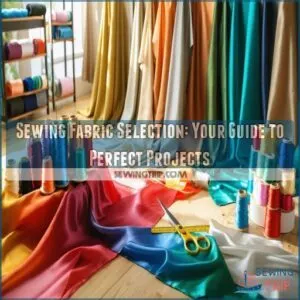
The truth is, fabric selection isn’t instinctive guesswork or brand loyalty; it’s a systematic evaluation process that balances fiber properties, construction methods, care requirements, and intended use. Master this guide to fabric selection, and you’ll transform your approach from hopeful experimentation to confident decision-making, choosing materials that perform exactly as your projects demand.
Table Of Contents
Key Takeaways
- Fabric selection demands systematic evaluation of fiber properties, construction methods, and intended use rather than instinctive guesswork, transforming hopeful experimentation into confident decision-making that prevents costly failures like shrinkage, pilling, or puckering.
- Successful material choices balance functional requirements—durability, wrinkle resistance, care simplicity—against aesthetic goals like texture, drape, and visual impact, with most projects requiring honest assessment of which priority matters more for your specific application.
- Weight, drape, texture, and stretch define how fabric behaves in practice, while technical specifications including colorfastness ratings (grade 4-5), shrinkage percentages (3-5% for cotton), and abrasion resistance determine whether your project maintains integrity through repeated use and washing.
- Strategic sourcing combines hands-on evaluation of color variance, texture analysis, and fabric density testing with systematic comparison matrices, while sustainable choices like GOTS-certified organic cotton or recycled polyester prove that eco-friendly materials don’t sacrifice performance when properly vetted.
Define Your Project Needs
Before you step foot in a fabric store or click “add to cart” online, you need a clear picture of what your project actually demands.
Understanding how to choose fabric patterns that complement your design vision will save you from costly mistakes and frustrating do-overs.
The right fabric won’t reveal itself until you understand the balance between what your project needs to do and how you want it to look. Let’s break down the key factors that will guide your fabric selection from the very start.
Functional Vs. Aesthetic Goals
Clarity in fabric selection begins with separating functional needs from aesthetic goals, because these two design priorities rarely overlap perfectly. Your project demands honest answers about which matters more: performance characteristics like durability and wearability, or aesthetic appeal through texture and visual impact.
Fabric selection starts with an honest choice: do you need performance that lasts, or beauty that captivates?
Consider these functional goals:
- Fabric durability under repeated washing and regular wear
- Wrinkle and fray resistance for practical, everyday use
- Color retention to maintain consistent appearance over time
- Care simplicity that preserves performance balance long-term
Aesthetic goals emphasize different fabric properties and characteristics:
- Texture variety such as sheen, matte finishes, or brushed surfaces
- Draping qualities that achieve specific silhouettes and volume
- Pattern alignment and print fidelity for visual harmony
- Color palette trends that create your desired style statement
Most projects require you to balance both dimensions, weighing tradeoffs between what performs reliably and what looks exactly right for your vision.
Performance and Usage Requirements
Performance requirements sharpen your fabric choices beyond surface appeal. You need fabric durability that withstands your project’s real-world demands—consider stretch recovery if garments will bend repeatedly, thermal comfort for skin contact, and breathability factors for humid conditions.
Textile characteristics like color fastness prevent bleeding across five launderings, while performance characteristics determine whether your material maintains integrity under mechanical stress, moisture exposure, and temperature fluctuations.
Project Classification (Garment, Home Decor, Quilting)
Project classification determines which fabric types you’ll need and how you’ll evaluate them. Each category demands distinct priorities.
- Garment types require drape, comfort, and stretch recovery to move with the body and maintain shape through repeated wear
- Home decor and upholstery prioritize abrasion resistance, heavy-weight construction, and UV stability for long-term surface durability
- Quilting and patchwork demand dimensional stability, consistent fabric width (44-45 inches), and coordinated print scale for precise piecing
Skill Level and Wearer Considerations
Your skill level shapes which fabric types you can confidently manage, while wearer comfort directly influences fabric selection for everyday garment fit. Beginners benefit from stable weaves that tolerate mistakes, whereas expert sewers handle slippery silks and precise fabric drape.
Home décor projects like cushion covers or table runners are ideal beginner-friendly fabric exercises that build confidence before tackling garments.
Consider sensory texture for sensitive skin, breathability for temperature regulation, and fabric durability in high-stress areas. Match fabric properties to both your technical ability and the wearer’s physical needs.
| Skill Level | Recommended Fabric Properties |
|---|---|
| Beginner | Stable weaves, simple care, minimal stretch |
| Intermediate | Moderate drape, predictable sewing behavior |
| Expert | Slippery textures, precise handling required |
| Sensitive Skin | Hypoallergenic, soft hand feel, breathable |
| Active Wear | Mechanical stretch, moisture-wicking, recovery |
Explore Fabric Types and Properties
You can’t choose the right fabric until you understand what you’re actually working with. Every material has its own personality—how it feels, moves, holds its shape, and performs under stress.
Let’s break down the essential fabric types and properties you need to know before making your selection.
Natural, Synthetic, and Blended Fibers
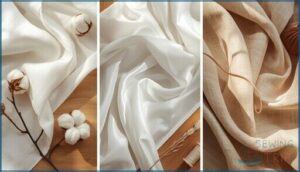
Understanding fiber categories shapes every fabric selection decision you’ll make. Natural fabrics like cotton and linen offer breathability and biodegradability, while synthetic fabrics such as polyester deliver outstanding fiber durability and quick drying.
Blended fabrics merge both worlds, creating material sourcing advantages through:
- Enhanced wrinkle resistance from cotton-polyester combinations
- Improved moisture management pairing absorption with quick-dry properties
- Lower production costs without sacrificing performance
- Unparalleled colorfastness and dimensional stability
This textile science foundation guides smarter fabric selection.
Fabric Weave and Knit Construction
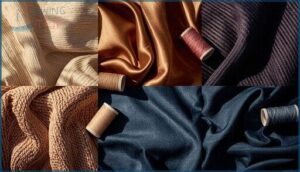
Weave patterns and knit structures determine fabric stability, stretch, and surface character—each yarn type interlaces differently to create distinct fabric properties.
Plain weave pairs warp and weft in a simple over-under rhythm, while twill creates diagonal lines through stepped weaving techniques.
Jersey, rib, and interlock represent essential knitting patterns, offering varying elasticity.
Fabric density, textile finishing, and construction method guide your fabric selection across all fabric types. For a deeper understanding of the key differences and construction of fabrics, see this explanation of woven and knit fabric structures.
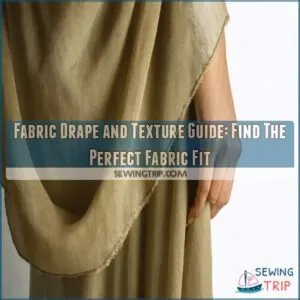
Weight, Drape, Texture, and Stretch
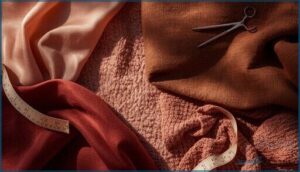
Weight, drape, texture, and stretch shape how fabric behaves in your hands and on the body—four properties that define fabric selection success.
Weight distribution affects drape analysis, with lightweight materials (2.0–3.9 oz/yd²) flowing fluidly while heavyweight options exceed 6.0 oz/yd² for structure.
Texture types range from smooth to nubby, influencing fabric durability, while stretch recovery determines whether your project maintains its shape through repeated wear.
Key Qualities of Popular Fabrics (Cotton, Linen, Polyester, Etc.)
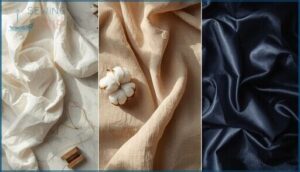
Cotton, linen, and polyester form the foundation of fabric types you’ll encounter—each with distinct properties that influence fabric selection and material durability.
- Cotton delivers textile softness, fabric breathability, and accepts reactive dyes for dye stability, though it may shrink unless preshrunk
- Linen offers exceptional cooling through rapid moisture evaporation, with natural slubs adding character despite uneven dye uptake
- Polyester provides fiber strength, wrinkle resistance, and colorfastness through petrochemical composition that maintains shape across washes
Evaluate and Source Fabrics

Once you’ve narrowed down your fabric types, the real work begins: finding the right source and confirming your material will actually perform as expected.
You’ll need to evaluate physical samples with a critical eye, comparing color accuracy, hand feel, and structural integrity across multiple suppliers. The strategies below will help you build a repeatable system for sourcing and evaluating fabrics, whether you’re shopping online or walking into a brick-and-mortar store.
Online Retailers Vs. Local Stores
Convenience factors shape every fabric sourcing and selection strategy—online reviews and vast inventories (often millions of yards) give you unparalleled variety and 24-hour access, while local stores deliver immediate pickup, hands-on fabric selection, and expert guidance without shipping costs.
Your budget planning should weigh inventory management realities: online platforms excel at obscure fabric types, but store loyalty programs and in-person testing add tangible value to your fabric selection guide.
Color, Texture, and Weight Assessment
Color variance and dye stability deserve your sharpest scrutiny—color pigments can shift 2 to 5 percent between dye lots, and fabric types fade at wildly different rates under sunlight.
Run your texture analysis by checking smoothness against the EPI scale, then weigh fabric density in grams per square meter to predict drape and weight relationships, ensuring fabric durability matches your fabric selection goals for each fabric properties category.
Standardized Evaluation Matrix
Once you’ve gauged color and texture hands-on, build a matrix design to organize your fabric evaluation systematically.
List each fabric option in the left column, then assign evaluation criteria across the top—performance characteristics like colorfastness grade, shrinkage percentage, and drape coefficient.
Apply weighted scoring on a 1 to 5 scale so your data analysis reveals which material selection best matches your project’s fabric properties priorities.
Practical Considerations in Fabric Selection
Choosing the right fabric goes beyond aesthetics and fiber content—you need to think about how it will perform in real-world conditions. Care requirements, colorfastness, shrinkage potential, and durability all directly impact whether your project succeeds or becomes a source of frustration.
Let’s walk through the practical factors that separate a smart fabric choice from a costly mistake.
Care and Maintenance Requirements
Care and maintenance requirements vary dramatically across fabric types, directly influencing your project’s durability and longevity. When evaluating fabric properties, you must consider laundry tips like lukewarm water washes and air drying to minimize fabric shrinkage—cotton often tolerates 50 to 100 cycles before strength loss.
Master ironing techniques, storage methods using breathable containers, and select cleaning products that preserve fiber integrity and extend your material’s lifespan.
Colorfastness, Shrinkage, and Stability
Beyond routine laundering, fabric durability depends on three technical specifications for fabrics: colorfastness, shrinkage control, and dimensional stability.
Color retention is rated on a 1-to-5 scale—seek grade 4 or 5 for fading resistance under washing and light exposure.
Fabric testing and evaluation reveal that cotton-rich fabric types usually shrink 3 to 5 percent unless preshrunk, directly affecting fit and drape throughout your project’s lifespan.
For a deeper look at the key types of testing, see this overview of fabric testing procedures and benefits.
Allergies and Skin Sensitivities
Skin irritation and allergic reactions matter just as much as thread count—especially when fabric allergens trigger dermatitis prevention concerns for sensitive skin. Natural fabrics like organic cotton and bamboo usually cause fewer issues than synthetic fibers, though even plant-based materials can harbor chemical residues from dyeing or finishing.
Fabric selection strategies for allergy-prone wearers include:
- Requesting hypoallergenic certifications before purchasing sustainable fabrics
- Testing small swatches against your inner forearm for 24 hours
- Choosing pre-washed natural fibers to remove potential irritants
Durability and Longevity
Fabric strength determines whether your project survives daily wear or unravels after a few washes—test it by examining abrasion resistance through Martindale counts for upholstery or double rub tests for apparel.
Blended fabrics often outlast pure natural fibers, balancing UV durability and wear resistance, while color fastness ratings above 4 prevent fading over fifty-plus laundering cycles, and shrinkage control preserves dimensional stability within two to five percent.
Sustainable and Budget-Friendly Choices
Choosing sustainable fabrics doesn’t mean you have to sacrifice quality or blow your budget—you just need to know where to look and what to prioritize.
The right approach balances environmental responsibility with practical cost considerations, ensuring your project succeeds on multiple levels. Let’s break down the key factors that will guide you toward choices that are both earth-conscious and financially smart.
Eco-Friendly and Recycled Fabrics
Choosing sustainable fabrics starts with understanding recycled materials and eco-friendly textiles. Recycled polyester repurposes post-consumer plastic bottles, while Tencel lyocell uses a closed-loop process that recovers solvents, minimizing environmental impact.
Organic cotton, hemp, and bamboo blends deliver natural fibers with fewer pesticides, and recycled nylon transforms discarded fishing nets into durable, abrasion-resistant fabric—proving that sustainable fabric choices don’t sacrifice performance.
Certifications and Labels
When you’re shopping for Sustainable Fabric Choices and EcoFriendly Materials, look for Sustainable Marks that verify claims—GOTS certifies organic fibers, Oeko-Tex Standard 100 ensures Chemical Safety, and the EU Ecolabel signals lifecycle responsibility. These Certification Types and Eco Labels empower your Fabric Selection by confirming Sustainable Fashion Practices and EcoFriendly Fashion Trends through Label Verification.
- GOTS tracks organic cotton from farm to finish
- Oeko-Tex tests for banned substances and skin irritants
- Bluesign oversees chemicals across production
- B Corp assesses company-wide environmental impact
Calculating Costs and Setting a Budget
Your Project Requirements drive Budget Planning and Cost Estimation from the start. Set a per-yard target, then add non-fabric expenses—thread, notions, interfacing—plus 10 to 20 percent contingency for waste or pattern shifts.
Track actual spend versus planned budget in a simple spreadsheet, compare Fabric Pricing across vendors with shipping and tax, and improve Expense Tracking for sharper Cost Optimization next time.
Balancing Quality, Sustainability, and Price
Quality doesn’t always demand the highest price—smart Cost Analysis reveals that mid-tier Eco Friendly Fabrics often outlast bargain blends by three to five years, lowering true cost per wear.
Run a simple Quality Control check on Sustainable Materials: examine fiber content, test drape, verify certifications like GOTS or OEKO-TEX, then rank Green Textiles by durability, ethics, and Budget Planning to find your sweet spot in Sustainable Fashion.
Frequently Asked Questions (FAQs)
How do I choose the right fabric?
You’ll need to match your material’s inherent properties—drape and weight—to your project’s performance demands through systematic textile analysis and fabric testing, balancing functional requirements with aesthetic intent during the fabric selection process.
How do you choose a fabric for a sewing project?
You choose a fabric for a sewing project by matching fiber content, weight, and drape to your garment’s intended use, then testing samples for colorfastness, shrinkage, and how the material reacts to your planned sewing techniques.
Why is fabric selection important in the apparel industry?
Fabric selection drives garment design and manufacturing success by balancing fabric quality, production costs, consumer safety, and environmental impact while meeting industry standards.
It also meets project requirements, and textile material science principles for choosing the right fabric.
How do I choose a fabric for a sewing machine?
Your machine’s compatibility with fabric thickness, tension settings, and thread selection determines success—test samples at varying sewing speeds, assess how weaves handle feed dogs, and match weight to presser foot pressure for clean, fray-free seams.
How do I choose the right fabric for my child?
Prioritize breathable fibers like cotton for sensitive skin, ensuring fabrics pass colorfastness tests and maintain 40 to 60 percent stretch for mobility.
While selecting machine-washable materials that won’t irritate during active play, consider the importance of hypoallergenic natural fibers for overall comfort.
Why should I choose a different fabric?
Your project’s performance demands may shift—Material Innovation expands Texture Variety and Color Options, while Sustainability Factors influence durability.
Different contexts require Fabric Versatility across Natural Fibers and Synthetic Fibers for ideal results.
How to budget effectively for fabric purchases?
Set a clear budget cap before you shop, compare price per meter across suppliers, request swatches to verify quality, and track every purchase in a simple ledger to prevent overspending.
What are common fabric storage mistakes to avoid?
Store fabrics away from direct sunlight and high humidity to prevent fading and mold.
Implement moisture management with proper ventilation, avoid compression that creases fibers, and maintain consistent fabric care through regular inspection.
How does fabric choice impact garment longevity?
Like building blocks in a structure, fabric durability hinges on fiber strength and weave density—synthetic fibers resist abrasion better than natural fibers.
While proper fabric care and material selection directly extend garment longevity and wear resistance.
What tools are best for cutting specific fabrics?
Sharp scissors excel on woven cottons, while rotary cutters slice through quilting layers effortlessly.
Fabric shears handle delicate silks, and specialized cutting machines guarantee precision for complex sewing projects across diverse fabric types.
Conclusion
Mastering material mechanics transforms mediocre makes into masterpieces. Your guide to fabric selection furnishes you with systematic evaluation tools—fiber analysis, construction assessment, performance prediction—that eliminate guesswork from every project.
You’ll now approach fabric stores with confidence, touching bolts with purpose, rejecting inappropriate materials before they betray your vision. The difference between amateur experimentation and professional execution lies in this methodical approach: understanding what fabrics do, not just how they look.