This site is supported by our readers. We may earn a commission, at no cost to you, if you purchase through links.
Your first hand-sewn seam probably looked nothing like you imagined—uneven stitches, puckered fabric, maybe even a broken needle. Here’s what nobody tells beginners: the fabric matters more than your technique.
Cotton forgives wobbly stitches while silk amplifies every mistake, and trying to hand-sew stretchy knit with the same approach you’d use on canvas is like writing with a paintbrush.
Understanding hand sewing fabric types transforms frustrating projects into satisfying ones. Each material has its own personality—some cooperate beautifully with beginners, others demand respect and experience. Once you know which fabrics work with your hands instead of against them, choosing the right material becomes as natural as selecting the perfect needle.
Table Of Contents
Key Takeaways
- Fabric choice matters more than technique for beginners because cotton forgives mistakes while silk amplifies them, and each material’s weight, weave, and stretch dictates which needles, threads, and stitches will actually work.
- Natural fibers like cotton (breathable, forgiving) and synthetics like polyester (wrinkle-resistant, durable) each bring distinct advantages, but you need to match your fabric’s personality to your project’s demands—lightweight for blouses, heavyweight canvas for totes.
- Pre-washing fabric prevents shrinkage disasters (cotton can shrink 4-10%), and pairing the right needle size with appropriate thread weight stops puckering, skipped stitches, and broken needles before they ruin your work.
- Master three core hand stitches—backstitch for strength, running stitch for speed, and overcast for edge finishing—then adjust your stitch density and tension based on whether you’re working with delicate silk, stretchy knits, or heavy denim.
Key Fabric Types for Hand Sewing
You’ve got three main fabric families to work with when you’re hand sewing, and each one brings something different to your project. Natural fibers like cotton and linen give you that classic, breathable feel, while synthetics offer durability and easy care that’s hard to beat.
Then there are specialty fabrics—blends and unique weaves that combine the best of both worlds or serve specific purposes you won’t find anywhere else.
Natural Fabrics – Cotton, Linen, Wool, Silk
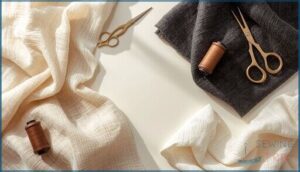
Natural fibers carry centuries of textile history in every thread. Cotton offers breathability with staple lengths reaching 1.6 inches in Pima varieties, while linen’s flax fibers stretch 18–30 inches for outstanding strength. Wool’s 13–18% moisture regain creates superior warmth, and silk delivers lightweight luxury at 6–30 momme weights.
These sustainable sources from natural dyes traditions give you reliable fiber properties for hand-stitching projects. Understanding cotton fiber properties is essential for selecting the right materials.
Synthetic Fabrics – Polyester, Nylon, Rayon, Spandex
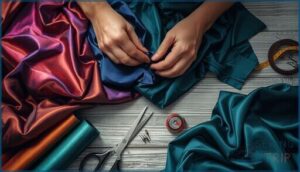
Polyester blends and other synthetic fibers now dominate fabric production—polyester alone claimed 59% of global output in 2024. These engineered materials bring distinct advantages to your hand-sewing bench:
- Polyester resists wrinkles and shrinkage with fiber diameters around 1.0–1.5 denier, though its smooth surface can slip during stitching
- Nylon textures span 70D to 420D yarn weights, delivering tear resistance for outdoor gear
- Rayon handling requires care—moisture regain hits 11–13%, weakening seams when wet
- Spandex stretch reaches 500–700% extension, demanding flexible hand stitches
- Synthetic finishes like DWR coatings increase needle resistance but boost durability
When working with these materials, understanding nylon sewing techniques is essential for achieving professional results.
Specialty and Blended Fabrics – Bamboo, Broadcloth, Canvas, Velvet
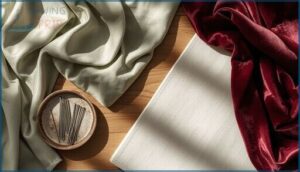
Beyond cotton and synthetics, specialty fabrics open new creative territory. Bamboo fabric wicks moisture three times its weight—perfect for activewear—while broadcloth’s tight plain weave (80–100 gsm) suits crisp shirts.
Canvas weaves at 270+ gsm demand size 1–3 needles for tote bags, and luxe velvet’s double-cloth structure calls for microtex 70/11 needles.
Blending bamboo with cotton extends garment life while maintaining breathability for fabric dyeing and pattern work.
How Fabric Characteristics Affect Hand Sewing
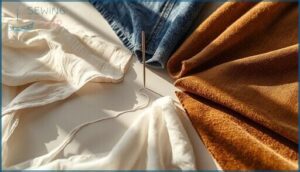
Not all fabrics behave the same way under your needle, and understanding what makes them tick can save you from a world of frustration. The weight, texture, and care requirements of your fabric will directly influence which stitches work best, how much prep you’ll need, and whether your finished project holds up over time.
Let’s break down the key characteristics that’ll make or break your hand sewing experience.
Fabric Weight, Thickness, and Drape
Think of fabric weight as your project’s personality—it shapes everything from drape to needle resistance. Understanding weight classes and GSM standards transforms fabric selection from guesswork into precision:
- Lightweight fabrics (up to 150 GSM) like cotton lawn give you fluid drape and easy hand-sewing—perfect for blouses and summer garments.
- Medium-weight textiles (150–270 GSM) balance structure with workability for everyday sewing projects.
- Heavyweight materials (270+ GSM) like canvas create architectural shapes but demand stronger needles and more force to pierce.
Texture, Weave, and Stretch
Weave patterns significantly influence how a needle interacts with fabric, affecting both ease of use and durability. Plain weaves, with their fewer yarn interlacing points, provide maximum stability and allow needles to glide through cotton with minimal resistance. In contrast, satin weaves pack yarns tightly, increasing needle friction and generating more heat during prolonged stitching.
Stretch recovery is another critical factor in fabric selection. Materials with 30–50% elongation and 80%+ recovery ensure that hand-sewn seams remain intact under stress, transforming fabric choice into a matter of performance engineering.
| Weave Type | Yarn Interlacing Density | Needle Friction & Sewing Ease |
|---|---|---|
| Plain | Lowest (most stable) | Easiest penetration |
| Twill | Medium (denser pack) | Moderate resistance |
| Satin | Highest (tightest) | Greatest force required |
Shrinkage and Fabric Care Considerations
Dimensional stability becomes your silent partner in every hand-sewn project. Cotton and rayon can shrink 4–10%, distorting seams you’ve carefully stitched, while polyester holds near-zero movement.
Pre-wash using the same washing methods your finished piece will face—hot water amplifies cotton’s contraction, cool cycles protect wool from felting.
Care labels aren’t suggestions; they’re your blueprint for preserving textile durability and stitch integrity across fiber blending choices.
Top 4 Fabrics for Hand Sewing Projects
You’ve got the basics down—now let’s talk about the fabrics that’ll actually make your hand sewing projects shine. These four materials strike that sweet spot between workability and professional results, whether you’re stitching up your first embroidery sampler or tackling a fitted wool project.
Each one brings something different to the table, so let’s break down what makes them worth keeping in your stash.
1. Natural Cotton Muslin Fabric Material
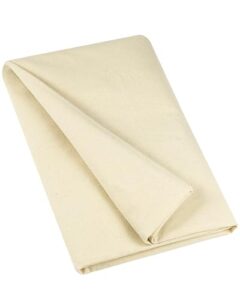
Natural cotton muslin fabric is your trusty practice partner in hand sewing—lightweight, breathable, and forgiving when you’re learning new sewing techniques. This natural fabric features a plain cotton weave that usually weighs 100–150 grams per square meter, making it easy on your fingers during extended stitching sessions.
The breathability factors shine here: those loosely woven natural fibers allow air to flow freely while absorbing moisture beautifully. You’ll find muslin shrinks about 5–10% when washed, so always pre-treat your yardage before cutting.
Perfect for toiles, quilting bases, and baby swaddles.
Best For: Beginner sewers, fashion students, and quilters who need an affordable, breathable fabric for practice garments, fitting muslins, baby items, and craft projects that require pre-washing.
- Lightweight and breathable with excellent airflow, making it ideal for baby swaddles, warm-weather clothing, and projects where comfort and moisture management matter
- Easy to hand sew with minimal needle resistance, and the flat surface takes well to marking, dyeing, and embroidery work
- Inexpensive enough to use for practice pieces and toiles, so you can test patterns and techniques without wasting costly fabric
- Shrinks significantly (5–10%) when washed, so you’ll need to pre-wash and dry it before cutting to avoid size surprises in your finished project
- Texture and thickness can be inconsistent between batches, with some yardage feeling smooth while others come out coarse or thin
- Natural unbleached muslin often contains small cotton seed flecks and may wrinkle heavily, requiring ironing or careful storage between sewing sessions
2. Pure Mulberry Silk Fabric Yardage
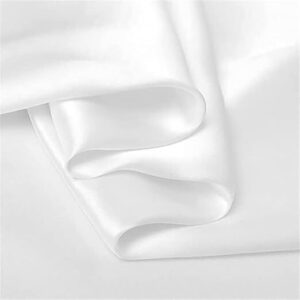
Pure mulberry silk brings luxury straight to your fingertips. The 16-momme charmeuse yardage, measuring 45 inches wide and weighing around 69 grams per square meter, is perfect for wedding gowns and elegant accessories.
The silk fiber structure features fibroin proteins in beta-sheet crystallites (40–60% crystallinity), providing remarkable strength despite its 10–13 micrometer diameter. Mulberry silk also offers natural hypoallergenic properties and breathable comfort against the skin.
Pre-wash at cool temperatures to avoid shrinkage, then enjoy silk fabric dyeing or the pure silk properties in every hand-sewn seam you craft.
Best For: Sewers and designers working on high-end projects like wedding dresses, luxury accessories, or delicate garments who want naturally hypoallergenic fabric with a beautiful drape.
- Made from 100% pure mulberry silk with strong fibroin structure, giving you durability and a luxurious feel that’s gentle on skin and hair.
- The 16-momme weight hits a sweet spot—thick enough to feel substantial and resist wear, but still lightweight and easy to work with for detailed sewing.
- Naturally hypoallergenic and breathable, so it’s comfortable year-round and great for anyone with sensitive skin or allergies.
- Comes pre-cut by the yard, which can be limiting if you’re tackling a large project that needs continuous yardage without seams.
- Requires gentle care—cool water washing and low-heat ironing only—or you risk shrinkage and damage to the delicate fibers.
- The fabric can be slightly see-through, so you may need to line your projects or use multiple layers depending on what you’re making.
3. Chocolate Brown Suede Leather Sheet
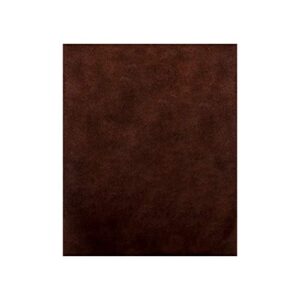
Suede leather sheets open a new world beyond woven fabrics, and your 8.5 x 11-inch chocolate brown panels prove it. At 3–4 oz (about 1.4–1.6 mm), this cowhide suede hits the sweet spot for pouches, patches, and bag trim—thick enough to resist tearing yet soft enough for hand sewing needles.
Pair it with diamond-point needles (sizes 2–4) and 0.4–0.6 mm thread for clean saddle stitching. Suede fabric prep means checking color fastness first, then clamping your work in a stitching pony for consistent seams.
With proper suede leather care, you’ll master leather stitching techniques that last.
Best For: Crafters who want to hand-stitch small leather goods like wallets, pouches, and bag accents without wrestling with thick hides.
- At 1.4–1.6 mm, it’s thin enough for hand needles but sturdy enough to hold stitches without tearing under normal use.
- The soft nap feels great and breathes better than synthetic alternatives, making it comfortable for items you’ll handle daily.
- Pre-dyed chocolate brown saves you a step and works as a natural by-product, so you’re not wasting material.
- Suede scuffs and fades faster than smooth leather—expect visible wear after heavy friction or sun exposure.
- Some sheets arrive with cuts or inconsistent thickness, so you may need to work around defects or request a replacement.
- The velvety surface shows every fingerprint and smudge, requiring regular brushing to keep it looking fresh.
4. British Wool Tweed Craft Squares

When you want heirloom texture that ages beautifully, British Wool Tweed Craft Squares deliver. Each 9 × 9-inch piece from UK weavers packs 100% wool durability into purses, phone covers, and appliqué—perfect for eco-friendly textiles enthusiasts.
Wool Tweed Benefits include natural elasticity that helps hand-sewn seams resist puckering, though you’ll need a sturdy needle and thimble for the heavier weave. British Wool Sources occupy less than 1% of global fiber production, making these Fabric Types a sustainable choice.
Master Sewing Techniques and Tips by pre-washing to prevent 5–8% shrinkage, then enjoy Tweed Fabric Care that rewards your Crafting and Hobby projects with lasting beauty.
Best For: Crafters and sewers who want authentic British wool fabric with rich texture for small hand-stitched projects like purses, phone covers, and appliqué work, and who value sustainable natural fibers over synthetic alternatives.
- Each pack gives you 10 squares of genuine 100% wool tweed from English and Scottish weavers, offering natural durability and that classic heathered look that only gets better with age.
- The twill weave creates a textured surface that grips seams and resists slipping, so your hand-stitched items hold up well even with regular handling.
- Wool is biodegradable and represents an eco-conscious choice compared to synthetic craft fabrics, plus it naturally resists puckering thanks to the fiber’s built-in elasticity.
- Packs are random selections that may not match photos, and some customers report disappointing color combinations or patterns that don’t suit their projects.
- The heavier weight means you’ll need stronger needles and a thimble for comfortable hand sewing, and seam allowances can get bulky at intersections in small squares.
- Quality and thickness can be inconsistent across pieces in the same pack, with some squares stretching more than expected or feeling thinner than typical tweed.
Choosing The Best Fabric for Your Project
Picking the right fabric can make or break your hand sewing project. You want something that matches the end use, works with your current skill level, and behaves well once it’s prepared.
Let’s walk through how to narrow down your choices and set yourself up for success.
Matching Fabric to Project Type
Project planning starts with understanding what you’re actually making. Fabric selection and preparation should always match your project’s demands—the texture choices for a delicate blouse won’t work for heavy tote bags. Here’s how to align material considerations with your sewing challenges:
- Lightweight quilting cotton (100–170 g/m²) works beautifully for hand-sewn summer shirts and blouses
- Midweight linen blends provide structure for hand-tailored trousers and utility dresses
- Heavy canvas above 340 g/m² delivers durability for tote bags and gear
- Tight-weave cotton, linen, or silk creates stable bases for hand embroidery projects
- Patterned fabrics require extra yardage for matching motifs at pockets and seams
Choosing the right fabric means thinking through both construction and final use—fabric care requirements matter just as much as how fabric types handle your needle.
Considering Skill Level and Technique
Skill assessment shapes every fabric decision you make. Over 70% of sewing educators recommend plain-weave cotton for beginners—it’s stable, forgiving, and builds your stitch precision without frustration.
Once you’ve mastered basic sewing stitches and hand sewing techniques on medium-weight cottons, you’re ready for denim and rayon. Save slippery silks and stretchy knits for later, when your sewing confidence and fabric handling feel rock-solid.
Pre-treatment and Preparation Tips
Before you cut a single piece, pre-treatment matters. Pre-wash cotton at 30–40 °C to remove that 2–3% residual shrinkage, then let it relax flat for 24 hours—stretch fabrics need 48.
Mark your seam allowances clearly: 1.3 cm works for most hand sewing, but generous margins give you room to trim and stabilize edges as you stitch.
Hand Sewing Techniques for Different Fabrics
Your fabric choice sets the stage, but your technique makes the magic happen. Different materials demand different approaches—what works beautifully on cotton might leave silk looking puckered or cause wool to pill.
Let’s walk through the needle and thread combos, essential stitches, and hands-on strategies that’ll help you tackle everything from lightweight lawn to heavyweight canvas with confidence.
Recommended Needles and Threads
Think of your needle and thread as a matched pair—they need to work together seamlessly.
Your needle and thread must work as a matched pair to sew seamlessly
For delicate fabrics like silk, you’ll want fine needles (sizes 9–12) with lightweight thread in the 50–60 weight range.
Medium cottons pair beautifully with size 7–9 sharps and all-purpose thread.
Heavy denim demands larger needles (sizes 2–4) and thicker topstitching thread to handle the density without breaking.
Essential Hand Stitches (Backstitch, Running, Overcast)
Mastering three core stitches unlocks any hand sewing project. Each stitch delivers distinct seam strength and purpose:
- Back stitch – Your strongest ally at 8–10 stitches per inch, overlapping threads like a machine lockstitch for durable, load-bearing seams
- Running stitch – Fast, economical threading for basting and gathering
- Overcast stitch – Edge finishing magic, with closely spaced loops preventing fraying
Match stitch density and thread selection to your fabric preparation needs, adjusting stitch tension as thickness demands.
Tips for Sewing Thick, Delicate, or Stretchy Fabrics
Fabric tension dictates your entire approach: heavy denim demands size 16/100 needles and upholstery thread, while silk calls for delicate 9/70 sharps. Stretch poplin and French terry fleece need ballpoint needles that separate—not pierce—yarns.
Control needle pressure with your thumb, maintain even stitch variation, and size your thread to the eye. Smart sewing notions and thread selection prevent puckering, skipped stitches, and fabric damage.
Frequently Asked Questions (FAQs)
Can you hand sew synthetic blends at home?
Need a quick fix on your favorite poly-blend shirt? You can absolutely hand sew synthetic blends at home using standard needles and polyester thread—just match your stitch density to the fabric weight for durability.
What fabric width is best for beginners?
You’ll find standard widths of 44–45 inches work best when starting out. Most beginner patterns calculate yardage for this fabric width guide, and quilting cotton at this measurement simplifies your first sewing projects beautifully.
How do you prevent puckering when hand sewing?
You’ll want to ease up on thread tension first—tight thread pulls fabric together. Use a longer stitch length, pick the right needle size for your fabric, and always pre-wash to prevent shrinkage-related puckers.
Which fabrics work best for visible hand stitching?
You’ve probably heard that weave density dictates visibility—it’s true. Cotton chambray (180–250 TPI), linen blends, and even-weave silk showcase embroidery beautifully.
Denim and velvet anchor bold thread selection with stitch durability that lasts.
Do I need different scissors for each fabric?
You don’t need separate scissors for each fabric, but you should keep dedicated shears for fabric only—never paper.
Heavy materials like leather or canvas benefit from specialized heavy-duty cutting tools.
Conclusion
What’s the difference between a project that fights you and one that flows? It all comes down to understanding hand sewing fabric types before you thread your needle.
You’ve now got the knowledge to match materials with techniques, prep fabrics properly, and choose needles that won’t betray you mid-stitch.
Your next hand-sewn piece won’t just look better—it’ll feel easier from that very first stitch. Trust the fabric, trust yourself.
- https://us.fashionnetwork.com/news/Global-polyester-production-climbs-while-cotton-declines-and-viscose-holds-steady,1766449.html
- https://www.reddit.com/r/sewing/comments/1n0wd7e/beginners_guide_to_fabrics_help/
- https://blog.treasurie.com/man-made-fibers/
- https://www.statista.com/statistics/1250690/global-textile-fiber-production-type/
- https://www.moodfabrics.com/blog/the-18-most-common-fabric-blends-you-need-to-know/