This site is supported by our readers. We may earn a commission, at no cost to you, if you purchase through links.
A button pops off your favorite jacket ten minutes before you need to walk out the door, and suddenly you’re rooting through drawers for a needle that may or may not be threaded with the right color. Most of us keep random sewing supplies scattered across junk drawers, bathroom cabinets, and that one kitchen drawer that holds everything except what we actually need.
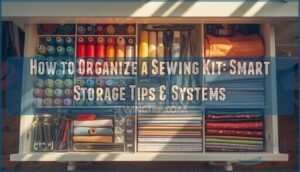
When you build your own sewing kit, you’re not just gathering supplies—you’re creating a command center for every wardrobe emergency, hem repair, and creative impulse that strikes. The right combination of needles, thread, and smart storage transforms those frustrating moments into quick fixes you can handle with confidence, whether you’re tacking down a loose seam or tackling your first tailoring project.
Table Of Contents
Key Takeaways
- A well-organized sewing kit transforms wardrobe emergencies into quick fixes by combining the right container—whether durable plastic boxes, portable canvas pouches, or compartmentalized tins—with strategic tool placement that keeps frequently used items like measuring tapes and seam rippers within instant reach.
- Essential tools for any DIY sewing kit include hand needles in multiple sizes, sharp fabric scissors (never used on paper), a magnetic or cushioned pin storage system, measuring tape with both metric and imperial markings, and a seam ripper for clean corrections without damaging fabric.
- Your thread collection should center on 40-weight polyester for general sewing and 60-weight for delicate materials, paired with basic fasteners like buttons and snaps, plus interfacing and stabilizers that provide the structural support behind professional-looking seams and shapes.
- Replace hand needles after each project and machine needles when stitches skip, swap dull scissors every 8–12 months, and discard bent pins immediately to maintain the precision that separates frustrating repairs from confident, clean results.
Choosing The Right Sewing Kit Container
Your sewing kit container isn’t just about looks—it needs to protect your tools, keep everything organized, and travel well when you need it to. The right choice depends on how many supplies you’ll carry, where you’ll use them, and whether you prefer quick grab-and-go portability or a more permanent home base.
A well-designed sewing kit for adults balances compartmentalization with accessibility, ensuring frequently used items stay within easy reach.
Let’s look at the most popular container options and what makes each one work for different sewing situations.
Types of Containers—boxes, Pouches, Tins
Your sewing box is the backbone of your entire sewing kit, and you have three main storage solutions to evaluate—cardboard boxes, fabric pouches, and metal tins. Each container type fulfills a unique purpose, depending on your sewing kit essentials and portability needs.
- Cardboard boxes provide lightweight, stackable storage case options ideal for organizing tools at home
- Plastic boxes with snap lids protect sewing supplies from dust and moisture during travel
- Nylon or canvas pouches offer zippered, foldable portable cases perfect for workshops
- Metal tins guard needles from rust in humid climates like Ashburn, VA
- Wooden box designs combine durability with decorative appeal for vintage tin organization
Features to Look For—durability, Portability, Compartments
Once you’ve chosen your container style, zero in on three core features that separate amateur storage from professional-grade sewing kit materials. Durability, portability, and compartment design transform a basic sewing box into a reliable workhorse for your sewing tools and sewing supplies.
| Feature | What to Look For |
|---|---|
| Durability | Nylon canvas blends with 1000 denier rating, reinforced seams, metal YKK zippers |
| Portability | Under 9 inches long, detachable straps, lightweight construction below 1.2 pounds |
| Compartments | 6-8 configurable pockets, elastic loops, clear sleeves for quick visibility |
Kit customization thrives when your storage case offers modular dividers and dedicated thread trays—portable designs that adapt as your collection grows.
Organizing Your Tools for Easy Access
Now that you’ve locked down durability and portability features in your storage case or box, map out a logical home for each sewing tool to keep your workspace running smoothly. Strategic tool organization prevents you from fishing through compartments mid-project:
- Front pocket—measuring tape, fabric markers, seam ripper for instant reach
- Center compartment—needles, thread spools, pins in dedicated dividers
- Back panel—scissors, rotary cutters, specialty sewing supplies secured by elastic loops
Label each section clearly to maintain kit customization as your collection expands.
Essential Tools for Your DIY Sewing Kit
Now that you’ve chosen your container, it’s time to fill it with the right tools. A well-equipped sewing kit doesn’t need to be fancy or expensive, but it should include a few essential items that handle most mending and basic sewing tasks.
Let’s look at the must-have tools that belong in every DIY sewing kit, starting with the fundamentals you’ll reach for again and again.
Hand Sewing Needles and Storage Options
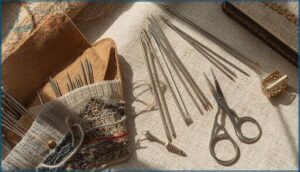
Your handsewing needles are the heartbeat of any sewing kit, so you’ll want a variety pack with sharps, jeans, and embroidery styles to tackle different fabrics.
If you’re looking to expand your collection, check out hand sewing projects for relaxation to discover which needles work best for different creative techniques.
Store them in a needle case or book to prevent bent tips and lost treasures, and consider adding a needle threader and thimble nearby—these sewing accessories transform frustrating moments into smooth handiwork.
Scissors—fabric and Thread Types
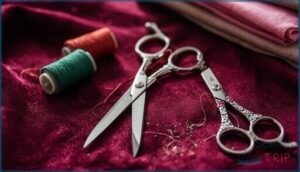
A sharp pair of fabric scissors with high-carbon blades will give you clean, precise cuts through multiple layers, while smaller embroidery scissors or thread snips handle delicate trimming near stitches. Look for ergonomic grips that reduce hand fatigue, and remember that blade sharpening maintains your edge over time—store them dry, wipe away lint after use, and never use your fabric scissors on paper.
High-carbon fabric scissors deliver clean cuts through multiple layers, but never use them on paper—dedicate them to fabric only and keep the blades sharp
Pins, Pin Cushions, and Magnetic Storage
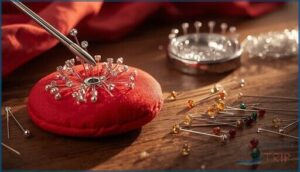
You’ll need a box of straight pins to hold fabric layers together as you work, and a pin cushion keeps them accessible—choose one with a magnetic field strength that attracts pins securely for easy pickup and prevents them from rolling off your workspace. For more guidance on selecting the best option, consider reading about choosing the right magnet for your pincushion.
A magnetic wand offers flexible pin retention methods, sweeping dropped pins from the floor while ensuring needle organization and pin cushion safety in your portable kit.
Thimbles—metal Vs. Leather
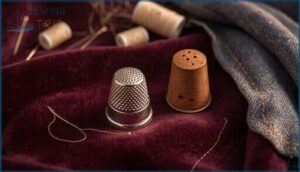
A thimble protects your pushing finger from punctures during hand sewing, and choosing between metal and leather comes down to balancing finger protection with sewing ergonomics.
Metal thimbles offer durability and firm needle safety for dense fabrics like denim, while leather thimbles mold to your fingertip for comfort during delicate work, though they require more frequent thimble maintenance and replacement as materials wear.
For additional details about information collection and usage, you can review related practices on specialty sewing websites.
Seam Ripper for Corrections
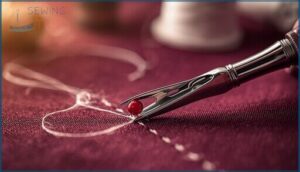
A seam ripper becomes your best friend when sewing mistakes happen, using a small forked blade to slide under threads and cut them cleanly without damaging fabric. Choose one with a protective ball end for fabric protection and a sharp point for precise thread removal.
Since correction techniques matter as much as the initial stitching when you’re building confidence with your sewing tools.
Measuring Tapes and Marking Tools

Accurate measurements transform your sewing from guesswork into precision work, making a quality measuring tape and reliable marking tools non-negotiable additions to your sewing kit.
Look for these features when selecting your measurement accuracy essentials:
- A flexible measuring tape with both metric and imperial markings, plus a metal hook that compensates for its own thickness
- Fabric chalk or heat-erasable marking tools that won’t leave permanent stains on your projects
- Ruler guides or sewing gauges for consistent seam allowances and hem depths
Keep the tape snug but not tight when measuring body dimensions, and always take readings at eye level to prevent parallax errors that shift your numbers.
Must-Have Sewing Notions and Supplies
Beyond your basic tools, you’ll need a selection of notions and supplies that keep your projects running smoothly and looking professional. These smaller items—threads, fasteners, stabilizers, and specialty materials—are the unsung heroes that transform raw fabric into finished pieces.
Let’s look at what belongs in a well-rounded sewing kit, starting with the everyday essentials and moving toward those handy extras that expand your creative possibilities.
Thread Types and Color Selection
Thread is the backbone of every textile repair, so you’ll want a range of thread weights and fiber types in your sewing kit. For general sewing, 40-weight polyester thread manages most woven fabrics, while 60-weight works beautifully for delicate materials.
When color matching, opt for a slightly darker shade—it’ll blend better than lighter options and keep your seams nearly invisible.
Basic Fasteners—buttons, Snaps, Zippers
Your sewing kit needs a small collection of closure systems—fasteners that keep garments functional and secure.
Stock a variety of button types in neutral shades, plus a few basic snaps for quick installations on lightweight fabrics. Include one or two all-purpose zippers; understanding zipper maintenance and fastener materials will help you match the right closure to each repair project you tackle.
Interfacing and Stabilizers for Structure
Once you’ve chosen the right fasteners for your projects, you’ll need materials that give fabric the body and reinforcement it deserves—interfacing types and stabilizer materials work behind the scenes to keep seams crisp and shapes defined.
Here are five sewing reinforcement essentials to stock in your sewing kit:
- Lightweight fusible interfacing for collars and cuffs that resist fraying
- Tear-away stabilizer for machine embroidery without puckering
- Woven interfacing for structured techniques on buttonholes
- Cut-away foam stabilizer for bag panels requiring permanent fabric support
- Knit interfacing for stretchy garments needing flexible sewing supplies
Glue Sticks and Fabric Pens for Crafting
Beyond interfacing, you’ll want crafting adhesives like fabric-safe glue sticks for temporary bonding before stitching—starch-based glue stick types dry clear in under a minute and wash out easily.
Fabric pen ink formulations, whether water-based or pigment-based, let you mark placement lines that disappear with heat or water, making fabric pens indispensable crafting tools for precise appliqué work and pattern transfer in DIY crafting projects.
Optional Add-ons for Specialized Projects
As your DIY sewing projects grow more ambitious, craft organizers with interchangeable compartments ease workflow by keeping tracing wheels and specialty headers within arm’s reach.
Premium inserts featuring magnetic closures protect sharp crafting tools during transport, while custom labels and fabric weight tags transform basic sewing kit essentials into a tailored system that conforms to garment construction and expert sewing techniques.
Top 5 Products for Your Sewing Kit
You’ve gathered your knowledge about what belongs in a sewing kit, but now comes the practical question: which specific products should you actually buy? The market offers countless options, and choosing quality tools from the start will save you frustration and money down the line.
Here are five standout products that consistently deliver reliable performance for both beginners building their first kit and experienced sewers restocking their supplies.
1. Sewing Needles for Hand Sewing Repair
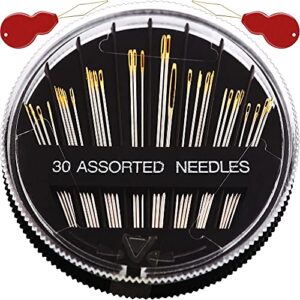
A good hand needle set is the backbone of any repair kit, and you’ll want assorted sizes to handle everything from torn hems to leather upholstery.
Look for stainless steel needles with large eyes that accommodate thicker thread without friction, along with options like sharps for woven fabrics, ballpoint for knits, and blunt-tip darning needles for reinforcing worn areas.
The JollMono 30-pack offers six sizes with threaders included, making it simple to match your needle to both fabric weight and thread thickness for clean, reliable stitches.
| Best For | Sewers of all skill levels who need a versatile needle set for everyday repairs, embroidery, and projects ranging from lightweight fabrics to heavier materials like upholstery and carpets. |
|---|---|
| Material | Stainless Steel |
| Brand | JollMono |
| Weight | 0.704 ounces |
| Primary Use | Hand Sewing |
| Quantity | 30/60 pack |
| Skill Level | All levels |
| Additional Features |
|
- Six different needle sizes with large eyes and included threaders make it easy to handle various thread types and fabric weights
- High-quality 304 stainless steel construction with a smooth surface reduces friction and ensures durability
- Affordable 30-piece set provides plenty of backups and options for different sewing tasks
- Needles may be too thick or sharp for delicate fabrics like silk or sheer materials
- The storage case may not hold up well with
2. Dritz Magnetic Needle Case
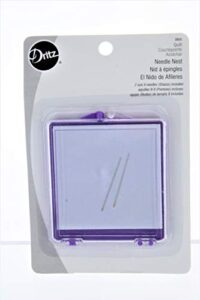
Keeping needles corralled between projects demands a storage solution that won’t spill its contents when you’re on the move, which is where the Dritz Magnetic Needle Case earns its spot in your kit.
This compact plastic shell measures roughly 3.5 by 2 inches, housing a white magnetic base that holds your hand sewing needles securely in place while you work or travel.
The clear lid lets you inventory your supply at a glance, and the lightweight design—under 50 grams—slips into a purse or desk drawer without adding bulk.
| Best For | Sewers who travel frequently or work on multiple projects and need a compact way to keep needles organized without losing them. |
|---|---|
| Material | Plastic |
| Brand | Dritz |
| Weight | 1.41 ounces |
| Primary Use | Storage Organization |
| Quantity | 1 case |
| Skill Level | All levels |
| Additional Features |
|
- Magnetic base keeps needles secure and visible through the clear lid, so you can see what you have without opening it
- Small enough to toss in a purse or travel bag at just over an ounce
- Comes with two needles to get you started right away
- Some units arrive with cracked lids due to quality control issues
- Might be bigger than you expect if you’re looking for something truly pocket-sized
- Won’t fit in standard sewing boxes because of its dimensions
3. Metal Sewing Thimble Finger Protector
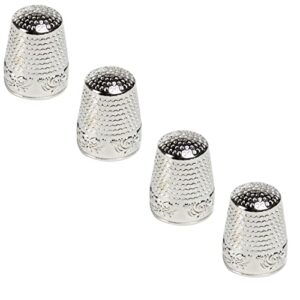
When you’re pushing a stubborn needle through multiple fabric layers, the gilded metal construction of this thimble shields your fingertip from punctures without adding bulk to your workspace.
Safety ridges along the top prevent needle slippage during intricate hand work, while the open-back design allows air circulation to reduce moisture buildup during extended sessions.
At roughly 0.55 inches in diameter, this four-piece set accommodates most finger sizes, though you’ll want to test the fit before tackling thick denim or quilting projects that demand repeated needle impacts.
| Best For | Sewers and crafters who regularly work on hand-stitching projects like needlepoint, quilting, or embroidery and need reliable finger protection during repetitive needle work. |
|---|---|
| Material | Gilded Metal |
| Brand | Generic |
| Weight | 0.704 ounces |
| Primary Use | Finger Protection |
| Quantity | 4 thimbles |
| Skill Level | All levels |
| Additional Features |
|
- Gilded metal construction provides sturdy protection against needle pricks while remaining lightweight at just 0.7 ounces
- Safety ridges on top prevent needles from slipping during detailed work, giving you better control on intricate projects
- Comes in a 4-pack so you have backups or can share with fellow crafters
- Sizing can be hit-or-miss—may not fit comfortably if you have particularly large or small fingers
- Some users reported receiving rusty thimbles, which suggests inconsistent quality control
- Metal material can rub uncomfortably against thin fingers during extended sewing sessions
4. Leather Thimble Finger Protectors
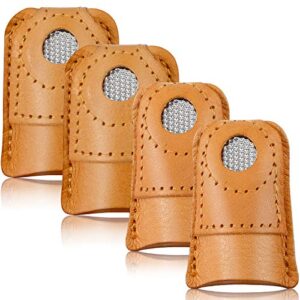
If metal thimbles feel too rigid for your sewing style, leather finger protectors offer flexible coverage that moves with your hand while still blocking needle pricks through thick canvas or denim.
The top grain cowhide outer layer provides abrasion resistance without restricting finger movement, and most designs feature a doubled interior for extra puncture protection during long stitching sessions.
You’ll find sizing options based on finger circumference, ensuring a snug fit that won’t slip when you’re pressing needles through multiple fabric layers.
| Best For | Sewers who prefer flexible finger protection over rigid metal thimbles, especially when working with heavy fabrics like denim or canvas. |
|---|---|
| Material | Faux Leather |
| Brand | Generic |
| Weight | Not specified |
| Primary Use | Finger Protection |
| Quantity | 4 thimbles |
| Skill Level | All levels |
| Additional Features |
|
- Flexible leather design moves naturally with your hand while still blocking needle pricks
- Sweat-absorbent and breathable material keeps fingers comfortable during long sewing sessions
- Comes with 4 pieces in two sizes so you can find the right fit and have backups
- Leather may stretch over time and lose its snug fit
- Metal protection disc can become loose or poorly secured with regular use
- Sizing options may not accommodate larger thumbs or fingers
5. Coats Dual Duty Thread Box
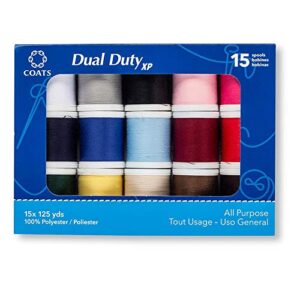
A thread box with multiple spools ready to go eliminates midproject trips to the store when you run out of basic colors. The Coats Dual Duty Thread Box usually includes 9 or 15 spools of polyester wrapped core spun thread, each with 125 yards suitable for standard garment and craft sewing.
The peggable box design with a clear window lets you spot your color options at a glance, while the compact packaging fits neatly in standard sewing baskets or drawers without taking up valuable workspace.
| Best For | Sewers and crafters who want a ready-to-use collection of basic thread colors without making multiple store runs. |
|---|---|
| Material | Polyester |
| Brand | Red Heart |
| Weight | Not specified |
| Primary Use | Sewing & Crafting |
| Quantity | 1875 yards |
| Skill Level | All levels |
| Additional Features |
|
- Includes 9-15 spools with 125 yards each, giving you plenty of common colors in one purchase
- Clear window box lets you quickly see which colors you have without opening it
- Compact design fits easily in sewing baskets or drawers without eating up space
- Some users have noticed quality isn’t quite up to par with other Coats Clark products
- Not strong enough for heavy-duty or industrial sewing projects
- A few customers have reported quality control issues with their spools
Frequently Asked Questions (FAQs)
How often should I replace sewing kit tools?
Sharp tools make all the difference, so replace hand needles after each project, change machine needles when stitches skip, swap dull scissors every 8–12 months, and discard bent pins immediately.
Can I travel with scissors in my sewing kit?
Yes, you can travel with scissors in your sewing kit if the blades measure 6 cm (36 inches) or shorter for carry-on luggage; longer blades must go in checked bags.
Whats the best way to store fabric scraps?
Sort your scraps by size and color in clear plastic bins or labeled containers, keeping them within arm’s reach near your sewing area so you can quickly grab pieces during projects.
How do I choose the right needle size?
Match needle size to your fabric weight—finer needles for delicate materials, heavier ones for thick layers.
Test on scrap fabric first to confirm smooth feeding without puckering or skipped stitches.
Where can I find free sewing patterns online?
You can download free sewing patterns from AllFreeSewing, FreeSewing.eu, Mood Fabrics, and SewCanShe, which offer thousands of options for garments, accessories, and home decor. These resources provide printable PDFs and step-by-step instructions to guide your sewing projects.
Conclusion
Think of your sewing kit as a well-stocked toolbox—when the right instrument is waiting exactly where you need it, those wardrobe mishaps lose their power to derail your day.
Now that you know how to build your own sewing kit with thoughtful container choices, essential tools, and smart organization, you’re equipped to handle everything from emergency button replacements to ambitious tailoring experiments.
Your organized collection stands ready whenever inspiration—or necessity—strikes.