This site is supported by our readers. We may earn a commission, at no cost to you, if you purchase through links.
I’ve sewn my share of beautiful garments that fell apart after three washes, and every single time, the culprit was the same: I’d skipped proper seam finishing. Those frayed edges don’t just look messy on the inside—they weaken your hard work and can even irritate your skin.
The difference between homemade-looking and professionally finished comes down to how you treat those raw fabric edges. Whether you’re working with delicate silk or sturdy denim, the right technique keeps seams secure, garments durable, and your insides looking as polished as your outsides. Let me walk you through the methods that’ll transform your sewing from fragile to rock-solid.
Table Of Contents
Key Takeaways
- Unfinished seams fray and unravel over time, weakening your garment’s structure and creating scratchy edges that irritate skin during wear.
- Match your seam finish to your fabric type—French seams work best for lightweight materials, serging handles medium to heavy fabrics, and zigzag stitching offers a flexible all-purpose solution.
- Professional-looking seams require pressing after stitching and trimming seam allowances to reduce bulk, not just the right finishing technique.
- You can achieve durable, polished seams without a serger by using hand stitching, pinking shears, or bias binding for edge protection.
Why Seam Finishing is Essential
You might think seam finishing is just for show, but it’s actually the backbone of every garment that lasts. Without it, your hard work can literally fall apart at the seams—and nobody wants that!
Mastering techniques for creating perfect seams means your garments won’t just look professional—they’ll actually hold up to everyday life.
Let’s look at the four main reasons why finishing your seams isn’t optional if you want results that look and feel professional.
Preventing Fraying and Unraveling
Raw edges on woven fabrics will fray without protection—loose threads unravel, weaken your work, and leave scratchy seam allowances that irritate skin.
Without protection, raw edges fray and unravel, weakening seams and creating irritating scratchy allowances against your skin
That’s why seam finishes like zigzag stitch, serging, or French seams matter so much. They lock down thread security through edge protection and fabric stabilization, preventing unraveling before it starts. Think of fray prevention as insurance for every seam you sew!
For additional ideas, you can learn about no-sew fabric edge finishes that offer practical options to prevent fraying without stitching.
Enhancing Garment Durability
Finished seams aren’t just about fray prevention—they’re the backbone of garment longevity. Seam reinforcement at stress points prevents blowouts during movement, while smart fabric selection paired with the right seam finishing techniques keeps your work together through countless wears and washes.
Here’s how seam finishes boost durability through garment construction:
- Flat-felled seams encase raw edges for double-layer strength
- Serged seam allowances resist unraveling during fabric stabilization
- Reinforced stitching at stress points copes with repeated strain
- Hong Kong finishes withstand frequent laundering without fraying
- Wider seam allowances at key zones accommodate wear without compromising fit
Durability testing shows properly finished seams last substantially longer than raw edges! Emphasizing further ensures a longer-lasting, more sustainable wardrobe.
Achieving a Professional Appearance
When you open up store-bought clothing, you’ll notice the seams inside look clean and intentional—that’s the mark of professional grooming in garment construction. Applying seam finishes like French seams, zigzag stitch, or serging transforms your homemade pieces from “clearly handmade” to “I can’t believe you made this!” It’s the difference between workplace etiquette for your wardrobe and letting raw edges announce amateur hour.
| Finish Type | Visual Impact | Best Application |
|---|---|---|
| French Seams | Enclosed edges, zero fraying | Sheer blouses, unlined dresses |
| Zigzag Stitch | Neat, contained edges | Everyday garments, casual wear |
| Serging | Clean, professional loops | Office attire, custom-made pieces |
| Hong Kong Finish | Contrasting bound edge | Unlined jackets, visible seams |
| Flat-Felled | Topstitched, denim-quality | Jeans, workwear, sturdy items |
That polished presence you see in ready-to-wear? You can absolutely achieve it at home with proper seam finishing techniques and attention to personal hygiene in your sewing process—keeping your workspace and hands clean prevents transfer of oils or dirt that can show on finished seams.
Start by learning the core seam finishing techniques used by professionals, then practice them consistently to build muscle memory and precision.
Improving Comfort and Wearability
Beyond good looks, seam finishes directly affect how your garment feels against your skin. Scratchy raw edges can irritate and chafe—especially along armholes or waistbands.
A smooth serged edge or narrow zigzag stitch keeps seam allowances flat and flexible, eliminating bulk that rubs during movement. French seams work beautifully on lightweight fabrics, enclosing rough edges completely for all-day comfort and wearability.
Choosing The Right Seam Finish
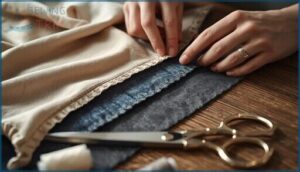
Not every seam finish works for every project, and that’s where things get interesting.
The right choice depends on your fabric, how you’ll use the garment, and what kind of look you’re after. Let’s break down what matters most when you’re deciding which finish to use.
Fabric Type Considerations
Your fabric type drives every seam finishing decision you’ll make. Woven fabrics fray quickly and need secure edges, while knit fabrics with stretch require flexible seam finishing techniques that move with the garment.
Fabric selection matters because:
- Fiber content affects how edges behave—cotton and linen unravel faster than synthetics
- Fabric weight determines which methods hold without adding bulk
- Fabric dye stability influences whether seams will bleed during washing
Garment Use and Longevity
Think about how often you’ll wear and wash your project when picking seam finishes. Daily-wear items like cotton shirts need sturdy serging or French seams to handle repeated laundering cycles, while special-occasion garments can use simpler techniques.
Garment maintenance becomes easier when you match seam finishing techniques to wear resistance needs—reinforced seam allowance protects stress points and extends fabric durability through care strategies that preserve longevity factors.
Personal Style and Preference
Your creative vision shapes every seam choice you make. Color choices and fabric feel dictate whether you prefer invisible zigzag stitch finishes or bold topstitching that makes style statements.
French seams suit minimal aesthetics, while serging works for casual looks. Visual goals matter—clean insides versus decorative edges reflect personal aesthetics, so pick seam finishing techniques that match your unique design sensibility.
Step-by-Step Seam Finishing Techniques
Now that you know which finish works best for your fabric, it’s time to actually do it.
I’m going to walk you through five essential techniques that’ll cover most of your sewing projects. Each method has its own sweet spot, so let’s break them down step by step.
Zigzag Stitching With a Sewing Machine
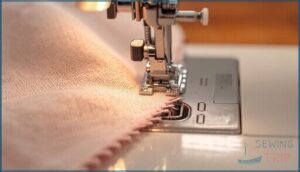
Your sewing machine’s zigzag stitch is one of the easiest edge finishing techniques you can master. Set your stitch width between 2.5 and 3.0 millimeters for lightweight fabrics, or go wider—up to 5.0 millimeters—for heavier materials.
The stitch crosses right over the raw edge, preventing fraying while keeping some flexibility. Test on scrap fabric first to nail down your stitch width control!
Using a Serger or Overlocker
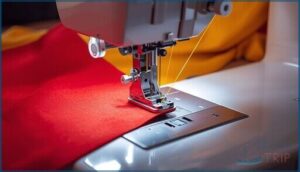
If you want speed and professional edge, a serger is your best friend. This machine wraps multiple threads around raw fabric edges in one pass, creating durable overlock stitches that prevent fraying beautifully.
Master serger threading—following those color-coded paths—and adjust thread tension so your finish lies flat. Regular serger maintenance keeps stitch quality consistent, and test swatches help you dial in fabric compatibility before committing to your garment!
Applying Pinking Shears
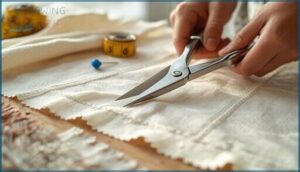
Pinking shears are your no-machine backup—those serrated blades cut a zigzag edge that slows fabric fray along raw edges.
Perfect for lightweight wovens or quick sample projects, but don’t expect the same durability as serged seam finishes.
Keep blades sharp for clean cuts, use gentle pressure on delicate fabrics, and remember this edge finishing method softens with washing!
Creating French Seams
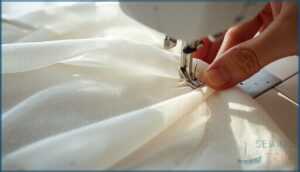
French seams take fabric preparation seriously—you’ll sew twice with wrong sides together first, trim the edge closely, then flip to enclose raw edges inside a second seam allowance.
This seam enclosure technique shines on lightweight fabrics where French stitching creates zero visible fraying. Master these sewing techniques and your garment construction methods will look professionally finished, inside and out!
Making Bound and Hong Kong Seams
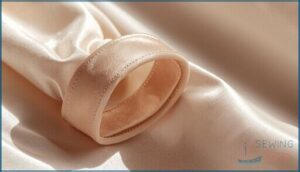
Bias binding takes seam enclosure to another level—Hong Kong finish wraps bias tape around raw edges for a couture-quality interior that won’t fray or show through.
Bound seams work beautifully when you want edge wrapping that’s both functional and gorgeous:
- Sew your seam normally, then press it open
- Stitch bias binding along one raw edge
- Wrap the binding over and press flat
- Stitch in the ditch to secure invisibly
This bound Hong Kong seam elevates any unlined jacket!
Seam Finishes for Different Fabrics
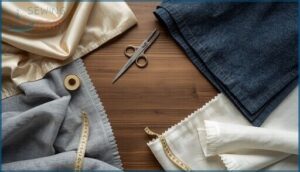
Not all fabrics behave the same way, so choosing the right seam makes all the difference. What works beautifully on silk might create bulk on denim, and stretchy knits need different treatment than crisp cotton.
Let’s look at the best finishing techniques for each fabric category so your seams always look professional.
Lightweight and Sheer Fabrics
Delicate fabrics like chiffon and georgette need gentle seam finishes that won’t disrupt fabric drape or add bulk. A French seam hides raw edges beautifully on sheer blouses, while a narrow zigzag prevents fraying without stiffness.
For elegant projects, try a Hong Kong seam—it protects the sheer edge with lightweight binding. Your serger can create delicate stitches that keep lightweight hems soft and professional-looking!
Medium-Weight and Heavy Fabrics
When you work with twill, canvas, or denim—fabrics ranging from 170 to 340 gsm—you’ll need seam finishes that can cope with the extra bulk.
A serger tackles dense weave finishing beautifully, while a wide zigzag on your regular machine works too. For thick fabric tips, increase your seam allowance to 1.5–2 cm and press well.
French seams or Hong Kong finishes add seam reinforcement without scratchy edges!
Knit and Stretch Fabrics
Knit fabrics behave differently than wovens—they stretch, curl at the edges, and need flexible seam finishes that move with the fabric.
A narrow zigzag or serger gives you that elastic seam strength while preventing fabric curling. Don’t use a straight stitch on knits; it’ll pop! Focus on seam stability and stretch recovery by choosing sewing techniques that respect the knit fabric behavior.
Specialty and Delicate Materials
Silk fabric care demands gentle handling—keep your iron below 30°C to protect those precious fibers. Lace finishing needs stabilizing interfacing underneath to prevent snags, while microfiber seams require ultra-fine stitches to avoid pulls.
For foil fabric tips, grab a Microtex needle! French seams work beautifully on sheers, and bamboo blends love flat-felled seam finishes that prevent fabric fray while keeping things soft.
Tips for Professional-Looking Seams
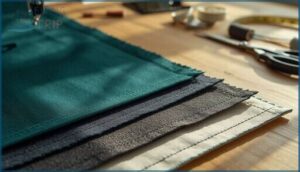
You’ve learned the techniques, chosen your fabrics, and stitched your seams—but the real magic happens in those finishing touches that separate homemade from handmade.
A few smart habits can transform your seams from functional to impeccable, giving every project that polished edge.
Here’s what you need to know to nail those details every single time.
Pressing and Trimming Seam Allowances
You can’t skip pressing and trimming if you want seams that look professional. Press your seam allowances after stitching to set the stitches and flatten bulk, then trim down to 1/4 inch to reduce thickness without cutting into your stitches.
For layered seams, grade the widths so each layer gets progressively narrower. This edge trimming keeps your fabric preparation smooth and prevents that homemade puffiness we all want to avoid!
Seam Order and Construction Sequencing
The order you finish seams matters just as much as the technique. Tackle construction scheduling by completing structural seams before fabric preparation steps like hems.
Your garment assembly flows best when you apply seam finishing methods to flat, open seams first—before crossing them with another.
This sequence optimization in sewing techniques prevents trapped bulk and gives you access to press both seam allowances properly.
Troubleshooting Common Seam Issues
Even perfect seam finishes hit snags. Seam pucker often means your thread tension‘s too tight—loosen it and test on scrap fabric. Thread breakage? Replace that dull needle.
Uneven stitch density creates weak spots, so adjust your SPI settings. Seam grin appears when raw edges creep apart; increase your seam allowance slightly.
Color shading happens with mismatched thread lots, and fabric fray means you need better seam sealing techniques.
Frequently Asked Questions (FAQs)
What is the best way to finish a seam?
Think of a seam finish as armor for your fabric edges—zigzag stitching and sergers prevent fraying, French seams hide raw edges beautifully, and bound seam finishes add professional polish to any garment.
Can I finish seams without a sewing machine?
Hand stitching, pinking shears, and bias binding work beautifully.
French seams, Hong Kong seams, and overcast stitches give you professional edge finishing and durable seam finishes without any machine at all.
How do I fix already frayed seam edges?
Most garments show edge damage within six months of regular wear—but you can rescue them.
Trim loose threads, then use a narrow zigzag stitch or serger to seal the frayed edge and stop further unraveling immediately.
What thread type works best for seam finishing?
Polyester thread works best for most seam finishes—it’s strong, resists fraying, and works beautifully with zigzag or serging.
For knits, choose stretch thread. Delicate fabric? Try fine mercerized cotton for smooth fabric compatibility.
Should I finish seams before or after hemming?
Finish seam allowance before hemming on woven fabrics to control fraying and prevent bulk. This construction order keeps your seam allowance stable, simplifies edge control during fabric handling, and ensures hem stability throughout wear.
Do all seams in a garment need finishing?
Not every seam demands finishing. Fully enclosed seams hidden by lining or facing don’t need extra edge protection, while French seams and bound finishes already secure raw edges—letting you prioritize visible, high-stress seams instead.
Conclusion
Your seams will outlive you if you finish them right—and that’s not an exaggeration when you compare a frayed mess to a properly bound edge. These techniques aren’t just about aesthetics; they’re insurance against your hard work falling apart.
Start with one method that matches your fabric, practice until your hands remember the rhythm, and soon you’ll finish seams without thinking. That’s when sewing stops feeling like a gamble and starts feeling like mastery.