This site is supported by our readers. We may earn a commission, at no cost to you, if you purchase through links.
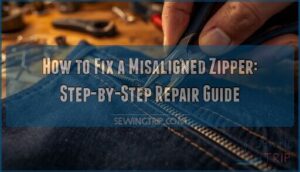
You tug at your jacket zipper and watch it split apart behind the slider—again. That crooked line of teeth won’t mesh no matter how carefully you coax them together. A misaligned zipper turns every outing into a minor crisis, whether it’s on your favorite coat, a backpack that won’t stay closed, or jeans that gap at the waistband.
The good news? Most zipper problems stem from a handful of fixable issues: fabric puckering during installation, teeth knocked out of alignment from wear, or a slider that’s stretched too wide to grip properly. With basic tools like needle-nose pliers and a seam ripper, you can straighten twisted tracks, reset stubborn sliders, and get that closure working smoothly again—often in under ten minutes.
Table Of Contents
Key Takeaways
- Most zipper misalignment stems from fixable issues like fabric shifting during installation, bent or worn teeth, or a stretched slider that won’t grip properly—problems you can tackle with needle-nose pliers, a seam ripper, and basic zipper maintenance in under ten minutes.
- Preventing zipper problems starts at installation by stabilizing your fabric with interfacing, basting before final stitching, and using the right presser foot to keep both sides tracking evenly without distortion.
- You can often repair a zipper without removing it by squeezing loose slider plates with pliers, realigning bent teeth one at a time, and applying simple lubricants like bar soap or beeswax to restore smooth gliding.
- Full zipper replacement makes sense when teeth are cracked beyond repair, the slider won’t stay on track despite adjustments, or the tape itself has torn—but repair costs around $25 compared to $114+ for replacement, making fixes worth attempting first.
Causes of a Misaligned Zipper
A zipper that won’t close straight can turn your favorite jacket into a frustrating puzzle. The culprit isn’t always obvious—it might be something you did during installation, the fabric you’re working with, or just plain wear and tear.
Catching these issues early with a few sewing project troubleshooting techniques can save you from having to rip out stitches later.
Let’s break down the main reasons zippers go crooked so you know exactly what you’re up against.
If you’re dealing with damaged or missing teeth, here’s how to fix broken zipper teeth so you can get it working smoothly again.
Common Sewing Mistakes Leading to Misalignment
Alignment errors often start when you’re stitching in the zipper. Fabric shifting under the presser foot throws off your placement, and uneven seams make the whole track twist. Here’s what causes the most sewing troubleshooting headaches:
Switching to the right presser foot for your fabric type keeps everything stable and prevents those shifty layers from ruining your zipper line.
- Rushing without basting first lets the tape slide around
- Skipping markings means your zipper won’t line up at seams
- Sewing both sides in opposite directions stretches one side more
- Using the wrong foot reduces visibility and control
- Pulling fabric while stitching distorts the finished line
To avoid common issues, consider using invisible zipper techniques for a professional finish. Master these zipper alignment techniques and your garment construction tips will level up fast.
Issues With Fabric Type and Handling
Your fabric choice matters more than you might think. Lightweight silks and rayons ripple along the zipper because the stable tape doesn’t stretch like the fabric does. Stretch knits and bias-cut pieces elongate under the presser foot, throwing off zipper alignment even when your sewing techniques are solid. Thick denim feeds unevenly, causing one side to advance slower.
Match your fabric manipulation and seam allowances to what you’re working with. Understanding proper zipper installation techniques is essential for avoiding common sewing mistakes.
Zipper Wear and Tear Factors
Even a perfectly installed zipper won’t stay aligned forever—metal teeth bend with repeated stress, plastic coils crack from overuse, and sliders wear down until they skip tracks like a broken record. Fabric friction rubs protective coatings away, exposing metal to corrosion that locks teeth together.
Fortunately, fixing zipper teeth that won’t close often takes just minutes with pliers, lubricant, or a slider adjustment.
Seam stress from overstuffed pockets pulls everything sideways. Material degradation doesn’t announce itself until your zipper suddenly refuses to close.
Tools and Materials Needed for Repair
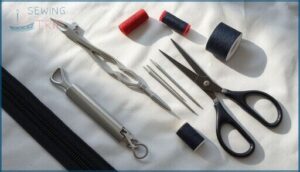
Before you can fix a misaligned zipper, you need the right tools on hand. Most repairs require just a few basic items you probably already have in your sewing kit.
Here’s what to gather before you start working on that stubborn zipper.
Essential Sewing and Repair Tools
You’ll need the right sewing and repair tools before you start tackling that zipper. A sewing machine with a zipper foot lets you stitch close to the teeth, while proper needle selection (size 80/12 for medium fabrics, 90/14 for heavier ones) prevents skipped stitches.
If you’re dealing with a zipper that keeps coming apart, check out this guide on how to fix a zipper that separates for step-by-step solutions.
Keep these essentials on hand:
- Needle-nose pliers for crimping stops and realigning sliders
- Seam ripper to remove old stitches cleanly
- Straight pins to hold tape alignment during resewing
- Polyester thread for strong, durable seams
- Small sharp scissors for trimming excess tape
Recommended Zipper Lubricants and Cleaners
A smooth zipper repair starts with the right zipper lubrication and cleaning agents. Before applying any lubricant, clean metal teeth with fresh water and a soft brush to remove grit that causes a stuck zipper.
For zipper maintenance, choose products matched to your fabric and environment—here’s what works best for zipper ease:
| Lubricant Type | Best For | Application Method |
|---|---|---|
| Beeswax products | Metal zippers, outdoor gear, marine suits | Rub solid block directly on teeth |
| Silicone sprays | Fabric zippers, backpacks, minimal residue | Spray lightly, work slider to distribute |
| Dry lubricants (graphite) | Dusty environments, low-mess repairs | Rub pencil lead along stuck zipper teeth |
| Bar soap or lip balm | Quick fixes, household zipper repair | Apply thin layer to teeth, test slider |
| White vinegar solution | Cleaning corroded metal before lubrication | Brush on with hot water, rinse, dry completely |
Avoid petroleum jelly—it breaks down rubberized fabrics and attracts dirt, worsening zipper problems over time.
Replacement Parts for Zipper Fixes
When broken hardware turns your repair into a replacement job, stock the right parts. Zipper sliders come in standard gauges—4.5, 7, and 10—so measure your zipper teeth width before ordering.
YKK repair kits bundle matched replacement teeth, top stops, and slider materials in nickel or brass finishes.
For open-end zippers, grab retainer boxes and insertion pins to restore full separability on your zipper track.
How to Diagnose Zipper Misalignment
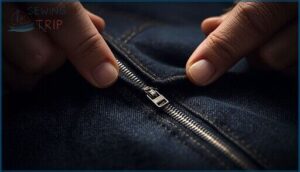
Before you can fix a misaligned zipper, you need to figure out exactly what’s wrong with it. A zipper can go off track in several ways, and each problem needs a different approach.
Here’s how to spot the specific issue so you can tackle it the right way.
Spotting Uneven Zipper Tracks
When your zipper won’t line up, visual inspection is your first move. Look closely at the zipper teeth—are they forming a straight line when closed, or do you see waviness along one track? Run your fingers down the closed zipper to feel for bumps or rough spots.
These tactile checks reveal misaligned zipper tracks before functional symptoms like repeated separation appear during zipper installation repairs.
Checking Slider and Teeth Alignment
Is your slider the culprit? Close the zipper and examine the slider plates from the side—worn sliders show a gap between their top and bottom plates, letting zipper teeth pass through without locking. Gently squeeze the plates with pliers for slider adjustment if they’ve spread apart.
Run the slider up and down during visual inspection to watch how teeth mesh. If they don’t interlock directly above the slider, that’s your troubleshooting target for zipper maintenance.
Identifying Fabric or Seam Issues
Sometimes the fabric itself creates zipper alignment trouble. Check for seam puckering—those ripples along the stitching line signal thread tension problems causing fabric distortion. Look for wavy edges where stretch fabric pulled during sewing, or where fabric shrinkage after washing has buckled a once-flat installation. Mark seam lines on both sides to spot uneven placement.
Adding interfacing solutions stabilizes stretchy areas and prevents garment construction issues that make your zipper won’t line up properly.
Step-by-Step Fix for a Misaligned Zipper
Once you’ve pinpointed the problem, it’s time to roll up your sleeves and fix that zipper. The good news? Most misalignments are totally manageable with a few careful steps.
Here’s exactly how to get your zipper back on track.
Removing Stitches to Access The Zipper

Before you can tackle a misaligned zipper, you’ll need clear access to the tape. Grab your seam ripper and work from the wrong side—cut every third or fourth stitch, then gently pull the thread free. This seam removal method protects fabric while managing thread cleanup.
Support delicate material on a flat surface during stitch removal to prevent tears and preserve your garment’s integrity.
Realigning Zipper Teeth and Tracks

With access clear, lay the tape flat and inspect each tooth. Run your finger along both sides—raised or uneven teeth signal the problem spot.
Here’s your track alignment process:
- Grasp bent metal teeth with needle-nose pliers
- Gently bend each tooth back into position
- Squeeze the slider plates to restore grip
- Apply zipper lubrication (bar soap works great)
- Test-zip repeatedly to verify teeth realignment
Don’t overdo the bending—you’ll weaken the metal.
Reinstalling and Basting The Zipper
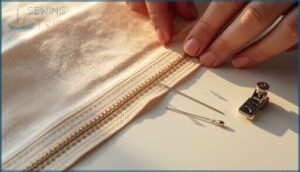
Once the teeth sit straight, position your repaired zipper along the seam line. Pin strategically every inch—don’t rush this.
Hand baste each tape side before touching your machine; those long stitches keep everything locked during final sewing. Sew one side at a time using your zipper foot.
Test the glide after each pass. That patience pays off in smooth, even closure.
Advanced Zipper Repair and Replacement

Sometimes a zipper is too far gone to save with a quick fix. When teeth are cracked, the slider won’t stay on the track, or the whole thing just won’t cooperate anymore, you need a bigger solution.
Here’s how to handle those tougher repairs and what to do when replacement is your best option.
Fixing Damaged Teeth or Sliders
When the slider won’t grip or teeth refuse to mesh, you’re facing hardware failure—but don’t panic. Tooth replacement and slider adjustment can breathe new life into that broken zipper.
Match your slider type to your zipper—coil, metal, or molded plastic each need specific parts.
- Tighten a loose slider with needle-nose pliers—gently crimp each side and test frequently
- Replace worn sliders by removing the top stop and sliding on a correctly matched new one
- Apply zipper lubrication like bar soap or graphite to help stubborn teeth glide smoothly
- Realign bent teeth carefully with pliers, working one tooth at a time
- Install replacement teeth on plastic zippers when fewer than three are missing
Replacing a Zipper Entirely
Sometimes a broken zipper won’t respond to zipper repair techniques—teeth too damaged, slider beyond saving, or fabric torn beyond fix-it measures. Full zipper removal is your answer.
Professional replacement costs run $8 to $75 depending on garment complexity, but you can tackle this yourself. Choose a replacement zipper matching original length and gauge, then use careful fabric preparation and proper sewing techniques for perfect zipper alignment.
Alternative Closure Options for Garments
When zipper replacement isn’t worth the hassle, you’ve got solid alternatives. Magnetic closures work beautifully for adaptive clothing—they self-align and close with almost no effort. Buttons and snap fasteners give you traditional security, while hook loops (Velcro) offer quick adjustability. For fitted garments, lace-ups create a custom fit every time.
- Snap fasteners and buttons: Quick installation, no special tools needed for clothing repair
- Velcro strips: Perfect for adjustable openings and childrenswear
- Drawstrings with toggles: Ideal for waistbands and casual garments
Preventing Future Zipper Misalignment

Fixing a misaligned zipper is one thing, but keeping it from happening again is where the real magic happens. The best repairs are the ones you never have to make in the first place (trust me on this).
Let’s walk through the key habits that’ll keep your zippers running smooth and straight for years to come.
Proper Zipper Installation Techniques
Most zipper alignment problems start at installation, not after. You prevent a misaligned zipper by securing fabric stabilization with interfacing strips before you sew—this keeps knits and slippery materials from shifting.
Use a presser foot designed for sewing zippers and stitch close to the teeth, maintaining consistent seam allowances. Baste first, then topstitch with careful stitching techniques for professional sewing finishes that won’t gap or twist.
Routine Zipper Maintenance Tips
You can keep zippers running smoothly with simple upkeep. Regular zipper cleaning removes dirt—brush teeth gently with a soft toothbrush after dusty wear. Apply wax-based lubricant types monthly on frequently used items for fabric protection and smooth gliding. Rinse saltwater exposure immediately to prevent corrosion.
Following these maintenance schedules helps you fix it before misalignment starts, extending your clothing maintenance routine and preventing that dreaded misaligned zipper altogether.
Best Practices for Garment Care and Storage
Think of your zipper as a precision mechanism—it deserves the same care as your best fabrics. Always clean garments before storing them (dirt attracts moths and weakens fibers).
Use breathable fabric storage tips like cotton bags, add humidity control measures such as silica packets, and organize closets with space between items.
These textile preservation techniques prevent crushing and keep clothing maintenance simple year-round.
Frequently Asked Questions (FAQs)
What tools are necessary to fix a misaligned zipper?
You’ll need needle-nose pliers to adjust teeth, a seam ripper for stitch removal, and lubricant like zipper wax.
Keep a basic sewing kit handy, plus replacement sliders if your zipper’s beyond simple realignment.
How do I know if my zipper needs to be replaced?
When your fastener repeatedly splits behind the slider or shows missing teeth despite adjustment, it’s passed its service life. Broken zipper parts, persistent slider malfunction, and torn tape all signal replacement criteria over repair.
Is it possible to fix a zipper without any tools?
Yes, you can fix minor zipper issues by hand. Manual repairs work for simple misalignment or stuck zippers—realign teeth by guiding the slider, clear fabric jams, or rub bar soap for emergency lubrication without tools.
Are there any tips to prevent misaligned zippers in the future?
A stitch in time saves nine—your best defense is fabric stabilization paired with smart sewing techniques.
Baste first, maintain consistent seam alignment, and use a zipper foot. Regular zipper maintenance keeps sliders and teeth tracking straight.
Is it possible to repair a zipper without unstitching it from the garment?
Many stuck zipper or slider adjustment problems respond to in-place fixes. Tighten a loose slider with pliers, apply lubricant to zipper teeth, or realign tooth realignment—no-sew repairs that save time without removing stitches.
Can I fix a zipper without removing it?
You can often restore a stuck zipper or fix teeth realignment without removing it.
Inplace tweaks like slider repair and zipper adjustment work when teeth and tape aren’t damaged—no sew fixes save time.
Whats the best zipper type for different fabrics?
Choosing the right zipper is like pairing wine with dinner—match delicate fabrics such as silk with lightweight coil zippers or invisible zippers, denim with sturdy metal, and stretch knits with flexible nylon coil for best results.
How do I fix a zipper that wont stay closed?
Your zipper slider has likely loosened over time and no longer meshes the teeth properly. Gently squeeze both sides with needle-nose pliers to restore tension, then test the closure after each adjustment.
When should I repair versus replace a zipper?
It’s not always obvious, but fixing broken zippers through simple slider replacement costs around $25, while full zipper replacement starts near $114—making repair the smarter choice when teeth and tape remain intact.
Can I shorten a zipper thats too long?
Yes, you can shorten most zippers by trimming the tape and adding new stops. Closed-end styles cut from the bottom; separating zippers shorten from the top to preserve the pin mechanism.
Conclusion
The myth that zippers are too finicky to repair at home falls apart the moment you realign your first stubborn track. Knowing how to fix a misaligned zipper saves money, extends the life of your favorite garments, and spares you the frustration of closures that won’t close.
Keep those pliers handy, practice gentle tension, and remember: most zipper failures aren’t permanent—they’re just waiting for your attention.
- https://drive.google.com/file/d/1KzhU8L7pPUeqDyeBQJn9xiaLP3OwgEdq/view?usp=drive_link
- https://hostinger.com/?REFERRALCODE=MGLRHONDA4MI
- https://www.instagram.com/amylattacreations/
- https://hoshima-int.com/why-zipper-wavy-after-sewing.html
- https://www.seamwork.com/sewing-tutorials/5-invisible-zipper-problems-solved-no-more-wavy-seams-or-peeking-teeth