
This site is supported by our readers. We may earn a commission, at no cost to you, if you purchase through links.
That sinking feeling hits the moment you notice purple streaks running down your cream leather couch—hair dye has a way of finding the worst possible surfaces. Leather’s porous structure pulls pigment deep into its fibers within minutes, turning a simple touch-up into a potential furniture disaster.
The difference between a faint shadow and a permanent stain often comes down to what you do in the first five minutes. Once dye molecules bond with leather proteins, removal becomes exponentially harder, sometimes requiring professional intervention or costly repairs.
The good news is that most hair dye stains respond well to targeted treatment when you match the right cleaning solution to your specific leather type and act before the pigment sets.
Table Of Contents
Key Takeaways
- Act within the first five minutes of a hair dye spill by blotting (never rubbing) from the outer edge inward with a clean white cloth to prevent the pigment bonding permanently with leather proteins.
- Match your cleaning solution to your specific leather type—aniline leather needs only diluted dish soap, semi-aniline tolerates moderate cleaners like vinegar-water mixtures, and pigmented leather can handle stronger approaches like rubbing alcohol.
- Always follow cleaning with leather conditioner or a small amount of olive oil to replace the natural oils stripped during stain removal, preventing dryness and cracking that can permanently damage the material.
- Avoid acetone and harsh solvents entirely, as they dissolve protective finishes and create irreversible bleached spots that professional refinishing can’t fix.
Immediate Steps to Remove Hair Dye From Leather
When you spot hair dye on your leather furniture or clothing, your first few minutes make all the difference. The dye hasn’t fully penetrated yet, which means you have a real window to lift it out before it becomes a permanent problem.
Let’s walk through the two critical steps you need to take right now to stop that stain in its tracks.
If you’re planning to distress your jeans later, check out this guide on how to make rips in your jeans to understand which fabric types hold up best under intentional wear.
Blotting Excess Dye Without Spreading
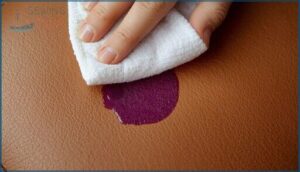
The moment hair dye hits your leather, grab a clean white cloth—never colored—and press straight down on the stain. Don’t rub or wipe sideways; that’ll just spread the pigment across a wider area, turning a small problem into a full-panel disaster.
- Start blotting from the stain’s outer edge and work inward in short, gentle presses
- Replace saturated cloth sections frequently so you’re not redepositing lifted dye
- Use only light pressure with your fingertips to avoid pushing pigments deeper
- Keep surrounding leather completely dry to prevent dye from wicking into clean zones
Acting Quickly to Prevent Permanent Staining
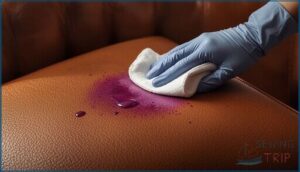
Blotting only buys you a window—you’ve got hours, not days, before hair dye accidents shift from reversible to permanent.
Act within hours, not days—hair dye stains shift from reversible to permanent as pigments migrate deeper into leather
On finished leather, pigment clings to the surface initially, but time sensitivity is critical: delayed action lets dye migration push colorants past the topcoat into deeper layers, where stain depth increases and removal becomes nearly impossible without professional refinishing.
To learn about specialized techniques for dealing with dye transfer removal methods, see resources specific to leather care.
Safe Cleaning Solutions for Leather
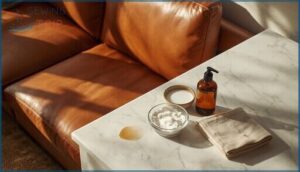
Once you’ve blotted the excess dye, you’ll need the right cleaning solution to tackle what’s left behind. Most effective leather cleaners use gentle household ingredients you probably already have.
Here’s what works safely on leather without causing additional damage.
For detailed step-by-step instructions on removing stains and dirt from nylon bags, check out this complete guide to cleaning a nylon purse.
Using Mild Dish Soap and Water Mixtures
You’ll find that mild dish soap mixed with water offers one of the safest approaches to hair dye removal from leather. Combine about one teaspoon of gentle soap per quart of warm water to maintain proper soap dilution ratios—this protects your leather’s pH balance during dye removal from leather.
Dampen a soft cloth in the solution, wring it thoroughly, then use gentle cleaning methods to blot the stain without oversaturating, always wiping away soap residue removal afterward.
For tougher stains or pH balance issues, consider specialized leather pH balanced cleaner options to help restore your leather’s integrity.
White Vinegar and Water Solution
White vinegar mixed in equal parts with water creates an effective leather stain removal solution for hair dye, thanks to its mild acidic effects that loosen stubborn pigments. However, vinegar dilution is critical—undiluted vinegar disrupts leather pH balance, risking dryness and cracking.
Apply sparingly with a damp cloth, test first on hidden areas, and always follow with conditioning to counteract vinegar risks and restore moisture after dye removal from leather.
Proper Use of Rubbing Alcohol
Rubbing alcohol cuts through hair dye stains when you use it strategically, but leather safety demands a careful touch. Pour 70 percent isopropyl alcohol onto a microfiber cloth—never directly on the leather—then dab the stained area with quick, gentle rubbing techniques.
Test hidden spots first, as solvent risks include finish stripping and drying. Always follow alcohol application with conditioning to prevent cracking.
Avoiding Harsh Chemicals and Acetone
Despite acetone’s reputation for lifting stains, it destroys leather finishes and creates permanent bleached spots you can’t reverse. Chemical risks from nail polish remover and harsh solvents accelerate leather damage through:
- Dissolved protective coatings exposing vulnerable material
- Stripped dyes leaving irreversible blotchy patches
- Damaged fiber structure causing brittleness and cracking
- Removed natural oils speeding surface deterioration
- pH imbalance weakening protein bonds
Safe protocols demand pH safe cleaners and gentle removal methods—your leather cleaner choice determines whether you rescue or ruin your piece.
Cleaning Techniques for Different Leather Types
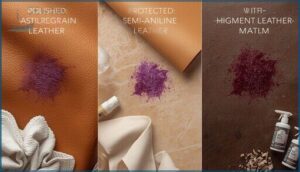
Not all leather responds the same way to cleaning products, and using the wrong technique can make a hair dye stain worse or damage the surface permanently.
Before you start scrubbing, you need to identify what type of leather you’re working with and match your approach accordingly. Here’s how to recognize different leather finishes and apply the safest cleaning method for each one.
Identifying Aniline, Semi-aniline, and Pigmented Leather
Before you reach for any cleaning solution, you’ll need to know exactly what type of leather type you’re dealing with—because treating aniline leather like pigmented leather can turn a fixable stain into permanent damage.
Aniline leather feels incredibly soft but absorbs liquids quickly due to minimal finish. Semi-aniline leather has a light protective coating, while pigmented leather features the most durable surface treatment. Check an inconspicuous spot by applying a water droplet—if it darkens immediately, you’re working with aniline.
Choosing The Right Method for Each Leather Type
Once you’ve identified your leather type, matching it with the appropriate cleaning method becomes the difference between rescuing your furniture and accidentally making things worse. Aniline leather requires gentler dye removal techniques—stick with diluted soap solutions and avoid rubbing alcohol entirely.
Semi-aniline accommodates moderate leather cleaning products, while pigmented leather tolerates stronger approaches. Your leather type identification directly determines which hair dye removal methods won’t cause additional dye damage assessment concerns.
Gentle Blotting and Wiping Motions
Your blotting techniques make all the difference between lifting hair dye and pushing it deeper into the grain. Here’s how to protect your leather during stain removal:
- Press a white microfiber cloth gently onto the dye—never rub or scrub the surface
- Work from the stain’s outer edges inward using small circular wiping patterns
- Rotate to a clean cloth section frequently to avoid redepositing lifted color
This motion control prevents finish damage while maximizing dye removal effectiveness.
Conditioning and Restoring Leather After Cleaning
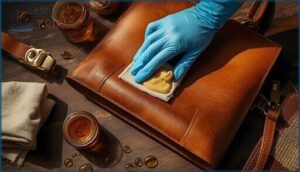
Once you’ve removed the hair dye stain, your leather isn’t quite ready for action yet.
The cleaning process can strip away natural oils, leaving the material vulnerable to drying out and cracking if you skip this essential step.
Here’s how to properly condition and restore your leather so it looks as good as it did before the mishap.
Air-drying Leather Properly
After you’ve cleaned away the hair dye, resist the urge to speed up the drying process with heat—patience here protects your leather from cracking and warping. Simply blot away excess moisture with a clean, dry cloth, then let the leather air dry naturally at room temperature.
This gentle drying technique preserves leather moisture balance and protects the finish, setting the stage for proper leather conditioning and protection that restores your piece completely.
Applying Leather Conditioner or Olive Oil
Now that your leather has dried completely, it’s time to replenish the natural oils you removed during cleaning—this step makes the difference between leather that looks worn and leather that looks restored. Proper leather moisturizing through oil application prevents the surface from becoming stiff or cracked.
Choose your conditioning leather product wisely:
- Apply commercial leather conditioner with a soft cloth in circular motions
- Use olive oil sparingly as a natural remedy alternative (quarter-size amount maximum)
- Test different conditioner types on hidden areas first
- Wait 24 hours before evaluating whether additional leather care is needed
- Buff gently for enhanced leather protection and shine
This leather maintenance routine restores suppleness effectively.
Preventing Dryness and Cracking Post-cleaning
Your conditioning work won’t mean much if the leather dries out again in the coming weeks, so you’ll need to establish a maintenance routine that keeps moisture locked in. Apply leather conditioner monthly for ongoing leather protection and crack prevention.
Keep your furniture away from direct sunlight and heat sources, which accelerate dryness repair needs. Regular leather care and maintenance through consistent conditioning practices ensures post cleaning care success, protecting your investment from future damage while maintaining suppleness.
Top Products for Removing Hair Dye From Leather
Once you’ve cleaned the hair dye stain, the right products can make all the difference in restoring your leather to its original condition.
Some cleaners work better for fresh stains, while others help repair damage that’s already set in. Here are three trusted products that leather care specialists recommend for tackling hair dye stains and bringing your leather back to life.
1. Leather Honey Leather Cleaner Solution
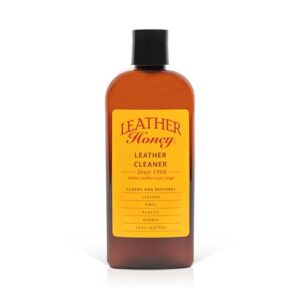
Hair dye mishaps don’t stand a chance against Leather Honey Leather Cleaner Solution—a gentle formula that addresses tough stains without compromising your leather’s integrity. This non-toxic, eco-friendly cleaner works on all leather types except suede, making it a reliable choice for hair dye removal methods.
You’ll need to dilute the concentrate with water, then apply it to a lint-free cloth before gently wiping the affected area. While it won’t eliminate deeply set pigment stains, it excels at general leather restoration and leather care and maintenance.
| Best For | People dealing with hair dye stains or general dirt on leather items who want a non-toxic cleaner that won’t damage the material. |
|---|---|
| Primary Use | Leather cleaning |
| Form | Liquid |
| Made In | USA |
| Suitable For | Furniture, shoes, car seats |
| Application | Deep cleaning |
| Finish | Clean surface |
| Additional Features |
|
- EPA Safer Choice certified and completely non-toxic, so it’s safe to use around kids and pets without worrying about harsh chemical fumes
- Works on pretty much any leather surface you can think of—car seats, couches, handbags, shoes—plus vinyl and faux leather too
- Made in the USA since 1968, and the concentrate format means you can dilute it yourself, which makes it last longer and saves money
- Won’t work on suede, so you’ll need a different product if that’s what you’re cleaning
- Struggles with really stubborn stains like deep dye transfer from jeans, so don’t expect miracles on set-in pigment marks
- You’ll probably need to follow up with a leather conditioner afterward since cleaning can dry out the leather a bit
2. Bickmore Leather Conditioner And Cleaner
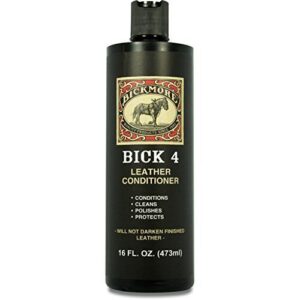
Once you’ve addressed surface stains with a dedicated cleaner, Bickmore Bick 4 Leather Conditioner steps in to restore what aggressive hair dye removal methods may have stripped away. This wax-free formula rehydrates leather without darkening or sealing pores, making it ideal for leather restoration after you’ve tackled removing hair dye stains.
You’ll apply it with a clean cloth, let it absorb, then buff for a polished finish. While Bickmore products won’t eliminate dye pigment themselves, they’re essential for leather care and maintenance post-cleaning, preventing the dryness and cracking that often follow stain removal attempts. It’s gentle cleaning meets long-term leather protection.
| Best For | Anyone who needs to recondition and protect smooth finished leather after cleaning off hair dye or other tough stains, especially if you’re worried about darkening or damaging the material. |
|---|---|
| Primary Use | Leather conditioning |
| Form | Liquid |
| Made In | USA |
| Suitable For | Shoes, boots, furniture |
| Application | One-step process |
| Finish | Non-greasy |
| Additional Features |
|
- Won’t darken leather or seal pores, so your items stay breathable and true to their original color
- Works as a conditioner, polish, and stain repellent in one product, simplifying your leather care routine
- Wax-free formula prevents the greasy residue that can attract dirt or make leather feel tacky
- Doesn’t actually remove hair dye stains—you’ll need a separate cleaner like Bick 1 first
- Some users report a watery consistency that requires multiple applications to see results
- Not ideal for suede, nubuck, or heavily textured leathers that need specialized care
3. Leather Recoloring Balm Restorer
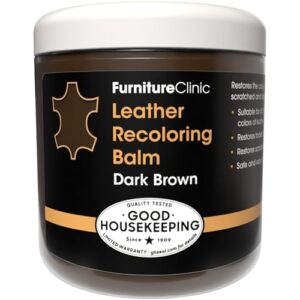
When hair dye stains prove too stubborn for standard cleaners or leave behind noticeable discoloration, Furniture Clinic’s Leather Recoloring Balm offers a professional-grade solution that doesn’t just remove the stain—it restores your leather’s original color and finish.
This 8.8-ounce liquid works best on genuine leather surfaces, handling everything from dye removal techniques to thorough color revival. You’ll apply it in thin layers using gentle circular motions, allowing each coat to dry before buffing.
The balm functions as both leather conditioner and finishing agent, making it ideal for leather care and maintenance when standard recoloring tips fall short.
| Best For | Anyone dealing with stubborn hair dye stains on leather furniture or car seats that won’t budge with regular cleaners, or anyone looking to restore faded and discolored leather back to its original look. |
|---|---|
| Primary Use | Leather restoration |
| Form | Liquid |
| Made In | Not specified |
| Suitable For | Furniture, car seats |
| Application | Balm application |
| Finish | Vibrant polished |
| Additional Features |
|
- Works as both a stain remover and color restorer, so you’re fixing the damage and bringing back the original finish in one go
- Professional-grade formula that handles tough jobs like scratches, fading, and discoloration without needing multiple products
- Protects leather from future damage while keeping the texture intact, so your furniture stays looking good longer
- Only works on real leather, so you’ll need to double-check your furniture material before buying
- Application can get messy and has a strong smell, so you’ll want good ventilation and careful handling
- Results depend heavily on your leather’s condition and type, meaning older or heavily damaged pieces might not fully restore
Frequently Asked Questions (FAQs)
What type of leather cleaner should I use?
An ounce of prevention beats a pound of cure, but choosing the right cleaner matters most.
Use pH balanced cleaners with gentle surfactants designed for leather care and maintenance—they lift dye without harsh chemicals, preserving your leather’s natural oils and finish.
How do I know if my leather is colorfast?
To test if your leather is colorfast, gently rub a white cloth dampened with mild leather cleaner on a hidden spot—if dye transfers or color changes noticeably, your leather isn’t fully colorfast.
Does sunlight help fade hair dye on leather?
Thinking sunlight will fade that dye stain? UV damage risks actually outweigh any fading effects—photochemical degradation causes uneven leather color stability issues, dryness, and cracking rather than effective hair dye stain removal from your leather.
Will insurance cover professional leather dye removal?
Most homeowners’ insurance policies won’t cover professional leather dye removal since it’s considered cosmetic damage rather than structural.
Check your policy exclusions and coverage limits, though some protection plans for furniture might help with restoration fees.
Can baking soda remove hair dye from leather?
Like using sandpaper on silk, baking soda’s alkaline damage disrupts leather pH balance rather than achieving gentle removal.
Safe alternatives such as isopropyl alcohol-based leather cleaner provide effective hair dye stain removal techniques without compromising structural integrity.
How long before hair dye becomes permanent stain?
Dye penetration and stain fixation happen fast—you’ve got minutes to a few hours before permanent discoloration sets in, depending on your leather’s finish and the dye’s intensity.
Start dye removal techniques immediately for successful leather care.
Conclusion
Your leather doesn’t have to dye a slow death from one beauty mishap. The techniques you’ve learned for how to get hair dye off leather—from immediate blotting to targeted cleaning solutions—work best when you match the method to your specific leather type and act within those critical first minutes.
Keep rubbing alcohol and quality conditioner in your cleaning arsenal, test every product in hidden spots first, and you’ll handle future accidents with the confidence of a seasoned pro.
- https://leathermilk.com/remove-dye-from-leather
- https://octaneseating.com/blog/leather-stain-removal/
- https://branchbasics.com/blogs/cleaning/hydrogen-peroxide-for-stains
- https://www.diynot.com/diy/threads/hair-dye-on-a-cream-leather-sofa.1321/
- https://www.healthline.com/health/eating-disorders/ways-the-cotton-ball-diet-could-kill-you