This site is supported by our readers. We may earn a commission, at no cost to you, if you purchase through links.

That delicate chiffon dress you splurged on doesn’t look quite so elegant when it’s covered in creases. Chiffon’s gossamer-thin fibers hold onto every fold like a grudge. The fabric’s loose weave—the very thing that gives it that ethereal drape—makes it wrinkle at the slightest provocation, whether from storage, travel, or just existing in your closet.
Standard wrinkle-removal tactics can backfire spectacularly: too much heat melts polyester chiffon into a shiny mess, while silk chiffon scorches before you can blink.
The good news? You don’t need professional help to restore your chiffon pieces to their original flowing glory. With the right techniques and a gentle approach, you can banish those stubborn wrinkles without risking damage.
Table Of Contents
- Key Takeaways
- What is Chiffon Fabric?
- Why Does Chiffon Wrinkle Easily?
- Can You Safely Remove Wrinkles From Chiffon?
- How to Prepare Chiffon for Wrinkle Removal
- Removing Wrinkles From Chiffon by Steaming
- How to Iron Chiffon Without Damage
- Alternative Methods to Smooth Chiffon
- How to Get Wrinkles Out of a Chiffon Dress
- Preventing Wrinkles in Chiffon Fabric
- Common Mistakes to Avoid With Chiffon
- Frequently Asked Questions (FAQs)
- Conclusion
Key Takeaways
- Chiffon wrinkles easily due to its loose weave and low fiber resilience, but you can safely remove creases using steamers, low-heat ironing with a pressing cloth, or bathroom humidity—never high heat, which melts polyester above 250°F and scorches silk above 230°F.
- Identifying your specific chiffon type (silk, polyester, nylon, or cotton) before treatment is essential because each fiber responds differently to heat and requires tailored temperature settings and handling techniques.
- Prevention beats correction: store chiffon on padded hangers with 2-3 inches of breathing room, roll garments around tissue paper for travel, and avoid overcrowding closets to stop wrinkles from forming in the first place.
- Common mistakes that destroy chiffon include direct high-heat ironing without a pressing cloth, cramming garments into packed closets, and using harsh chemicals or bleach—all of which cause irreversible damage like melting, scorching, or fiber disintegration.
What is Chiffon Fabric?

Before you can master wrinkle removal, you need to know what you’re working with. Chiffon isn’t just one fabric—it comes in different types, each with its own characteristics that affect how you’ll treat it.
Understanding chiffon’s unique properties gives you the control to handle it confidently without causing damage.
Common Types of Chiffon
You’ll encounter five main chiffon weaves worth knowing before tackling wrinkles. Silk chiffon reigns paramount—a delicate fabric with subtle sheen and crisp hand feel that demands respect. Polyester chiffon offers wrinkle resistance and affordability, perfect when you’re working with budget constraints. Nylon chiffon delivers lightweight drape with surprising elasticity. Crêpe finishes add textured interest through crinkled surfaces, while georgette textures bring a grainy feel and fluid movement.
Cotton chiffon also deserves attention for its breathable, matte finish—especially helpful when you’re navigating common chiffon sewing challenges that require a more forgiving natural fiber.
Each fabric blend behaves differently under heat, so identifying your specific chiffon garments before treatment isn’t optional—it’s essential for preservation.
Unique Properties of Chiffon
Beyond simply identifying your chiffon type, understanding this delicate fabric’s core traits determines your wrinkle-removal success. Chiffon texture combines sheer transparency with featherweight construction—usually under 60 grams per square meter. The loose weave patterns create remarkable air permeability, allowing steam and moisture to penetrate easily during treatment.
Key structural characteristics include:
- Minimal inter-fiber friction that lets wrinkles set quickly under pressure
- Excellent fabric drape from fine warp and weft threads in silk chiffon and polyester chiffon
- Low resilience in fiber blends, making proper chiffon fabric care non-negotiable for preservation
These properties make chiffon fabric both beautiful and challenging to maintain.
Why Does Chiffon Wrinkle Easily?
Chiffon doesn’t wrinkle by accident—its structure practically invites creases the moment you handle it. Understanding why this happens puts you in control of preventing damage before it starts.
Since chiffon shares silk’s delicate nature, you’ll want to know whether silk wrinkles easily before choosing your fabric care approach.
Three key factors determine how easily your chiffon wrinkles and how you can fight back.
Fabric Structure and Weave
Chiffon’s plain weave creates a balanced grid where warp and weft threads intersect tightly, usually at 40–80 threads per centimeter. This fabric density, combined with high-twist yarns that add loft, produces the delicate texture you see.
Thread intersections in this weave pattern don’t flex easily, so every fold or press leaves a visible crease. That’s why proper fabric care protects chiffon from permanent wrinkles.
Fiber Type Differences
Not all chiffon fibers fight wrinkles equally. Polyester chiffon bounces back from creases with crease recovery angles above 90 degrees, giving you serious wrinkle resistance. Silk chiffon, though luxurious, sets wrinkles stubbornly when humidity shifts—textile science proves lower elasticity means tougher fabric smoothing.
Consider these material properties before you choose your delicate fabric handling strategy:
- Polyester recovers from wrinkles faster than natural fibers
- Silk chiffon needs gentler ironing techniques at lower temperatures
- Nylon blends relax creases readily under light steam
- Finer filaments crease more easily under pressure
- Fabric durability varies widely across fiber comparison tests
Effects of Handling and Storage
Mishandling chiffon guarantees wrinkles. When you twist wet fabric, wring it out hard, or cram garments into tight closets, you’re forcing stress lines that refuse to release. Storage conditions matter just as much—high humidity swells fibers, then locks creases as they dry. To prevent damage, it’s vital to follow proper chiffon care tips.
| Wrong Move | What Happens |
|---|---|
| Overcrowding closets | Compression sets random wrinkles |
| Folding long-term | Sharp creases form at folds |
| Wire hangers | Narrow pressure points distort fabric |
Roll chiffon for travel, use padded hangers short-term, and skip the crammed drawer.
Can You Safely Remove Wrinkles From Chiffon?

Yes, you can safely remove wrinkles from chiffon—but only if you understand the fabric’s limits and respect them. Chiffon won’t forgive careless handling, so knowing what it can tolerate makes the difference between smooth fabric and permanent damage.
If you’re also working with velvet pieces in your wardrobe, getting wrinkles out of velvet requires similar gentle care to avoid crushing the delicate pile.
Chiffon forgives nothing—respect its limits or risk permanent damage when removing wrinkles
Here’s what you need to know about heat sensitivity and the risks involved.
Is Chiffon Heat-Sensitive?
Understanding fabric sensitivity gives you control over every wrinkle removal decision. Yes, chiffon is heat-sensitive, but thermal limits vary by fiber composition. You need to recognize these differences to protect your delicate fabrics:
- Silk chiffon can scorch, shrink, or lose its drape under direct high heat
- Polyester chiffon resists heat better but risks melting or developing shine
- Nylon chiffon tolerates moderate warmth yet still requires caution
- Fiber reaction depends on weave integrity and manufacturing quality
- Heat damage threatens chiffon durability during steaming and ironing
Your fabric’s care label reveals safe temperature thresholds for wrinkle removal success.
Risks of Using High Heat
Applying excessive temperatures during ironing or steaming invites irreversible thermal damage to your delicate fabric. Polyester chiffon can melt above 250°F, fusing yarns together permanently, while silk varieties scorch and lose structural integrity beyond 230°F. High heat causes fiber weakening, surface glazing that creates unwanted shine, and visible color fading on darker hues. You’ll notice warped texture, puckering, or even burned holes that destroy your garment’s drape.
Heat sensitivity demands respect—wrinkle removal requires precise temperature control, protective pressing cloths, and patience to preserve chiffon fabric’s elegance without compromise. To safely iron chiffon, it’s vital to follow proper low heat settings to avoid damaging the fabric.
How to Prepare Chiffon for Wrinkle Removal

Before you start smoothing out those stubborn creases, you need to know exactly what you’re working with. Chiffon isn’t a one-size-fits-all fabric, and the wrong approach can turn a minor wrinkle into permanent damage.
Here’s how to assess your chiffon and set yourself up for wrinkle-removal success.
Assessing Fabric Type (Silk, Polyester, Etc.)
Before you grab your steamer or iron, you need to identify exactly what kind of chiffon you’re dealing with—because silk chiffon and polyester chiffon respond to heat as differently as ice and butter. This fiber analysis isn’t just textile science mumbo-jumbo—it’s your roadmap to material selection that prevents disaster.
Run a simple fabric comparison by examining the weave patterns and texture. Silk chiffon feels cool, naturally slippery, and has subtle sheen variations. Polyester chiffon stays warm to the touch and maintains consistent shine. Delicate fabrics demand precision, and knowing your fabric type protects your garment from irreversible damage.
Checking Care Labels and Instructions
That care label sewn into your chiffon isn’t legal decoration—it’s your fabric symbol guide and your insurance policy against heat damage. Start by decoding the five standard laundry instruction tips: washing, bleaching, drying, ironing, and dry cleaning symbols. Each icon tells you exactly what your fabric can tolerate.
Silk chiffon often demands “dry clean only,” while polyester versions may permit gentle machine washing. Check for dot-coded iron settings—one dot means low heat only. These chiffon handling precautions protect your investment and determine which wrinkle removal techniques you can safely use.
Removing Wrinkles From Chiffon by Steaming
Steaming is hands-down the safest way to tackle wrinkles in chiffon without risking heat damage or scorching. This method works with the fabric’s delicate structure instead of fighting against it, gently relaxing fibers back into place.
You’ve got two solid options: use a handheld garment steamer for precision control, or let your bathroom’s humidity do the heavy lifting.
Using a Garment Steamer Step-by-Step

A garment steamer gives you complete control over wrinkle removal techniques for delicate chiffon fabric without risking heat damage. Master these steaming techniques to reclaim your garment’s perfect drape:
- Fill your steamer with clean water to the maximum line, select the delicate setting for polyester chiffon, and let it heat until steam flows continuously.
- Hang the chiffon vertically on a sturdy hanger with straps secured, allowing gravity to assist your wrinkle removal efforts.
- Hold the steamer nozzle a few inches away from the fabric, never touching it directly to the surface.
- Move in slow sweeps downward and side-to-side, keeping constant motion to prevent water spotting while gently pulling the hem taut for ideal fabric preparation and chiffon handling.
Steaming in a Humid Bathroom

You don’t need a garment steamer to achieve wrinkle relaxation in chiffon—your bathroom becomes a powerful steam room with the right humid environment setup. Run the hottest shower for 20 to 30 minutes, sealing doors and windows to trap moisture.
Hang your chiffon vertically on a sturdy hanger once visible steam fills the space, then let fabric renewal begin. These steaming techniques work through gentle chiffon steaming that relaxes fibers without direct contact.
Leave the garment hanging for 20 to 30 minutes, allowing gravity and steaming for wrinkles removal to smooth creases naturally.
How to Iron Chiffon Without Damage

Ironing chiffon might feel risky, but with the right approach, you can reclaim smooth, crisp fabric without scorching or shine marks.
The secret lies in controlling heat, protecting the surface, and working from the side that won’t show damage.
Master these three fundamentals, and you’ll iron chiffon with the confidence of a professional.
Choosing The Right Iron Settings
Set your iron to the lowest heat setting—usually labeled “silk” or “delicate”—because chiffon fibers will scorch, melt, or permanently distort under anything hotter. Turn off steam control entirely to prevent water spots and uneven heat distribution across the fabric.
Test iron temperature on an inconspicuous seam first, giving you full control over pressing techniques before committing to visible areas of your chiffon garment.
Using a Pressing Cloth
Always place a thin cotton or muslin pressing cloth between your iron and chiffon—this barrier shields delicate fibers from scorching at temperatures around 250 to 300°F. Your pressing cloth protects against melted spots, shine marks, and permanent damage while you smooth wrinkles with confidence.
- Choose 100 percent cotton or muslin for even heat distribution across the fabric surface.
- Lay the pressing cloth smoothly over your chiffon to avoid texture imprints.
- Glide the iron gently in long strokes for about 10 seconds per spot.
- Apply minimal pressure to prevent crushing yarns or creating new creases.
Ironing on The Wrong Side
Flip your chiffon inside out before you press—you’ll protect the right side from heat exposure and keep that soft, lustrous finish intact. This wrong side technique shields visible surfaces from iron shine while you smooth every wrinkle with low heat ironing precision.
Your pressing cloth tips matter here too: layer that cotton barrier over the interior surface, set your iron to delicate iron care settings, and glide smoothly for impeccable chiffon fabric prep and wrinkle prevention.
Alternative Methods to Smooth Chiffon

You don’t always need a steamer or iron to conquer chiffon wrinkles. Sometimes the best approach is working with what you already have at home, using methods that require zero heat and minimal effort.
These alternative techniques give you the freedom to smooth delicate fabric safely, especially when traditional tools aren’t available.
Using Wrinkle-Release Sprays
Wrinkle-release sprays offer quick fabric smoothing without dragging out an iron. Here’s how to master spray application for chiffon fabric:
- Hold the bottle 6–12 inches from the fabric to create a fine, even mist
- Test spray effectiveness on a hidden seam first to confirm fabric compatibility and safety
- Apply lightly—damp, not soaked—to avoid water marks on delicate fabrics
- Gently smooth with your hands along the grain after spraying
- Hang to air dry completely before wearing
Choose water-based formulas for wrinkle removal and fabric safety on silk or polyester chiffon.
Gentle Hand Smoothing Techniques
Your hands are powerful wrinkle-release tools when you know fabric relaxation basics. Mist chiffon lightly with water, then smooth along the grain using fingertips—never tugging or pulling hard.
| Technique | Action | Result |
|---|---|---|
| Light misting | Spray clean water 6–8 inches away | Fabric relaxation begins |
| Manual smoothing | Glide fingertips vertically | Wrinkle removal without heat |
| Flat drying | Press gently between towels | Hand finishing excellence |
This gentle stretching preserves delicate fabrics while banishing creases naturally.
Hanging in a Steamy Environment
Turn your bathroom into a wrinkle-release sanctuary by running a hot shower for five minutes. Hang chiffon garments on padded hangers roughly 12–18 inches from the steam source, allowing controlled humidity to soften fibers without direct contact.
This fabric relaxation method rivals garment steamer performance while removing wrinkles from delicate fabrics safely.
Monitor steam exposure closely—ten minutes maximum prevents over-saturation and maintains proper humidity control throughout your steaming techniques.
How to Get Wrinkles Out of a Chiffon Dress

Getting wrinkles out of a chiffon dress requires a more careful approach than other garments, especially when you’re dealing with formal wear or special occasions. The shape, structure, and embellishments on dresses create unique challenges that flat fabric pieces don’t face.
Here’s how to handle your chiffon dress with precision, whether you’re preparing for a wedding or need a quick fix on the road.
Special Tips for Wedding and Formal Dresses
Wedding dress steaming demands extra care when you’re working with beading, lace, or embellishments on delicate fabrics. Start your wrinkle removal 24 to 48 hours before the event so moisture evaporates fully and chiffon fabric relaxes completely.
Hold your garment steamer six to eight inches away from the dress, working upward from the hem in gentle downward motions. Avoid direct steam on decorated zones—hover nearby instead. Use distilled water to prevent mineral spots on light chiffon.
Hang the wedding dress on a sturdy padded hanger in a well-ventilated space, and stuff bodices with acid-free tissue to preserve structure during bridal gown storage.
Travel and On-the-Go Solutions
Packing chiffon for a trip without it emerging like crumpled tissue paper takes strategy, but you can outsmart wrinkles with the right travel techniques. Roll your chiffon garments instead of folding them—this fabric smoothing method prevents sharp creases.
Tuck a portable steamer or wrinkle release spray into your travel kits for quick fixes at your destination. Mini garment steamers work wonders for on-the-go wrinkle removal, while fabric rollers gently smooth minor creases without heat.
These packing tips give you control over your chiffon’s appearance, no matter where you’re headed.
Preventing Wrinkles in Chiffon Fabric

You’ve mastered wrinkle removal, but the real win is stopping those creases before they form. Smart storage and handling habits protect your chiffon from damage and keep it looking fresh between wears.
Here’s how to store, hang, and pack chiffon so it stays smooth and ready to wear.
Proper Storage Techniques
Storing chiffon correctly ensures it remains in pristine condition. The key is to provide breathable storage that maintains the fabric’s integrity, shielding it from humidity and poor ventilation.
To achieve this, follow these essential steps:
- Use padded fabric hangers to distribute weight evenly and prevent shoulder marks
- Choose breathable garment bags made of cotton or fabric, never plastic
- Space out your clothing storage to avoid compression and fabric stress
- Control closet humidity with moisture absorbers and proper airflow
Best Ways to Hang or Fold Chiffon
While proper storage sets the foundation, the method you choose—hanging or folding—directly determines whether your chiffon stays smooth or develops stubborn creases. Hanging chiffon fabric on padded hangers prevents compression wrinkles, while folded storage emphasizes using acid-free tissue between layers to cushion delicate fibers and maintain gentle handling for ideal garment maintenance.
| Storage Method | Best For | Key Technique |
|---|---|---|
| Padded Hangers | Dresses, blouses, formal wear | Use wide, fabric-covered hangers to distribute weight evenly |
| Tissue-Layered Folding | Scarves, delicate garments | Place acid-free tissue between each fold to prevent creasing |
| Rolled Storage | Scarves, lightweight pieces | Roll gently around a padded tube for wrinkle-free chiffon draping |
| Vertical Hanging | Long gowns, skirts | Hang full-length to avoid compression and maintain fabric flow |
| Flat Storage | Embellished chiffon | Lay flat in drawers with protective tissue for beaded or detailed items |
Packing Chiffon for Travel
Traveling with chiffon demands a different strategy—one that protects your garments from the chaos of luggage compression and constant movement. Roll your chiffon fabric loosely around tissue paper instead of traditional travel folding, then secure each roll inside breathable garment bags.
Pack a portable garment steamer for instant wrinkle removal at your destination, ensuring fabric smoothing without risking heat damage during your journey.
Common Mistakes to Avoid With Chiffon
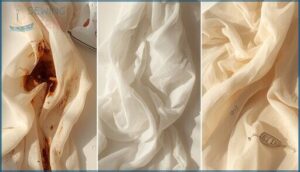
You’ve learned how to remove wrinkles and protect your chiffon, but avoiding damage in the first place means steering clear of a few common traps.
Even experienced handlers can fall into habits that compromise this delicate fabric’s integrity.
Here are the critical mistakes that’ll wreck your chiffon if you’re not careful.
High Heat and Direct Ironing
Don’t let a hot iron ruin your delicate chiffon—heat damage risks are real and irreversible. Polyester and nylon chiffon can melt at temperatures above 300°F, while silk scorches easily. Direct ironing without a pressing cloth creates permanent shine marks and fiber distortion.
Here’s what to avoid:
- Never use high heat settings designed for cotton or linen, which reach 400°F and will melt synthetic chiffon instantly.
- Skip direct soleplate contact on this sheer fabric—always use steam alternatives or hover techniques.
- Avoid the “just a quick press” mentality that leads to scorch marks you can’t undo.
Stick to clothing ironing techniques specifically designed for delicate fabric ironing: low temperatures around 250°F maximum, a protective pressing cloth barrier, and gentle steam rather than pressure when working with chiffon fabric.
Overcrowding in Closets
Cramming chiffon into a packed closet guarantees wrinkles you’ll battle endlessly. Your delicate fabric needs breathing room—at least 2-3 inches between hangers—or constant compression creates permanent creases.
Closet organization isn’t optional here; it’s fabric protection. Give each chiffon piece dedicated space on padded hangers, never double-hanging or stuffing garments together.
Smart storage solutions and proper closet maintenance prevent wrinkle formation before it starts, saving you from repetitive steaming sessions.
Using Harsh Chemicals or Bleach
Bleach risks permanent chemical damage to chiffon’s delicate fibers, causing yellowing and fabric disintegration you can’t reverse.
Instead of harsh cleaners, prioritize fabric safety with gentle alternatives like mild detergent or wrinkle-release spray for wrinkle removal and fabric smoothing.
Steam remains your best ironing technique for preventing fabric wrinkles while keeping chiffon wrinkle-free—no dangerous chemicals required for effective delicate cleaning.
Frequently Asked Questions (FAQs)
What type of fabric is chiffon?
Like silk whispers caught in morning breeze, chiffon fabric floats with ethereal grace.
This sheer textile relies on a specific weaving technique using silk, polyester, or nylon fibers to create its distinctive lightweight, flowing drape.
Is steaming the only way to remove wrinkles from chiffon?
Steaming isn’t your only weapon against chiffon wrinkles. You can master wrinkle removal through low-heat ironing with a pressing cloth, bathroom humidity, wrinkle-release sprays, or gentle hand smoothing techniques—giving you multiple fabric relaxation paths beyond garment steamers.
Can I iron chiffon fabric?
Yes, you can iron chiffon, but only with extreme caution. Use the lowest heat setting, always place a pressing cloth between the iron and fabric, and work on the wrong side to protect delicate fibers from scorching.
What is the best way to store chiffon to prevent wrinkles?
Hang your chiffon on padded hangers in breathable garment bags—never plastic—within a cool, dry closet. Avoid overcrowding, which crushes delicate fibers.
For long-term storage, roll pieces loosely with acid-free tissue between layers.
Can I use a dryer to remove wrinkles from chiffon fabric?
Picture pulling your favorite polyester chiffon blouse from the suitcase—creased and disappointing. A gentle, low-heat dryer cycle can release minor wrinkles in polyester chiffon, but silk chiffon demands air drying to avoid irreversible fiber damage.
Does chiffon shrink after removing wrinkles?
Chiffon fabric can shrink during wrinkle removal if you expose it to high heat settings or aggressive steaming techniques.
Silk chiffon shows greater shrinkage risk than polyester, with fiber behavior and fabric relaxation determining dimensional stability.
Can you use a hairdryer on chiffon?
A hairdryer? Sure, if you enjoy melting polyester or scorching silk.
Stick to the lowest heat, keep it eight inches away, and use constant motion—or better yet, just steam your chiffon instead.
How long does steaming chiffon take?
Most garments need five to ten minutes of gentle steaming for complete wrinkle removal.
Your chiffon fabric relaxes faster with proper steaming techniques—delicate pieces smooth out quickly when you use consistent garment steamer passes for thorough fabric smoothing.
Will hanging wet chiffon cause stretching?
Water weakens fibers and invites gravity to pull down—especially in silk chiffon. Wet hanging risks fabric stretch and distortion.
Instead, gently press out moisture, then lay flat or use padded hangers when barely damp.
Can you dry clean wrinkled chiffon?
Yes, professional dry cleaning effectively removes wrinkles from chiffon while preserving delicate fibers. Cleaners use controlled solvent processes and specialized pressing equipment designed for fabric smoothing methods, making it ideal for silk varieties requiring gentle textile care.
Conclusion
Chiffon care is like handling spun air—one wrong move and the magic’s gone. You now hold every technique to get wrinkles out of chiffon safely, whether you’re wielding a steamer, iron, or just your bathroom’s humidity.
Stop treating delicate fabrics like they’re indestructible denim. Master these methods, store your pieces properly, and those flowing garments will keep their ethereal elegance instead of looking like crumpled tissue paper.
Your chiffon deserves better—and now you can deliver.
- https://en.wikipedia.org/wiki/Clothes_steamer
- https://maggiesottero.preferences.center/
- https://www.sciencedirect.com/science/article/pii/S0749208123000268
- https://github.com/vinhphunguyen/how-to-write-a-paper/blob/master/how-to-write-paper.out
- https://www.scribd.com/document/356795007/Research-Methods-Knowledge-Base