This site is supported by our readers. We may earn a commission, at no cost to you, if you purchase through links.
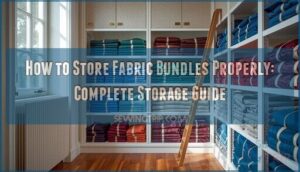
Your fabric stash deserves better than a dusty cardboard box shoved in the corner. Improper storage leads to faded colors, stubborn creases, and holes from hungry pests—damage that can ruin even premium textiles.
The difference between preserving your collection and watching it deteriorate comes down to three key factors: choosing the right containers, controlling your storage environment, and handling fabrics correctly. When you store fabric bundles properly, you protect your investment and keep every yard ready for your next project.
This guide walks you through proven techniques that textile conservators use to maintain fabric integrity for decades.
Table Of Contents
- Key Takeaways
- Choosing The Right Storage Containers for Fabric Bundles
- Maintaining Ideal Temperature and Humidity Levels
- Folding Vs. Rolling: Best Techniques for Fabric Bundles
- Protecting Fabric From Pests and Damage
- Organizing and Cataloging Your Fabric Collection
- Frequently Asked Questions (FAQs)
- Conclusion
Key Takeaways
- Store fabric bundles in breathable containers like cotton bins or clear plastic bins with tight seals at 60–75°F and 30–50% humidity to prevent mold, fading, and pest damage.
- Roll delicate fabrics like silk on padded tubes with acid-free tissue between layers, and fold heavier fabrics with tissue paper, refolding every two to three weeks to prevent permanent creases.
- Use natural pest deterrents like cedar blocks and lavender sachets alongside airtight containers with silicone gaskets to create a barrier against moths and beetles that destroy natural fibers.
- Create a cataloging system with fabric swatch cards, unique identifiers, and rotation schedules to track your collection and ensure every yard gets regular inspection and planned use.
Choosing The Right Storage Containers for Fabric Bundles
The container you choose can make or break your fabric storage system. You need something that protects your bundles from moisture, dust, and pests while keeping them accessible.
For best results, opt for breathable containers like cotton bins or mesh baskets, and prepare your fabric properly using hand sewing fabric preparation methods before storing.
Let’s look at the key features that’ll keep your fabrics in top condition.
Breathable Materials Vs. Plastic Bins
You’ll face a real choice between breathable containers and plastic bins for fabric storage.
Breathable materials like cotton or canvas promote bin ventilation and help moisture control by letting humidity escape, protecting natural fibers from mildew.
Plastic bins offer material durability and stronger fabric protection against dust and pests, though they can trap moisture if humidity levels aren’t managed carefully.
Consider your storage flexibility needs when deciding. For more about the differences between durability and moisture protection, visit this guide.
Clear Containers for Easy Identification
Clear plastic bins offer visibility benefits that breathable containers can’t match—you’ll spot colors, patterns, and yardage at a glance without opening lids.
Choose stackable designs with smooth surfaces ready for labeling systems, so you can organize by color or project. Look for tamper evidence features like tight gaskets that show dust intrusion while keeping your fabric storage clean and accessible.
For more on the organizational and safety advantages, read about the benefits of clear containers.
Using Dividers and Compartments
Once you’ve picked transparent storage bins, divider placement transforms chaos into order. Adjustable grid inserts create up to 9 compartments for small swatches, while modular cube systems let you separate fat quarters from yardage.
Proper compartment size matters—use 3 to 5 vertical partitions for fabric segregation by type:
- Position knits, wovens, and specialty textures in separate sections
- Reserve tall center dividers for bulky bundles
- Place shallow trays at the front for quick swatch access
- Color code organizer systems to speed sorting sessions
This storage efficiency keeps your fabric organization functional.
Labeling Systems for Quick Access
Label systems don’t just name your bins—they build true Inventory Management. Try Color Coding by fabric type or season: cotton prints get blue tags, silks take purple.
For larger collections, Barcode Scanning links each bundle to a digital catalog, while RFID Tracking locates items within seconds. Icon Labeling adds quick visual cues for care needs, making Fabric Organization Techniques work harder with Clear Labeling that keeps every yard accounted for.
Pairing these methods with a complete fabric bundle organization system ensures you can track not just where materials are, but also their yardage, project potential, and purchase history.
Maintaining Ideal Temperature and Humidity Levels

Your storage space isn’t just a closet—it’s the climate that determines whether your fabric bundles last for years or deteriorate in months.
Temperature swings and humidity spikes can weaken fibers, fade colors, and invite mold before you even notice.
Here’s how to keep conditions stable and your fabrics safe.
Optimal Temperature Range for Fabric Storage
Keep your fabric storage space between 60°F and 75°F for ideal fabric stability. This temperature range prevents dye fading and fiber weakening that can happen when heat resistance fails.
Temperature regulation matters because extremes cause brittleness in natural fibers. Install a digital thermometer near your bins for climate control, and maintain thermal insulation around storage areas to support consistent climate management.
Controlling Humidity to Prevent Mold
Aim for indoor humidity levels between 30 and 50 percent to stop mold from taking hold. Use a hygrometer to track moisture control daily, and run a dehumidifier in your storage room to keep humidity management steady.
Position humidity sensors near your fabric bundles for early detection, and boost air circulation with fans to prevent damp pockets where mold prevention fails.
Monitoring Tools and Environmental Checks
Environmental tracking protects your investment by catching problems before they damage your fabric bundles. You need reliable tools to maintain proper temperature and humidity levels without constant guesswork.
- Install sensors that alert you when temperature exceeds 70 degrees for over two hours
- Place a hygrometer inside every major container to verify humidity stays below 50 percent
- Review data logs monthly to spot sudden shifts in environmental control
- Schedule weekly visual inspections to confirm sensor readings and check for mold
Folding Vs. Rolling: Best Techniques for Fabric Bundles
How you store your fabric bundles makes a real difference in keeping them wrinkle-free and ready to use.
The choice between folding and rolling depends on the type of fabric you’re working with and how long you plan to store it. Let’s look at the best techniques to keep your fabric collection in top shape.
When to Fold Your Fabric
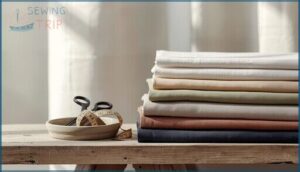
You’ll want to fold fabric when stacking at room temperature away from direct sunlight to prevent fading. Heavy fabrics need refolding every two to three weeks to stop permanent creases.
Always fold after washing once completely dry to reduce shrinkage and mildew risk.
| Fabric Type | Fold Frequency |
|---|---|
| Cotton/Linen (humid climates) | More often |
| Heavyweight fabrics | Every 2-3 weeks |
| After washing | When completely dry |
Rolling Methods for Delicate Materials

Roll delicate fabrics like silk or rayon by placing them on soft fiber rollers with rounded edges to prevent crushing. Use gentle tension with a padded tube and roll along the grain to avoid distortion. Always place acid-free tissue sheets between layers to cushion fibers during rolling techniques for ideal textile preservation.
| Material Type | Roll Preparation | Pressure Level |
|---|---|---|
| Silk/Rayon | Tissue wrap first | Very light |
| Lightweight cotton | Minimal wrapping | Light |
| Velvet/Pile | Nap oriented consistently | Gentle, even |
| Lace/Embroidery | Support boards added | Minimal contact |
| Printed fabrics | Print facing outward | Light, uniform |
Using Acid-Free Tissue Paper to Prevent Creases
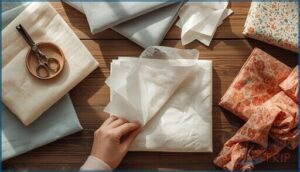
Acid-free tissue paper acts as a buffer layer between fabric layers, protecting dyes and fibers from chemical reactions that cause yellowing. Place one sheet between each fold to reduce friction and prevent deep creases. Choose 15 to 25 gsm tissue for lightweight cottons and 40 gsm for heavier textiles to provide adequate cushioning without adding bulk.
| Tissue Weight | Best For | Interleaving Method |
|---|---|---|
| 15-25 gsm | Quilting cotton, lawn | Single sheet per fold |
| 40+ gsm | Wool, canvas | Double layer cushion |
| Buffered tissue | Long-term storage | Replace yearly |
Storing Fat Quarters Properly
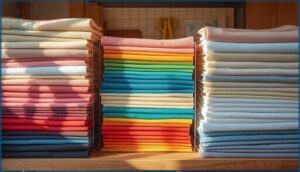
Fat quarters measure 18 by 22 inches and store best when folded into uniform squares. Fold each piece with clean hands to avoid transferring oils onto the fabric. Stack them flat in breathable cotton bins or clear containers to prevent creases from setting over time.
Group by color family on labeled shelves for quick retrieval during quilting projects.
| Storage Method | Best Container Type |
|---|---|
| Flat stacks | Cotton muslin bags |
| Sorted by color | Clear plastic bins |
| Individual protection | Fabric storage bags |
| Vertical filing | Hanging file folders |
| Visible display | Open shelving units |
Protecting Fabric From Pests and Damage

Pests can destroy your fabric collection faster than you’d think.
Moths, beetles, and other insects are drawn to natural fibers, and once they settle in, the damage spreads quickly.
Here’s how to protect your bundles through regular checks, natural deterrents, and smart storage choices.
Regular Inspection and Early Detection
Weekly visual checks catch problems before they spiral out of control. Inspect each bundle for small droppings, webbing, or chewed edges that signal pest infestations. Run your fingers along fabric edges to spot staining or color bleeding during these storage audits.
Record findings with dates in a simple log, noting humidity levels and temperature control readings. Early damage assessment protects your collection and saves money on fabric inspection and repair.
Natural Pest Deterrents for Fabric Storage
Once you spot signs of trouble, natural barriers work alongside regular checks for pest prevention and control. Cedar blocks and lavender sachets repel moths without chemicals, while herbal repellents like bay leaves tuck easily between bundles. Essential oils on cotton balls create scent barriers that insects avoid.
Refresh these natural deterrents every few months to maintain strong protection against fabric pest infestations. To effectively use these deterrents:
- Place cedar blocks in drawers and bins to emit oils that deter moths and beetles
- Tuck lavender sachets with wool and silk to protect delicate fibers
- Use peppermint or eucalyptus oils on cotton balls as natural barriers
- Replace all sachets every 3 to 6 months for consistent insect prevention
Using Airtight Containers to Keep Pests Out
Natural deterrents help, but airtight containers form your strongest defense against pest infestations. Choose storage containers with silicone gaskets and locking latches that create a complete airtight seal to block pests and moisture prevention.
Glass or BPA-free metal bodies resist flexing better than plastic, maintaining storage security over time. This combination of container materials and proper sealing delivers reliable pest prevention and control for your fabric bundles.
Organizing and Cataloging Your Fabric Collection

You can have the best storage setup in the world, but without a solid organization system, you’ll waste time hunting for the right fabric.
A good cataloging method keeps your collection manageable and helps you actually use what you own. Here are four practical ways to organize and track your fabric bundles.
Creating a Fabric Inventory System
A solid Fabric Inventory system turns chaos into control. Start by defining five core categories—type, use, weight, finish, and project data—so you can filter your Fabric Stash quickly. Assign each bundle a unique identifier and barcode for accurate Data Tracking.
- Record total yardage and waste allowance per bundle
- Use Barcode Scanning to speed check-ins and reduce errors
- Log fiber content, weave type, and color family as searchable metadata
- Maintain an audit trail with timestamps for every inventory change
This approach facilitates Storage Optimization and efficient Fabric Management.
Shelving and Display Solutions
Open Shelving Units in wood or powder-coated steel let you scan your Fabric Storage at a glance. Choose adjustable Rack Systems with dividers to separate bundles by color or project.
Visible Storage Bins on Display Panels keeps dust away while showcasing inventory. Pair Shelf Design with Cabinet Organization for efficient use of vertical space and easy rotation.
Using Fabric Swatch Cards for Reference
A Fabric Swatch Card Design system gives you quick Color Verification without unfolding entire bundles. Attach small samples to sturdy cards marked with fiber content, width, and your personal code.
This Reference Systems approach streamlines Catalog Management and facilitates accurate Fabric Sampling during planning. Pair Fabric Swatch Cards with your Fabric Labeling and Inventory tools to simplify Textile Care and Maintenance across your Fabric Storage setup.
Rotation Schedules and Fabric Calendars
Assigning each bundle a planned use date keeps your collection active and prevents years-old prints from languishing untouched. Mark Rotation Patterns on a wall calendar or digital Schedule Template, noting which fabrics you’ll pull next month.
This Cycle Planning method aids both Fabric Tracking and Fabric Maintenance, ensuring every yard gets regular inspection while your Storage Solutions and Fabric Organization systems stay balanced and purposeful.
Frequently Asked Questions (FAQs)
What is the best way to store bulk fabric?
Think of your fabric stash like wine—it needs the right environment to age well.
Store bulk fabric in airtight plastic bins at 65 to 70 degrees with 50 percent humidity for ideal textile preservation.
What are the best practices for storage fabrics?
Store your fabrics in breathable containers at 60–70°F and 50% humidity. Roll delicate pieces, fold sturdy ones with acid-free tissue, and use natural pest deterrents.
Keep a simple inventory for easy tracking.
Is it okay to store fabric in plastic bags?
You can use plastic bags short-term, but long-term storage in sealed plastic bags risks moisture control problems and fabric damage.
Breathable options like cotton bags offer safer storage alternatives and better material safety than ziplock bags.
How to store fabric layer cake?
Keep your layer cake in a clear, airtight bin at room temperature with 40 to 60 percent humidity.
Fold along selvage edges, slip acid-free tissue between layers, and stack flat to preserve square edges.
Can I store fabric bundles in a garage or attic?
Your attic and garage might seem perfect for fabric storage, but temperature swings above 90°F or below freezing, plus humidity spikes over 60%, create a recipe for mold, fading, and pest infestation.
How long can fabric safely remain in storage?
With proper textile preservation, stable humidity levels, breathable storage containers, and regular fabric care—your bundles can last decades without material degradation.
Aging factors like light and pests pose greater risk than storage duration itself.
Should I prewash fabrics before storing them long-term?
Yes, you should prewash fabrics before long-term storage. Prewash benefits include removing sizing that attracts mildew, improving dye stability and color fastness, controlling fabric shrinkage, and eliminating factory odors for better fabric care and maintenance.
How do I remove musty odors from stored fabric?
Wash fabrics with detergent plus white vinegar in hot water, then add baking soda to neutralize odors.
Air bundles outdoors on sunny days and control humidity levels between 40-50 percent using dehumidifiers.
Conclusion
Picture opening your storage space five years from now and finding every fabric as vibrant and smooth as the day you bought it. That’s what happens when you store fabric bundles properly.
The containers you choose, the environment you maintain, and the folding techniques you use today determine whether your collection stays perfect or deteriorates. Start with one section of your stash, apply these methods, and watch your fabrics stay project-ready for decades.
- https://www.gaylord.com/Preservation/Conservation-Supplies/Boards-%26-Paper/Gaylord-Archival%26%23174%3B-Unbuffered-Acid-Free-Tissue-%28100-Pack%29/p/HYB01351
- https://www.ezministorage.com/blog/how-to-prepare-your-belongings-for-storage-in-humid-climates-a-practical-guide?query=%7Bquery%7D
- https://info.gaylord.com/resources/guide-archival-storage-of-textiles
- https://hayden-hill.com/blogs/journal/fold-or-roll-clothes-for-storage
- https://lovetosewpodcast.com/episodes/episode-185-fabric-stash-organization/