This site is supported by our readers. We may earn a commission, at no cost to you, if you purchase through links.

A single cut through silk tells you everything. Sharp fabric scissors glide through the fibers without hesitation, leaving edges so clean they look laser-cut. Dull blades snag and pull, creating ragged lines that ruin your work before you even reach the sewing machine.
The difference between a smooth cut and a jagged mess often comes down to blade sharpness—something most sewers don’t check until they’ve already damaged expensive fabric. Testing your scissors takes less than two minutes and can save you from wasted materials, hand fatigue, and frustration.
You don’t need special equipment or technical expertise. A few simple tests using paper and fabric scraps will show you exactly where your blades stand, so you can sharpen them before your next project suffers.
Table Of Contents
Key Takeaways
- Sharp fabric scissors make clean cuts without snagging or pulling fibers, while dull blades create ragged edges, require extra hand pressure, and damage expensive materials before you reach the sewing machine.
- You can test scissor sharpness in under two minutes using simple methods like cutting printer paper, slicing fabric strips, cutting through multiple layers, and inspecting the blade edge under bright light for uniform reflection.
- Dull scissors reveal themselves through frayed or jagged cut edges, visible snagging or pulling on fabric (especially knits), uneven cuts with missed sections, and the need for sawing motions instead of smooth slicing.
- Maintaining sharpness requires using fabric scissors only on textiles (never paper), cleaning blades regularly, storing them properly to prevent rust, and getting professional sharpening every six to twelve months.
Why Sharp Fabric Scissors Matter
Sharp fabric scissors aren’t just a nice-to-have—they’re the foundation of quality work. When your blades are truly sharp, you’ll notice immediate differences in how your cuts turn out and how your body feels during projects.
Investing in high-quality sewing scissors designed for quilting ensures cleaner edges and reduces hand fatigue during extended cutting sessions.
Sharp fabric scissors are the foundation of quality work, transforming both your cutting results and comfort during projects
Let’s look at three key reasons why sharpness matters so much for anyone working with fabric.
Mastering how to hand sew corners neatly ensures your points stay crisp and professional-looking every time.
Impact on Cutting Accuracy
Cutting precision starts with edge sharpness. When your fabric scissors stay sharp, you’ll make cleaner cuts with fewer pulled fibers, which keeps your measurements reliable for stitching. Blade geometry matters too—proper angles and alignment help you follow curved guides without fabric distortion. Here’s how sharpness testing protects your cutting accuracy:
Regular at-home sharpening techniques restore that precision edge so you can maintain sub-millimeter accuracy across every project.
- Sharp blades maintain consistent seam allowance across multiple cuts.
- Clean edge quality prevents grain line distortion during pattern matching.
- Smooth blade movement reduces misalignment and improves your control.
Preventing Fabric Damage
Sharp fabric scissors protect your materials from fiber damage that dull blades cause. When you maintain edge quality through regular sharpness testing, you’ll avoid pulling or snagging delicate weaves.
Proper scissor maintenance and material selection guarantee your cutting tool stays ready for precision fabric care. Store your fabric scissors with closed blades to preserve cutting techniques that keep edges clean between uses.
Choosing the right fabric scissors for dressmaking means understanding blade angles and handle ergonomics that support fatigue-free cutting through multiple fabric layers.
Reducing Effort and Fatigue
You’ll cut through fabric faster and with less hand strain when your scissors maintain their sharp edge. Sharp blades combined with ergonomic grips create efficient cutting that protects your hands during long projects.
Regular sharpness testing and blade maintenance reduce fatigue through:
- Less pressure needed per cut
- Smoother scissor balance during use
- Better cutting technique with proper tool maintenance
- Fewer repeated cuts on the same line
Preparing to Test Fabric Scissor Sharpness
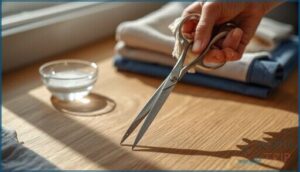
Before you run any sharpness test, you need to get your scissors ready. This means cleaning the blades, holding them correctly, and picking the right materials to cut. These three steps guarantee you get accurate results every time.
Cleaning and Inspecting The Blades
Before testing for sharpness, proper blade maintenance starts with thorough scissor hygiene. Wipe away lint and residue using a soft cloth with mild soap and water, then dry completely for rust prevention.
During edge inspection, examine both blades under bright light for nicks or pitting. Check that closed blades align perfectly—misalignment affects your sharpness evaluation and overall scissor care routine.
Proper Scissor Handling Techniques
A good scissor grip starts with your thumb through the top handle and middle or ring finger through the bottom. Keep your hand position relaxed with light finger pressure to avoid fatigue.
Your cutting posture matters—stand or sit comfortably with straight wrists and neutral forearms. Hold the scissors parallel to your work surface, maintaining proper blade alignment throughout each cut for accurate sharpness testing methods.
Pairing these habits with high-quality fabric scissors designed for precision ensures every cut stays clean and controlled from the first project to the hundredth.
Choosing Appropriate Test Materials
Fabric selection drives sharpness evaluation. Choose test materials with uniform thickness and stable weave patterns to guarantee reliable results. For instance, cotton or polyester blends with predictable edge behavior set solid test standards. Avoid frayed edges or finished surfaces.
Mix woven and knit fabrics to check material cutting performance. This fabric test mirrors real project conditions, making your sharpness test accurate.
Step-by-Step Methods to Test Sharpness
Testing your fabric scissors doesn’t require special tools or training. You can run a few simple tests at home to check if your blades are sharp enough for clean cuts.
Each method reveals different aspects of blade performance, so you’ll know exactly where your scissors stand.
The Paper Cutting Test
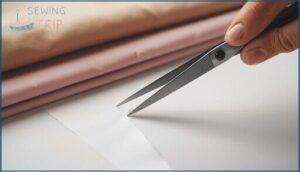
You’ll see the quickest results with printer paper held firmly in your non-dominant hand. Sharp fabric shears slice through in one smooth stroke without tearing fibers.
If your cutting technique produces ragged edges or requires sawing motions, your blade inspection reveals dullness.
This paper test establishes baseline sharpness levels before moving to actual fabric, giving you reliable cutting tool evaluation in seconds.
The Fabric Strip Test
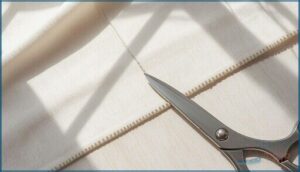
Your fabric quality depends on precise cutting tool evaluation with real material. Lay a narrow cotton or linen strip flat on your work surface, then cut straight along the grain. Sharp blades produce smooth edges without fiber lift or snagging.
Compare your results against a reference strip from known sharp fabric shears. Record the fabric type and strip width to maintain consistent sharpness levels during future blade inspection sessions.
The Multiple Layer Bite Test
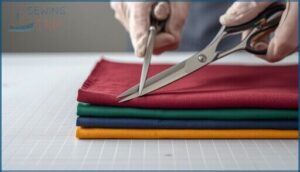
Stack three to five fabric layers of the same material and cut through them in one pass. Sharp blades deliver consistent bite depth and edge capture across all layers without snagging.
If your cutting tool shows uneven penetration or requires extra force, your blade sharpness has declined. Check scissor alignment by comparing each layer’s cut quality—uniform results confirm proper blade edges and effective material testing standards.
Visual and Tactile Blade Inspection

Close your scissors and hold them up to bright light at a slight angle. Sharp blade edges show a uniform, bright line along the cutting surface—that’s your edge reflectivity and a key sharpness indicator.
Run your finger gently along the closed blades to check tactile feedback. Any catching, roughness, or uneven resistance signals dullness. Consistent visual cues and smooth touch confirm proper blade sharpness for accurate fabric cutting.
Interpreting Test Results and Common Signs of Dullness
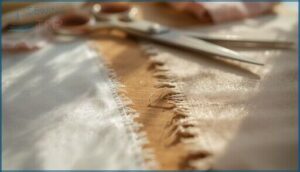
After you test your fabric scissors, you need to know what the results actually mean. Sharp blades leave clean edges, while dull ones create telltale signs you can’t miss.
Here’s what to look for when your scissors aren’t cutting like they should.
Recognizing Frayed or Jagged Cuts
A telltale sign of dullness appears right at the cut edge—if your blades aren’t up to par, you’ll spot the evidence immediately. During fabric test runs, sharp scissor blades should deliver clean results, but worn cutting tools leave clear sharpness indicators behind:
- Frayed threads extending beyond your intended cut line, showing the blade tore instead of sliced
- Small sawtooth or zigzag patterns along the edge, especially on synthetic materials
- Fuzzy, uneven fiber separations visible under close scissor blade inspection
These jagged cut prevention failures signal it’s time for scissor care and maintenance.
Identifying Snagging or Pulling
Beyond frayed edges, snag detection reveals another key dullness clue. When your blades resist smooth fabric resistance during cutting tool testing, you’re witnessing pull factors in action. Edge inspection shows that worn scissors snag and drag instead of gliding through material—especially noticeable on knits and stretch fabrics.
| Fabric Type | Sharp Blade Behavior | Dull Blade Signs |
|---|---|---|
| Knit fabrics | Clean, smooth cut | Visible pulling, stretched loops |
| Woven cotton | Straight edge | Thread bunching, uneven line |
| Delicate silk | Smooth slice | Snagging, jerky motion |
| Heavy canvas | Consistent penetration | Increased hand pressure needed |
These cutting dynamics indicate your scissor sharpness has declined. Regular fabric test runs catch these pull factors early, keeping your scissor care and maintenance on track.
Checking for Uneven or Missed Cuts
Uneven blade alignment creates wavy lines or diagonal pulls across your fabric. When you spot a cut that finishes on one side before the other, your scissor sharpness and blade alignment are off.
Check for small uncut slivers near the edge—these missed sections signal poor cutting consistency. Measure several cuts; if fabric removal alternates from pass to pass, you’re dealing with unequal sharp edges that compromise cut quality and cutting efficiency.
What to Do if Your Fabric Scissors Are Dull
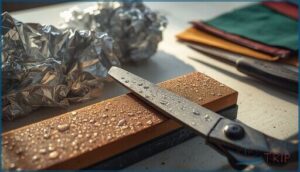
You don’t need to toss out dull fabric scissors right away. Several options can restore their cutting edge and save you money.
Here’s what you can do to bring your scissors back to life.
DIY Sharpening Techniques for Fabric Scissors
You can sharpen fabric scissors at home with basic sharpening tools. Use a fine-grit sharpening stone (800–1200 grit) for blade honing. Make short, even strokes along the blade’s bevel in one direction. This DIY sharpening method restores your cutting edge without removing too much metal.
Test on fabric scraps after each pass to check your progress with edge refining.
When to Seek Professional Sharpening
When nicks or chips compromise your blade geometry, you need professional blade repair and edge restoration. If routine DIY sharpening fails to restore clean cuts, or if visual sharpness evaluation reveals uneven bevels your tools can’t fix, seek professional maintenance.
High-volume users should schedule regular tool resharpening intervals instead of waiting for performance drops. Expert scissor care preserves your investment and ensures consistent cutting results.
Tips for Maintaining Sharpness Over Time
Reserve your fabric scissors for textiles only—paper and adhesives dull blades quickly. Regular cleaning removes lint and residue that interfere with smooth cuts. Apply a drop of oil to the pivot joint periodically for blade lubrication and edge maintenance.
Store scissors in a protective case away from moisture to prevent rust. Schedule professional scissor sharpening every six to twelve months to maintain consistent sharpness testing results and reliable tool maintenance.
To minimize damage, consider the risks of scissor blade damage when cutting various materials.
Frequently Asked Questions (FAQs)
Can I use fabric scissors on paper occasionally?
Paper cutting poses a problem for fabric scissors. Blade durability drops when paper fibers dull edges faster than cloth. Dust deposits transfer to fabric, affecting future cuts. Dedicated scissors for each material preserve sharpness testing accuracy.
How often should I test scissor sharpness?
Test your scissors weekly during active projects and monthly for occasional use. Professional tailors check daily, while hobby sewers benefit from a quick blade inspection before each new fabric batch to maintain cutting efficiency.
What causes fabric scissors to lose sharpness quickly?
Cutting frequency and fabric type drive edge wear. Synthetic materials and thick layers dull blades faster than natural fibers.
Poor maintenance habits, improper storage, and blade material quality also accelerate dulling over time.
Are expensive scissors always sharper than budget ones?
Price isn’t everything regarding sharpness. Blade geometry, edge retention, and scissor material matter more than cost alone. Mid-range options often outperform premium models on specific fabrics through smart design.
Conclusion
Like checking the tread on your tires before a road trip, knowing how to test if fabric scissors are sharp enough prevents disaster mid-project. Those two-minute tests—paper cuts, fabric strips, and visual inspections—give you control over your results.
Sharp blades mean clean edges, less wasted material, and hands that don’t ache after cutting. Check your scissors regularly, sharpen when needed, and you’ll never sacrifice quality to dull blades again.
- https://www.matakki.com/scissor-maintenance
- https://blog.wordvice.com/formatting-research-paper-headings-and-subheadings/
- https://www.sciencedirect.com/science/article/pii/S0749208123000268
- https://github.com/vinhphunguyen/how-to-write-a-paper/blob/master/how-to-write-paper.out
- https://pmc.ncbi.nlm.nih.gov/articles/instance/9553038/bin/pone.0275964.s005.docx