This site is supported by our readers. We may earn a commission, at no cost to you, if you purchase through links.
A zipper seems like the smallest decision in any sewing project.
But pick the wrong one, and a beautiful dress looks clunky, or a jacket closure fails after ten uses.
The invisible vs regular zipper debate splits sewists constantly—not because one is better, but because each solves a completely different problem.
Invisible zippers disappear into a seam like they were never there.
Regular zippers show up bold and functional, built to take abuse.
Knowing which one belongs in your project changes everything from the final silhouette to how long the piece actually lasts.
Table Of Contents
- Key Takeaways
- Invisible Vs Regular Zipper: Key Differences
- How Invisible Zippers Work
- How Regular Zippers Work
- Installation Techniques Compared
- Choosing The Right Zipper for Your Project
- Advantages of Invisible Zippers
- Benefits of Regular Zippers
- Common Issues and Fixes for Zippers
- Style and Design Considerations
- Zipper Selection for Production and DIY
- Frequently Asked Questions (FAQs)
- Conclusion
Key Takeaways
- Invisible zippers hide inside the seam for a clean look, while regular zippers sit exposed on the surface and handle heavy daily use.
- Your fabric weight guides the pick — lightweight silks and formal wear call for invisible zippers, while denim, canvas, and outerwear need the strength of a regular one.
- Installing an invisible zipper requires a special foot and careful pressing, whereas regular zippers are forgiving enough for beginners with basic tools.
- Treat your zipper as a design choice, not just a closure — hiding it preserves the silhouette, and showing it can become a bold style statement.
Invisible Vs Regular Zipper: Key Differences
Invisible and regular zippers look similar at first glance, but they work quite differently. The gap between them shows up in how they’re built, how they look on a finished piece, and what they’re made of.
If you want to see those differences in action, this advanced invisible zipper insertion tutorial walks through the technique in a way that makes the construction logic click.
Here’s a closer look at the key differences.
Definition and Construction
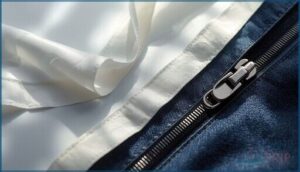
Two zippers, two completely different builds under the hood.
An invisible zipper flips its nylon coil teeth to the tape’s back side. That tape curvature design bends inward, tucking everything behind your seam. A regular zipper sits teeth-forward — fully exposed, easy to grab.
| Feature | Invisible Zipper | Regular Zipper |
|---|---|---|
| Coil Teeth Formation | Hidden on tape back | Exposed on tape front |
| Tape Curvature Design | Curves inward | Lies flat |
| Slider Mechanism | Small, discreet pull | Larger grip pull |
| Stop Placement | Crimped backward | Stamped metal/plastic |
For a sleek look, consider using invisible zipper teeth that tuck under the fabric.
Visual Appearance in Garments

Build changes everything once you look at your garment in a mirror.
An invisible zipper disappears — zero teeth visibility contrast, unbroken fabric line flow. A regular zipper sits right on the surface, adding visible bulk.
| Detail | Invisible Zipper | Regular Zipper |
|---|---|---|
| Teeth visibility contrast | Hidden | Exposed |
| Silhouette bulk | None | 3–5 mm |
| Pull tab profile | Flush, 5 mm | Prominent, 15–25 mm |
| Tape color blend | Smooth | Can contrast |
| Fabric line flow | Uninterrupted | Disrupted |
For formal wear, invisible zippers provide a formal wear smooth look.
Material Types and Durability
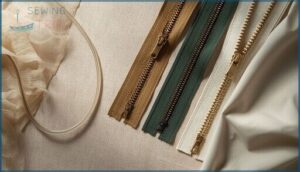
Material matters just as much as placement.
Invisible zips rely on nylon coil strength — lightweight, flexible, perfect for curved seams.
Metal zips offer raw power but watch for metal tooth corrosion in humid conditions.
Molded plastic wear resistance makes it great outdoors.
Recycled polyester impact is lower, too — a win for eco‑conscious projects.
| Zipper Types and Uses | Best For |
|---|---|
| Nylon Coil Zip | Dresses, skirts, delicate fabric |
| Metal Zip | Workwear, luggage, heavy‑duty use |
| Molded Plastic | Outdoor gear, marine covers |
| Invisible Zip | Formalwear, silhouette‑focused garments |
Fabric tape compatibility ties it all together for smart zipper selection.
How Invisible Zippers Work

Invisible zippers have a clever little secret — their teeth hide behind the fabric tape so you never see them.
Understanding how that works makes it much easier to use them well.
Here’s what makes the design tick.
Concealed Teeth Design
The secret behind an invisible zipper is simple: teeth curl toward the wrong side of the tape. Curled coil profile keeps the front smooth and flat.
When you sew it into a seam, seam integration looks like any regular seam line. No ridge, no hardware showing.
That aesthetic impact matters enormously in formal wear, where fabric compatibility and installation precision determine whether your concealed zipper truly disappears.
Zipper Pull and Tape Characteristics
The pull tab on an invisible zipper is small and flat — it tucks right against the seam when closed. That slim slider profile keeps everything hidden.
Tape width variants run from about 20 mm for sheer fabrics up to 31.8 mm for heavier materials. Lace tape options blend beautifully into delicate pieces. For color matching strategies, transparent tapes work wonders on sheer or light-colored garments.
For a truly seamless result, pairing the right tape width with a lapped zipper hand-sewing technique hides every seam behind that clean fabric flap finish.
How Regular Zippers Work
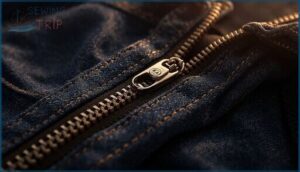
Regular zippers are the workhorses of the sewing world — built to be seen and built to last.
Unlike their hidden counterparts, they work through a straightforward system with two key components worth knowing. Here’s how each part plays its role.
Exposed Teeth Structure
Regular zippers put their teeth right out in the open — no hiding here.
Those teeth come in a few forms: Y-shaped metal teeth stamped from brass or nickel, injection-molded acetal polymer teeth, or flexible spiral coil types.
Each interlocking mechanism grips the opposing tooth’s cavity when the slider passes through.
Tooth pitch — the spacing between teeth — affects how smoothly your exposed zipper closes.
Zipper Pull and Tape Options
What makes a regular zipper truly work for your project?
It starts with the pull tab and tape choices.
Locking pull types add security for jackets and bags, while non-locking options keep sportswear accessible.
You’ll also find the reversible pull mechanism and teardrop pull design here.
Tape width variations — from 25 mm to 38 mm — and color matching strategies tie everything together beautifully.
Installation Techniques Compared

Installing a zipper isn’t one-size-fits-all — type you choose changes everything about how you sew it in.
The tools, steps, and slip-ups differ quite a bit between invisible and regular zippers. Here’s what you need to know before you start.
Required Sewing Tools and Feet
The right tools make all the difference. For invisible zippers, you need an invisible zipper foot — it has two grooves underneath that cradle the coils open so your needle stitches right beside them.
A regular zipper foot works for standard zippers, with its off‑center needle position. Don’t skip marking tools, pins and clips, or pressing and finishing tools — they keep everything aligned and flat before you sew.
Step-by-Step Installation Methods
Each zipper type follows its own rhythm in garment construction. Here’s how to install both cleanly:
- Invisible Zipper: Seam preparation comes first — press teeth open, then use zipper foot alignment to stitch each side top-down. Finish with bar tack finishing at the ends.
- Regular Zipper: Baste the seam, position with a precise pinning technique, then stitch using your pressing sequence to keep everything flat.
- Both sewing techniques reward patience over speed.
Common Installation Mistakes
Even small mistakes can wreck a clean seam.
Watch out for these common pitfalls:
| Mistake | Invisible Zipper | Regular Zipper |
|---|---|---|
| Misaligned Teeth | Exposes coil outside | Causes skipped teeth |
| Skipping Pressing | Wavy, rippled tape | Uneven seam change |
| Wrong Foot Selection | Stitches catch coil | Poor edge control |
Improper tape tension and insufficient seam allowance are the sneaky culprits behind most zipper installation failures.
Choosing The Right Zipper for Your Project

Picking the right zipper comes down to a few key things.
Your project type, your fabric, and how often the zipper will get used all play a role.
Here’s what to think about before you decide.
Project Type and Garment Style
Your project type decides everything. A bridal gown seam calls for an invisible zipper — no question. Same with evening dress closures and cocktail dress zips. But a denim jacket? Go regular.
Here’s a quick guide by garment:
- Evening/bridal gowns — invisible zipper, center back
- Pencil skirts — invisible zipper, skirt side seam
- Dress pants — invisible zipper, pants side zip
- Jeans/jackets — regular zipper, exposed front
- Casual shirt dresses — regular zipper as a design feature
Match your zipper to the garment’s purpose.
Fabric Compatibility Considerations
Fabric matters just as much as style. Weight Matching is your first check — invisible zippers love light to medium fabrics under 220 gsm. Regular zippers handle heavier textile materials with ease.
| Fabric Type | Best Zipper |
|---|---|
| Silk, cotton lawn | Invisible Zipper |
| Denim, canvas | Regular Zipper |
| Lightweight knit | Invisible (stabilized) |
| Fleece, quilted | Regular Zipper |
Stretch Recovery and Fabric Structure also guide your pick. Stable wovens? Great for concealed coils. Stretchy knits need regular zipper tape and interfacing support.
Intended Use and Frequency
How often you’ll use the zipper matters more than most people think. Match your pick to the moment:
- Daily Wear – Regular Zipper holds up through constant use.
- Occasional Events – Invisible Zipper keeps formalwear sleek.
- Heavy‑Duty Use – Regular Zipper manages bags and outerwear.
- Light‑Frequency Projects – Invisible Zipper suits seasonal garments perfectly.
Smart Zipper Selection and Usage starts here.
Advantages of Invisible Zippers

Invisible zippers bring a lot more to the table than just staying out of sight. Whether you’re working on a gown or a throw pillow, they offer real advantages worth knowing.
Here’s a closer look at what makes them stand out.
Seamless Finish for Formalwear
Formal garments live or die by their silhouette — and an invisible zipper is your secret weapon. It adds less than 2mm of bulk, keeping wedding gowns and evening wear smooth from shoulder to hem. Side seam placement and solid lining integration seal the deal.
Invisible zippers add less than 2mm of bulk, keeping formal silhouettes flawlessly smooth from shoulder to hem
| Technique | Purpose | Result |
|---|---|---|
| Side Seam Placement | Hides closure | Unbroken silhouette |
| Lining Integration | Covers tape | Clean interior finish |
| Edge Finishing Techniques | Stabilizes top | Secure neckline |
Pull tab minimalism keeps back necklines polished.
Versatility Across Fabrics
Invisible zippers work across more fabrics than you’d think. For lightweight silk pairing, fine nylon teeth glide without puckering. Sheer polyester blend garments stay shadow-free.
Stretch knit flexibility is handled with mesh-tape versions.
Even heavy denim integration is possible using reinforced size-5 teeth.
Canvas tote application works too.
Your fabric selection truly shapes which zipper types and applications make sense.
Applications in Home Décor
Beyond garments, invisible zippers quietly shine in home décor. Pillow covers stay smooth and polished with a hidden zipper tucked into the seam.
Cushion inserts slide in easily, duvet closures stay low-profile, and slipcover panels look custom without visible hardware. Even outdoor cushions benefit from concealed zippers. Compared to a regular zipper, the clean finish is hard to beat.
Benefits of Regular Zippers
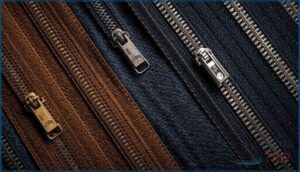
Regular zippers don’t get the glamour treatment, but they earn their keep in a different way. They’re built for projects where toughness, speed, and style all matter at once.
Here’s what makes them a solid choice.
Strength and Durability
Metal teeth — stamped from brass or nickel — give you serious load bearing capacity that concealed zippers simply can’t match.
Coil tooth strength on nylon versions manages constant flexing without breaking down.
Wear resistance factors stay high across jackets, bags, and workwear.
Unlike invisible zippers, regular zipper types spread seam stress distribution evenly, so heavy-use projects hold up much longer.
Easy Installation for Beginners
Starting with a regular zipper just makes sense for new sewists.
Your machine’s standard foot manages basic foot adjustment without extra purchases.
Simple stitch length — just slightly longer than normal — keeps things clean and forgiving.
- Easy zipper alignment follows an already‑sewn seam
- Beginner pinning tips: straight pins or clips hold it steady
- quick interfacing method required
- Mistakes rip out fast without damaging the zipper tape
Design Features and Color Options
Exposed Coil Tooth Finishes in brass, nickel, or gunmetal turn a simple closure into a design detail.
Metallic Tape Shades and Pantone Pull Colors let you match brand palettes exactly.
Lace Tape Details add texture on casual or streetwear pieces.
For Minimalist Seam Aesthetics, your zipper selection guide points toward a concealed zipper instead.
Common Issues and Fixes for Zippers

Even the best zippers run into trouble sometimes.
Knowing what to look for makes the fix a lot easier.
most common zipper problems and how to handle them.
Preventing Stuck or Broken Invisible Zippers
Invisible zippers are delicate — a little care goes a long way. Before you even start, proper zipper installation and maintenance habits save you from headaches later.
- Use interfacing reinforcement on slippery fabrics like silk to prevent stretching.
- Run alignment checks by basting before permanent stitching.
- Try lubrication methods like pencil graphite for smooth slider adjustment.
- Always press teeth flat for better fabric compatibility.
- Store garments zipped and dry for lasting zipper maintenance.
Troubleshooting Regular Zipper Problems
Your regular zipper acting up? It’s usually one of a few familiar culprits.
Stuck teeth often mean dirt buildup — scrub with soapy water, then rub on pencil graphite.
Slider misalignment or a loose slider? Gently squeeze it with needle-nose pliers.
Bent teeth get nudged back with fine-tipped pliers.
Broken pull? Clip on a paperclip or key ring fast.
Chain separation usually means the bottom stop needs to be crimped tighter.
Repair Tips and Maintenance
Beyond quick fixes, good zipper care and maintenance save you from bigger headaches.
For slider replacement, use pliers to remove the old one and swap it carefully.
Graphite lubrication keeps coils moving smoothly — just rub pencil graphite along the teeth.
Do coil cleaning every three months with soapy water.
Teeth realignment and routine inspection monthly catch wear early on both invisible and regular zipper closures.
Style and Design Considerations

A zipper isn’t just a closure — it’s part of the design.
The one you pick can shape how a garment looks, moves, and feels on the body.
Here’s what to think about when style is just as important as function.
When to Highlight Vs Conceal a Zipper
Deciding whether to hide or show a zipper shapes your whole Design Narrative. Here’s a quick guide:
- Silhouette Emphasis – Use a concealed zipper on fitted dresses to keep seams clean.
- Contrast Detailing – A bold exposed zipper adds edge to casual or streetwear pieces.
- Functional Visibility – Highlight regular zippers on outerwear for easy daily access.
- Fabric Weight Choice – Hidden zippers suit delicate fabrics like satin or chiffon.
- Statement Hardware – Let an exposed zipper tell your garment’s story.
Impact on Garment Silhouette
Your zipper choice quietly shapes how a garment sits on the body.
| Zipper Type | Silhouette Effect |
|---|---|
| Invisible Zipper | Seam line continuity, clean back |
| Concealed Zipper | Enhances curve smoothing on hips |
| Regular Zipper (center) | Strong vertical elongation effect |
| Regular Zipper (side) | Can interrupt fabric drape interaction |
| Both types | Affect body proportion balance differently |
Garment construction techniques using invisible zippers reduce seam allowance bulk, keeping fitted dresses smooth through fashion design choices.
Fashion Trends in Zipper Selection
Fashion trends are quietly rewriting how you pick zippers. Here’s what’s driving choices in 2026:
- Minimalist luxury: Invisible zippers keep couture and eveningwear sleek
- Athleisure concealment: Hidden closures reduce bulk in performance wear
- Tech-fabric integration: Architectural blazers use invisible zippers for clean lines
- Sustainable colormatching: Recycled-thread zippers now match exact fabric shades
- Gender-neutral design: Exposed zipper types become bold, intentional accents
Your garment construction techniques should reflect these shifts.
Zipper Selection for Production and DIY

Picking the right zipper isn’t just about looks — it’s also about budget, sourcing, and how you’re actually building your project.
Whether you’re sewing one dress or producing a hundred, these factors shape your final decision.
Here’s what to think about before you buy.
Cost and Sourcing Factors
Price matters more than most sewers expect. A single invisible zipper runs about $0.95, while regular ones cost around $1.00. Order over 100 pieces and bulk discounts kick in — concealed zippers drop to $0.75 each. Production cost, supplier MOQ, and lead time all shape your budget in clothing manufacturing.
| Factor | Concealed Zipper | Coil Zippers |
|---|---|---|
| Retail Price | ~$0.95/unit | ~$1.00/unit |
| Bulk Price (100+) | ~$0.75/unit | Varies |
| Lead Time | 7–25 days | 7–15 days |
Textile and material selection also affect sourcing speed. Currency fluctuation hits hard when importing from Asia.
Bulk Vs Custom Zipper Options
Want your brand to stand out? That’s where custom zippers change everything. Bulk options cover standard sizes and finishes — perfect for everyday clothing manufacturing. But custom unlocks real branding flexibility through material customization and logo-engraved pulls. Keep these production planning factors in mind:
- MOQ requirements often start at 500+ units
- Lead time runs 4–12 weeks longer
- Bulk zippers ship within 2–6 weeks
Recommendations for Sewing Enthusiasts
Stock both zipper types and you’re ready for almost anything. Keep invisible zippers in fine coils for dresses and skirts, and regular ones in heavier gauges for bags and outerwear.
Smart tool organization — a dedicated invisible zipper foot, adjustable regular foot, and proper thread selection — makes installation smoother. Always prioritize fabric preparation, stitch length optimization, and pattern adjustment before you sew.
Frequently Asked Questions (FAQs)
Can invisible zippers be used on stretchy fabrics?
Yes, but it takes extra prep. Fuse interfacing strips to your seam allowances first. This stabilizes stretchy fabrics so your invisible zipper lies flat with a smooth finish every time.
How do zipper lengths affect garment fit?
Zipper length shapes how a garment fits and moves.
A bust‑to‑hip span that’s too short strains seams. Always factor in seam allowance impact and hip‑level placement for smooth, comfortable closure.
What zipper works best for childrens clothing?
For kids’ clothing, nylon coil zippers are your best bet. They’re soft, lightweight, and flexible.
Add a reversible slider for easy diaper changes, a silicone pull for tiny hands, and a safety lock to prevent accidents.
Are invisible zippers suitable for handmade bags?
zip right into your handmade designs — but only for the right bag. Invisible zippers suit lightweight fabric choice and decorative fashion accessories.
heavy-duty bag closure projects needing durability.
How do I match zipper color to fabric?
Hold your fabric swatch next to the zipper tape under D65 lighting. This mimics daylight and prevents color surprises.
YKK Color Cards make tape tone selection simple — just match and sew.
Conclusion
At the end of the day, the invisible vs regular zipper choice comes down to one question: what does your project actually need?
If the seam should disappear, go invisible.
If the closure needs to survive daily punishment, go regular.
Match the zipper to the job, not the other way around.
Get that right, and your finished piece won’t just look intentional—it’ll hold up exactly as long as you built it to.
- https://shoptailoredtrends.com/2025/01/14/all-about-invisible-zippers/
- https://molniya.eu.com/en/concealed-vs-regular-zipper-which-to-choose/
- https://www.ywchunzhen.com/blog/article-18.html
- https://www.seamwork.com/sewing-tutorials/sewing-an-invisible-zipper
- https://www.fyzipper.com/news/industry-news/how-does-invisible-zipper-achieve-aesthetic-concealment-in-highend-clothing-and-household-items.html