This site is supported by our readers. We may earn a commission, at no cost to you, if you purchase through links.
The first time most sewists tackle an invisible zipper, they spend twenty minutes convinced they’ve done it wrong—only to zip it up and find a seam so clean it looks factory-made. That moment is genuinely satisfying.
Unlike a regular zipper, where the teeth face out and leave a visible hardware line, an invisible zipper curls its teeth inward and disappears into the seam. No bulk. metal glint. Just smooth fabric from top to bottom.
It’s the closure choice for evening gowns, silk blouses, and cushion covers—anywhere a zipper would ruin the look. With the right foot, a warm iron, and a clear sequence of steps, sewing an invisible zipper for beginners is far more achievable than it looks.
Table Of Contents
- Key Takeaways
- What is an Invisible Zipper and When to Use It
- Top 3 Supplies for Sewing an Invisible Zipper
- Do You Need an Invisible Zipper Foot?
- How to Sew an Invisible Zipper Step by Step
- Step 1 – Prepare and Pre-Wash Your Fabric
- Step 2 – Finish The Raw Seam Edges
- Step 3 – Apply Fusible Interfacing to Lightweight Fabric
- Step 4 – Mark The Zipper Placement on The Fabric
- Step 5 – Press and Uncurl The Zipper Teeth
- Step 6 – Pin and Sew The First Side of The Zipper
- Step 7 – Pin and Sew The Opposite Side
- Step 8 – Finish The Seam Below The Zipper
- Common Invisible Zipper Mistakes and How to Fix Them
- Frequently Asked Questions (FAQs)
- Conclusion
Key Takeaways
- An invisible zipper hides its teeth inside the seam, making it the go-to closure for formal wear and delicate fabrics where visible hardware would ruin the look.
- Pressing the zipper coil flat before sewing is the step most beginners skip—it’s exactly what separates a clean finish from a frustrating redo.
- You don’t need a specialty invisible zipper foot to get the job done, but stitching within 1–2mm of the teeth is non-negotiable for a truly invisible result.
- Most invisible zipper problems—puckering, showing teeth, misalignment—trace back to skipped prep steps like pre-washing fabric, finishing raw edges, or applying interfacing.
What is an Invisible Zipper and When to Use It
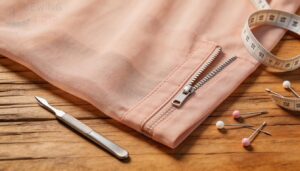
An invisible zipper is exactly what it sounds like — a zipper that disappears into your seam like it was never there. Before you start sewing, it helps to know how it compares to a regular zipper, where you’d actually use one, and how to pick the right length.
Once you’ve got the basics down, sewing an invisible zipper on a dress is a satisfying skill that makes your finished garment look truly polished.
Here’s what you need to know.
How an Invisible Zipper Differs From a Regular Zipper
Think of an invisible zipper as a hidden closure — the teeth fold inward so the seam hiding them looks completely smooth.
A regular zipper sits right on top, teeth forward and visible.
Here’s what actually separates them:
- Teeth orientation — invisible teeth curl inward; regular teeth face outward
- Seam visibility — invisible zippers disappear into fabric; regular zippers show a distinct line
- Slider design — the invisible zipper’s slim slider tucks inside, aiding bulk reduction
- Fabric compatibility — invisible zippers suit lightweight fabrics like satin; regular zippers handle heavier materials better
- Installation — an invisible zipper foot is essential for stitching close to the teeth without catching them
Common Garments and Projects That Use Invisible Zippers
Invisible zippers show up wherever clean lines matter most. In formal wear — evening gowns, bridesmaid dresses — they keep the silhouette smooth without a visible seam breaking the look. Silk and satin love them.
For home projects, cushion covers, duvet covers, and roman shades all benefit from that tidy, hardware-free finish.
Basically, if the closure should disappear, this is your zipper.
Choosing The Right Zipper Length for Your Project
Getting the zipper length right comes down to three things:
- Garment type: Dresses need longer zippers than skirts; match the opening, not a guess.
- Fabric weight: Heavier fabric means more stress — go slightly longer to ease strain at the zipper stop.
- Alteration planning: If you’re adjusting the fit later, check that your seam allowance still works with the zipper tape and zipper coil placement.
Top 3 Supplies for Sewing an Invisible Zipper
Before you sew a single stitch, it helps to have the right supplies on hand — the wrong ones can turn a simple project into a frustrating afternoon. You don’t need a cart full of notions; just three key items that do the heavy lifting.
Here’s what to grab before you get started.
1. Coats Clark Invisible Navy Zipper

One zipper can make or break your finished seam. For beginners, the Coats & Clark Invisible Zipper in Navy is a smart starting point.
It’s made from 100% polyester, so it’s flexible, strong, and holds up through washing without losing its shape. The 14-inch length works well for most dress and skirt closures. Navy blends beautifully with dark fabrics, keeping your closure discreet.
Pre-press it before you sew — flat tape means cleaner stitching and less frustration right from the start.
| Best For | Sewers and beginners who need a clean, reliable invisible zipper for dress or skirt projects and want a trusted brand delivered to their door. |
|---|---|
| Brand | Coats & Clark |
| Origin | Made in USA |
| Material | Polyester |
| Primary Use | Sewing projects |
| Color | Navy |
| Package Weight | 0.03 pounds |
| Additional Features |
|
- Made in the USA by Coats & Clark, a brand sewers have trusted for years
- 100% polyester construction means it stays flexible and holds up through washing
- The 14-inch length covers most dress and skirt closures without any trimming hassle
- Pricier than grabbing one off the rack at a local fabric store
- Only comes in navy, so it won’t work if your project calls for a different color
- If you only need a shorter zipper, you’re still paying for the full 14 inches
2. Singer Ball Head Straight Pins
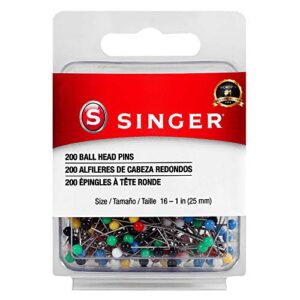
Pinning an invisible zipper well is half the battle. Singer Ball Head Straight Pins (Model 07040) give you a real advantage here — 200 nickel-plated steel pins with colorful ball heads that are easy to spot on patterned fabric.
Pair these pins with the right tool by checking out this guide on choosing the best zipper feet for your sewing machine — it makes a noticeable difference in how cleanly those coils sit.
The size 16 length accommodates most woven and lightweight fabrics without leaving noticeable holes. Those bright heads aren’t just pretty; they save you from accidentally stitching over a hidden pin.
Store them in a magnetic dish and you’ll never lose your place mid-project.
| Best For | Sewists, quilters, and crafters who work with patterned or detailed fabrics and need pins that are easy to spot and remove quickly. |
|---|---|
| Brand | SINGER |
| Origin | Not specified |
| Material | Alloy Steel |
| Primary Use | Sewing and quilting |
| Color | Assorted colors |
| Package Weight | 9.07 grams |
| Additional Features |
|
- Colorful ball heads make pins super easy to see on busy or dark fabrics
- Nickel-plated steel means they won’t rust, so they last through plenty of projects
- 200 pins in a pack gives you plenty to work with for big sewing or quilting sessions
- Some users have reported getting pins with broken shafts or dull tips right out of the box
- The ball heads can come loose on some pins, which gets annoying fast
- At size 16, they might feel a bit short if you’re working with thicker or bulkier fabrics
3. Pellon Shape Flex Iron On Cotton Interfacing
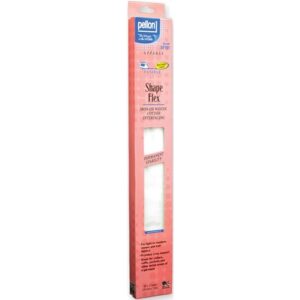
Lightweight fabrics can be tricky near a zipper — they shift, pucker, and stretch before you even reach the foot.
That’s where Pellon Shape-Flex Iron-On Cotton Interfacing earns its place.
Cut two strips about an inch wide and as long as your zipper plus an inch, then press them onto the wrong side of your seam allowance.
The cotton weave adds just enough body to stabilize the area without stiffening your fabric. Your seam will lie flatter, and your zipper will behave.
| Best For | Sewers and crafters working with light to medium-weight fabrics who need reliable stabilization for detail areas like collars, cuffs, and zipper seams. |
|---|---|
| Brand | Pellon |
| Origin | Made in USA |
| Material | 100% Cotton |
| Primary Use | Sewing and quilting |
| Color | White |
| Package Weight | 2.72 ounces |
| Additional Features |
|
- 100% cotton weave gives a natural feel and works well with both woven and knit fabrics
- Steam-activated bond holds up through machine washing, drying, and dry cleaning
- Stable in both grain directions, so it won’t warp or shift over time
- At 15" wide, you may burn through the roll faster than expected on bigger projects
- Iron-on application isn’t ideal if you’re working with heat-sensitive fabrics
- Best suited for lighter fabrics only — won’t cut it for heavier materials like canvas or denim
Do You Need an Invisible Zipper Foot?
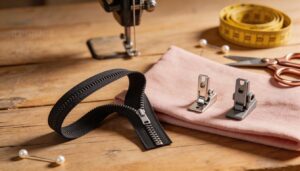
The right foot makes a real difference when sewing an invisible zipper — but it’s not the only path forward. Knowing your options helps you work with what you have and still get clean results.
Here’s what you need to know about each approach.
How an Invisible Zipper Foot Works
Think of an invisible zipper foot as a tiny guide rail for your needle.
Its Recessed Channel Design cradles the zipper coil in a fixed groove, while the Toe Lip Funnel directs fabric smoothly toward the stitch line.
Rail Alignment Rails keep everything parallel, and an Adjustable Needle Guide lets you stitch right beside the teeth — close, but never through them.
Using a Standard Zipper Foot as an Alternative
Don’t have an invisible zipper foot? A standard zipper foot gets the job done — especially for beginners still building their kit.
Its foot width adjustment lets you steer the needle right alongside the teeth. Here’s where it actually shines:
- Heavy fabric handling — handles bulk without the specialty foot getting in the way
- Decorative topstitching — keeps your stitch line straight and controlled
- Interfacing stabilization — works smoothly over reinforced seam areas
Tips for Getting The Needle Close to The Teeth
Getting that needle within 1–2mm of the teeth is the real advantage. Use Needle Path Marking with chalk before you sew — it keeps your stitching honest.
| Technique | Why It Matters |
|---|---|
| Needle Size Selection (70/10) | Reduces fabric gap near teeth |
| Stitch Length Tuning (2.0–2.5mm) | Prevents stretching or skipped stitches |
| Foot Pressure Adjustment | Minimizes drag along the seam allowance |
| Fabric Edge Curl | Keeps teeth clear of the needle path |
How to Sew an Invisible Zipper Step by Step
Now comes the part where it all comes together. Sewing an invisible zipper has a clear sequence, and following it in order makes the difference between a zipper that disappears into your seam and one that fights you the whole way.
Here’s exactly how to do it, step by step.
Step 1 – Prepare and Pre-Wash Your Fabric
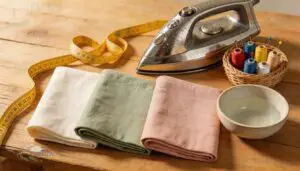
Before you cut a single piece of fabric, wash it. Skipping this step is how you end up with a puckered seam after the first laundering.
Always wash your fabric first — skip that step and a puckered seam will remind you later
For proper prep, machine wash on a gentle cycle — cottons do well at 60°C for shrinking prevention and starch removal. This fiber care step also doubles as a colorfastness test.
Once dry, press everything flat.
Step 2 – Finish The Raw Seam Edges
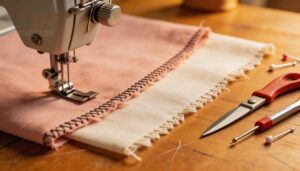
Raw edges fray fast — and fraying under a zipper is a headache you don’t want. Before placing your zipper, run each seam edge through an overlock or zigzag finish.
An Overlock Edge Trim creates a clean, flat result; a Zigzag Edge Stitch works just as well on a standard machine. Keep the finish slim — bulk near the teeth will fight you later.
Step 3 – Apply Fusible Interfacing to Lightweight Fabric

Lightweight fabrics need fusible interfacing to stay stable under the zipper — without it, thin fabric shifts and puckers as you sew.
Cut your Pellon Shape-Flex Iron-On Cotton Interfacing slightly smaller than the seam area (Interfacing Trim Size) and align it with the grain (Grain Alignment Method). Place a Press Cloth on top, apply firm heat using Adhesion Temperature Control, then do a quick Bond Strength Testing tug before moving on.
Step 4 – Mark The Zipper Placement on The Fabric
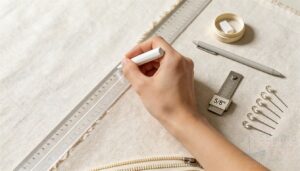
Once your interfacing is bonded, it’s time for Zipper Line Marking — and getting this right makes everything else easier.
Use a fabric marking pen or tailor’s chalk with a seam guide to draw your stitching line parallel to the edge. Consistent Edge Distance is everything here.
Keep these steps in mind:
- Mark your Tape Alignment line exactly 5/8 inch from the fabric edge
- Verify Pattern Alignment at multiple points along the seam
- Use a clear ruler to confirm the line stays straight
- Check Pin Placement before securing the zipper tape
- On slippery fabrics, swap chalk for temporary marking tape
Step 5 – Press and Uncurl The Zipper Teeth

With your marks in place, grab your iron and pressing cloth — it’s time for Heat Flattening the zipper coil. Invisible zipper teeth naturally curl inward. Pressing the zipper coil flat uncurls them so your needle can stitch right alongside each tooth cleanly.
| Tool | Setting | Purpose |
|---|---|---|
| Iron and pressing cloth | Low-synthetic heat | Edge Sealing without scorching |
| Steam Uncurling | Light steam burst | Relaxes stubborn zipper teeth |
| Iron Pressure | Gentle, even weight | Fabric Stabilization beneath tape |
Run the iron tip slowly along the zipper coil, pressing cloth between iron and teeth.
Step 6 – Pin and Sew The First Side of The Zipper
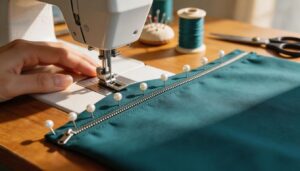
Now comes the satisfying part. Lay your zipper face-down on the fabric’s right side, aligning the teeth with your seam allowance line. Pin perpendicular — those pinning alignment tips matter here.
Slide the zipper tape’s coil into your invisible zipper foot’s groove, then stitch slowly, basting the first side before committing.
Keep thread tension too tight and you’ll pucker. Aim for smooth, steady stitching.
Step 7 – Pin and Sew The Opposite Side
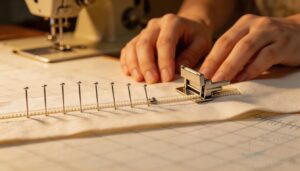
Before you sew the opposite side, double-check your pin interval marking and fabric edge flattening. Place pins every two centimeters, keeping them perpendicular for control.
Slide the zipper coil into the invisible zipper foot groove—this is Foot Groove Alignment.
Stitch slowly, use a basting stitch if needed, and finish with a gentle backstitch end reinforcement. Seam opening technique keeps everything smooth and invisible.
Step 8 – Finish The Seam Below The Zipper

Once both zipper sides are sewn, switch to your regular zipper foot. Starting just above where your zipper stitching ends, backstitch reinforcement anchors the seam. Then sew straight down, using a stitch length adjustment of 2.5–3 mm.
Keep your seam edge topstitch close but clear of the teeth. Press the finished seam flat with a pressing cloth for a clean, professional finish.
Common Invisible Zipper Mistakes and How to Fix Them
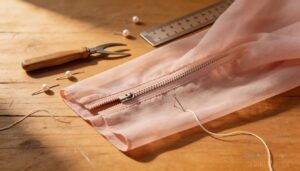
Even the most careful sewers hit a snag with invisible zippers — it’s just part of the learning curve. The good news is that most problems come down to a handful of fixable mistakes.
Here’s what to watch for and how to correct each one.
Fixing Misaligned Zipper Teeth
Misaligned teeth are one of the most common invisible zipper issues — and are usually fixable.
Start with debris cleaning: brush lint out with a stiff brush, then wipe between teeth using a cotton swab.
For tooth realignment, nudge bent teeth back with a blunt tool.
Check slider realignment and watch fabric tension while sewing.
Always finish with a quick alignment test: zip slowly and look for uniform interlock.
Preventing Puckering Along The Seam Line
Puckering usually comes down to a few fixable culprits. Start with seam allowance sizing — keep it consistent at ⅝ inch.
Lightweight fabrics need interfacing stabilization, so apply fusible interfacing before you sew.
Hand basting technique locks everything in place before your final pass.
Match your thread weight to your fabric, dial in thread tension adjustment, and always press with a pressing cloth after stitching.
What to Do When Teeth Show on The Outside
Teeth peeking through the seam? That’s almost always a zipper alignment issue.
Before you resew, check your zipper stop placement — the top stop should sit right at the seam edge. Use staggered pinning to hold teeth precisely on the seam line.
A mock-up test on scrap fabric first saves frustration. Also try tape color matching and a walking foot to feed layers evenly.
Adjusting Thread Tension for a Smooth Finish
Thread tension might be the sneakiest culprit of all. Thread Tension Basics come down to one thing: upper and lower threads meeting in the middle.
Start at 4 or 4.5, then adjust in half-step increments. Fabric Weight Influence matters too — silk needs lower tension than denim.
Always test on a scrap first.
Needle Size Impact and Thread Type Compatibility can mimic tension problems, so swap those out before over-adjusting your dial.
Pressing Tips for a Clean, Professional Closure
Once tension is dialed in, pressing seals the deal. A sloppy press can undo even perfect stitching.
- Lay seams on a tailor ham for curved areas, using a pressing cloth to protect the teeth
- Hold your iron on each section for 6–8 seconds on a heat-resistant surface
- Finish with a cool press to lock fibers flat
Frequently Asked Questions (FAQs)
Can invisible zippers be hand-sewn on delicate fabrics?
Yes — hand sewing an invisible zipper on silk or chiffon is like threading light itself: done right, it disappears.
Use a size 60–70 microtex needle, silk thread, and light interfacing for clean, flexible results.
How do you replace a broken invisible zipper?
Grab your seam ripper and work slowly along the zipper tape on both sides.
Once removed, reinforce any frayed fabric edges, match your replacement zipper color, and reinstall using your invisible zipper foot.
Are invisible zippers suitable for heavyweight fabrics?
Invisible zippers can work on heavy fabrics when you pair them with reinforced interfacing, heavy-duty zipper teeth, and a size 16–18 needle. Bulk seam stabilization keeps everything flat and aligned.
Can invisible zippers be reused after seam removal?
Think of an invisible zipper like a good seam ripper — it works quietly until it doesn’t. Yes, reuse is possible if the Zipper Tape Condition is clean, teeth intact, and the Slider Compatibility Check passes.
Proper use of an invisible zipper foot helps maintain a consistent seam allowance line.
How do you store invisible zippers to prevent damage?
Store your invisible zippers flat in breathable packaging with a silica gel packet for moisture control.
Label each one by length and color, and rotate your stock monthly so nothing gets forgotten or damaged.
Conclusion
Frustration and satisfaction can be two sides of the same sewing coin. One moment you’re wrestling with an invisible zipper; the next, it’s a smooth success.
Mastering the invisible zipper for beginners takes patience and practice, but the payoff is worth it. With these steps and tips, you’re equipped to tackle projects that demand a perfect finish.
So go ahead, take on that evening gown or silk blouse – your sewing skills are ready to shine.