This site is supported by our readers. We may earn a commission, at no cost to you, if you purchase through links.
Somewhere between pinning the zipper in place and realizing your invisible zipper foot is still in the original packaging—or missing entirely—most sewers have a small moment of panic. The good news? That foot isn’t the gatekeeper people make it out to be.
Plenty of beautifully finished dresses and skirts exist in the world, sewn by people working with whatever foot was already on their machine. Sewing an invisible zipper without a special foot takes a a little more patience and hand control, but the results hold up. Here’s how to do it right.
Table Of Contents
- Key Takeaways
- What is an Invisible Zipper and How It Works
- Can You Add a Zipper Without a Zipper Foot?
- Best Fabrics and Supplies for Invisible Zippers
- How to Prepare Fabric and Zipper Before Sewing
- Step-by-Step: Sewing an Invisible Zipper Without a Special Foot
- Hand Finishing and Reinforcement Techniques
- Common Invisible Zipper Problems and How to Fix Them
- Frequently Asked Questions (FAQs)
- Conclusion
Key Takeaways
- You don’t need a special invisible zipper foot — a regular zipper foot works just fine as long as you roll the teeth flat with your fingers and stitch close to the coil.
- Prepping both your fabric and zipper before you sew (pressing teeth flat, reinforcing edges with interfacing, finishing raw edges) makes the difference between a zipper that disappears and one that fights you.
- Light to medium-weight fabrics like crepe, cotton, and rayon are your best friends here — stretchy or bulky fabric can still work, but needs basting and interfacing strips to behave.
- invisible zipper problems — puckering, peeking teeth, a stuck slider — trace back to one fixable thing, like stitching too far from the coil or skipping fabric stabilization.
What is an Invisible Zipper and How It Works
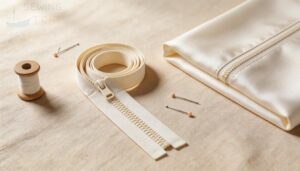
Before you can sew one in, it helps to know what makes an invisible zipper different from the kind you’re used to. It’s not magic — just smart engineering. Here’s what’s actually going on beneath the surface.
Once you see how the coil tucks away and hides inside the seam, sewing an invisible zipper into a dress becomes much less intimidating.
How Invisible Zipper Teeth Curl Inward to Hide in The Seam
The secret behind invisible zipper magic is all in the coil geometry. Unlike a regular zipper, the teeth curl inward — that’s the curl mechanics doing their job. When closed, fabric overlap covers everything.
Applying an invisible zipper foot helps align the coil accurately.
- Zipper teeth tuck behind the seam line
- Straightening zipper teeth before sewing lets you stitch close to the coil
- Tension balance keeps seam concealment looking perfect
When to Use an Invisible Zipper Vs. A Regular Zipper
So now that you know how those teeth curl inward, the real question is: which zipper actually belongs on your project?
Design concealment is the whole point of an invisible zipper — dresses, skirts, formal wear.
But when durability demands matter more than hiding the closure, a regular zipper wins.
Material suitability and style appropriateness drive the choice every time.
Key Differences Between Invisible and Standard Zippers
Think of it this way: a concealed zipper hides its coil on the back of the tape, while a standard zipper wears its teeth proudly on the front. That coil placement changes everything — visibility impact, seam allowance needs, even pull tab design.
Strength comparison? Regular zippers win there.
And using a regular zipper foot for invisible zippers? Totally doable, just slower.
Can You Add a Zipper Without a Zipper Foot?
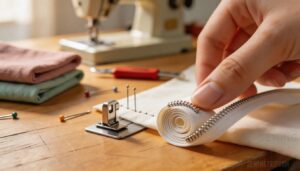
Yes, you absolutely can sew an invisible zipper without a special foot — it just takes a little more patience. A regular presser foot or standard zipper foot can get the job done, but there are a few things worth knowing before you start.
Here’s what to expect going in.
Why Sewers Attempt This Without a Special Foot
Sometimes the right tool just isn’t in your sewing box — and that’s okay.
Budget Constraints, Urgent Deadlines, and plain old Equipment Shortage push sewers to get creative fast.
Many skilled tailors actually prefer sewing invisible zippers without a special foot because it sharpens their hand control. Improvisation Techniques and Skill Development go hand in hand, and necessity? That’s honestly the best sewing teacher there is.
Necessity is the best sewing teacher, and skipping the special foot sharpens the hand control no tool can teach
How a Regular Presser Foot or Standard Zipper Foot Compares
Each foot tells a different story when you’re chasing that smooth finish.
- A standard presser foot offers the least Coil Clearance — its wide base keeps your needle too far from the teeth, hurting Stitch Accuracy and Fabric Visibility.
- A regular zipper foot gets you closer, though Control Ease drops since you’re manually steering the coil flat.
- Using a regular zipper foot for invisible zippers sacrifices some Speed Efficiency, but absolutely works.
What to Expect in Terms of Difficulty and Results
Yes, there’s a learning curve — but don’t let that scare you off. Sewing invisible zippers without a special foot demands stitch precision and a steady hand, especially when rolling teeth flat with your fingers.
Practice importance is real here: try a scrap piece first.
Done right, seam flatness and durability expectations are both solid. The results? Genuinely impressive.
Best Fabrics and Supplies for Invisible Zippers
Getting the right fabric and supplies makes the whole process so much easier. Some materials practically beg to be sewn with an invisible zipper, while others need a little extra coaxing.
Here’s what you’ll want to have on hand before you start.
Light to Medium-weight Fabrics That Work Best
Invisible zippers love a cooperative fabric. Silk Charmeuse, Crepe de Chine, and Batiste Lawn are natural fits — they’re smooth, lightweight, and drape beautifully into a clean seam. Cotton and rayon blends are equally reliable. Even Structured Dupioni manages it well with some care.
When sewing invisible zippers without a special foot, light to medium-weight fabrics give you the best shot at a polished finish. A little lightweight interfacing along the tape edge keeps everything stable.
Managing Bulkier or Stretchy Fabrics With Extra Preparation
Stretchy or bulky fabric isn’t a dealbreaker — it just needs a little extra convincing. Stabilizing bulk fabrics starts before you touch the machine. Here’s what makes the difference:
- Pre-pressing for stretch: Fuse interfacing strips to the zipper opening to stop rippling before it starts.
- Relaxed fabric positioning: Keep everything flat and tension-free while pinning — no stretching allowed.
- Hand basting technique: Slippery or clingy fabrics drift; basting holds them honest.
Consistent seam allowances matter most here. A regular zipper foot still works beautifully with proper fabric preparation.
1. Coats Clark Invisible Navy Zipper

Coats & Clark makes a reliable invisible zipper, and their 14-inch navy version is a smart pick for back seams and side closures on dresses or skirts. The 100% polyester tape and fine coil stay flexible, which helps the teeth curl inward cleanly once stitched.
That matching navy tape is the quiet hero here — it disappears inside dark or deep-toned fabrics without a trace. Press it flat before sewing, and you’re already halfway to a professional finish.
| Best For | Sewers and crafters who need a clean, invisible finish on dark or navy-toned garments like dresses, skirts, or tailored pieces. |
|---|---|
| Brand | Coats & Clark |
| Origin | USA |
| Material | Polyester |
| Color | Navy |
| Sewing Use | Zipper application |
| Project Type | Garment sewing |
| Additional Features |
|
- Made in the USA with a flexible polyester tape that curls inward cleanly for a nearly invisible finish
- The navy color blends seamlessly into dark fabrics, so there’s no tape peeking through
- Easy to ship and order online — great when your local store doesn’t carry the right length
- Priced higher than what you’d typically find at a fabric or craft store
- Only comes in one length and one color, so it’s not a versatile grab if you’re working on multiple projects
- Might not be worth it cost-wise if you have a good sewing store nearby
2. Singer Ball Head Straight Pins
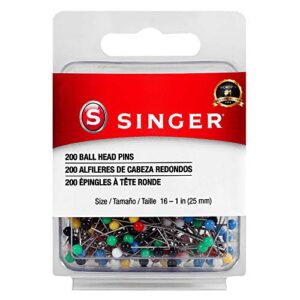
Good pins are the unsung backbone of a clean invisible zipper.
Singer’s Ball Head Straight Pins (Model 07040) come in 200 to a pack — plenty for a full project — and the colorful heads make them easy to spot on patterned fabric.
That matters when you’re juggling a slippery zipper tape and trying not to lose your place.
The nickel-plated steel shaft slides in smoothly without distorting your fabric, and the rounded head gives your fingers a real grip point.
| Best For | Sewists and crafters who work with patterned or detailed fabrics and need pins that are easy to spot and handle. |
|---|---|
| Brand | SINGER |
| Origin | USA |
| Material | Alloy Steel |
| Color | Assorted |
| Sewing Use | Fabric pinning |
| Project Type | Quilting & crafting |
| Additional Features |
|
- 200 pins per pack gives you plenty to work through a full project without running out
- Colorful ball heads are easy to see on busy or patterned fabric
- Nickel-plated steel resists rust and slides cleanly through fabric without distorting it
- Some users have received pins with broken shafts or dull, unsharpened tips
- Ball heads can be loose or detach entirely, which gets frustrating mid-project
- At size 16, they may feel too short for certain heavier or layered fabrics
3. Pellon Shape Flex Iron On Cotton Interfacing
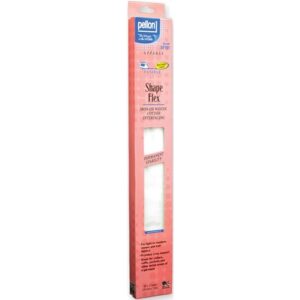
Pins hold everything in place — but interfacing keeps the seam from stretching out of shape in the first place.
Pellon’s Shape-Flex SF101 is a woven, iron-on cotton interfacing that fuses cleanly to light and medium-weight fabrics. It adds just enough body to zipper tape edges without stiffness.
Press it on with steam for about 10 seconds, let it cool completely, and your seam allowance stays stable and crisp — exactly what you need for a zipper that disappears like it was never there.
| Best For | Sewers and crafters working with light to medium-weight fabrics who need clean, stable structure in detail areas like collars, cuffs, and zipper edges. |
|---|---|
| Brand | Pellon |
| Origin | USA |
| Material | 100% Cotton |
| Color | White |
| Sewing Use | Fabric stabilizing |
| Project Type | Quilting & crafting |
| Additional Features |
|
- Woven cotton construction gives a natural feel without stiffness — great for garments that need to move
- Fuses quickly with steam and stays put through machine washing, drying, or dry cleaning
- Works across a range of projects, from shirts and handbags to home décor and wool appliqué
- At 15" wide, you may run out faster than expected on bigger projects
- Iron-on application isn’t ideal for heat-sensitive fabrics or users without a reliable steam iron
- Best suited for lighter fabrics only — not the right pick if you’re working with heavier materials
How to Prepare Fabric and Zipper Before Sewing

Before you sew a single stitch, a little prep work makes all the difference between a zipper that disappears into your seam and one that fights you the whole way. Getting your fabric and zipper ready ahead of time is honestly the step most people skip — and then wonder why things went sideways.
Here’s what to do before you even thread your machine.
Pre-washing, Pressing, and Finishing Raw Edges
Before you touch the zipper, get your fabric ready. Start with a shrinkage test swatch — natural fibers can shrink 5–10%, so prewashing saves headaches later.
Use the steam press method to flatten the fabric smooth.
Then finish those raw edges: a zigzag edge stitch, pinking shears edge, or serger overlock finish all work great.
Clean edges mean cleaner zipper stitching every time.
Marking and Measuring Seam Allowances Correctly
Now that your edges are clean, it’s time to measure.
Grab a seam gauge — it’s the fastest way to mark a consistent seam allowance along both fabric pieces.
Your throat plate guides help too; align your raw edge with the printed lines while stitching.
Consistent edge measurement keeps your zipper opening square, your seam line straight, and everything playing nicely together.
Reinforcing Zipper Openings With Interfacing Strips
Once your seam allowances are marked, reinforce those opening edges before anything else. Fuse a stabilizing strip width of about 1¼ inches — fusible interfacing works beautifully here — along each zipper opening edge.
This edge seam reinforcement keeps knit or lightweight fabric from stretching under stitch line tension. Support strip placement matters too: press it flat against the wrong side, right along your seam allowance.
Straightening and Pressing Zipper Teeth Flat Before Stitching
Before you pin it to your fabric, those curly zipper teeth need a little convincing.
Left alone, they spiral inward — and that’s exactly what causes puckered seams later.
Press the teeth flat using these pressing steps:
- Set your iron to synthetic (130°C max) — Heat Temperature Limits matter here, nylon melts fast
- Use Press Cloth Protection and Steam Flattening to coax coils straight without direct contact
- Follow Coil Alignment Tips: roll teeth outward with fingertips every few inches for Seam Edge Precision
This prep makes using a regular foot for hidden zipper seams surprisingly manageable.
Step-by-Step: Sewing an Invisible Zipper Without a Special Foot
Here’s where the real work begins — and honestly, it’s simpler than it looks. With a regular zipper foot and a little patience, you can get a clean, invisible result without any specialty tools.
steps one at a time, and you’ll be surprised how smoothly it comes together.
Pinning The Zipper Face-down to The Right Side of Fabric
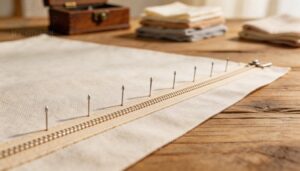
Lay your zipper face-down on the right side of the fabric — this is where pinning the right side of the fabric correctly makes all the difference. Pin orientation matters: insert pins perpendicular to the tape for easy pin removal while stitching. Pin alignment keeps everything from drifting.
| Pin Detail | What to Do |
|---|---|
| Orientation | Perpendicular to tape edge |
| Spacing | Every 2–3 inches |
| Alignment | Match coil to seam allowance line |
| Starting point | Top opening first |
| Removal | One pin at a time while sewing |
Good fabric preparation and pinning and pressing methods for zipper seams mean that your regular zipper foot — or using a regular foot for an invisible zipper — can absolutely get the job done.
Manually Rolling Zipper Teeth Flat With Your Fingers

Now comes the satisfying part — the Finger Pressure Technique. Before you stitch, gently roll the zipper teeth away from the tape using light, steady pressure. Section-by-Section Rolling keeps teeth flat long enough to sew each pass. Remember: they spring back fast.
- Use Heat-Assisted Flattening first — warm iron, wrong side only
- Work in small sections for Coil Alignment Tips
- Keep fingers close to the foot for Preventing Spring-Back
- Press the teeth outward, never downward
Stitching Close to The Coil Using a Regular Zipper Foot
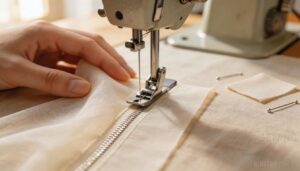
Think of your regular zipper foot as a trusty sidekick — not the hero, but absolutely capable. Position it so the needle sits right beside the coil for Stitch Line Accuracy and solid Needle Positioning.
Use the Test Swatch Method first. Go slow, stay mindful of Foot Pressure Control, and those Coil Alignment Tips you practiced. They pay off here.
Sewing The Second Side and Aligning Seam Lines
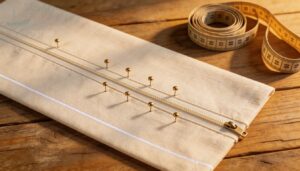
The second side is where everything either comes together or quietly falls apart. Before second side pinning, close the zipper and check that both stops sit at the same height — that’s your zipper stop sync.
Transfer your seamline with chalk for clean seamline transfer. Keep edge alignment consistent with your seam allowance, and baste intersection-matching points first when crossing a horizontal seam.
Hand Finishing and Reinforcement Techniques
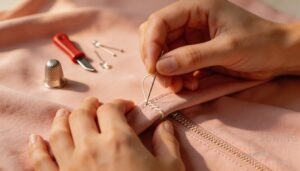
Stitching the zipper in is the big win, but the finishing touches are what separate a good result from a great one. A few small steps at the end lock everything in place and give your seam that clean, intentional look.
Here’s what to do once both sides are sewn down.
Back-tacking and Bar-tacking The Zipper Ends Securely
Once both sides are stitched, lock everything in place. Back tack timing matters — secure those thread ends right at the start and finish of each zipper side.
Bar tack placement, stitch a tight zigzag (stitch length around 0.1–0.5) on the seam allowance only, never across visible fabric. Reinforcement density keeps your slider from wandering past its stop.
Hand-stitching The Bottom for a Clean, Professional Finish
Now that your zipper ends are locked down, a few hand stitches seal the deal at the bottom.
- Thread a hand sewing needle with waxed thread.
- Use a basting stitch to tack the tape flat.
- Apply seam edge stitch close to the bottom stop.
- Circle the stop for solid bottom stop reinforcement.
That hand stitch finish makes everything look intentional — not improvised.
Adding a Hook-and-eye or Fabric Loop at The Top
Once the bottom is hand-stitched, close that little gap above your invisible zipper with a hook and eye or fabric loop — because the zipper shouldn’t carry all the stress alone.
Hook Placement matters: set the hook about 1/8 inch from the edge so nothing peeks through. For Fabric Loop Bias, cut a small bias strip from your garment fabric — it blends right in.
| Closure Option | Best For |
|---|---|
| Hook and eye | Structured waistbands |
| Thread Loop Finish | Lightweight or sheer fabric |
| Fabric loop | Soft dress closures |
| Round eye | Abutting zipper edges |
| Reinforcement Stitching | High-stress necklines |
Whichever you choose, anchor it firmly with tight hand stitches. A loose hook unravels all your hard work sewing invisible zippers without a special foot.
Attaching Lining Over an Invisible Zipper Neatly
Once your closure is anchored at the top, the lining comes next — and it’s honestly the step that makes everything look intentional. Fold the lining edge under about 5–6 mm, then use Lining Edge Pinning to position it snug against the zipper tape.
A simple Slip Stitch Technique catches the Folded Edge Finish with a Hidden Stitch Line, keeping Trimmed Lining Bulk minimal and the inside polished.
Common Invisible Zipper Problems and How to Fix Them
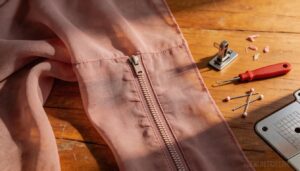
Even when you do everything right, invisible zippers can still throw a curveball or two. Don’t panic — most problems have a simple fix once you know what to look for.
Here are the most common ones you’ll run into, and exactly how to handle them.
Teeth Showing or Peeking Through The Seam
Peeking teeth usually come down to one thing: your stitch proximity to the coil was too generous. When needle drifts even a millimeter away, the fabric can’t fold over and hide those teeth.
Interfacing thickness and fabric bulk effects both push the zipper outward, making coil alignment trickier. Fix it by resewing closer to the coil — almost hugging it.
Zipper Not Lying Flat or Causing Puckered Fabric
Puckering usually means fabric and zipper tape are fighting each other. Lightweight fabrics stretch along a bias grain, while zipper tape stays stubbornly firm — that mismatch creates tension.
Apply edge support strips and use fabric stabilization along the opening before you sew. A small stitch line offset at the bottom helps too.
Press well after, and most ripples disappear.
Zipper Stuck or Not Gliding Smoothly After Sewing
A stuck zipper after sewing usually comes down to five culprits:
- Thread Obstruction — loose threads caught in the teeth
- Stitch Interference — stitches sitting on the coil, not beside it
- Slider Damage — a worn or bent slider dragging through
- Fabric Pressure — bulk squeezing the tape too tightly
- Lubrication Care — a little wax or graphite fixes surprising stiffness fast
Seam Misalignment Below The Zipper Stop
When seam below your zipper stop drifts off course, the whole back seam tells on you. Here’s what causes it — and how to fix it:
| Problem | Cause | Fix |
|---|---|---|
| Stop Placement Accuracy | Zipper sewn too low | Mark both fabric sides first |
| Seam Overlap Strategy | Gap at junction point | Overlap last stitch by 1 cm |
| Alignment Guide Markings | Eyeballing the seam allowance | Chalk a guide line before stitching |
Press flat, then sew.
Frequently Asked Questions (FAQs)
Can you add a zipper without a zipper foot?
Yes, you can.
A regular zipper foot works just fine — it gets close enough to the zipper tape to stitch a clean seam. It just takes a little more hand control and patience.
Can you shorten an invisible zipper at home?
Funny how a zipper that’s too long feels like a small crisis — but it’s actually a quick fix.
Mark your new length, stitch a DIY stop stitching barrier, then trim using the tape trimming technique.
How do you press an invisible zipper after sewing?
Close the zipper first, then press the seam with a low heat setting and a press cloth for protection.
Use the iron tip for flattening along the tape, and let it cool down before handling.
What stitch length works best for invisible zippers?
Measure twice, cut once" — same goes for your stitch length. Stick to 5–0 mm. It holds firm, stays easy to unpick, and keeps your invisible zipper lying flat and clean.
Can invisible zippers be reused after removal?
Absolutely — invisible zippers are surprisingly reusable.
With careful removal, intact tape, and a quick press to restore the coil curl, tooth durability holds strong through multiple reinstallations with near-identical post-reuse performance.
How do you sew an invisible zipper by hand?
Who needs a machine? Grab a hand sewing needle, wax your thread for smooth gliding, and use a prick stitch close to the coil. Neat, quiet, and oddly satisfying.
Conclusion
The invisible zipper: sewing’s prime magic trick.
With a little patience and practice, you can master the art of sewing an invisible zipper without a special foot. It’s not rocket science, but it does require some finesse.
By following these steps, you’ll be zipping up your favorite garments in no time. So, go ahead and give it a try – your invisible zipper skills will thank you, and so will your wardrobe, with the invisible zipper without special foot technique.
- https://www.heatherhandmade.com/invisible-zipper-without-invisible/
- https://untitledthoughts.com/blogs/sewing-basics/quick-guide-on-inserting-an-invisible-zip
- https://sewguide.com/how-to-use-the-invisible-zipper-foot/
- https://sew4home.com/how-to-install-an-invisible-zipper/
- https://byhandlondon.com/blogs/by-hand-london/11628353-inserting-an-invisible-zipper-the-definitive-tutorial